Inspiration
NeuroLearn was born from a simple but powerful idea: learning should be accessible to everyone, regardless of ability. We were inspired by the daily challenges that students with disabilities face in traditional and digital classrooms: limited support tools, overwhelming interfaces, and a lack of personalization. Our team wanted to create a platform where accessibility wasn’t an afterthought but the foundation.
What it does
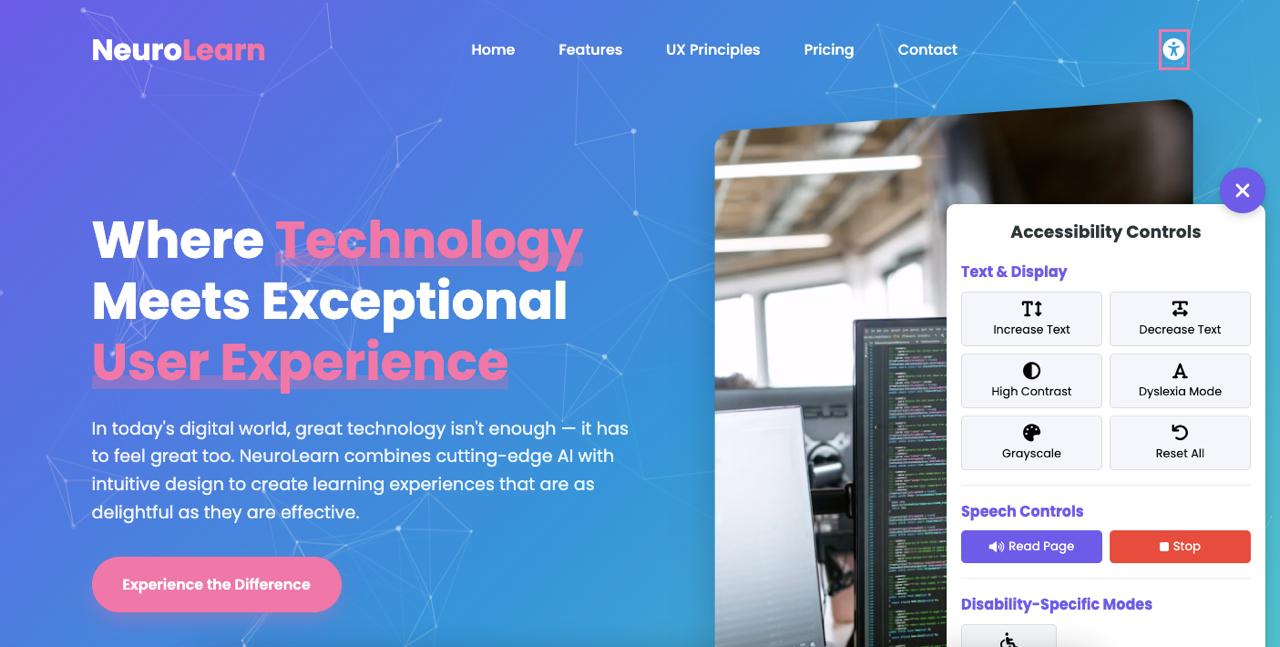
NeuroLearn is an AI-powered accessible learning platform that offers custom accessibility settings, dynamic styling, and learning modes tailored to a wide range of disabilities. It provides a clean, customizable, and responsive experience that adapts in real-time to each learner’s unique needs.
How we built it
We built NeuroLearn using HTML, CSS, and JavaScript, focusing on integrating accessibility-first design principles. Our development process incorporated WCAG guidelines, assistive technology concepts, and real user feedback to ensure inclusivity. The platform features AI-driven learning modes and a dynamic, responsive layout to enhance usability for all users.
Challenges we ran into
The biggest challenge was balancing simplicity and inclusivity. We had to ensure the UI remained clear and intuitive while supporting diverse disabilities, including seizure safety, cognitive load management, and motor impairments. Designing one interface that effectively addresses all these needs required creative problem-solving and smart compromises.
Accomplishments that we're proud of
We’re proud to have created a platform where accessibility is the foundation, not an add-on. NeuroLearn successfully combines AI-powered customization with a user-friendly interface that adapts to individual learner needs in real-time. Our inclusive design approach helped us build a product that truly supports diverse users.
What we learned
Through this hackathon, we gained valuable experience in designing through an inclusive lens. We deepened our understanding of WCAG standards, assistive technologies, and the real pain points faced by users with disabilities. This project taught us how to thoughtfully balance design complexity and accessibility requirements.
What's next for NeuroLearn - AI-Powered Accessible Learning Platform
Moving forward, we plan to expand NeuroLearn’s AI capabilities, incorporate more personalized learning pathways, and continuously refine accessibility features based on user feedback. Our goal is to make NeuroLearn the go-to platform for truly inclusive education that empowers every learner.
Built With
- 2.1
- css3
- html5
- javascript
- opendyslexic
- particle
- poppins
- responsive
- wcag

Log in or sign up for Devpost to join the conversation.