-
-
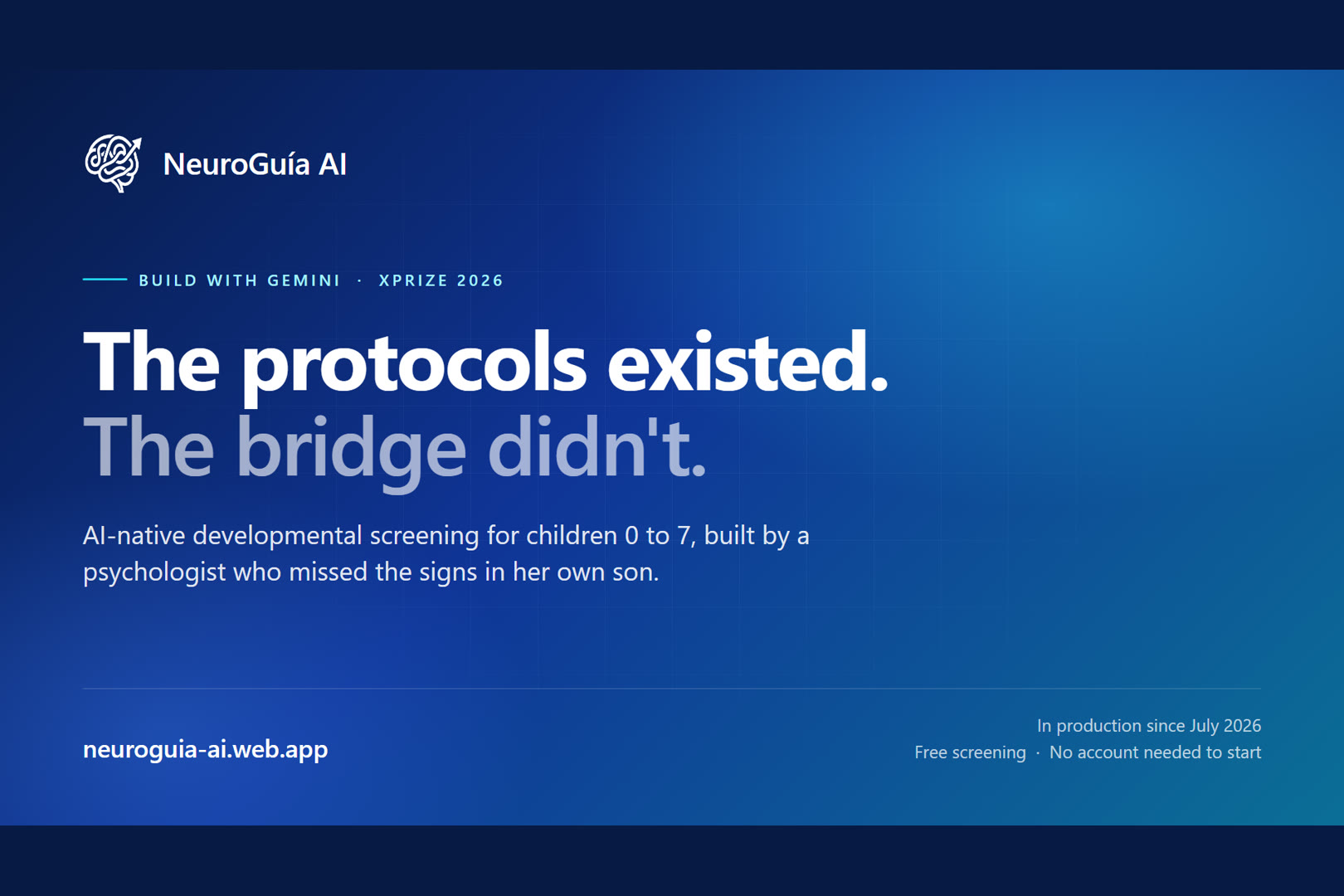
Cover
-
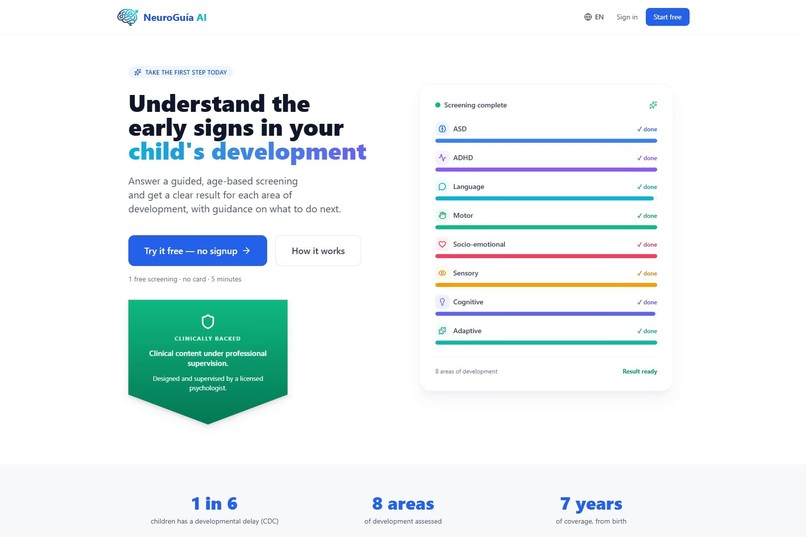
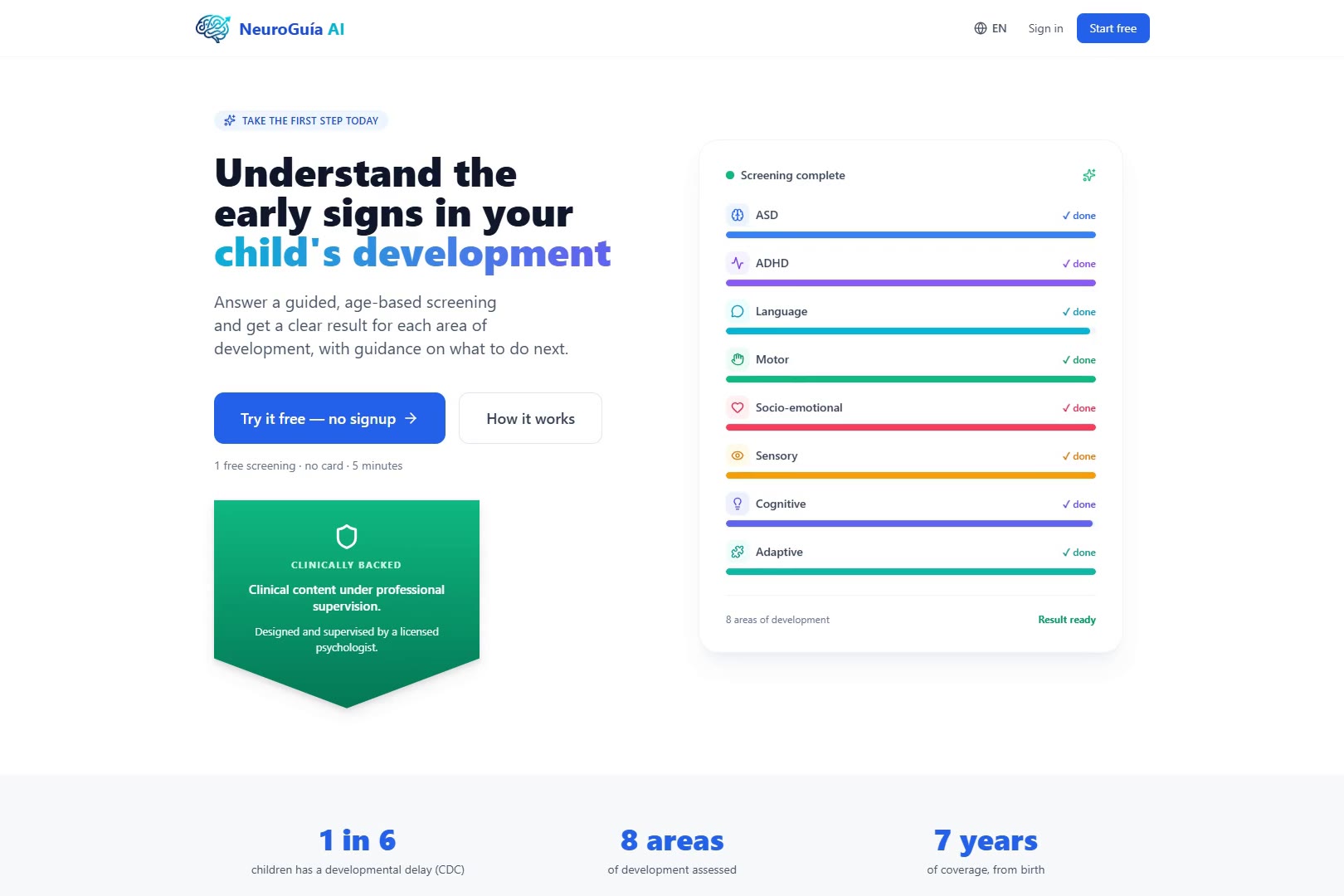
Landing
-
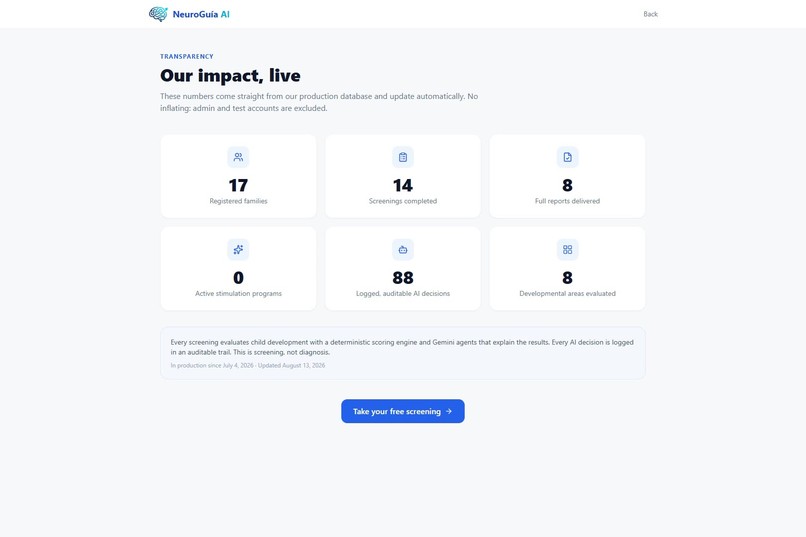
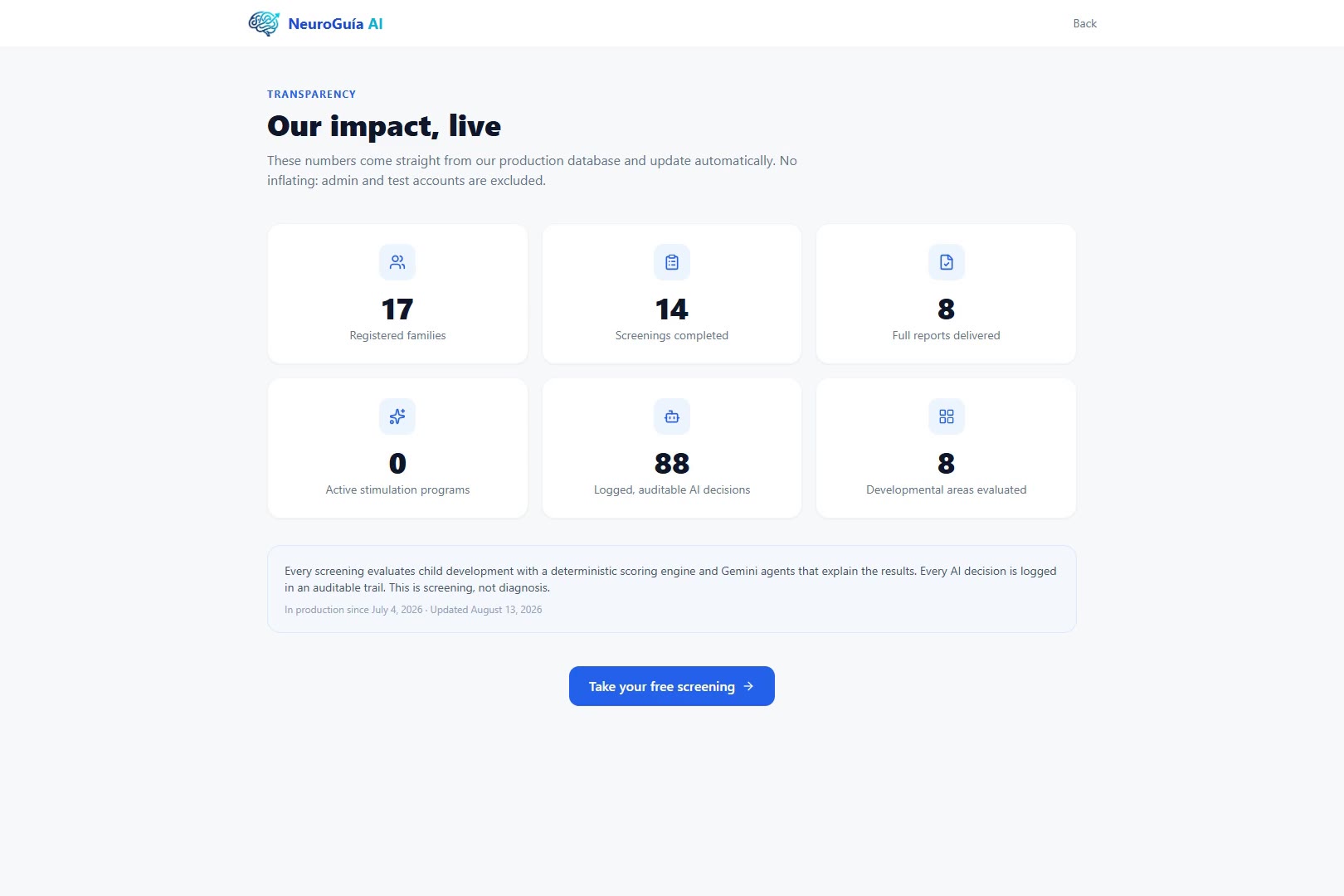
Impact dashboard
-
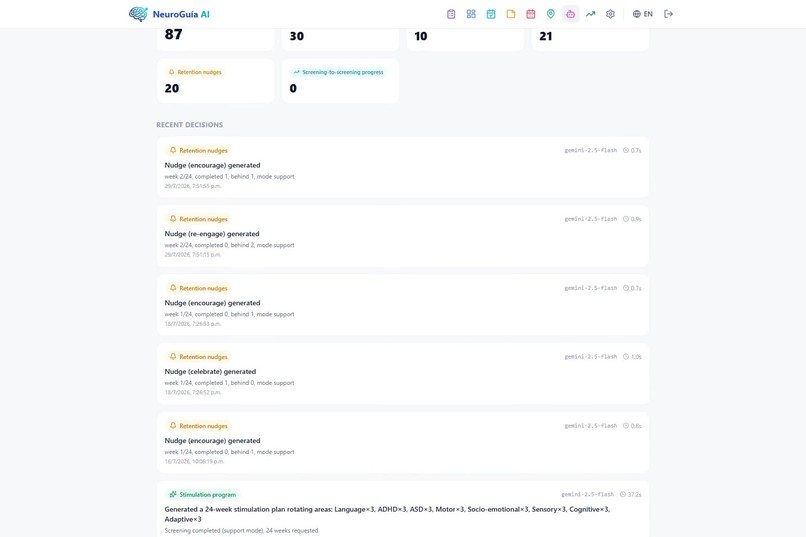
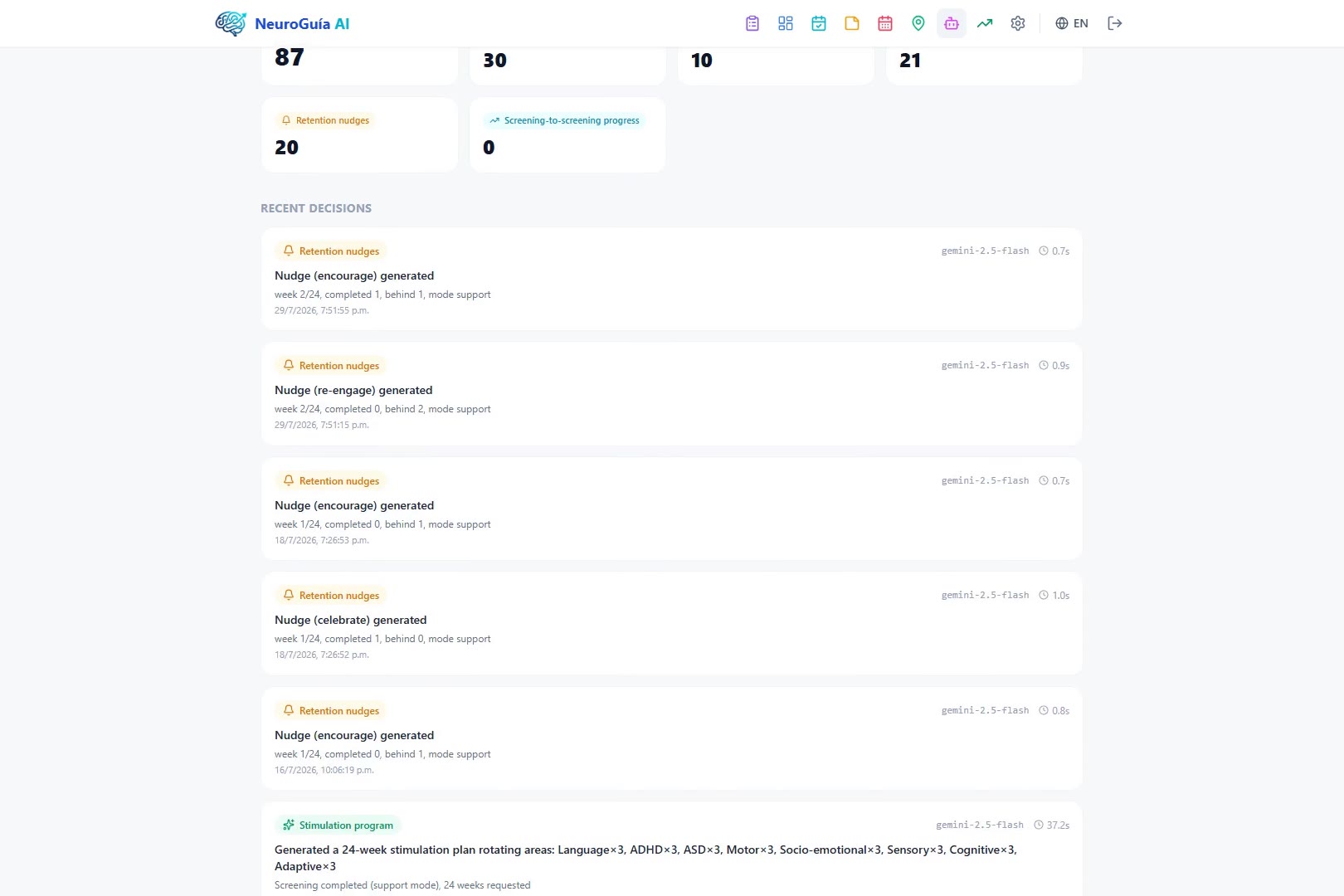
Agent log counters
-
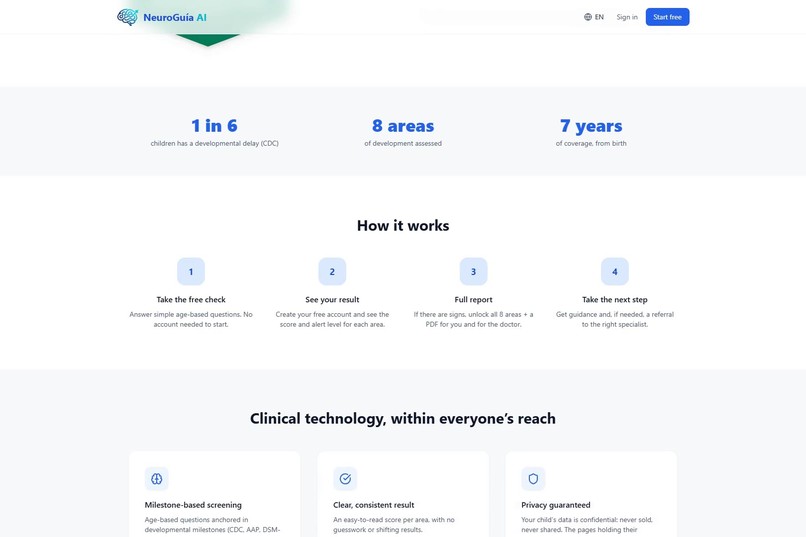
How it works
-
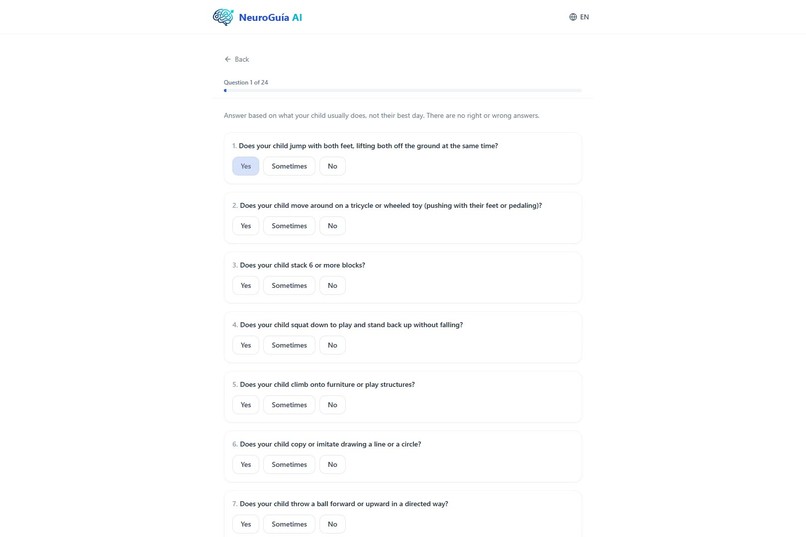
Screening questions
-
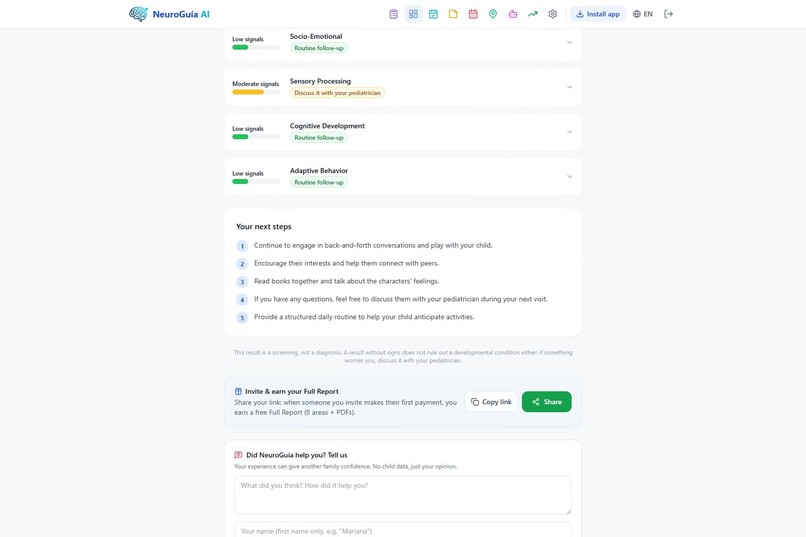
Results 8 areas
-
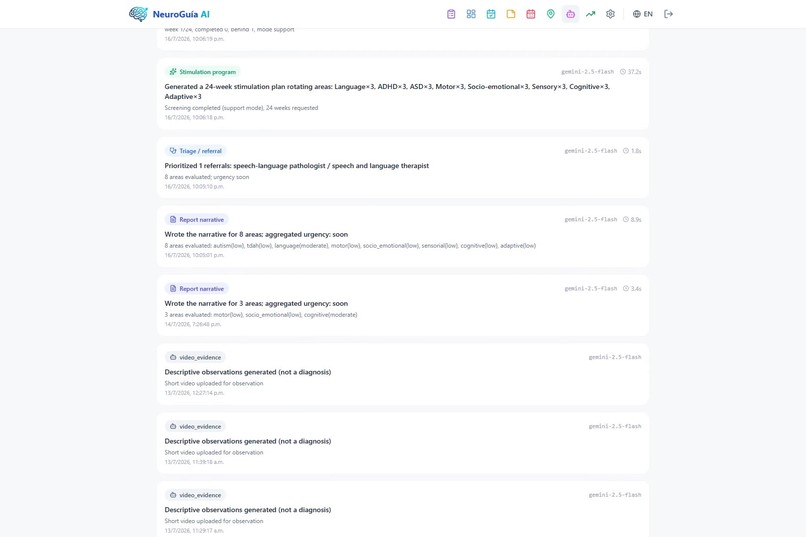
Agent log detail
-
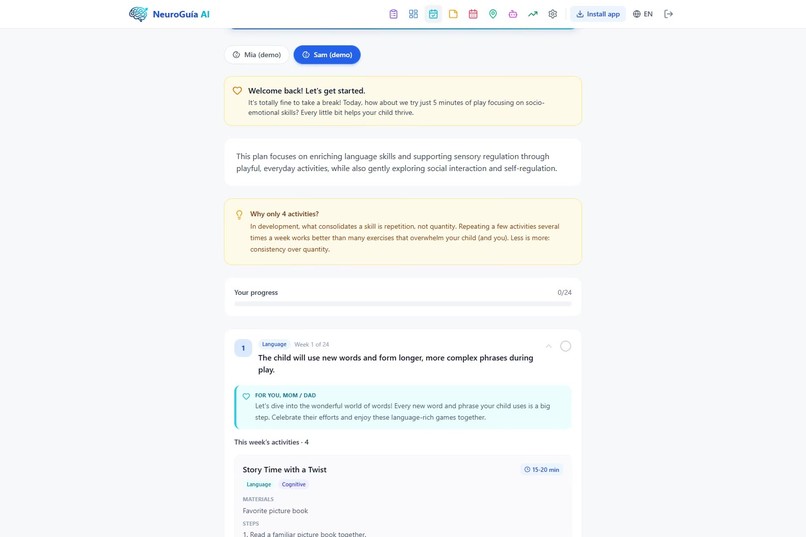
Program 24 weeks
-
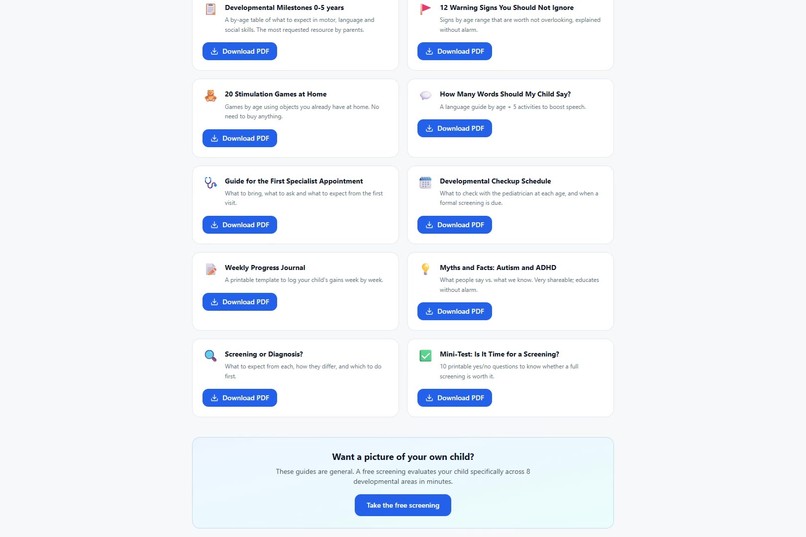
Free Resources
-
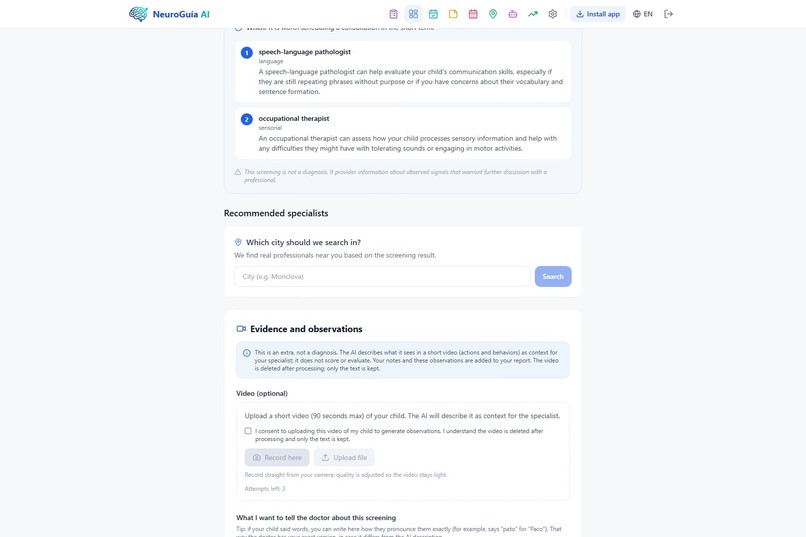
Specialists video evidence
-
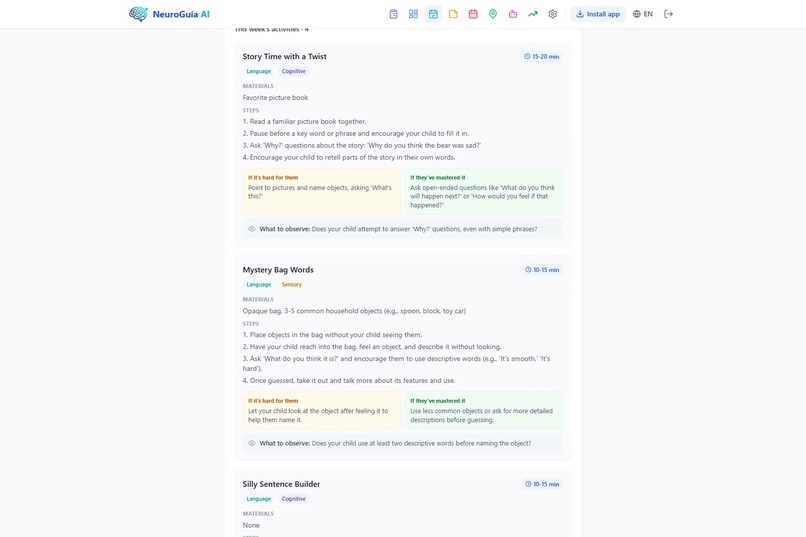
program activities
Inspiration
I'm a psychologist who gave language therapy for years, and when it was my own son, I still did not know what to watch for in time. We found the early intervention program on our own at two years and eight months. It only serves children until three. Nobody had told us it existed, and nobody had told us there was a deadline.
That constraint is also the thesis. In Mexico, developmental screening instruments and official norms mandating early diagnosis already exist. The gap is not clinical knowledge — it's the bridge between that knowledge and a family's kitchen table.
What it does
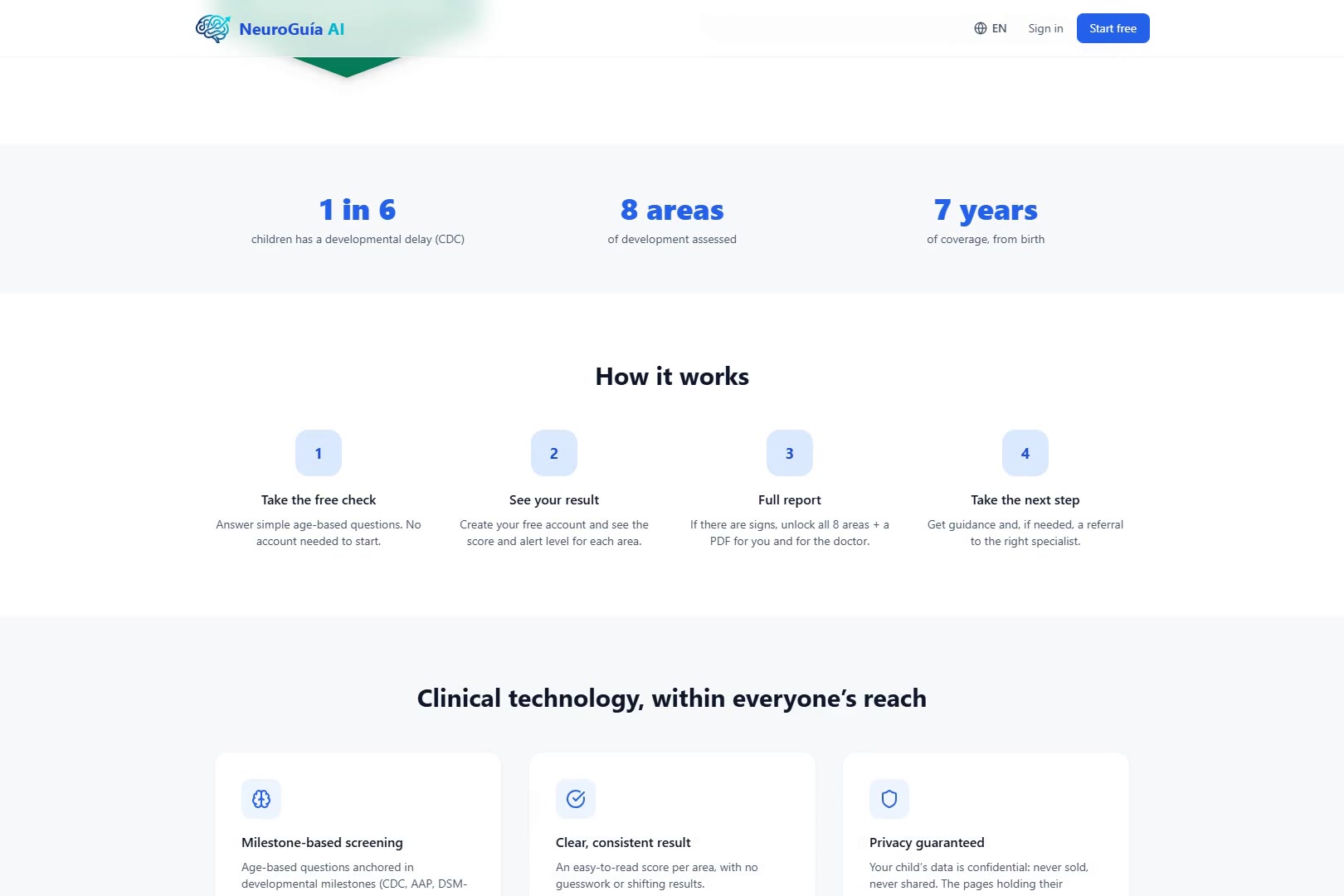
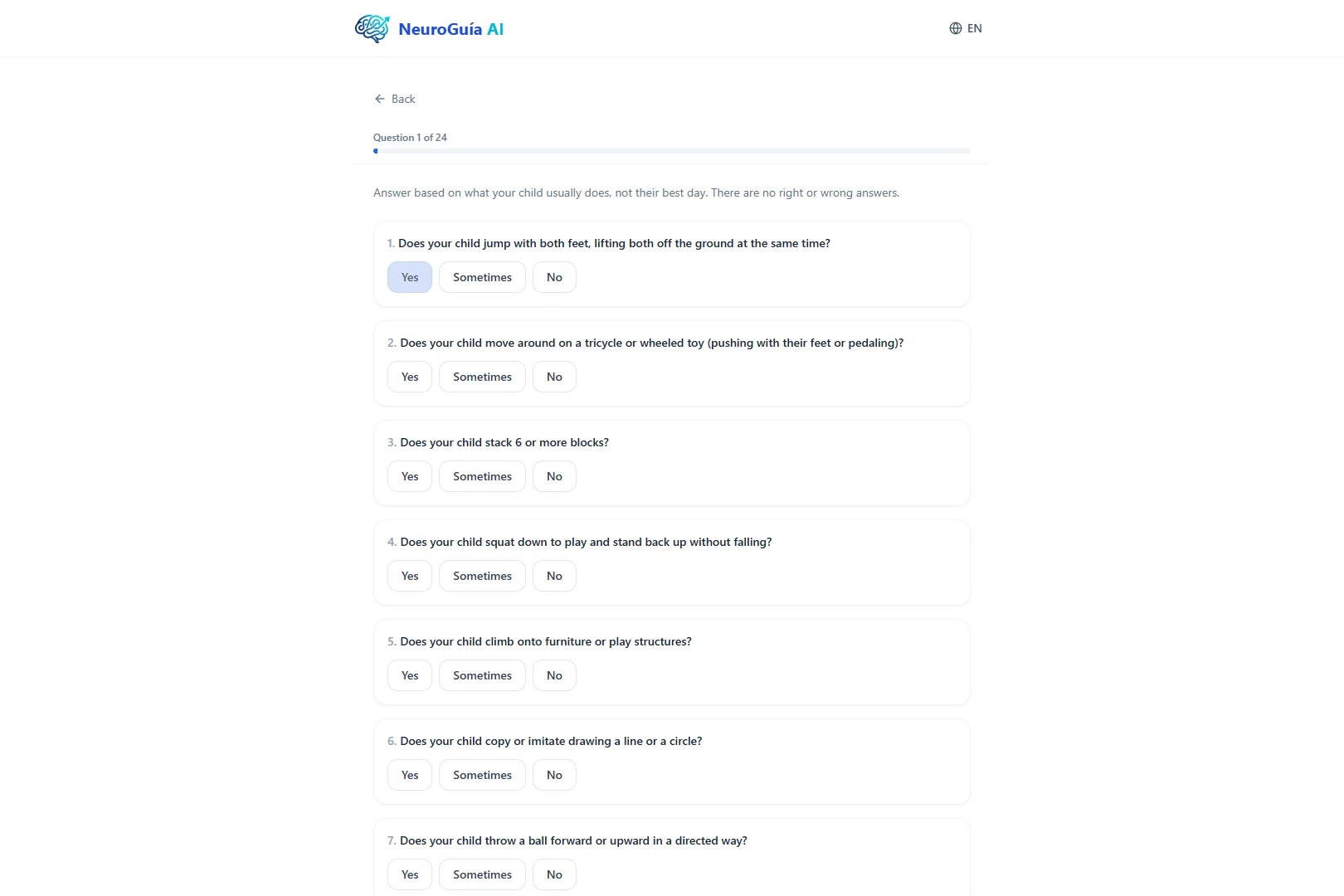
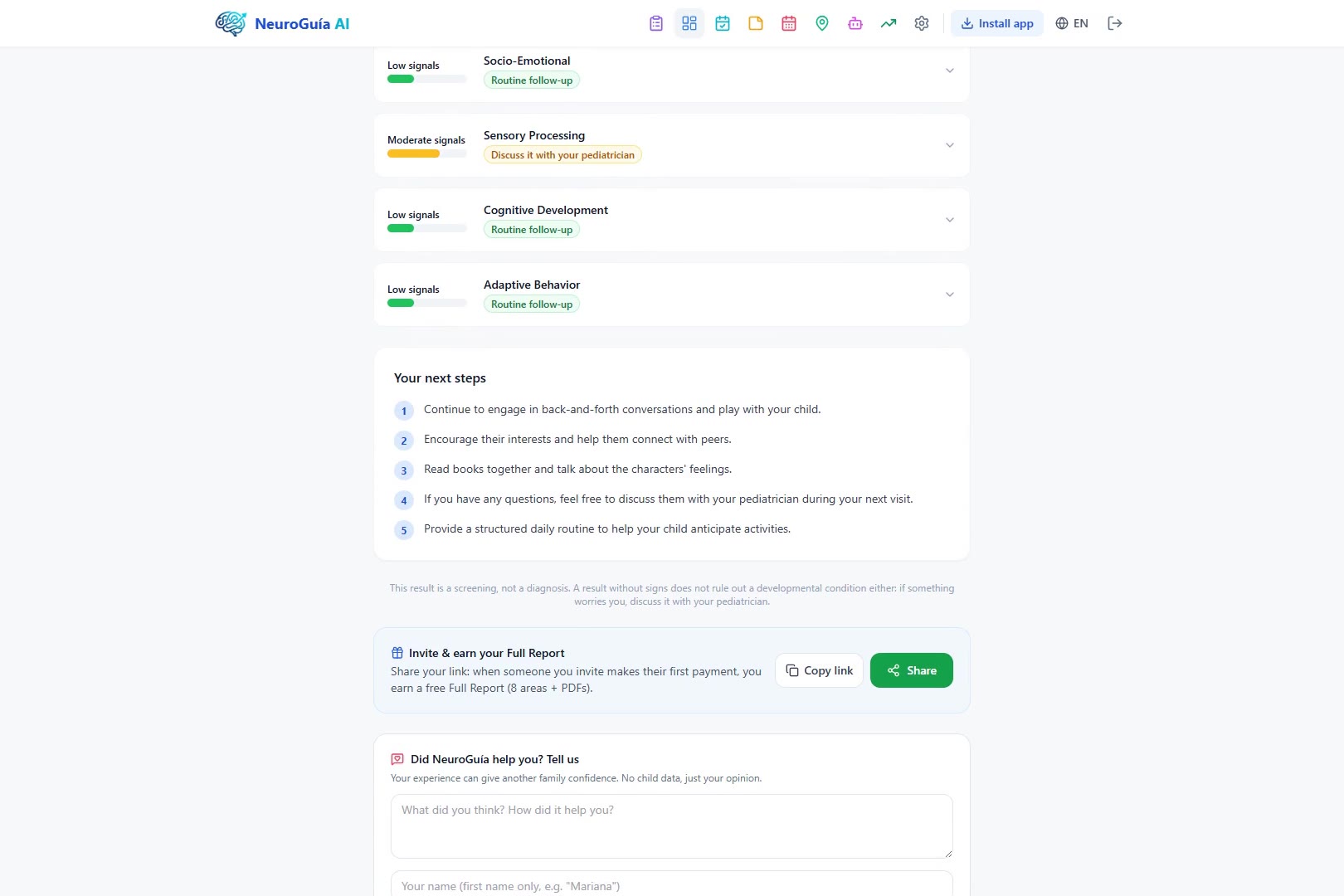
NeuroGuía AI is a developmental screening service for parents of children aged 0 to 7. A parent answers age-specific questions in five minutes, free and without creating an account, and learns whether there are signs worth reviewing across eight developmental areas, from language and motor skills to social-emotional development. Paid tiers unlock all eight, two PDF reports (one for the parent, one for their pediatrician) and guidance on which specialist to see.
How we built it
The most important architectural decision in this product is what Gemini is not allowed to do.
Gemini does not score children. Scoring runs on a deterministic system built from age-banded instruments anchored in CDC, AAP, DSM-5-TR, ASHA and PAHO/WHO milestones. The same answers always produce the same bands. Letting a language model assign risk scores to a child's development is indefensible and impossible to audit, so it does not happen. The rules score; Gemini writes.
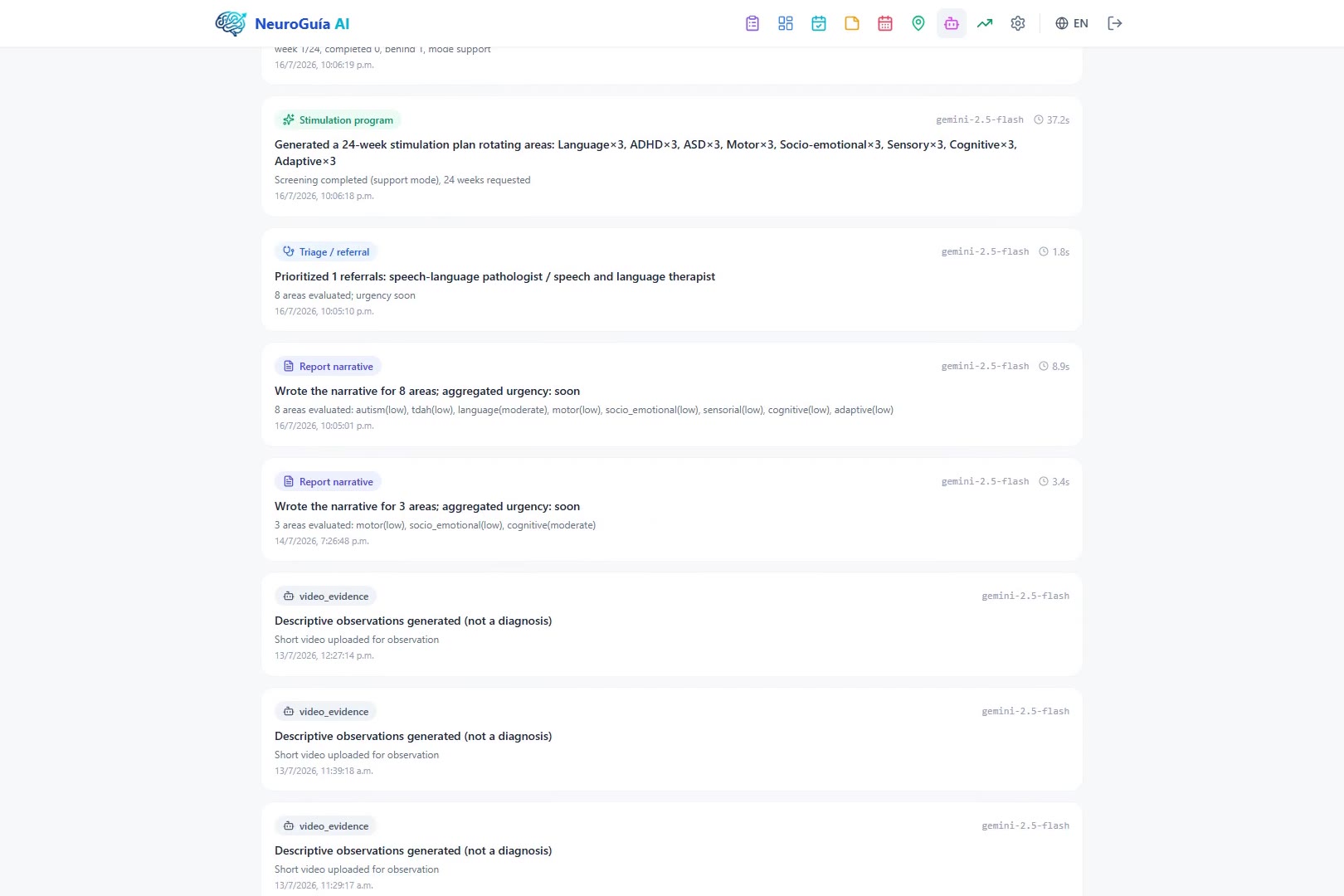
Within that boundary, six Gemini agents run in production, all logged:
- Report narrative turns deterministic scores into language a frightened parent can absorb without being alarmed or falsely reassured.
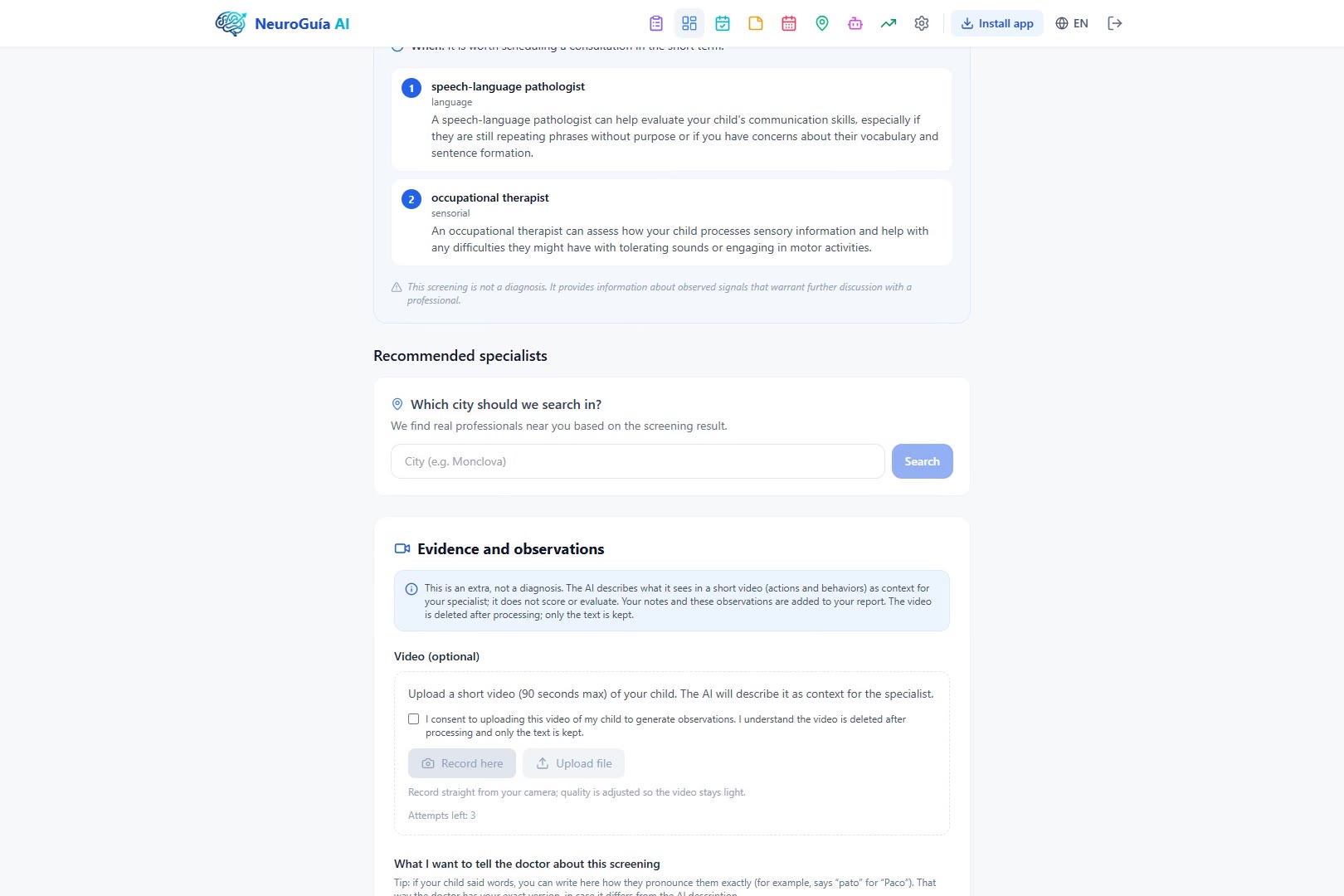
- Triage and referral converts flagged areas into which professional to see and how soon.
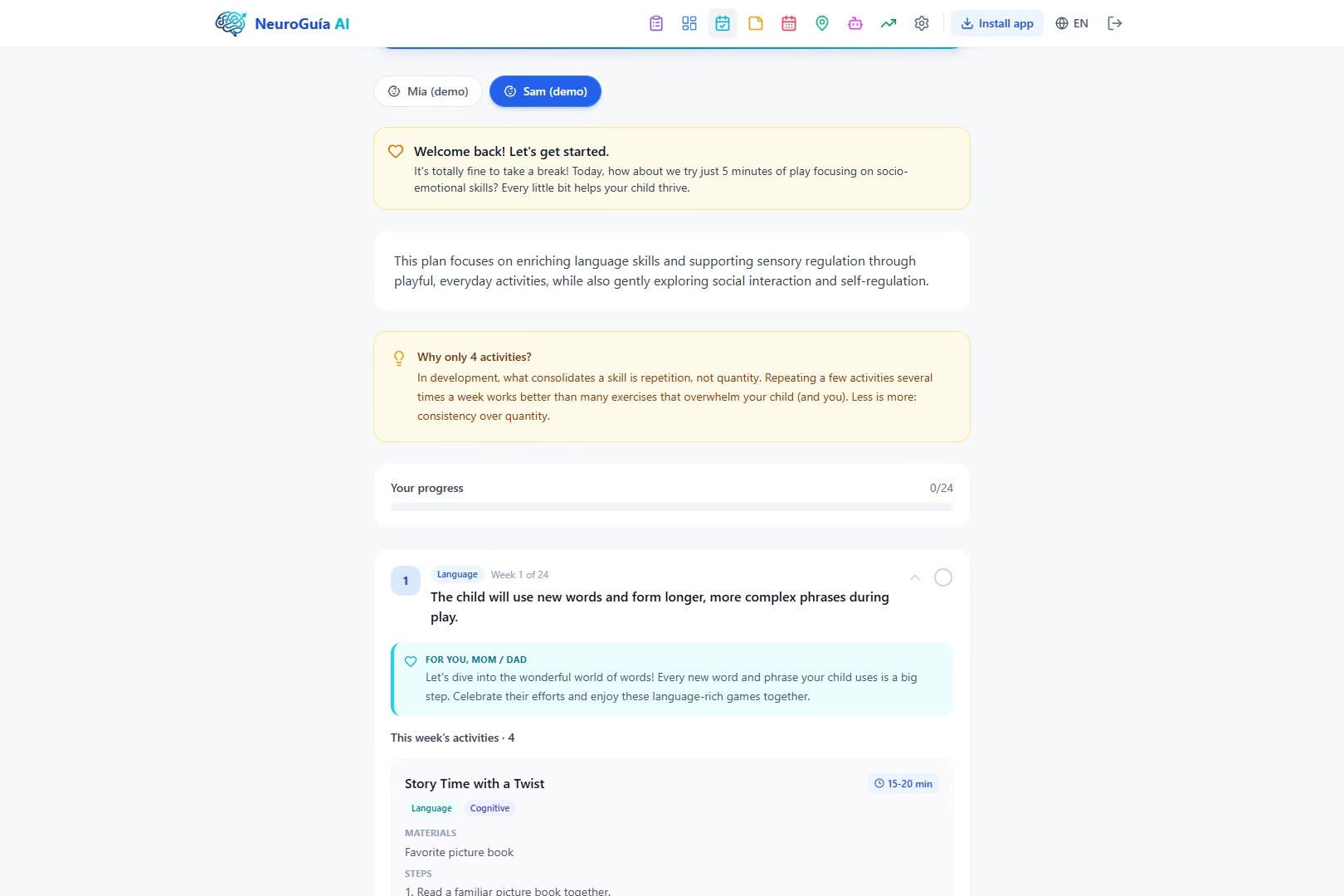
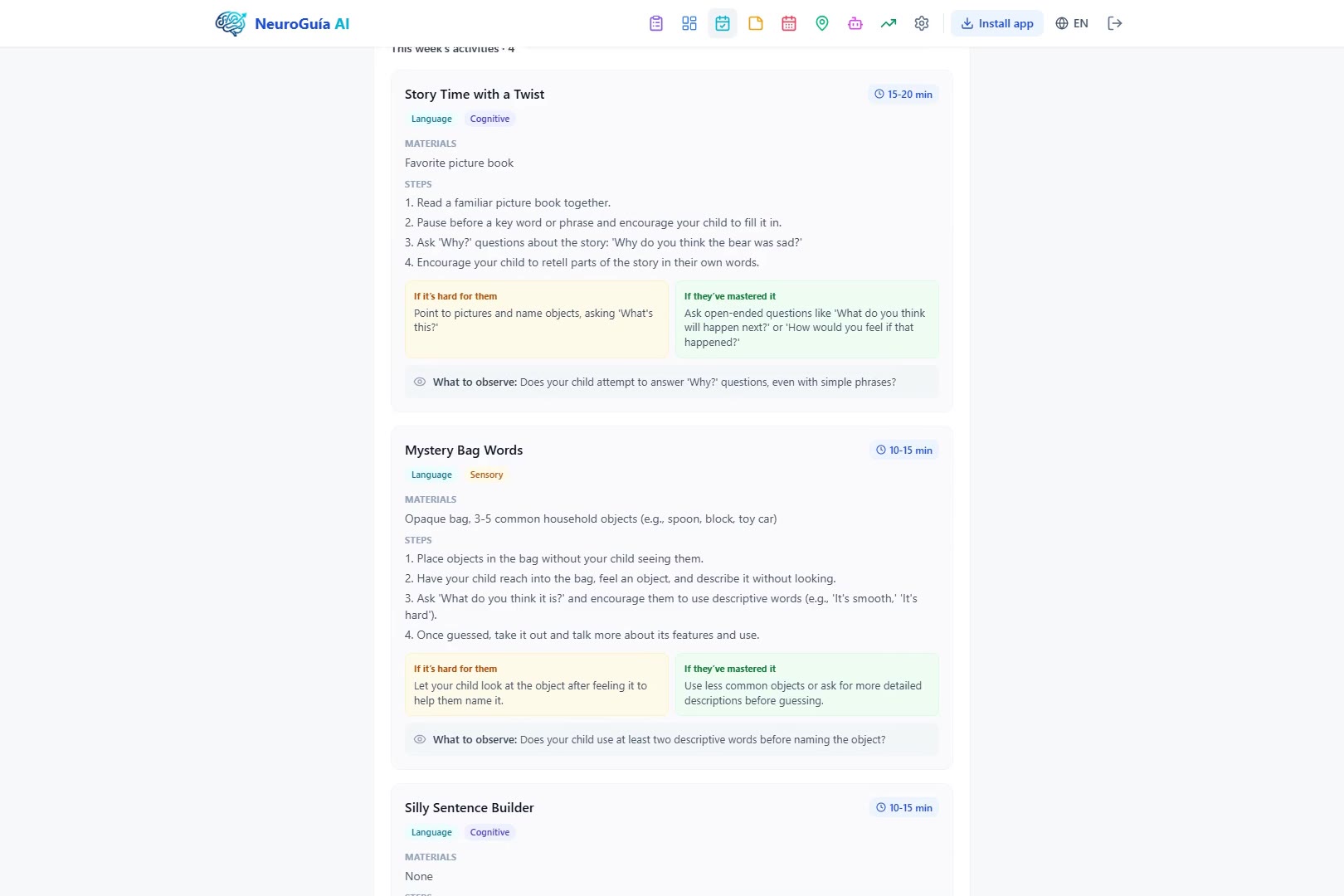
- Program generation builds a 24-week home program tailored to the child's age and flagged areas.
- Progress narrative compares screenings over time. Deltas are computed on the server and passed as ground truth the model may not contradict.
- Retention nudge writes the in-app message that brings a family back for a re-screening.
- Video evidence describes what it observes in uploads. It describes; it does not diagnose, and it transcribes a child's speech exactly as produced.
Each writes to an agent decision log with its inputs, outcome and latency. That log holds 90 recorded decisions, visible in an internal evidence dashboard. Nothing in this product is a claim I make; it is a record you can read.
A daily automated cycle also runs the business: it deletes uploaded media within 48 hours, reminds parents at each AAP surveillance milestone, follows up with families who haven't yet screened, recovers abandoned cash vouchers, and purges dormant accounts.
I do the clinical work the machine must not: I authored and authorize every prompt, I review generated narratives against real cases before anything ships, and I enforce the boundaries this product refuses to cross. Two of those boundaries cost money on purpose. First, if a screening flags immediate urgency, the concrete next step, which specialist and what to watch for, is given at no cost to users. Telling a parent "there are urgent signs" and then charging them to learn what to do is not defensible. Second, the product never diagnoses; it routes families to professionals rather than replacing them.
I am the only person who built this product: instead of hiring a team, I built a system of agents that do the writing, reminding, queuing and cleanup that would otherwise require staff. A second member is listed on the submission only as a designated representative, in case the project must send someone in person to an event; they contributed no development or clinical work.
Challenges we ran into
Being a solo builder was the biggest operational challenge: every agent, every safety boundary, and every business-automation task had to be designed to run without a team behind it.
I am reporting this plainly because the alternative would be misleading: the product is finished and running in production; what it has not yet had is qualified traffic. Our own funnel data shows the drop happens before the paywall, not at it, which is why the free screening was moved out front, and why distribution, not product, is the current constraint.
Arm's-length paid customer acquisition spend is 215.74 MXN (~12 USD) across two small July campaigns: the first misconfigured, the second correctly targeted and still not converting. Every other user arrived organically.
Accomplishments that we're proud of
- 17 families registered, 14 screenings completed, eight full reports delivered, all eight as a courtesy to founding families.
- An ethical architecture where a language model never scores a child: every risk band comes from deterministic, clinically anchored logic, and every agent decision is logged (90 recorded decisions so far, visible on an internal evidence dashboard).
- Two boundaries that cost money on purpose, kept anyway: free urgent-next-steps guidance, and a strict no-diagnosis policy that routes families to professionals rather than replacing them.
- A daily automation cycle that runs retention, reminders, and data hygiene without any staff.
- An affiliate program opened in August 2026, tracked end to end: attribution link, partner sales portal, and payout once the refund window closes. Built and deployed.
What we learned
Distribution, not product, is the real constraint. The screening itself works — our own funnel data shows families drop off before ever reaching the paywall, which is why we moved the free screening out front and are now focused on distribution.
We also confirmed the core thesis: in Mexico, developmental screening instruments and official norms mandating early diagnosis already exist. The gap is not clinical knowledge — it is the bridge between that knowledge and a family's kitchen table.
What's next for NeuroGuía AI
Three channels, in order of how real they are:
Category, impact, and specialists. We're not competing on category — the impact is on what a parent knows early enough to act on. Birth to seven is the window where intervention changes a trajectory instead of remediating one; the free early-intervention program stops accepting children at three. Screening is the gate to that window, and in Mexico it is usually reached only after a school raises a flag, years late. NeuroGuía AI moves the gate to the kitchen table: it performs the screening at near-zero cost, teaches the parent what to observe week by week through a 24-week program, and hands the specialist a family that arrives informed. Every correctly routed family is both a child reached inside the window and demand for a professional who was never going to meet them.
Creators. In August 2026 I opened an affiliate program paying creators a fixed commission per sale, tracked end to end: attribution link, partner sales portal, and payout once the refund window closes. Built and deployed; the first partner has not yet published.
Families. Early detection is the whole economic argument, and a screening costs us under three pesos to serve.

Log in or sign up for Devpost to join the conversation.