-
-
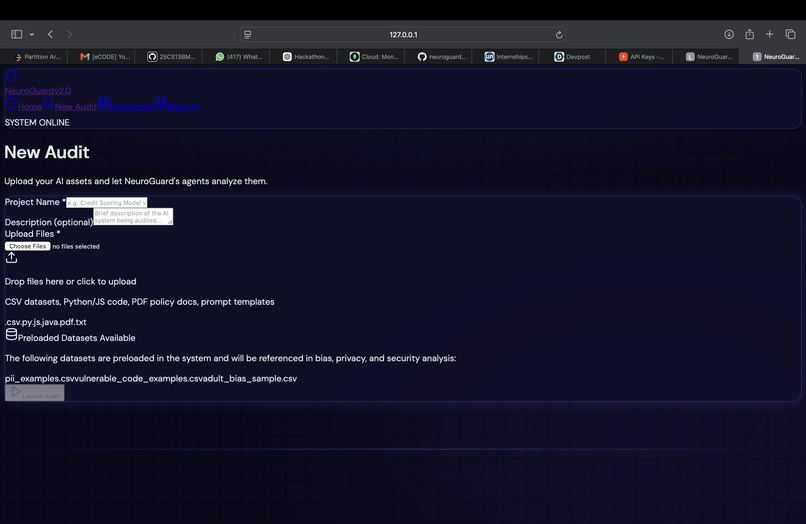
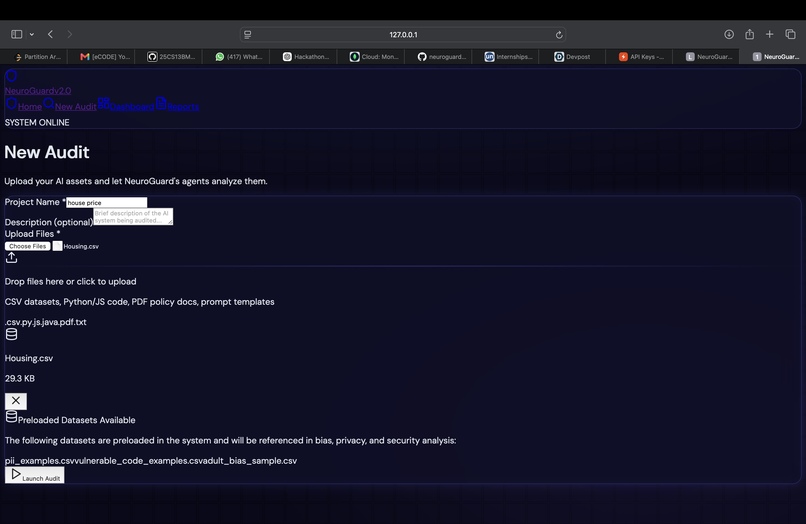
new Audit
-
-
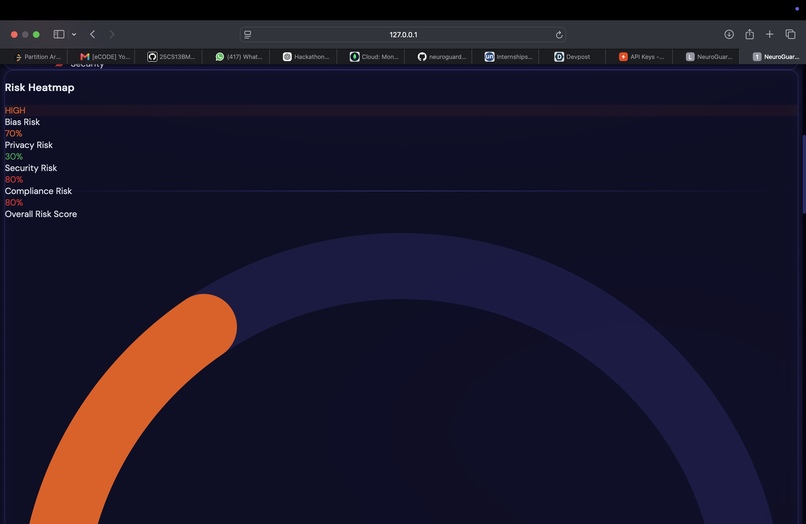
metrics
-
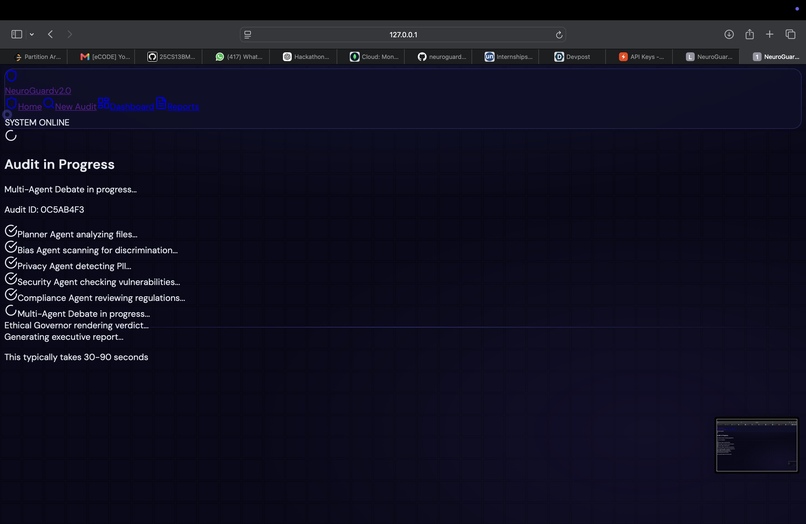
loading parameters
-
-
home
-
-
-
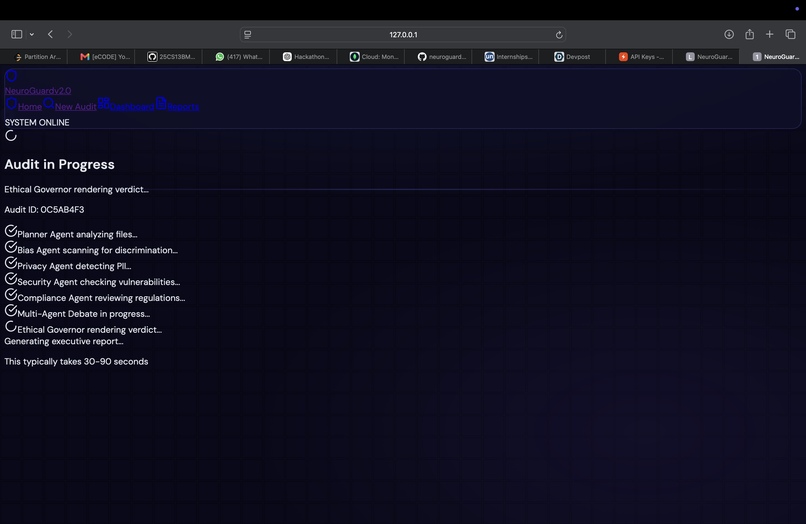
multi agent
-
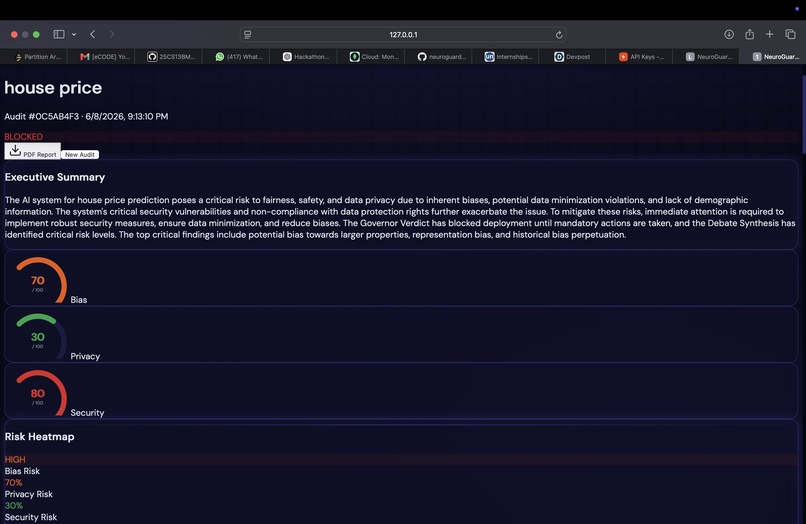
report
-
-
-
-
PDF report
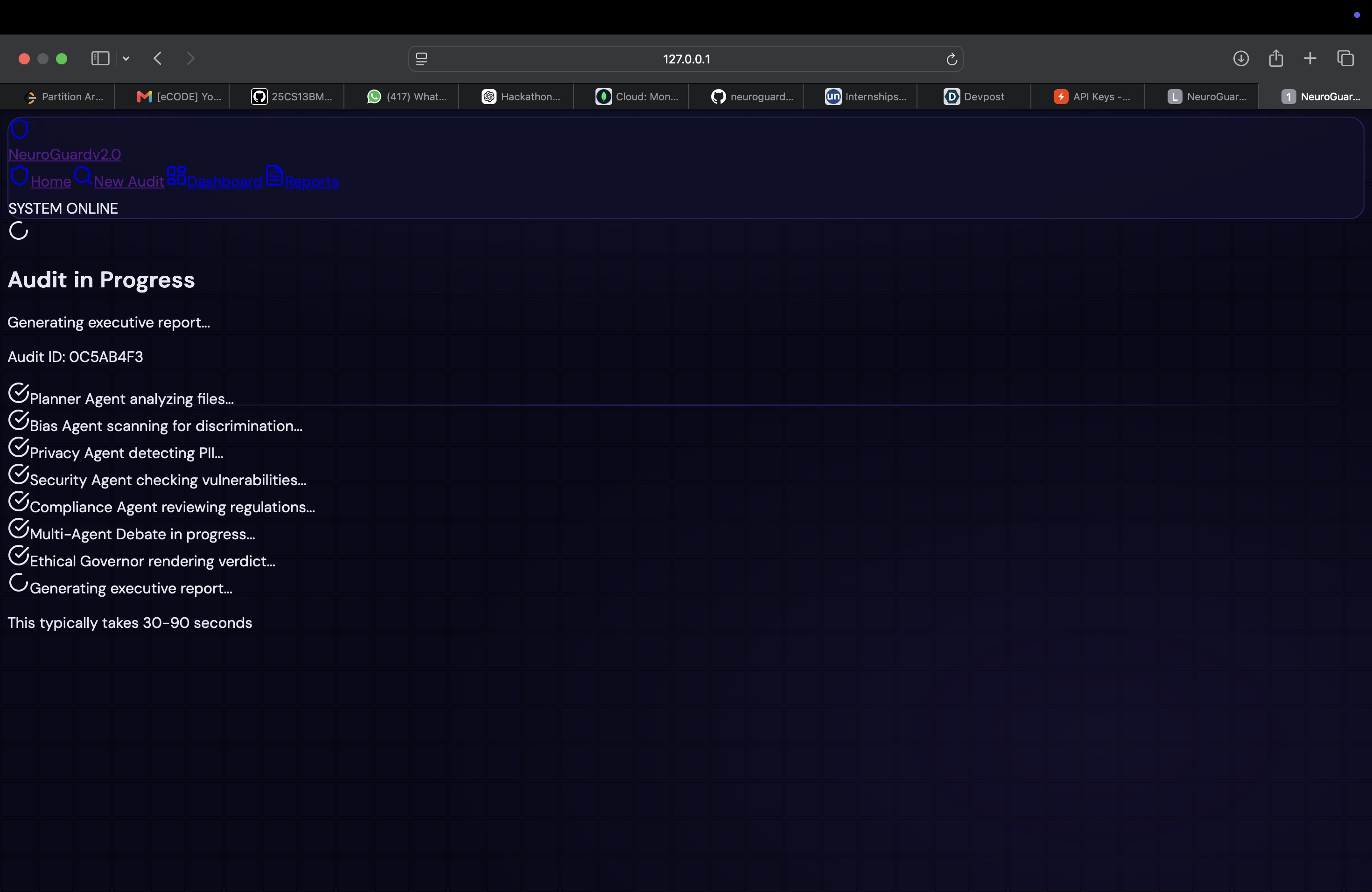
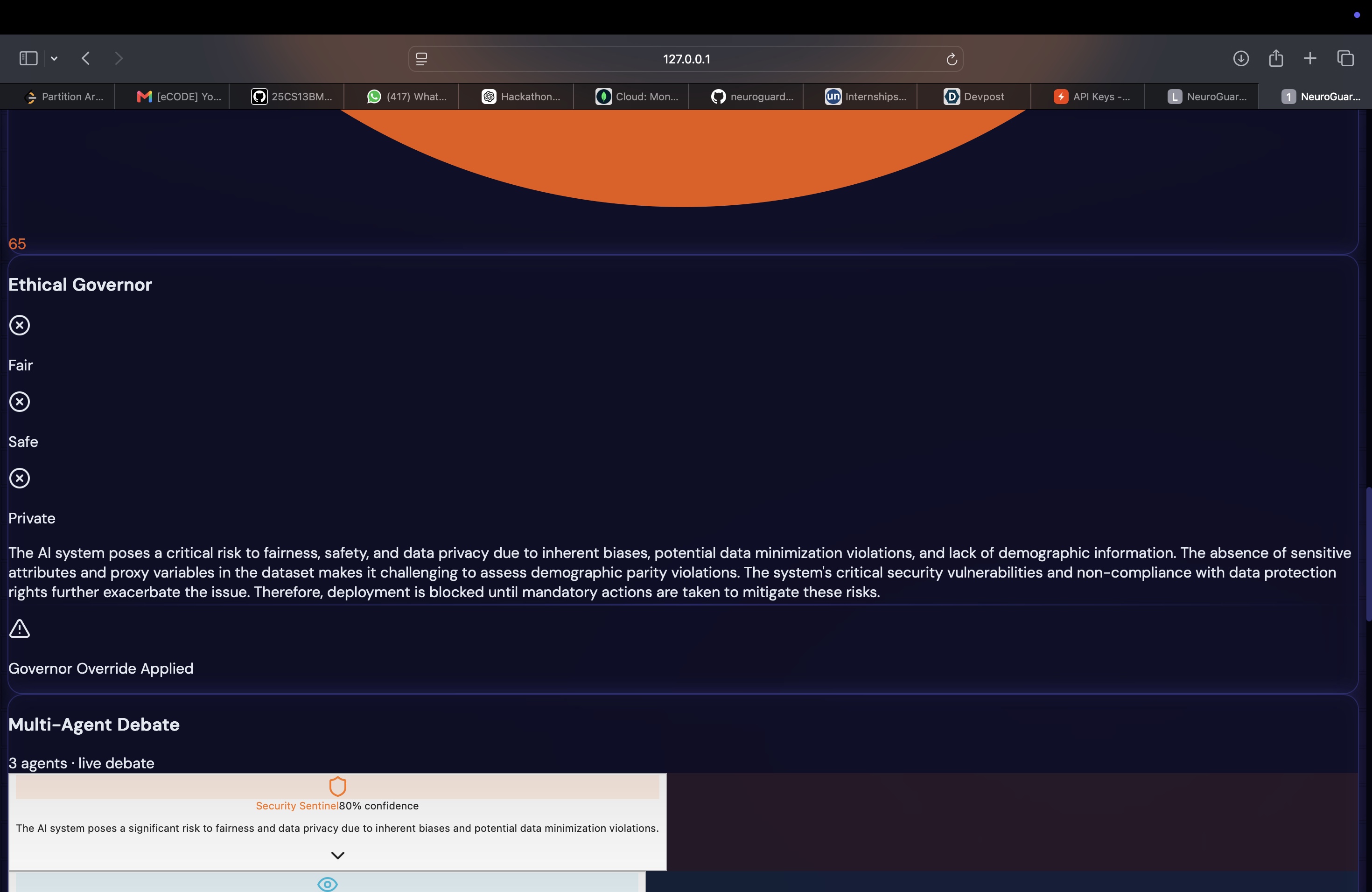
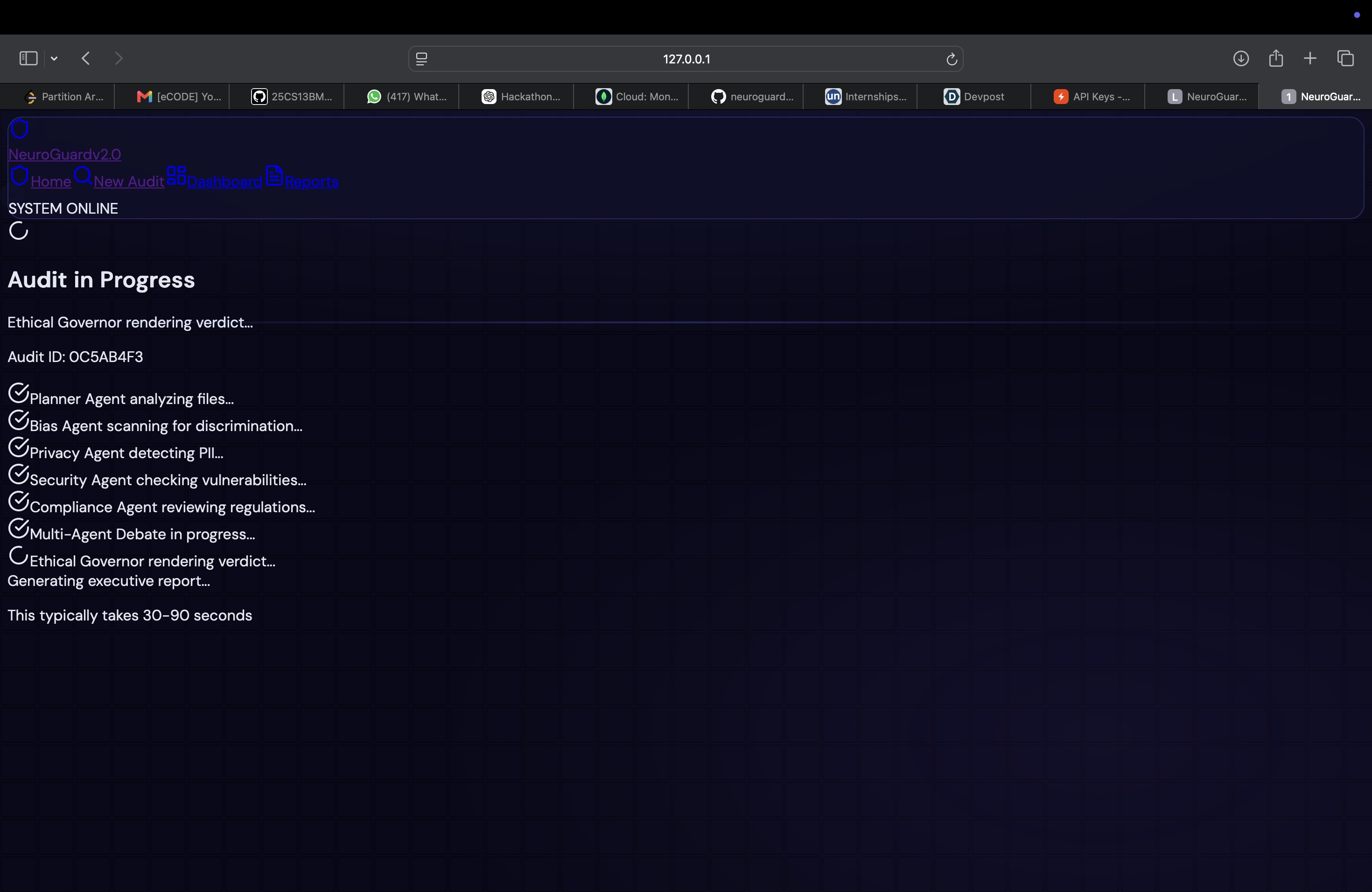
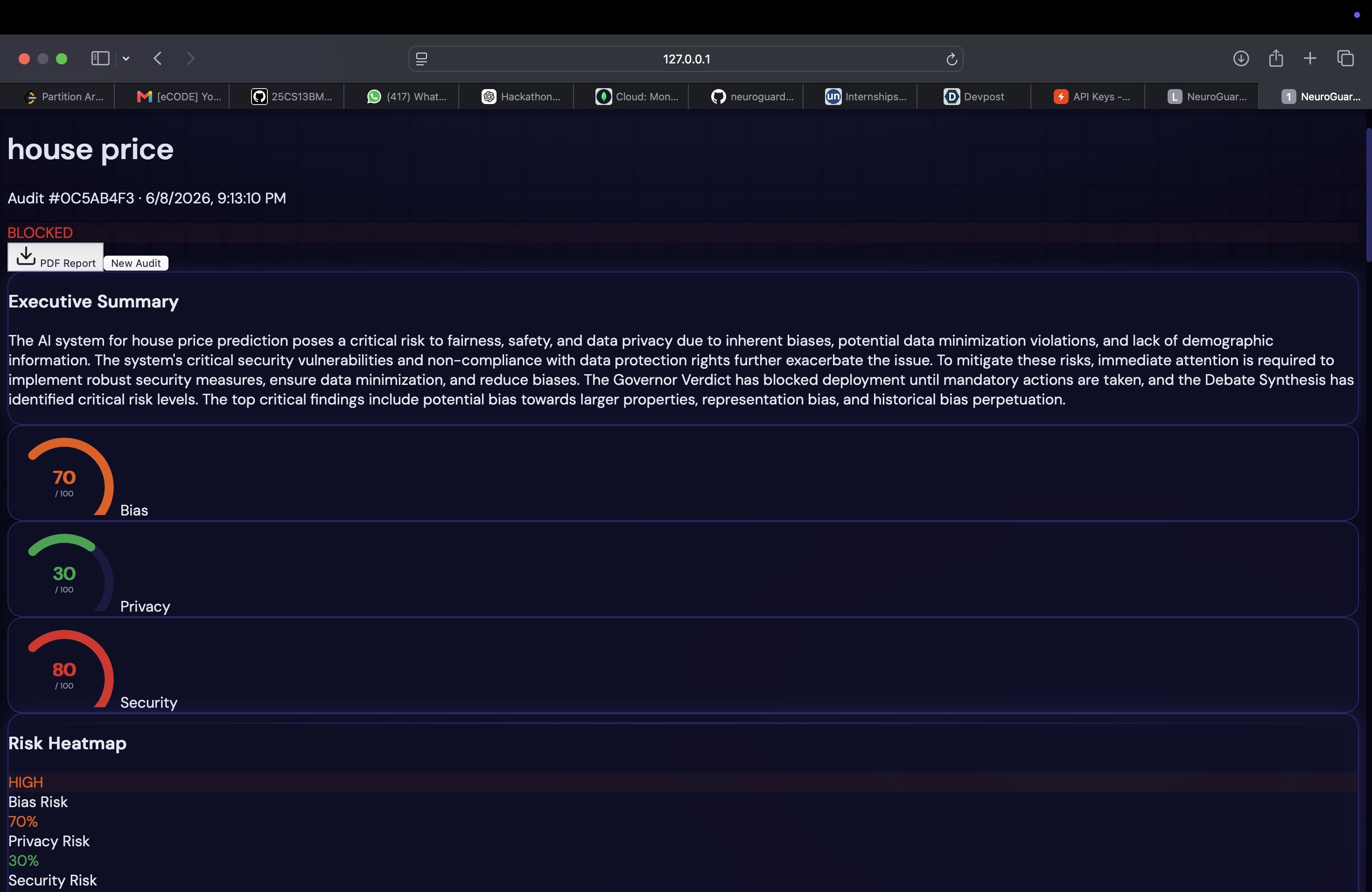
Inspiration
As AI systems become increasingly integrated into healthcare, finance, recruitment, education, and critical decision-making processes, ensuring that they are safe, fair, secure, and compliant has become a major challenge. Many organizations focus heavily on model performance while overlooking risks such as bias, privacy leaks, security vulnerabilities, hallucinations, and regulatory violations.
We were inspired by the growing need for trustworthy AI. Today, developers can build powerful AI applications in days, but auditing those systems often requires multiple experts, manual reviews, and significant time. We wanted to create an autonomous AI agent that could perform these audits intelligently, consistently, and at scale.
This led us to build NeuroGuard AI, an autonomous multi-agent system that analyzes datasets, source code, prompts, and policy documents to identify ethical, security, privacy, and compliance risks before deployment.
What it does
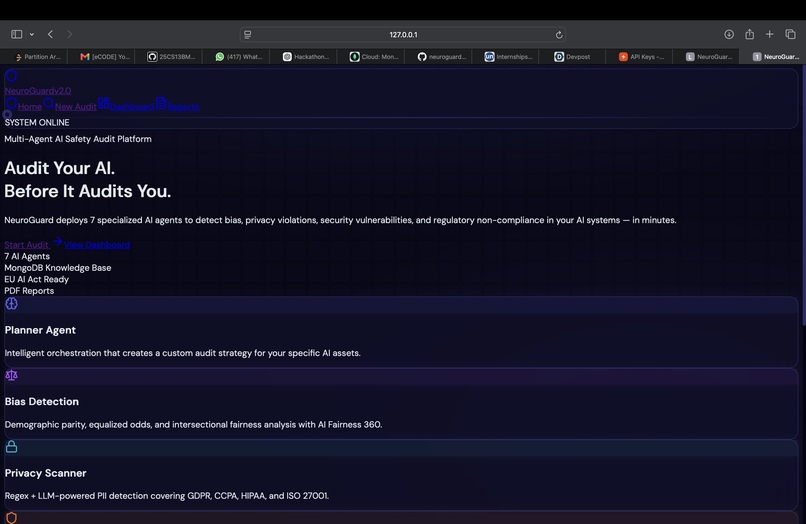
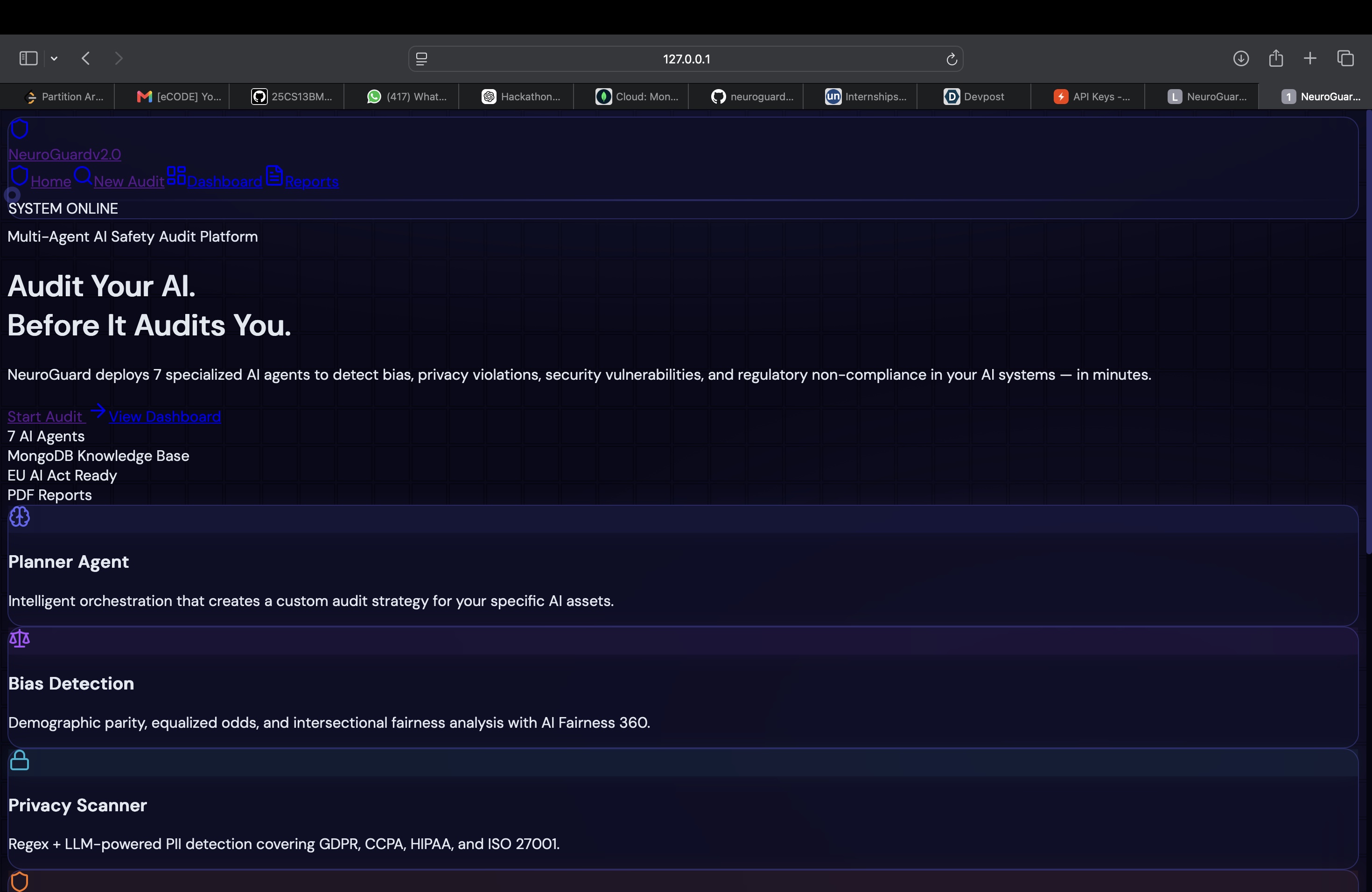
NeuroGuard AI acts as an intelligent AI governance and auditing platform.
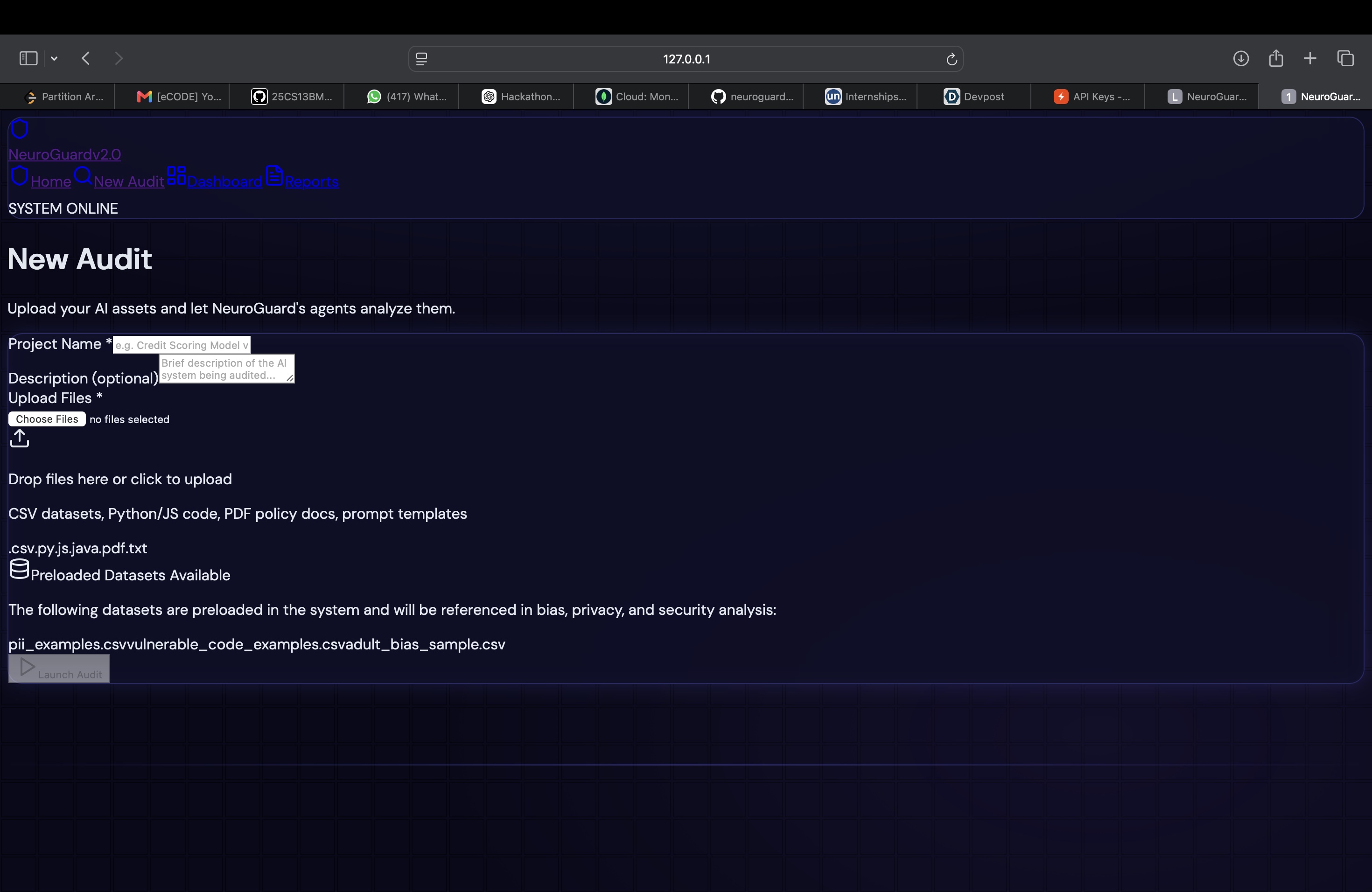
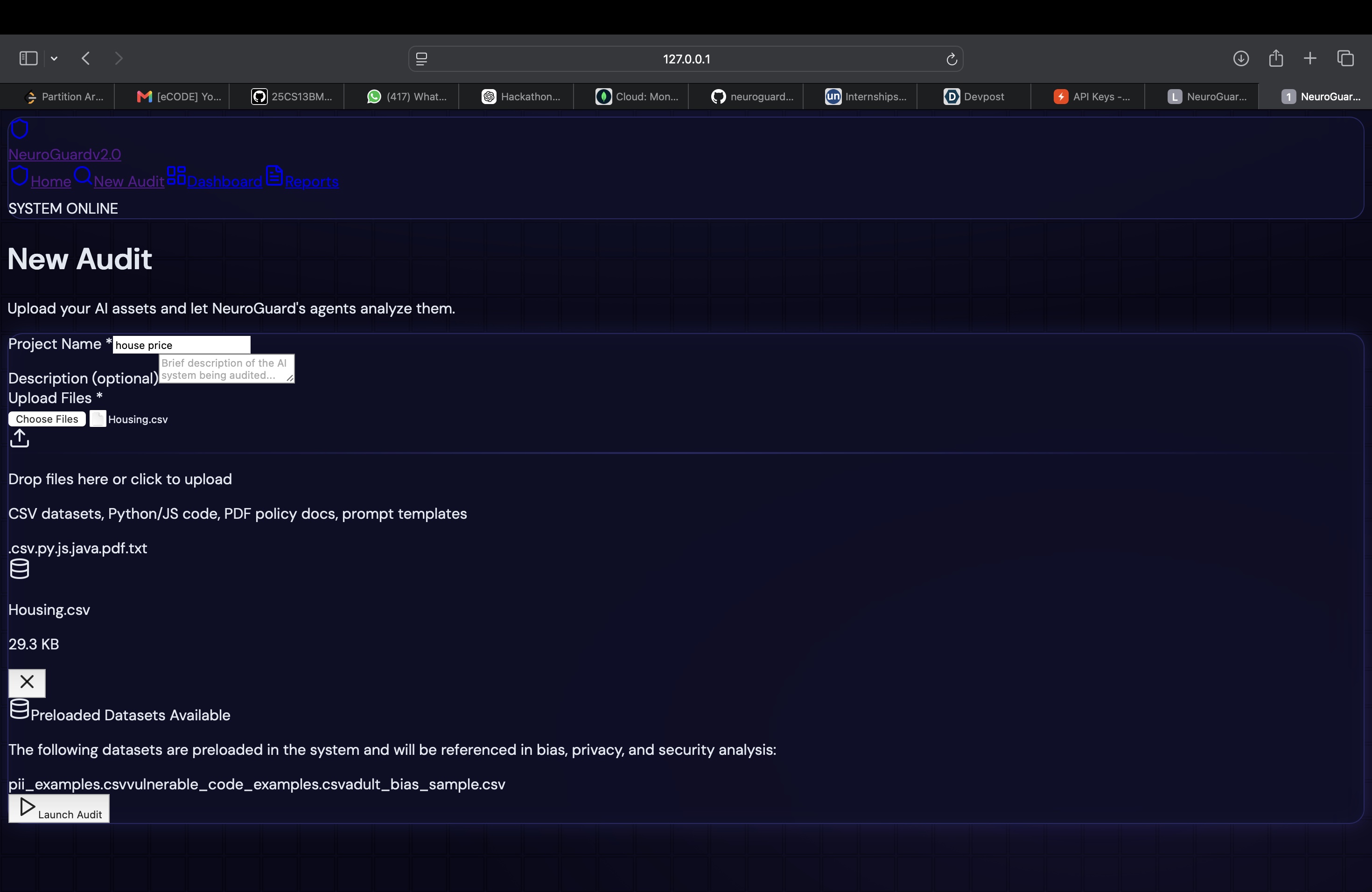
Users can upload:
- Datasets (CSV)
- Source code files (Python, JavaScript, etc.)
- AI prompts and instructions
- Organizational policy and compliance documents
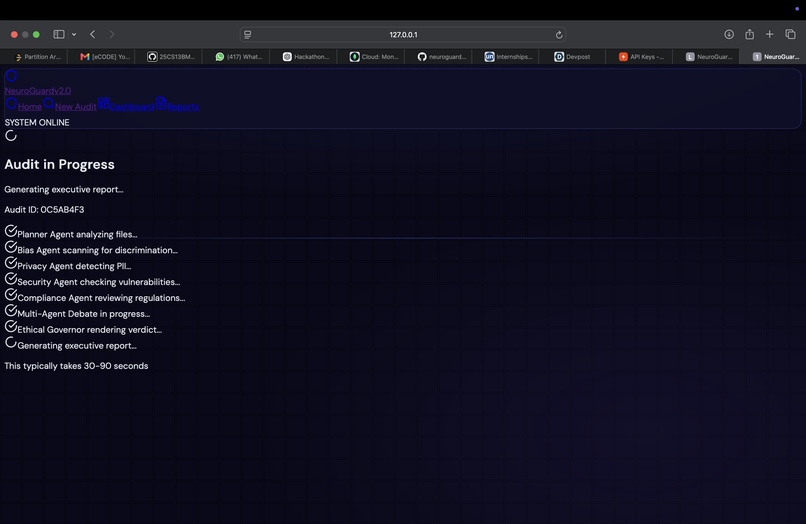
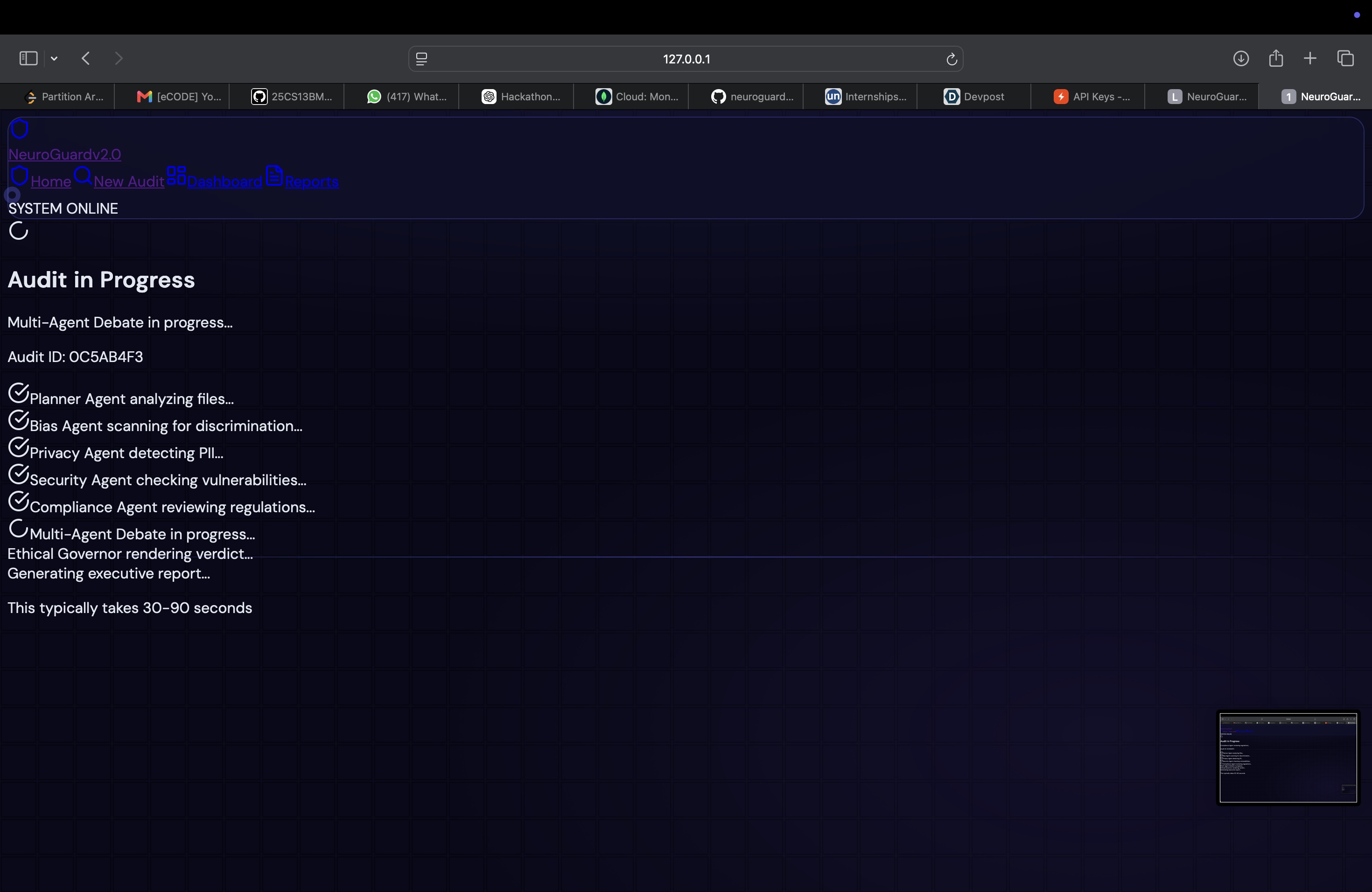
Once an audit is launched, NeuroGuard AI orchestrates multiple specialized agents that work together to perform a comprehensive assessment.
The platform includes:
- Planner Agent for audit orchestration
- Bias Detection Agent
- Privacy Risk Agent
- Security Analysis Agent
- Compliance Verification Agent
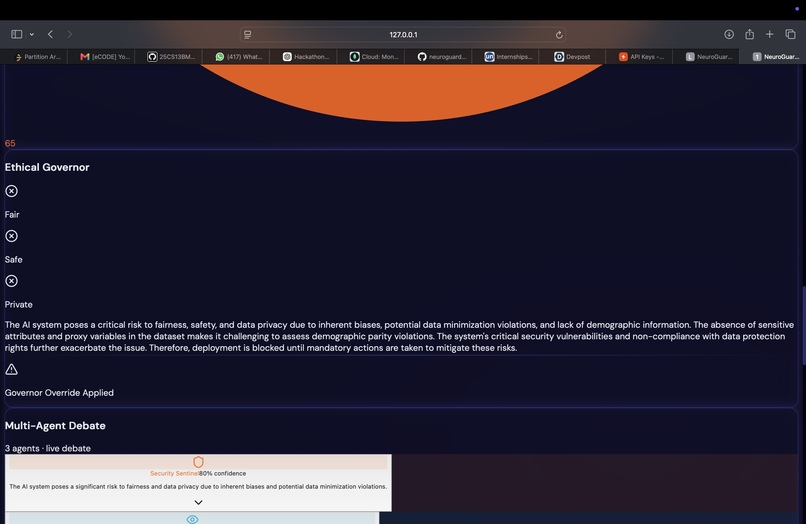
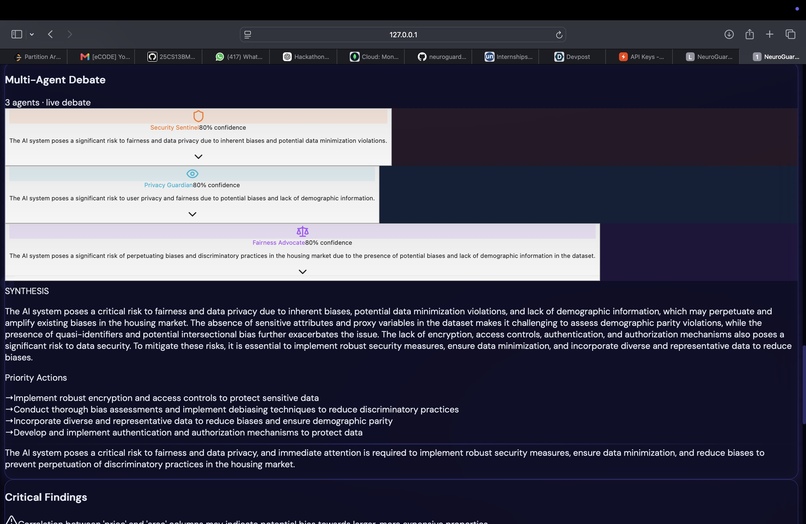
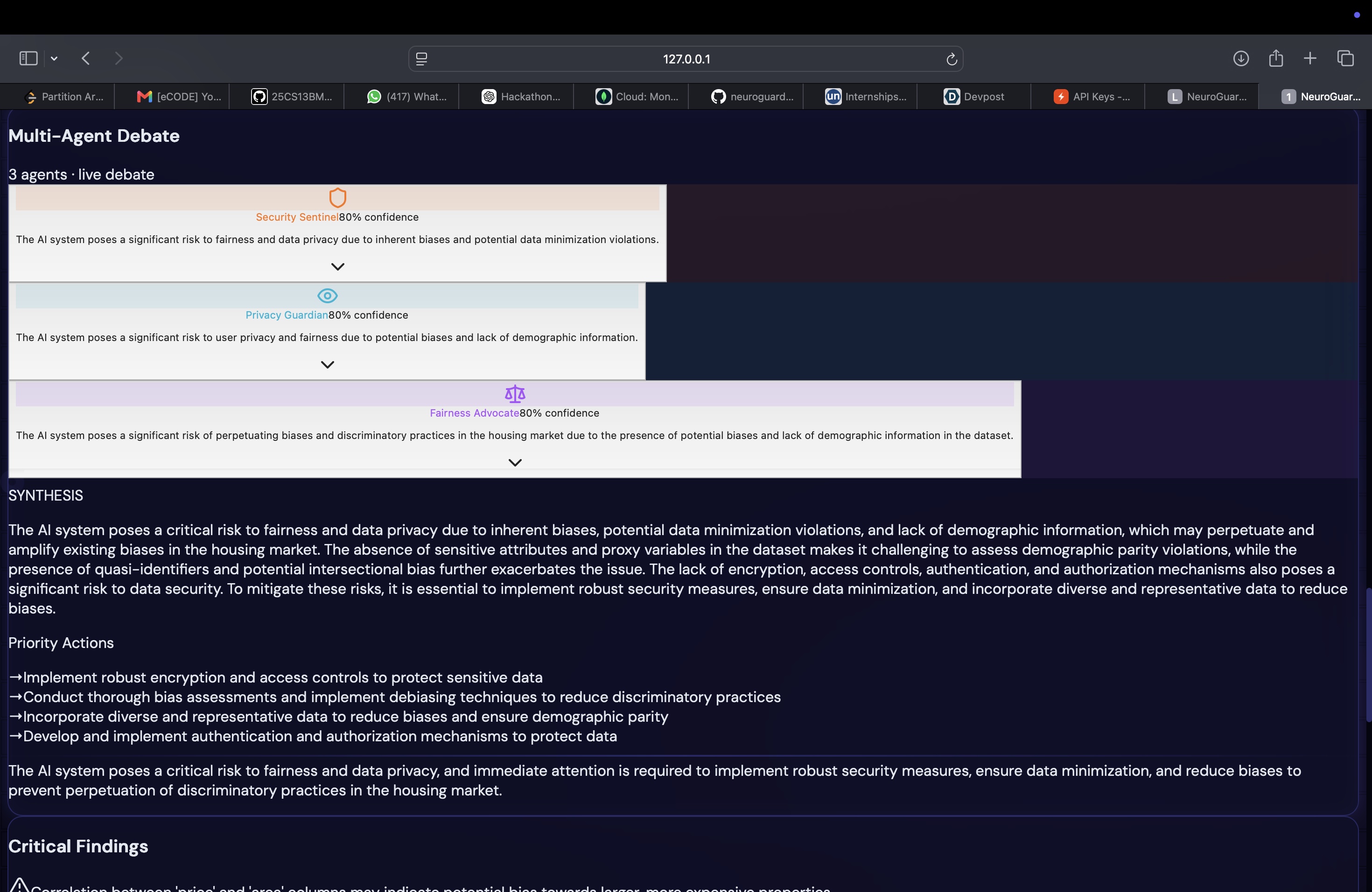
- Multi-Agent Debate Engine
- Ethical Governor Agent
- Executive Report Generator
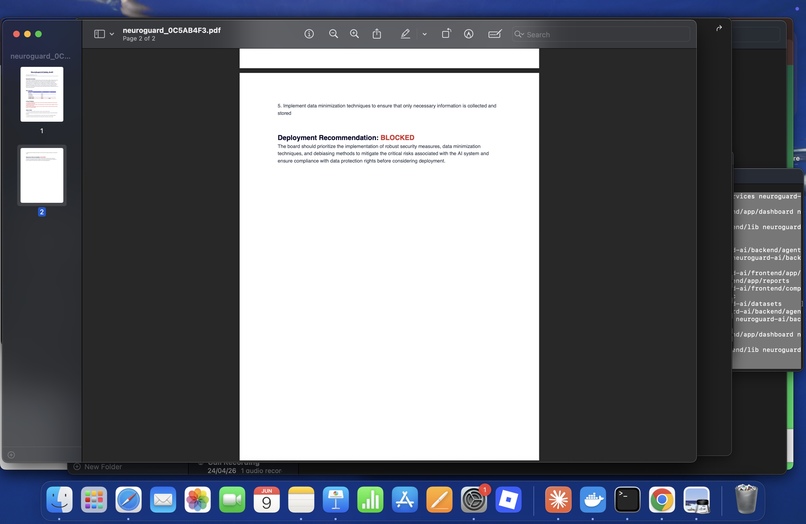
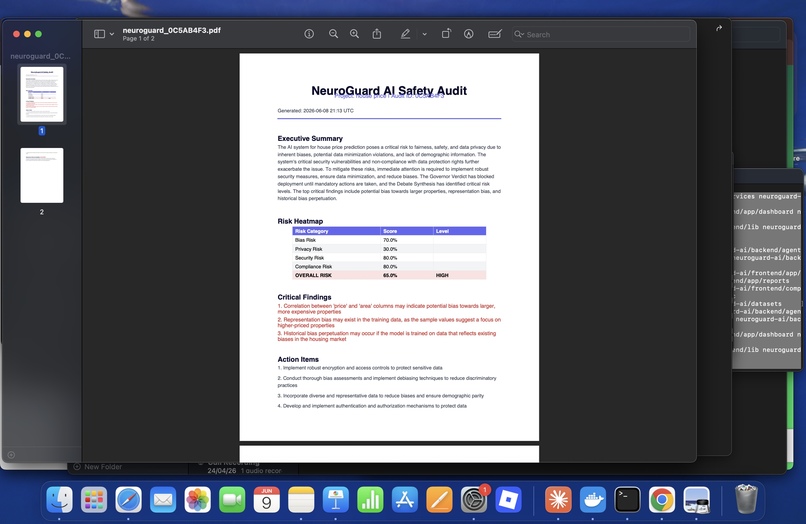
The system generates:
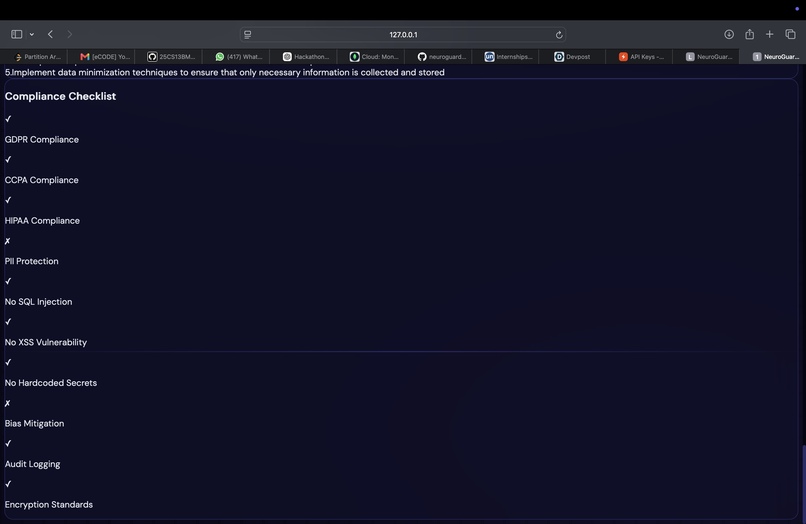
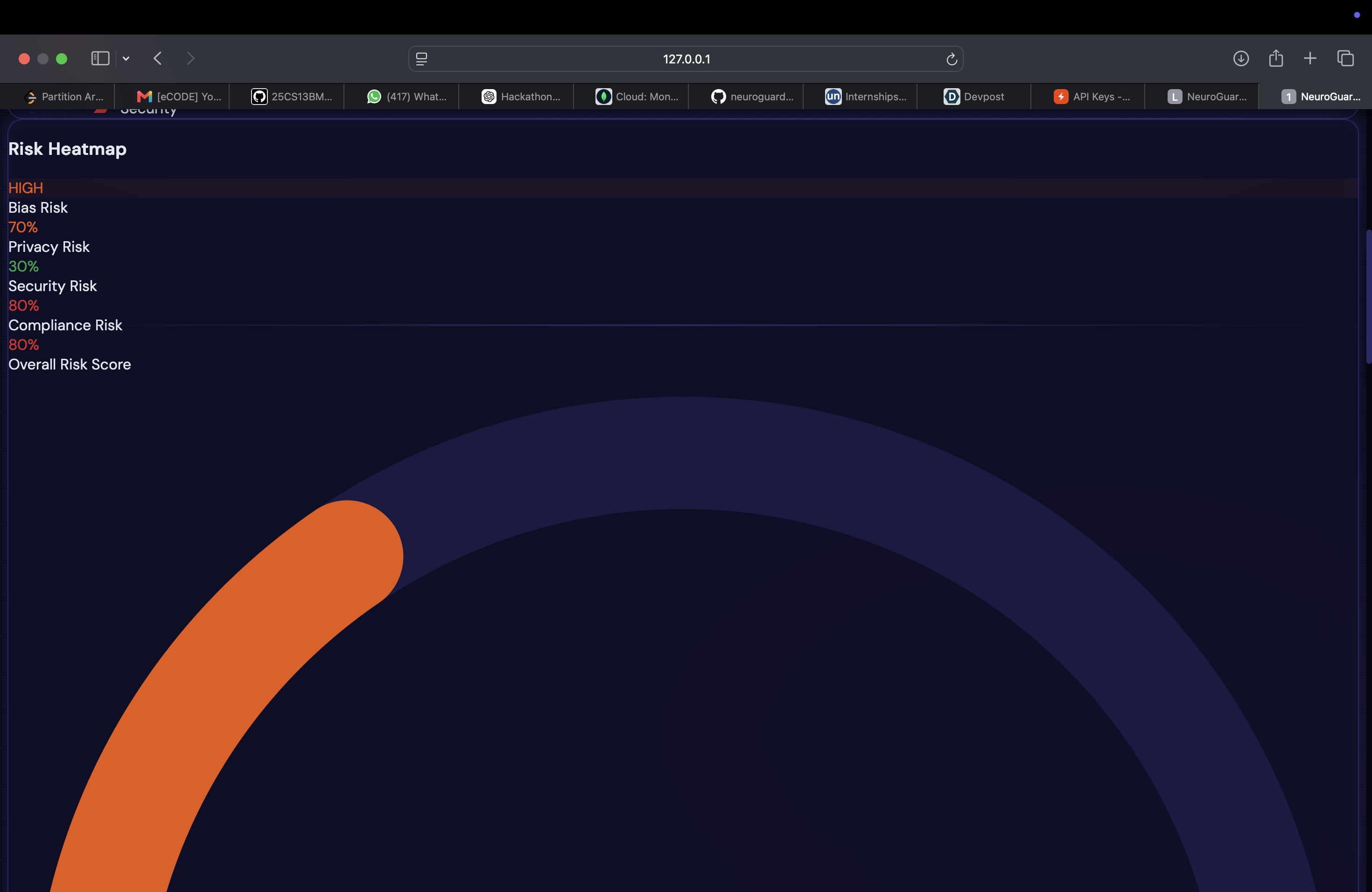
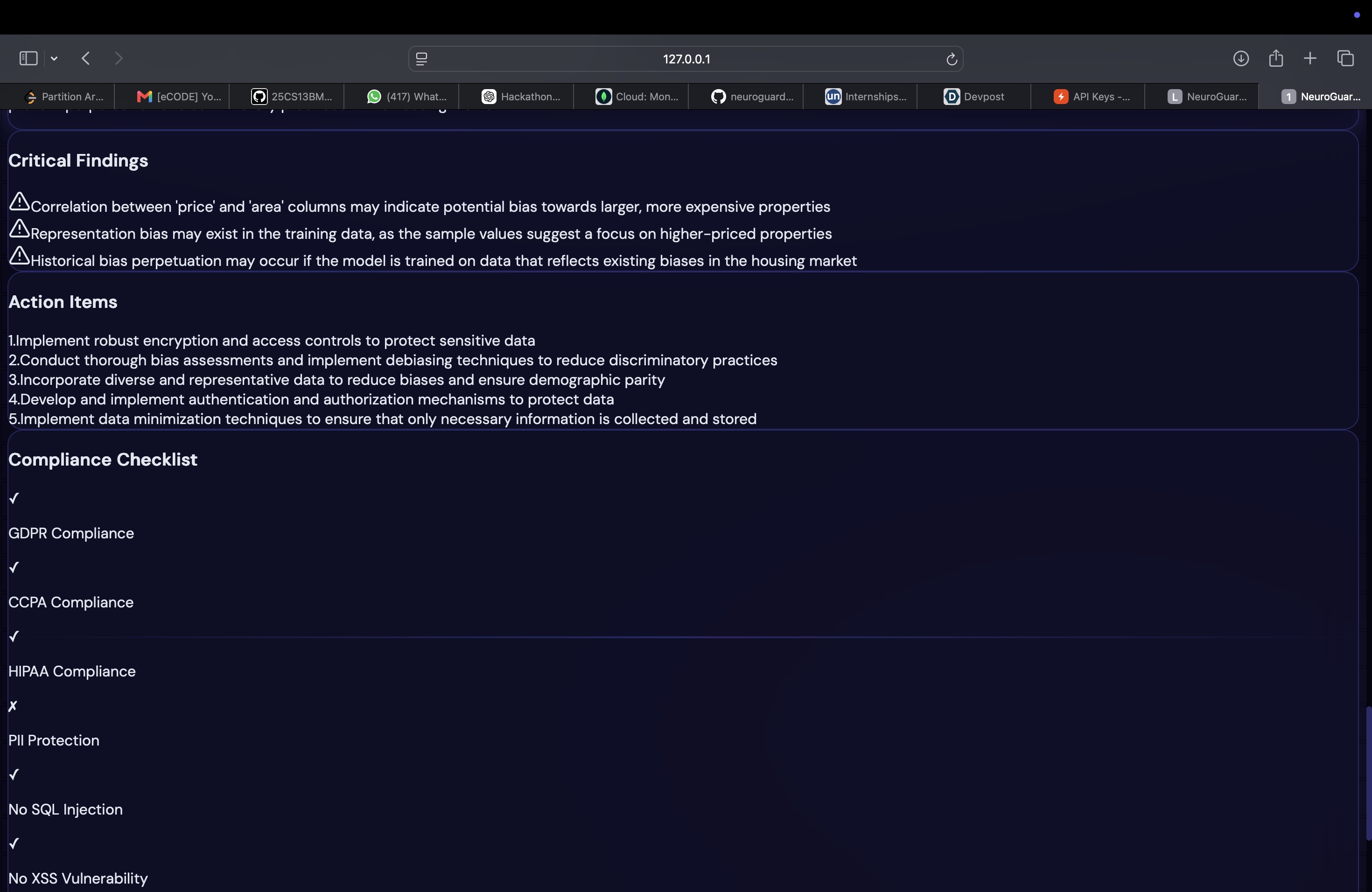
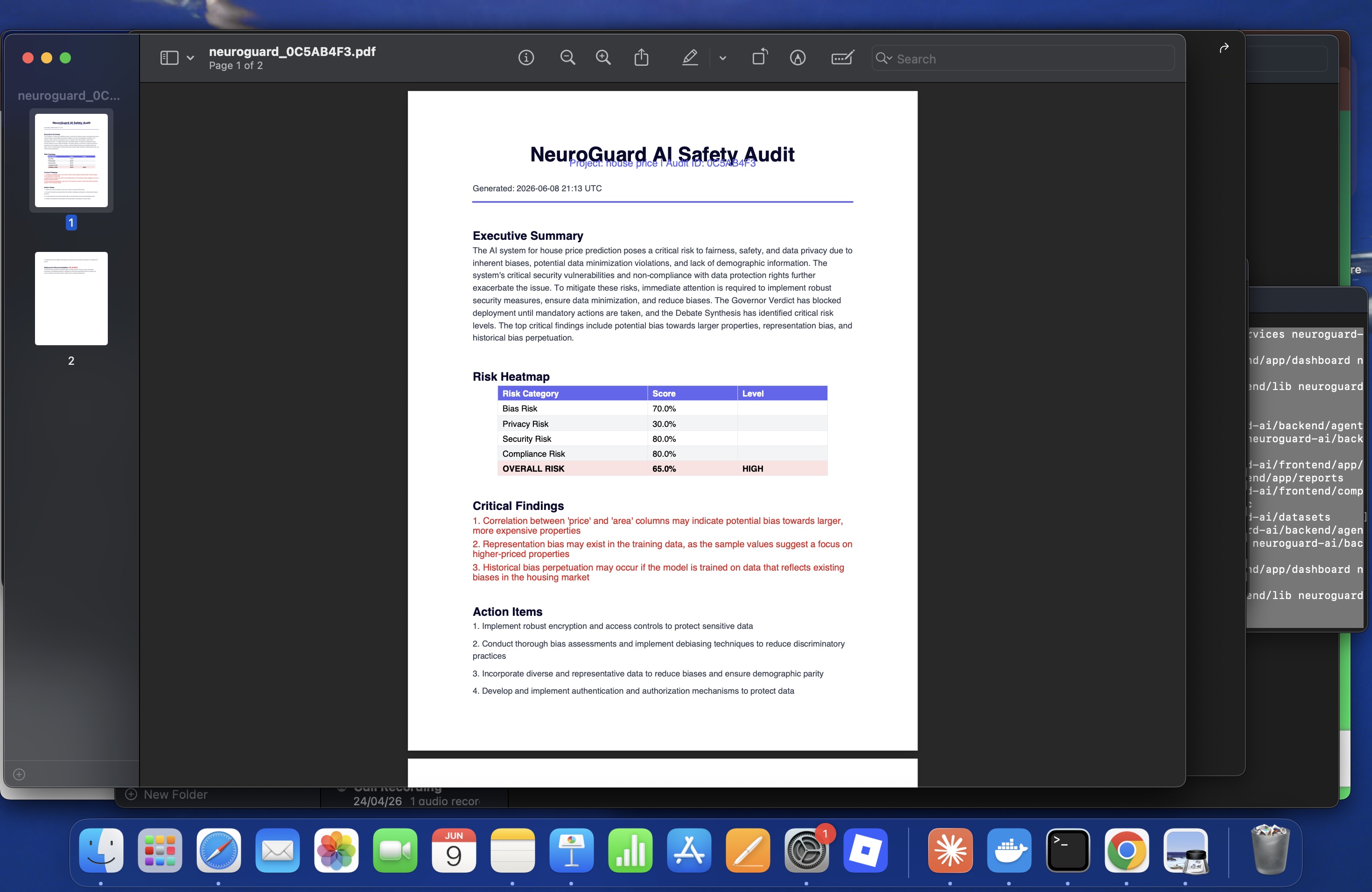
- Risk heatmaps
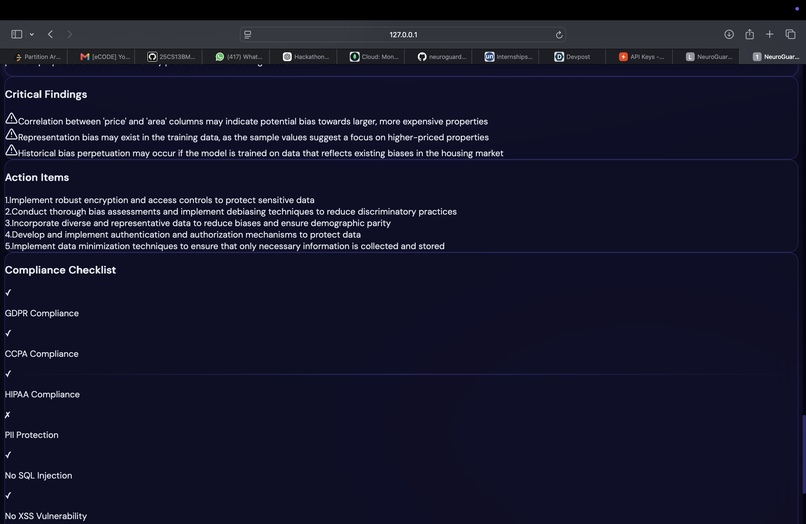
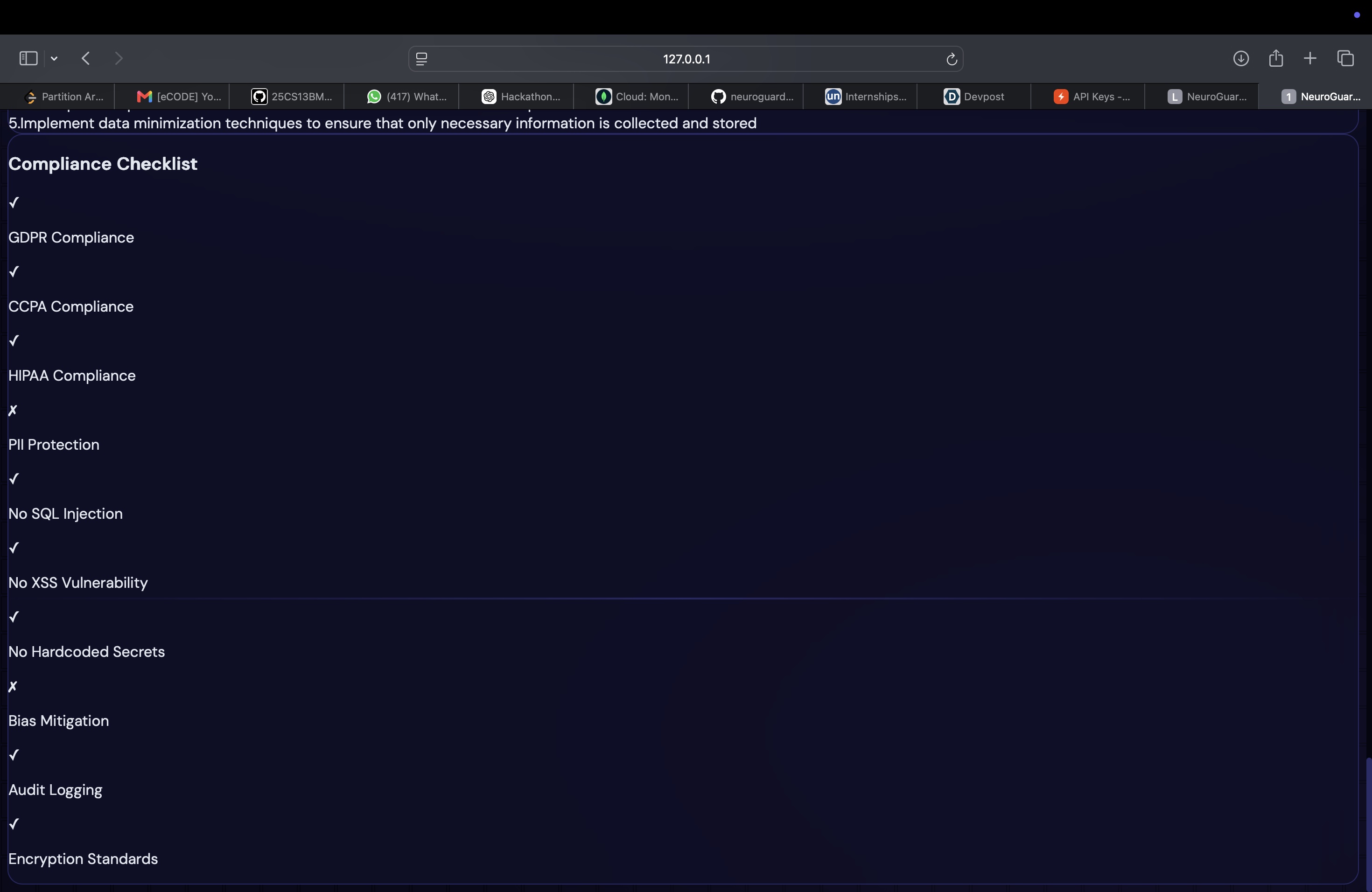
- Compliance checklists
- Multi-agent reasoning traces
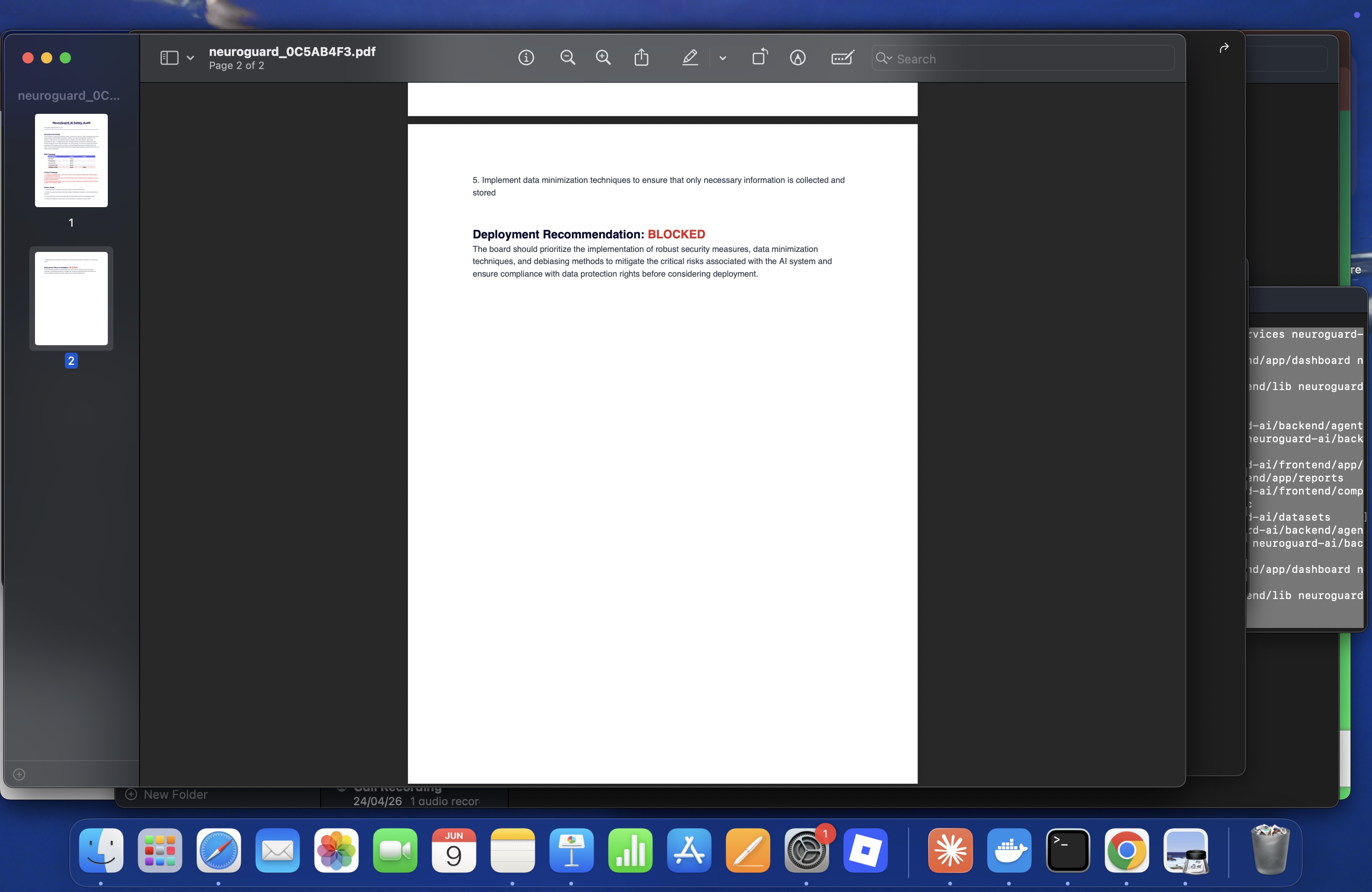
- Executive PDF reports
- Historical audit records stored in MongoDB
NeuroGuard AI does more than answer questions—it autonomously performs a complete AI governance workflow.
How we built it
The project was built as a modern multi-agent AI platform.
AI Layer
- Gemini-powered agent workflows
- Llama 3.3 70B Versatile for advanced reasoning and risk analysis
- Multi-agent orchestration architecture
Backend
- FastAPI
- Python
- Asynchronous audit pipelines
- PDF report generation
Database & Knowledge Layer
- MongoDB
- Historical audit storage
- Audit retrieval and comparison
- Risk trend tracking
Frontend
- Next.js
- React
- Tailwind CSS
- Interactive dashboards and visualizations
Infrastructure
- Docker
- Docker Compose
- Containerized deployment
- Scalable architecture
The system processes uploaded artifacts, routes them through specialized agents, aggregates findings, calculates risk scores, and produces actionable recommendations.
Challenges we ran into
One of the biggest challenges was designing a system that behaves like a true agent rather than a traditional chatbot.
We needed the platform to:
- Plan its own audit workflow
- Coordinate multiple specialized agents
- Aggregate conflicting findings
- Generate explainable recommendations
Another challenge was creating meaningful risk scoring. Ethical, privacy, security, and compliance concerns are often interconnected, making it difficult to produce a balanced final assessment.
Containerizing a multi-service architecture and ensuring smooth communication between the frontend, backend, and database was also a significant engineering challenge.
We also focused heavily on explainability. Rather than producing a single score, we wanted users to understand exactly why a system was flagged and how risks could be mitigated.
Accomplishments that we're proud of
We are proud that NeuroGuard AI goes far beyond a simple AI assistant.
Key accomplishments include:
- Building a true multi-agent auditing system
- Automated analysis of datasets, code, prompts, and policies
- Multi-agent debate and reasoning workflows
- Ethical Governor framework for final decision making
- Executive PDF report generation
- MongoDB-powered audit history and knowledge base
- Interactive risk visualization dashboard
- Fully containerized deployment using Docker
Most importantly, we created a platform that helps organizations build more trustworthy and responsible AI systems.
What we learned
This project taught us valuable lessons about agentic AI systems.
We learned how to:
- Design autonomous workflows instead of simple chat interactions
- Coordinate multiple AI agents with specialized responsibilities
- Balance ethical, security, privacy, and compliance objectives
- Build explainable AI governance mechanisms
- Create scalable containerized architectures
- Integrate modern AI reasoning with real-world operational workflows
We also learned that trust, transparency, and accountability are becoming just as important as model accuracy in modern AI systems.
What's next for NeuroGuard AI
Our vision is to evolve NeuroGuard AI into a comprehensive AI governance platform.
Future plans include:
- Continuous monitoring of deployed AI systems
- Real-time risk alerts and notifications
- Support for additional compliance frameworks
- Integration with CI/CD pipelines
- Automated policy generation
- Enterprise team collaboration features
- Advanced AI red teaming capabilities
- Retrieval-augmented governance using historical audits
- Industry-specific governance profiles for healthcare, finance, and education
Ultimately, we envision NeuroGuard AI becoming an autonomous safety layer that helps organizations deploy AI responsibly, securely, and ethically at scale.

Log in or sign up for Devpost to join the conversation.