-
-
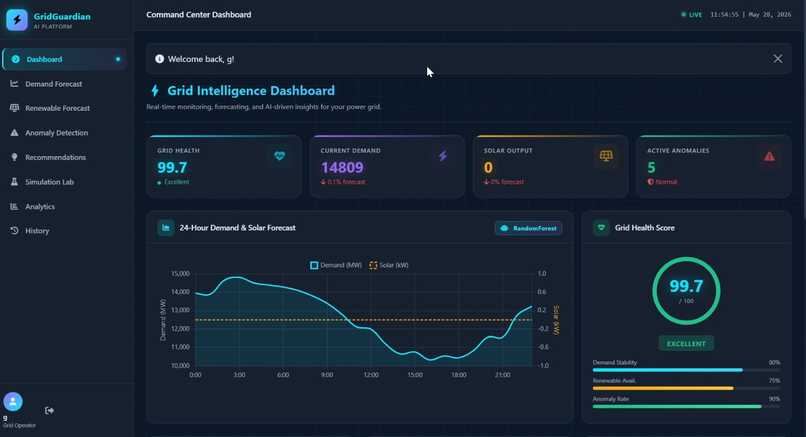
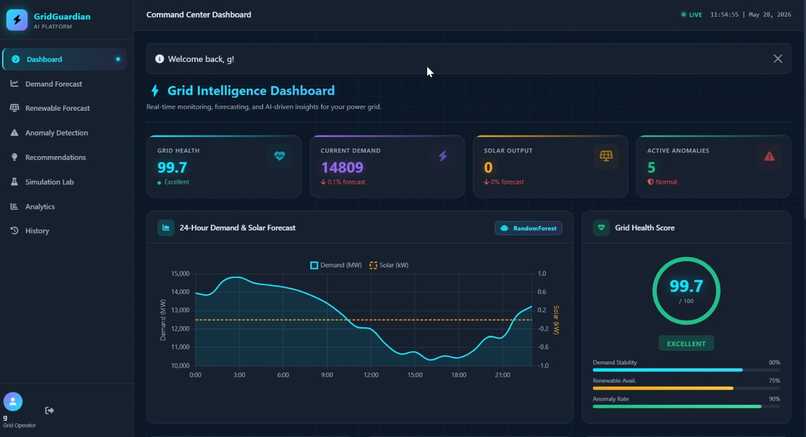
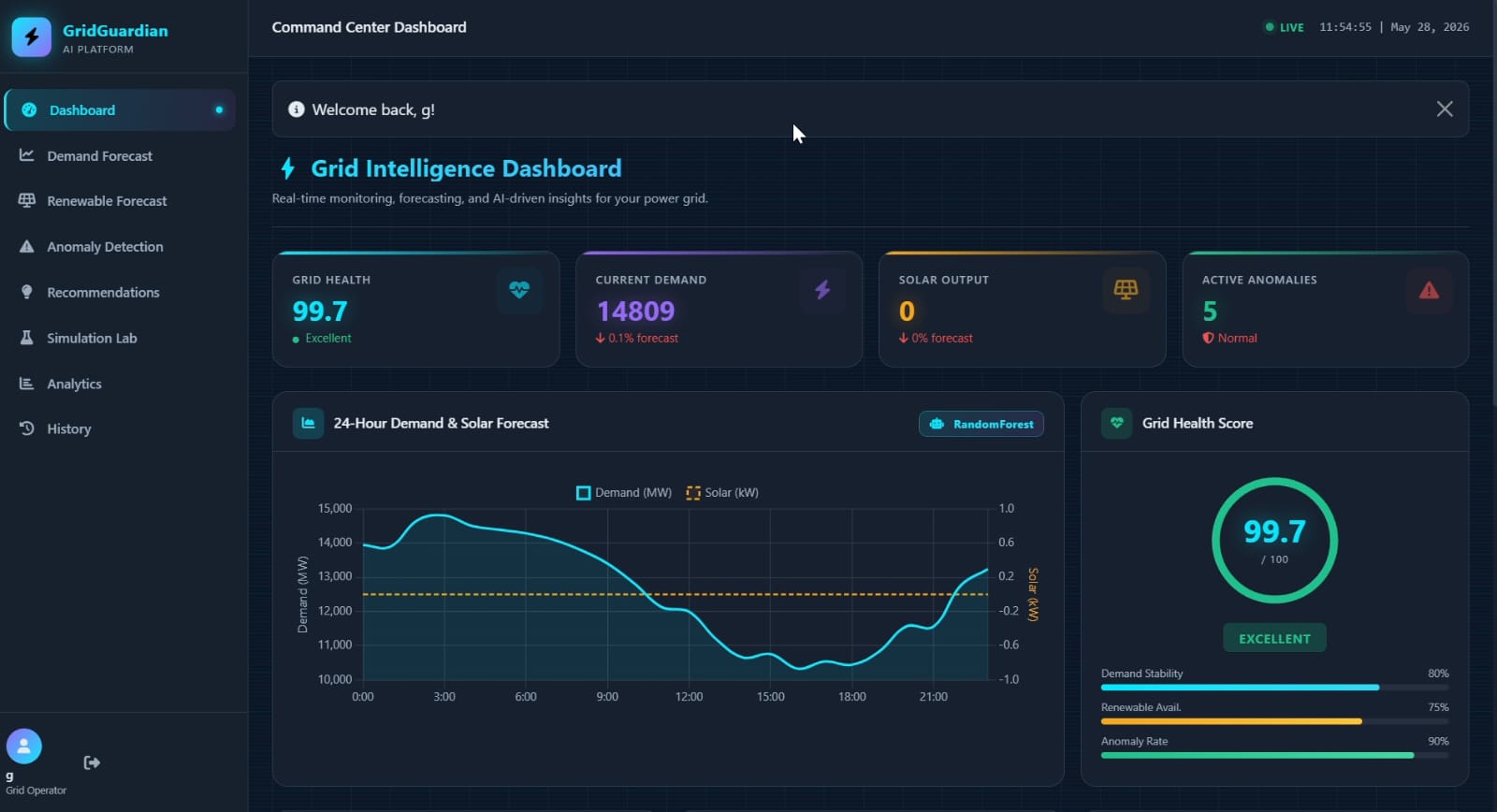
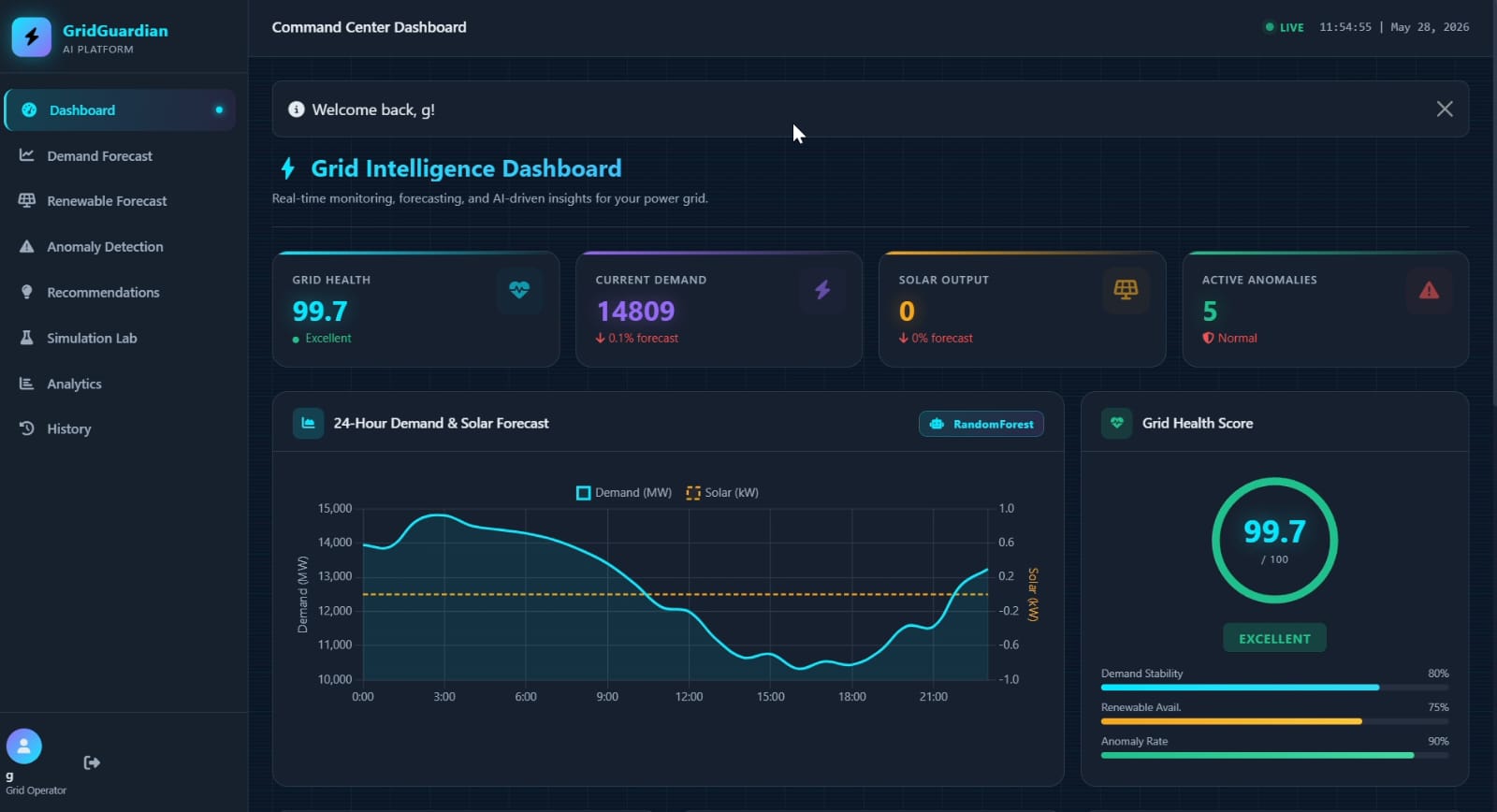
DashBoard
-
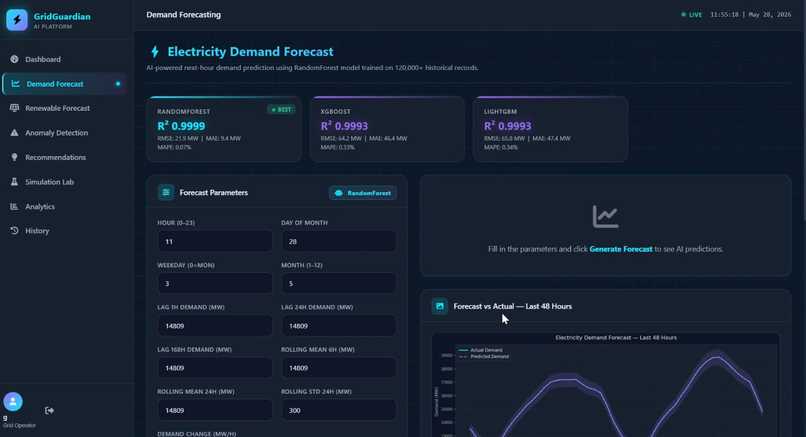
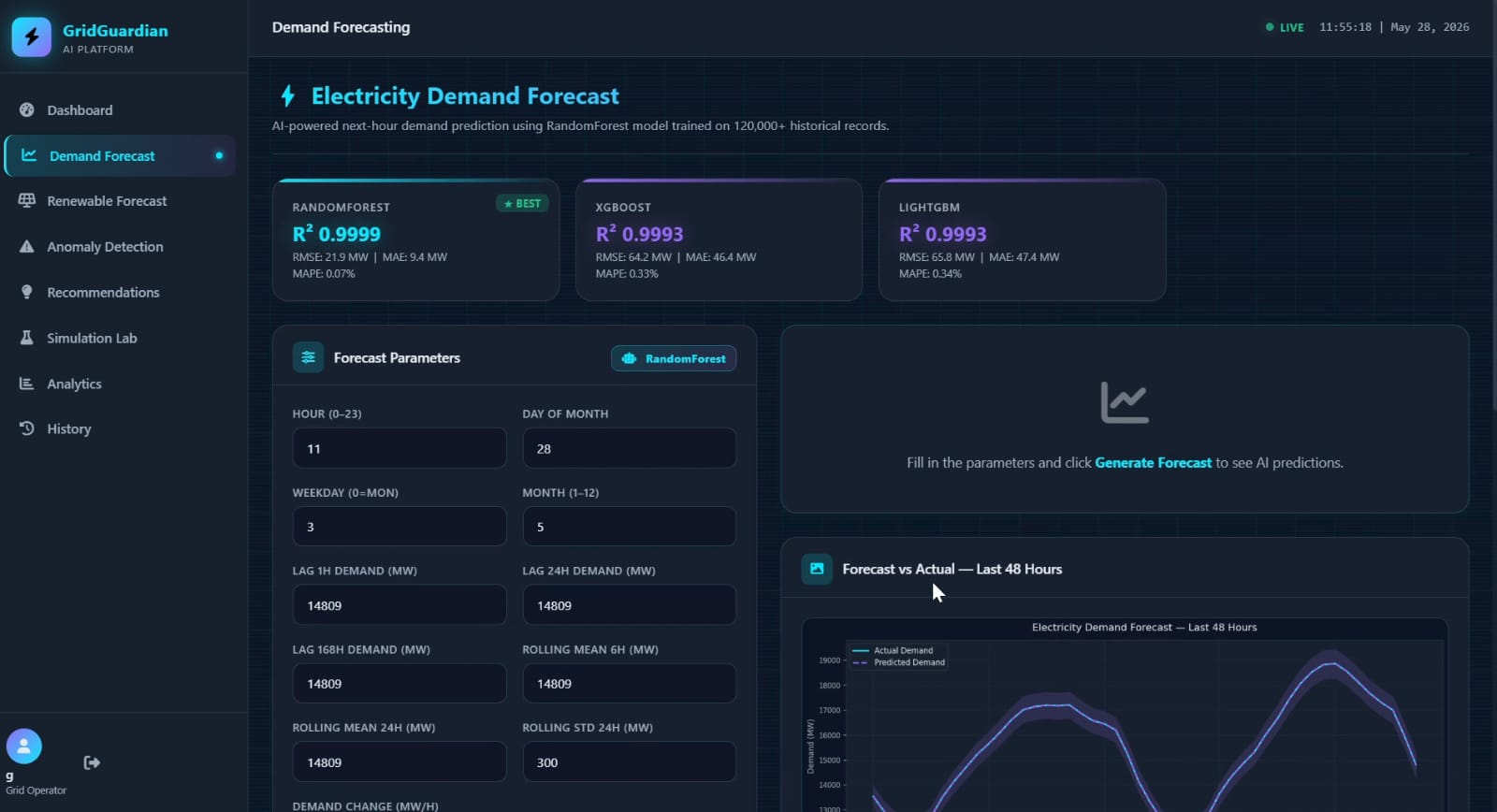
Demand Forcast
-
Renewable Forecast
-
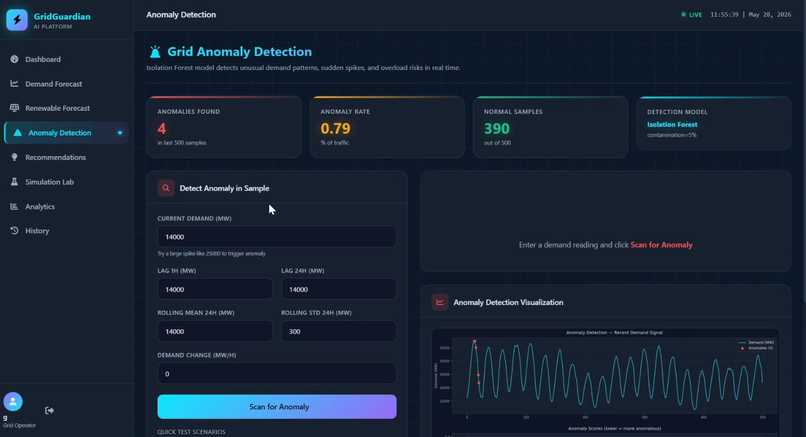
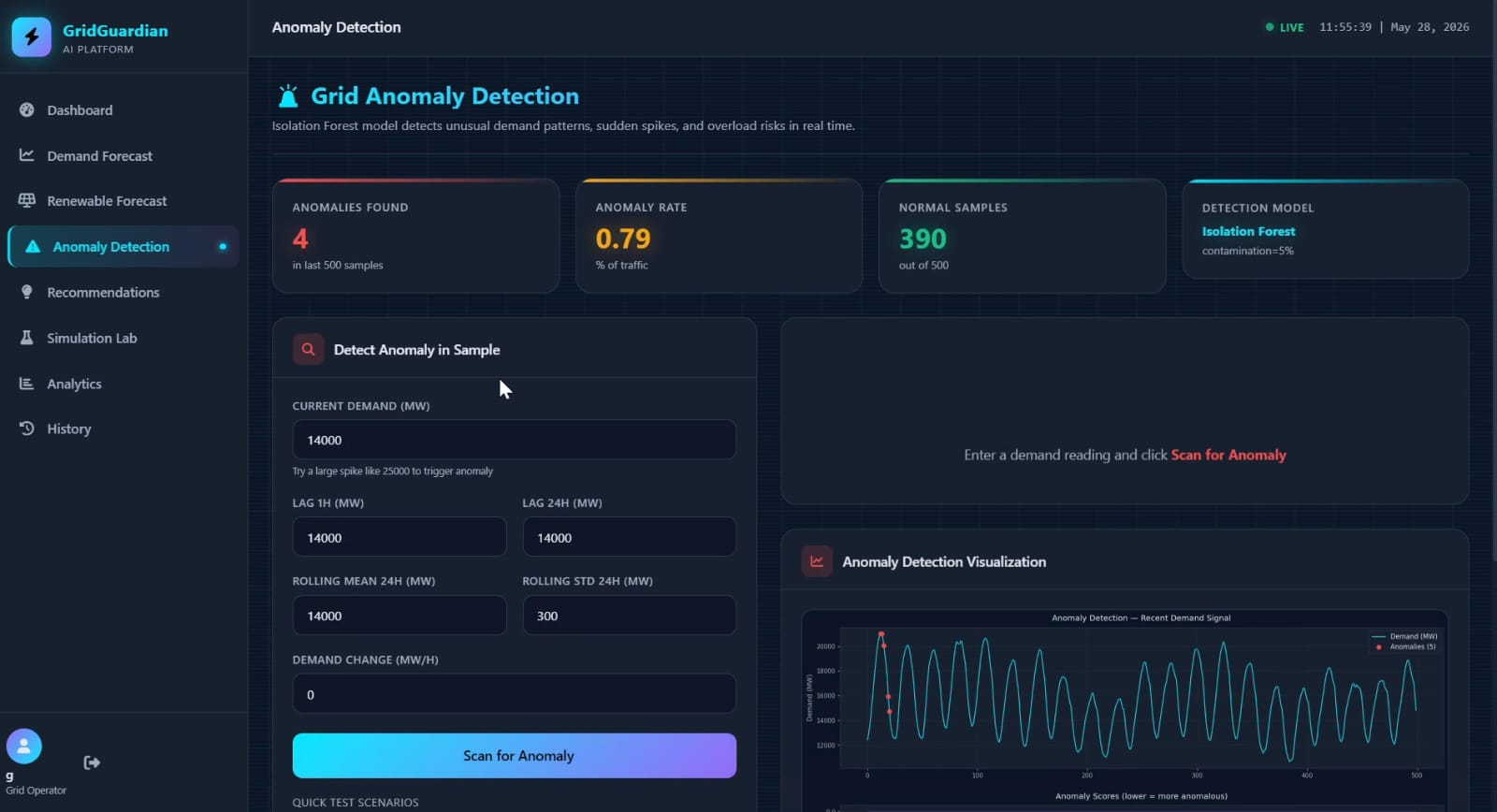
Anomaly Forecast
-
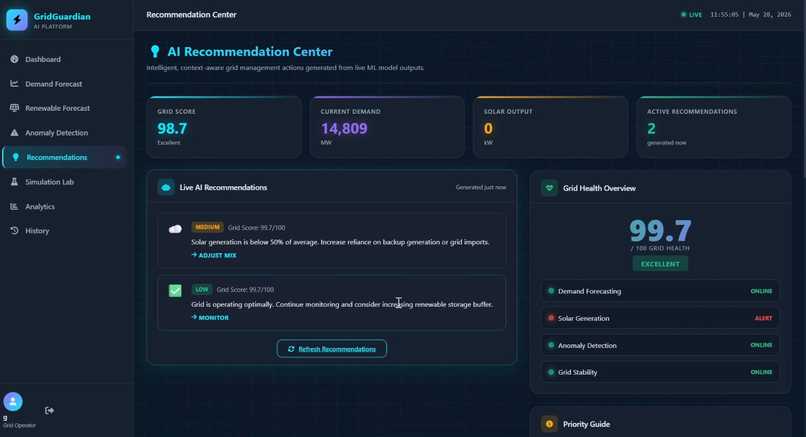
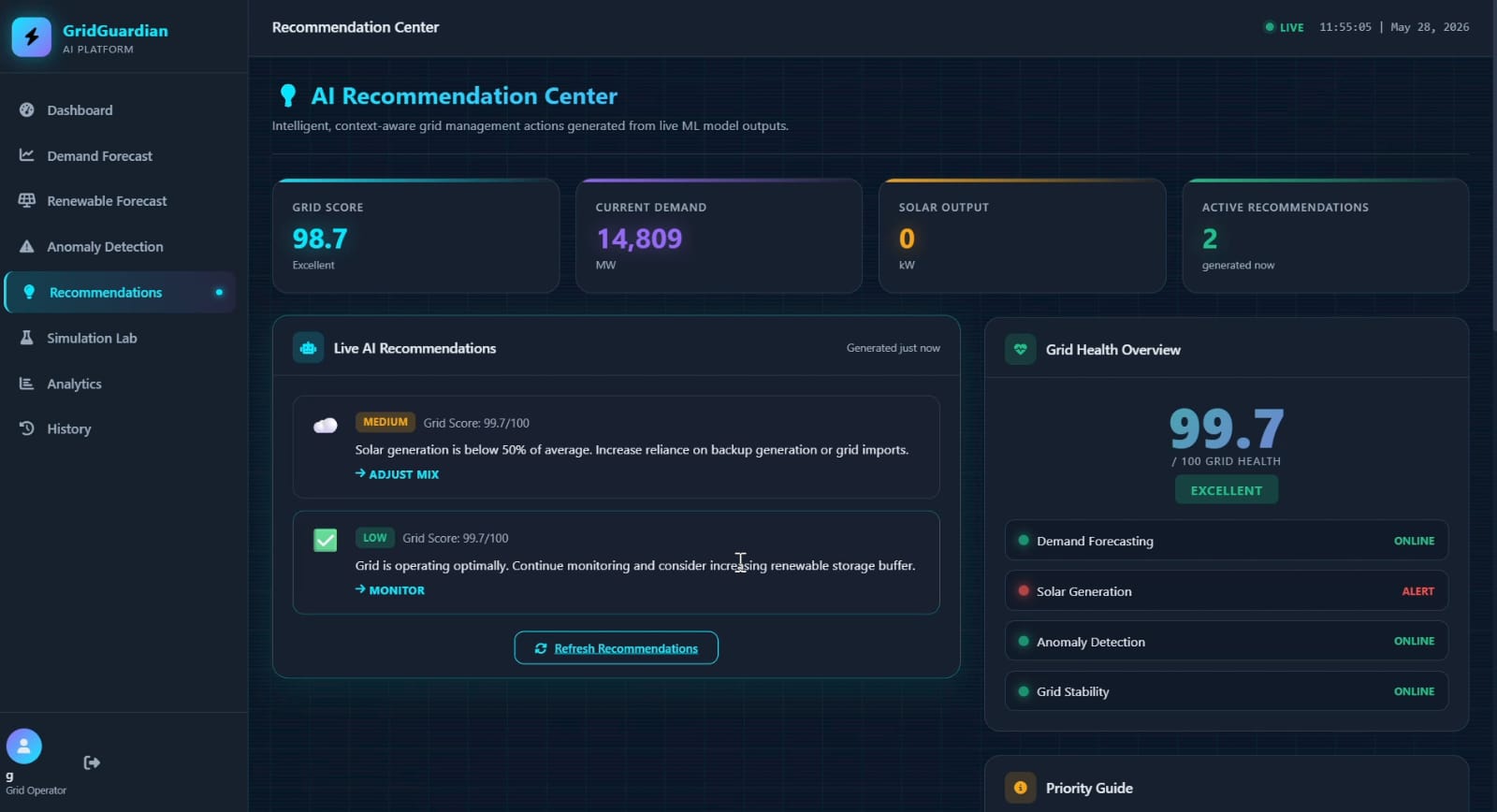
AI-Recommendation
-
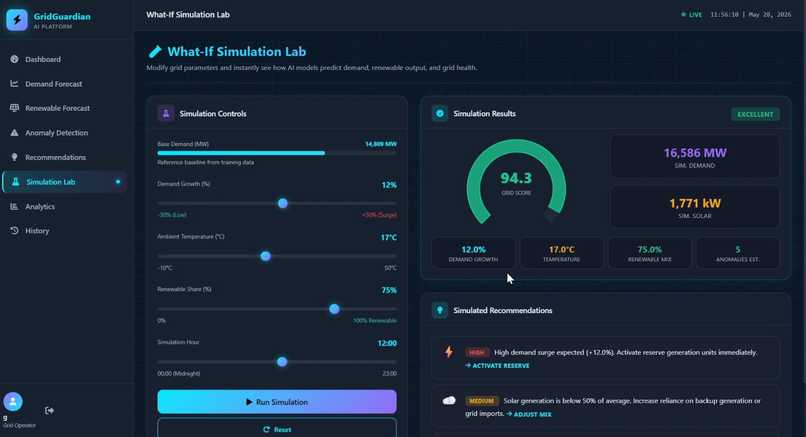
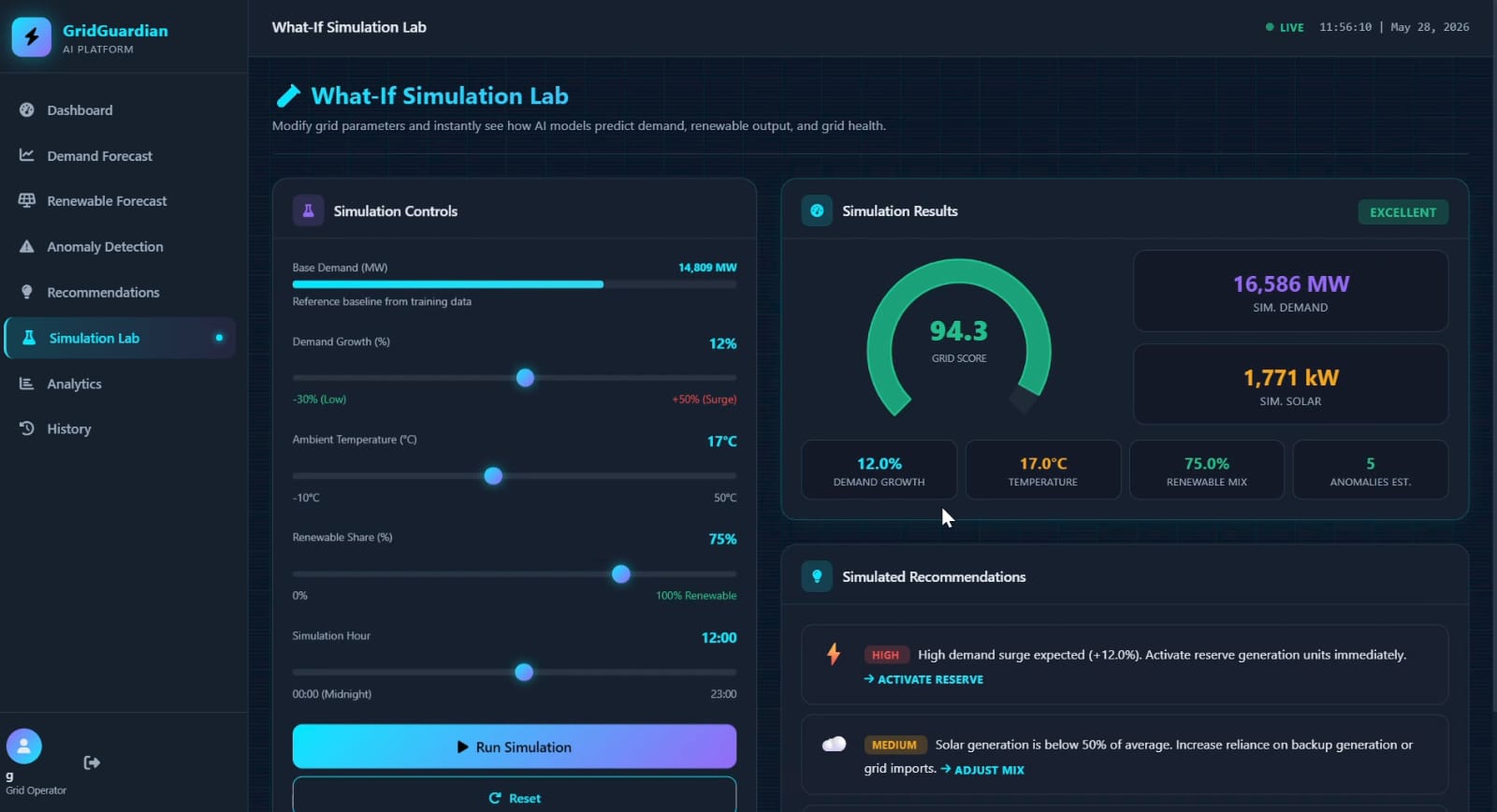
Simulation Lab
-
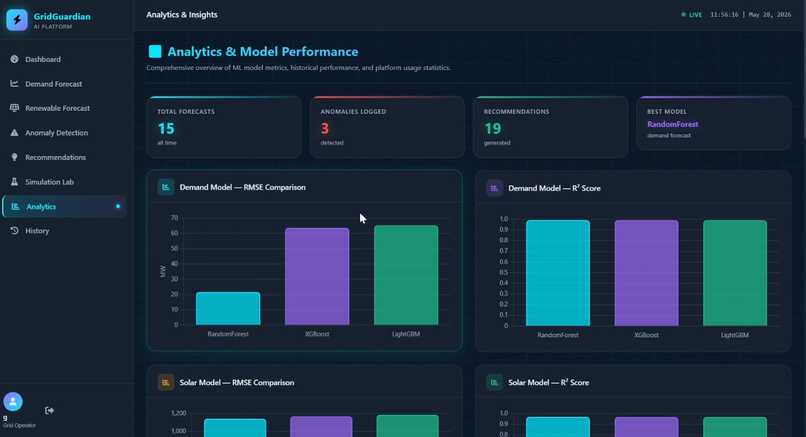
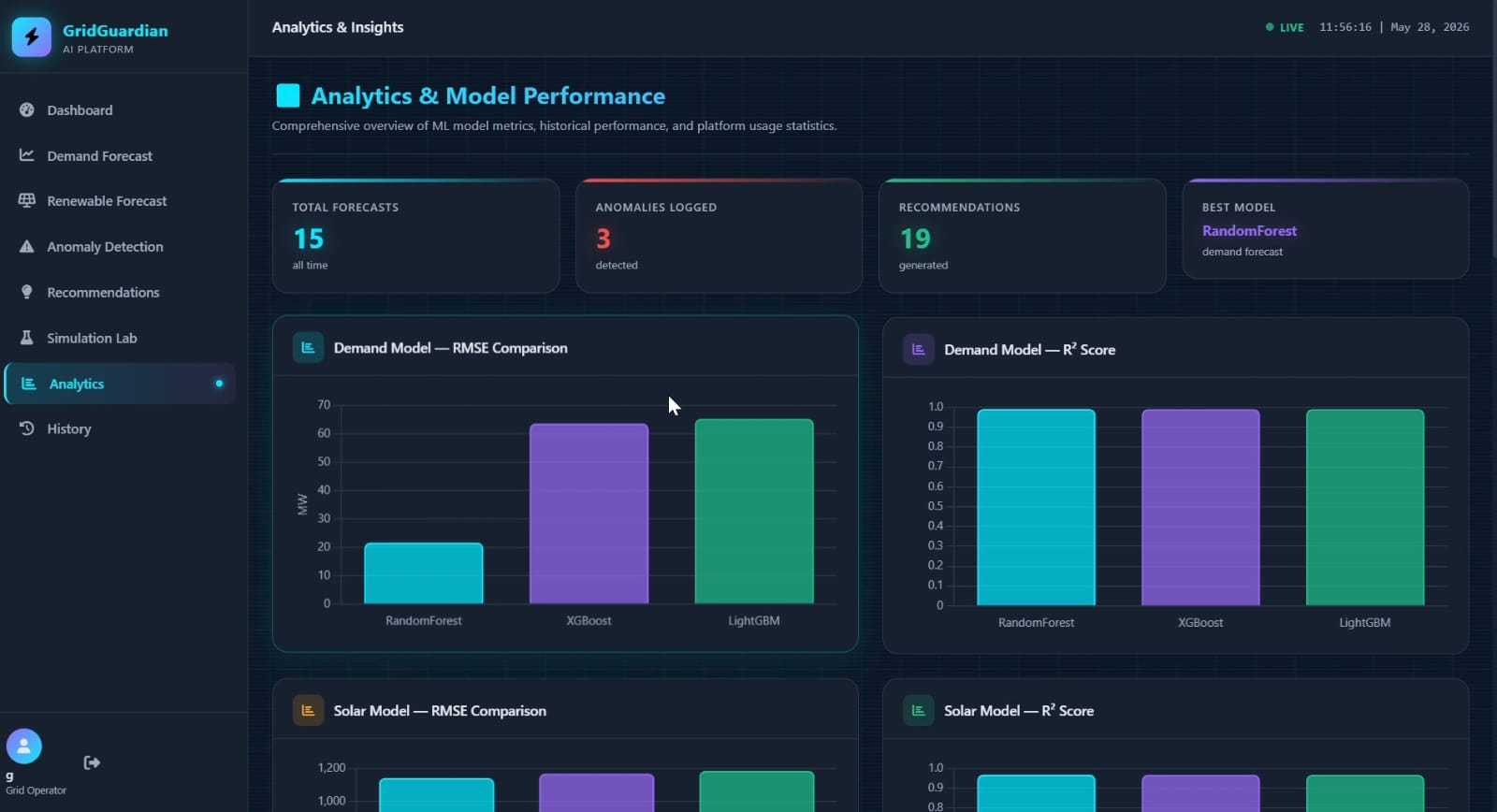
Analytics
-
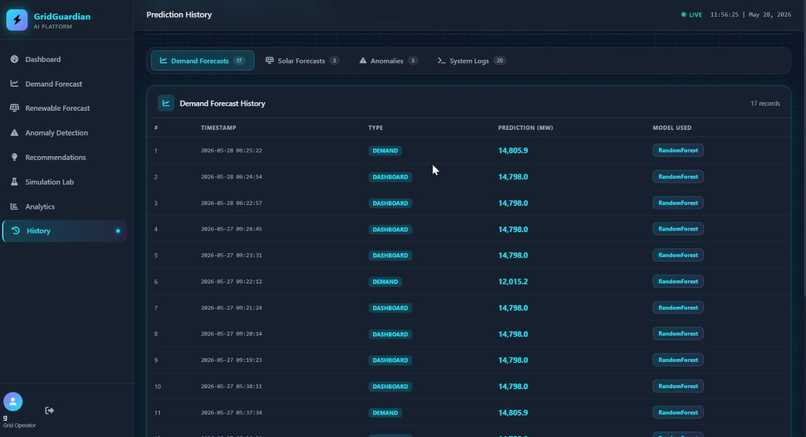
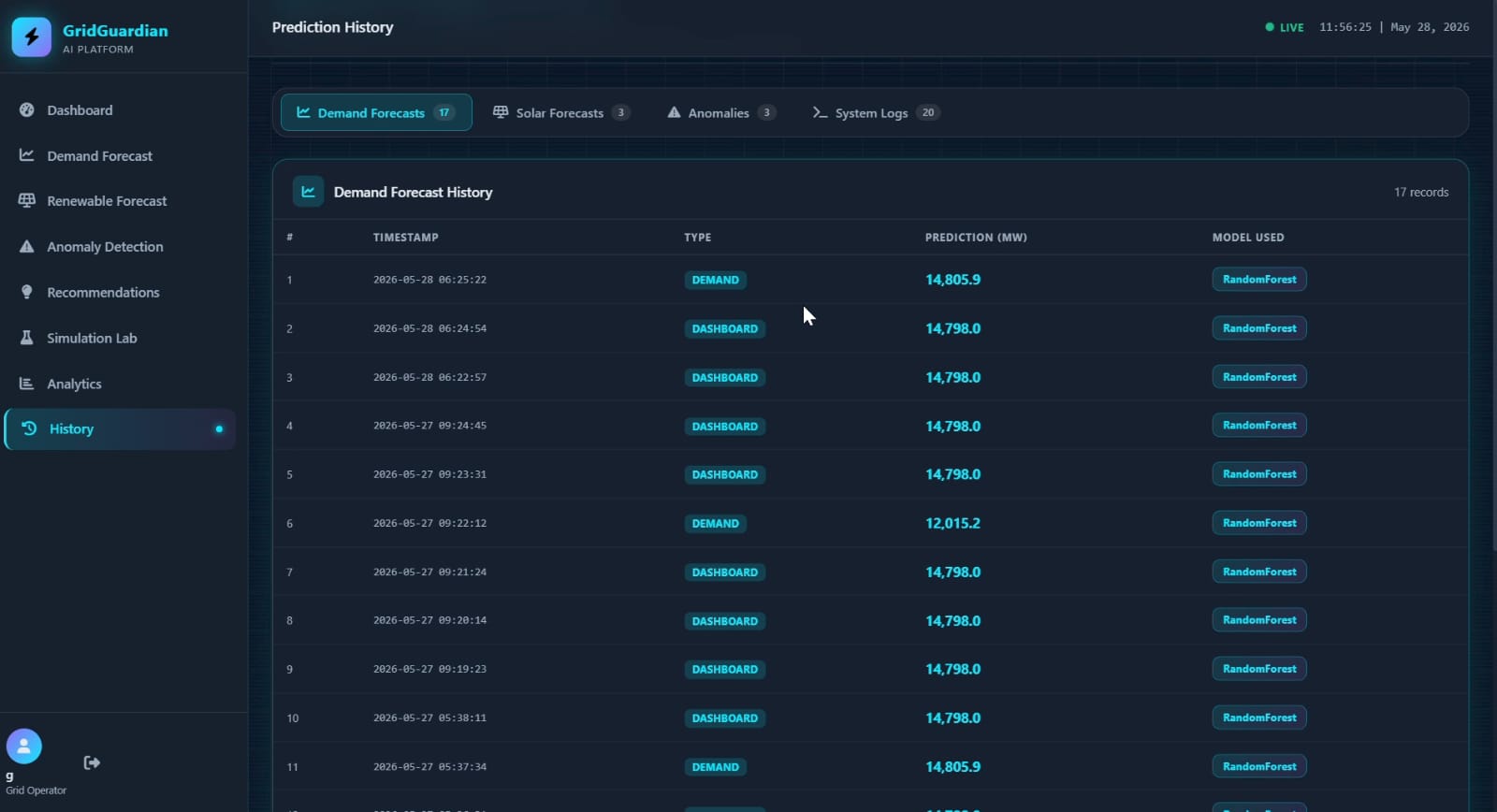
History
Inspiration
Growing up around our family rice mill, I personally experienced how unstable electricity supply and sudden power fluctuations can affect daily operations, productivity, and costs. Unexpected overloads, voltage instability, and inconsistent power availability often created operational difficulties.
That experience inspired me to think deeper about how modern AI systems could help improve power grid intelligence and energy stability.
This idea led me to build ** GridGuardian AI** — an AI-powered Smart Grid Intelligence Platform designed to forecast electricity demand, predict renewable energy generation, detect anomalies, and provide intelligent recommendations before grid issues occur.
What it does
GridGuardian AI uses Machine Learning and real-world energy datasets to:
- Forecast future electricity demand
- Predict solar and renewable energy generation
- Detect abnormal grid behavior using anomaly detection
- Generate a real-time Grid Health Score
- Provide intelligent optimization recommendations
- Simulate future grid conditions using what-if analysis
The platform visualizes all insights through a futuristic cyberpunk-inspired AI dashboard.
How I built it
I combined multiple real-world datasets, including:
- Electricity demand datasets
- Weather datasets
- Solar power generation datasets
- Smart grid stability datasets
The datasets were cleaned, preprocessed, merged, and transformed into a unified machine learning pipeline.
I trained and compared multiple machine learning models including:
- Random Forest
- XGBoost
- LightGBM
For anomaly detection, I used:
- Isolation Forest
The backend was developed using Flask and SQLite3, while the frontend was built using:
- HTML
- CSS
- JavaScript
- Bootstrap
For visualization and analytics, I used Matplotlib to generate forecasting and anomaly charts dynamically.
Challenges I ran into
One of the biggest challenges was integrating multiple datasets with different formats and timestamps into a unified forecasting pipeline.
Another major challenge was designing a dashboard that looked like a professional AI operations platform instead of a typical student project. I focused heavily on creating a futuristic UI with glassmorphism, neon effects, responsive layouts, and interactive analytics.
I also faced challenges with:
- Time-series preprocessing
- Feature engineering
- Model optimization
- Flask template inheritance
- Real-time chart rendering
- Managing the entire project as a solo participant
Accomplishments that I'm proud of
- Successfully integrated multiple energy datasets into a single intelligent platform
- Built a complete end-to-end AI system as a solo developer
- Achieved highly accurate forecasting performance
- Designed a visually polished futuristic dashboard
- Created a scalable architecture suitable for future smart-grid systems
What I learned
Through this project, I gained deeper experience in:
- Machine Learning pipelines
- Time-series forecasting
- Anomaly detection
- Data engineering
- Flask full-stack development
- UI/UX design
- Real-world AI system architecture
Most importantly, I learned how AI can be applied to solve real infrastructure problems that directly impact industries, businesses, and daily life.
Future scope
Future versions of GridGuardian AI could integrate:
- Live IoT sensor streams
- Smart meter integration
- Battery optimization systems
- Real-time automated load balancing
- Reinforcement learning for grid optimization
- Smart city infrastructure integration
My long-term vision is to evolve GridGuardian AI into a real-world intelligent energy management platform capable of supporting next-generation sustainable power systems.
Built With
- bootstrap-5
- css3
- flask
- github
- html5
- isolation-forest
- javascript
- joblib
- lightgbm
- matplotlib
- numpy
- pandas
- python
- random-forest
- render
- scikit-learn
- sqlite
- xgboost


Log in or sign up for Devpost to join the conversation.