-
-

Landing Page
-
How It Works
-
Sign Up
-
Creating Content
-
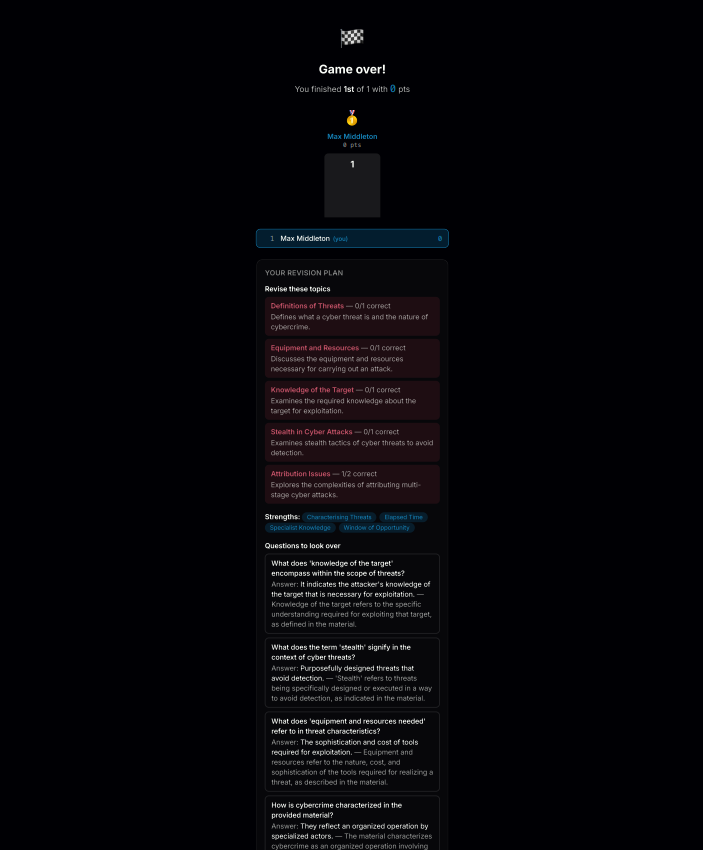
Student Summary - Personal
-
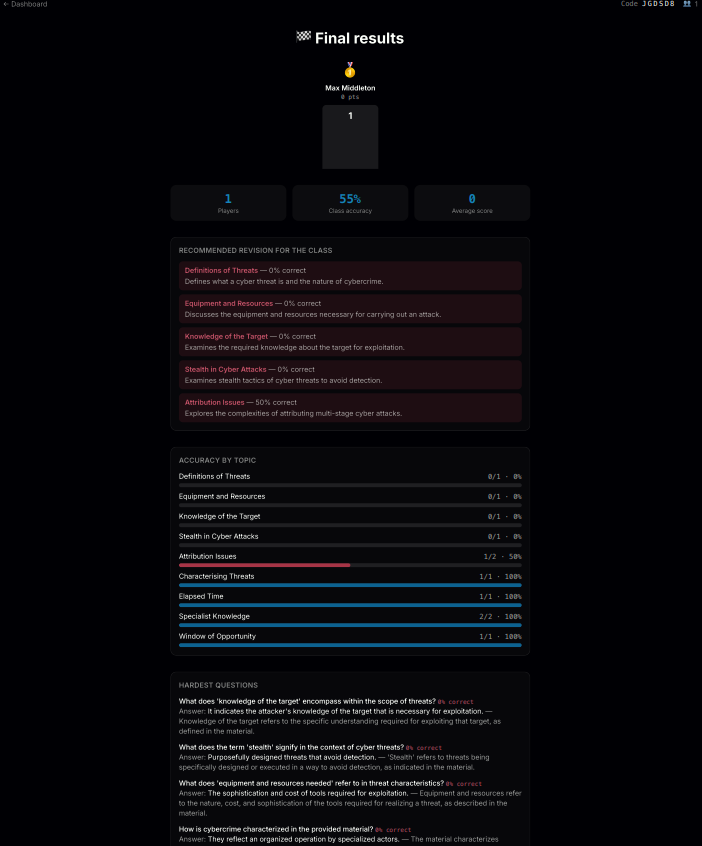
Teacher Summary - All Students

Inspiration
We were inspired by methods used in Swansea University. A lecturer we had used games as a method of teaching with live competition. He mentioned that it took him incredibly long to plan out and create these games, hence the creation of our project.
We wanted to incorporate a Multi-Agent methodology with this to be able to perform REPLY's Track of "AI ON CAMPUS" where we had to incorporate AI Agents to support either teachers or students.
What it does
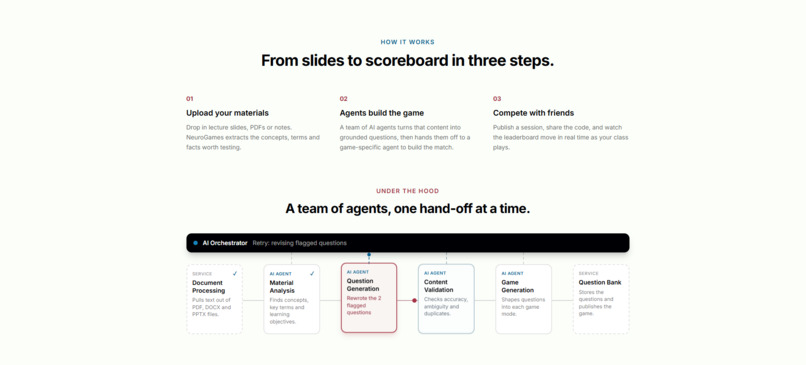
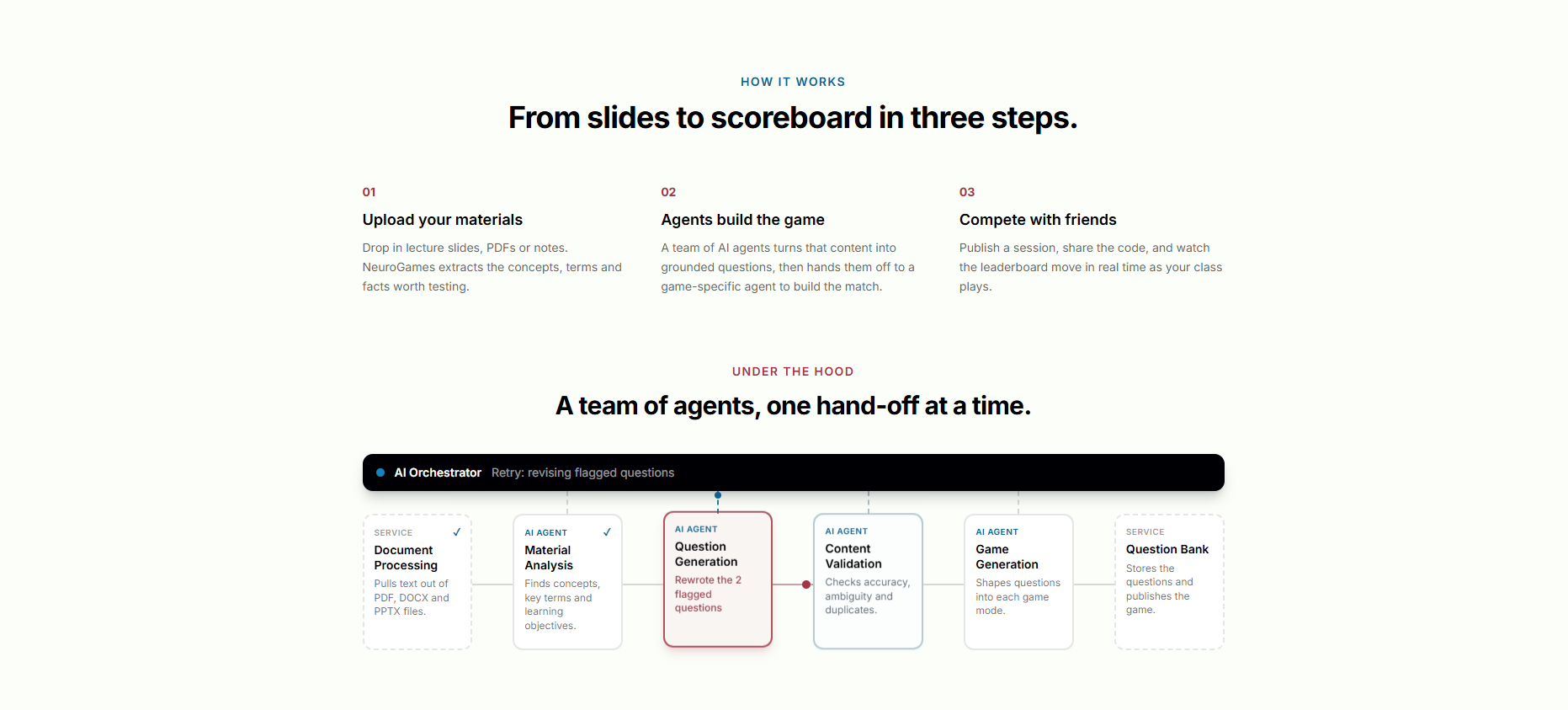
Our platform allows teachers to upload their lecture materials, then it passes over the workload to AI which automatically generates educational games based on the provided content.
Our Material Analysis Agent then passes off its workload to the Question Generation Agent and once they compile a Content Validation agent which goes backwards and forwards with the Question Generation Agent to get the best possible questions according to the Lecture Material.
Students can then play these games when a teacher hosts it and can compete with classmates helping them reinforce their knowledge in an engaging way.
How we built it
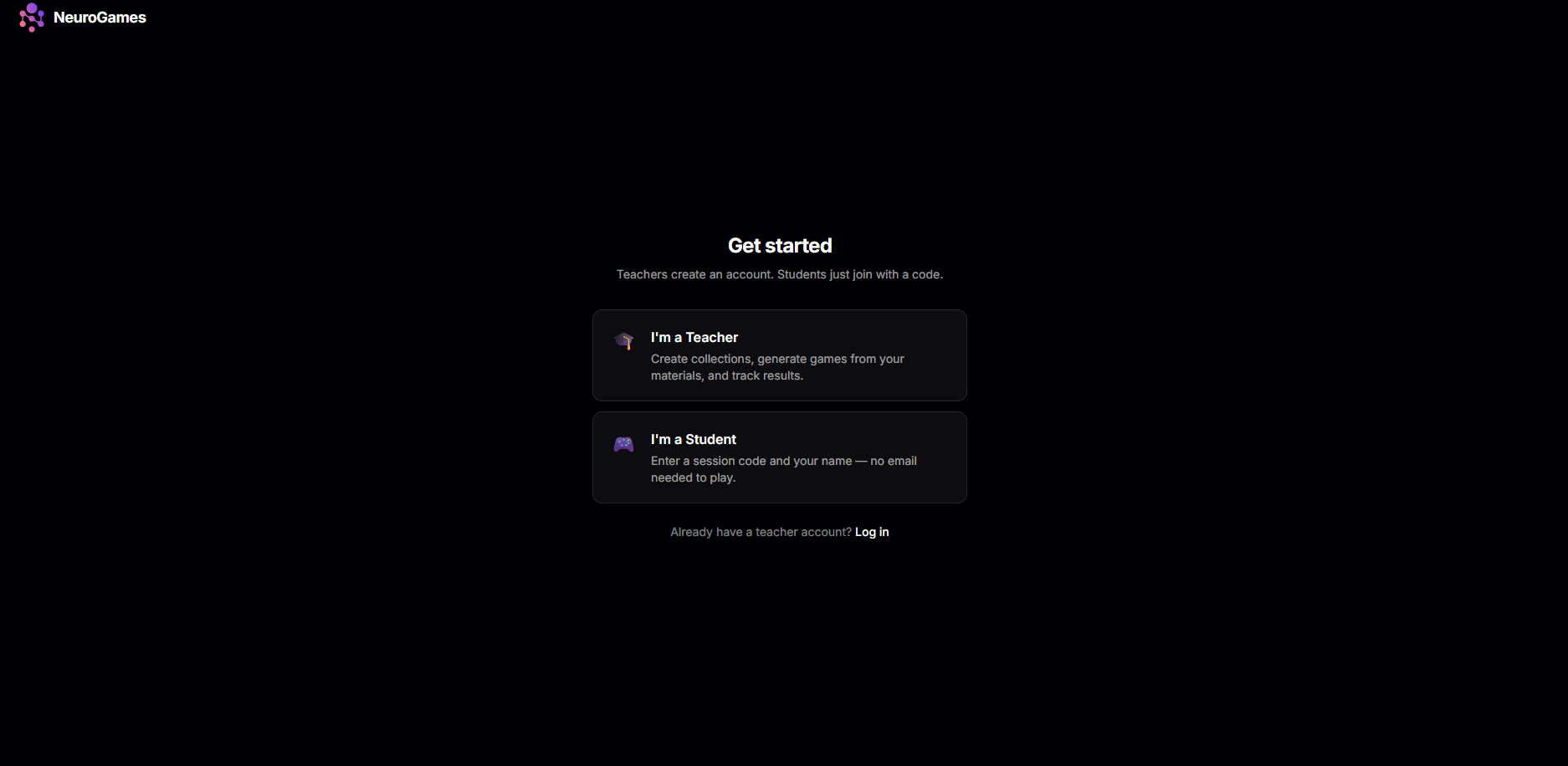
We designed the platform around two main user experiences: a teacher dashboard and a student interface.
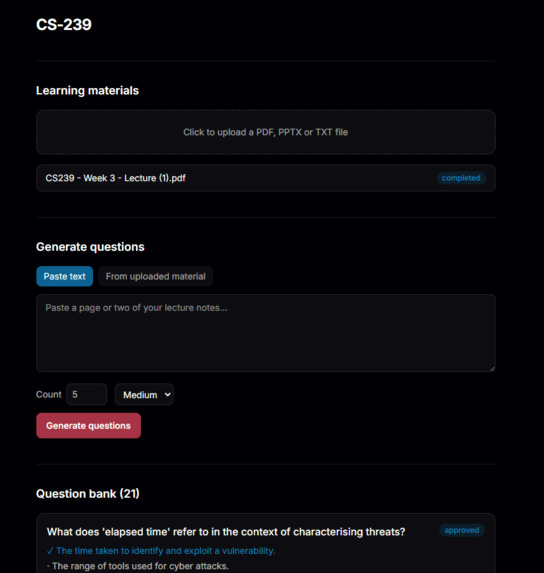
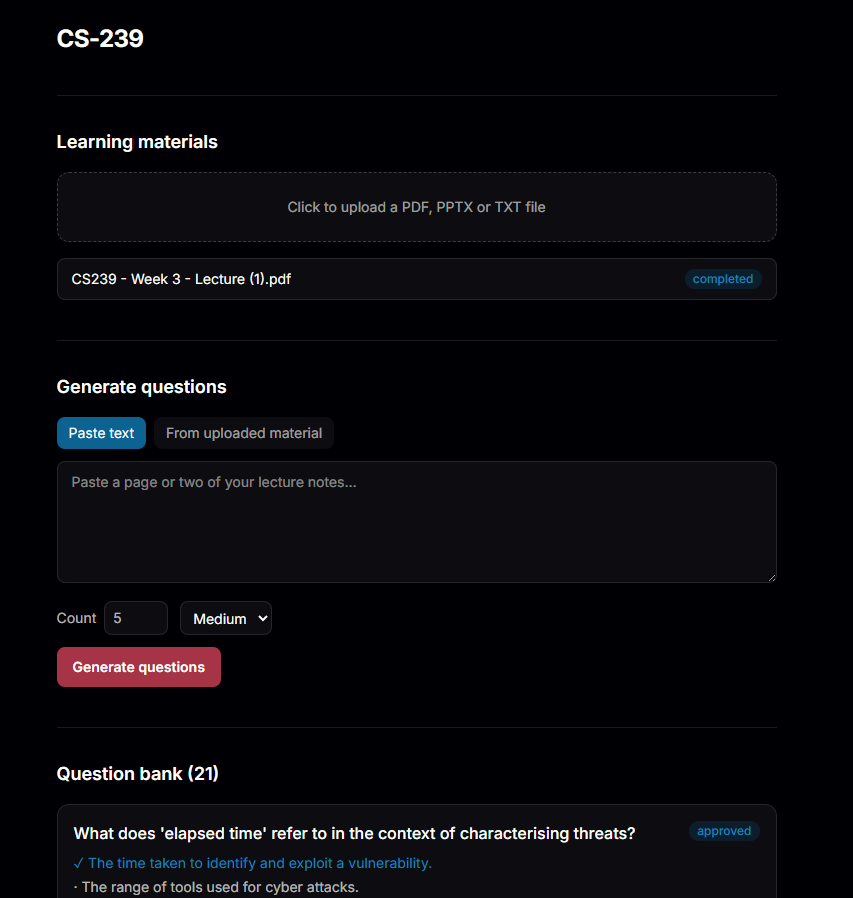
The teacher dashboard allows educators to upload learning materials, configure game settings, generate quizzes and manage their educational games.
The AI component processes the uploaded content, extracts important concepts and generates structured questions with correct and incorrect answers. These questions are then adapted to the requirements of the selected game mode.
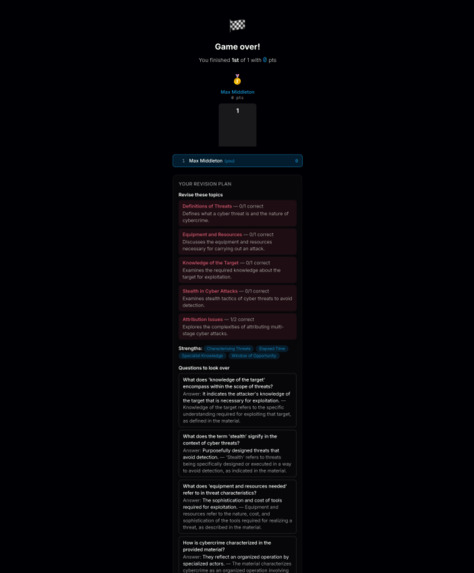
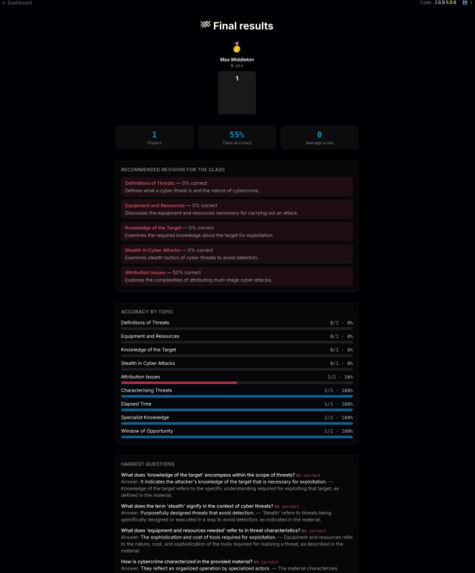
The student interface focuses on interactive gameplay, scoring and learning progression. The backend manages users, educational content, generated questions, game sessions and student performance.
Challenges we ran into
Our main challenge was aligning the coordination of multiple agents, as it was a new concept for us. We struggled to have AI-generated questions to prevent hallucination across agents and stay relevant to the teacher's uploaded materials.
Accomplishments that we're proud of
The hackathon was reduced to 6 hours from the original 24 hours. We are impressed we managed to deploy and publish a fully working app.
We also believe we achieved the reduced time it would take teachers to create revision resources and give students a more enjoyable and interactive way to study.
What we learned
Non-Technical was Project Managing. Breaking down the solution even though we were on reduced time, ultimately saved us a lot in the long run. Without mapping out the foundations we would need first and then extra features we can develop in the future.
Human in the loop is essential. AI-Generated content needs to be accurate, relevant and reliable. A Teacher approval system allows them to decide if a question is deemed acceptable.
Most importantly, we learned how AI and gamification can complement each other to make education more engaging without losing its educational purpose.
What's next for NeuroGames
Our next steps would be to develop a wider range of game modes and adaptive difficulty. Teachers can have a more advanced analytic dashboard which can help track students progress and what they struggle on.
In the future, we would like to introduce personalised learning recommendations, allowing NeuroGames to identify individual weaknesses and automatically generate targeted revision games.
Ultimately, our goal is to make learning more interactive, accessible and enjoyable while giving teachers intelligent tools to create engaging educational experiences with minimal effort.