-
-
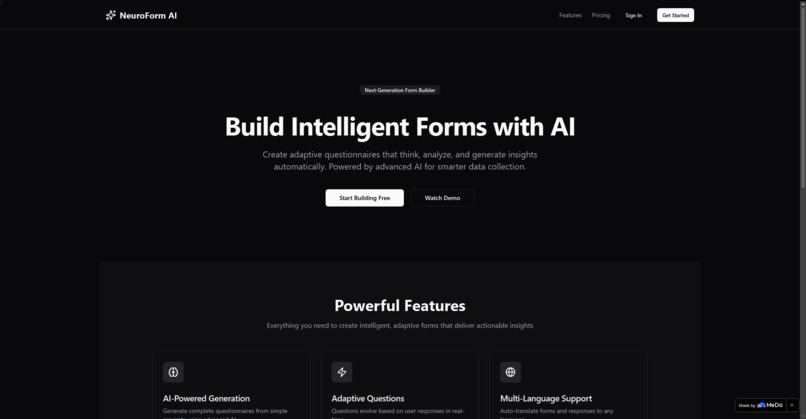
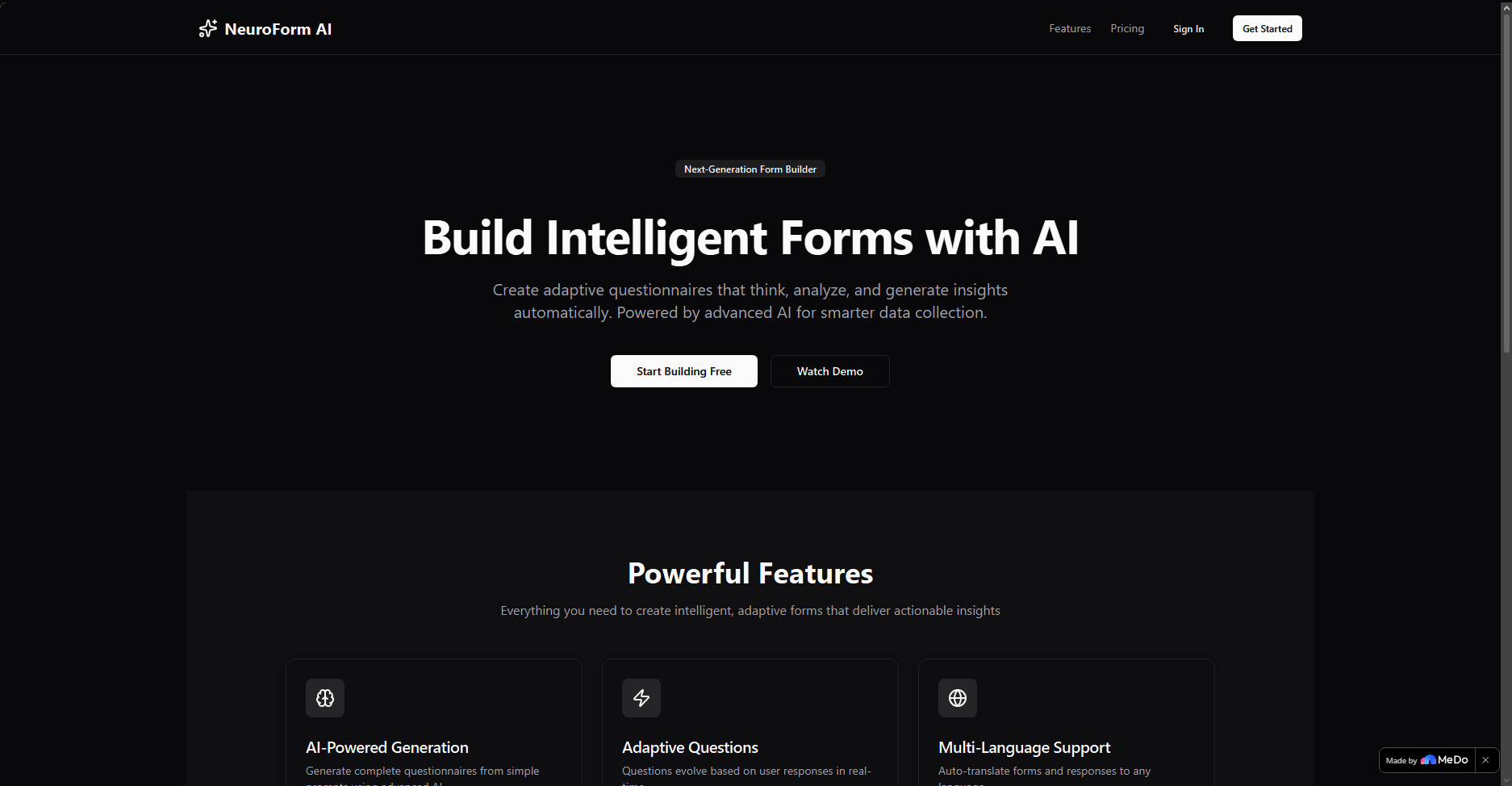
Homepage
-

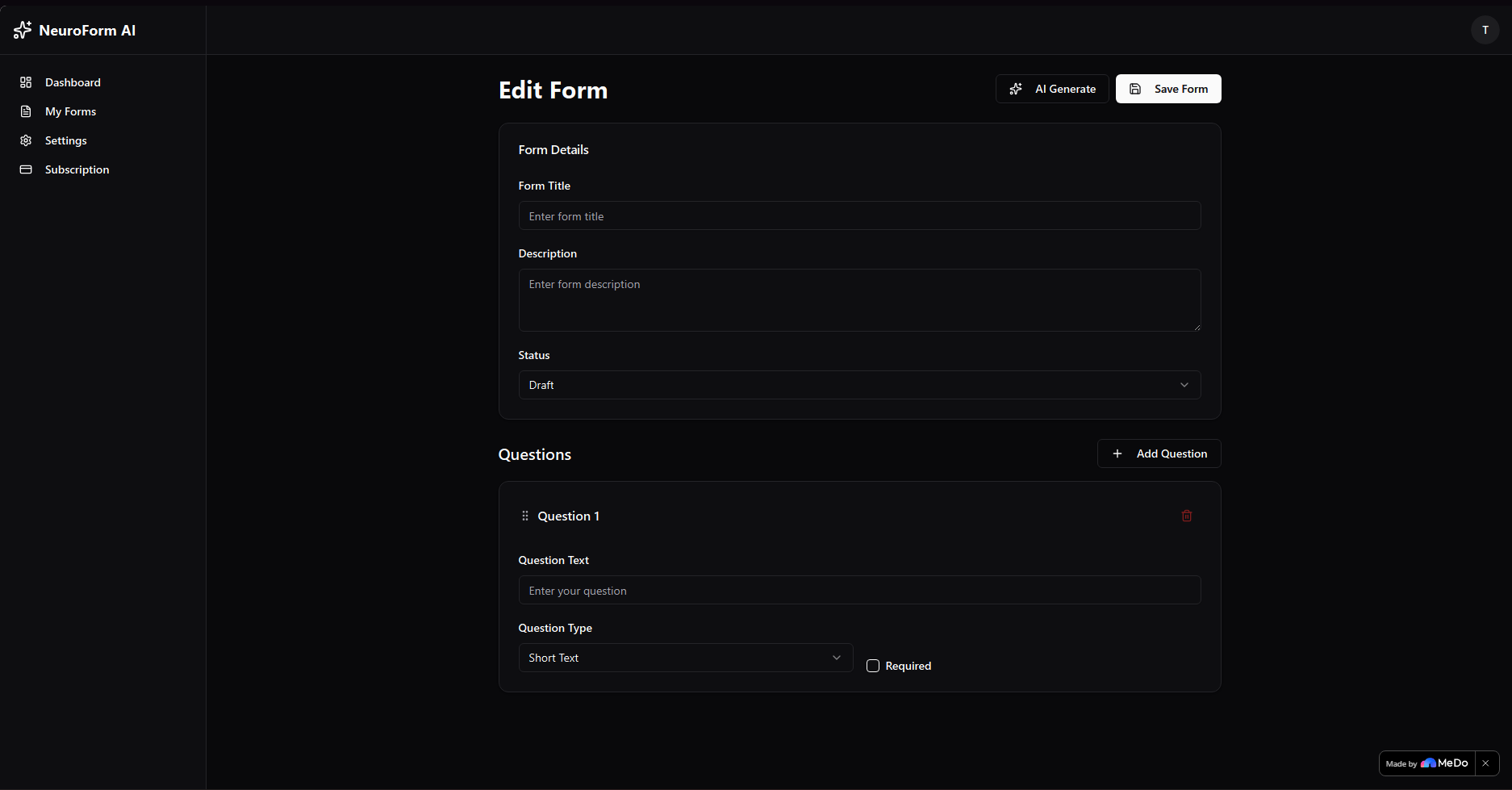
Forms
-

Sign Up
-

Sign In
-

Shre Link
-
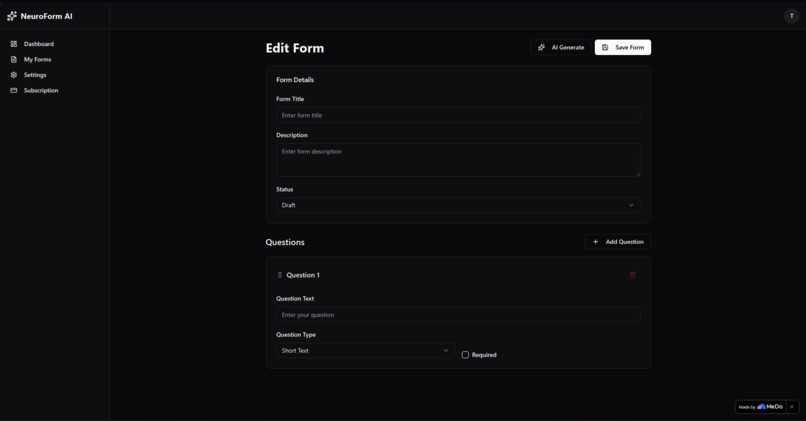
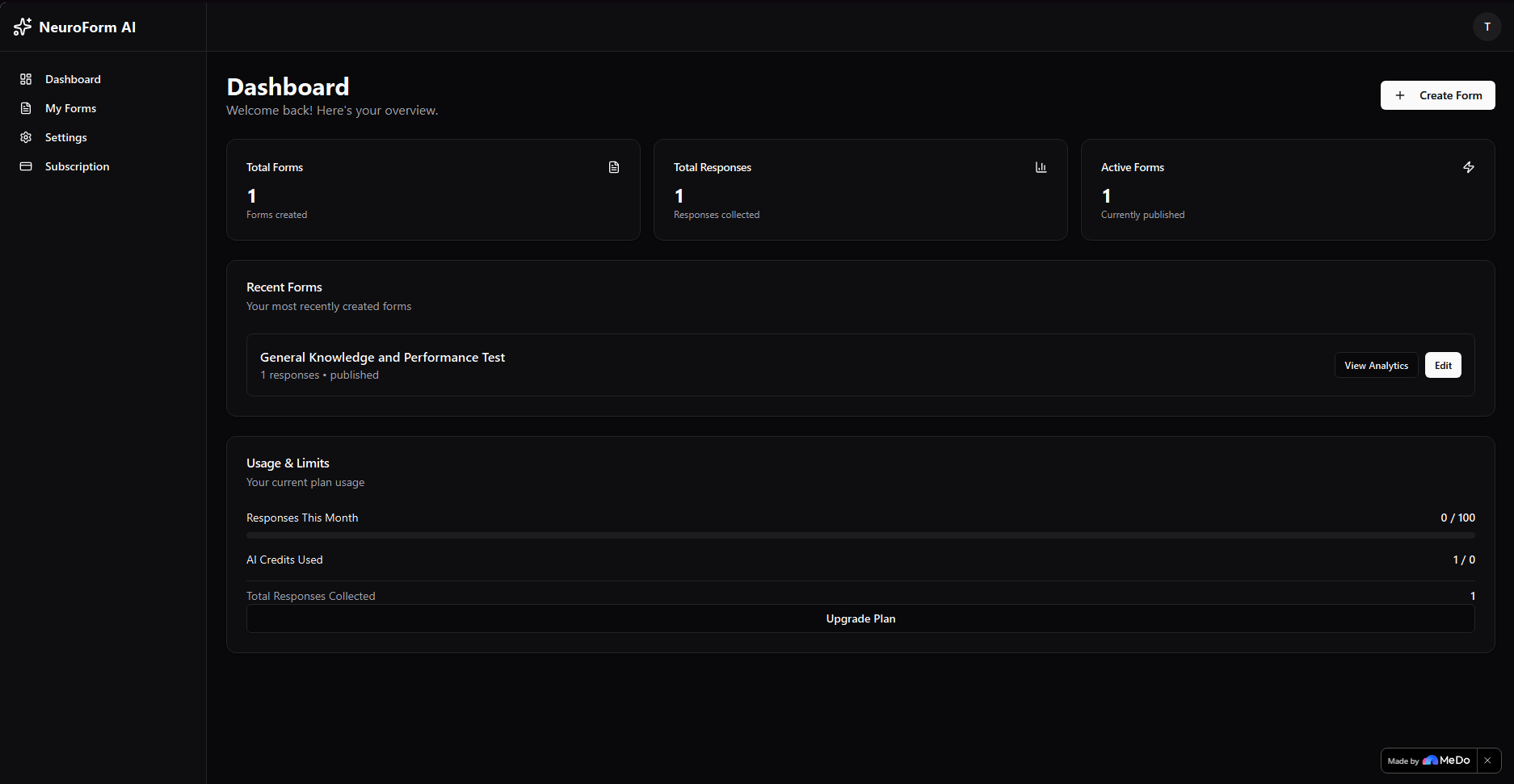
Forms Page
-
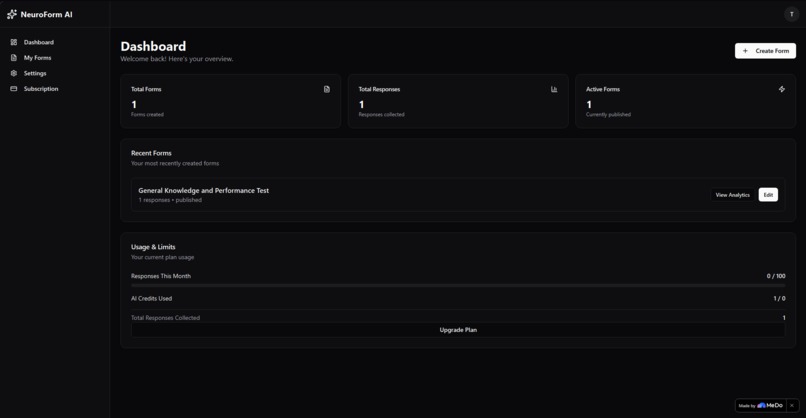
Dashboard
-
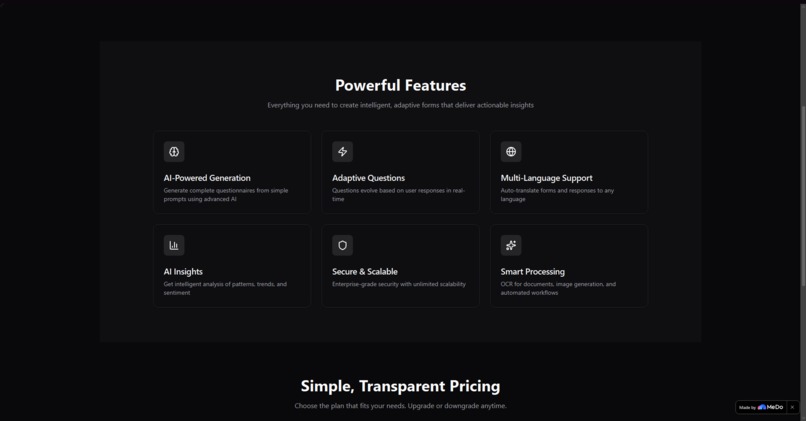
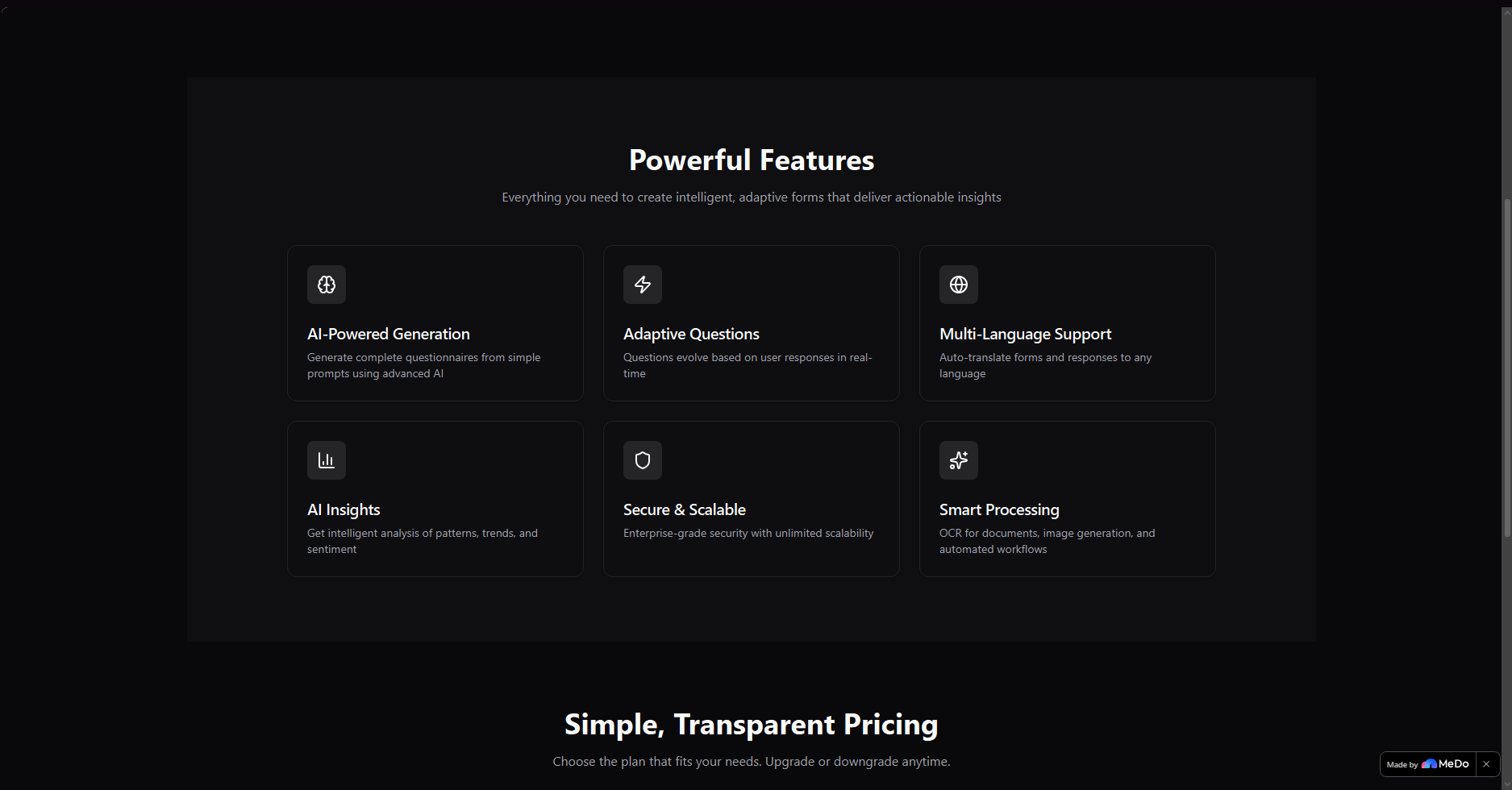
Fiture
-
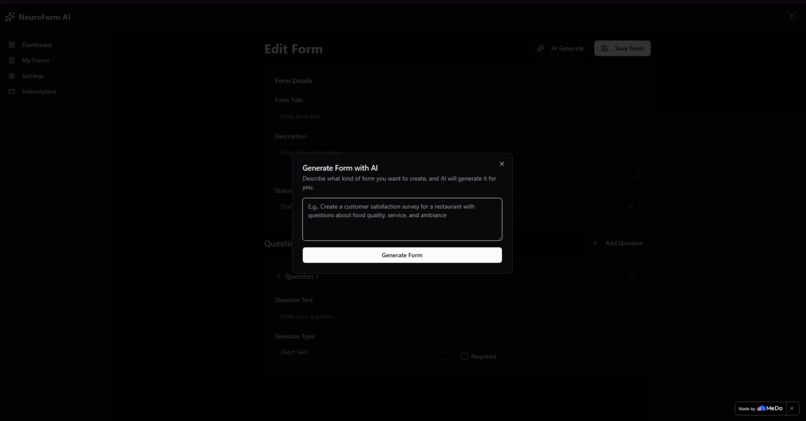
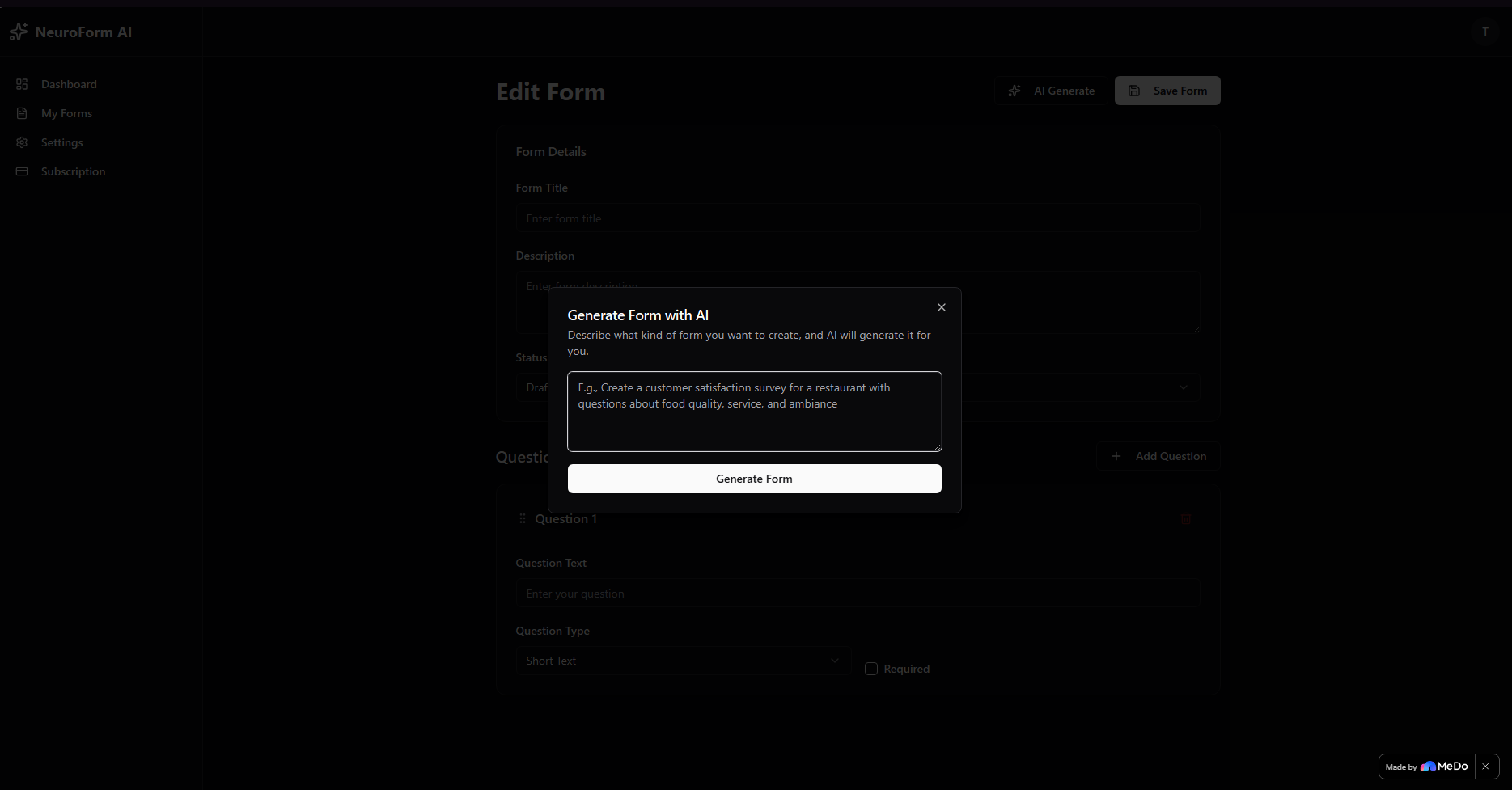
AI Question
-
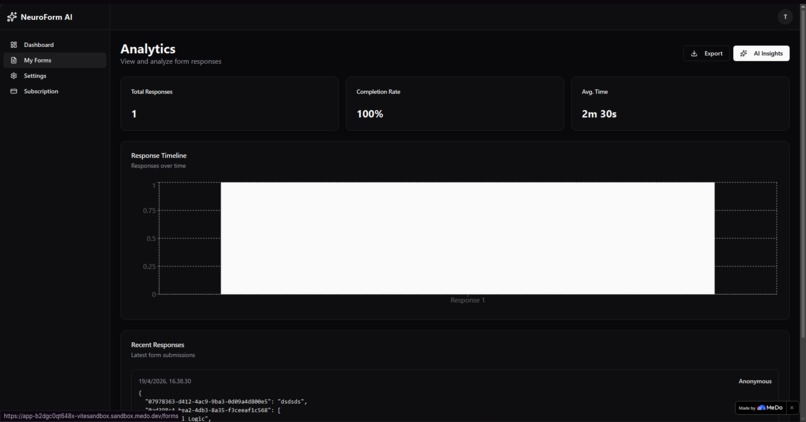
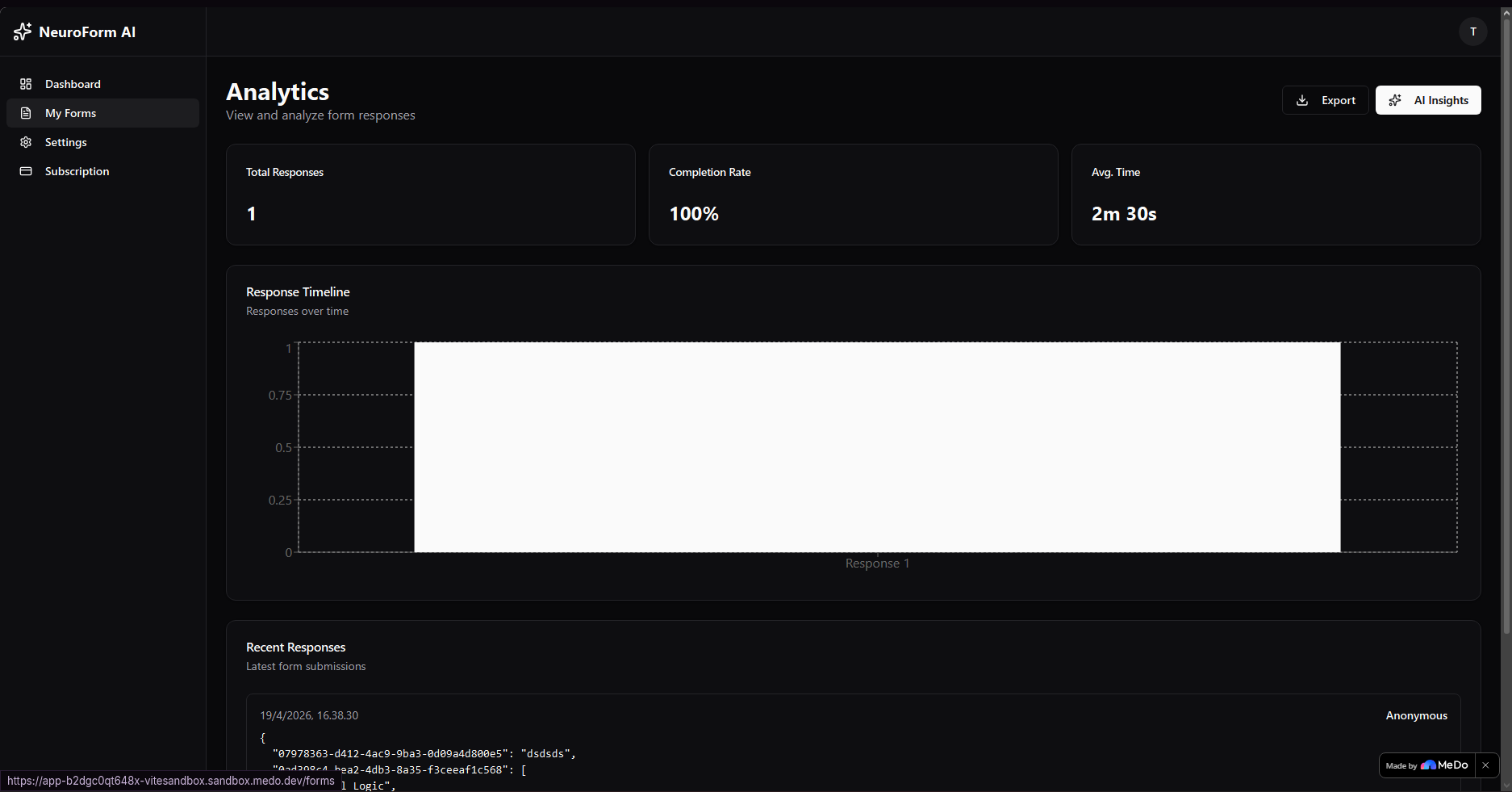
Analytics
-

Prices





Inspiration
Traditional form builders are static — they only collect data without understanding it.
We wanted to rethink forms from first principles:
What if a form could think, adapt, and analyze in real-time?
NeuroForm AI was inspired by the gap between data collection and decision-making. Instead of just gathering answers, we aimed to build a system that transforms responses into actionable intelligence using AI.
What it does
NeuroForm AI is an AI-powered questionnaire and form builder that goes beyond traditional tools.
It allows users to:
- Generate full forms using AI from simple prompts
- Create adaptive questions that change based on user responses
- Collect multi-modal inputs (text, images, documents)
- Extract data using OCR from uploaded files
- Translate forms and responses in real-time
- Generate AI-driven insights, summaries, and reports
- Automate workflows using triggers and webhooks
In short:
It turns forms into intelligent, adaptive systems.
How we built it
We built NeuroForm AI as a modular SaaS platform with a strong AI integration layer.
Core components:
- Frontend: Interactive Typeform-style UI with one-question-at-a-time flow
- Backend: Scalable API handling forms, responses, and automation
- AI Layer:
- Large Language Model → question generation, insights, summaries
- Image Generation (Kling) → visual-based questions
- OCR → extracting structured data from uploads
- Google Translation → real-time multilingual support
- Payments: Stripe for subscription and usage-based billing
- Automation Engine: Trigger-based workflows + webhook system
The system is designed to be extensible and plugin-driven for future AI capabilities.
Challenges we ran into
- Designing adaptive question logic without making the flow unpredictable
- Balancing AI flexibility with user control and reliability
- Managing multi-plugin orchestration (LLM, OCR, image, translation)
- Handling edge cases like failed AI calls or incomplete responses
- Ensuring performance while processing AI tasks in near real-time
- Structuring data in a way that supports both analytics and AI processing
Accomplishments that we're proud of
- Successfully built a working AI-powered form generator
- Implemented adaptive question flow based on user input
- Integrated multiple AI capabilities into a single seamless experience
- Created a real-time analytics dashboard with AI-generated insights
- Built a monetization system with subscription tiers and usage tracking
- Designed a system that is not just a tool, but a foundation for intelligent data systems
What we learned
- AI is most powerful when combined with structured systems, not used in isolation
- Good UX is critical — especially when introducing dynamic AI behavior
- Data structure and architecture decisions heavily impact scalability
- Users want control, even when automation is powerful
- Building a “smart system” requires thinking beyond features into behavior and logic
What's next for NeuroForm AI
- Develop a Cognitive Engine to understand user intent and behavior patterns
- Implement predictive question generation and deeper adaptive flows
- Add knowledge graph and entity extraction for advanced insights
- Improve analytics with segmentation, cohort analysis, and predictions
- Introduce a template marketplace for growth and community sharing
- Expand API capabilities for deeper integrations
- Optimize performance with async processing and event-driven architecture
Our long-term vision:
Transform forms into intelligent systems that don't just collect data — but understand it.
Built With
- medo.dev


Log in or sign up for Devpost to join the conversation.