-
NeuroFlow: AI-Powered Attention OS
-
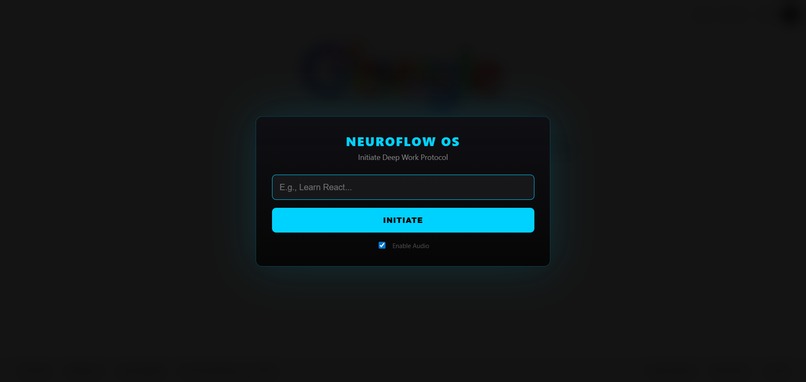
Session Architecting: Define your mission, AI builds your environment.
-
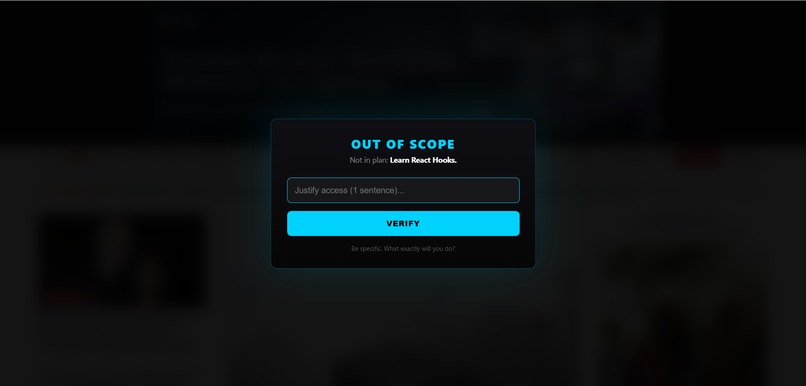
Intent Gateway: AI verifies alignment before access.
-
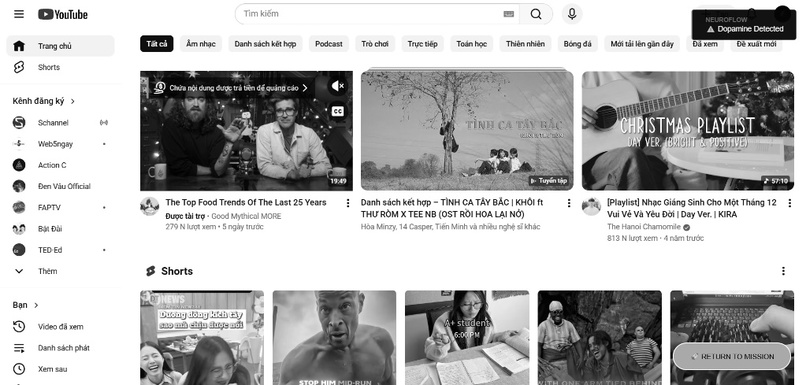
Dopamine Bleach: Making distraction chemically boring.
-
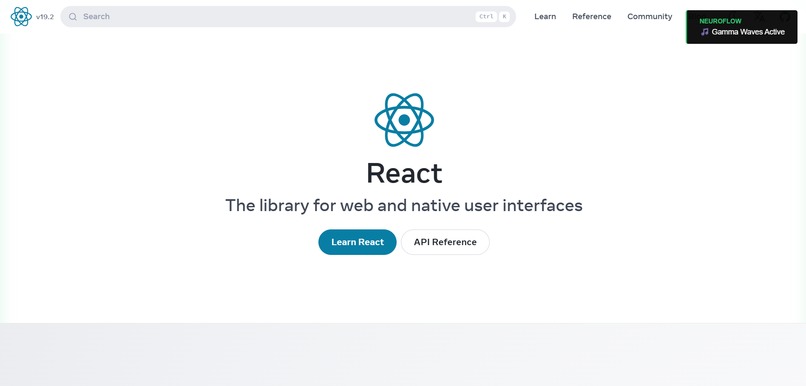
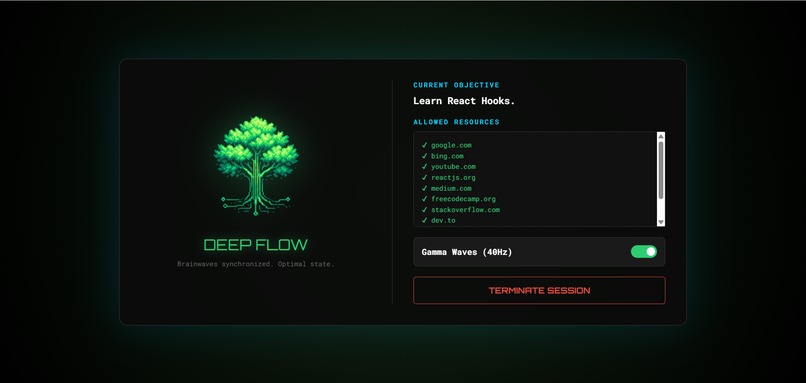
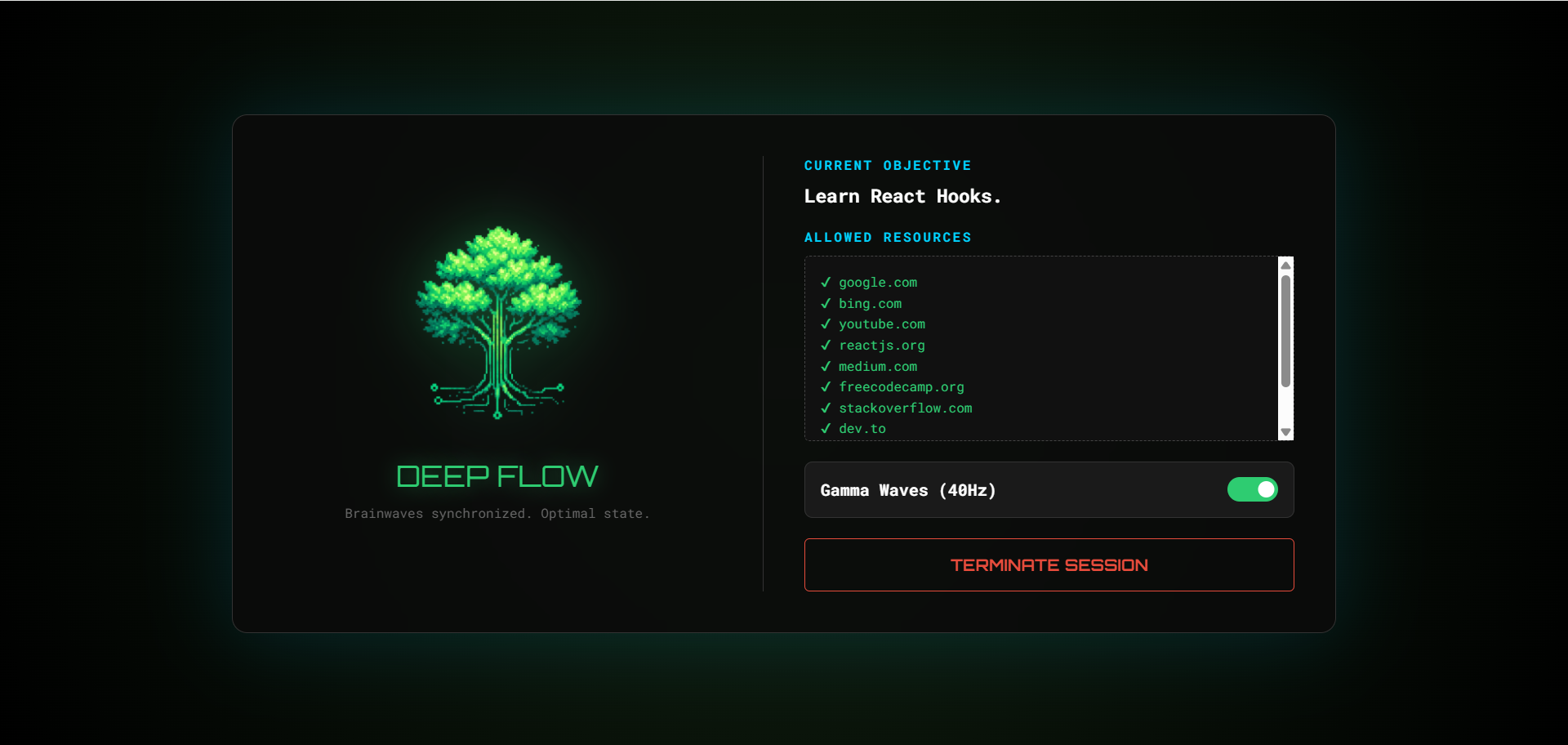
Flow State: 40Hz Gamma Entrainment & Whitelist Access.
Inspiration
We are fighting an asymmetric war. On one side: The human brain, evolved over millions of years to seek quick rewards. On the other side: Supercomputers at Big Tech companies, processing billions of data points to hack our Dopamine Loops.
The result is "Popcorn Brain"—a global crisis of attention deficit. We realized that traditional blockers act like "Jailers" (restriction), which users inevitably resent and uninstall. We didn't want to build another blocker. We wanted to build a Cognitive Firewall.
NeuroFlow was born from a simple question: What if we could use the same psychological triggers that distract us, to engineer deep focus instead?
What it does
NeuroFlow is the world's first AI-Powered Attention OS. Instead of lazily blocking URLs, it creates a Bio-Feedback Layer between your brain and the browser using a "Session-First" architecture.
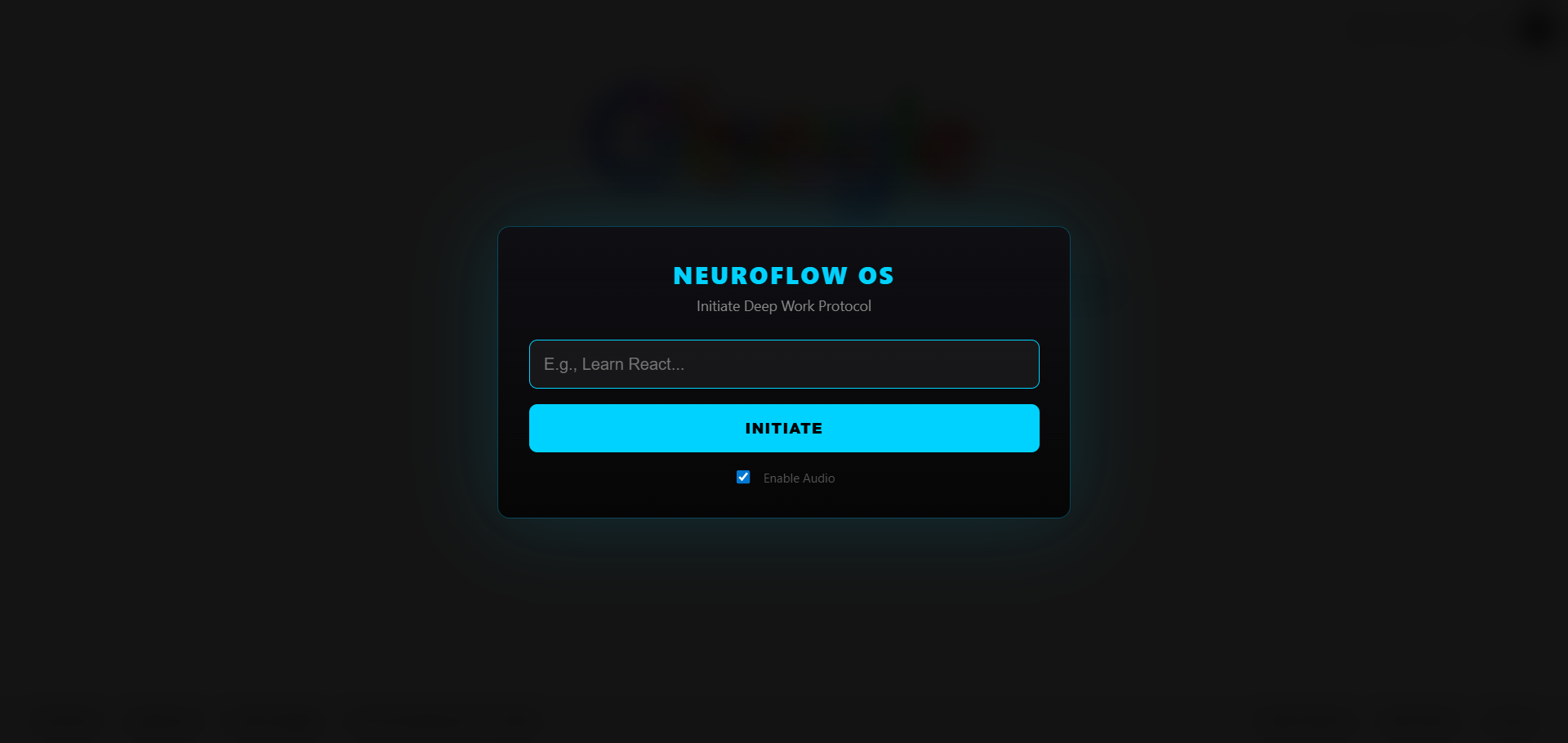
Session Architecting (The Modal): Before you enter the web, NeuroFlow intercepts you. You must declare your Core Objective (e.g., "Learn React Hooks"). The AI then instantly architects a bespoke Whitelist of allowed resources needed for that specific goal.
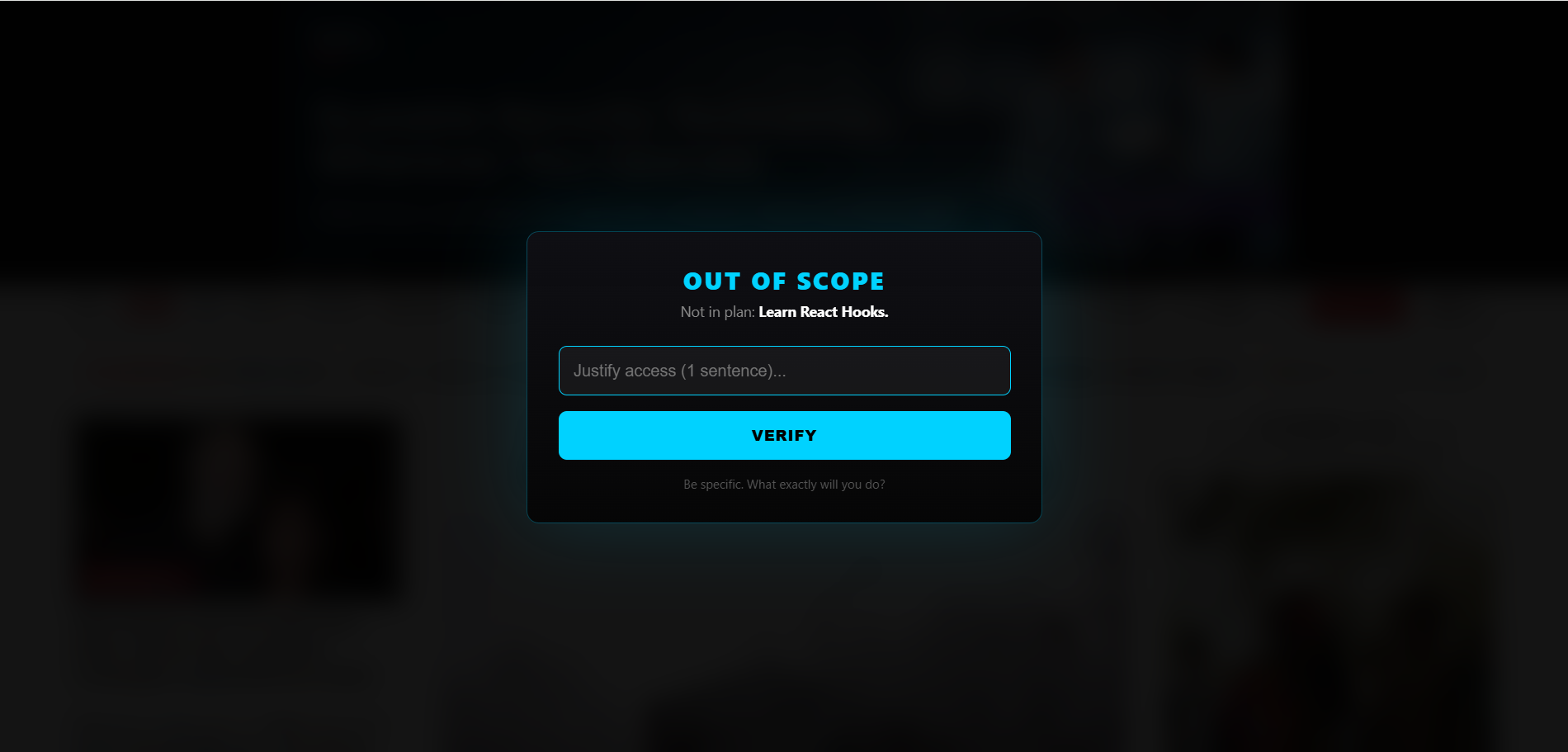
Intent Gateway: If you navigate outside the AI-generated whitelist (e.g., clicking a news link while studying), access is paused. You face a "Cyberpunk Gateway" requiring you to type a justification. The AI analyzes your intent in real-time: if it aligns with your mission, you pass. If not, you are rejected.
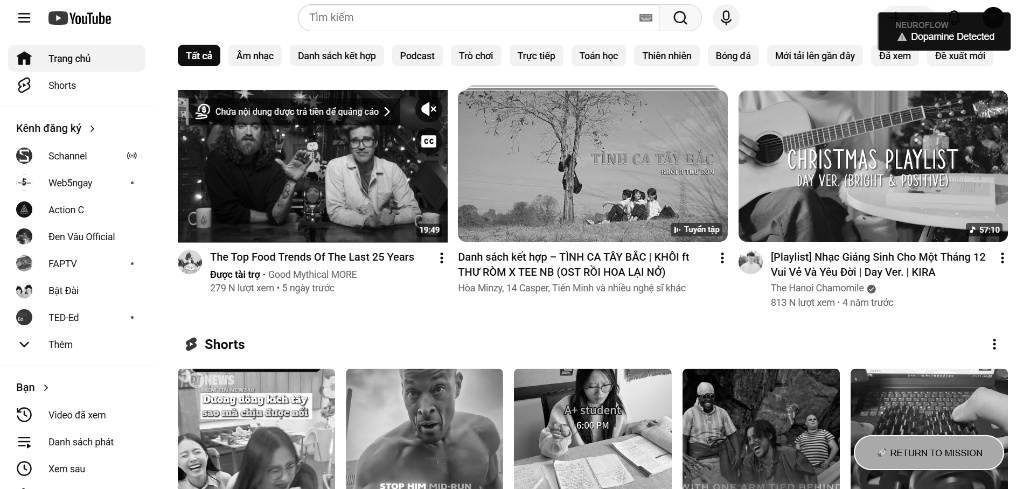
Contextual Intelligence: It understands nuance. On YouTube, it distinguishes between "Dopamine" (Home Feed/Shorts) and "Growth" (Specific Tutorials). It blocks the feed but allows the lesson.
Visual Friction (The Dopamine Bleach): In high-dopamine zones, the screen turns grayscale and "breathes" with a red pulse. As you doom-scroll, the screen blurs dynamically, making the content chemically boring to the visual cortex.
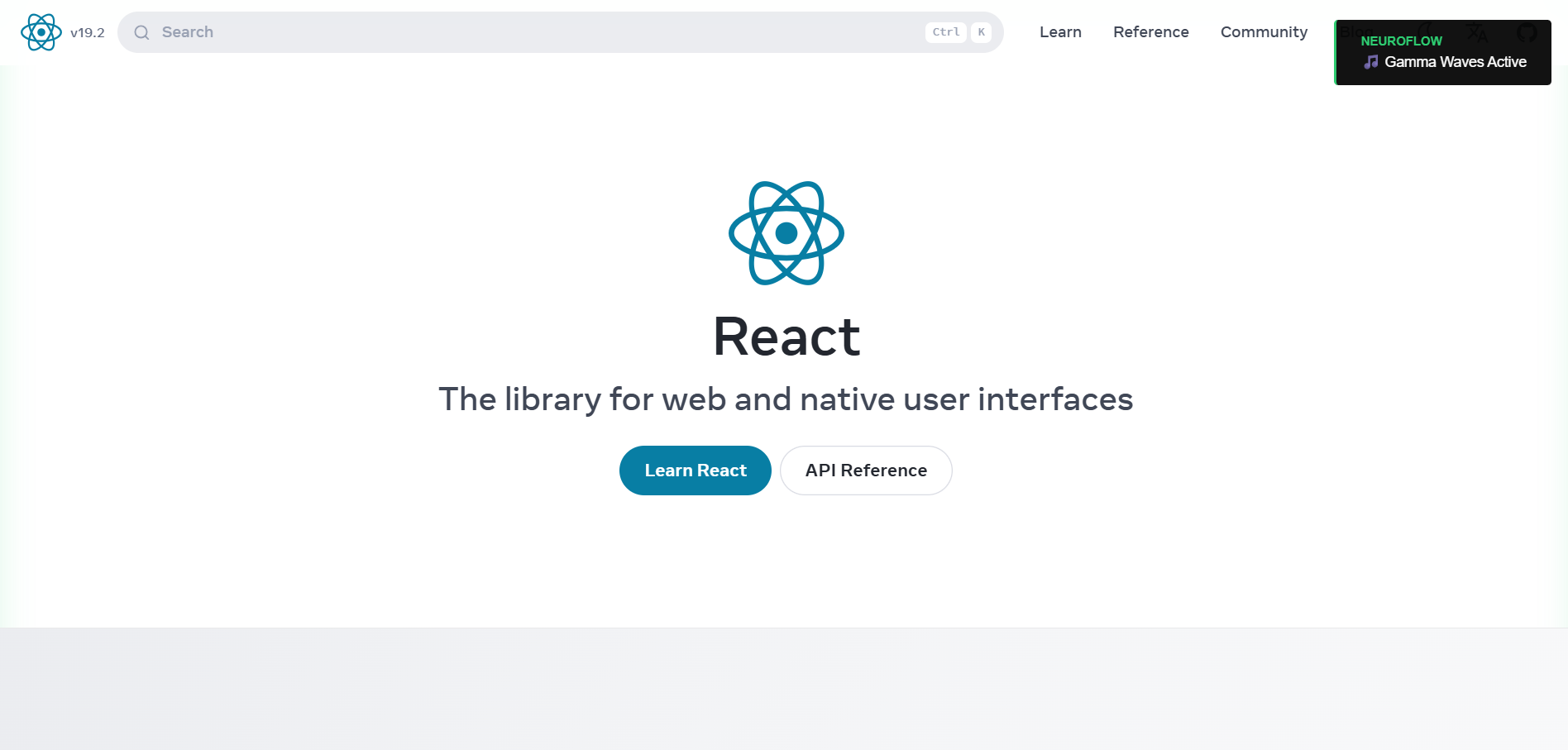
Auditory Entrainment: In "Growth Mode", the system automatically injects 40Hz Binaural Beats (Gamma Waves) to physically entrain your brainwaves into a deep flow state.
How we built it
We architected NeuroFlow like a digital brain, leveraging Chrome Extension Manifest V3:
The Prefrontal Cortex (AI Logic): Powered by OpenAI GPT-4o-mini, analyzing user goals to generate strict JSON whitelists and evaluating access requests against the current mission context.
The Central Nervous System (State Sync): We engineered a real-time message bus that synchronizes state across the Content Script, Background Worker, and the Dashboard. This ensures that if you toggle audio or enter a "Dopamine Zone" in one tab, the entire system reacts instantly.
The Auditory System: Utilized the Web Audio API to synthesize real-time Binaural Beats (400Hz Left / 440Hz Right) directly within the DOM context, bypassing the need for external audio files.
The Limbic System (UI): A gamified "Mission Control Dashboard" featuring a living "Bio-Tree" that withers when you doom-scroll and blooms when you maintain deep work.
Challenges we ran into
Real-time State Synchronization: The biggest engineering hurdle was keeping the full-screen Dashboard in sync with the active tab. We had to architect a "Global State Broadcasting" system so that toggling the "Gamma Switch" on the Dashboard instantly controlled the Audio Context inside isolated content scripts across all open tabs.
Browser Autoplay Policy: Chrome blocks audio contexts created without user gestures. We implemented a "Lazy Priming" mechanism that arms the audio engine on the first "Initiate" click, ensuring the Gamma waves start seamlessly without breaking browser policy.
Semantic Nuance: Initially, the AI flagged all YouTube videos as "Dopamine." We engineered a route-aware logic that treats /feed as toxic but /watch?v=... as potentially productive, verifying the video title against the user's goal.
Accomplishments that we're proud of
The "Architect" Workflow: Shifting from "Blocking" to "Whitelisting" is a paradigm shift. We successfully built a flow where the user feels like they are designing their environment, not being punished by it.
Zero-Latency Friction: Despite the heavy AI logic, the Visual Friction (Blur/Grayscale) renders at 60fps using optimized CSS animations and scroll listeners.
Cyberpunk Aesthetic: We moved away from standard UI to a fully immersive, cohesive Cyberpunk design language that makes focus feel cool.
What we learned
Friction > Restriction: We learned that users respond better to "high cost" (blur, delay) than "no access" (blocking). It preserves their sense of autonomy while guiding their choices.
Context is King: A URL is not enough. To truly solve distraction, you must understand the semantics of the content and the kinematics of the user's behavior.
What's next for NeuroFlow: AI-Powered Attention OS
Focus Staking (Web3 Integration): Users can stake crypto on their focus sessions. If they get distracted, they lose money to a charity they hate. (Loss Aversion Psychology).
Mobile Ecosystem: Porting the logic to Android Accessibility Service to protect users across devices.
EEG Hardware Integration: Connecting with consumer brain-computer interfaces (like Muse) to adapt the friction based on real brainwave data, not just heuristics.
NeuroFlow isn't just a tool; it's the next step in digital evolution. Reclaim your mind.
Built With
- chrome-storage-api
- chromeextension
- html
- javascript
- openai
- web-audio-api

Log in or sign up for Devpost to join the conversation.