-
-
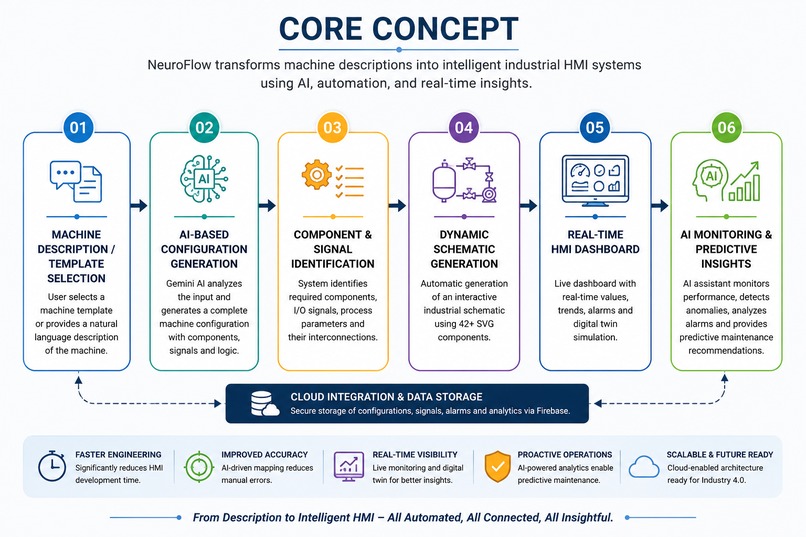
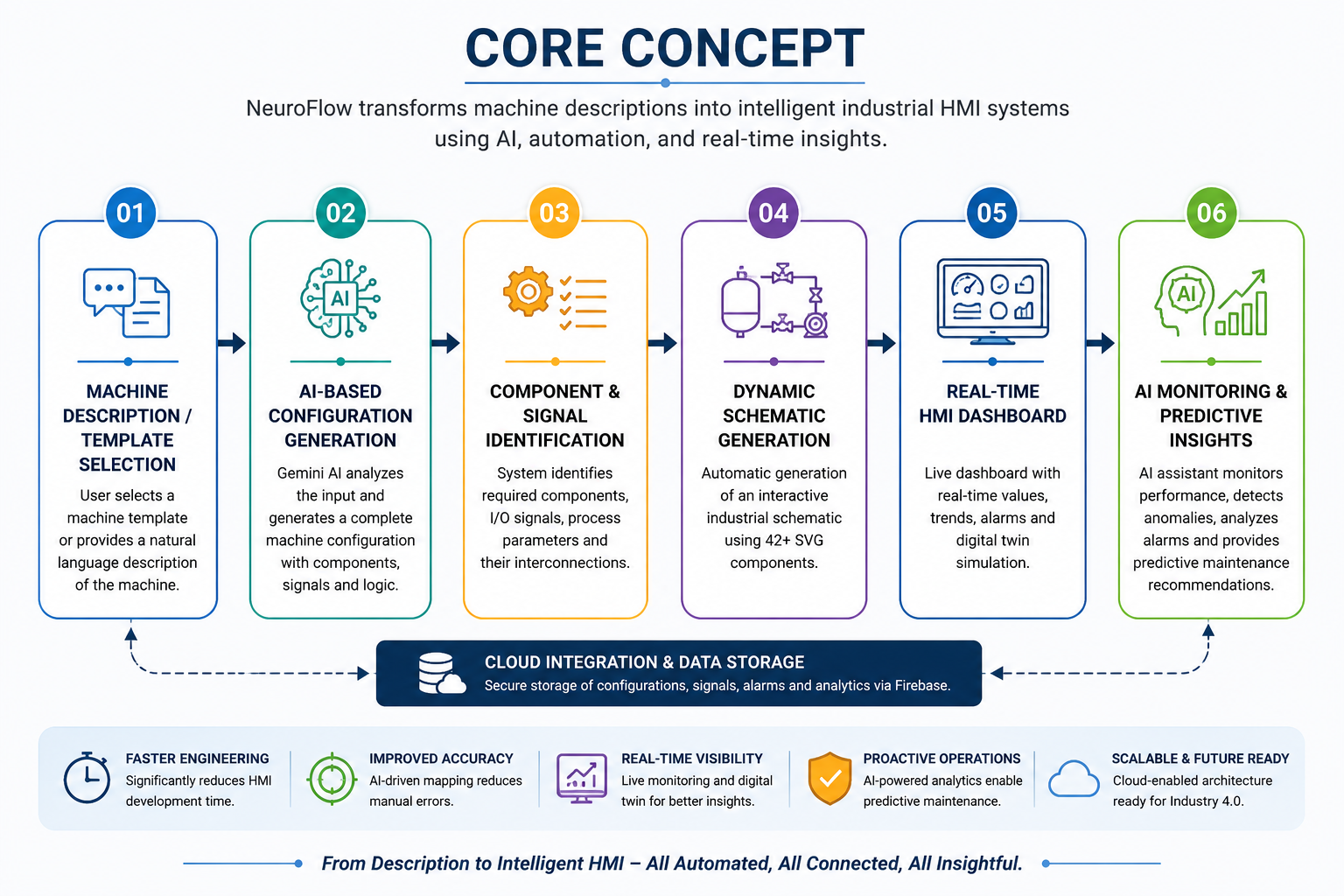
CORE CONCEPT
-
-
-
-
Inspiration
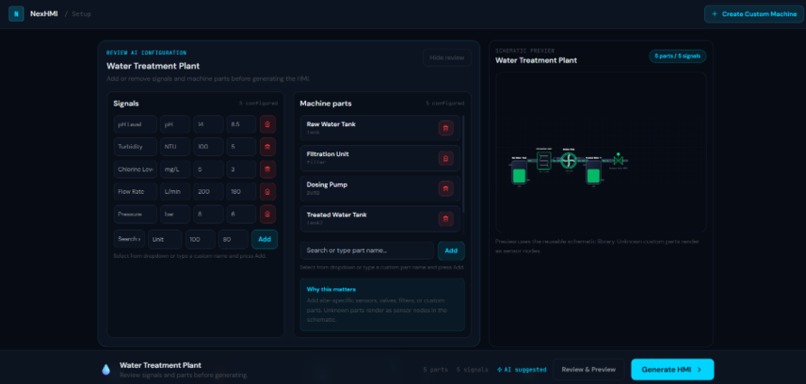
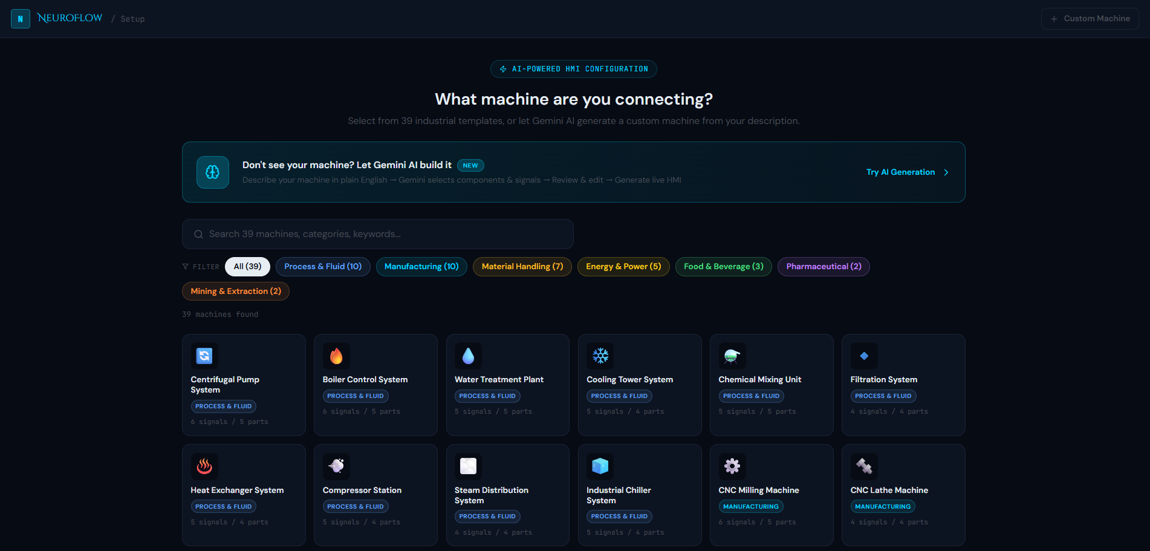
Industrial HMI development is often complex and time-consuming, requiring engineers to manually configure machines, map signals, design interfaces, and build visualization systems. NeuroFlow HMI was created to simplify this process by using GenAI to transform natural-language machine descriptions into structured industrial HMI configurations and digital twins.
What it does & How we built it
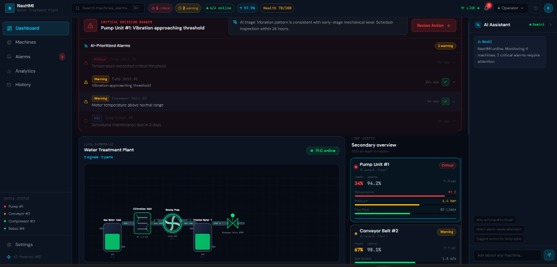
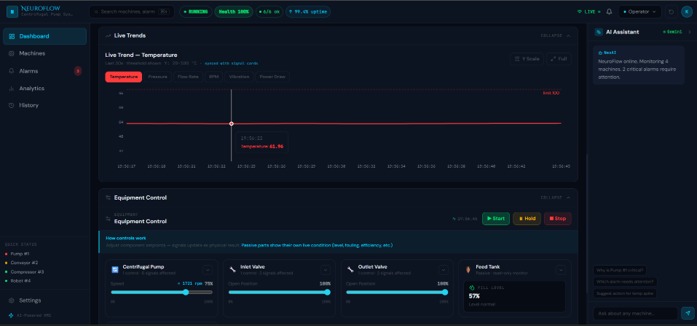
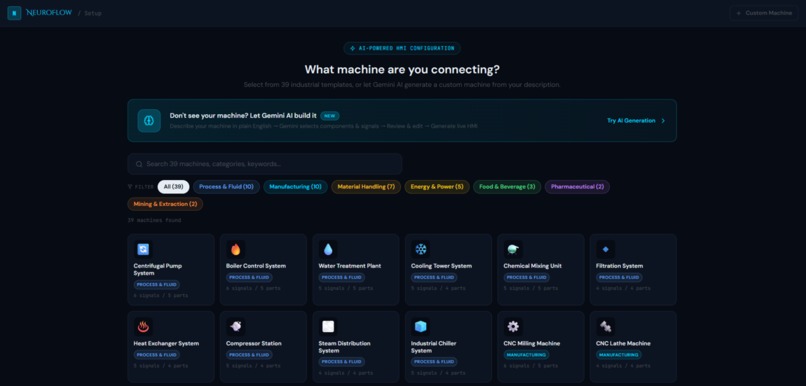
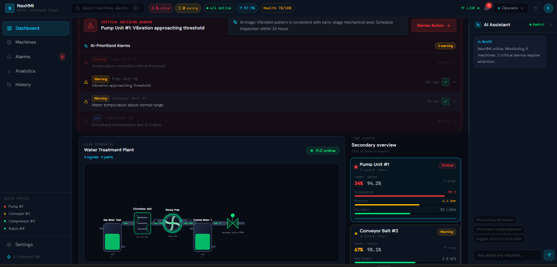
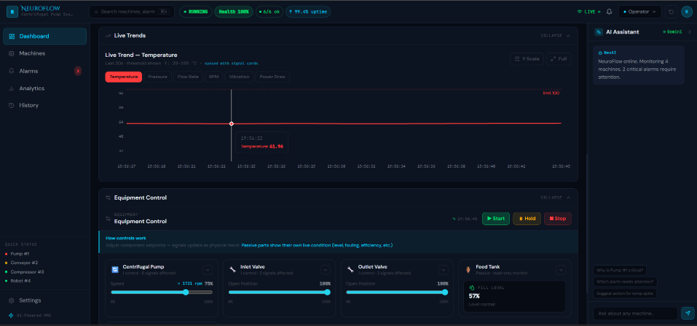
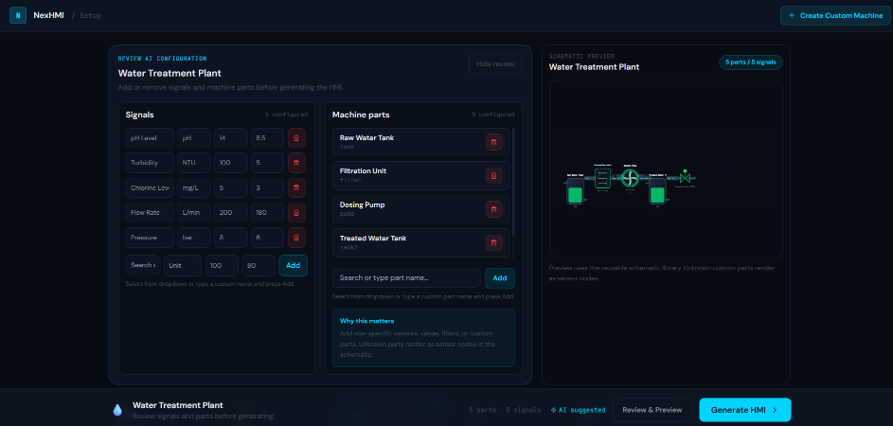
NeuroFlow uses Google Gemini, React, TypeScript, Firebase, and dynamic SVG technology to generate machine configurations, industrial schematics, signal mappings, dashboards, and digital-twin simulations. It supports components such as pumps, tanks, motors, valves, sensors, and pipes, along with live simulation, alarms, machine controls, history, and an AI assistant. We also added Google Authentication and personalized workspaces so users can securely save and resume their projects.
Challenges, Learning & What's Next
Our biggest challenge was converting flexible AI-generated responses into reliable, structured industrial configurations that could drive deterministic visualizations and simulations. Through multiple hackathons, we learned how to combine GenAI reasoning with structured engineering logic and user-focused design. Next, we aim to add AI configuration validation, context-aware troubleshooting, intelligent alarm analysis, automated reports, and natural-language generation of complete industrial plants.


Log in or sign up for Devpost to join the conversation.