-
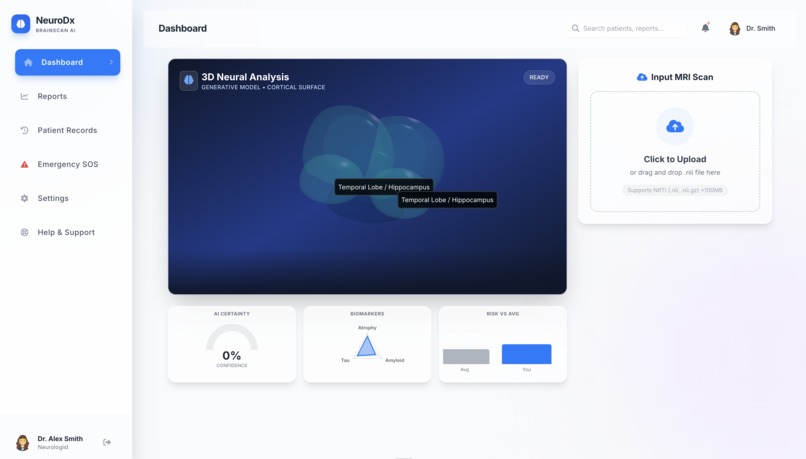
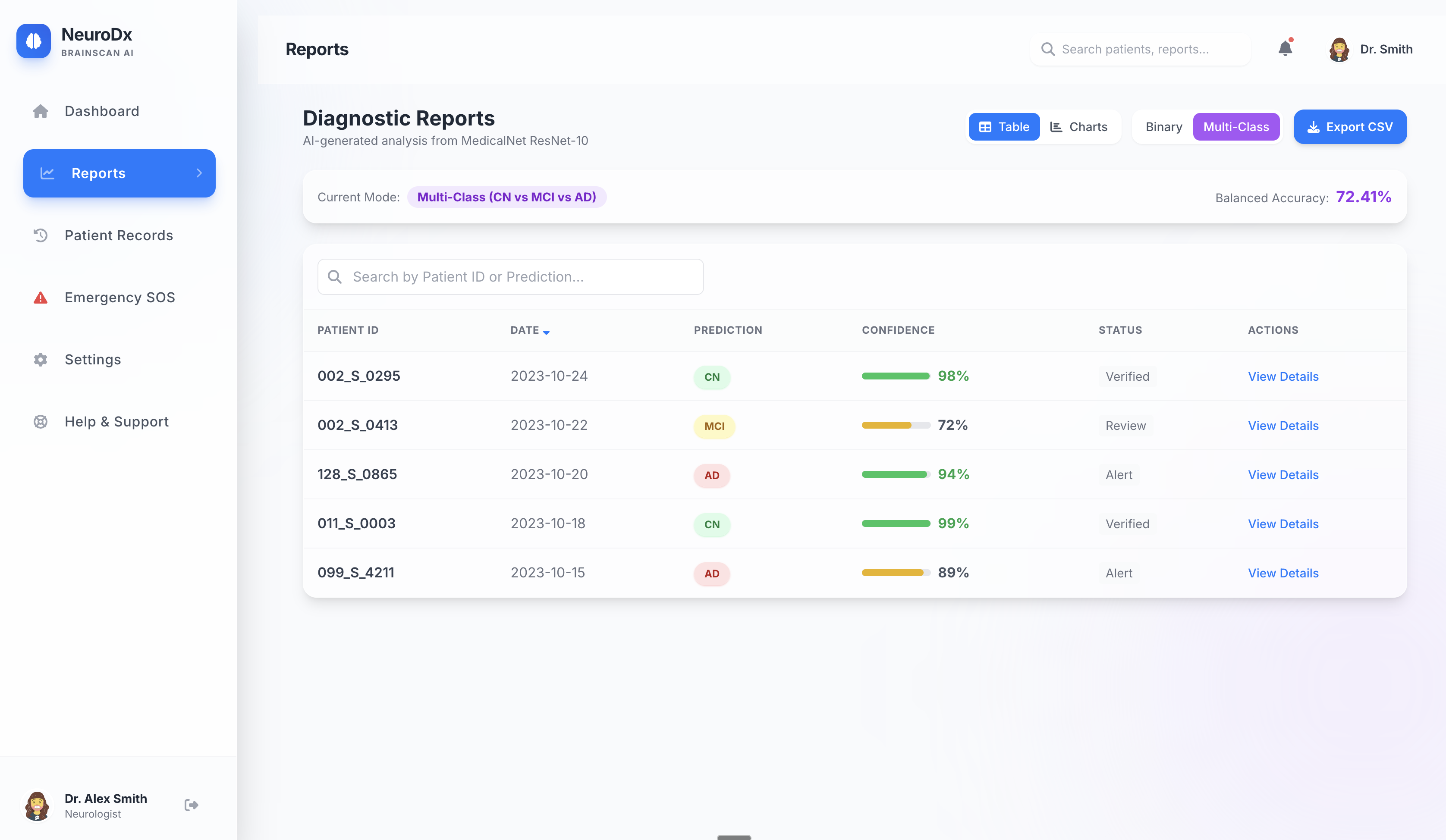
Dashboard
-
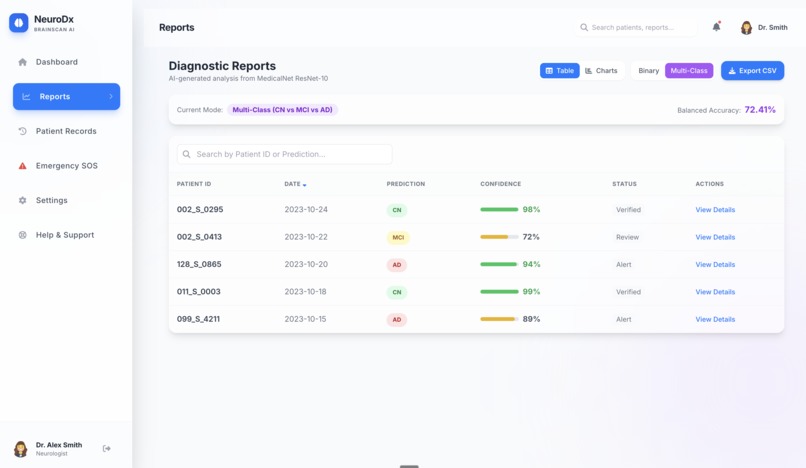
Reports
-
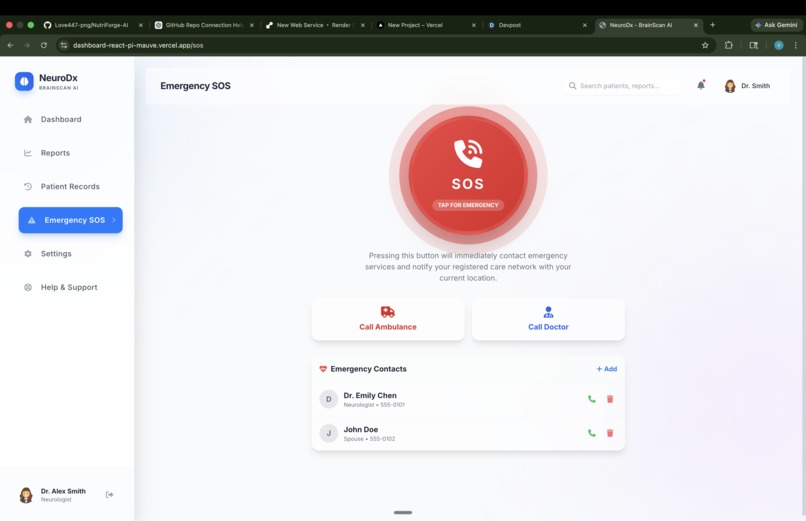
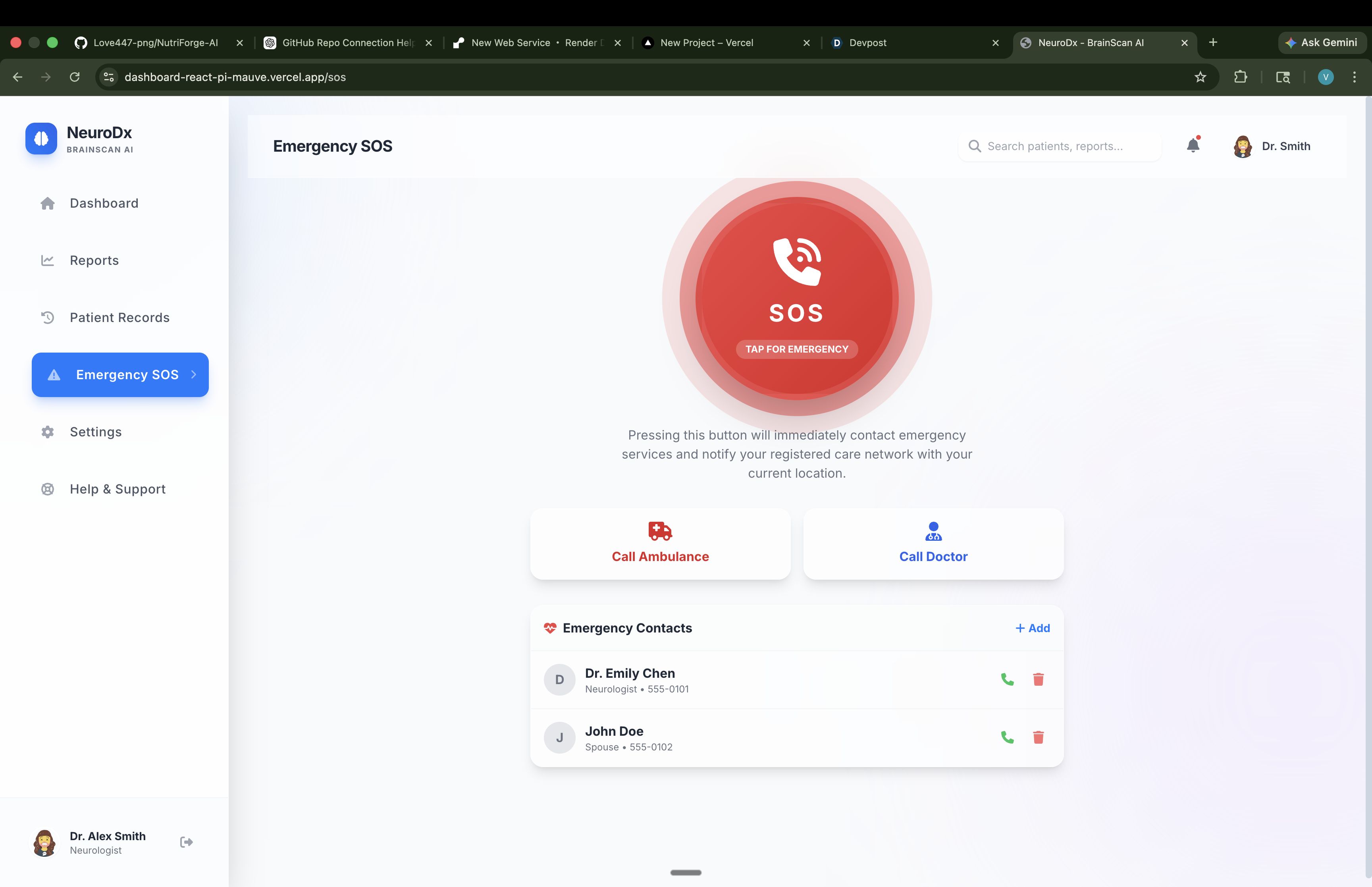
Emergency SoS
Inspiration
Healthcare accessibility and early diagnosis remain major global challenges, especially in rural and under-resourced areas. Many patients experience delayed diagnosis due to limited access to specialists, particularly in neurological disorders where early detection is critical.
We were inspired to build NeuroDx AI to bridge this gap by leveraging artificial intelligence to assist in early-stage diagnosis. The goal was to create a system that can analyze symptoms and provide intelligent predictions, empowering both patients and healthcare providers with faster, data-driven insights.
What it does
NeuroDx AI is an intelligent diagnostic assistant that:
- Takes user symptoms as input
- Processes them using machine learning models
- Predicts possible diseases (with a focus on neurological conditions)
- Provides insights that can support early diagnosis and decision-making
How we built it
We designed a full-stack AI-powered system:
- Frontend: Built with modern UI frameworks to ensure a clean and intuitive user experience
- Backend: Developed using Python-based frameworks to handle API requests and model integration
- Machine Learning Model: Trained on healthcare-related datasets to predict diseases based on symptom patterns
Mathematically, the model learns a function:
$$ f(x) = y $$
Where:
- ( x ) = input symptoms vector
- ( y ) = predicted disease
We used supervised learning techniques to minimize prediction error:
$$ Loss = \frac{1}{n} \sum (y_{true} - y_{pred})^2 $$
Challenges we ran into
- Data Quality: Medical datasets are often noisy, incomplete, or imbalanced
- Model Accuracy: Ensuring reliable predictions without overfitting
- System Integration: Connecting frontend, backend, and ML model seamlessly
- Deployment Issues: Handling cloud deployment and environment configurations
- User Experience: Making a complex AI system simple and intuitive
What we learned
- How to integrate machine learning models into real-world applications
- Importance of clean and structured data in healthcare AI
- Full-stack development with AI integration
- Debugging deployment and scaling issues
- Designing user-centric AI systems
Future improvements
- Integration with real-time patient data and wearable devices
- More advanced deep learning models for higher accuracy
- Multi-disease prediction system
- Voice-based symptom input using AI assistants
- Deployment as a scalable SaaS healthcare platform

Log in or sign up for Devpost to join the conversation.