-
-
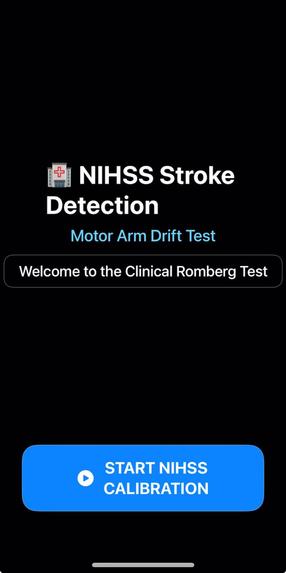
Home Page of App
-
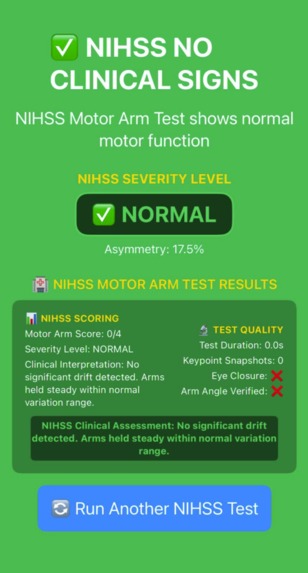
User passes pronator drift test (stroke not detected)
-
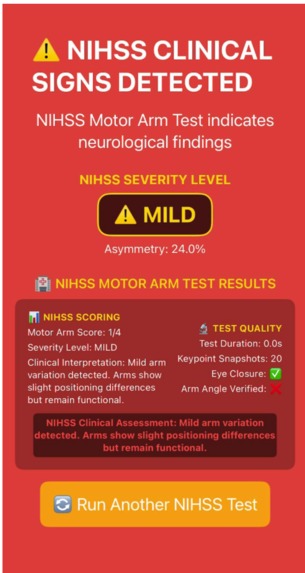
User fails pronator drift test (stroke is detected)
-
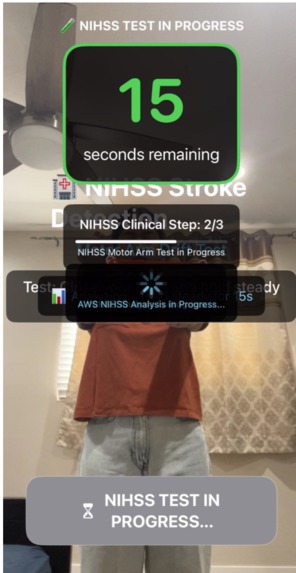
User conducting drift test
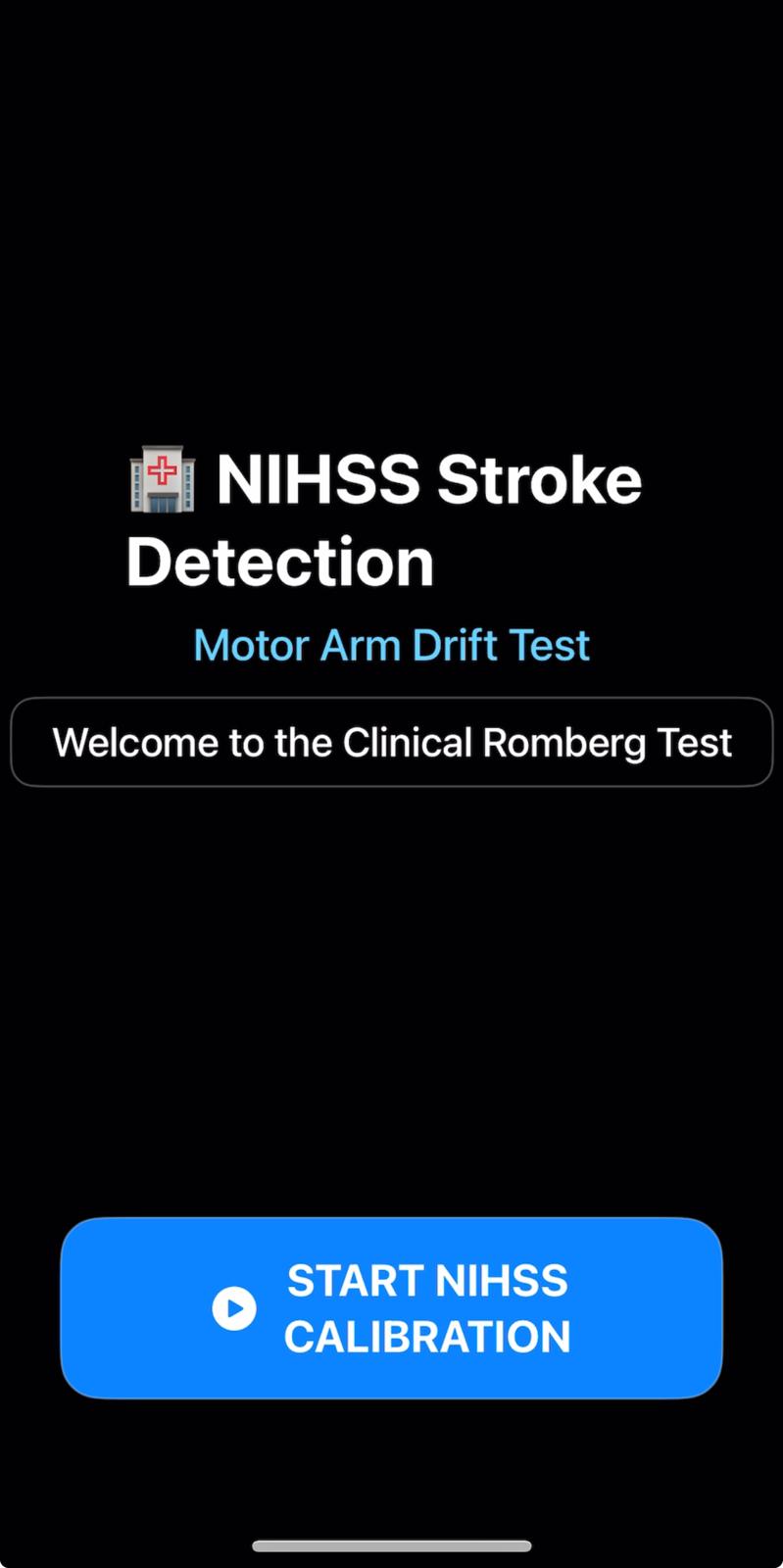
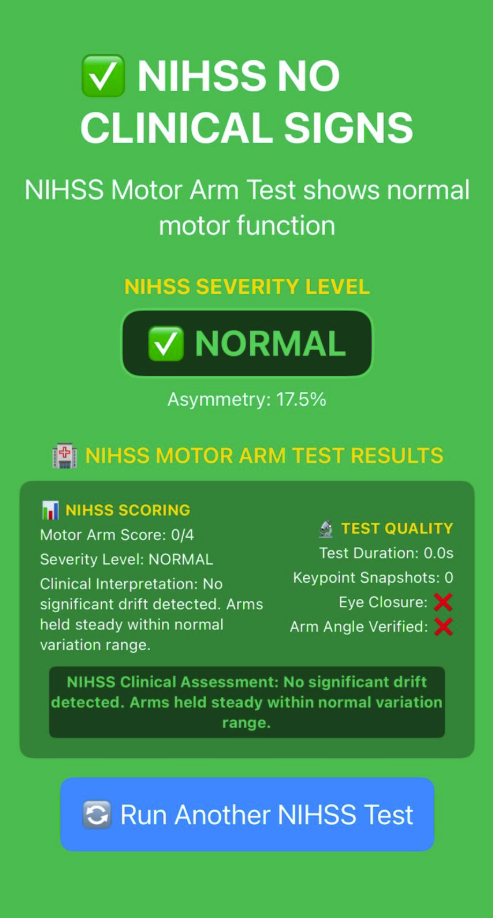
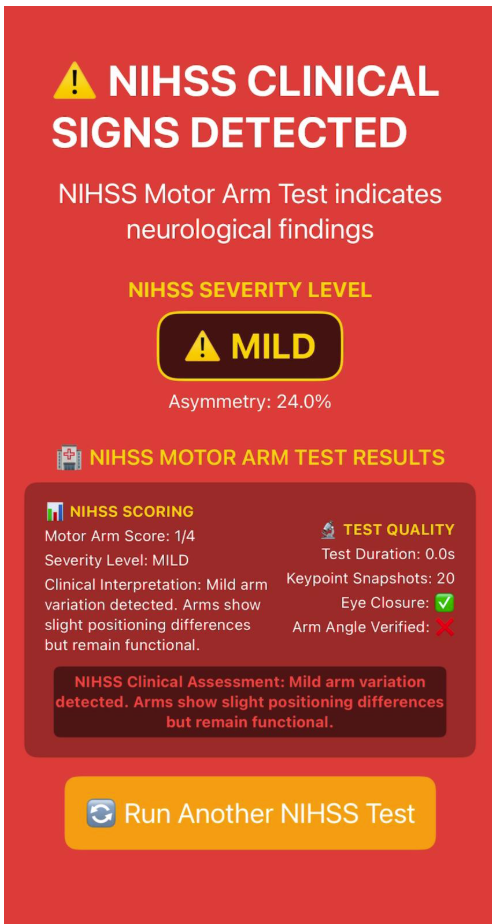
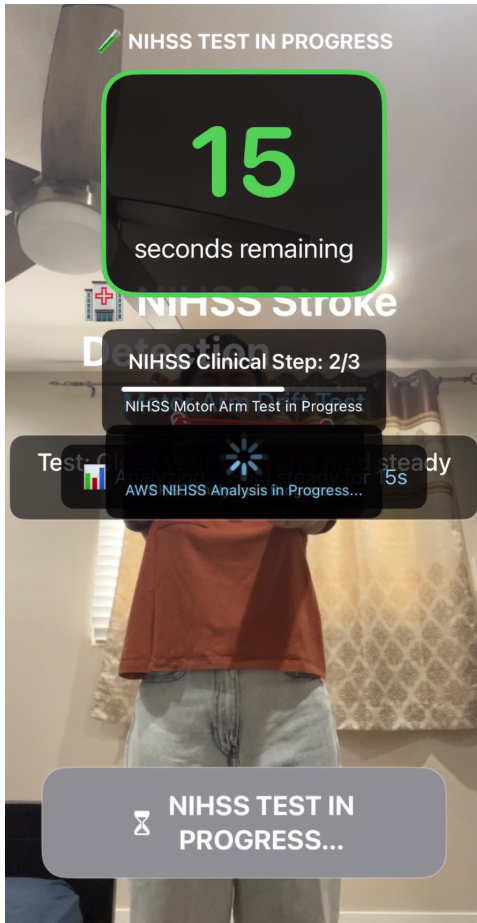
Every 40 seconds, someone in the United States suffers a stroke and 1 in 4 stroke survivors will have another. In those crucial moments, every minute of delay costs 1.9 million neurons. Witnessing the devastating impact of delayed diagnosis on loved ones inspired us to build NeuroDrift, a mobile application designed to make stroke detection faster, more objective, and accessible to everyone. NeuroDrift transforms the clinical Pronator Drift Test, a key component of the NIH Stroke Scale, into an AI-powered, smartphone-based assessment tool. We developed a high-performance SwiftUI frontend, using AVFoundation for video capture and Apple’s Vision Framework for real-time keypoint detection during the 20-second test window. This data flows through a serverless AWS architecture (Kinesis → Rekognition → Lambda), where we implemented a logic system using Lambda and DynamoDB. This enforces a 3.0-second sustained drift confirmation rule, normalizing by each user’s arm length to ensure clinical accuracy despite environmental noise or camera variation.
Our greatest accomplishment lies in the reliability and real-world readiness of this system. By merging the native speed of SwiftUI and AVFoundation with the scalability of AWS AI services, we achieved consistent results: detecting and confirming sustained arm drift within 3.5 seconds. The app delivers a clear, human-centered verdict: “Clinical Signs Detected” or “No Clinical Signs.” This integration of Lambda/DynamoDB persistence and AI-powered video analysis demonstrates both technical depth and clinical awareness, solving the challenge of maintaining accurate state in a stateless environment. Looking forward, we aim to refine the user interface for greater accessibility and aesthetics, conduct pilot studies to validate clinical accuracy, and integrate a custom SageMaker model to further enhance detection precision, advancing NeuroDrift toward becoming a professional-grade stroke screening tool that helps save time, neurons, and lives.
Built With
- amazon-web-services
- swift-ui

Log in or sign up for Devpost to join the conversation.