Inspiration
Working in HR, I saw neurodiverse colleagues struggle to get workplace adjustments that matched their needs—no centralized way to share preferences, and managers lacked training to support them. I wanted to build something that centered neurodiverse voices while equipping workplaces to be truly inclusive, rooted in ADA guidelines and real workplace needs.
What it does
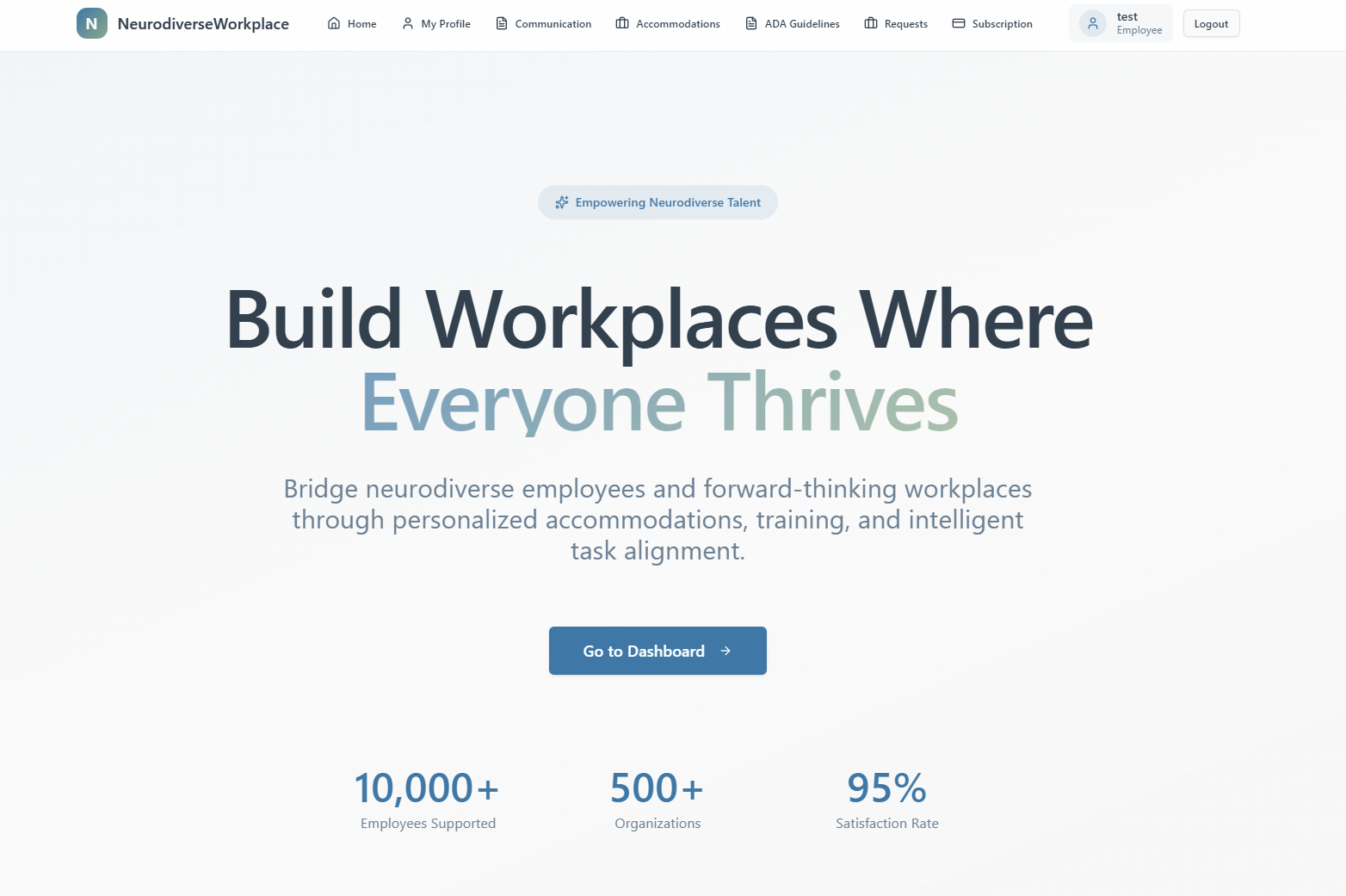
NeurodiverseWorkplace is a web platform where neurodiverse employees create personalized profiles (sensory, communication, accommodation needs) and track adjustment effectiveness. Employers access neurodiversity training, a task-matching engine for strengths-based assignments, and compliance tools to meet ADA obligations.
How we built it
We started with user interviews—talking to neurodiverse employees, HR teams, and DEI managers to map core needs. Built the frontend with React for accessible, dyslexia-friendly UI; backend with Node.js/Express for role-based access control; PostgreSQL for secure data storage; and integrated Stripe for subscription management.
Challenges we ran into
Balancing data privacy (ensuring employee neurotype data stayed private unless shared) with manager access to critical accommodation info was tough. We also had to design the task-matching logic to be flexible enough for diverse neurotypes and task requirements without overcomplicating the UI.
Accomplishments that we're proud of
Creating a platform that’s accessible (customizable brightness, dyslexia-friendly typography) and centers neurodiverse users’ autonomy. We also built a task-matching engine that truly aligns strengths with tasks, and compliance tools that simplify ADA adherence for small and enterprise teams.
What we learned
Neurodiversity inclusion isn’t just about “accommodations”—it’s about centering user voice in design. We also learned how to balance strict privacy rules with functional workplace tools, and the importance of testing with neurodiverse users at every stage of development.
What's next for this project
We plan to add mobile-responsive enhancements (beyond basic responsiveness), expand training content to include more neurotype-specific modules, and explore lightweight integrations with common task management tools to streamline task matching workflows.

Log in or sign up for Devpost to join the conversation.