-
-
Neuro Detect landing page outlining the platform’s purpose and clinical focus.
-
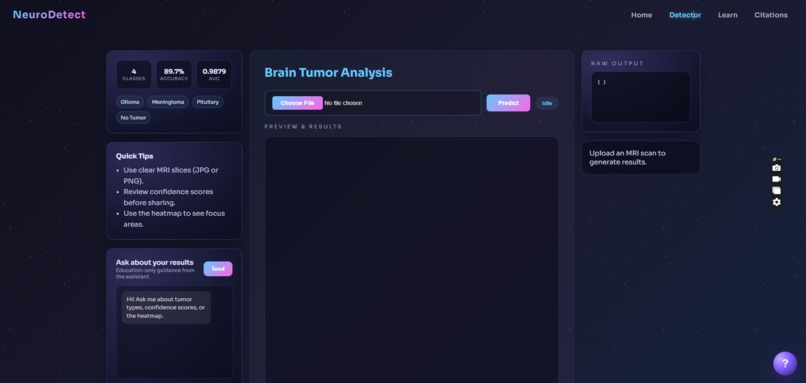
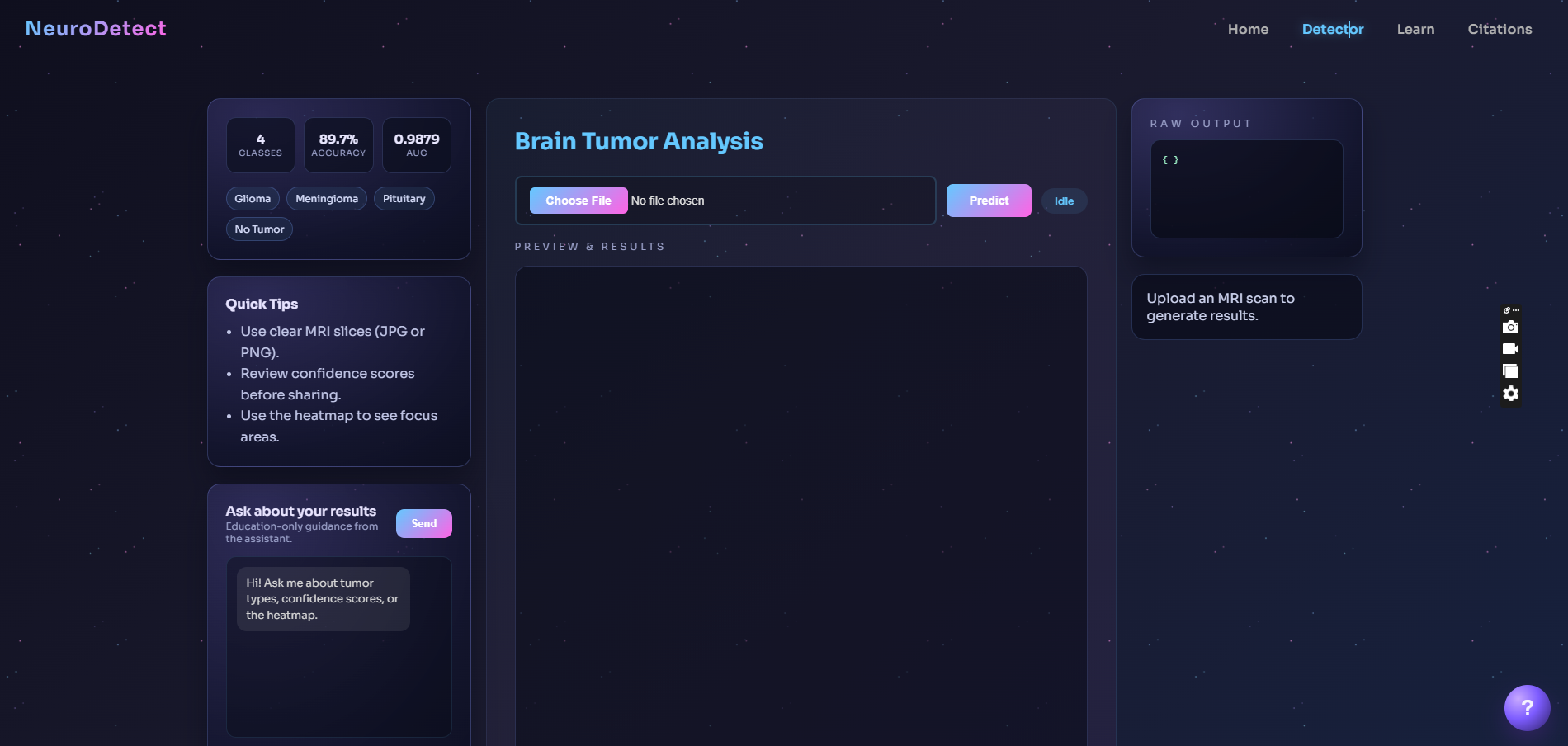
Dashboard displaying model metrics, supported tumor classes, and analysis tools.
-
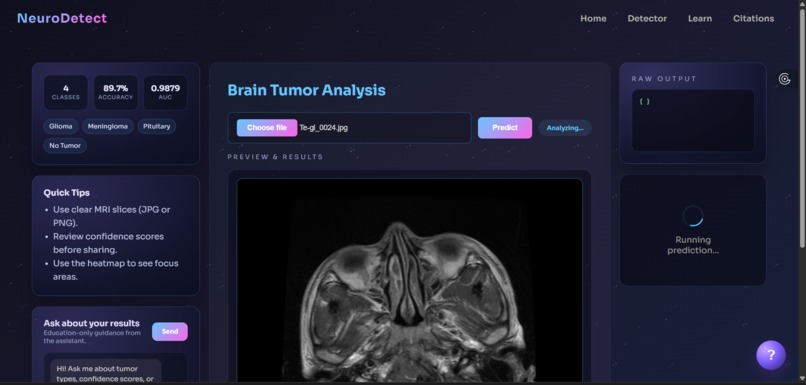
Interface for uploading brain MRI scans to begin analysis.
-
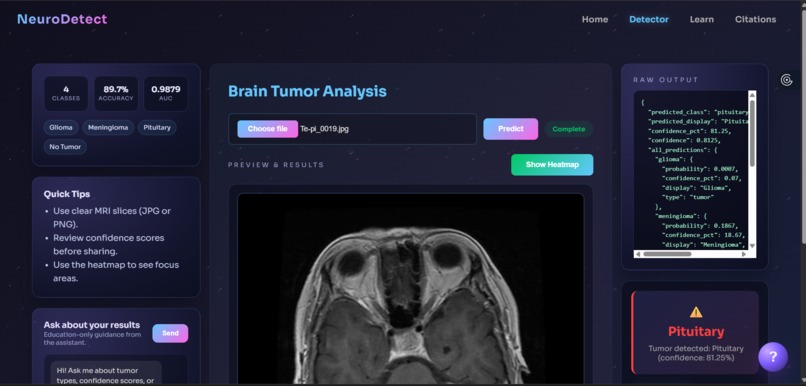
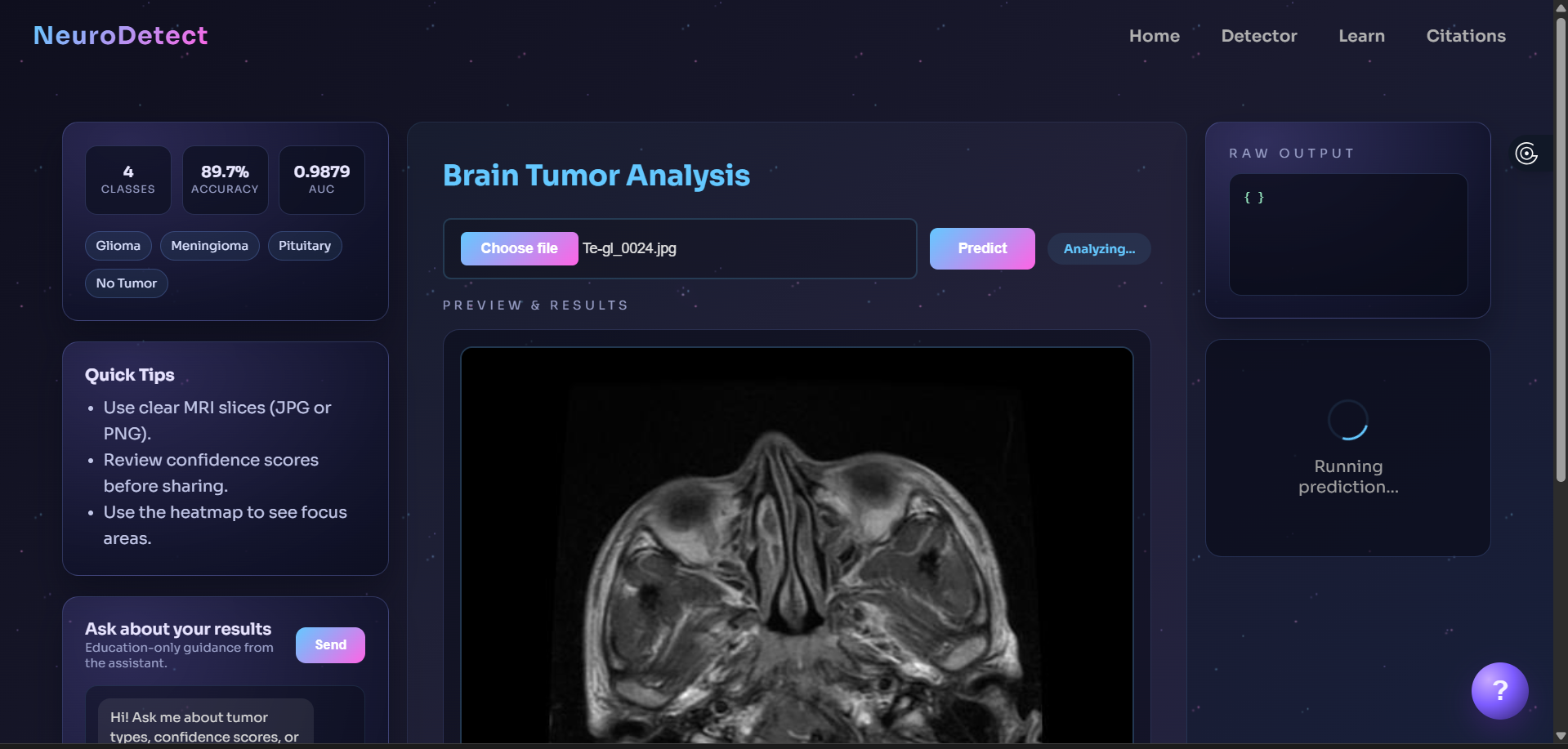
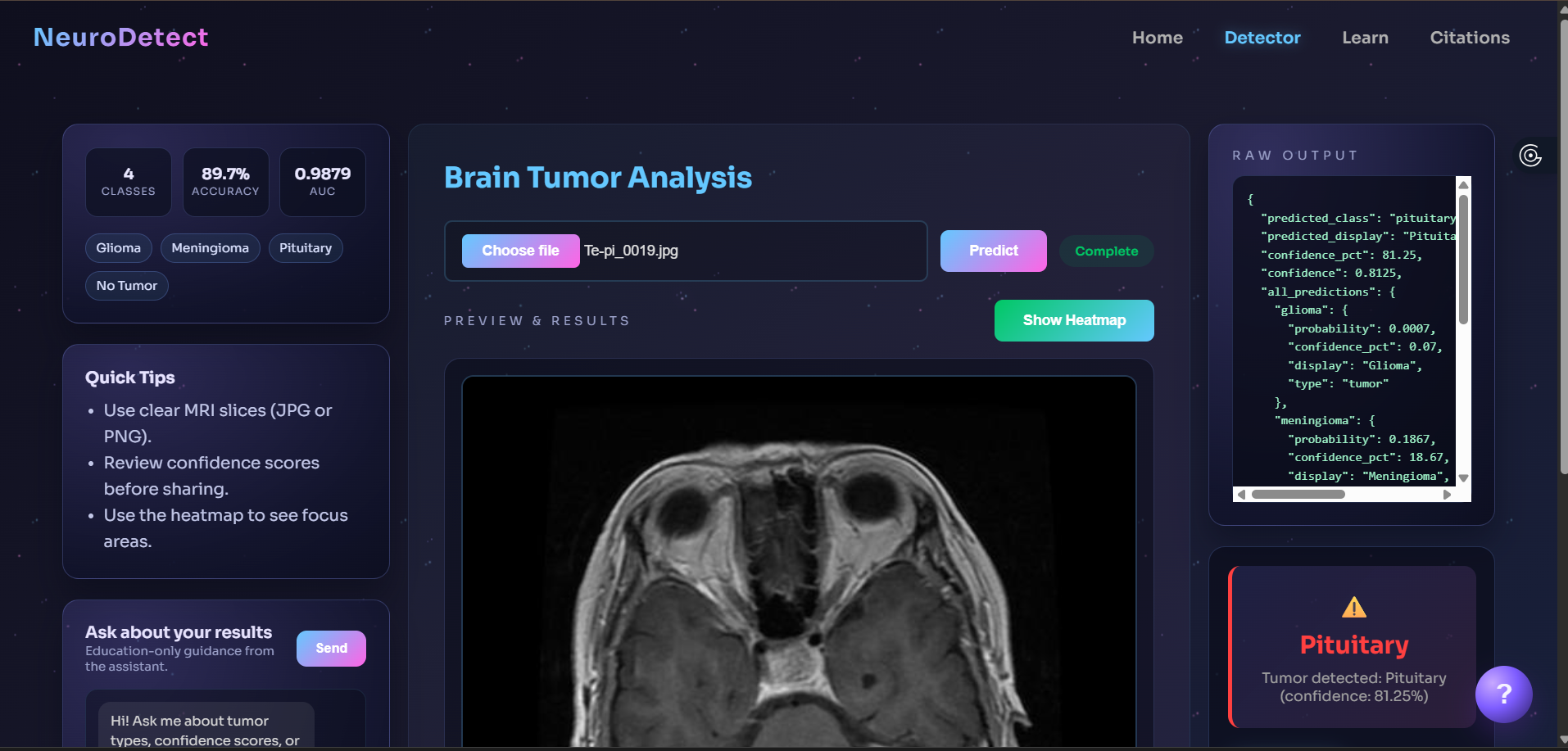
Real-time MRI analysis with backend processing status.
-
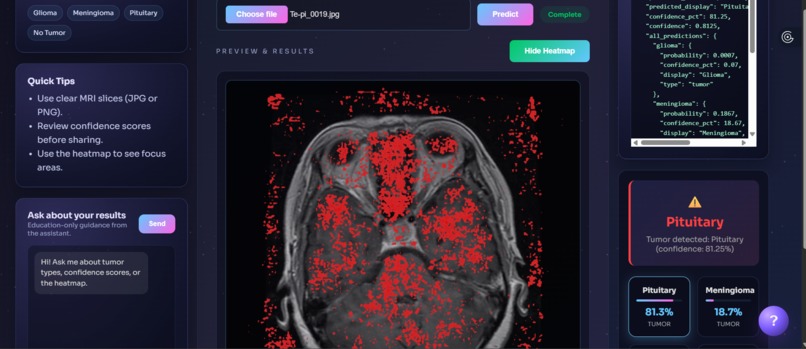
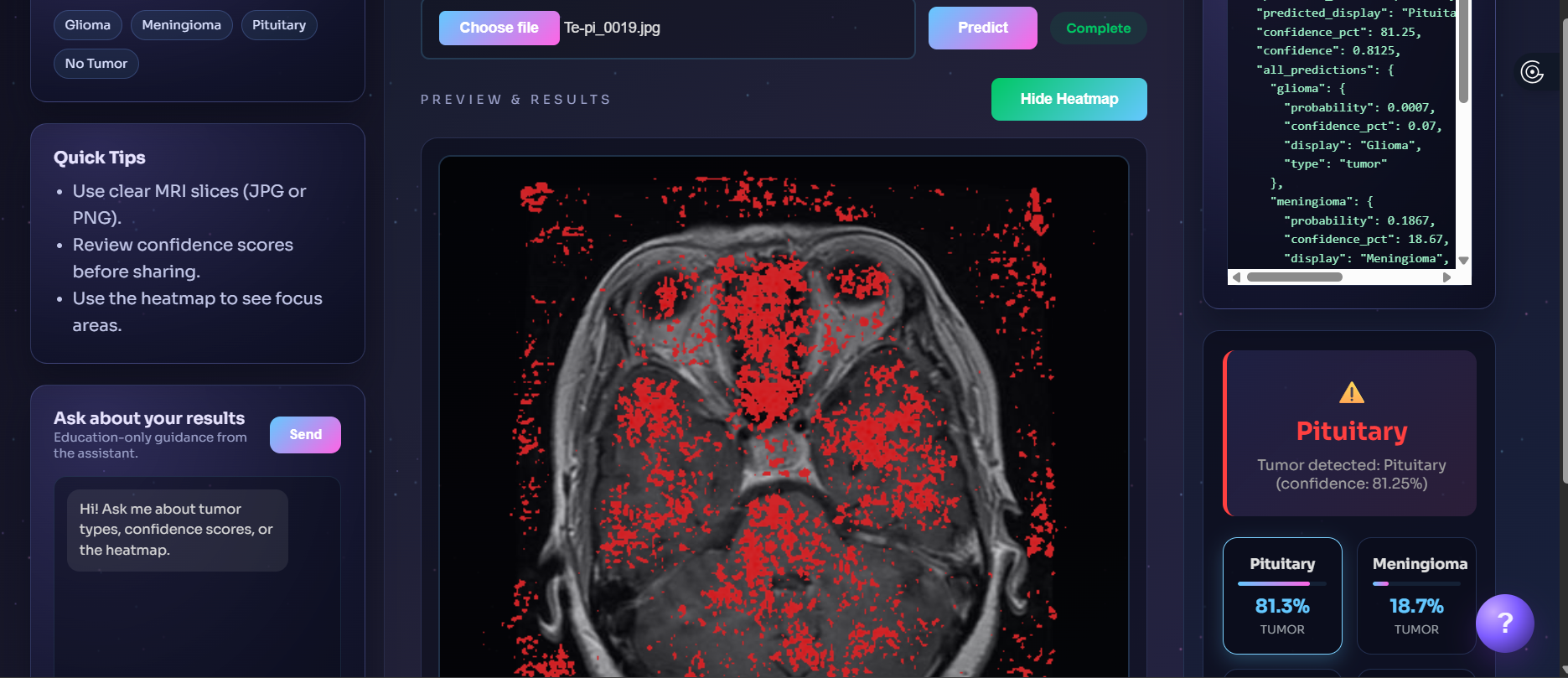
Heatmap overlay showing regions that influenced the model’s prediction.
-
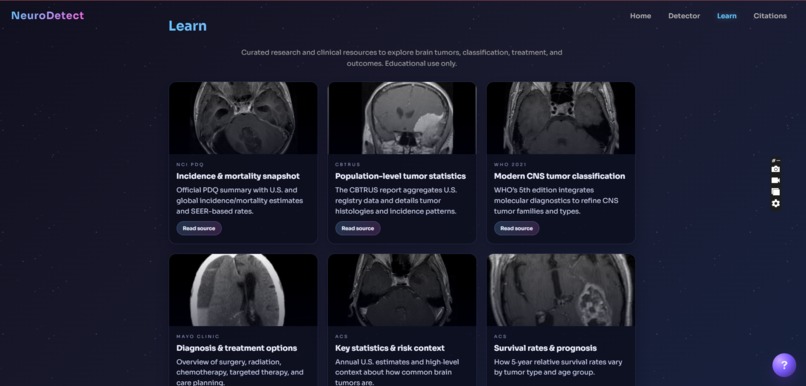
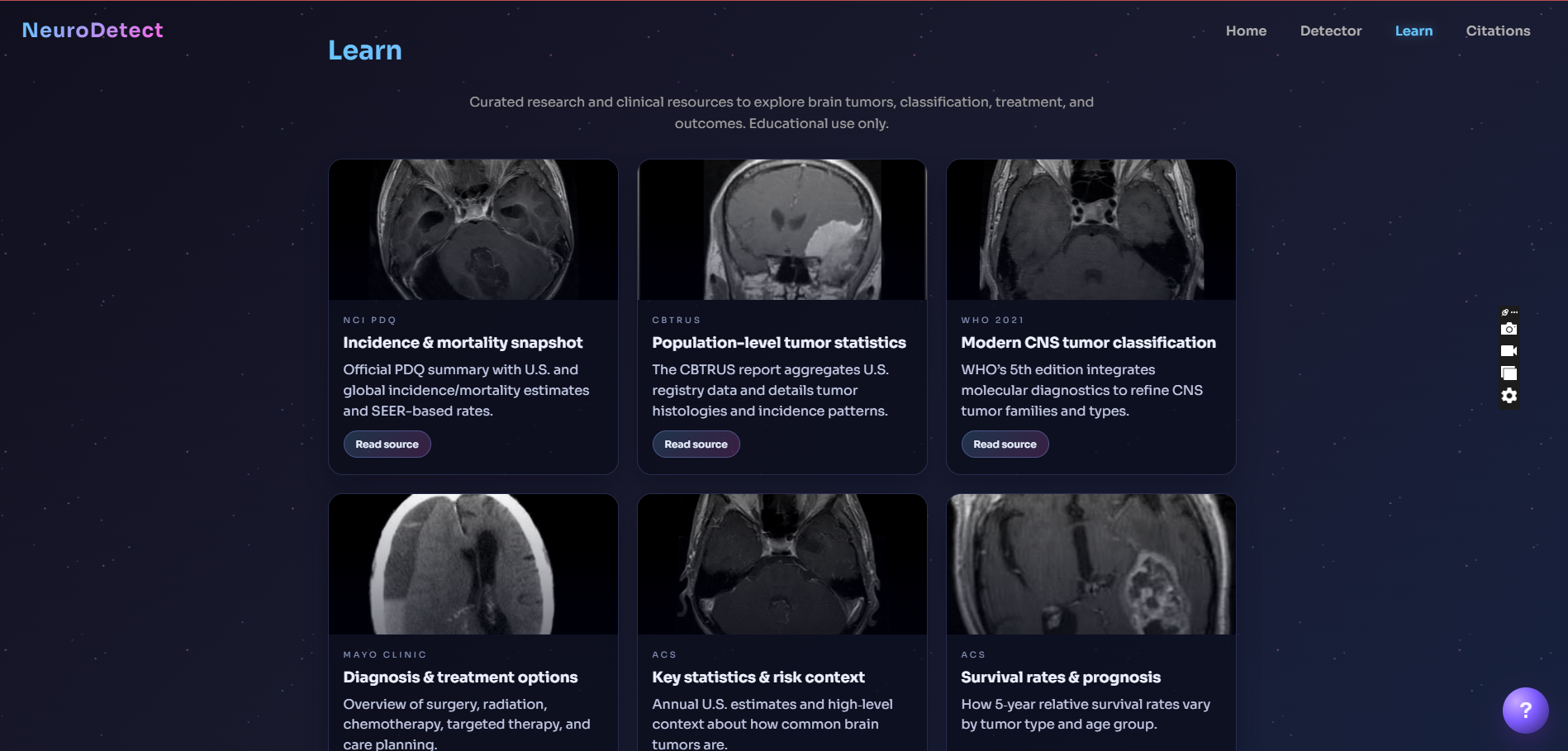
Curated learning resources about brain tumors and classification.
-
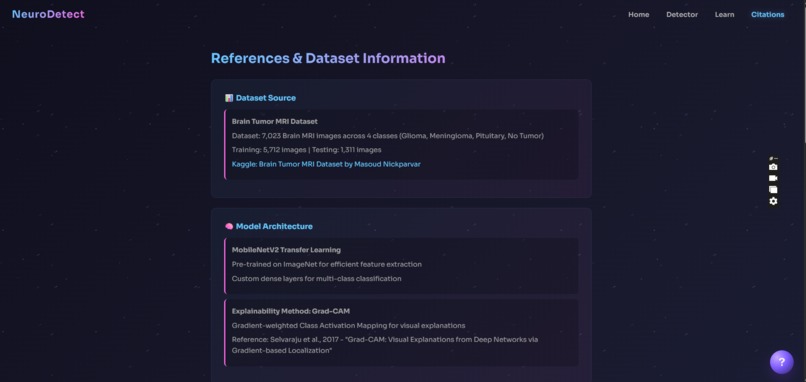
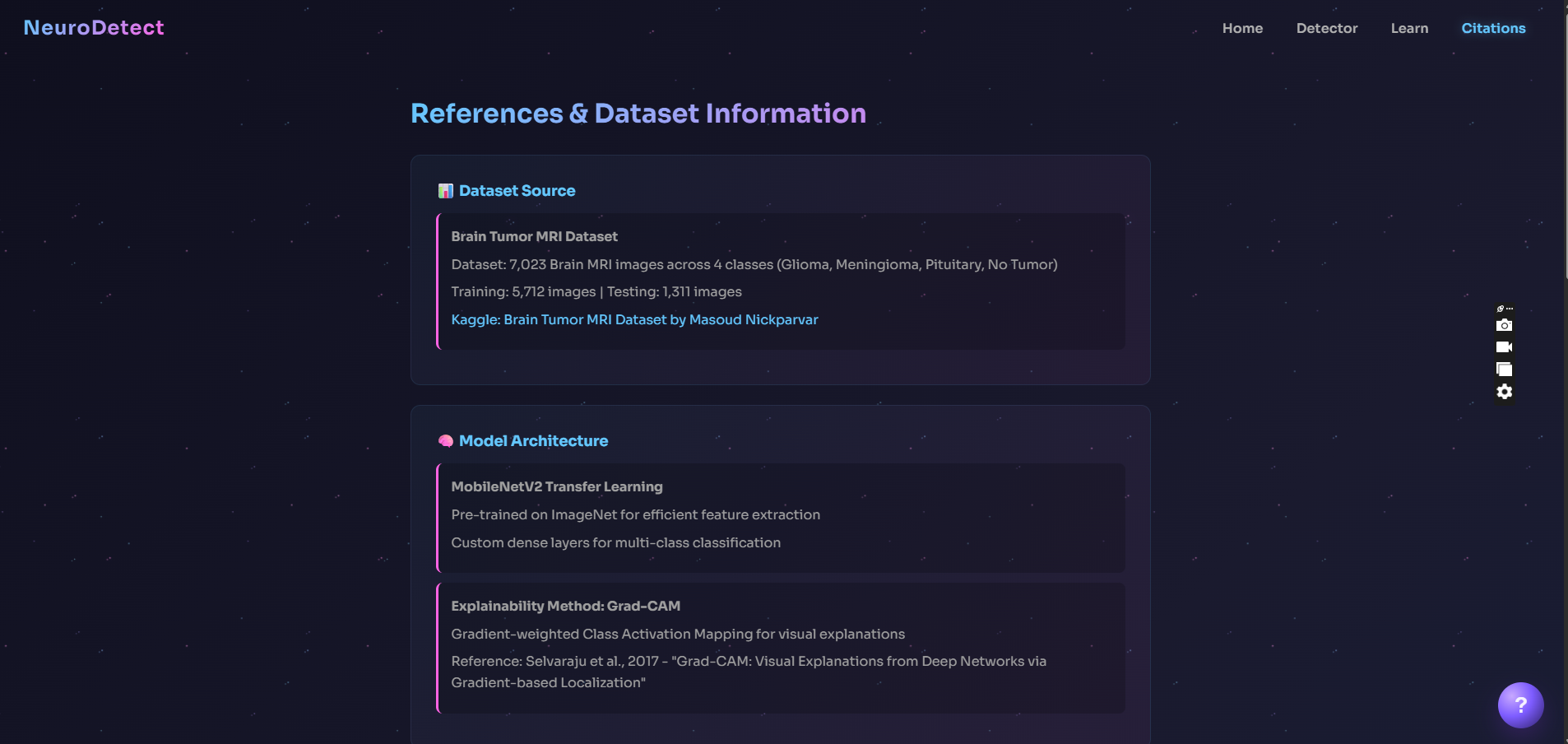
References detailing datasets, model architecture, and sources used.
What It Does
NeuroDetect is an AI-first diagnostic assistant that analyzes brain MRI scans and predicts tumor types, alongside confidence scores and explainable heatmaps generated by Grad-CAM. The system provides decision support and visual reasoning without attempting to automate clinical judgment. Our focus is on augmenting expertise, not substituting medical professionals or making autonomous diagnoses.
Inspiration
Brain MRI interpretation is time-intensive and mentally demanding, especially as imaging volumes continue to rise. We were inspired to build a tool that supports radiologists rather than replaces them, reducing diagnostic friction while keeping human judgment at the center of care. Our goal was to explore how AI can accelerate screening workflows, increase accessibility, and improve clarity for both clinicians and students.
Brain tumors are a universal health burden that can affect anyone — children, adults, seniors — regardless of geography, race, income level, or healthcare infrastructure. Unlike lifestyle-driven illnesses, brain cancers often emerge without a clear preventable cause, making early detection and diagnosis critical for survival.
Children: Brain tumors are the leading cause of cancer-related death in children, surpassing leukemia in several regions. Pediatric cases are often aggressive, requiring rapid diagnosis to preserve neurological function and survival.
Adults: In adults aged 20–54, brain and CNS tumors are a major driver of lost productive life years due to their cognitive, motor, and psychological impact.
Seniors: Incidence increases with age, and comorbidities can complicate treatment. For older populations, delays in diagnosis increase morbidity and reduce treatment options.
Global Statistics
- Brain and CNS tumors affect ~308,000 people per year globally
- They account for ~251,000 deaths annually worldwide
- Incidence is rising due to better imaging and detection
- Pediatric brain tumors are the #1 cancer killer in children and adolescents
- 5-year survival varies drastically by tumor type (e.g., glioblastoma ~6%)
- Earlier detection directly correlates with better functional outcomes and survival.
Access & Inequality##
- Access to MRI imaging and neuroradiology expertise is not evenly distributed:
- Many low- and middle-income countries have <1 MRI per million people
- Even high-income countries face shortages of trained neuroradiologists
- Long wait times and backlog of MRI scans can delay diagnosis by weeks or months
- This disparity means that where you live can determine how early your tumor is found.
How We Built It
We trained a convolutional neural network (CNN) using a publicly available Kaggle Brain Tumor MRI dataset. The model outputs a softmax probability distribution across four tumor classes, represented as:
$$ p(y \mid x) = \text{softmax}(f_\theta(x)) $$
Prior to training, the images were preprocessed through normalization, resizing to (224 \times 224), and data augmentation through rotation, zoom, and noise injection. The backend was built using FastAPI, serving the trained model as an inference API that returns both predicted probabilities and visual explanations.
To support transparency, Grad-CAM was integrated for explainability. The attention heatmaps were computed as:
$$ L_{\text{Grad-CAM}}^c = \text{ReLU}\left(\sum_k \alpha_k^c A^k\right) $$
where (A^k) are the CNN feature maps and (\alpha_k^c) are gradient-derived importance weights. The frontend, implemented using HTML, CSS, and JavaScript, handles MRI uploads, API requests, and overlays the heatmaps on top of the input scan. Both the frontend and backend were deployed on Render, enabling cloud-based real-time inference.
Challenges We Ran Into
We encountered several challenges throughout development. Integrating the trained machine learning model into the FastAPI backend required careful handling of serialization, GPU compatibility, and inference latency. Deploying a multi-service system to the cloud introduced reliability and networking issues, including CORS restrictions and performance bottlenecks. Balancing explainability, ethical considerations, and user experience under tight hackathon constraints was an additional difficulty, especially in the context of medical AI where responsibility and transparency matter.
Accomplishments We’re Proud Of
We are proud to have successfully deployed a fully functional end-to-end AI system that performs real-time tumor classification, generates visual explanations, and offers a clean user interface. We are especially proud of designing NeuroDetect as a responsible, human-in-the-loop assistant that focuses on transparency and clinician support rather than automation or replacement. For a hackathon-scale project, achieving both technical deployment and ethical framing was a major accomplishment.
What We Learned
Throughout the process, we learned how to deploy machine learning models in cloud environments, build inference pipelines using FastAPI, and integrate explainability techniques such as Grad-CAM into a medical imaging workflow. We also learned how to design for non-technical users, communicate limitations clearly, and consider ethical issues such as automation bias, uncertainty, and responsible deployment in healthcare settings. The project highlighted that explainability in medical AI is not merely a research feature but a practical requirement for trust and adoption.
What’s Next for NeuroDetect
Moving forward, we plan to improve model performance and calibration, explore support for volumetric (3D) MRI, and integrate uncertainty estimation techniques such as Monte Carlo Dropout, defined as:
$$ \hat{p}(y \mid x) = \frac{1}{T} \sum_{t=1}^{T} \text{softmax}(f_{\theta_t}(x)) $$
We also aim to expand to other modalities such as CT, PET, and fMRI, incorporate segmentation models for more localized tumor analysis, and explore integration with clinical systems such as PACS. Our long-term mission is to build scalable, responsible, and clinically meaningful AI assistants that support medical imaging workflows ethically and effectively.
Built With
- css
- fastapi
- geminiapi
- html
- javascript
- kaggle
- render
- tensorflow


Log in or sign up for Devpost to join the conversation.