-
-
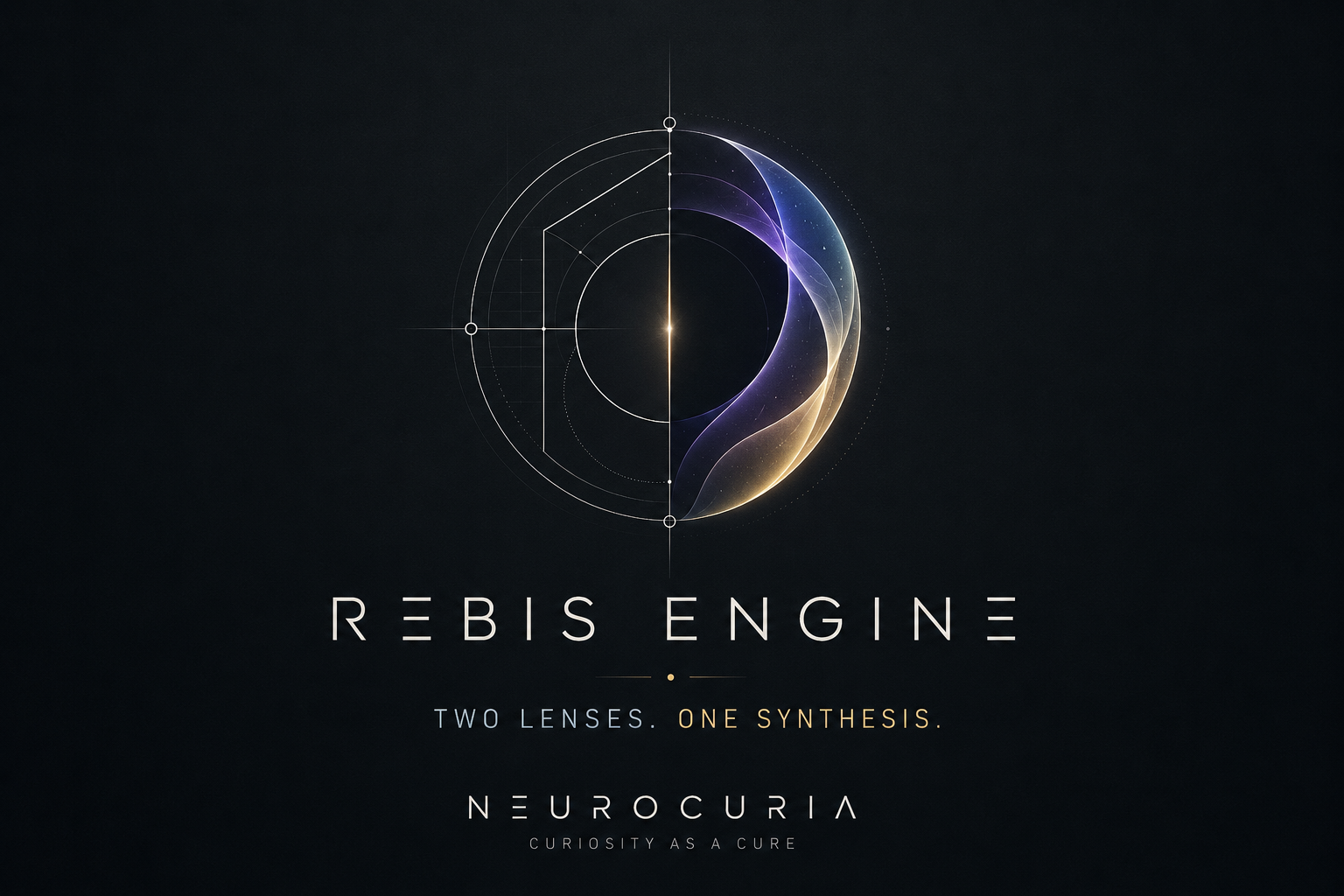
Two Lenses. One Synthesis. Better Reasoning.
-
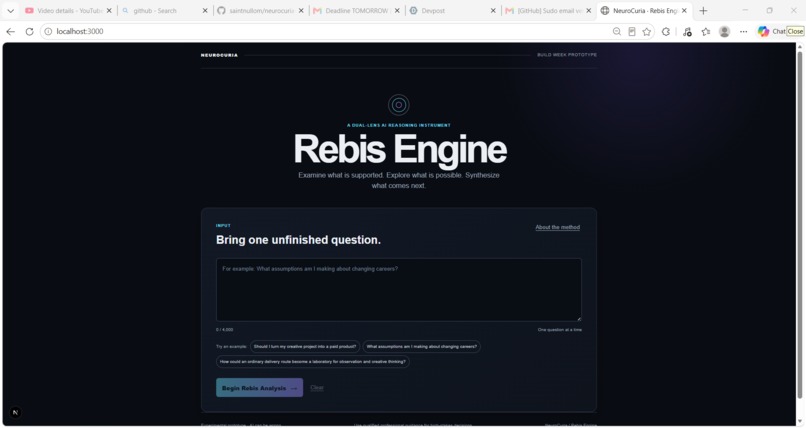
Rebis Engine reasoning workspace
-
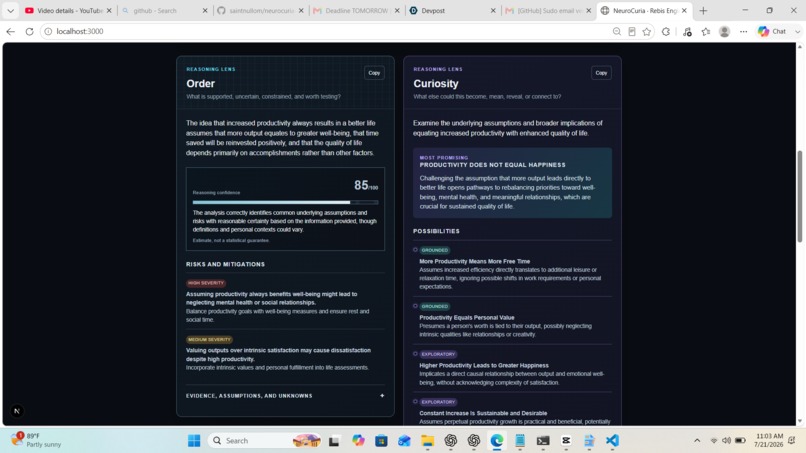
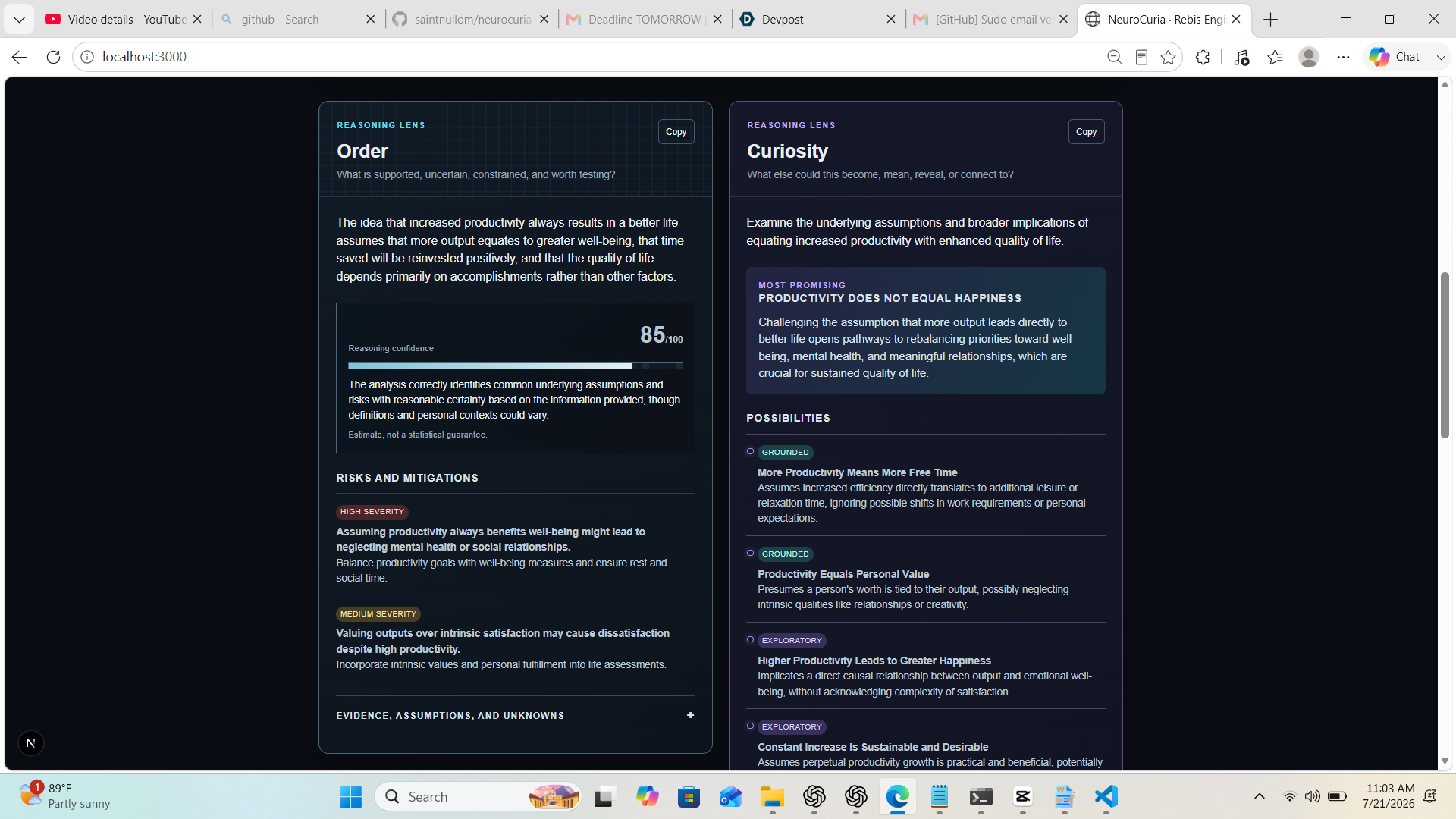
Order evaluates evidence and constraints. Curiosity expands the possibility space
-
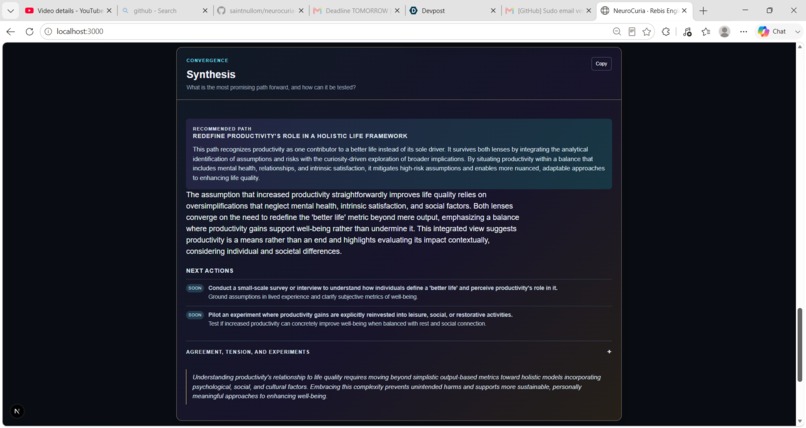
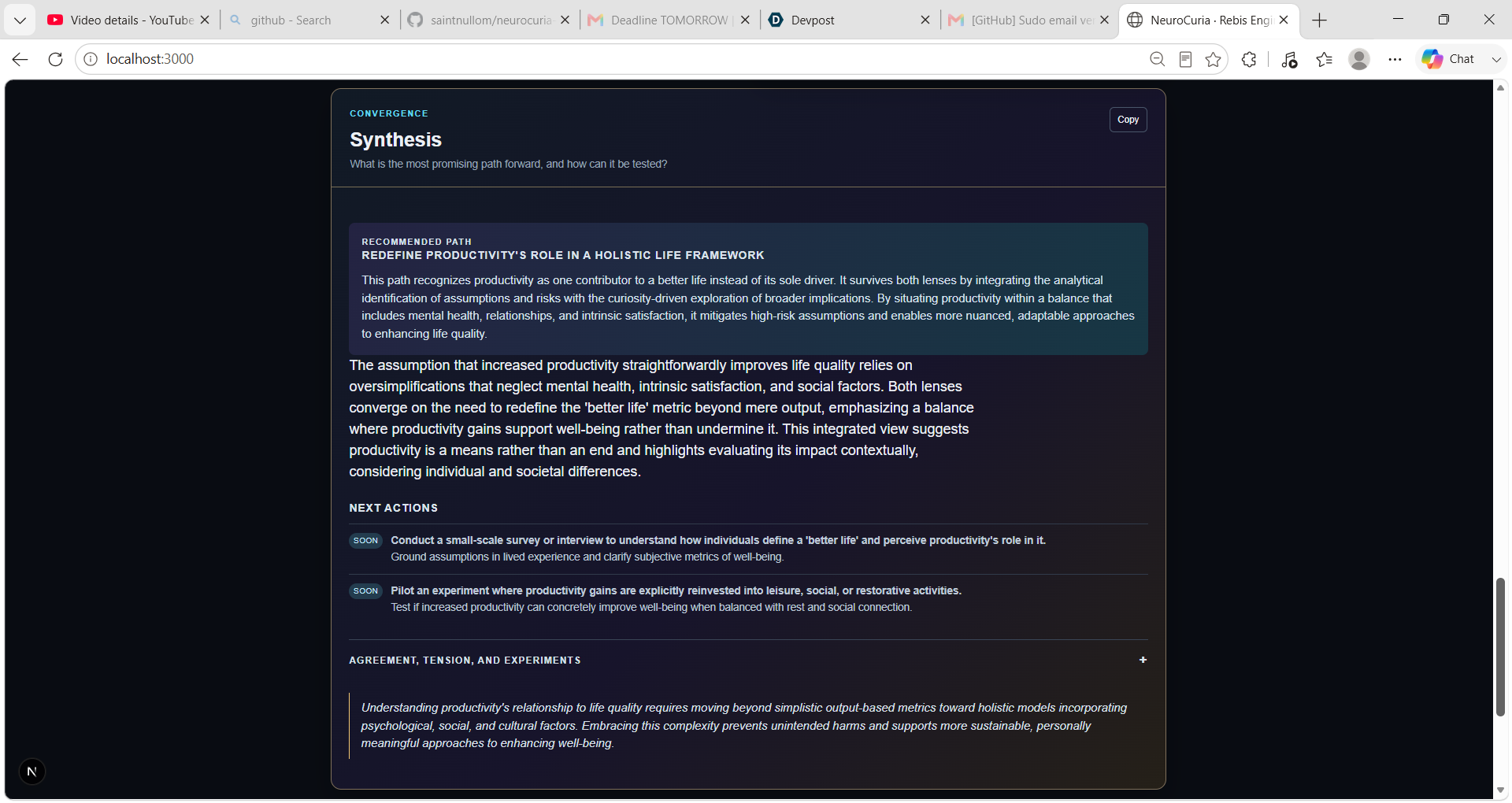
Synthesis converts both lenses into action
-
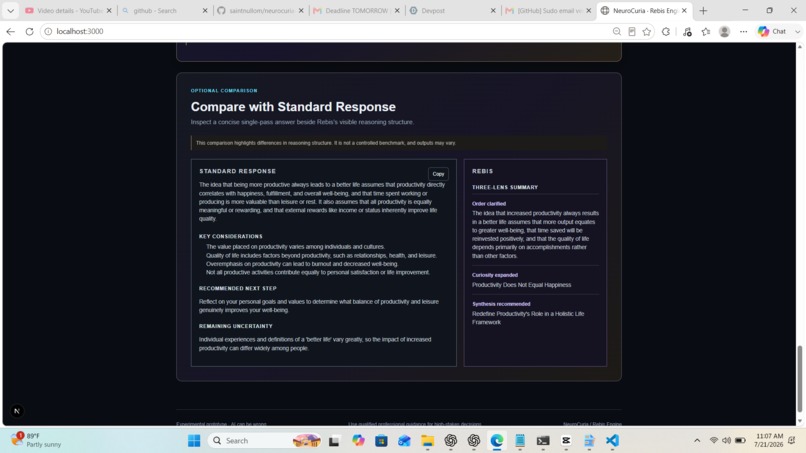
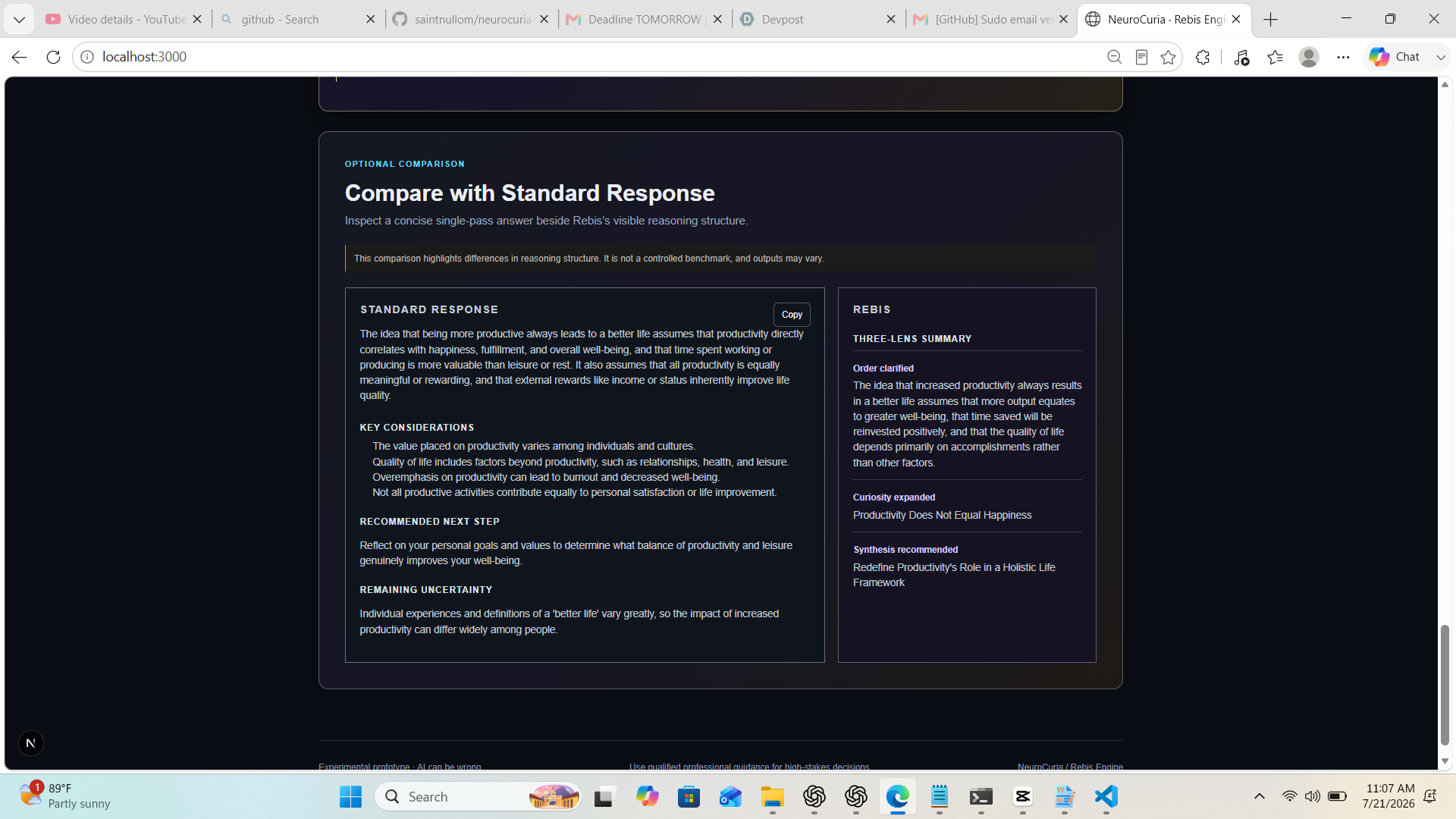
Structured reasoning compared with a standard AI response
Inspiration
Most AI systems present reasoning as a single polished answer. That can be useful, but it often hides the assumptions, uncertainty, and alternative possibilities that shaped the result.
I built NeuroCuria Rebis Engine to explore a different approach.
Rebis separates reasoning into two distinct lenses:
Order evaluates evidence, constraints, definitions, risks, and uncertainty. Curiosity explores alternatives, analogies, overlooked possibilities, and unconventional perspectives.
Only after both lenses complete their work does a third stage, Synthesis, combine their strongest insights into a practical recommendation.
The project grew from NeuroCuria’s broader philosophy that curiosity can be more than open-ended brainstorming. It can function as a disciplined reasoning tool when balanced with evidence, structure, and critical evaluation.
What it does
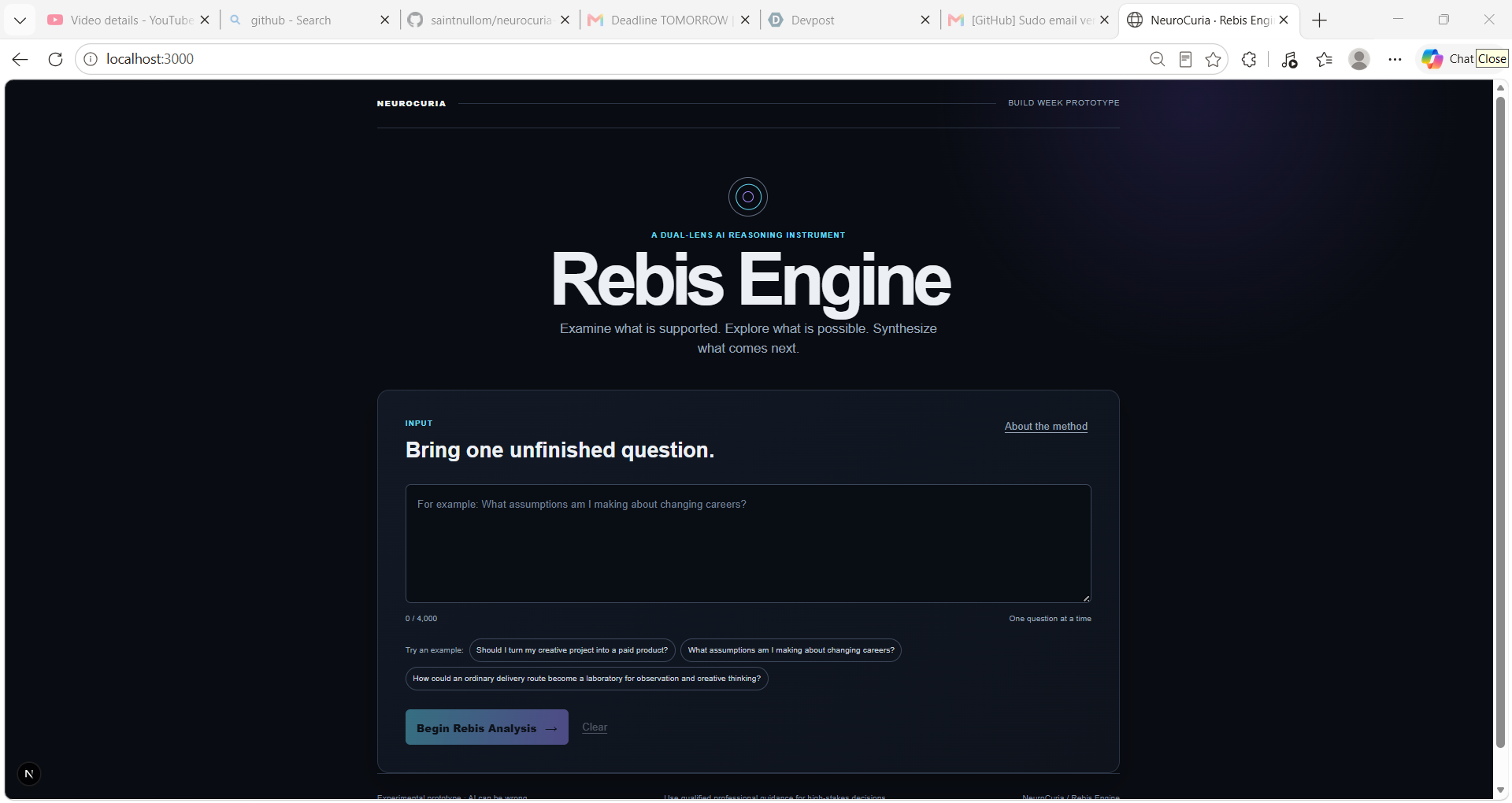
A user submits one question to the engine.
Rebis processes that question through three visible stages:
Order analyzes what is known, what is uncertain, which assumptions are present, and what constraints or risks matter. Curiosity expands the possibility space by exploring alternative interpretations, analogies, overlooked variables, and unconventional perspectives. Synthesis combines the strongest insights from both lenses into a clear conclusion, recommendation, or next step.
The interface keeps the stages separate so users can inspect how the result was formed instead of receiving only a final answer.
Rebis also includes a Standard Response comparison, allowing users to compare the structured three-stage workflow with a conventional single-pass AI response.
How we built it
Rebis was built as a full-stack web application using:
Next.js React TypeScript Zod OpenAI Responses API Codex
The application uses separate prompt modules and structured output schemas for Order, Curiosity, Synthesis, and the Standard Response.
Order and Curiosity run independently. Their outputs must pass schema validation before they can enter the Synthesis stage. This prevents malformed or incomplete results from silently moving through the reasoning pipeline.
All live model calls are handled server-side so API credentials are not exposed in the browser.
The application also includes:
live and demo modes loading and progress states confidence indicators expandable reasoning details responsive layouts structured error handling automated schema and workflow tests configurable model selection through environment variables
Codex served as the primary implementation partner. It helped translate the original concept into an application architecture, build the API integration, create the validation schemas, implement tests, diagnose runtime issues, and refine the interface through repeated QA.
GPT-5.6 was used during concept development, prompt design, evaluation, documentation, and quality assurance. The live application uses the OpenAI model selected through its environment configuration.
Challenges we ran into
The largest challenge was preventing the three stages from collapsing into slightly different versions of the same response.
Early versions sometimes produced:
an Order response that brainstormed too broadly a Curiosity response that became vague or unfocused a Synthesis response that merely summarized the first two outputs
We addressed this by defining a distinct responsibility for each stage, using separate structured prompts, validating each output against a different schema, and making Synthesis dependent on completed Order and Curiosity results.
Another challenge was balancing transparency with readability. Showing every detail at once made the interface dense, while hiding too much weakened the purpose of the project. We solved this by showing concise summaries first and placing supporting material inside expandable sections.
We also encountered practical development issues involving:
API authentication rate limits environment configuration Next.js caching workspace and lockfile conflicts development-server conflicts graceful handling of provider failures
These problems led us to improve both the application’s failure states and its setup documentation.
Accomplishments that we're proud of
We are proud that Rebis moved from an abstract reasoning philosophy into a working, testable application.
Specific accomplishments include:
building a complete Order → Curiosity → Synthesis workflow preserving meaningful separation between the reasoning lenses implementing structured output validation connecting the application to the OpenAI Responses API keeping API credentials server-side creating a Standard Response comparison mode supporting both demo and live operation building responsive desktop and mobile layouts adding clear error handling and progress states completing automated tests and manual QA documenting the project for installation, evaluation, and continued development
Most importantly, the project demonstrates that creative exploration and rigorous analysis do not need to compete. They can remain distinct, challenge one another, and then converge into a more useful result.
What we learned
We learned that structured AI reasoning depends on much more than choosing a capable model.
The architecture around the model matters just as much.
Prompt separation, schema validation, workflow dependencies, visible uncertainty, and interface design all affect whether an AI system feels understandable and trustworthy.
We also learned that Synthesis must do more than summarize. A useful synthesis should resolve tensions, identify tradeoffs, and transform competing perspectives into an actionable next step.
On the development side, the project taught us how to move from an early concept to a functioning full-stack product with API integration, structured validation, testing, documentation, version control, and a complete demonstration.
What's next for NeuroCuria Rebis Engine
The next stage will focus on improving reasoning quality, expanding evaluation, and developing Rebis into a broader reasoning workspace.
Planned directions include:
testing and comparing multiple OpenAI models improving the depth and originality of Synthesis selectable reasoning depth saved analysis sessions side-by-side comparison between sessions user-defined reasoning lenses exportable reports collaborative evaluation domain-specific modes for education, research, strategy, and creative work
The long-term goal is not to replace human judgment. It is to create an AI-assisted environment where different modes of thought remain visible, inspectable, and useful.
NeuroCuria Rebis Engine turns one answer into a transparent reasoning process: two lenses, one synthesis.
Built With
- artificial-intelligence
- codex
- creative-thinking
- critical-thinking
- decision-support
- explainable-ai
- full-stack
- gpt
- human-ai-collaboration
- innovation
- neurocuria
- nextjs
- openai
- productivity
- prompt-engineering
- react
- reasoning
- rebis-engine
- responses-api
- structured-output
- transparent-ai
- typescript
- web-application
- zod

Log in or sign up for Devpost to join the conversation.