Inspiration
Our inspiration stemmed from the desire to create a practical application of brain-computer interfaces (BCIs) that could demonstrate the synergy between neuroscience and robotics. We envisioned a brain-controlled car as an innovative solution to showcase how EEG and EMG signals can enable intuitive control of assistive technologies, especially for individuals with disabilities or limited mobility.
What It Does
The car moves forward based on brainwave signals detected by the Muse 2 EEG headband. Directional control, left or right and stop is achieved using muscle signals captured by BioAmp EMG pills attached to the user’s arms. Together, these systems allow the user to control the car seamlessly using their brain and muscle activity.
How We Built It
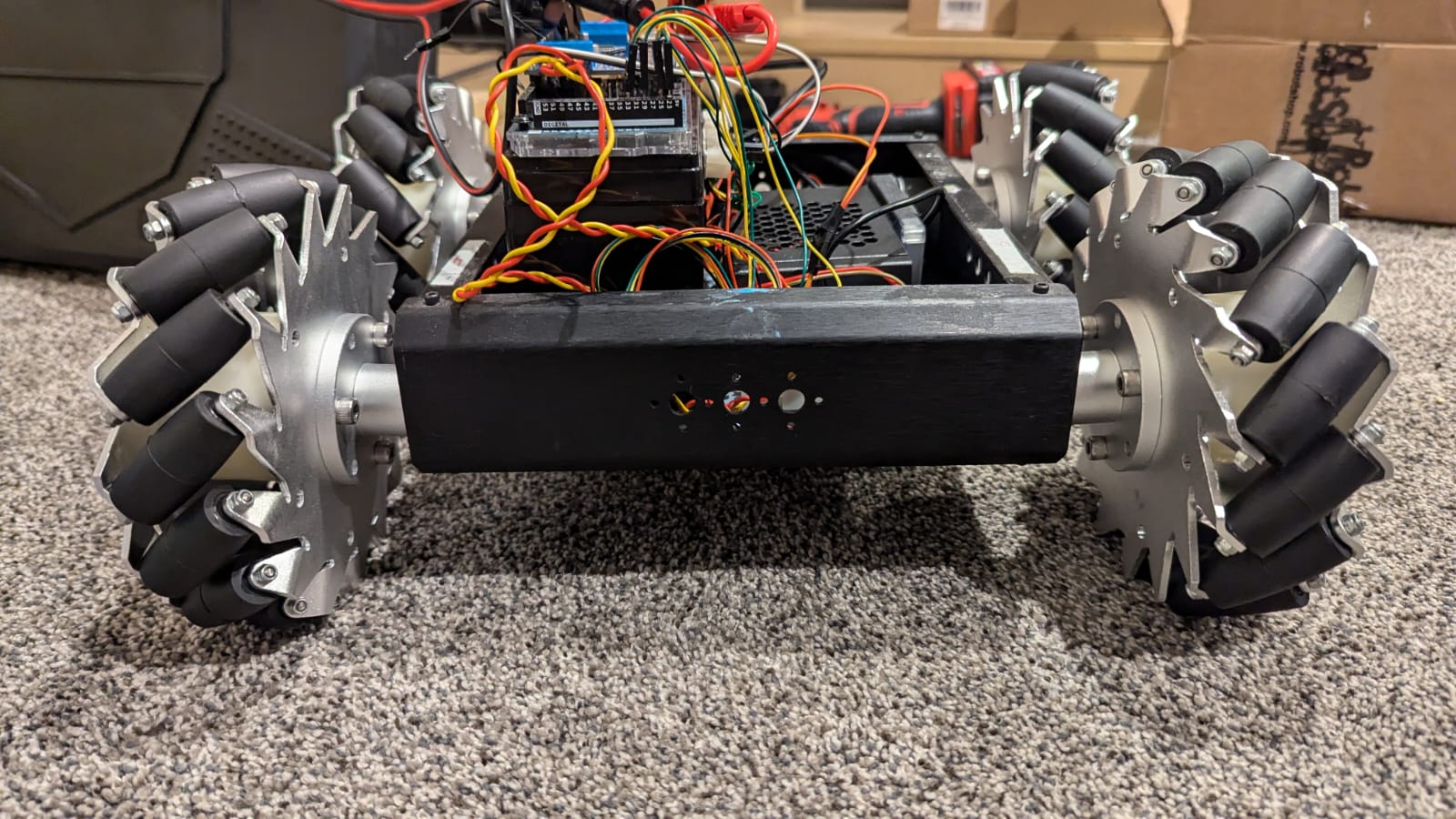
• Hardware: We used a robotic car base with motors, the Muse 2 EEG headband for brainwave detection, and BioAmp EMG pills for capturing muscle signals.
• Software: We implemented signal preprocessing and classification using Python, with algorithms for extracting meaningful features from EEG and EMG data. Control commands were sent to the car in real time via a microcontroller.
• Integration: Data from both devices was synchronized to ensure responsive and accurate car movements, with custom logic to prioritize user input effectively.
Challenges We Ran Into
• Signal Noise: Filtering noise from EEG and EMG signals to extract actionable data.
• Real-Time Processing: Achieving low-latency control while processing complex biosignals.
• System Integration: Synchronizing EEG and EMG inputs to avoid conflicting commands.
• User Adaptation: Training ourselves to produce consistent signals for reliable control.
Accomplishments That We’re Proud Of
• Successfully integrating two distinct biosignal sources (EEG and EMG) into a single control system.
• Creating a functional prototype that responds in real-time to user inputs.
• Overcoming signal noise issues
• Demonstrating the potential of neuroscience in robotics for assistive technology.
What We Learned
• Advanced signal processing techniques for EEG and EMG data.
• Multimodal integration for real-time applications.
• Practical challenges in robotics, from hardware calibration to user-centric design.
• The potential of BCIs to enhance accessibility and human-machine interaction.
What’s Next for NeuroCruise
• Scalability: Expanding the system to control more complex robotic platforms.
• Accessibility Applications: Refining the design for assistive technologies, such as wheelchairs or prosthetic devices.
• Open Source: Sharing our work with the community to inspire further innovation in BCI-driven robotics.

Log in or sign up for Devpost to join the conversation.