-
-
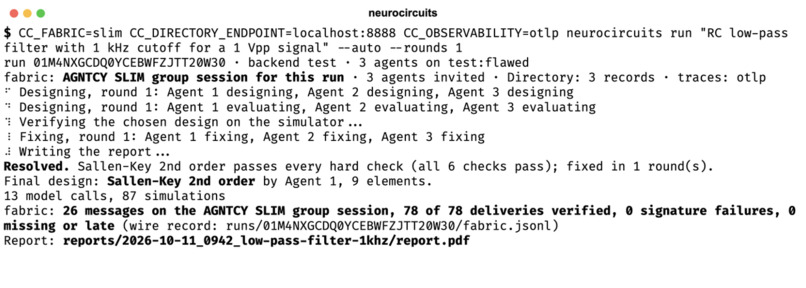
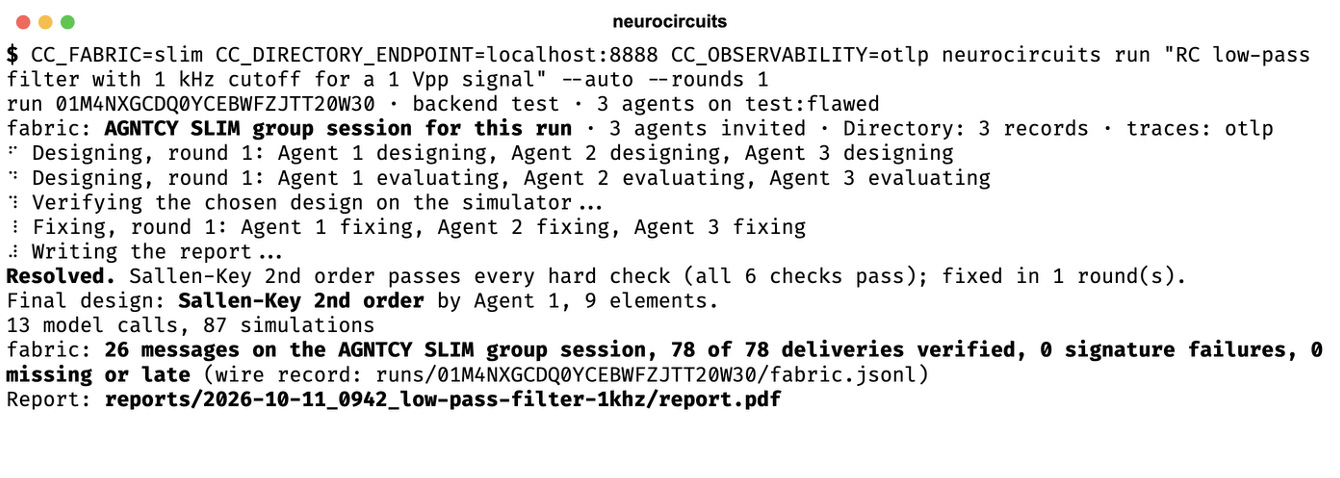
AGNTCY SLIM test run: 3 agents, 78 verified deliveries, all 6 circuit checks passed.
-
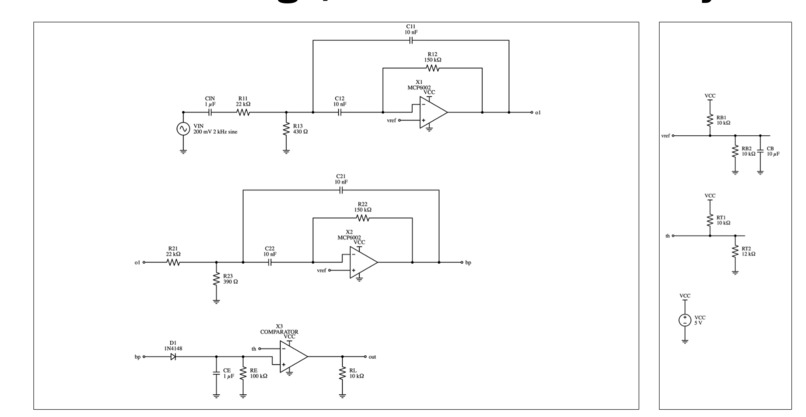
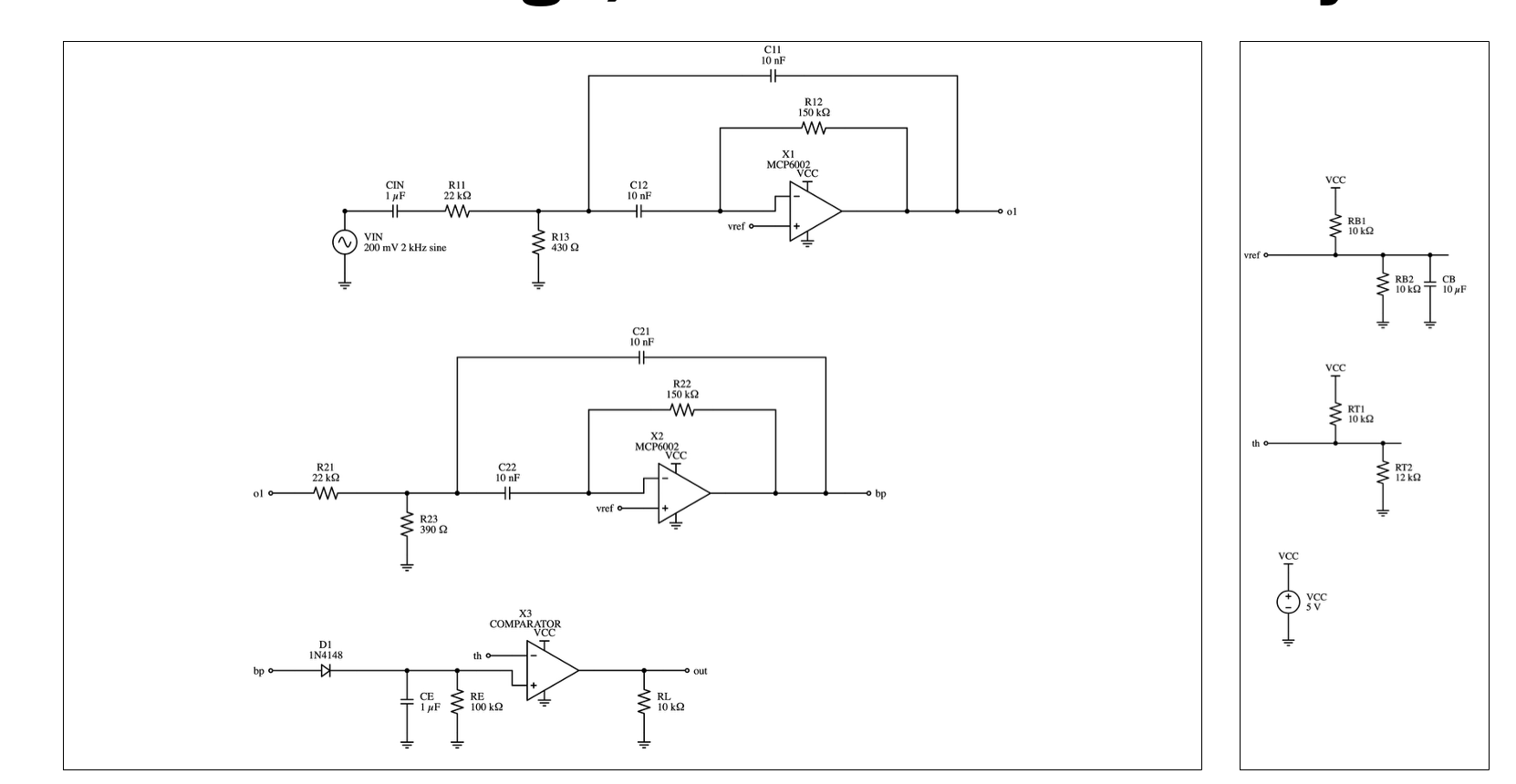
Agents write netlists only. The schematic is laid out by the app with schemdraw.
-
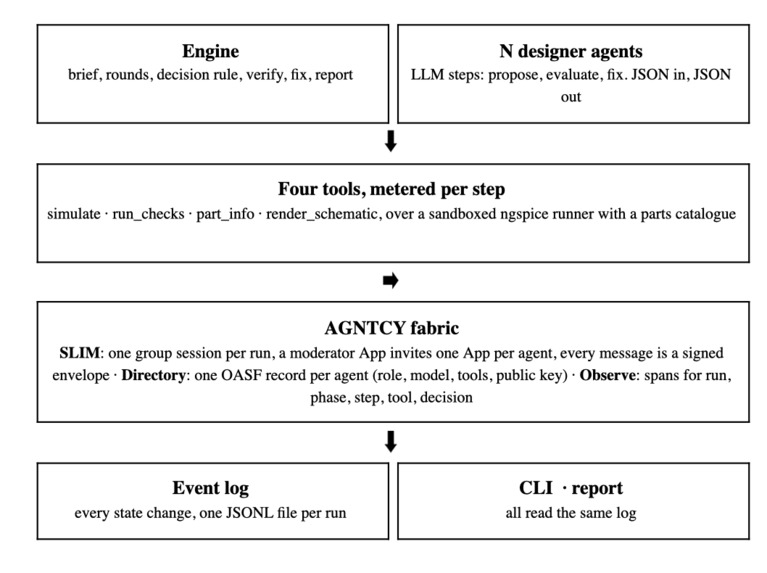
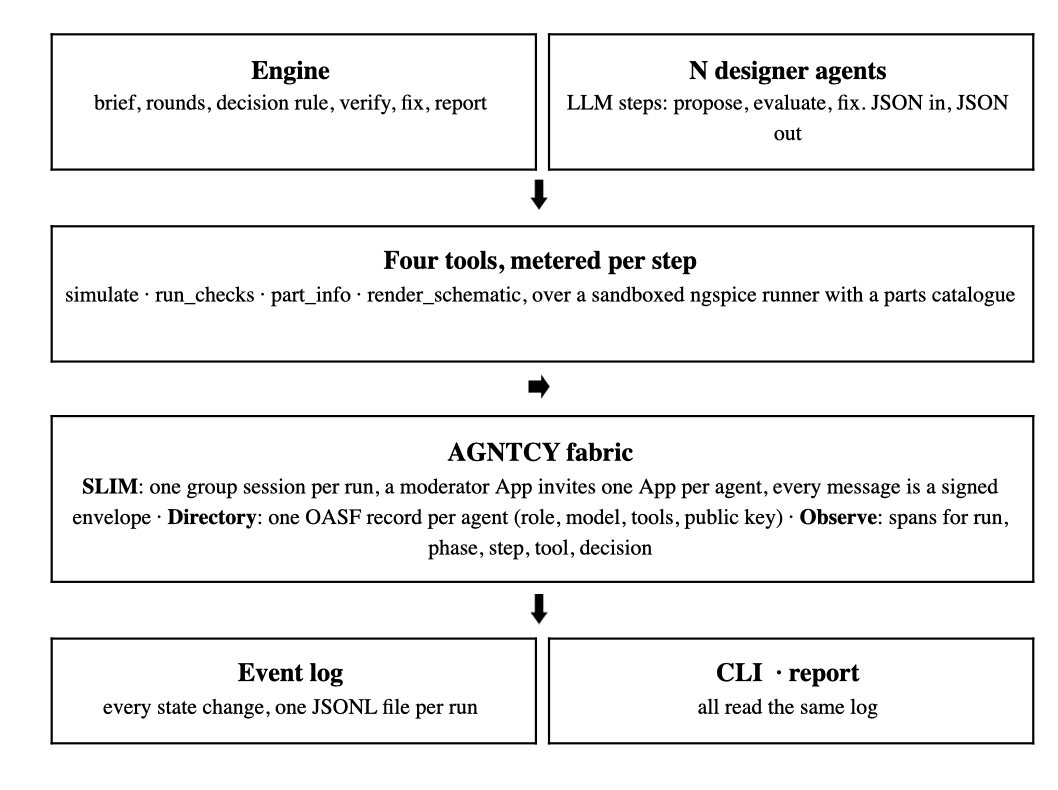
Neuro Circuits architecture: AI designers, sandboxed simulation, AGNTCY messaging, and a shared event log.
Inspiration
In a lab, one filter-plus-detector takes about a week: one idea at a time, numbers checked with a scope, and most of the reasoning never makes it into the report. We wanted the loop itself to be the product: several designs proposed at once, all measured the same way, argued over with real numbers, and fixed before anyone touches a breadboard.
What it does
You describe a circuit in plain English. A panel of agents each designs one, every design is simulated on ngspice against the same checks, the agents score each other with those measurements, a fixed rule picks a winner, it is verified and fixed until every hard check passes, and a paper-style report with every design, plot and dissent lands in your folder.
How we built it
The agents talk over AGNTCY: one SLIM group session per run carrying signed envelopes, an inbox rule so each agent evaluates only what it actually received, Directory records for discovery, and Observe traces for every step. Pure Python: a brief that fixes ports, test sources and checks before any design exists; agents that only get four metered tools (simulate, run checks, part info, schematic) and must cite measurement ids for every claim; a decision rule chain (veto, dominance, tie-break); and schematics laid out automatically from the netlist.
Challenges we ran into
Getting a readable schematic out of a netlist turned out to be a project of its own: when the agents drew their own, labels collided and wires wandered, so we wrote a layout engine that walks the signal chain left to right, hangs shunts down, lifts feedback above and wraps long chains, and the agents now never touch drawing code. The other hard part was the sandbox: every netlist must be refused unless it can only simulate, every part must come from a verified catalogue, and the agents never see files, shell or network, which meant rebuilding the parts library as behavioral models whose slew, swing and supply limits we checked on ngspice one by one.
Accomplishments that we're proud of
The 2 kHz tone detector, typed ae out as 6 designs and 3 fixes over 268 simulations with 8 of 8 checks passing, and the fix round caught a real bias-node leak in simulation that a bench a probe. We built it on a breadboard from the report once and it worked, cleaner than the hand-built version of the same exercise.
What we learned
A fixed contract (the brief) and more for quality than any prompt wording, and recorded disagreement is worth more than consensus: the losing arguments are what make the final design error-free; an agent fabric is only meaningful if the agents actually depend on it, which is why what an agent evaluates is what arrived in its inbox.
What's next for NeuroCircuits
Tolerance sweeps as first-class parts" becomes a requirement, vendor part models and a larger catalogue, and a bill of materials and PCB export from the same parts table the schematic i the loop with the bench by feeding scope measurements back as checks and letting the agents explain the gap.
Built With
- agncy
- ngspice
- openrouter
- python

Log in or sign up for Devpost to join the conversation.