-
-
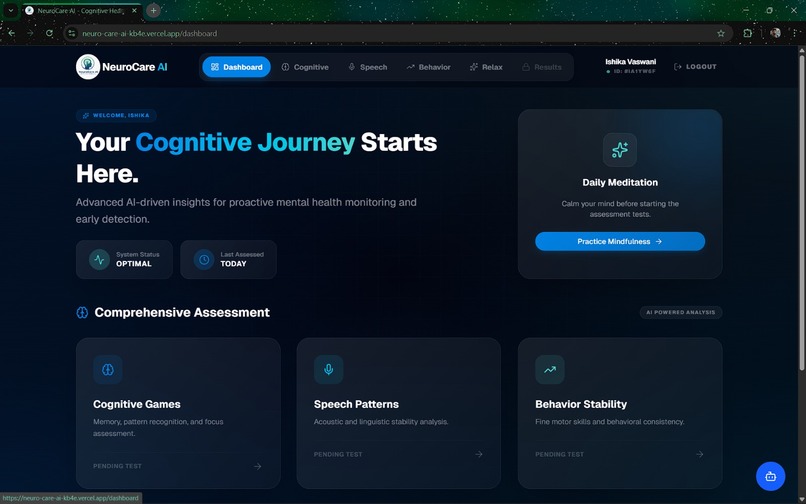
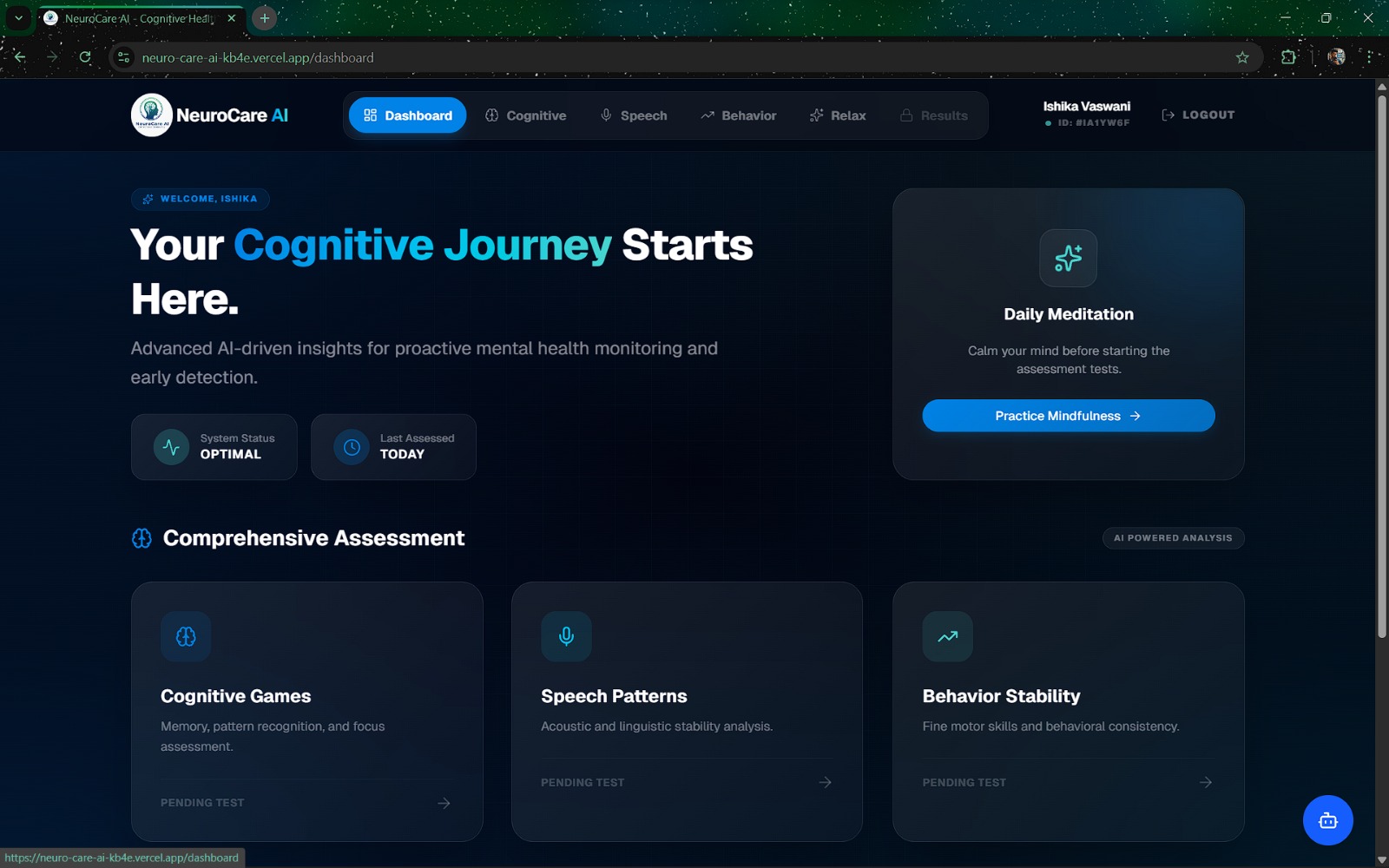
Dashboard
-
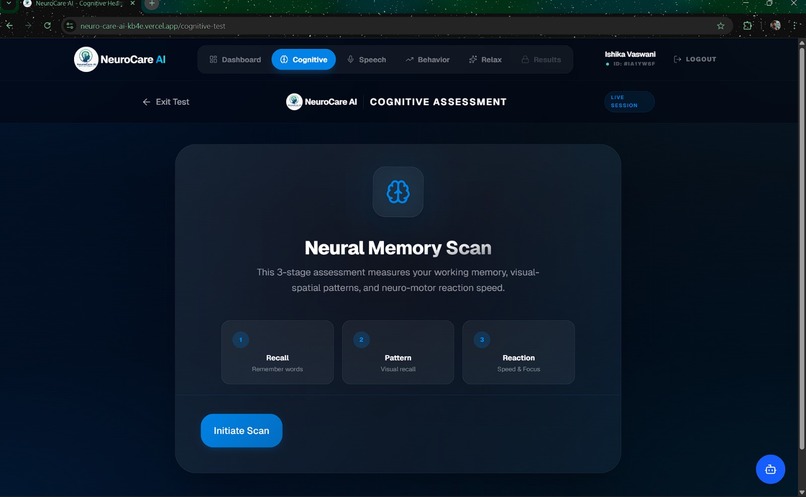
Cognitive tests
-
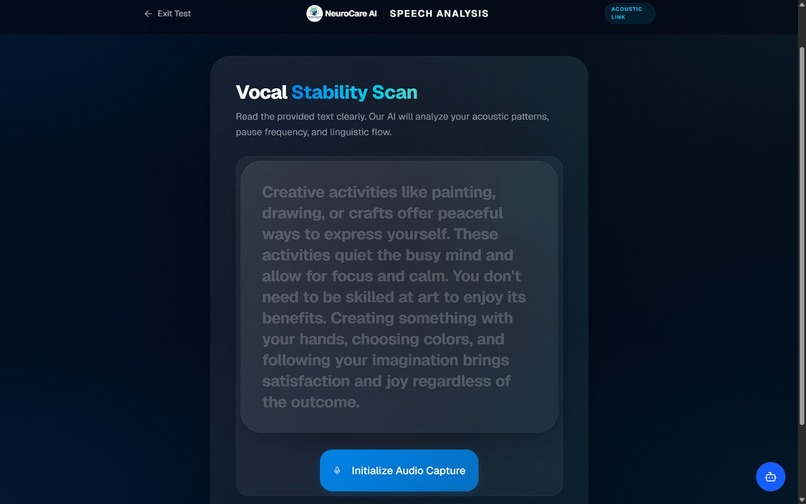
Speech test
-
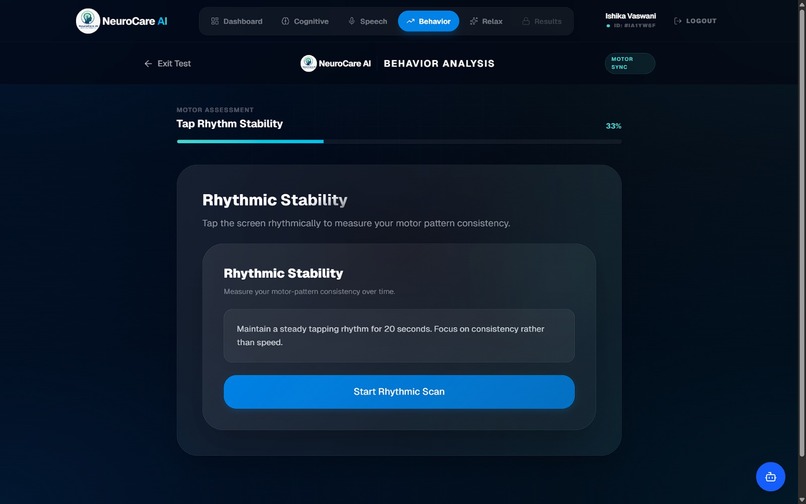
Behavior Analysis
-
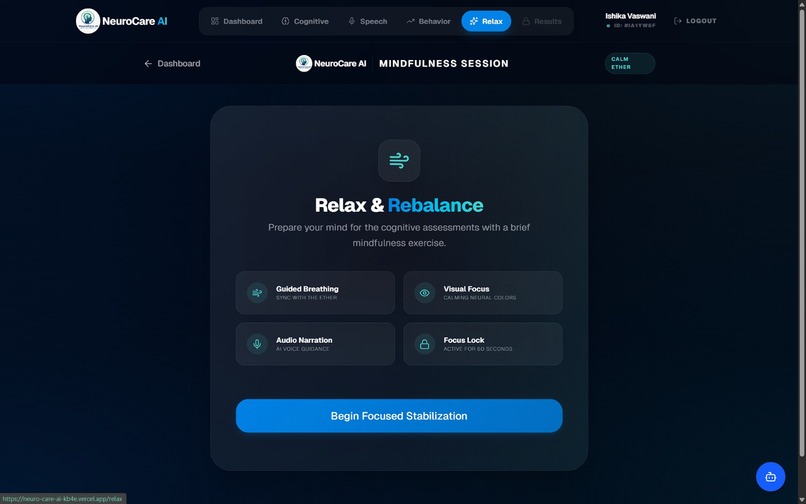
Relax and Rebalance
-
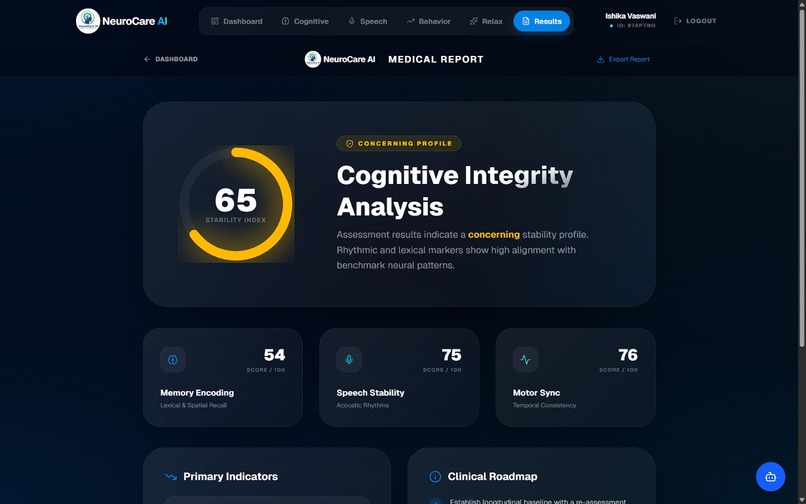
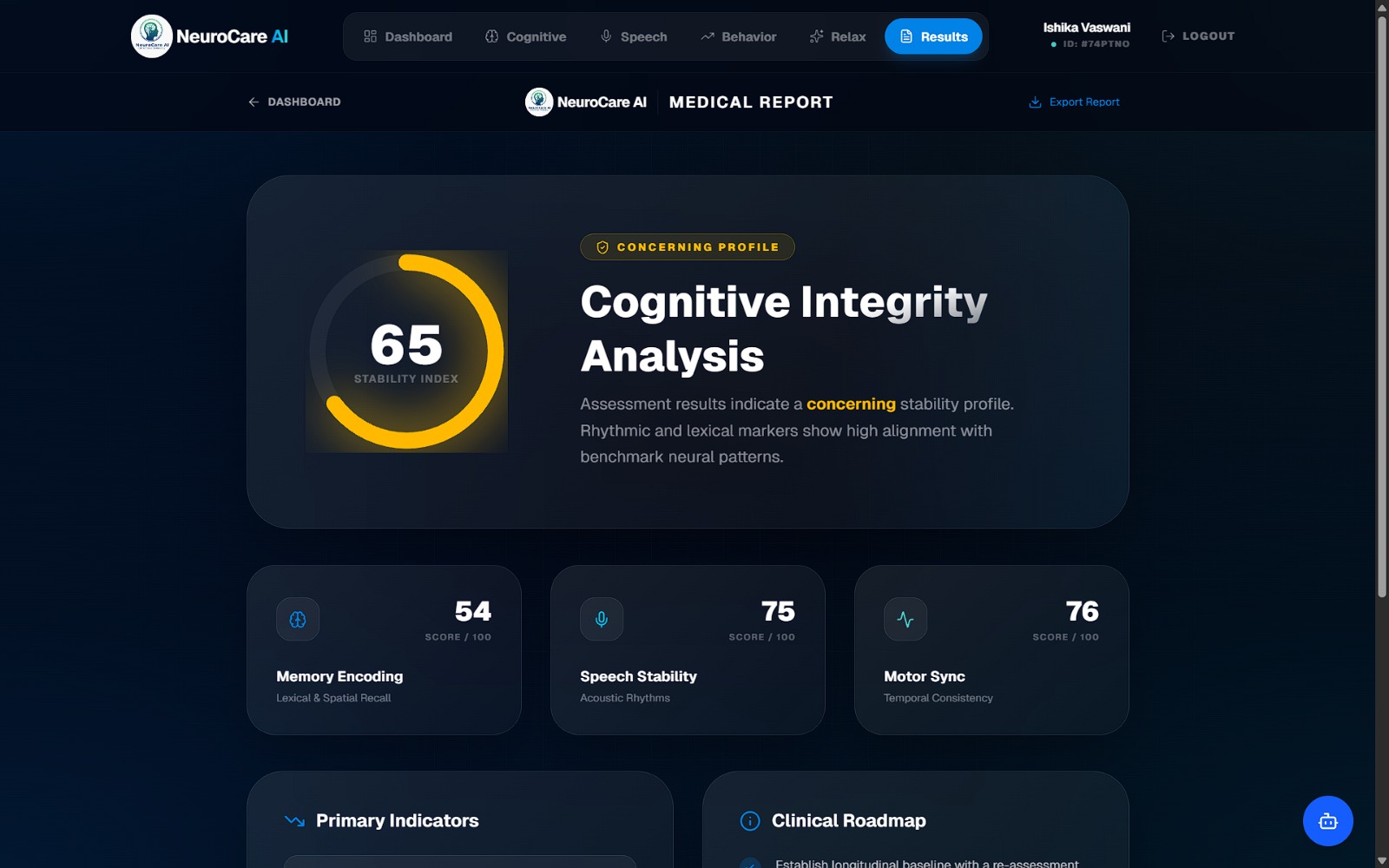
Result: Tells risk of Dementia
-
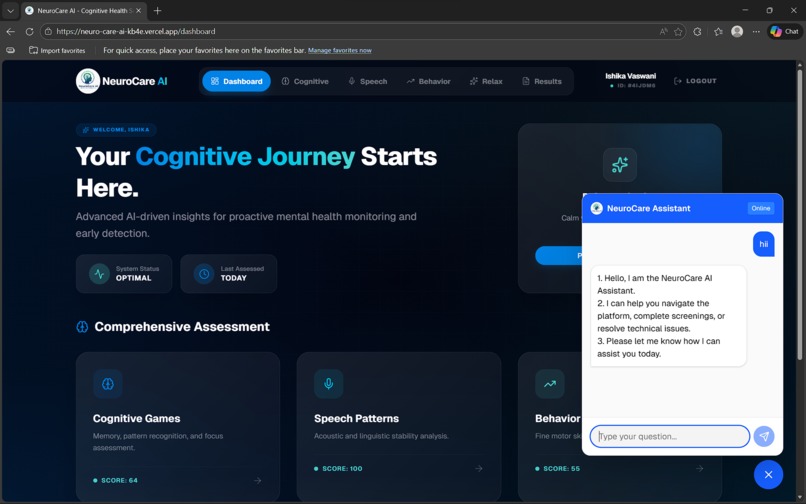
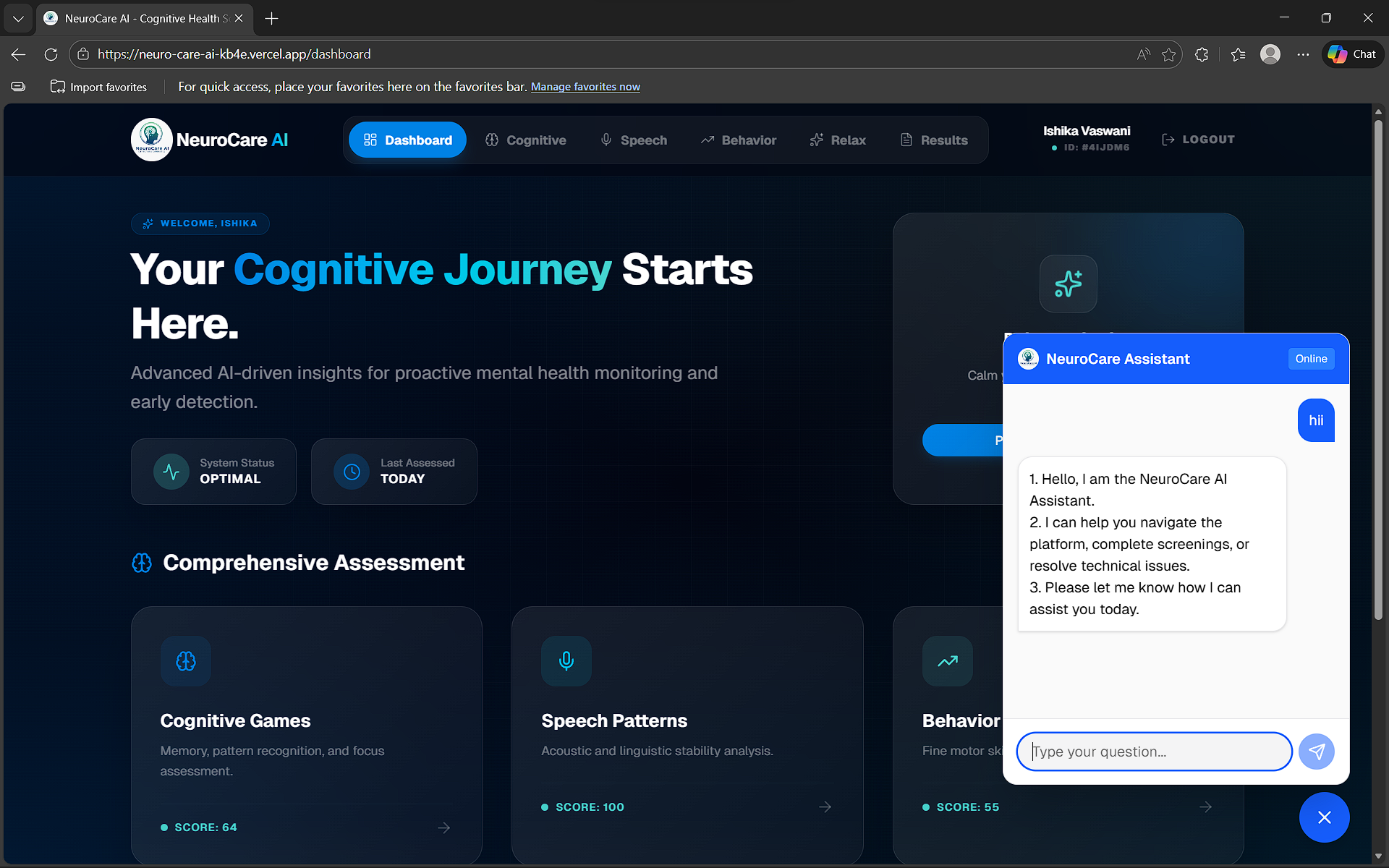
Chatbot
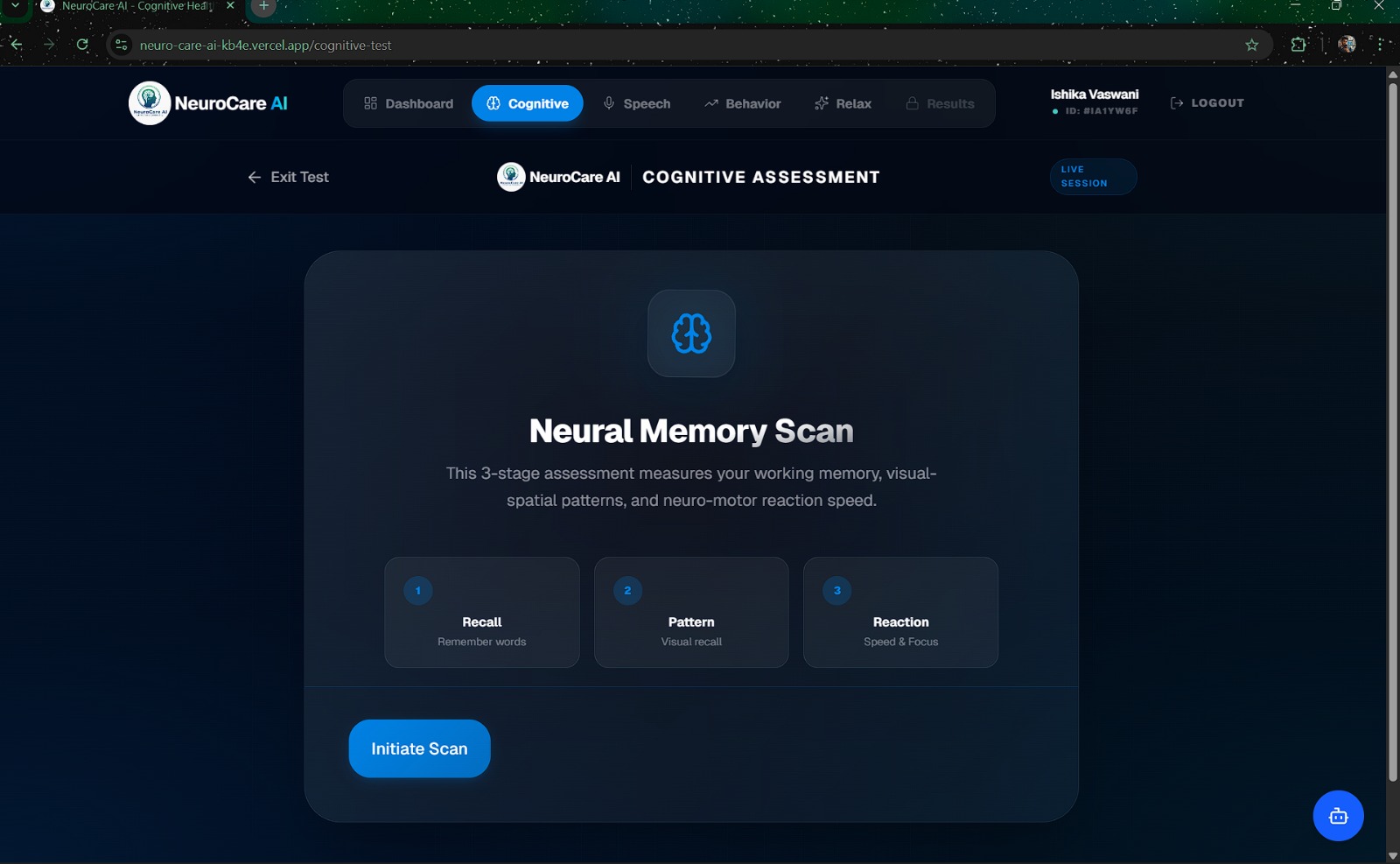
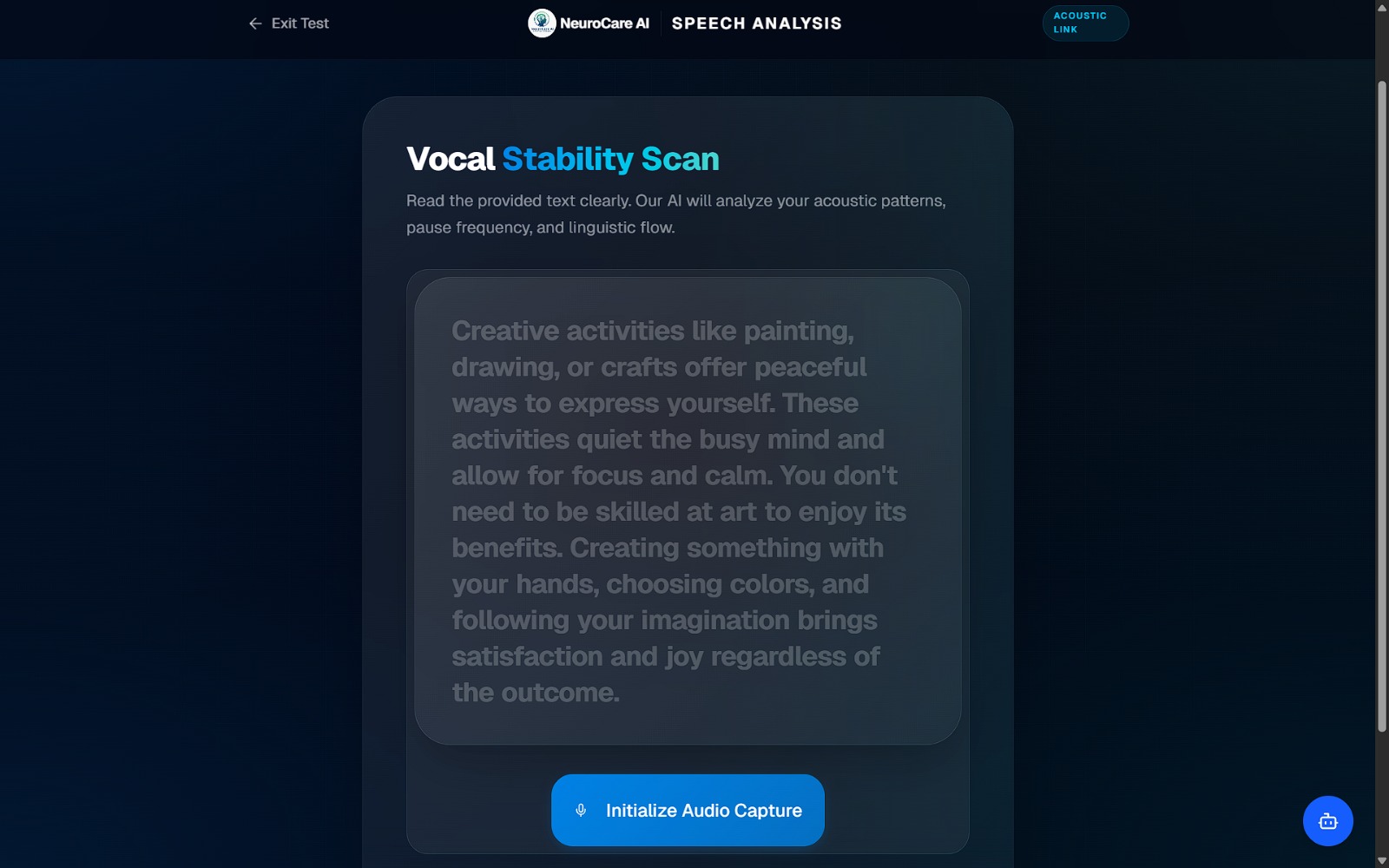
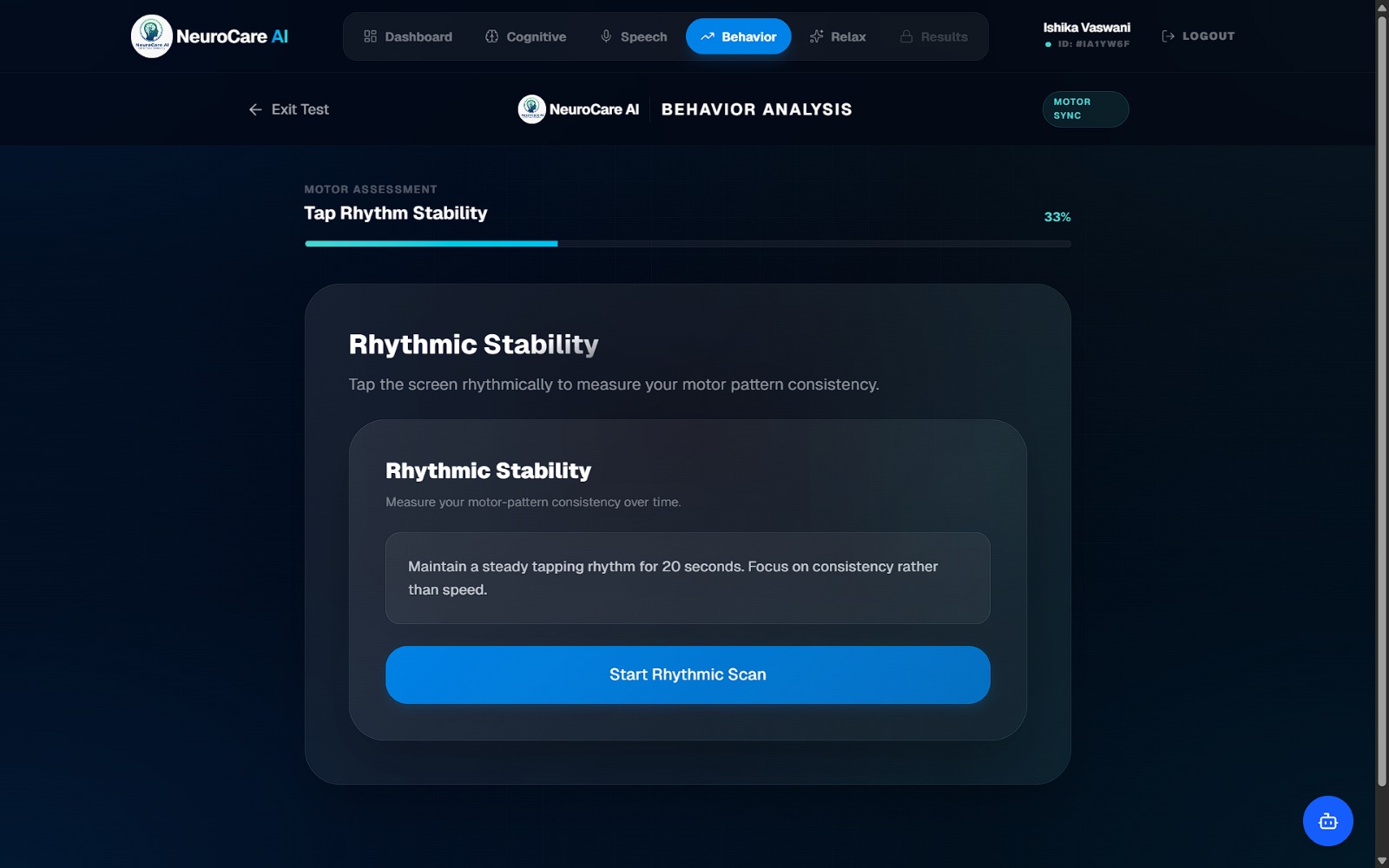
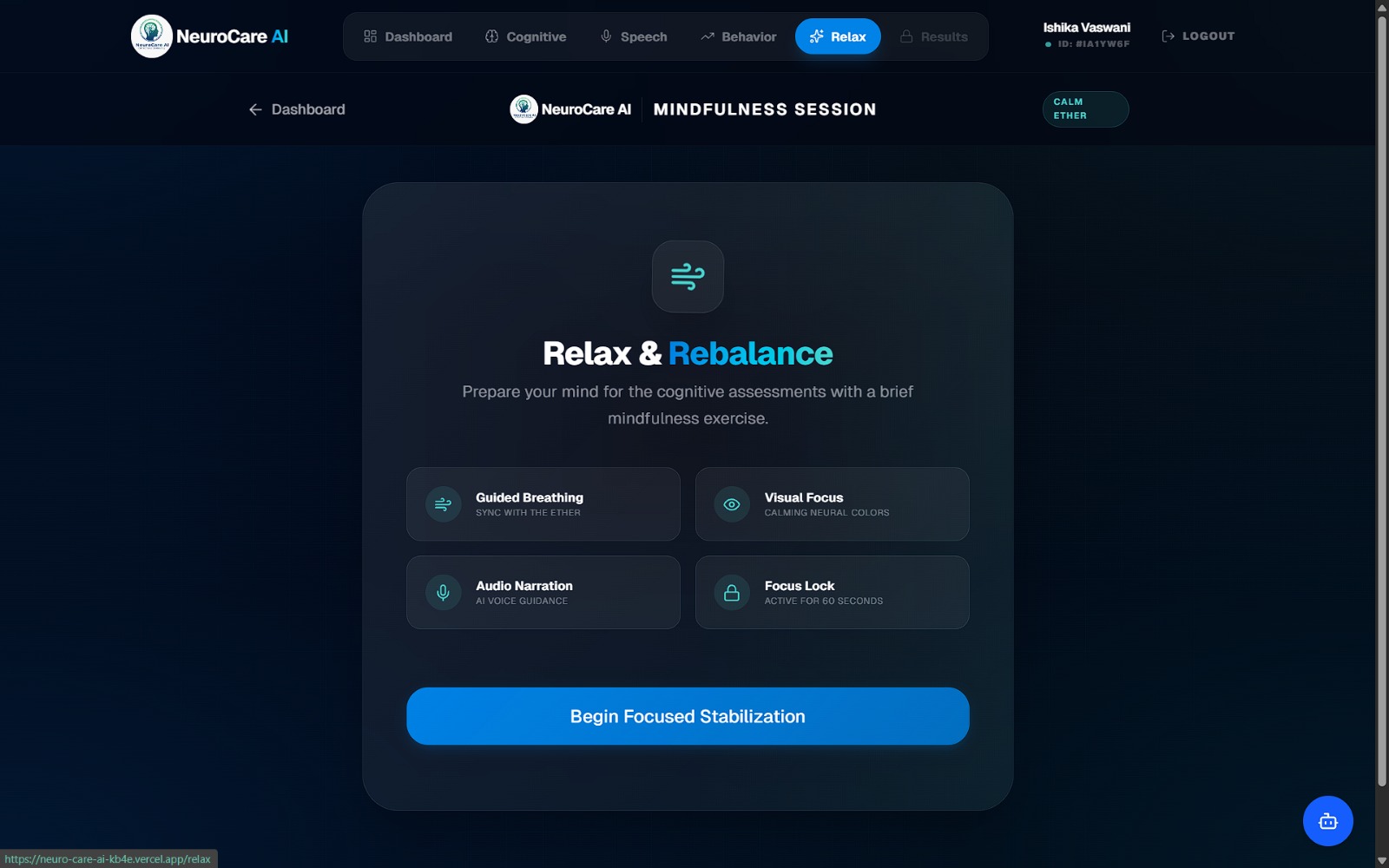
Inspiration NeuroCare AI was inspired by a deep respect for human memory, identity, and dignity. Cognitive decline often progresses quietly, and support typically begins only after visible symptoms appear. We were motivated by the belief that awareness should come earlier — thoughtfully, responsibly, and without stigma. Our goal was to explore whether artificial intelligence could help recognize subtle cognitive changes in a way that empowers individuals and families to seek timely care.
What it does NeuroCare AI is an AI-powered early cognitive monitoring platform. It analyzes speech patterns, micro memory tasks, and behavioral consistency to identify subtle indicators of cognitive strain. The system generates a structured cognitive risk profile designed to encourage early consultation and proactive care. It is not a replacement for medical professionals, but a supportive tool that promotes earlier awareness.
How we built it We structured NeuroCare AI into three integrated layers: data capture, AI-driven processing, and risk modeling. The platform collects voice samples and short cognitive interaction data, extracts meaningful features such as pause frequency and response latency, and combines them into a composite score: Risk=v1(Speech)+v2(Memory)+v3(Behavior) where each weight is optimized to ensure balanced sensitivity and reliability. The system was built with secure backend architecture and a simple, human-centered interface to ensure clarity, privacy, and accessibility.
Challenges we ran into Balancing sensitivity with responsibility was one of our greatest challenges. An early-warning system must detect meaningful change without causing unnecessary anxiety. Achieving that equilibrium required careful calibration and repeated refinement. We also faced scalability challenges, as speech patterns and communication styles vary across cultures and languages. Designing a robust and adaptable framework required disciplined abstraction. Data privacy and ethical handling remained central throughout development.
Accomplishments that we're proud of We are proud of building a structured end-to-end AI framework that promotes proactive brain health monitoring. We are especially proud that dignity, clarity, and emotional sensitivity guided every design decision. NeuroCare AI emphasizes responsible assistance rather than replacing clinical expertise.
What we learned We learned that healthcare AI requires more than technical performance — it requires empathy, ethical awareness, and accountability. This project strengthened our understanding of feature engineering, model calibration, and human-centered system design. Most importantly, it reinforced that technology must serve people with humility.
What's next for NeuroCare AI Our next steps include expanding multilingual adaptability, improving longitudinal tracking, and refining model calibration for broader global use. We aim to integrate clinician feedback loops and enhance personalization while maintaining strict privacy safeguards. Our long-term vision is to make proactive brain health monitoring a respectful and routine part of preventive healthcare — always placing the individual above the algorithm.
Built With
- css
- geminiapi
- github
- html5
- javascript
- node.js
- npm
- pnpm
- python
- spyder
- sql
- typescript
- vscode


Log in or sign up for Devpost to join the conversation.