-
-
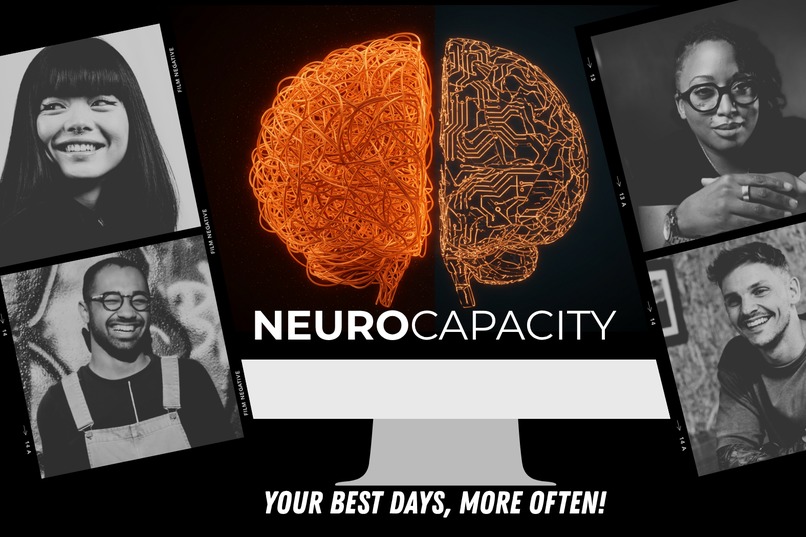
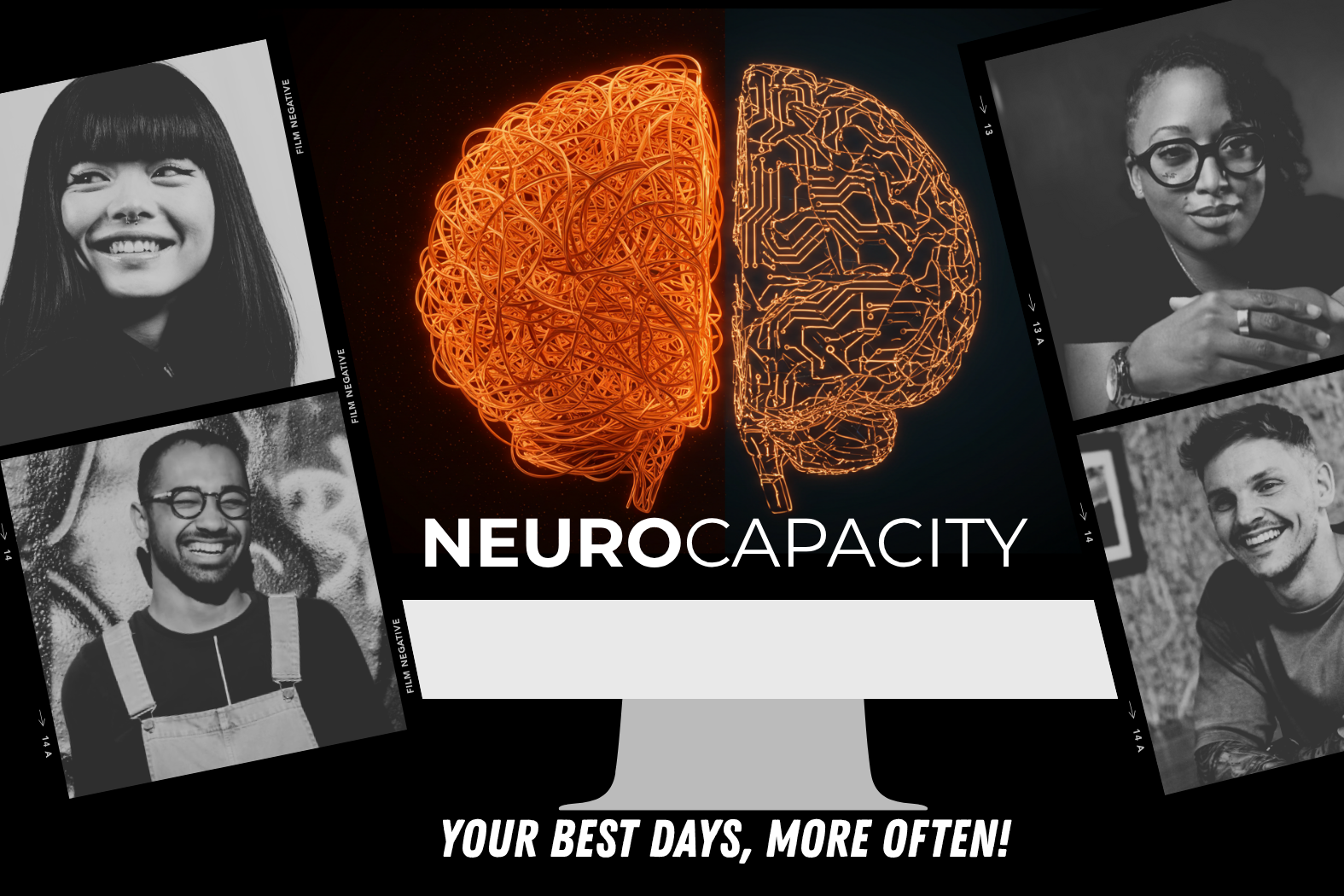
NeuroCapacity Poster
-
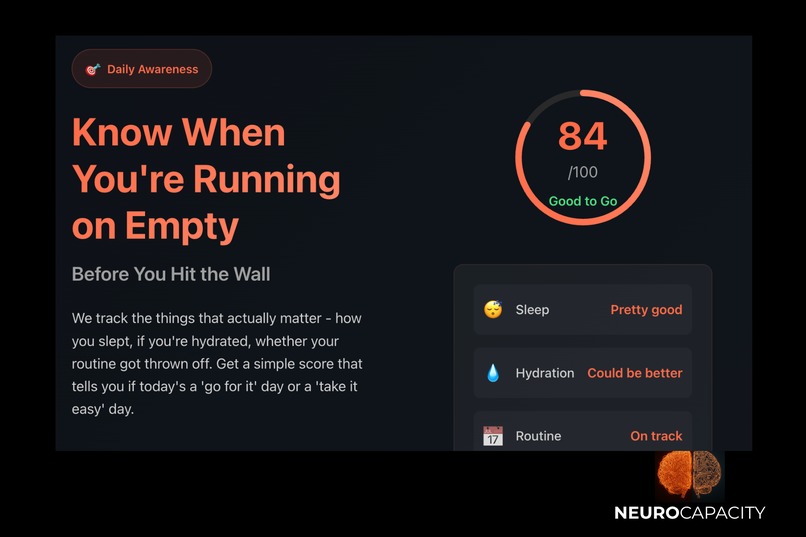
Value Proposition
-
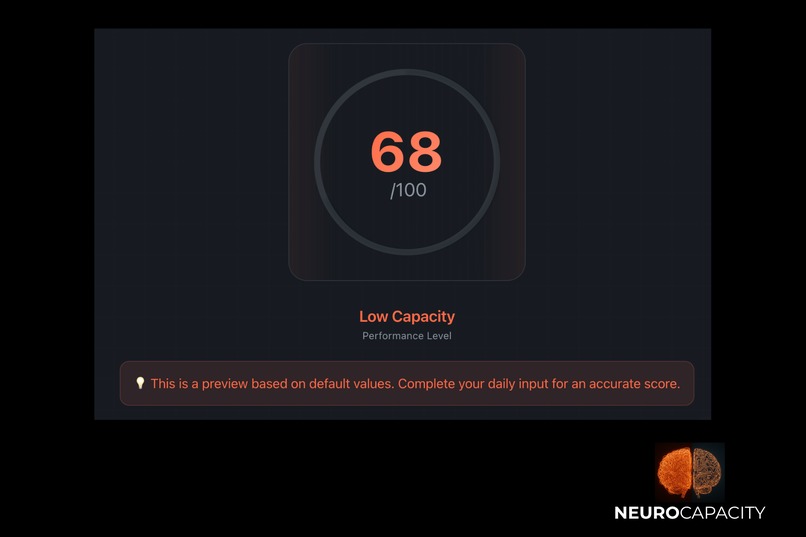
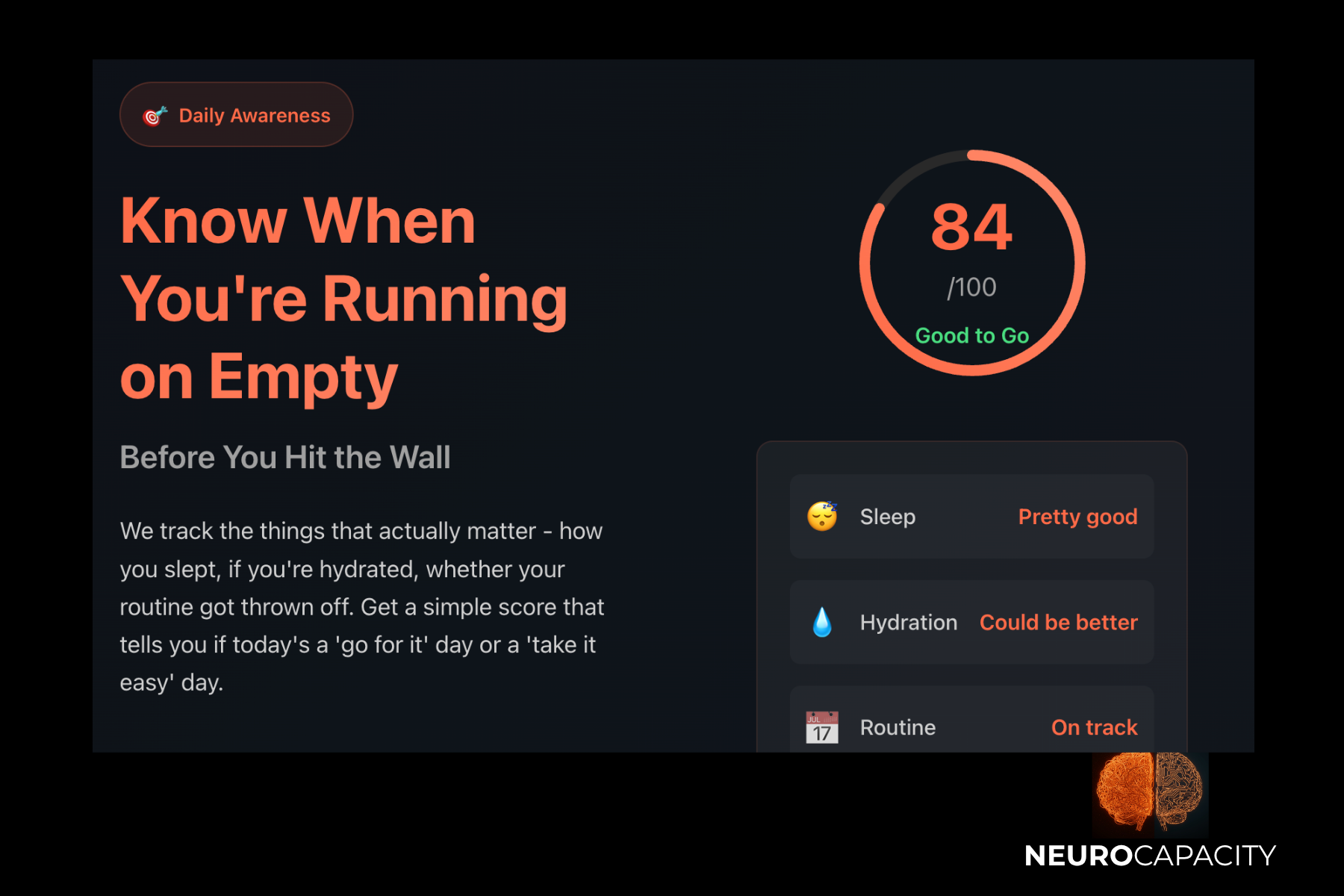
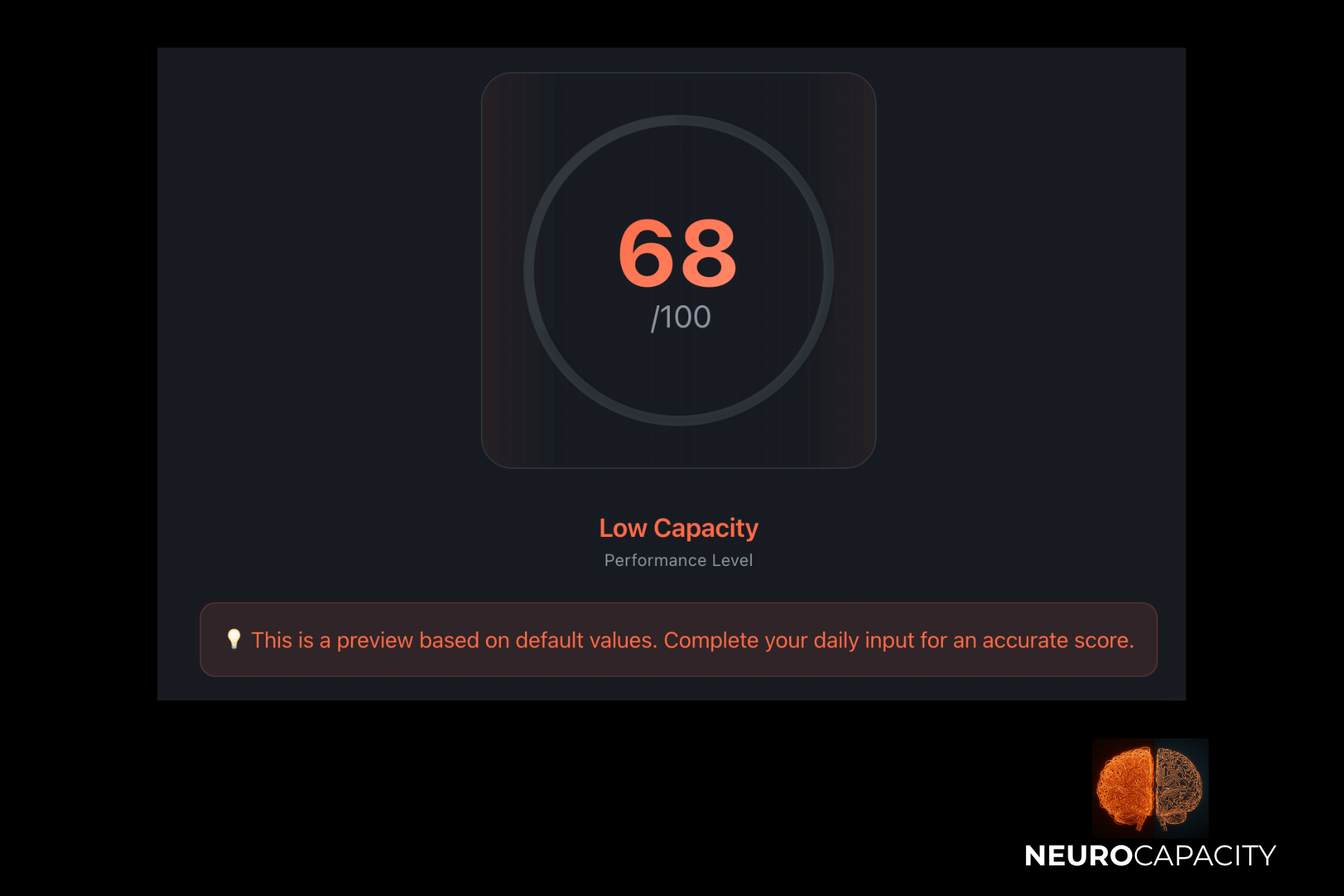
Daily Score
-
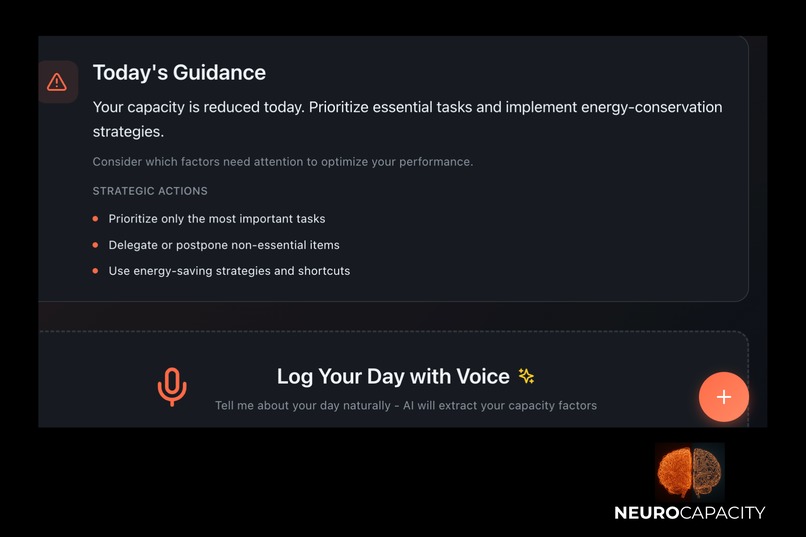
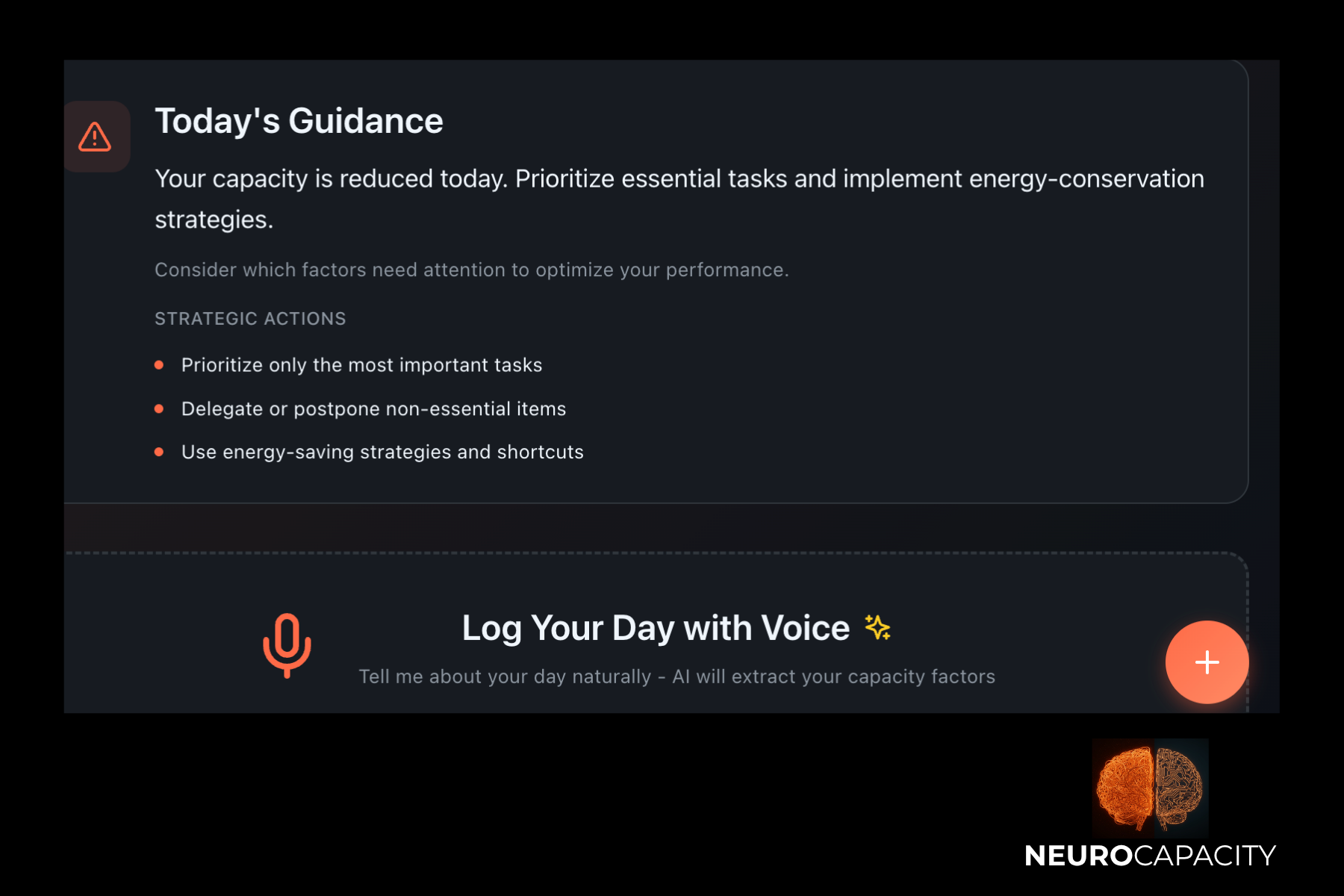
Daily Guidance
-
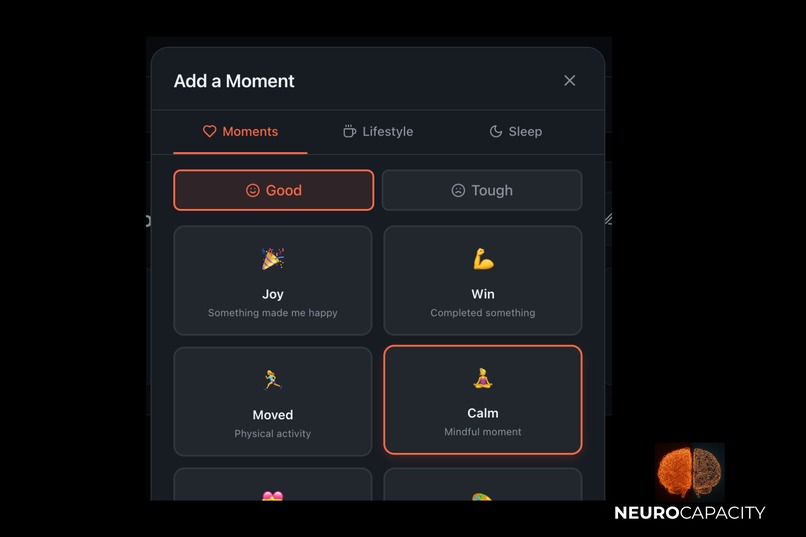
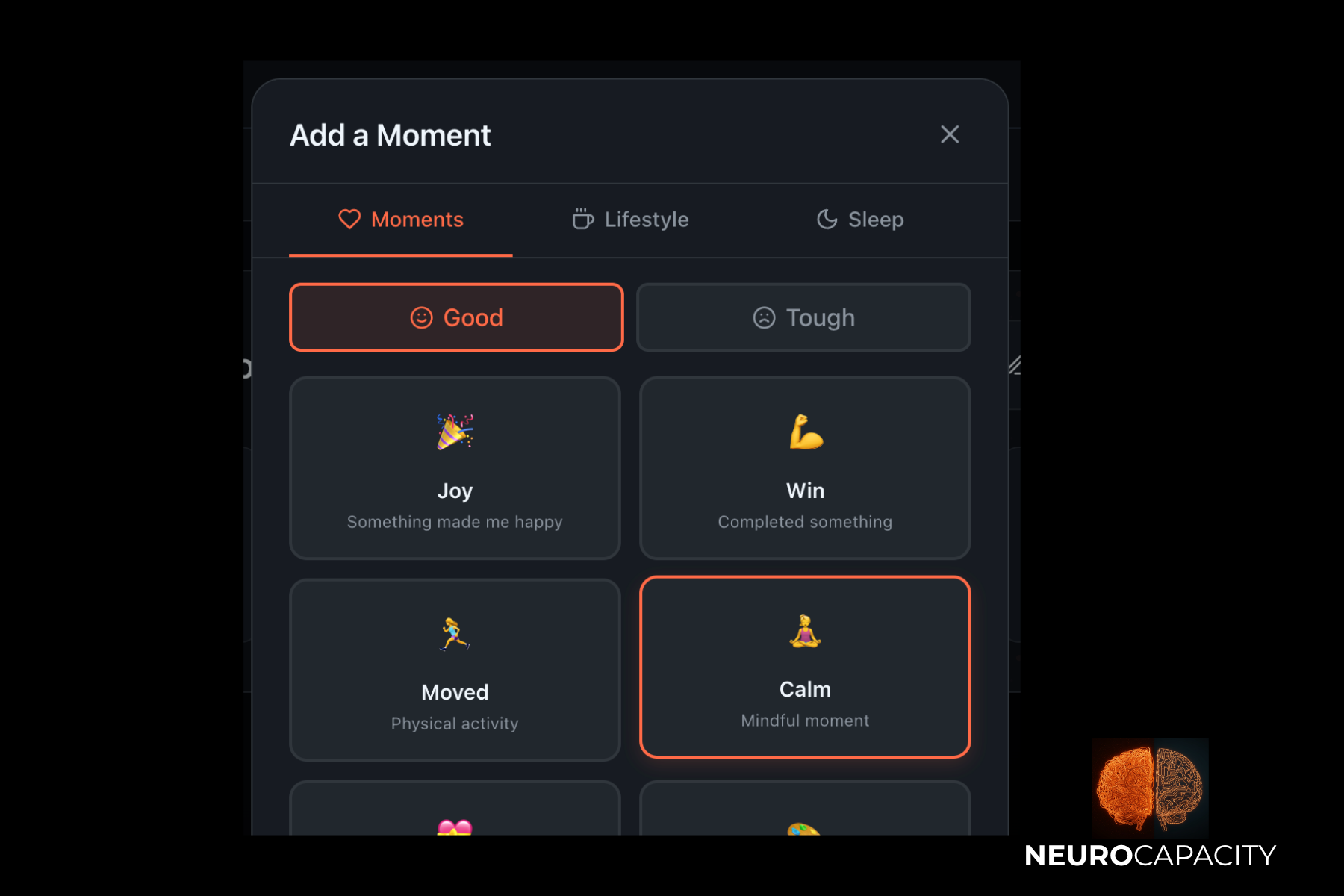
Add a Moment to Your Day
-
Ready to get started?
Inspiration
Two years ago, I thought I had it all figured out. I was a certified life coach, an award-winning entrepreneur, black belt, a stacked resume and a solid network. But then I walked into therapy one day and my therapist asked, “Have you ever considered that you might be neurodivergent?”
I froze! THAT WORD DID NOT fit how I saw myself!
Yet the more she explained, the more my own experiences made sense. The shutdowns when my day didn’t go as planned. The mental fog after poor sleep. The emotional crashes after challenging social interactions. The irritability that showed up when I felt overstimulated or off-balance. It was clear that she was right, but at the time I felt so ashamed because as a Black woman coming from a community that historically ignores mental health or warns you to “get over it”… admitting this felt like weakness.
But then, I did some research and realized I wasn’t alone. In the U.S., around 15–20% of the population is neurodivergent, and 19% of adults identify as such according to a recent YouGov poll. That began my journey to accept how I am and work with my brain instead of against it.
I documented my routine daily, downloaded ADHD apps, bought a smart ring to track my sleep, started journaling, and even cut back on coffee (still not sure how I pulled that off).
But… despite all that, I still felt anxious about my ability to get all of my work done, and the moment things went off track, overwhelm kicked in.
So… I kept experimenting until it finally clicked: I don’t have an anxiety problem. I have a capacity problem.
The actions I was taking, like drinking more water or getting good sleep, helped my brain stay stable, but they rarely moved the needle when it came to battling the real giants: anxiety and overwhelm.
So, in true entrepreneurial fashion, I went to work to solve the real problem. My hypothesis was that if I did more things that fed my soul (not just my body), I would have fewer encounters with overwhelm and anxiety—and more ability to stand my ground when they did show up.
I was right.
Within just 30 days of shifting my paradigm and adding in joy, mindfulness, and positivity, I went from unpredictable anxiety to confidence that I can get through anything. I had hope again. I fell back in love with my work. I felt unstoppable.
Moral of the story: It’s BOTH. My neurodivergent brain was stabilized with healthy actions, but it was thriving when joy, fun, mindfulness, and positivity entered the chat.
Building this app was a way to make that revelation and hope available to everyone in the community. Furthermore, I decided to do this as an act of self-trust and self-ownership. A declaration that my brain (and the brains of so many others) are not broken. We’re just different.
This is my gift to the neuroexpansive community—and proof that different doesn’t mean less.
How I Built This
To build the NeuroCapacity project, I started by talking to friends who are also neurodivergent. I wanted to understand their daily challenges, not just mine.
From there, I did deep research to design an algorithm that could calculate a daily capacity score based on inputs that actually impact our functionality. That was the most important part to me—because us neurodivergent folks are data people. I didn’t want fluff. I wanted it to be measurable.
Once the logic was clear, I moved into prompting, starting with the dashboard and overall design. I used user stories pulled from my own wish list and conversations with others to guide it.
My ultimate goal wasn’t to make it pretty. It was to make it effective.
Challenges
Some of the biggest challenges I faced were internal. First, overcoming the belief that I didn’t belong in this hackathon because I’m not a coder. I had to remind myself that innovation isn’t reserved for people who speak JavaScript.
Second, figuring out how to integrate some of the tools from the Bolt Pack. I’m a product girl, so I think in experience, flow, and impact—not code. Incorporating those technical pieces definitely stretched me, but I stayed curious, asked questions, and found workarounds that made sense to me.
Finally, I’m still working on my prompting skills, so I was definitely challenged in figuring out how to communicate what I wanted to the Bolt app. But the discussion and enhanced prompt features helped tremendously.
What I Learned
1. Technology is the Equalizer
Tech isn’t just a tool, it really is a bridge to results. Using the Bolt app showed me how digital tools can level the playing field. My app is doing the same by helping neurodivergent minds stay sharp, competitive, and most importantly, healthy.
2. Trying > Winning
I almost didn’t enter this hackathon. I’m not a developer, and I definitely didn’t feel “qualified.” But I joined anyway—uncertain and nervous. That decision to step out of my comfort zone changed me. I built an app of hope for others, gained new skills, made meaningful connections, and found real confidence in my ability to do hard things.
3. Vibe Coding is REAL
I learned that I don’t have to speak code to build meaningful tech. I now know how to create helpful solutions using tools that speak my language. This competition permanently shifted how I see myself in tech.
4. Clarity of Self Creates Confidence
Through this project, I’ve learned more about how my brain works than I ever did before. The research I did to bring this app to life gave me language for what I’ve felt for years. I now feel equipped to be a light for others navigating their own neurodivergent journey.
What's next for NeuroCapacity
What's next is absolutely deploying this into a mobile app, asap! The interface is designed intuitively for mobile and on the go usage so that's next. In the future I plan to deploy the app in other languages and also intergrate with lifestyle tools that can automatically update the users score such as external hardware like Oura ring, apple watch and more. Also, I plan to do an alexa integration that allows for easy log in the home. Finally, what's next is live events where users can come together to have community and celebrate our brilliant, non typical selves!

Log in or sign up for Devpost to join the conversation.