-
-
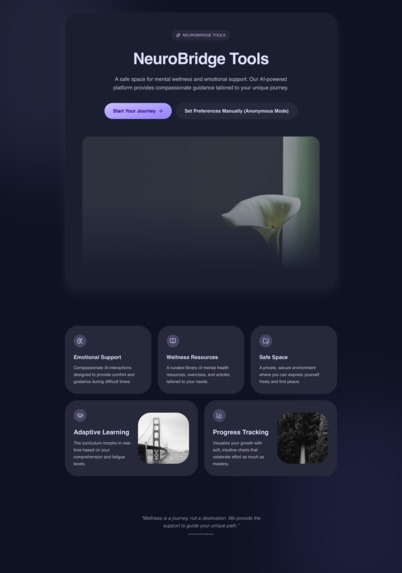
Homepage
-
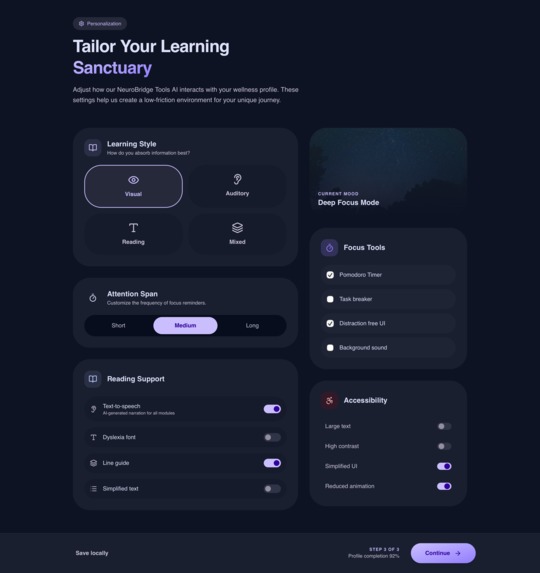
Dashboard
-
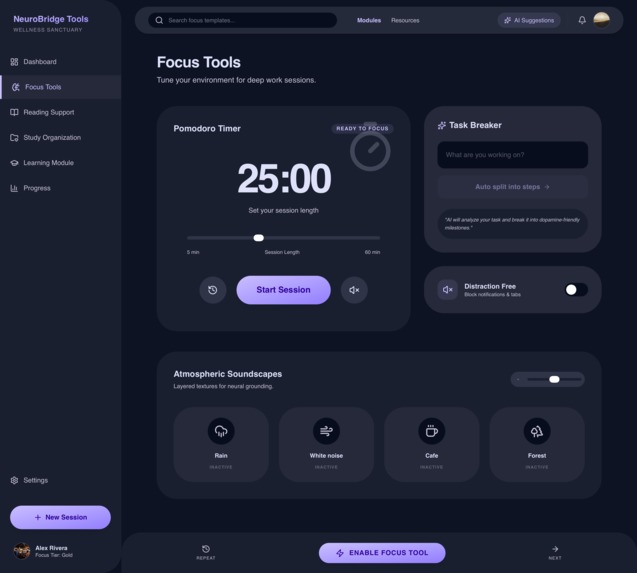
Focus Tools
-
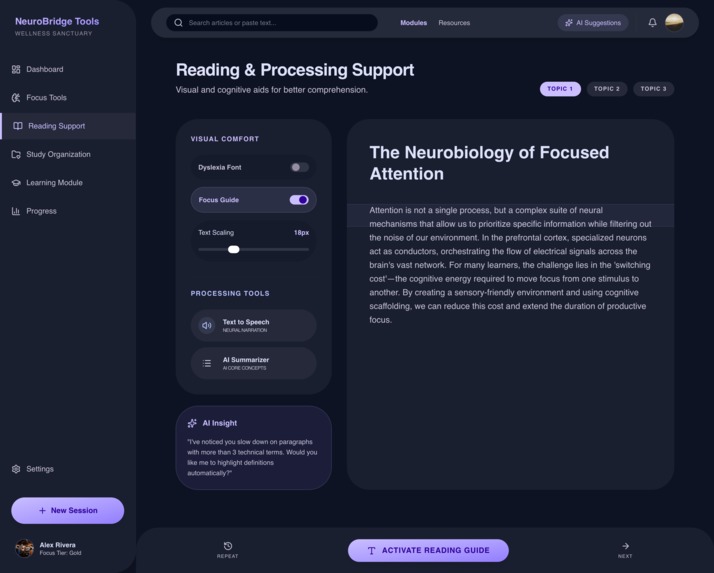
Reading Support
-
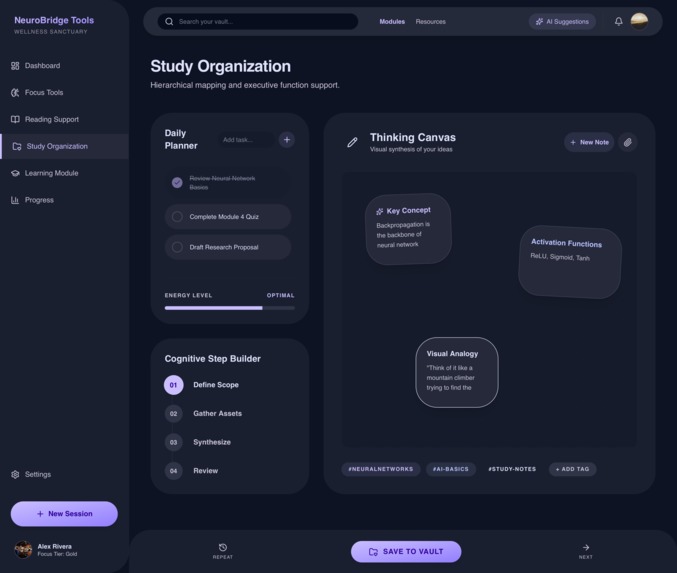
Study Organisation
-
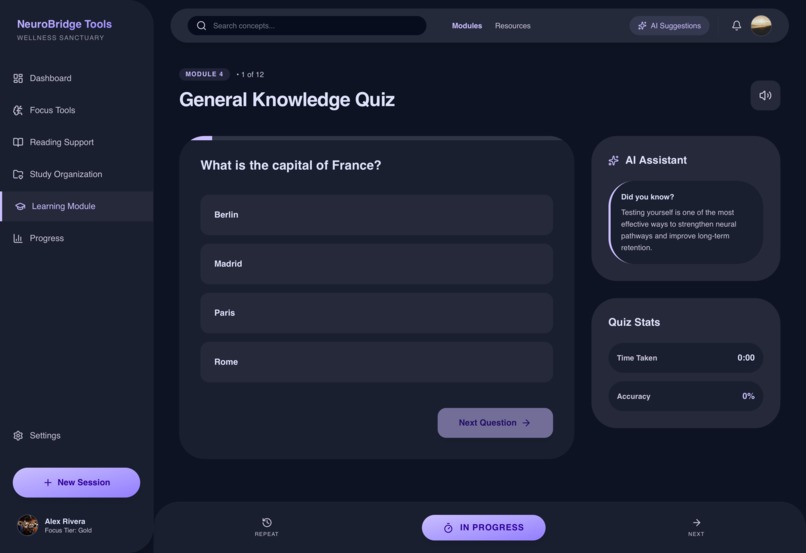
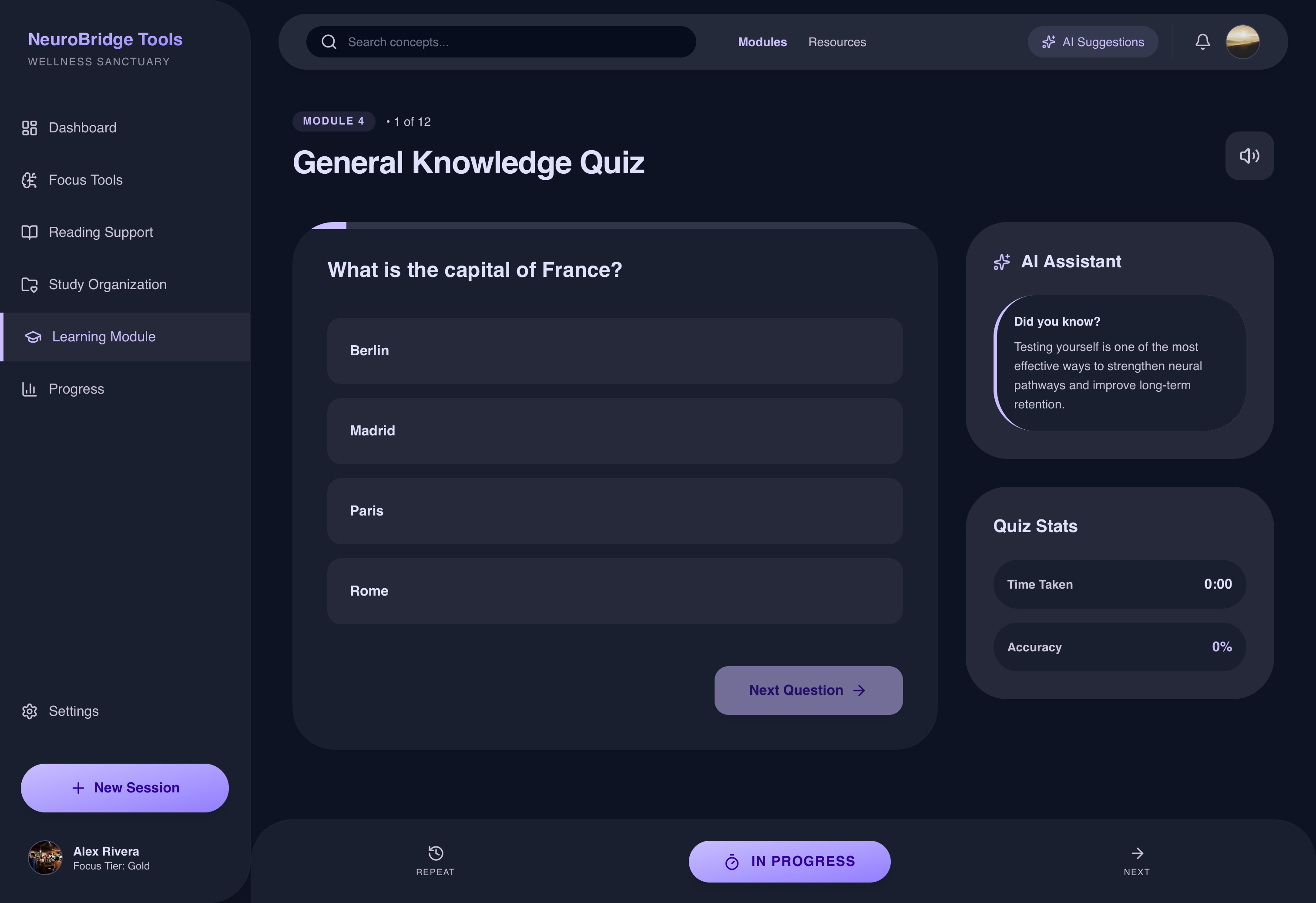
General Knowledge Quiz Test
-
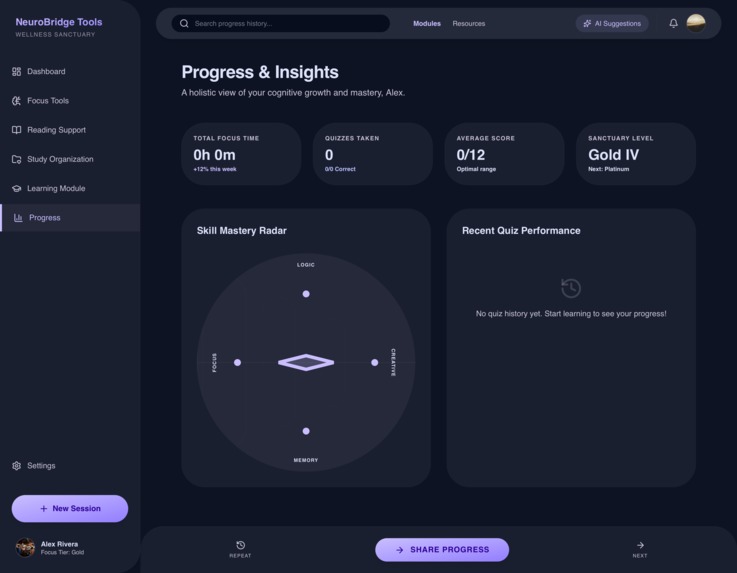
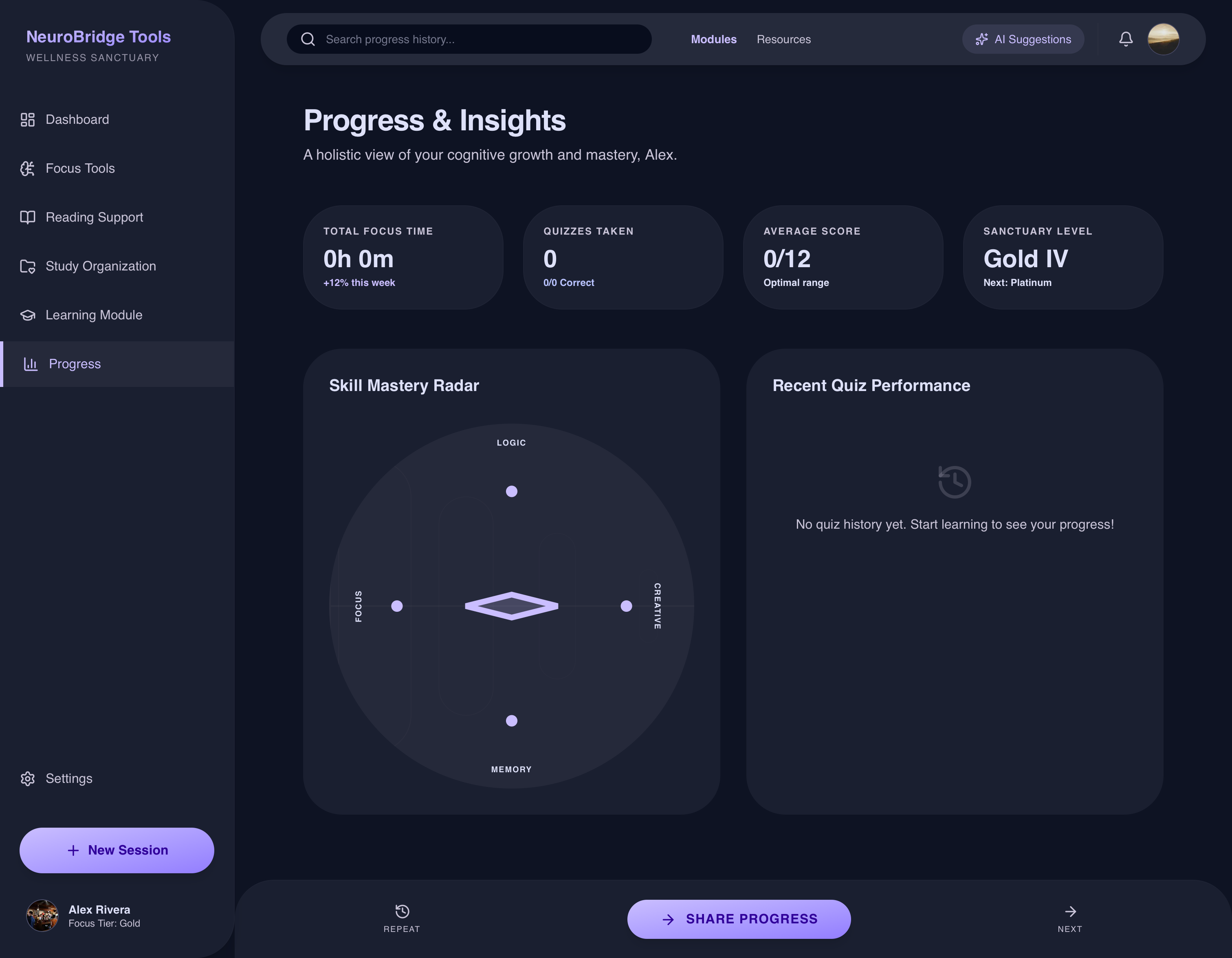
Progress Report
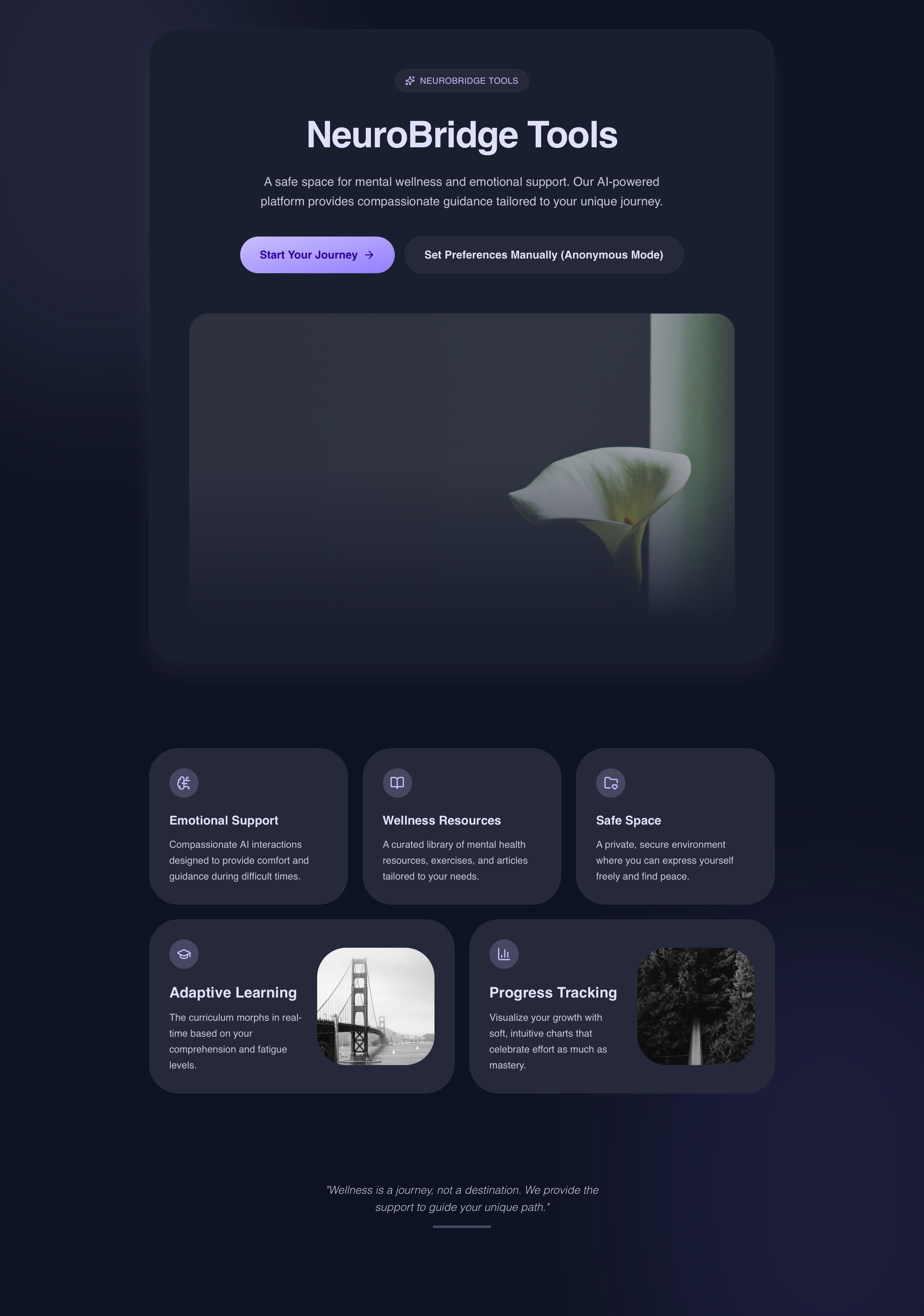
Inspiration
Education is not one-size-fits-all, yet many students are still expected to learn in rigid, standardized ways. NeuroBridge Tools was inspired by this gap in accessibility and inclusion in education. It was also deeply shaped by personal experience of seeing someone close being belittled for learning difficulties, which motivated the creation of a more supportive and respectful system. This project is an ode to them and an attempt to turn that experience into something meaningful and impactful.
To ensure the idea was responsible and grounded in reality, feedback was taken from educators and mental health professionals, including psychologists, who helped refine the ethical and functional boundaries of the system.
This aligns with UN SDG 4 Quality Education for All by promoting inclusive, equitable, and supportive learning environments for every learner.
What it does
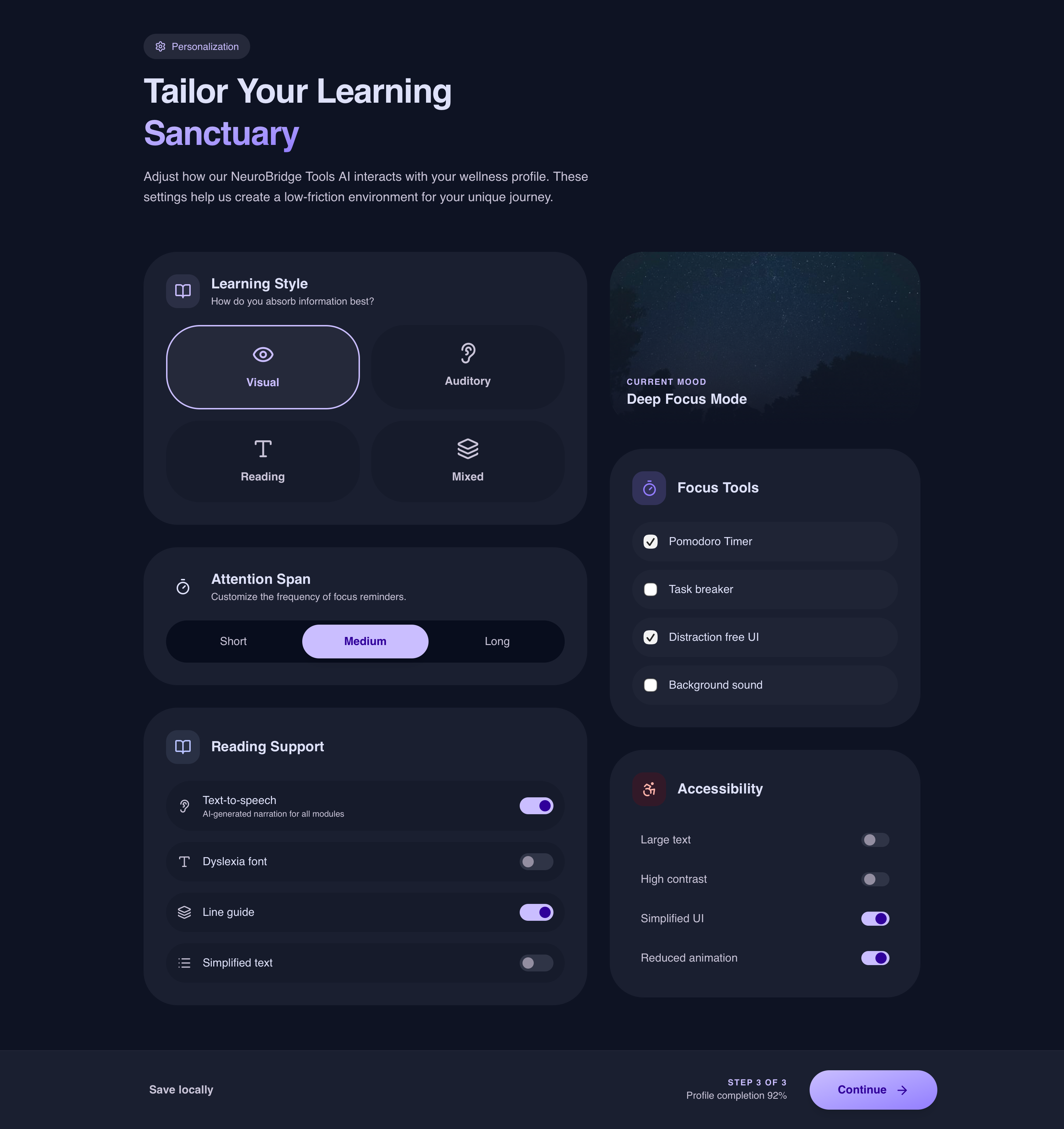
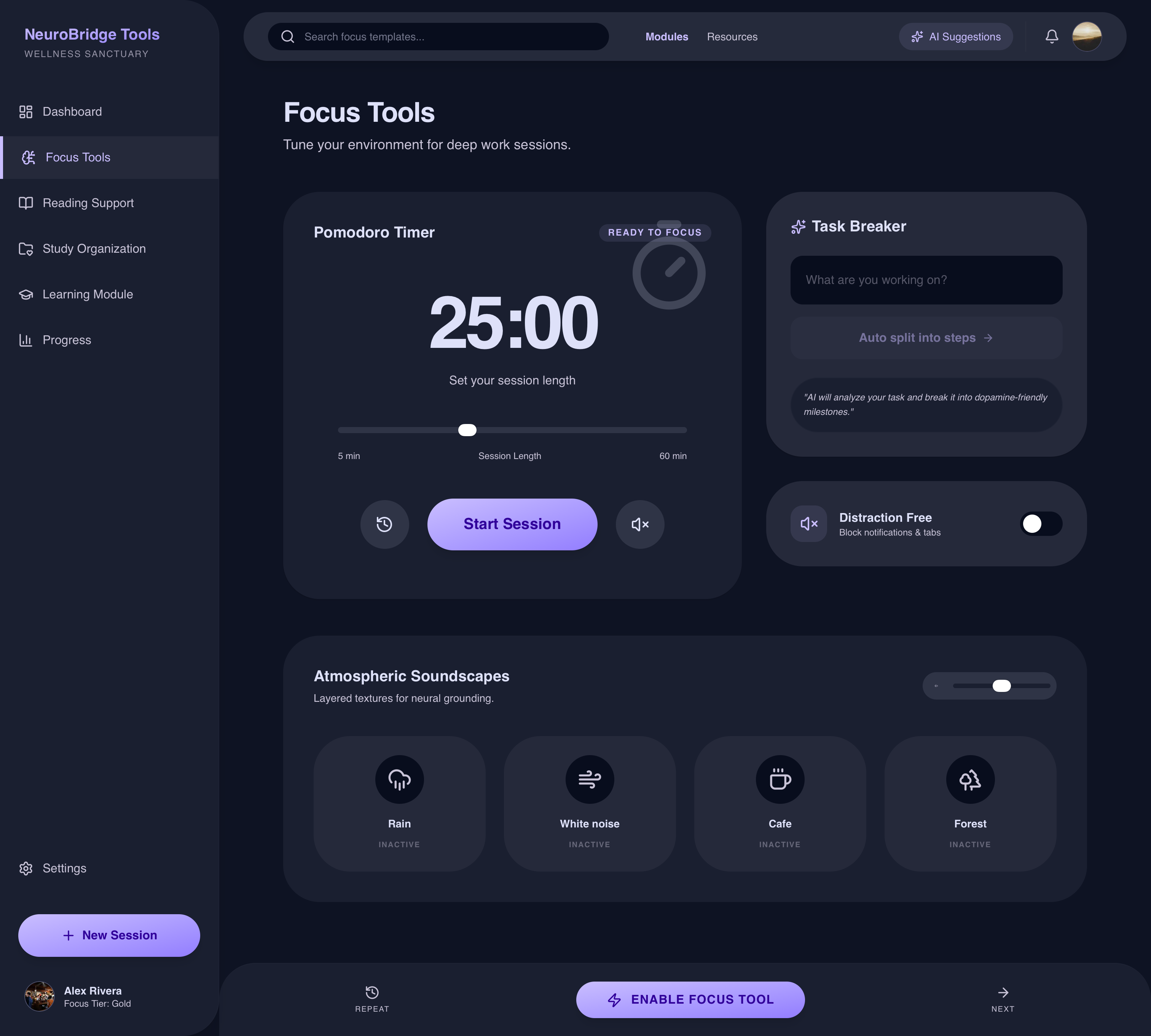
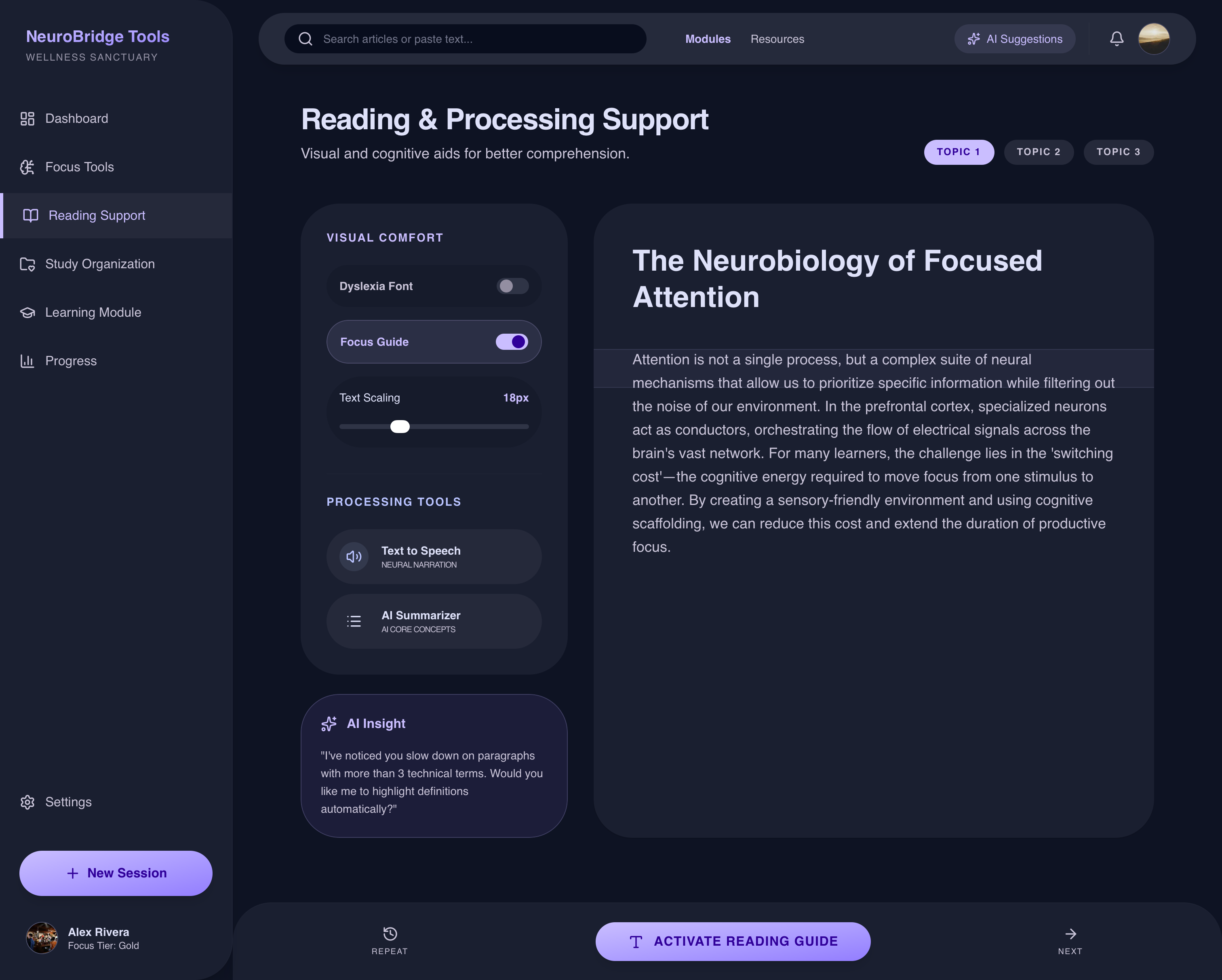
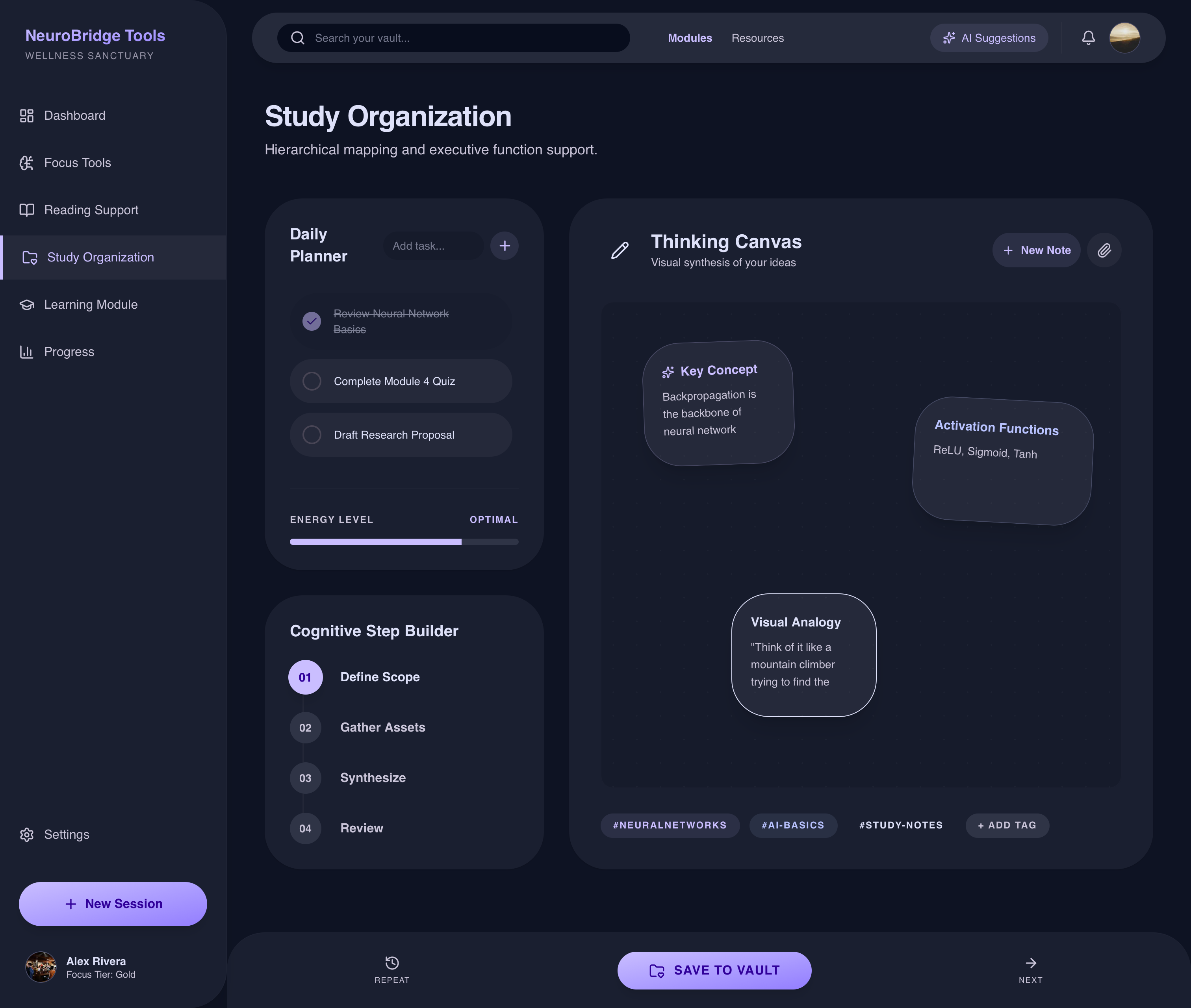
NeuroBridge Tools is an adaptive learning platform that personalizes the learning experience based on user preferences. It provides focus tools, reading support, study organization, and interactive learning modules in one unified system. The platform allows users to learn in ways that suit their individual needs while maintaining full control over their experience.
By improving accessibility and flexibility in learning, it supports UN SDG 4 by helping create more inclusive and effective educational experiences.
How we built it
The platform was built using React, TypeScript, and Vite with a modular and component based architecture. Each feature was designed to be simple, accessible, and user controlled rather than complex or intrusive.
Input from educators and psychologists helped guide the ethical structure of the system, ensuring that it remains a support tool rather than a diagnostic or clinical system. This design approach reflects the principles of UN SDG 4 by focusing on inclusivity and equitable access to learning.
Challenges we ran into
One of the main challenges was ensuring that the system remained helpful without crossing into diagnosis or medical interpretation. It was important to carefully define boundaries so the platform supports learning preferences rather than labeling users.
Another challenge was integrating multiple tools such as focus systems, reading support, and study organization into one cohesive experience without overwhelming the user. These challenges reflect real world difficulties in achieving UN SDG 4, where accessibility, simplicity, and inclusivity must all be balanced.
Accomplishments that we're proud of
We successfully built a unified and accessible platform that combines focus tools, reading support, and personalized learning features in one system. A major accomplishment was refining the project through feedback from educators and psychologists to ensure ethical and responsible design.
We are also proud of transforming a personal experience of learning stigma into a structured and scalable solution that promotes inclusivity and respect. This contributes to UN SDG 4 by supporting more equitable learning experiences.
What we learned
We learned the importance of ethical design in educational technology and how critical it is to distinguish between support tools and diagnostic systems. We also learned how user centered design can significantly improve accessibility and engagement.
Through expert feedback and development, we gained a deeper understanding of how inclusive systems can better support diverse learners, reinforcing the goals of UN SDG 4 Quality Education for All.
What’s next for NeuroBridge Tools
Future improvements include expanding personalization features, enhancing AI based learning support, and improving accessibility across devices. The goal is to continue refining the system into a more adaptive and inclusive learning environment.
NeuroBridge Tools aims to further support UN SDG 4 by making quality education more accessible, flexible, and respectful for all learners.
Built With
- api
- css
- node.js
- react
- typescript
- vite

Log in or sign up for Devpost to join the conversation.