NeuroBridge
Rethinking the Characterization of Neurodivergent Cognition
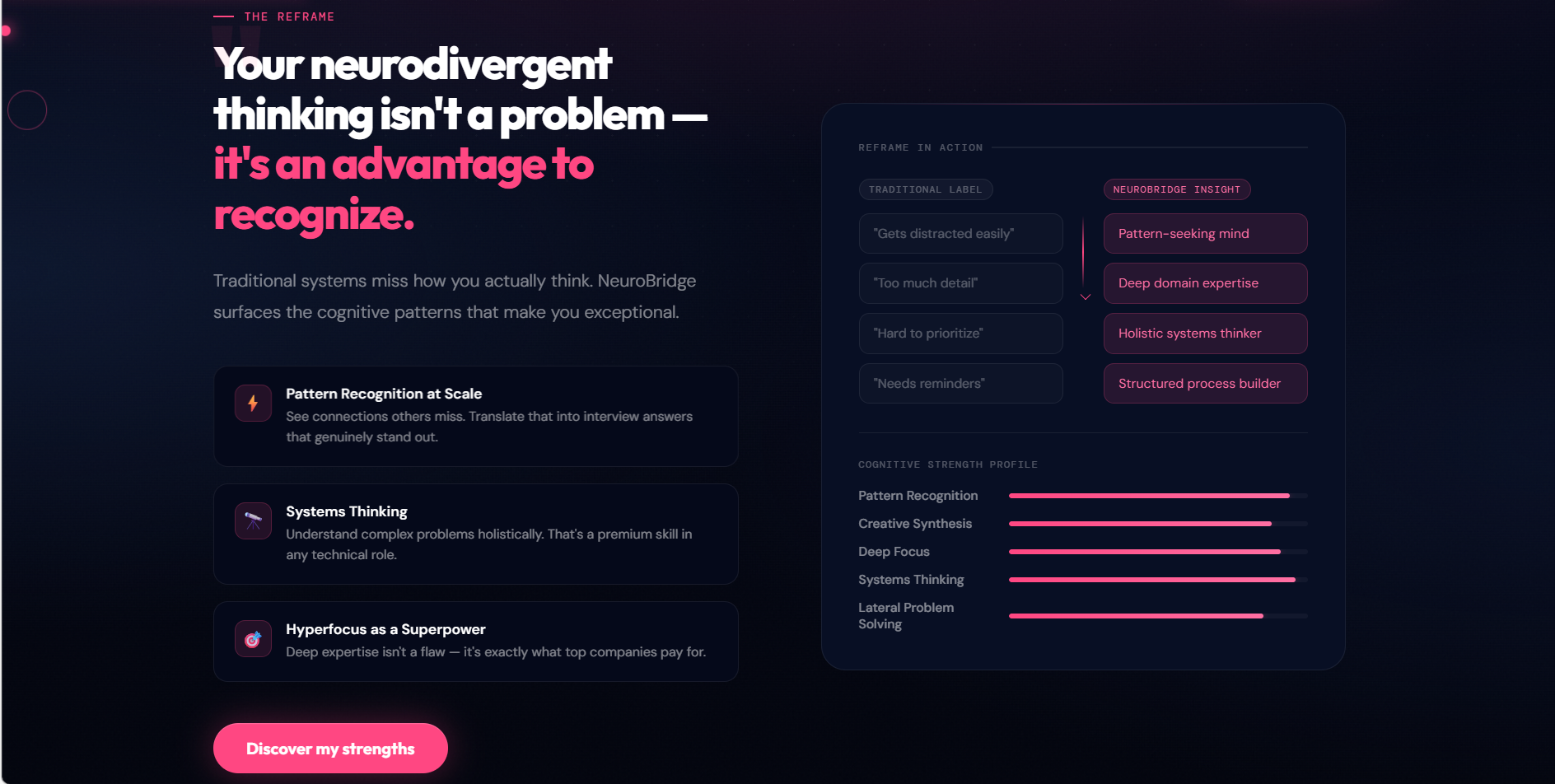
A significant percentage of systems created to measure intelligence, such as standardized tests, traditional educational settings, and aptitude tests, are grounded in a single assumption: that intelligence should be expressed in a similar manner for all people. However, for millions of neurodivergent people, such as those with attention-deficit/hyperactivity disorder, autism, dyslexia, and a range of cognitive variations, intelligence seems to manifest in non-linear, non-traditional, and non-conventional ways. Neurodivergent people frequently show significant strengths in areas such as pattern recognition, systems thinking, creative problem solving, hyperfocus, and more.
The problem is not with the person, nor is it with their intelligence, as the issue is merely a matter of measurement, which NeuroBridge was created to address.
Inspiration
NeuroBridge was created in response to a discernible trend in the evaluation of human potential, as a significant percentage of neurodivergent evaluation tools focus on determining difficulties, rather than strengths. Although such tools can be enlightening, they do not address the fundamental question: “What is this person good at?”
Many stories have been shared about high-functioning individuals being overlooked for their potential because their cognitive style does not mesh with traditional evaluation tools. The goal was to create a system that changes the paradigm, from asking “What is wrong?” to asking “What cognitive strengths may be hidden inside the person?”
How We Built It
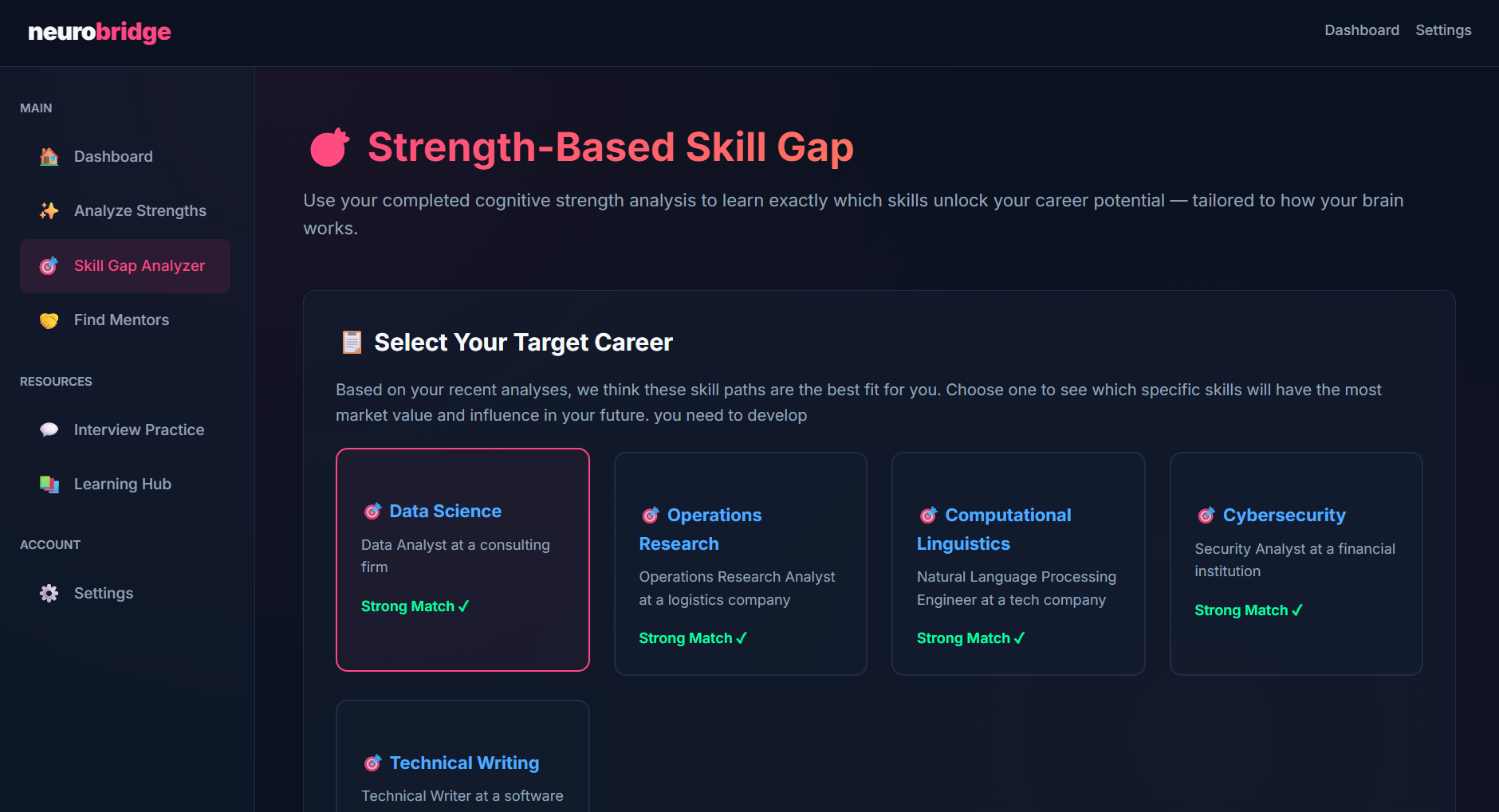
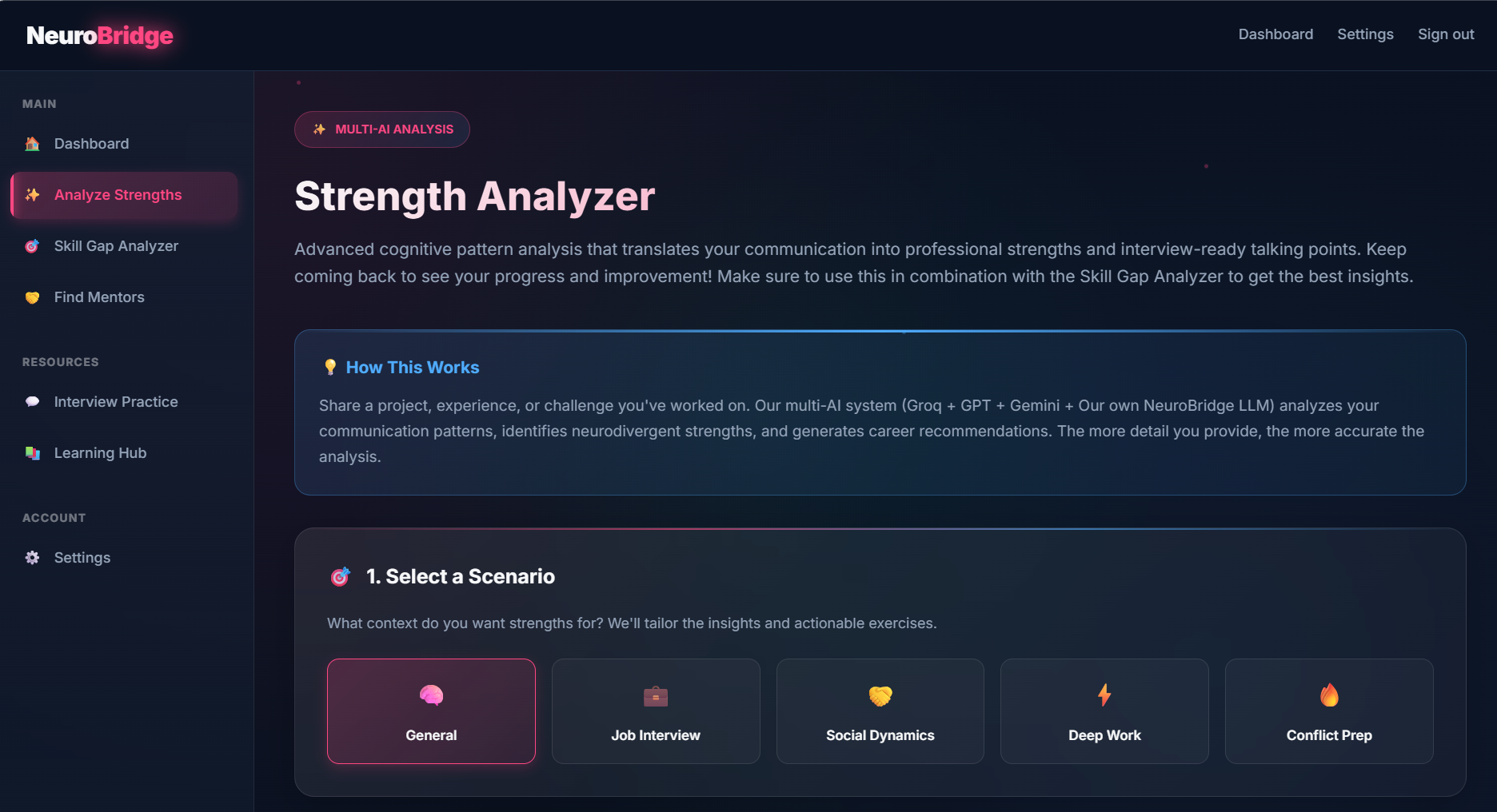
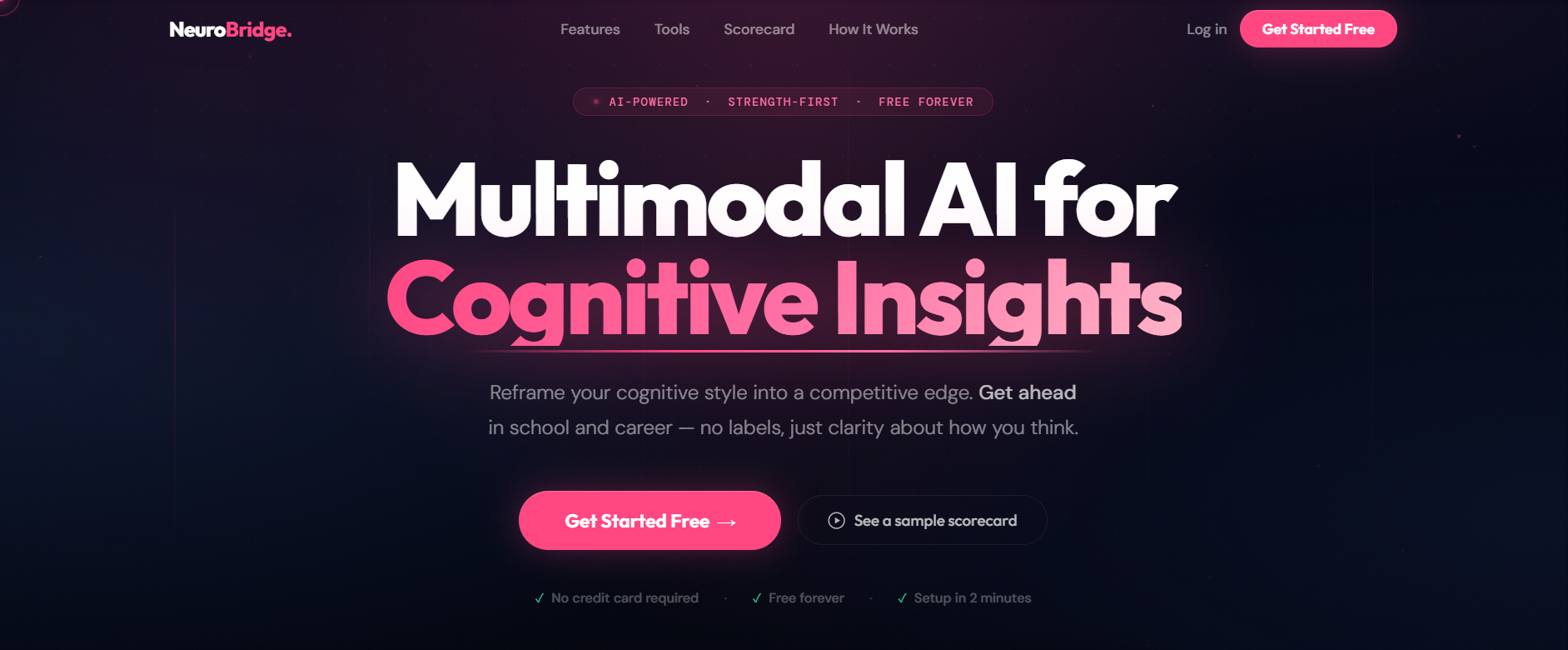
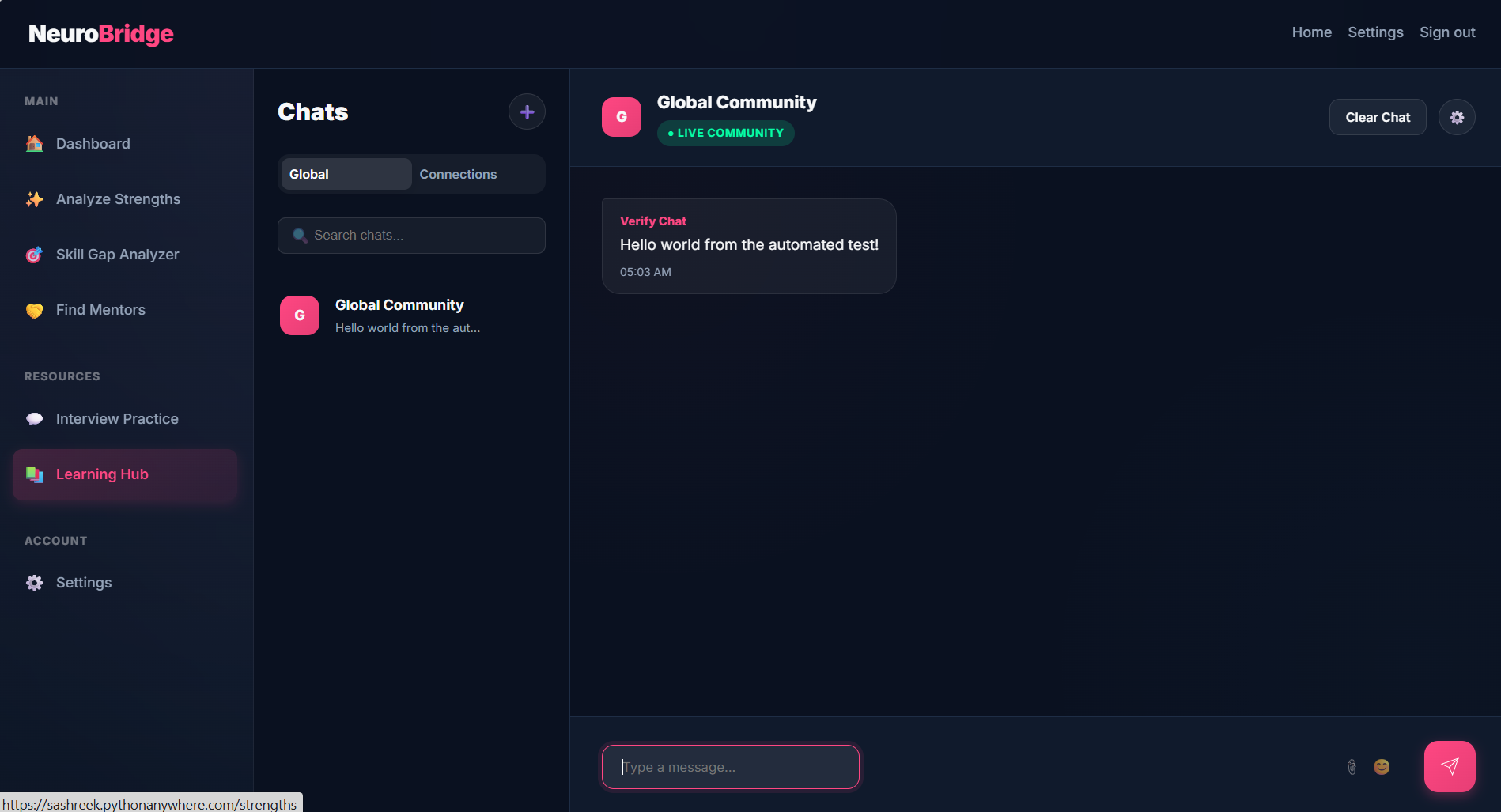
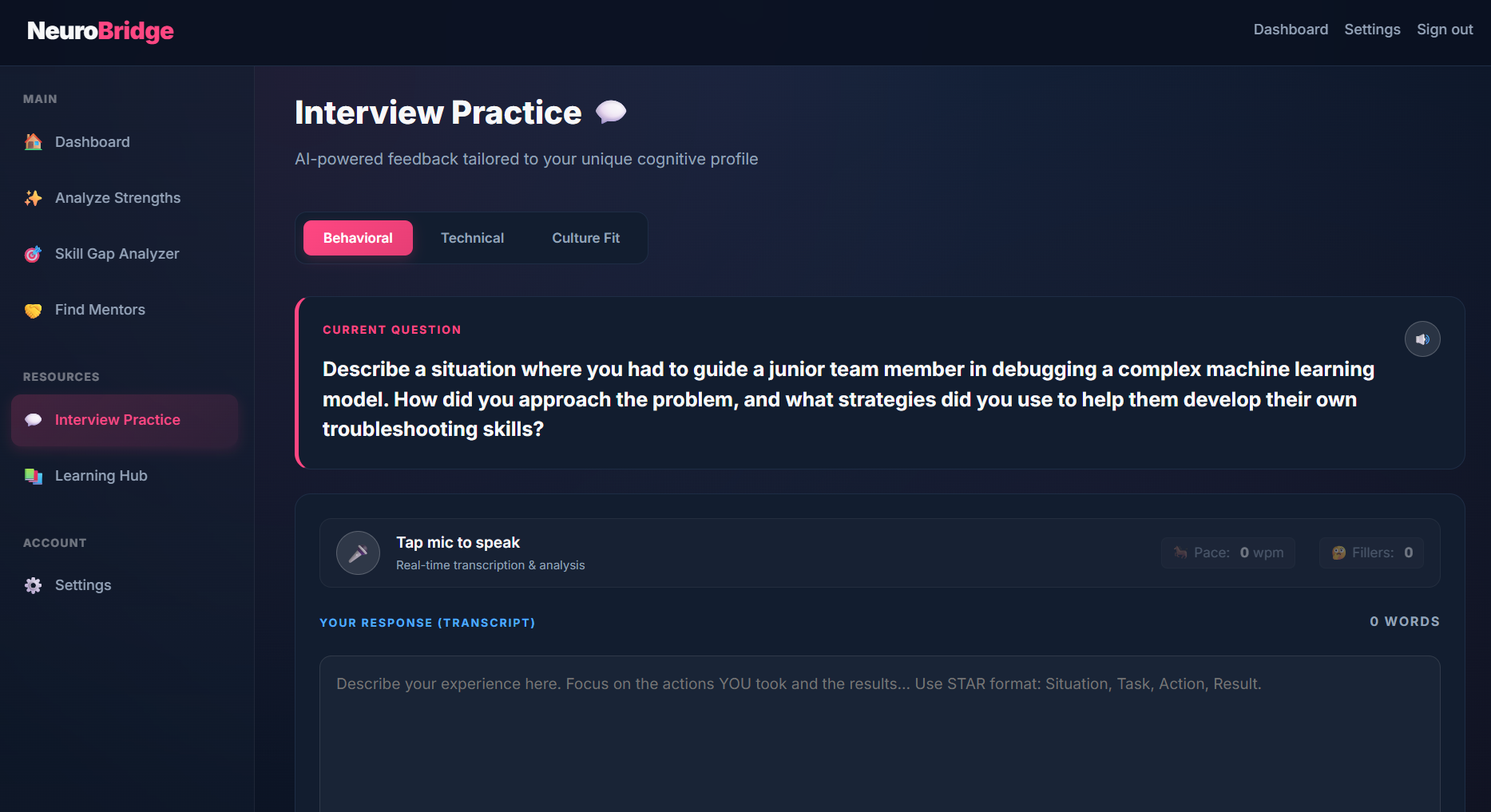
NeuroBridge is an AI-driven tool for cognitive strength analysis, designed to detect hidden thinking patterns and problem-solving types through interactive tasks and behavioral analysis. The process involves three main elements:
Cognitive Interaction Tasks Users are led through a series of mini-challenges that aim to test various different cognitive behaviors, including pattern recognition, systems thinking, abstraction, logical reasoning, creative problem solving, and speed versus accuracy trade-offs. These challenges are specifically designed to test how an individual thinks, rather than whether their answers are correct.
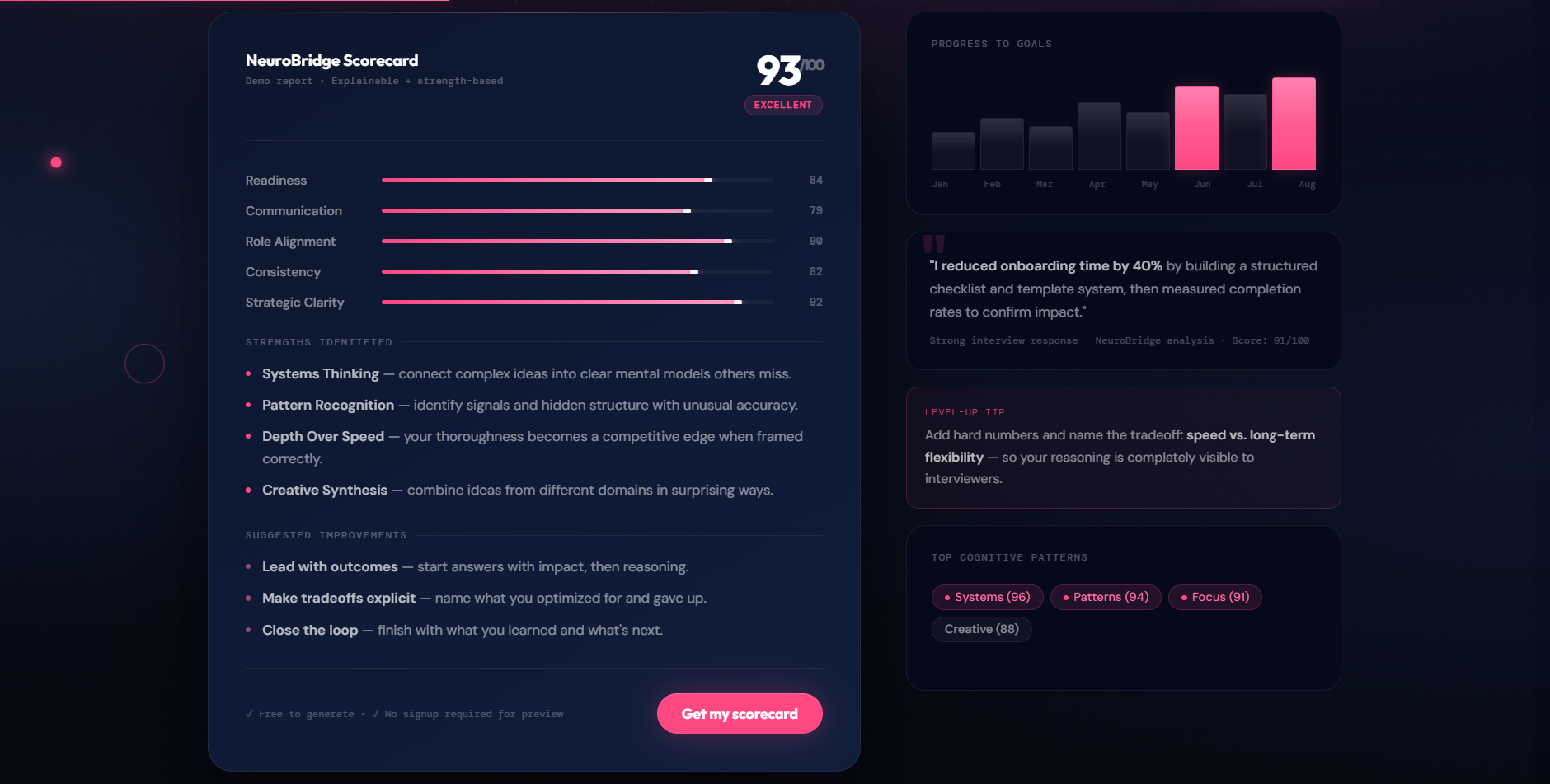
Behavioral Signal Extraction For each user, NeuroBridge extracts various behavioral signals, including response time patterns, error correction mechanisms, exploration-exploitation trade-offs, and diversity in solving paths. Instead of generating a score, NeuroBridge generates a cognitive signature.
AI-Based Cognitive Strength Mapping The behavioral signals are then analyzed using machine learning algorithms to map user interaction patterns onto possible cognitive strengths, including systems thinking, pattern abstraction, nonlinear reasoning, creative synthesis, and rapid iteration.
The Core Idea The current system for measuring intelligence tends to treat multidimensional thinking as a single-dimensional quantity. In many conventional assessment systems, intelligence is implicitly modeled as a function of correctness and performance on standardized tasks:
𝐼=𝑓(Accuracy)
While this approach can be useful in limited contexts, it often compresses the complexity of human cognition into a single scalar score. This simplification fails to capture the diversity of cognitive strategies used by individuals, particularly those who approach problems through unconventional or nonlinear reasoning processes.
NeuroBridge instead approaches cognition as a multi-dimensional landscape of strengths, where intelligence is better represented as a vector of cognitive capabilities rather than a single score.
Each component of this vector represents the degree to which an individual demonstrates strength in a particular cognitive domain. Rather than compressing intelligence into a single measurement, NeuroBridge attempts to map how different cognitive abilities interact to produce unique thinking styles.
By modeling cognition this way, the system allows for a more nuanced understanding of human problem solving, particularly for individuals whose strengths may not align with traditional evaluation frameworks.
Challenges I Faced
One of the most significant challenges in building NeuroBridge was designing tasks that genuinely measure cognitive processes rather than memorized knowledge. Many conventional assessments unintentionally reward familiarity with previously learned patterns instead of authentic reasoning ability.
To address this issue, the interaction tasks were designed to emphasize novel problem-solving situations, where users must rely on reasoning strategies rather than prior exposure.
Another challenge involved determining which behavioral signals meaningfully reflect cognitive strengths. Raw interaction data can contain substantial noise, and not every measurable behavior corresponds to an interpretable cognitive feature. As a result, considerable effort was devoted to identifying signals such as adaptive problem solving, persistence after mistakes, and exploration strategies that may correlate with deeper reasoning patterns.
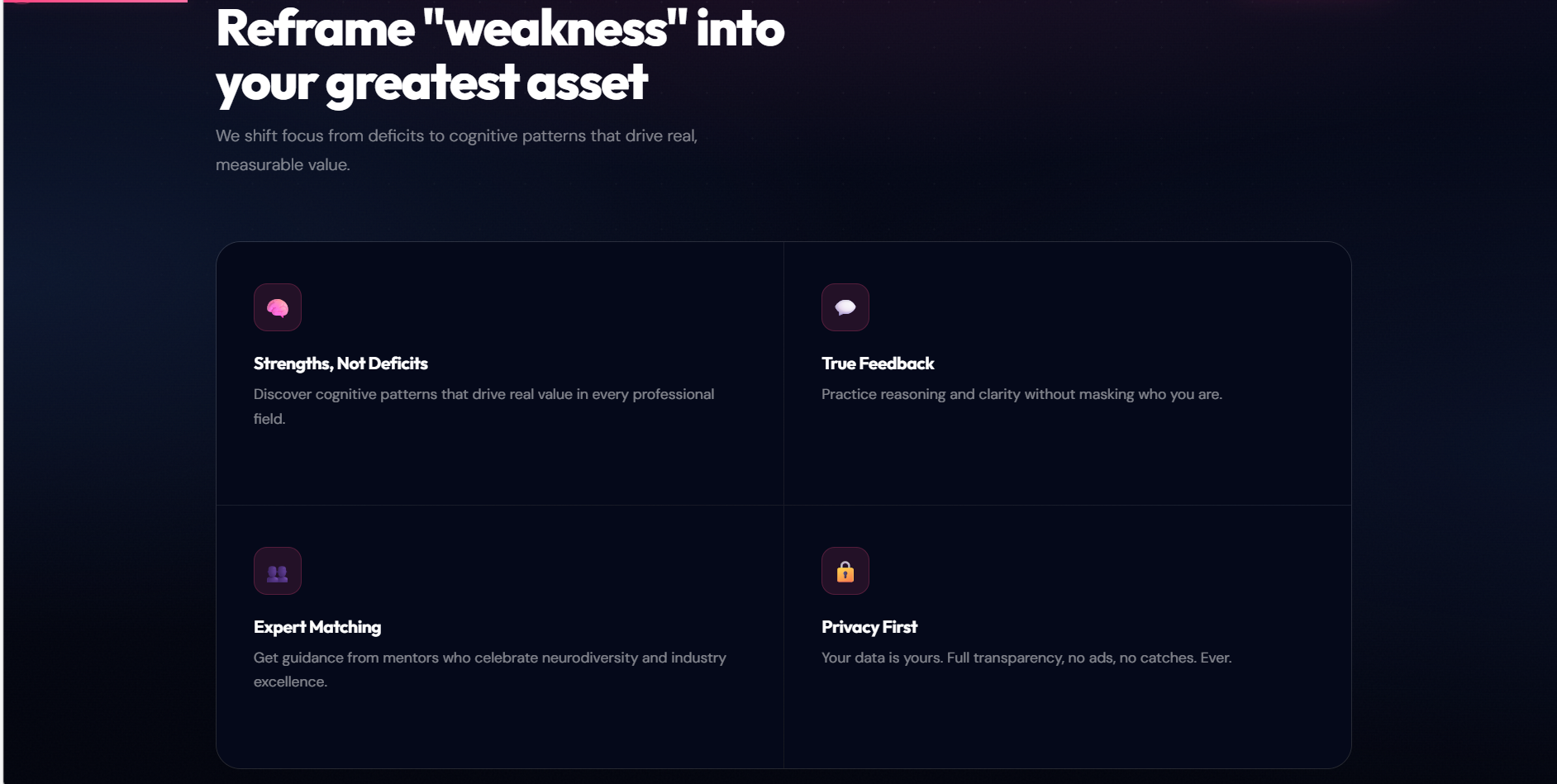
Additionally, presenting results in a way that emphasizes strengths rather than deficits required careful design decisions. Many existing neurodivergent evaluation systems frame results around what individuals struggle with. NeuroBridge attempts to reverse this framing by highlighting potential cognitive advantages instead.
What I Learned
Developing NeuroBridge reinforced the idea that intelligence is far more complex than many conventional systems assume. Through building cognitive interaction tasks and analyzing behavioral data, it became clear that different individuals approach the same problems through vastly different reasoning pathways.
Some individuals prioritize rapid intuitive pattern recognition, while others demonstrate strengths in systematic exploration and deep analysis. These differences do not necessarily indicate variations in intelligence, but rather variations in cognitive strategy.
Understanding these strategies provides a richer picture of human cognition and highlights the value of cognitive diversity in problem solving and innovation.
Why This Matters
Millions of neurodivergent individuals are often underestimated because the systems used to evaluate them measure only a narrow subset of cognitive abilities. When intelligence is defined too narrowly, valuable strengths may remain hidden.
NeuroBridge aims to help address this gap by identifying potential cognitive advantages that traditional systems overlook. By emphasizing strengths rather than deficits, tools like NeuroBridge may help individuals better understand how their minds work and where their abilities can thrive.
In the long term, approaches like this could influence how we think about education, talent identification, and the broader characterization of intelligence, shifting the focus from uniform measurement toward recognizing the diverse ways that people think and solve problems.
Built With
- anthropicapi
- dotenv
- flask
- flask-limiter
- flask-wtf
- groqapi
- gunicorn
- html5
- javascript
- next.js
- openaiapi
- python
- pythonanywhere
- sqlite
- vanillacss
- werkzeug

Log in or sign up for Devpost to join the conversation.