-
-
-
-
-
-
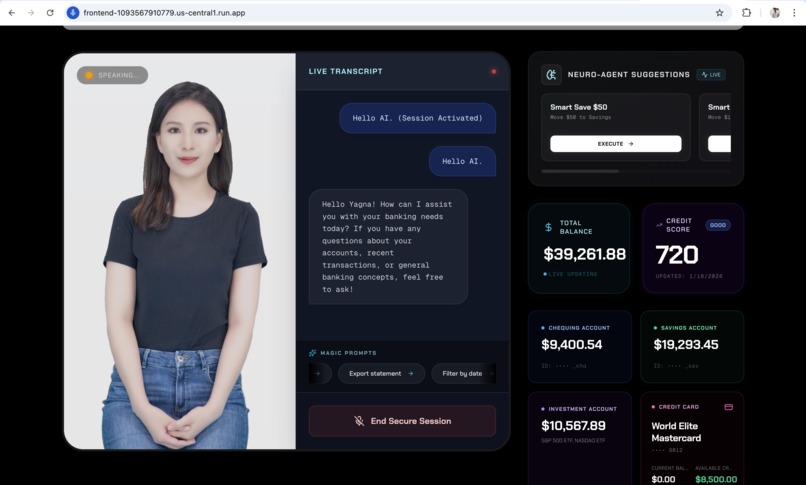
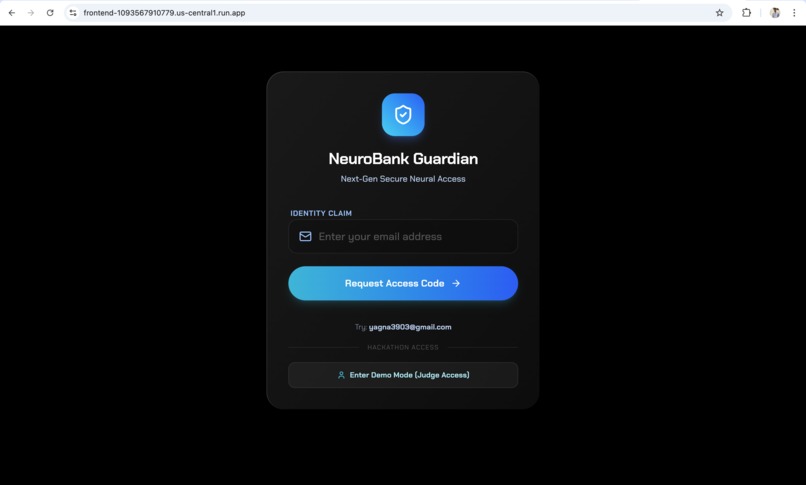
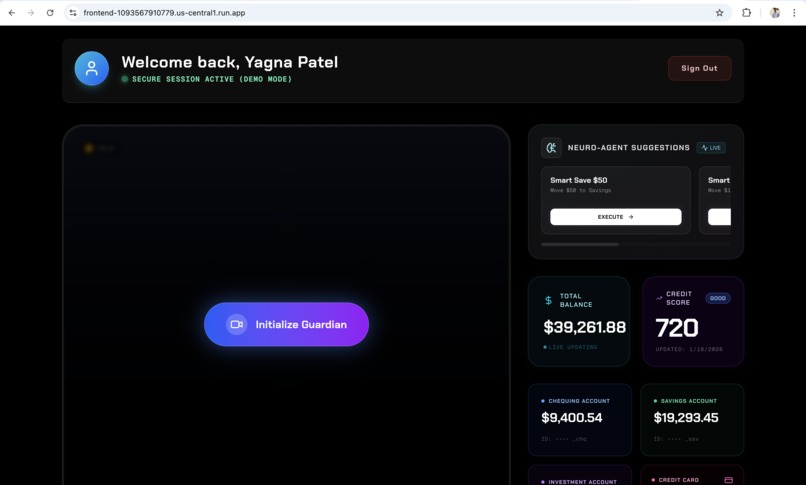
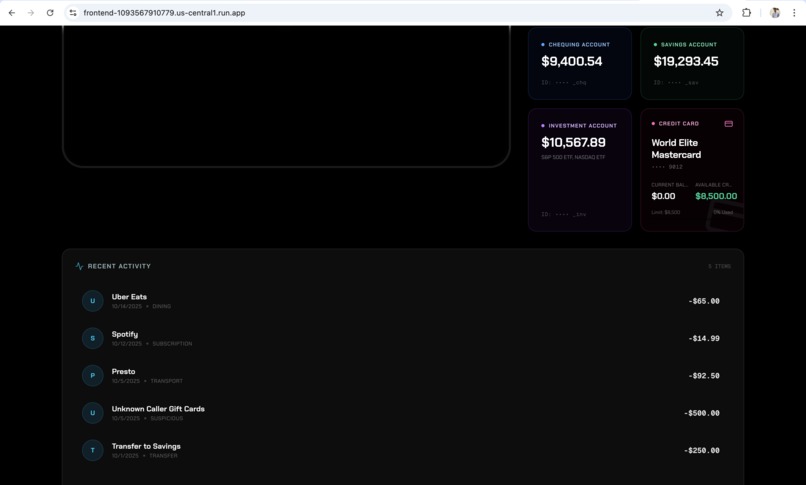
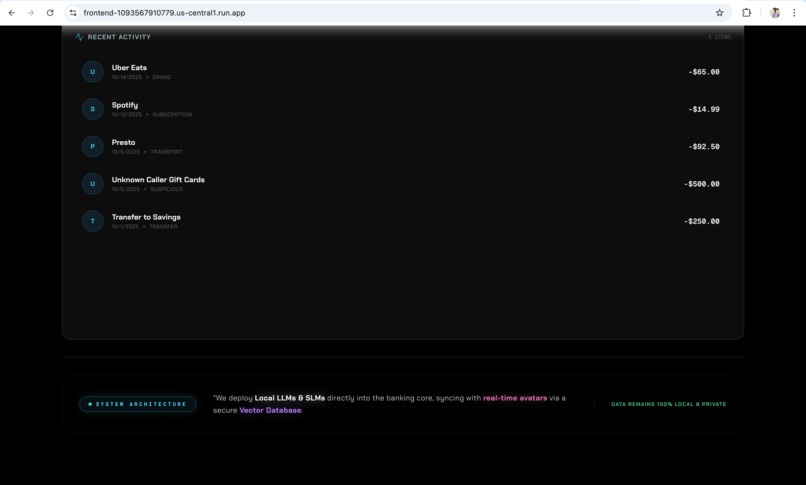
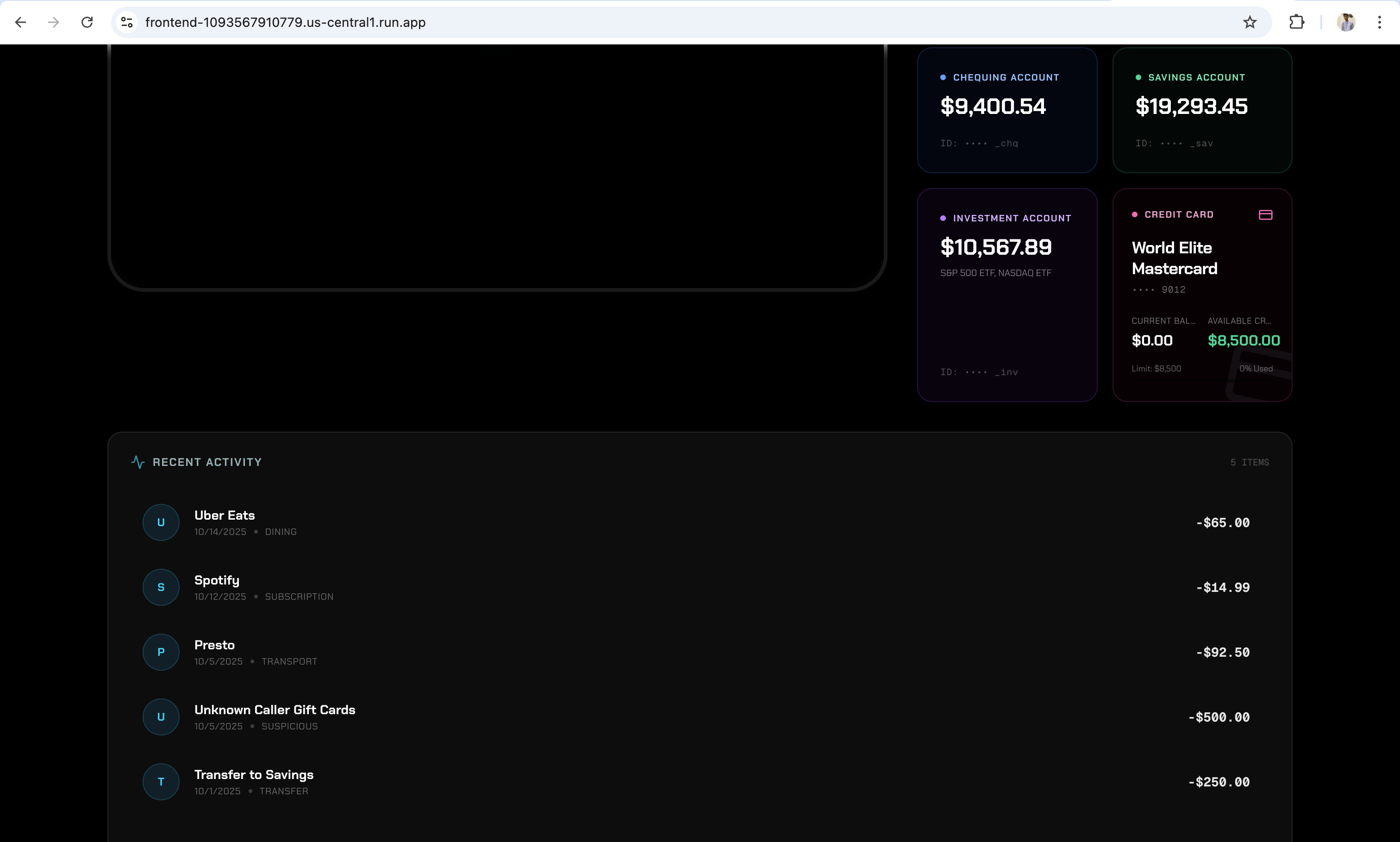
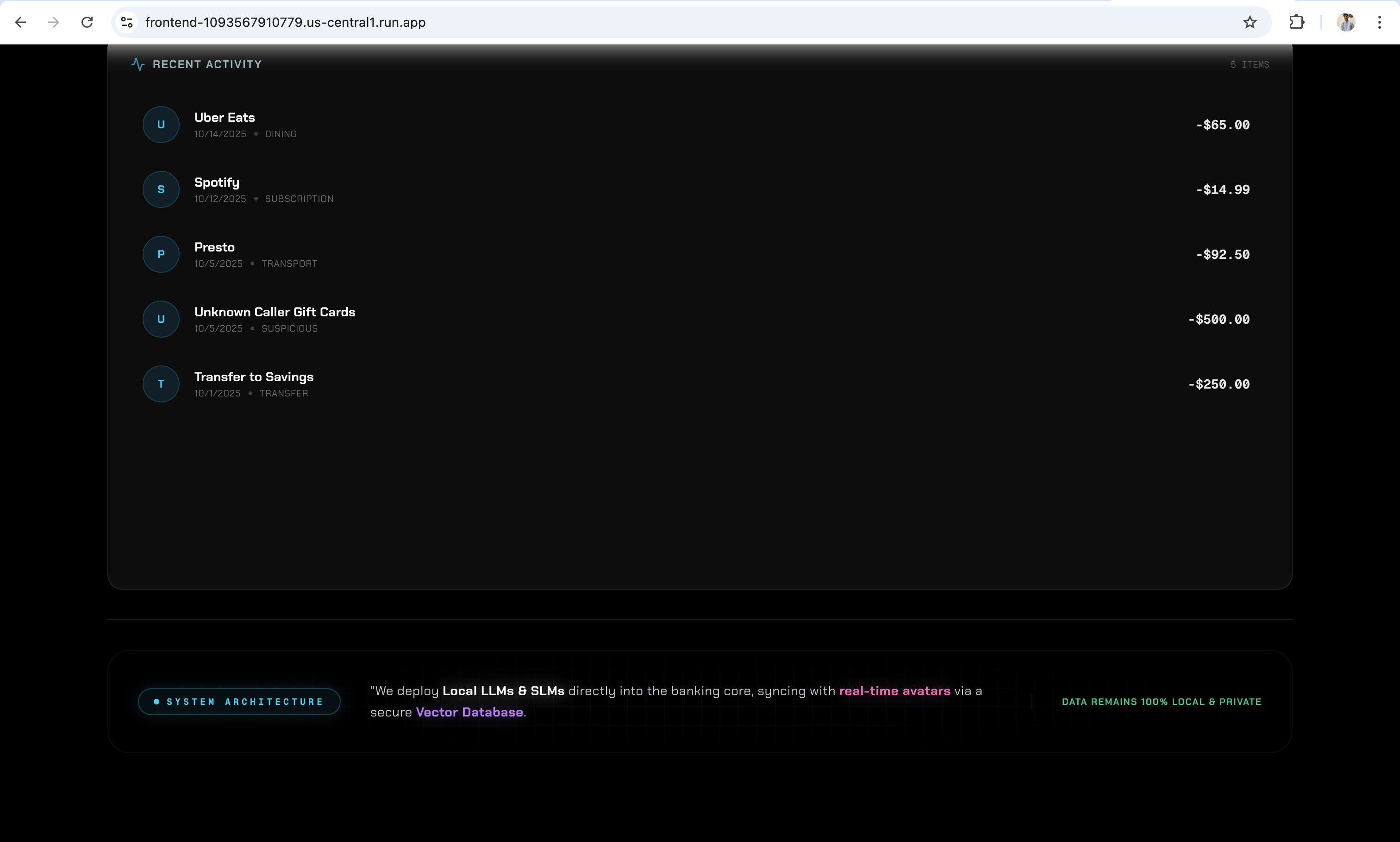
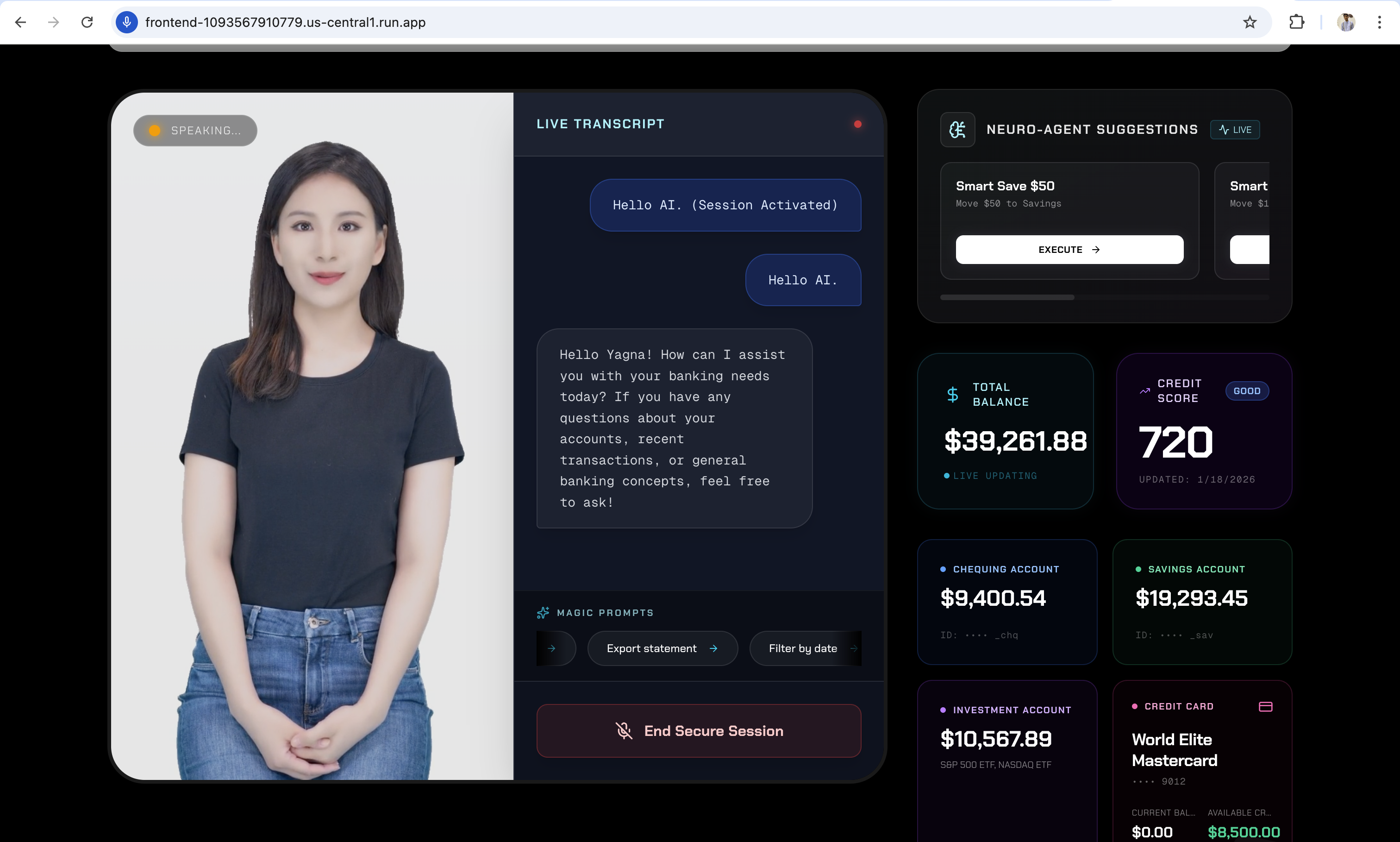
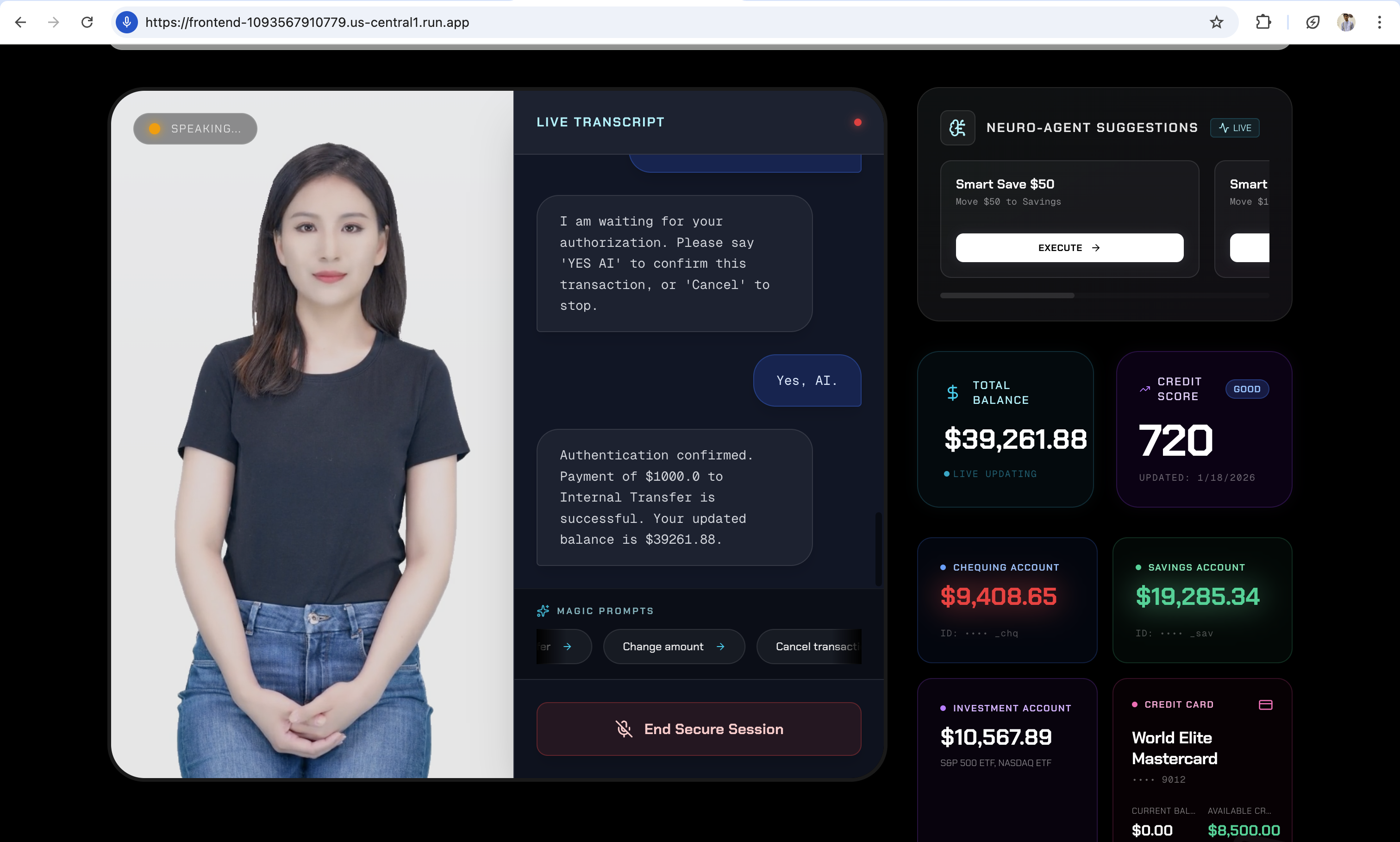
This is our Agent screen shot
-
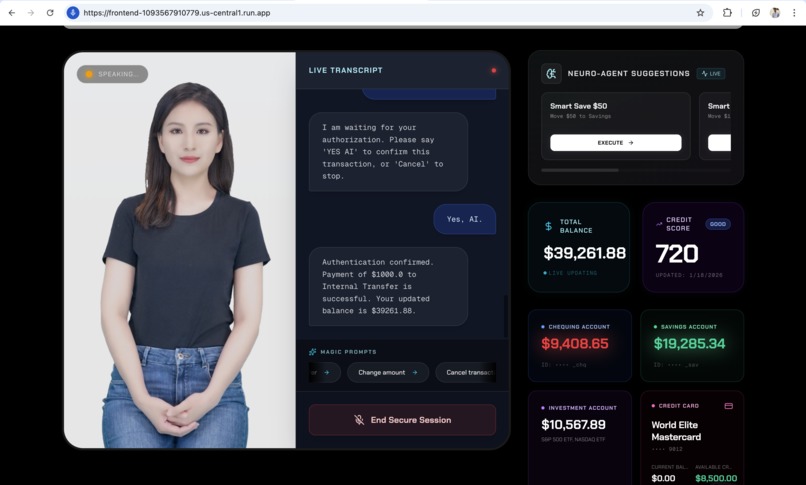
Live updates of the transactions done through agentic AI
💡 Inspiration: More Than Just “Accessible”
We started this hackathon with a simple question: Why is banking still so hard?
For most people, banking apps are annoying. But for millions — people who cannot see clearly, cannot hear, or face cognitive challenges — banking becomes a barrier. We saw friends and family struggle with tiny buttons, complex menus, and confusing screens. The current idea of “accessibility” often feels like a checklist, not a real solution.
We didn’t want to build another tool.
We wanted to build a Guardian — a system that feels human, reduces cognitive load, and helps people access their money with dignity and confidence.
🚀 What It Does
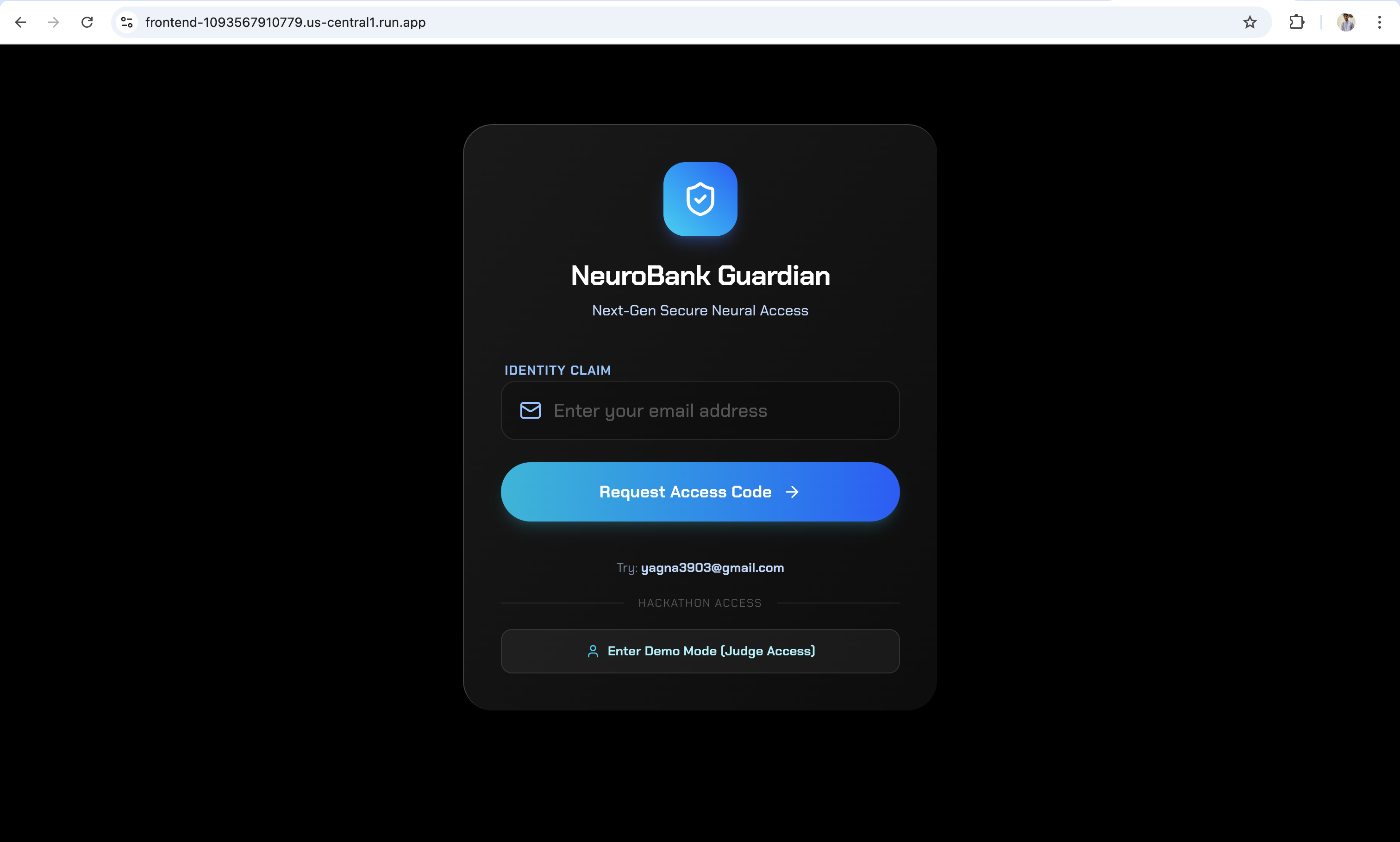
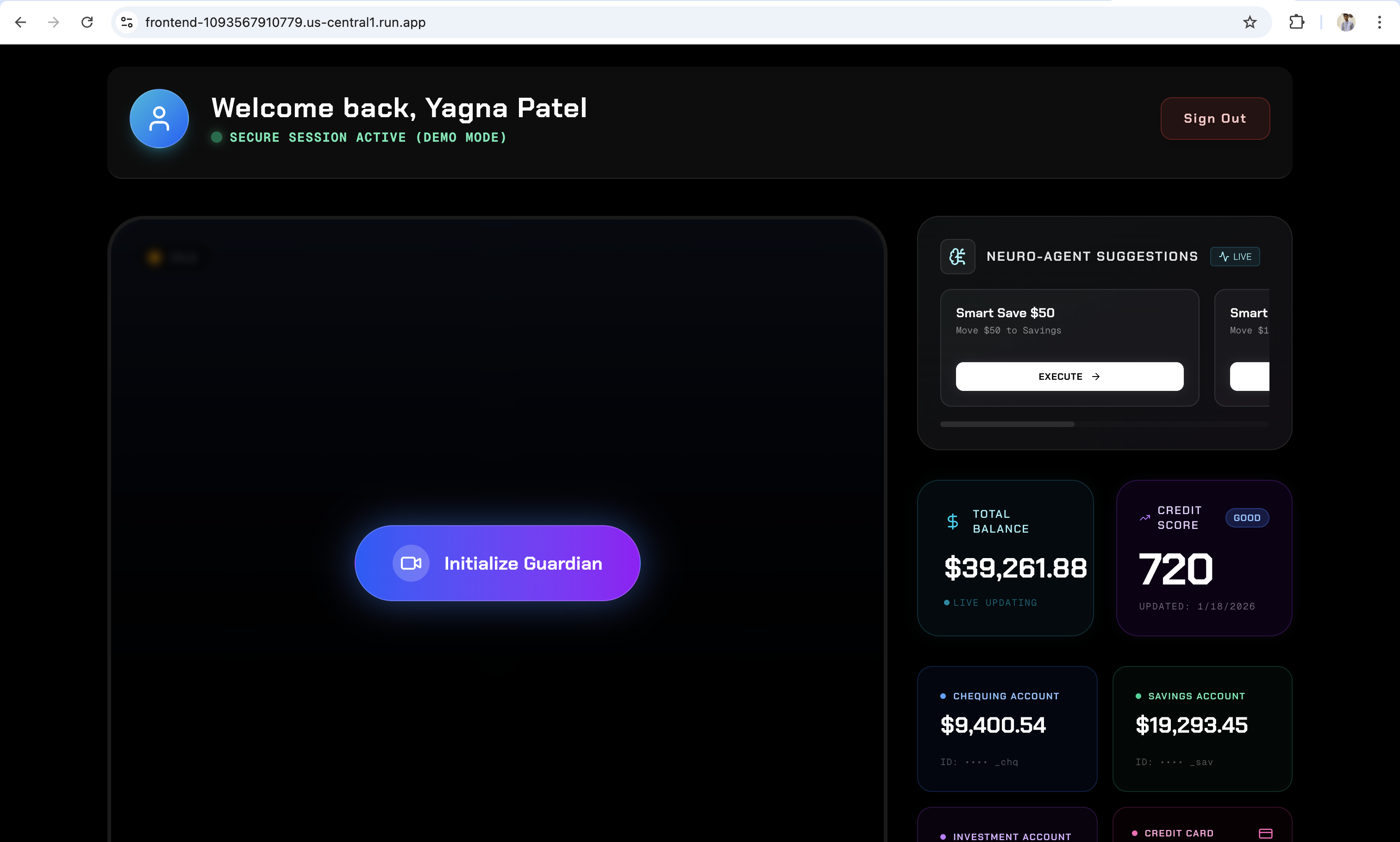
NeuroBank Guardian is an in-bank, accessibility-first AI assistant designed to help people who cannot see or cannot hear access banking services independently.
It provides:
- Voice-first interaction for visually impaired users
- Visual, text-based interaction for hearing-impaired users
- A real-time AI avatar for natural communication
- Proactive reminders for important bills and actions
Routine tasks like balance checks, bill reminders, and guided money transfers are handled automatically, reducing repetitive workload for bank staff.
🧠 How It Works: Agentic Workflow with Local AI
NeuroBank Guardian is not a traditional chatbot. It is built as an agentic system.
Using real-time WebSocket communication, the AI maintains a continuous two-way conversation with the user. When a user speaks or interacts visually, the system:
- Understands user intent in real time
- Checks relevant context (balance, bills, account state)
- Decides the safest next step
- Performs the action only after user confirmation
- Stores the interaction as part of the agent’s memory
This creates a natural, human-like banking experience instead of menu-based navigation.
🔐 Security & Privacy by Design
NeuroBank Guardian is designed to be installed locally inside bank infrastructure.
- The AI runs on local LLM/SLM models, not public cloud chatbots
- Sensitive banking data never leaves the bank
- Information retrieval uses a vector database, not raw data access
All banking information is converted into vector embeddings (numerical representations). When a user asks a question, the system performs a Top-K similarity search on these vectors to retrieve relevant context — without exposing actual account numbers, documents, or personal data.
This ensures:
- Strong privacy guarantees
- No raw data exposure
- Bank-grade security and compliance
🏦 Why It Matters
For customers:
- Accessible banking without waiting in line
- Independence for elderly and disabled users
- Multilingual, easy-to-understand interaction
For banks:
- Reduced staff workload
- Faster in-branch support
- Better accessibility without hiring additional staff
NeuroBank Guardian doesn’t replace human employees — it supports them.
🛠️ Built With
- Python & FastAPI – backend and agent logic
- WebSockets – real-time, continuous interaction
- Vector Database (Top-K Search) – secure semantic retrieval
- MongoDB Atlas – agent memory and interaction logs
- Local AI Models (LLM/SLM) – private, on-prem intelligence
- Next.js – frontend interface
- Azure Avatar + STT/TTS – real-time voice and avatar interaction
- Google AI Studio / OpenAI – AI orchestration and reasoning
Built With
- azure-avatar
- fastapi
- gcp
- google-ai-studios
- next
- open-ai
- pinecone
- python
- stt
- tts
- vectordatabase
- vectorembeddings


Log in or sign up for Devpost to join the conversation.