Inspiration
Growing up, I witnessed firsthand how traditional educational tools often failed to accommodate neurodivergent learners. Many children with ADHD, autism and learning differences struggle with conventional learning methods that don't align with their unique cognitive patterns. This observation sparked my passion to create something different - a platform that would not only be accessible but specifically designed with neurodivergent youth in mind.
The inspiration for NeuroAid came from recognizing that cognitive training shouldn't be a one-size-fits-all approach. I wanted to build a platform that would celebrate cognitive diversity while providing meaningful tools for skill development. The idea was to create games that would be engaging enough to hold attention while being scientifically grounded in cognitive training principles.
What it does
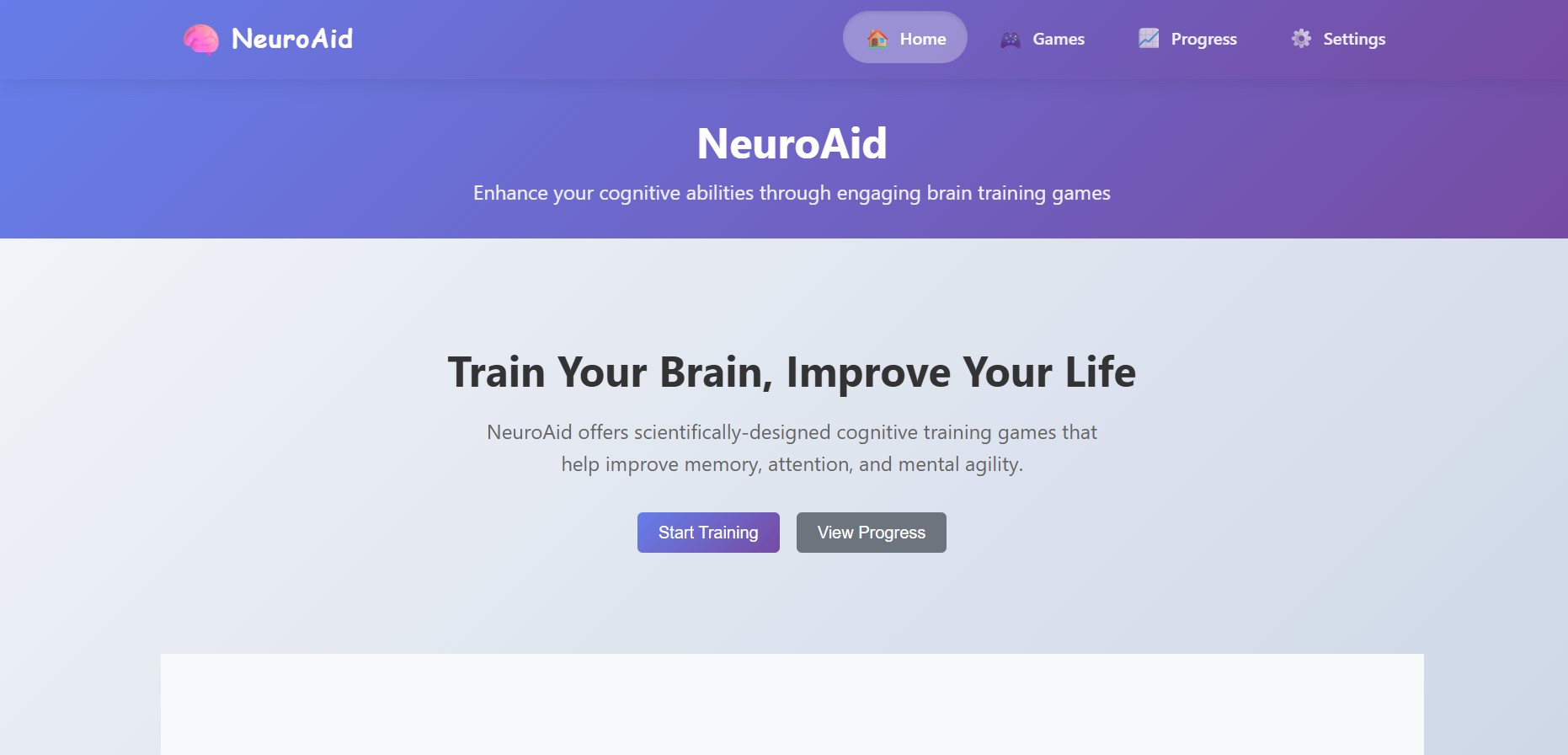
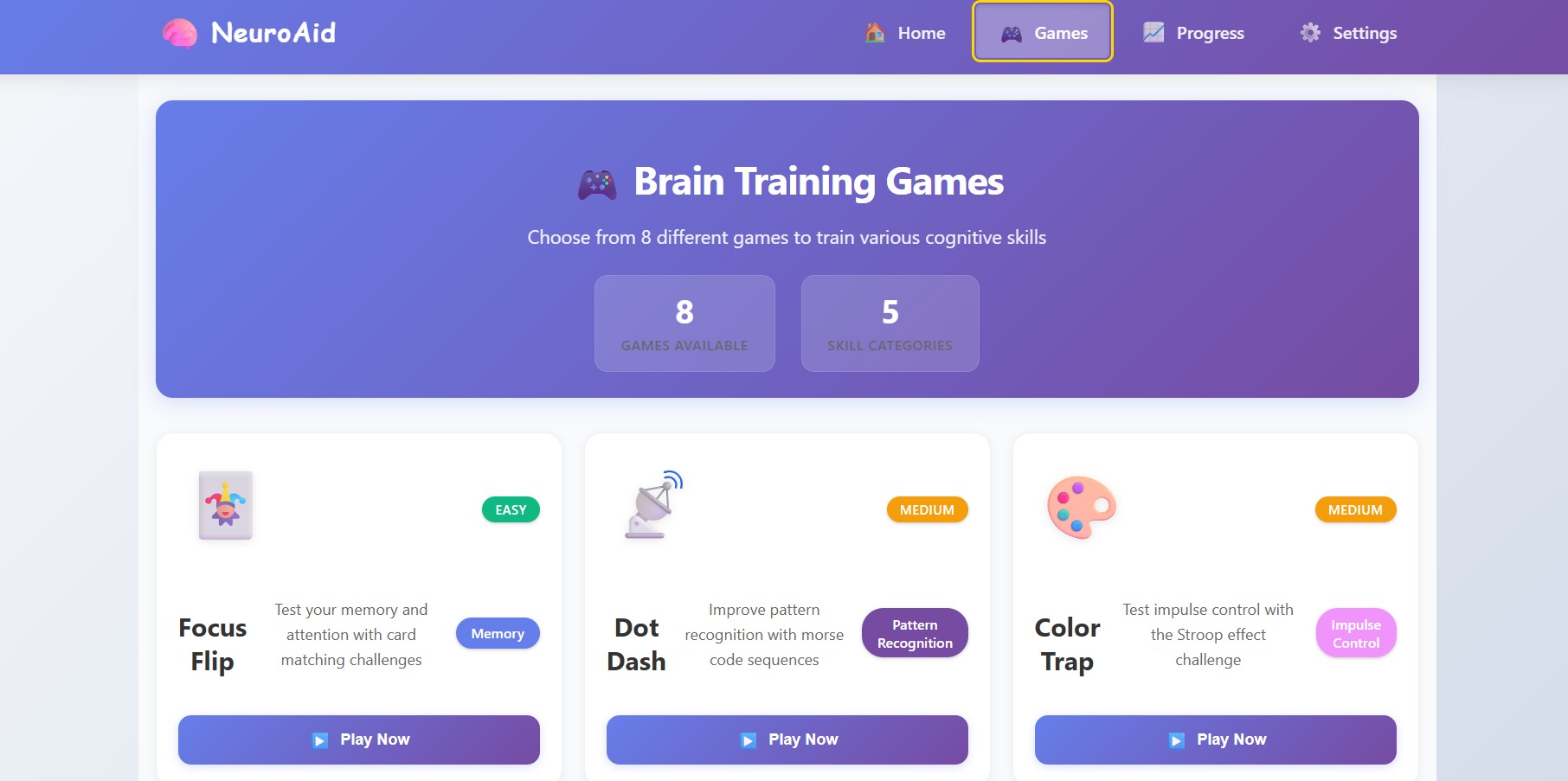
NeuroAid is a comprehensive cognitive training platform featuring eight specialized brain training games, each targeting different cognitive skills:
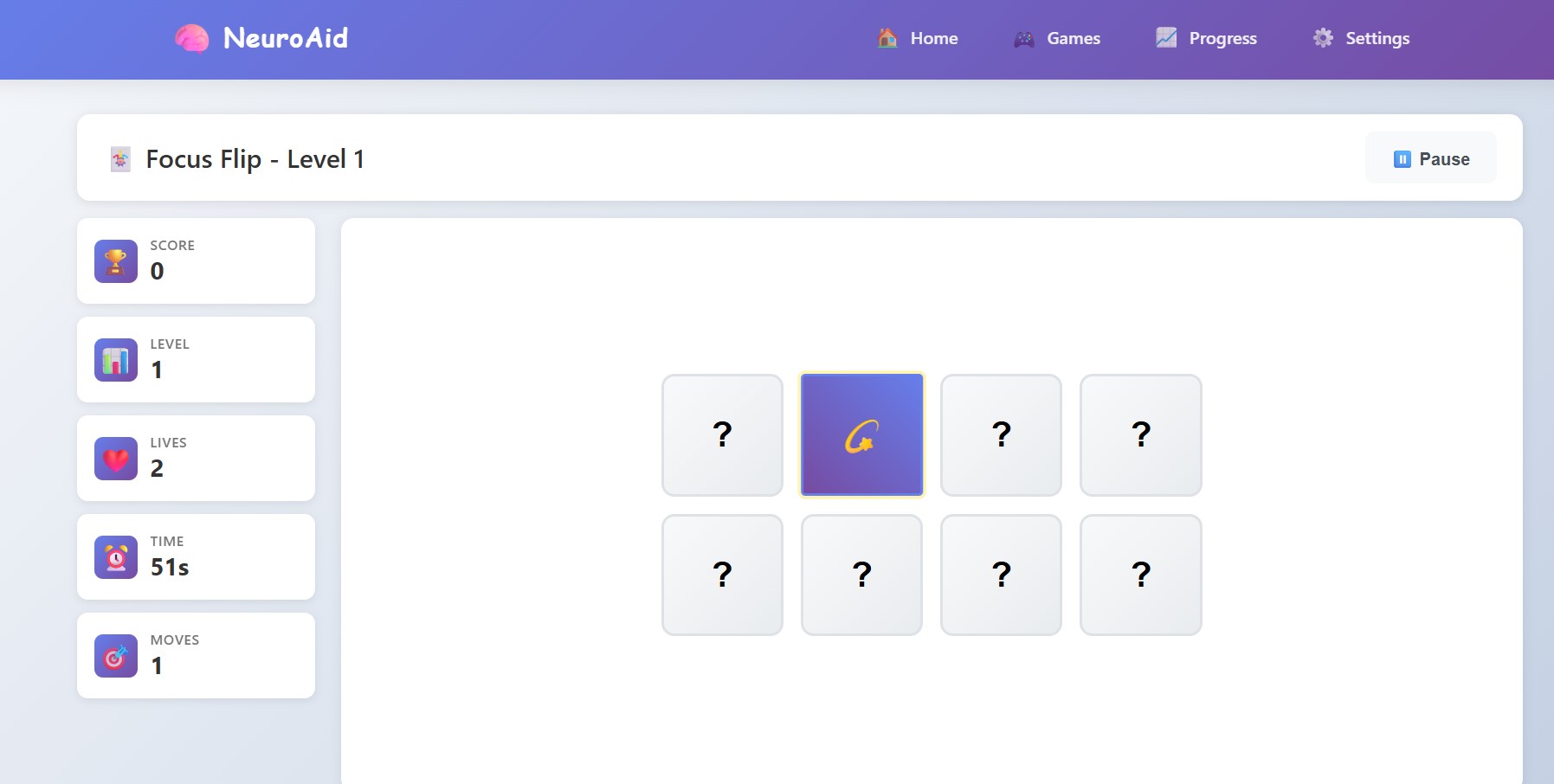
- Focus Flip: A memory card matching game that enhances working memory and visual attention
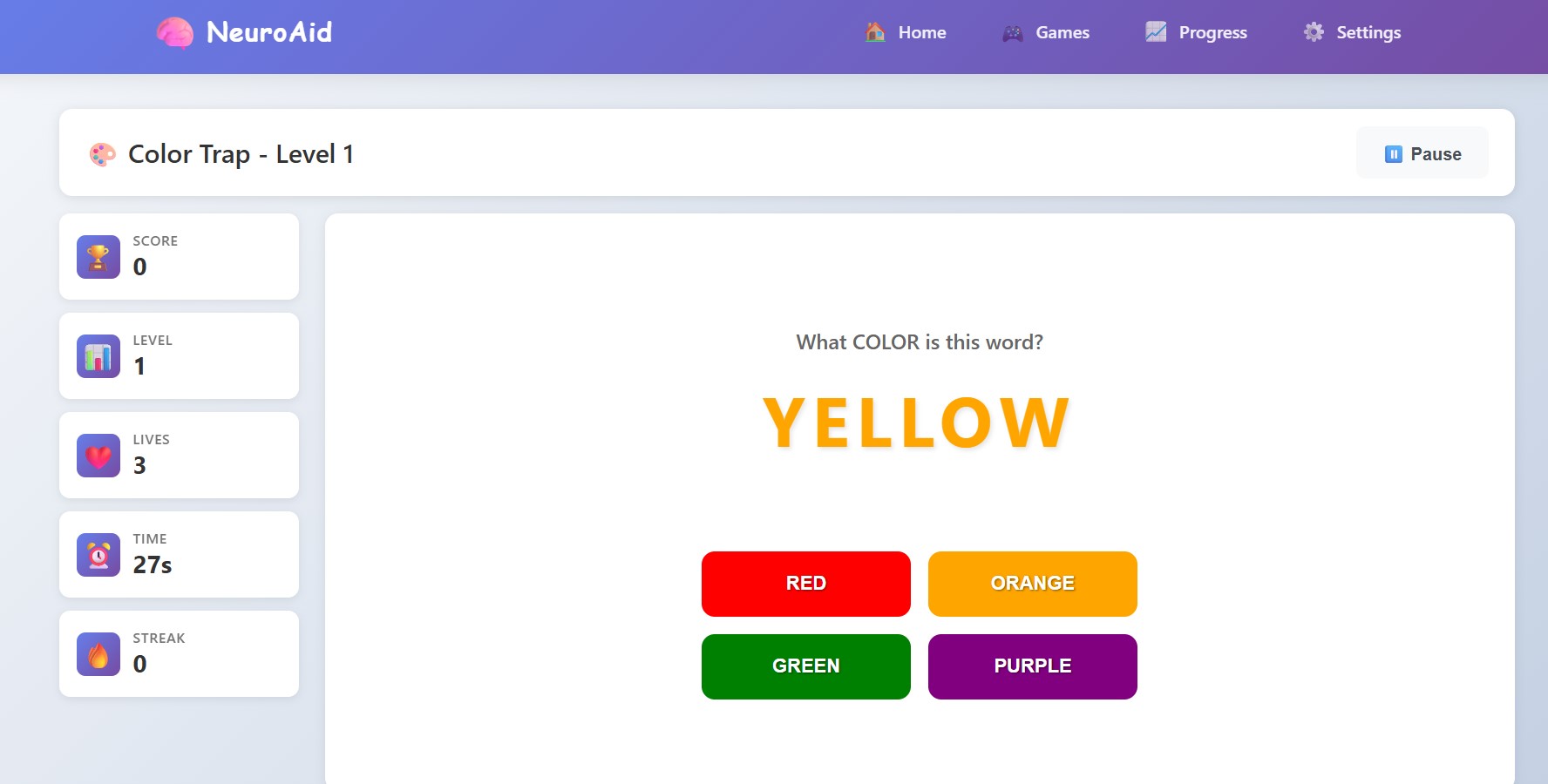
- Color Trap: A Stroop-effect based game that improves impulse control and cognitive flexibility
- Dot Dash: A morse code pattern recognition game that strengthens sequential processing and attention to detail
- Math Master: Mental arithmetic challenges that boost numerical processing and quick thinking
- Reaction Time: Speed-based exercises that improve processing speed and reflexes
- Sequence Sense: Number sequence memory tasks that enhance working memory capacity
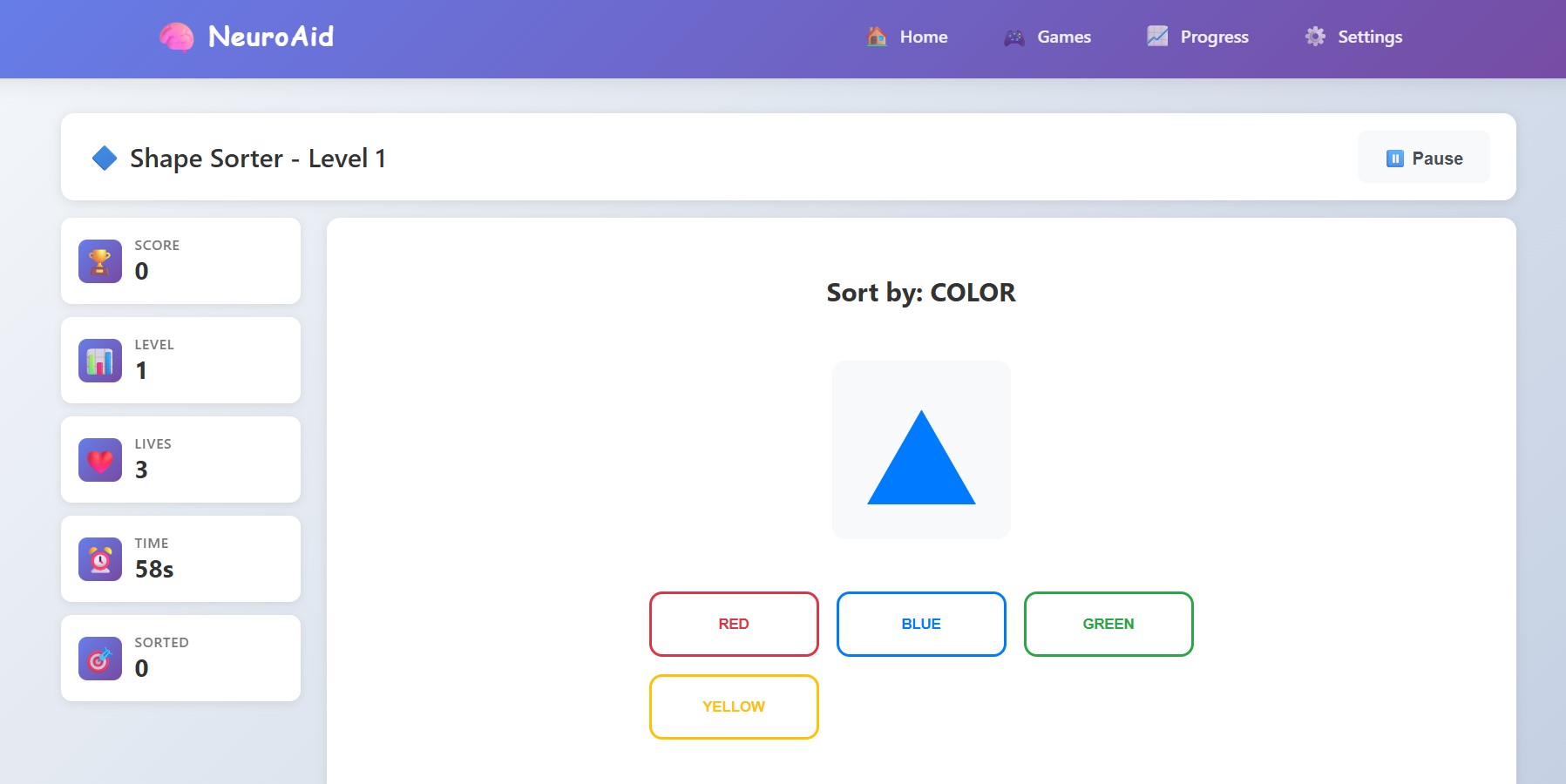
- Shape Sorter: Visual categorization challenges that develop cognitive flexibility and pattern recognition
- Word Chain: Vocabulary building exercises that strengthen verbal fluency and word association
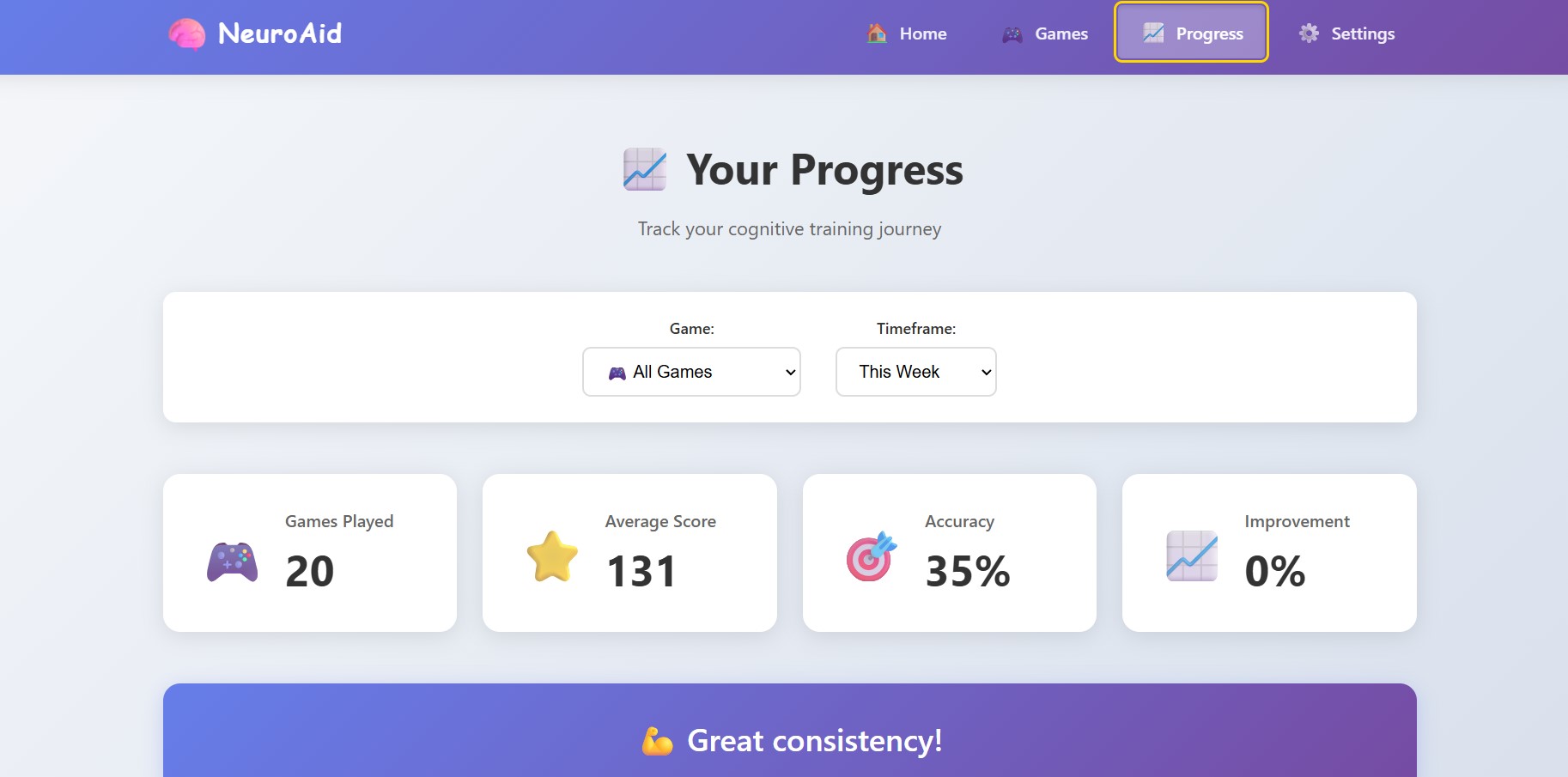
The platform includes a comprehensive progress tracking system with interactive charts, personalized skill insights, and detailed performance analytics. Each game adapts to the user's skill level and provides immediate feedback to maintain engagement and motivation.
How I built it
I built NeuroAid using a modern full-stack architecture:
Frontend: React.js with a component-based architecture, focusing on accessibility and responsive design. I implemented custom CSS with careful attention to neurodivergent-friendly design principles, including high contrast modes, reduced motion options, and clear visual hierarchies.
Backend: Node.js with Express.js, providing RESTful APIs for game data management, user progress tracking, and performance analytics.
Database: MongoDB for storing user profiles, game scores, performance metrics, and progress data.
Challenges I ran into
Accessibility Implementation: Creating truly accessible games was more complex than anticipated. I had to learn about ARIA standards, screen reader compatibility, and various assistive technologies. Balancing visual appeal with accessibility requirements required multiple iterations and careful testing.
Game Balance and Difficulty: Designing games that are challenging enough to be effective for cognitive training while remaining engaging and not frustrating was a significant challenge. I had to implement sophisticated algorithms for dynamic difficulty adjustment and spent considerable time fine-tuning the progression curves.
Data Visualization: Creating meaningful and accessible charts for progress tracking was challenging. I had to build custom chart components that would work well with screen readers while providing visual insights for sighted users.
Responsive Design: Making eight different games work seamlessly across desktop, tablet, and mobile devices required extensive CSS work and careful consideration of touch interactions versus mouse/keyboard inputs.
Accomplishments that I'm proud of
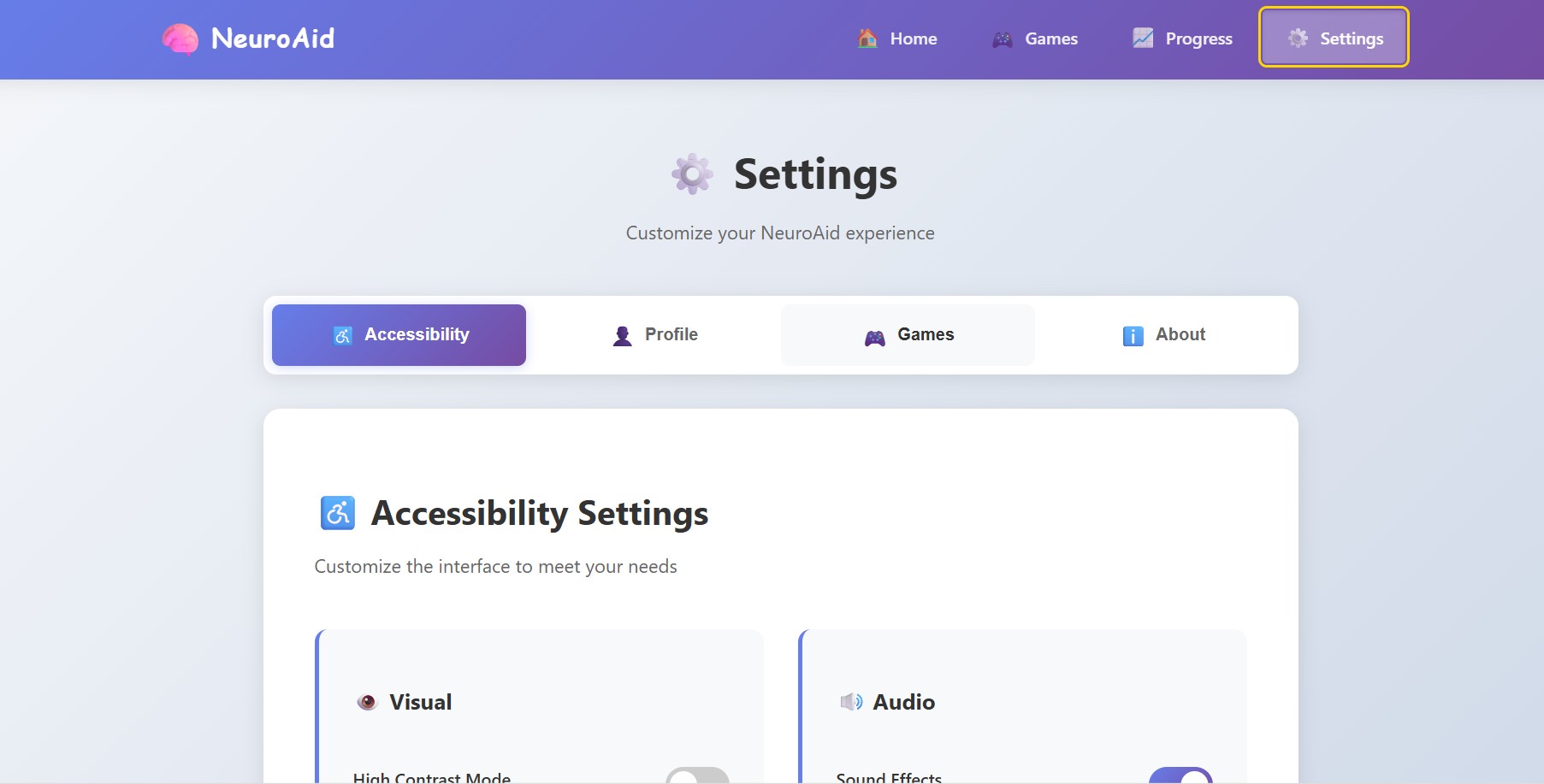
Comprehensive Accessibility: I successfully created a platform that truly prioritizes accessibility, with features like keyboard navigation, screen reader support, and customizable visual settings that make the games usable by a wide range of users.
Engaging Game Design: Each of the eight games provides a unique and engaging experience while maintaining scientific validity for cognitive training. The games successfully balance fun with educational value.
Professional UI/UX: I developed a modern, polished interface that looks and feels like a professional application. The consistent design system and smooth interactions create an engaging user experience.
Robust Progress Tracking: The platform includes sophisticated analytics with interactive charts, personalized insights, and meaningful progress visualization that helps users understand their cognitive development.
What I learned
Accessibility is Fundamental: This project taught me that accessibility isn't an add-on feature - it needs to be considered from the very beginning of the design process. I learned about WCAG guidelines, assistive technologies, and the importance of inclusive design.
Cognitive Science Principles: I gained deep insights into cognitive training methodologies, working memory research, and how different types of mental exercises can target specific cognitive skills.
User-Centered Design: I learned the importance of designing for specific user needs rather than general audiences. Understanding neurodivergent users' requirements shaped every design decision.
What's next for NeuroAid
Enhanced Analytics: I plan to implement more sophisticated progress tracking with trend analysis, goal setting, and personalized recommendations based on performance patterns.
Additional Games: Expanding the platform with more specialized games targeting specific cognitive skills like spatial reasoning, executive function, and social cognition.
Multiplayer Features: Adding collaborative games and challenges that allow users to engage with peers while maintaining a supportive, non-competitive environment.
Educator Dashboard: Developing tools for teachers and therapists to track student progress, assign specific exercises, and integrate NeuroAid into educational curricula.
NeuroAid represents my commitment to creating technology that truly serves neurodivergent learners, and I'm excited to continue developing it into an even more powerful tool for cognitive development and empowerment.
Built With
- css
- express.js
- mongodb
- node.js
- react
- tailwind

Log in or sign up for Devpost to join the conversation.