-
-
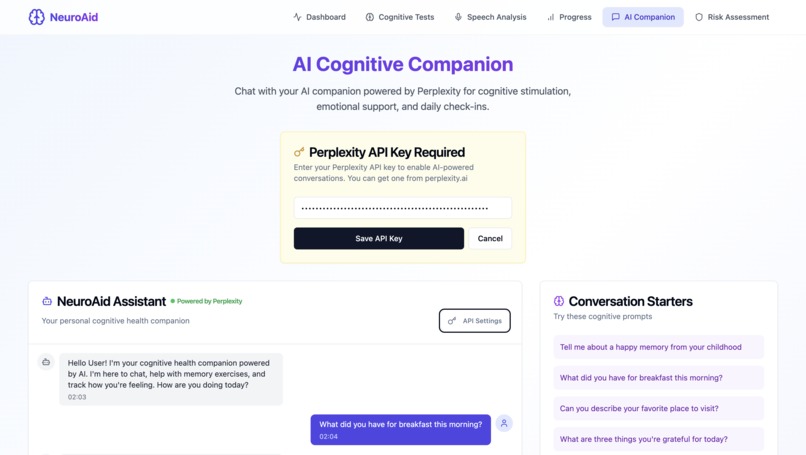
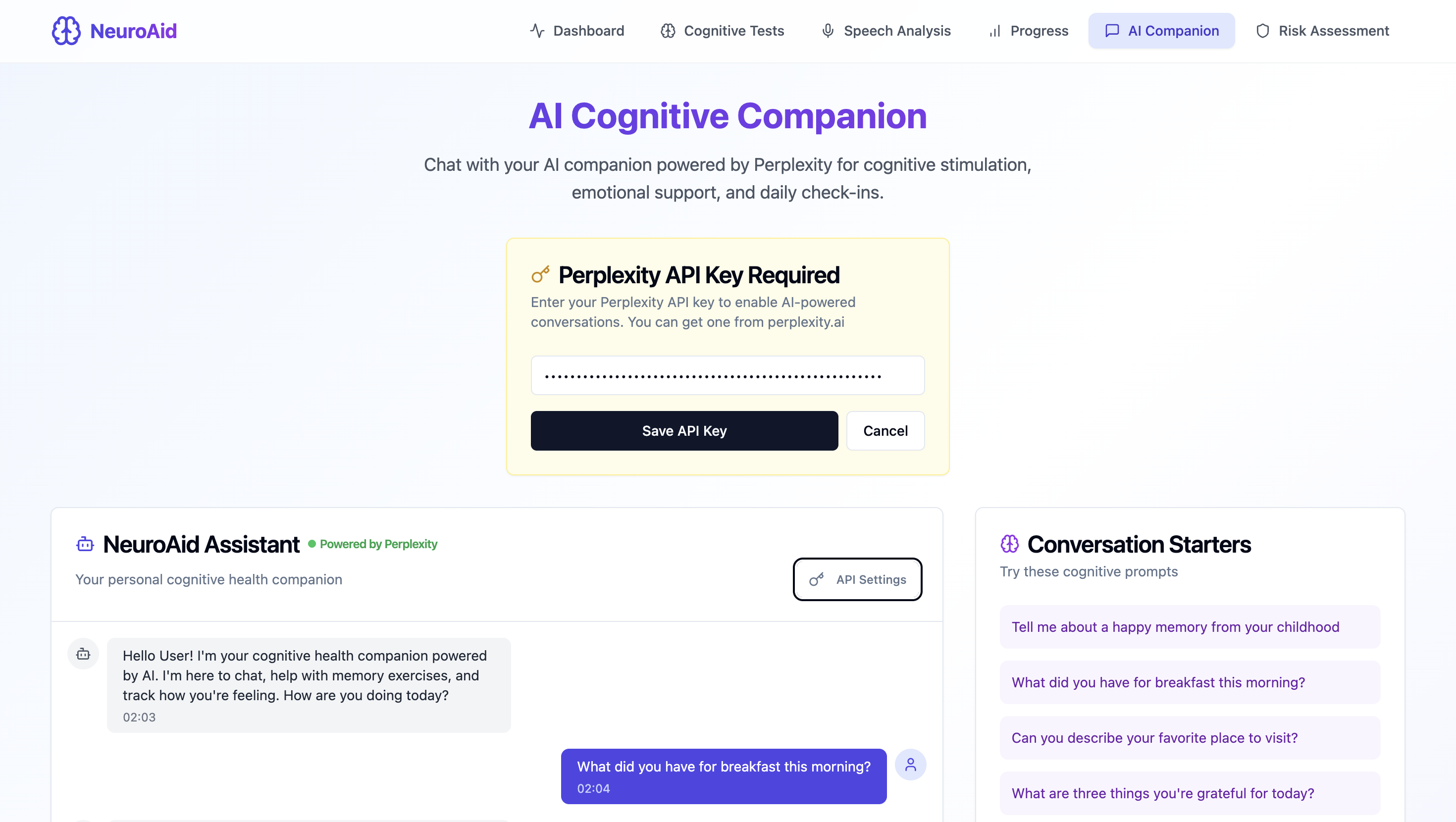
Perplexity Chatbot
-
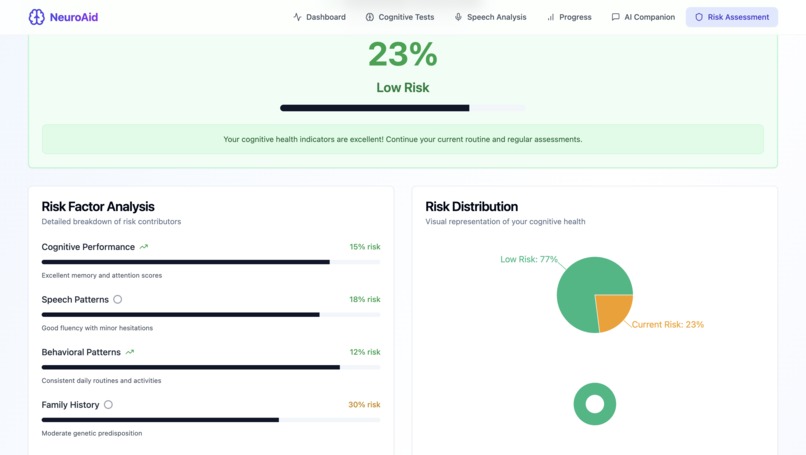
Risk Assessment
-
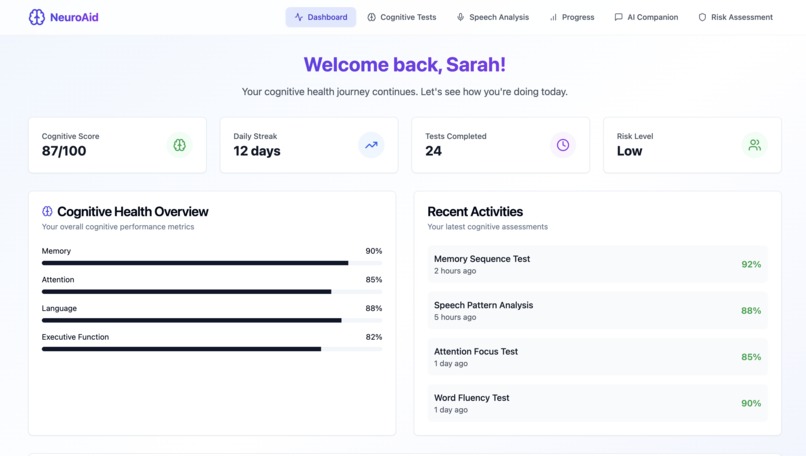
Dashboard
-
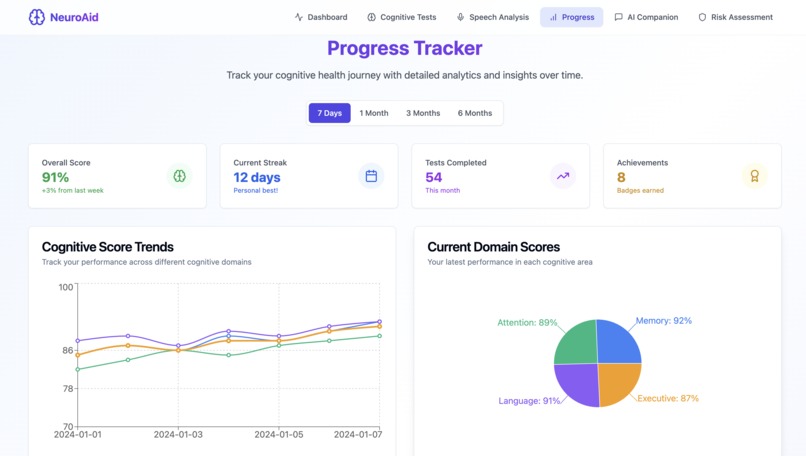
Progress Tracker
-
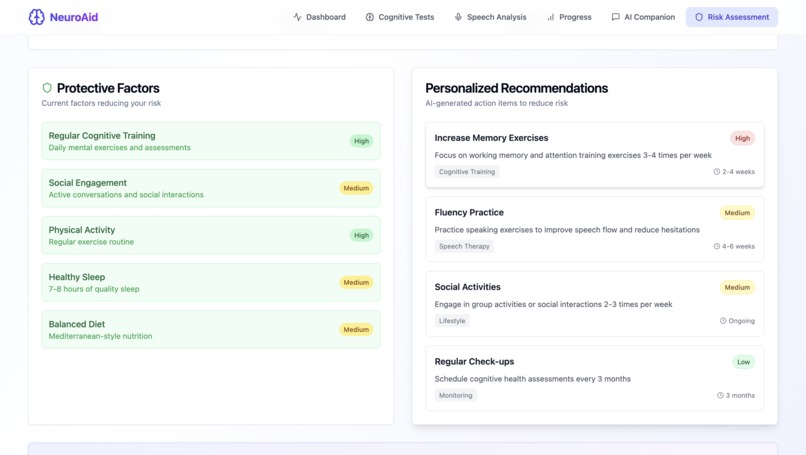
Recommandations
-
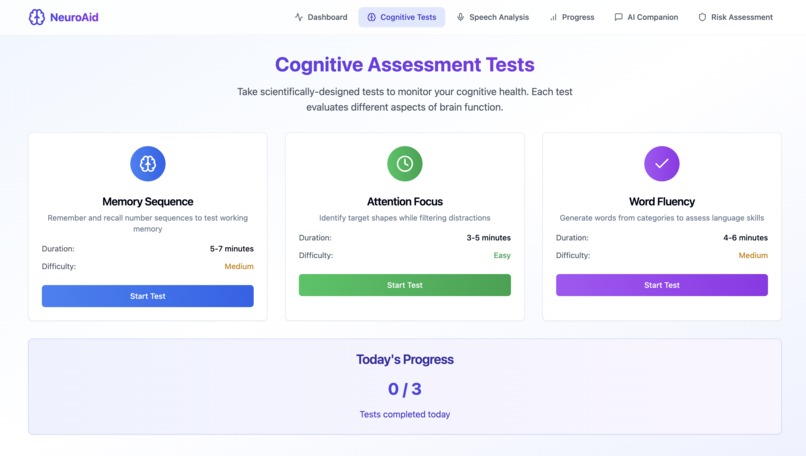
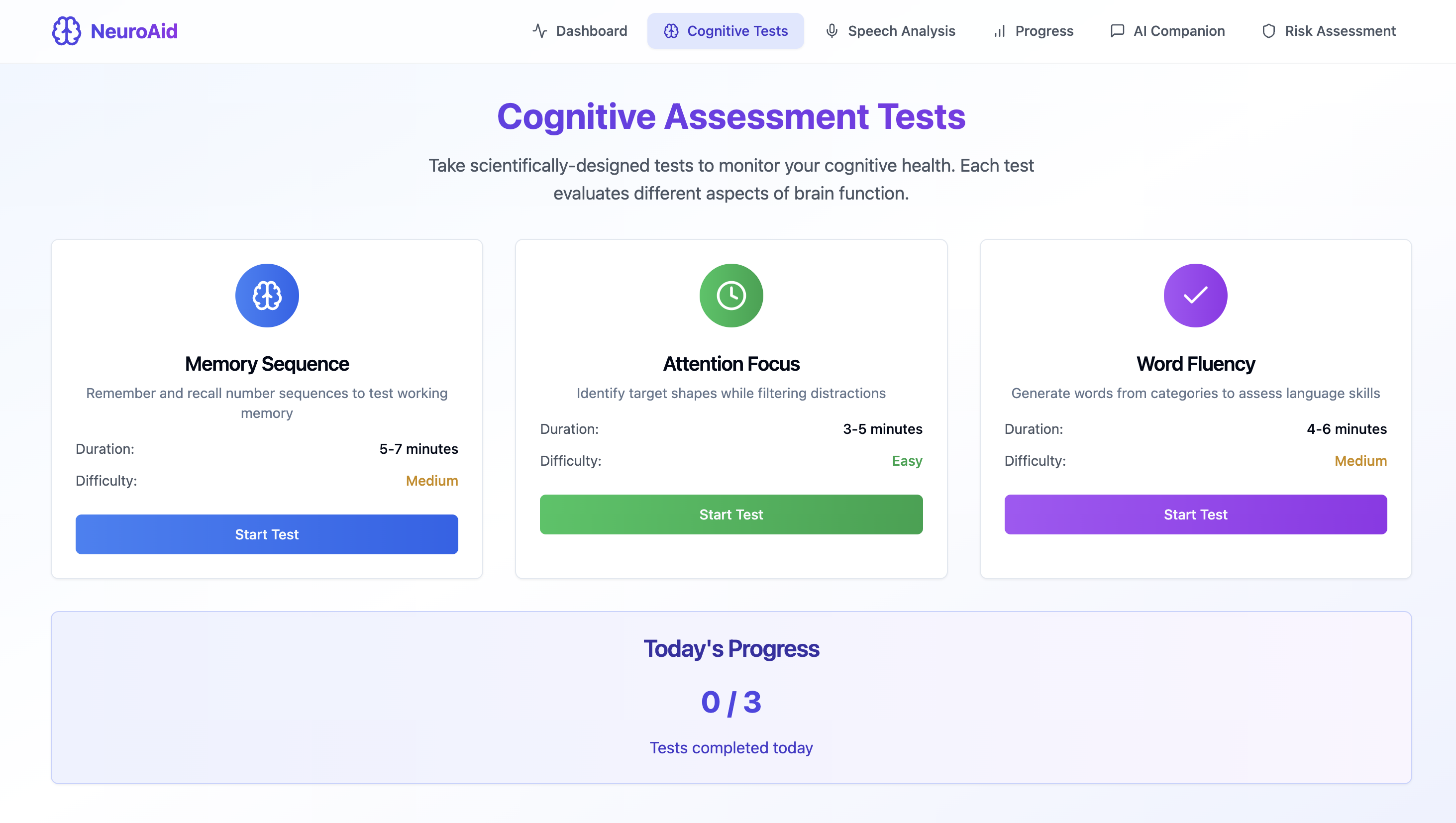
Cognitive Assessment Task
-
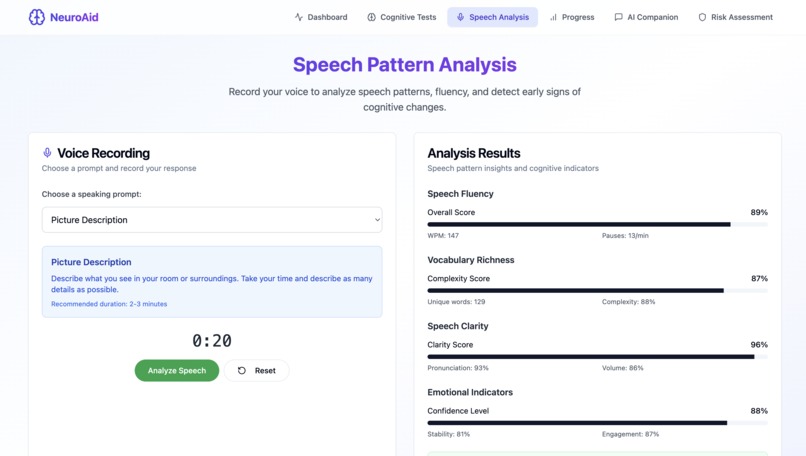
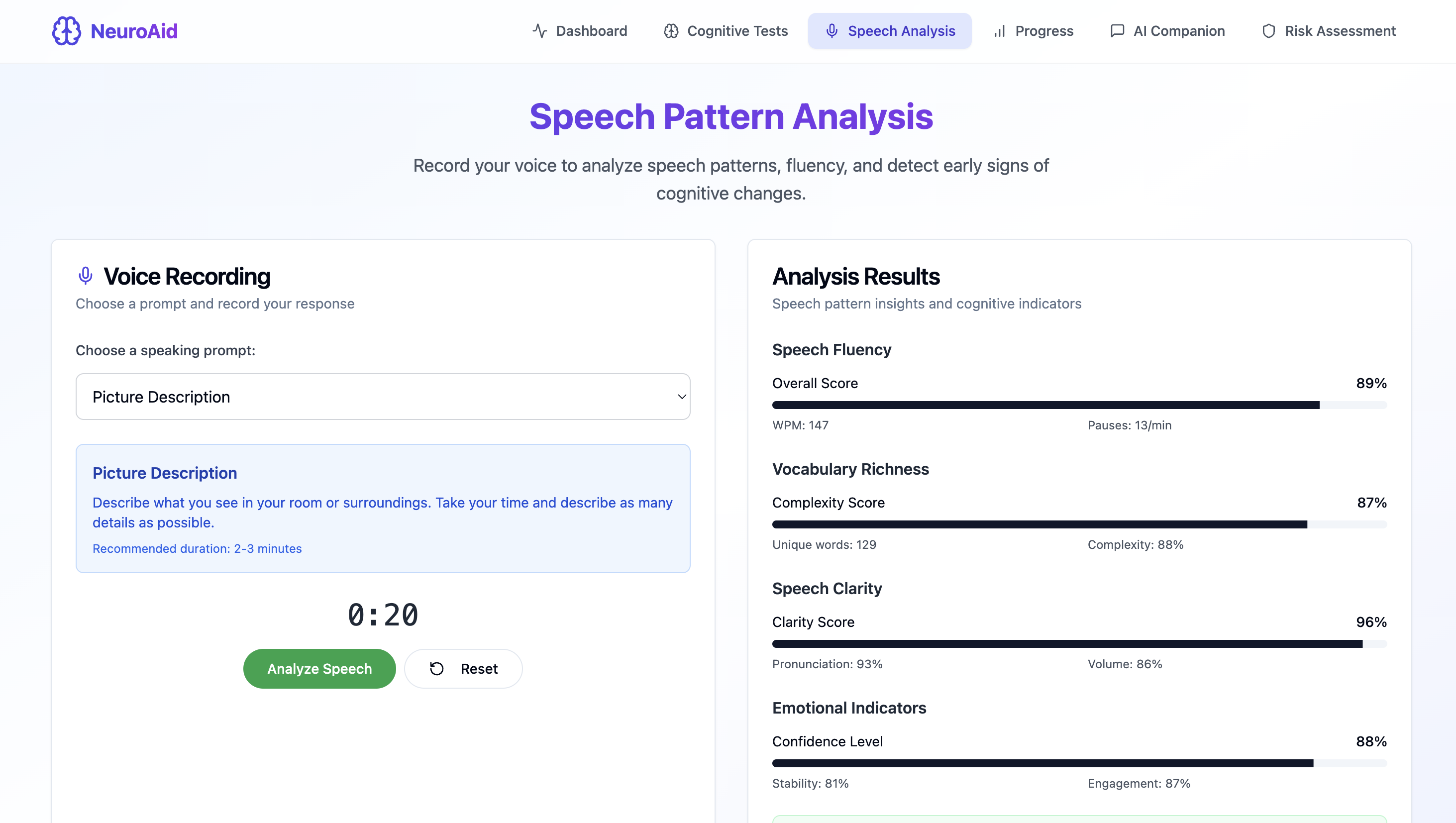
Speech Analysis
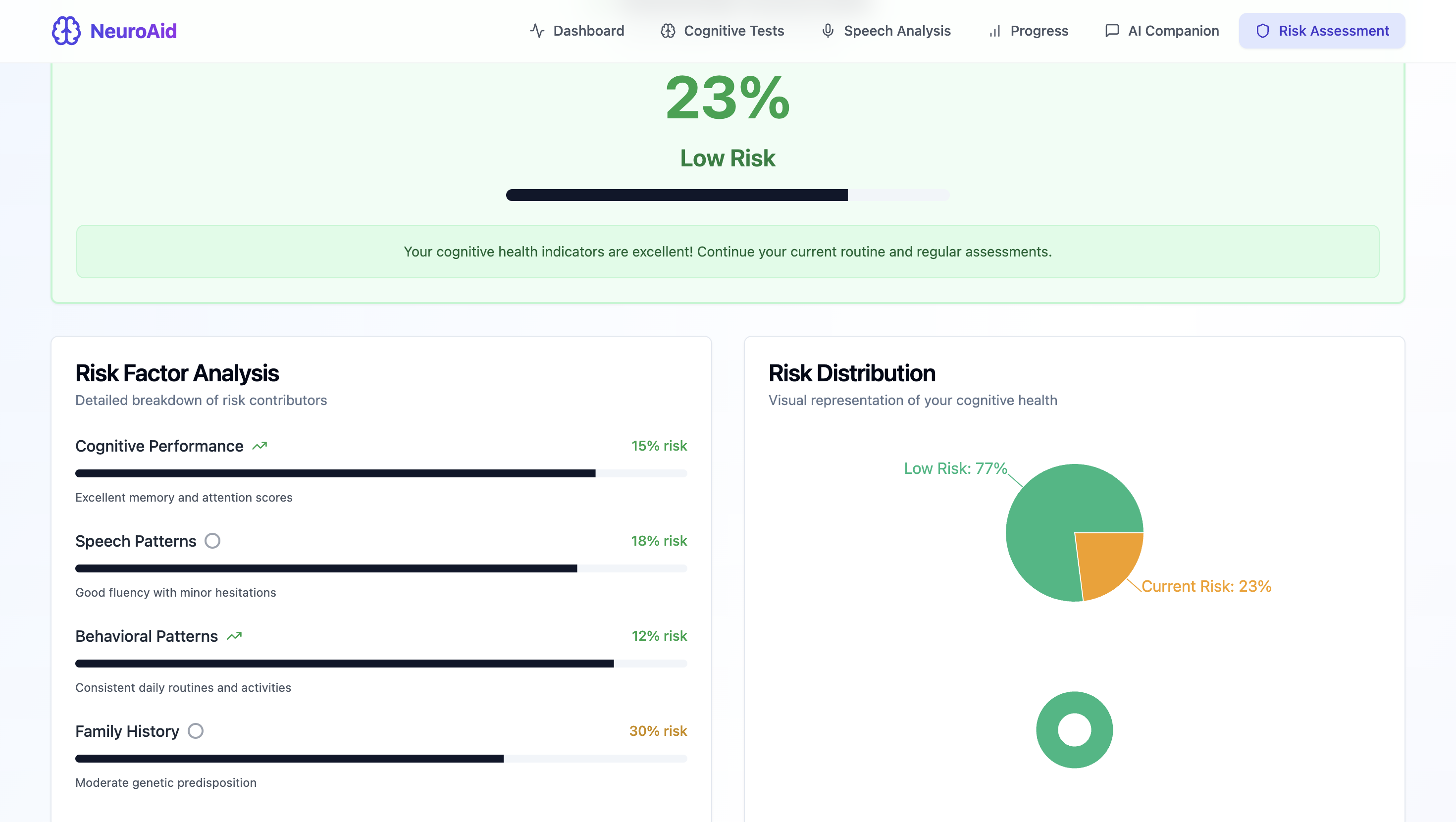
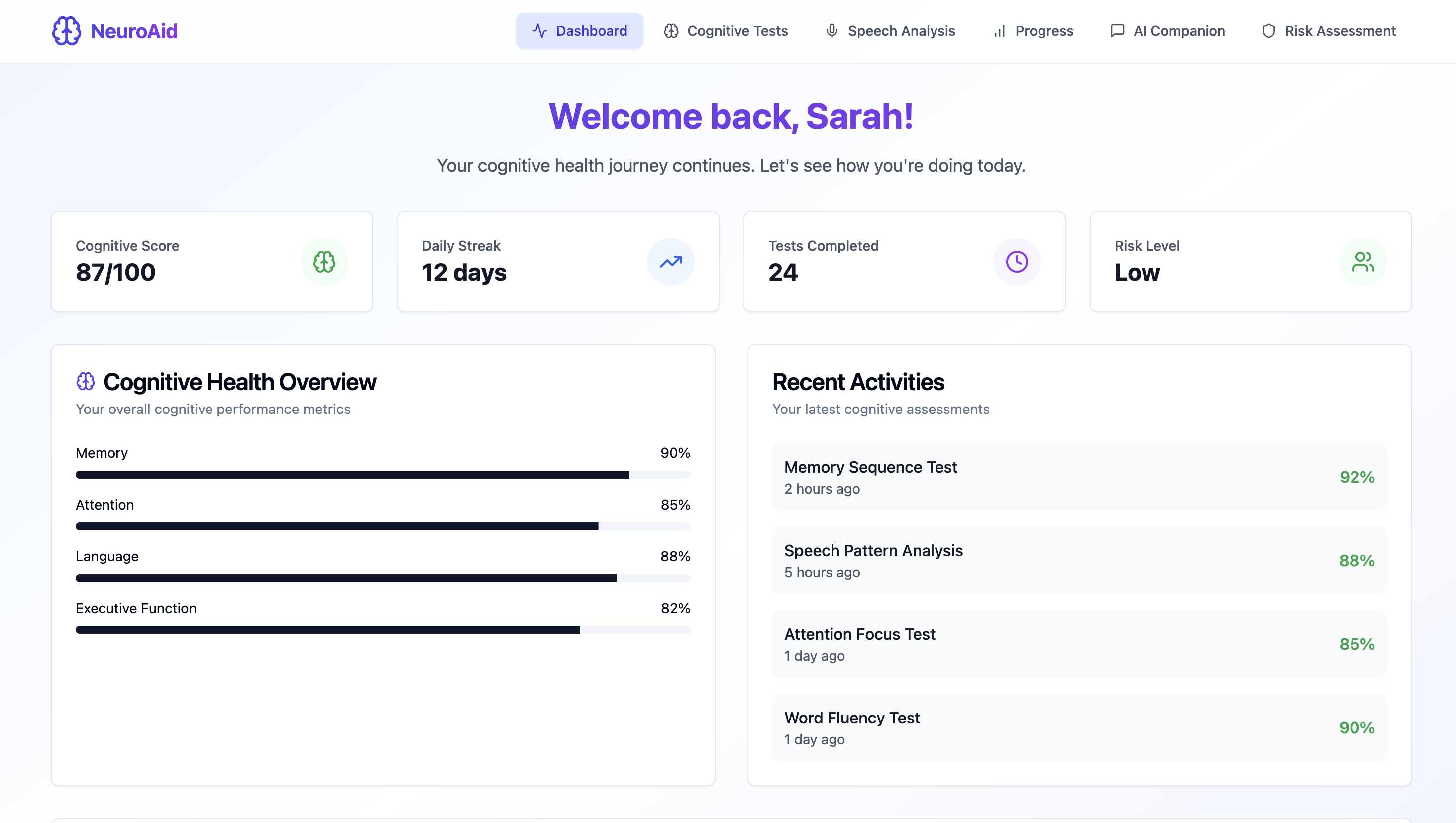
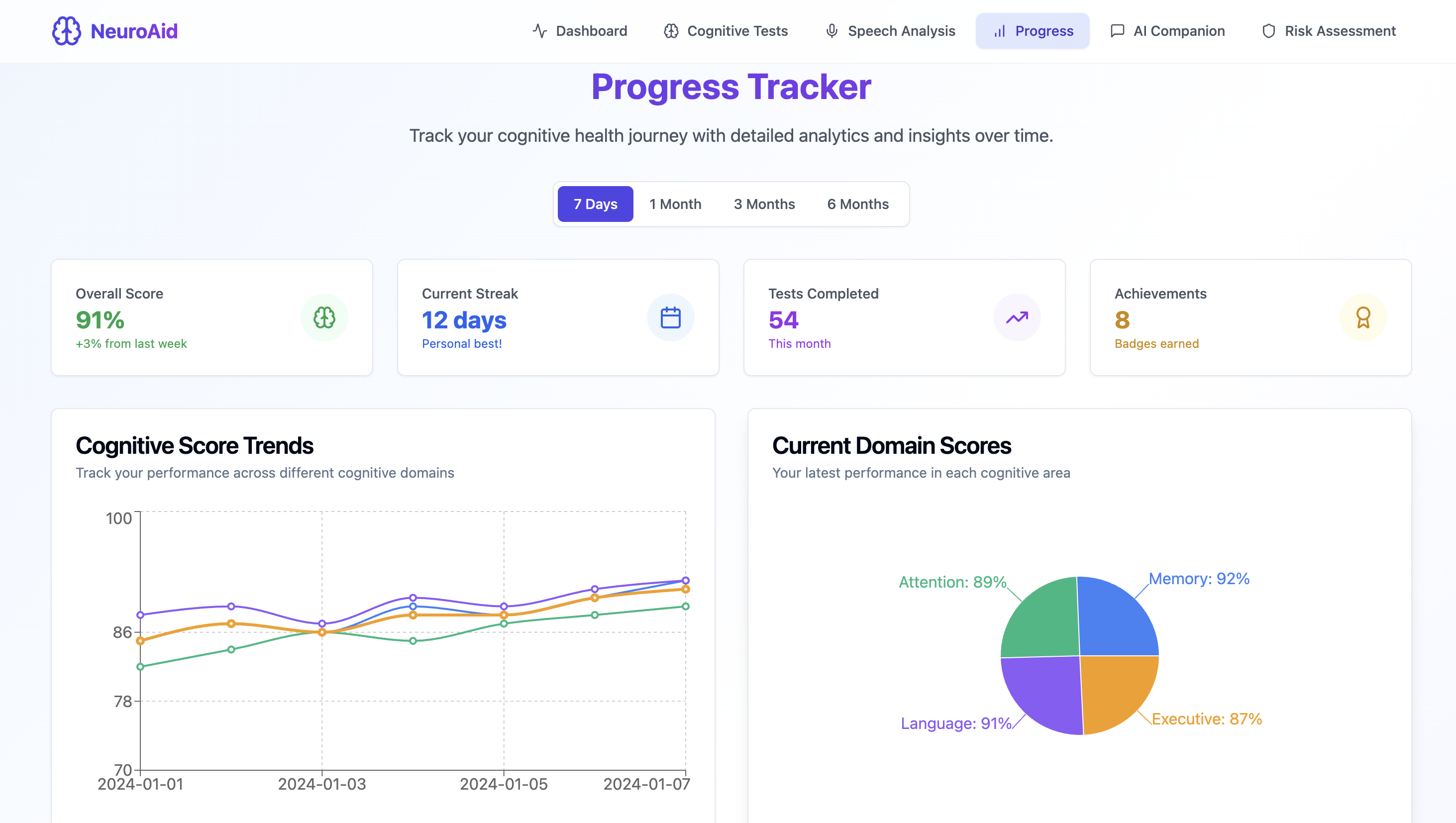
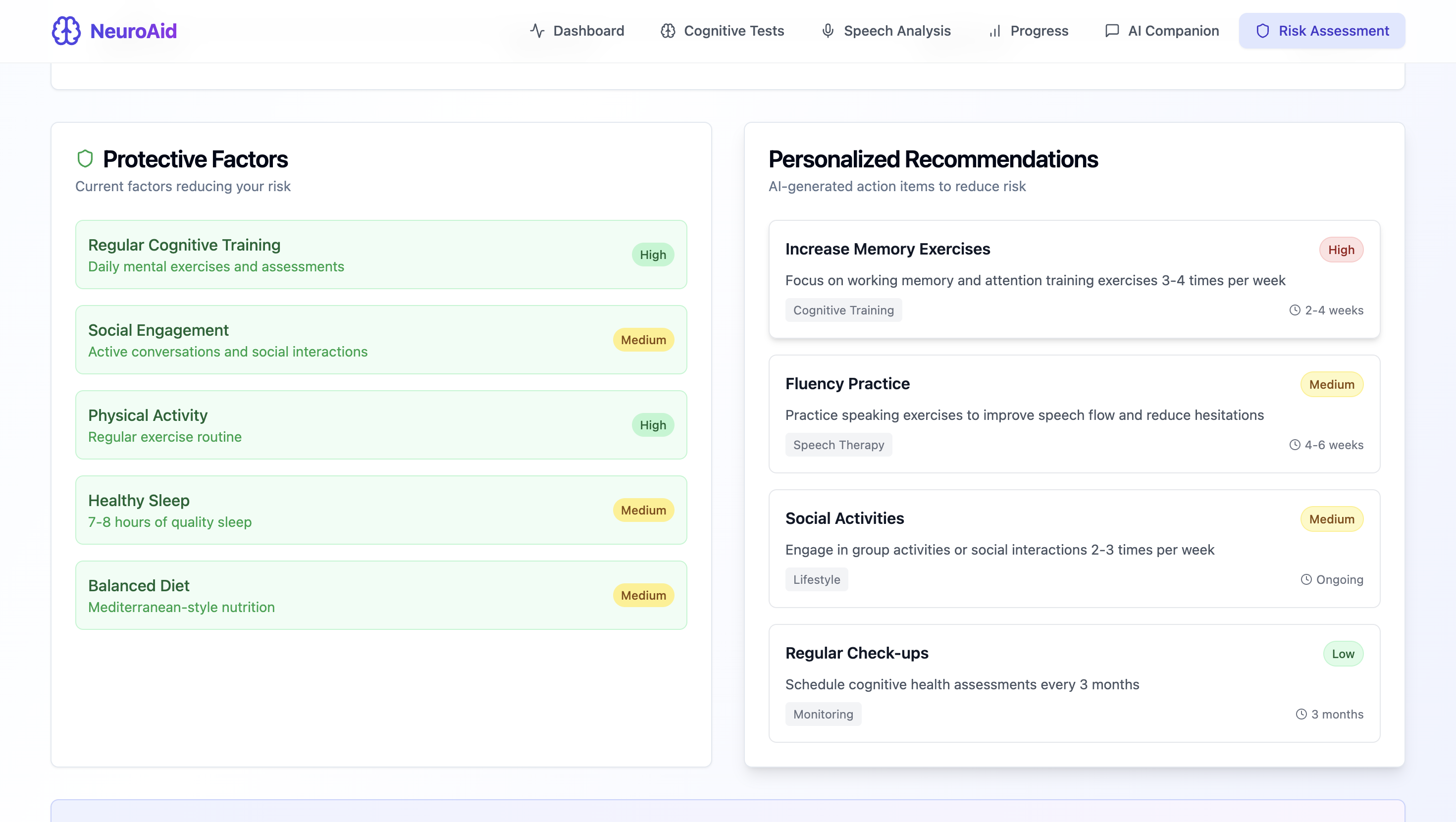
🧠 About the Project
Inspiration
Cognitive decline often begins subtly — a forgotten name, a lost word — and goes unnoticed until it's too late. Inspired by this challenge, we asked: Can language itself become the diagnostic tool?
That question led us to the Perplexity Sonar API — a powerful engine for extracting deep insights from language. With Sonar at the core, we built NeuroAid, an AI-powered cognitive companion that analyzes conversations to detect early signs of mental decline.
What We Built
NeuroAid leverages the Perplexity Sonar API to transform everyday conversations into diagnostic signals. By feeding transcribed user speech into Sonar, we can surface issues in memory, coherence, repetition, and language organization — key cognitive markers of conditions like Alzheimer’s and dementia.
Sonar’s semantic analysis capabilities allow us to detect subtle anomalies that traditional NLP pipelines might miss — such as tangential responses, looping speech, or reduced complexity. NeuroAid pairs this with a lightweight voice interface to provide a non-invasive, user-friendly early warning system.
What We Learned
- Perplexity Sonar API is a breakthrough diagnostic layer — able to understand not just what is said, but how coherently and consistently it’s said.
- We discovered the power of language as a biomarker — using GPT and Sonar to flag early risk factors.
- Designing with privacy, ethics, and clarity is critical when working with sensitive conversational health data.
How We Built It
- OpenAI Whisper: Transcribed user speech for text analysis.
- Perplexity Sonar API: Analyzed conversation logs to extract semantic drift, coherence issues, memory breakdowns, and fluency metrics.
- GPT-4: Used to scaffold follow-up questions based on Sonar's feedback, enabling dynamic cognitive assessments.
- Streamlit: Built the front-end for users to interact with the system and view real-time Sonar-powered insights.
- Firebase: Stored anonymized conversation data and cognitive metrics.
- GitHub + GitHub Actions: Managed version control and automated code quality checks.
Challenges We Faced
- Crafting Sonar analysis prompts that were accurate, reliable, and relevant to cognitive health.
- Building interpretability into Sonar outputs — making results understandable to users and caregivers.
- Ensuring Sonar’s insights were ethically used, anonymized, and aligned with real-world medical guidelines.
- Tuning the system to detect mild cognitive impairment (MCI) without overwhelming users with medical jargon.
By putting the Perplexity Sonar API at the heart of NeuroAid, we reimagined conversational AI as a proactive health tool. It's not just about talking — it's about listening deeply, extracting meaning, and enabling early action through language.
Built With
- firebase
- github
- gpt-4
- openai-whisper
- perplexity-sonar-api
- python
- scikit-learn
- streamlit
- xgboost


Log in or sign up for Devpost to join the conversation.