-
-
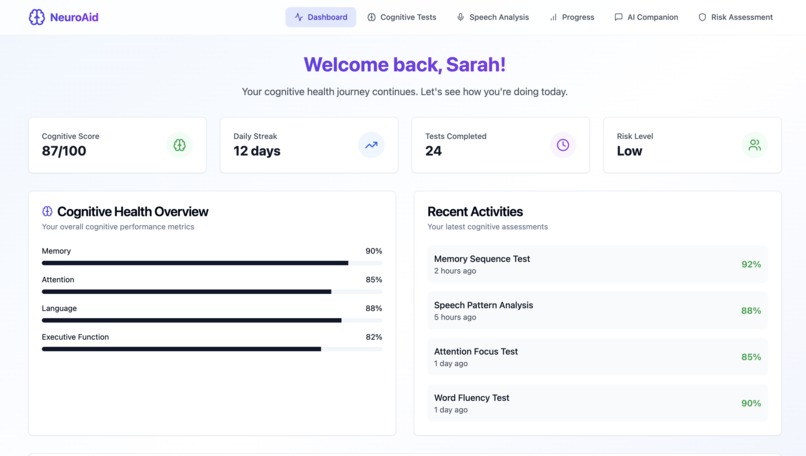
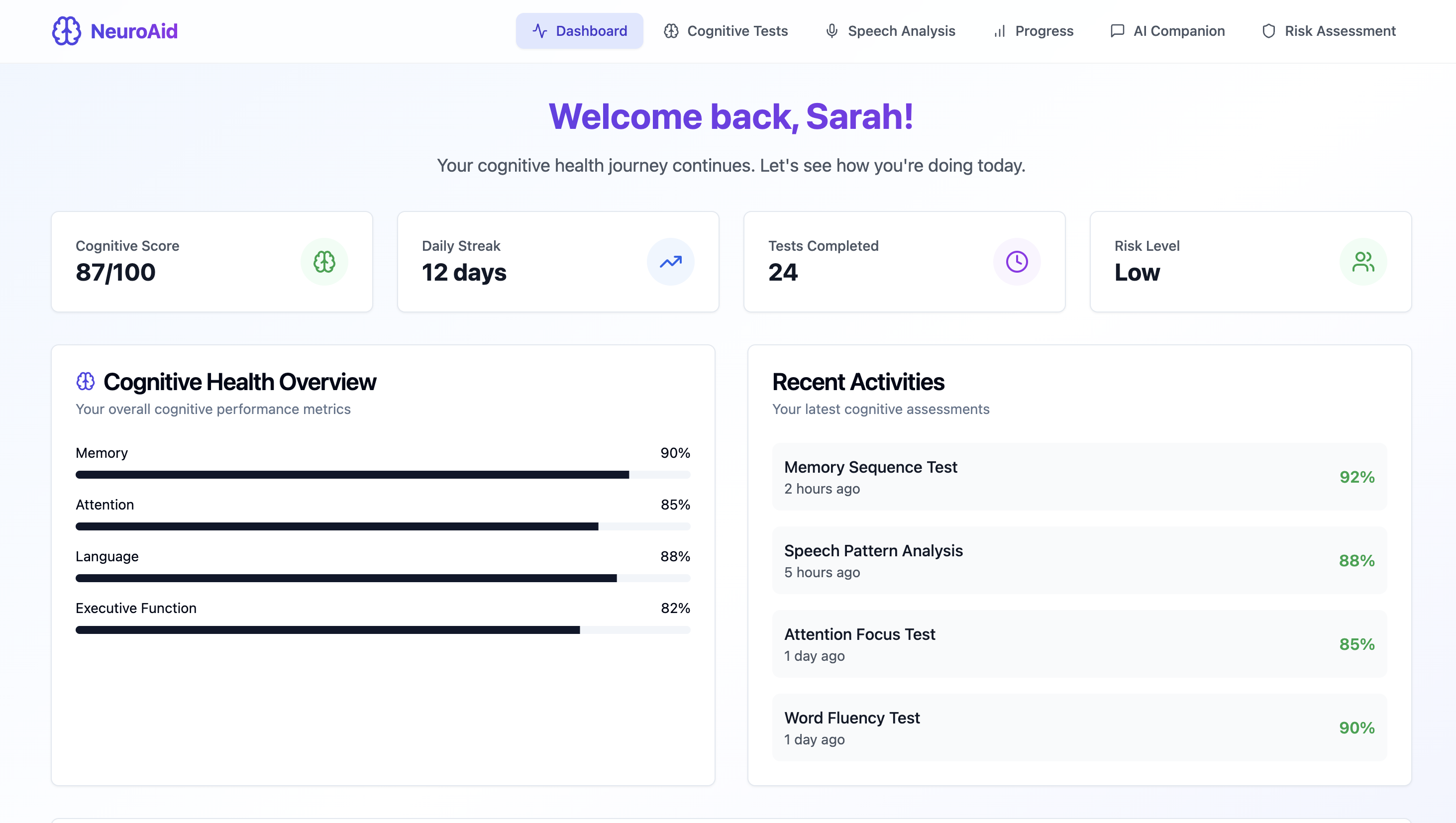
Dashboard
-
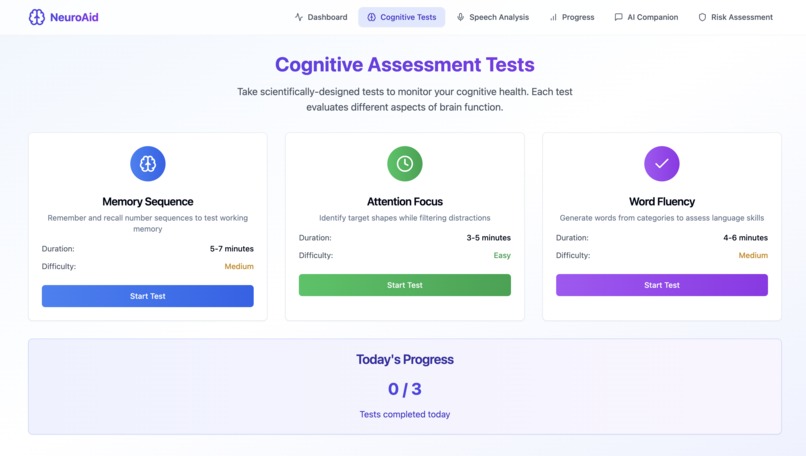
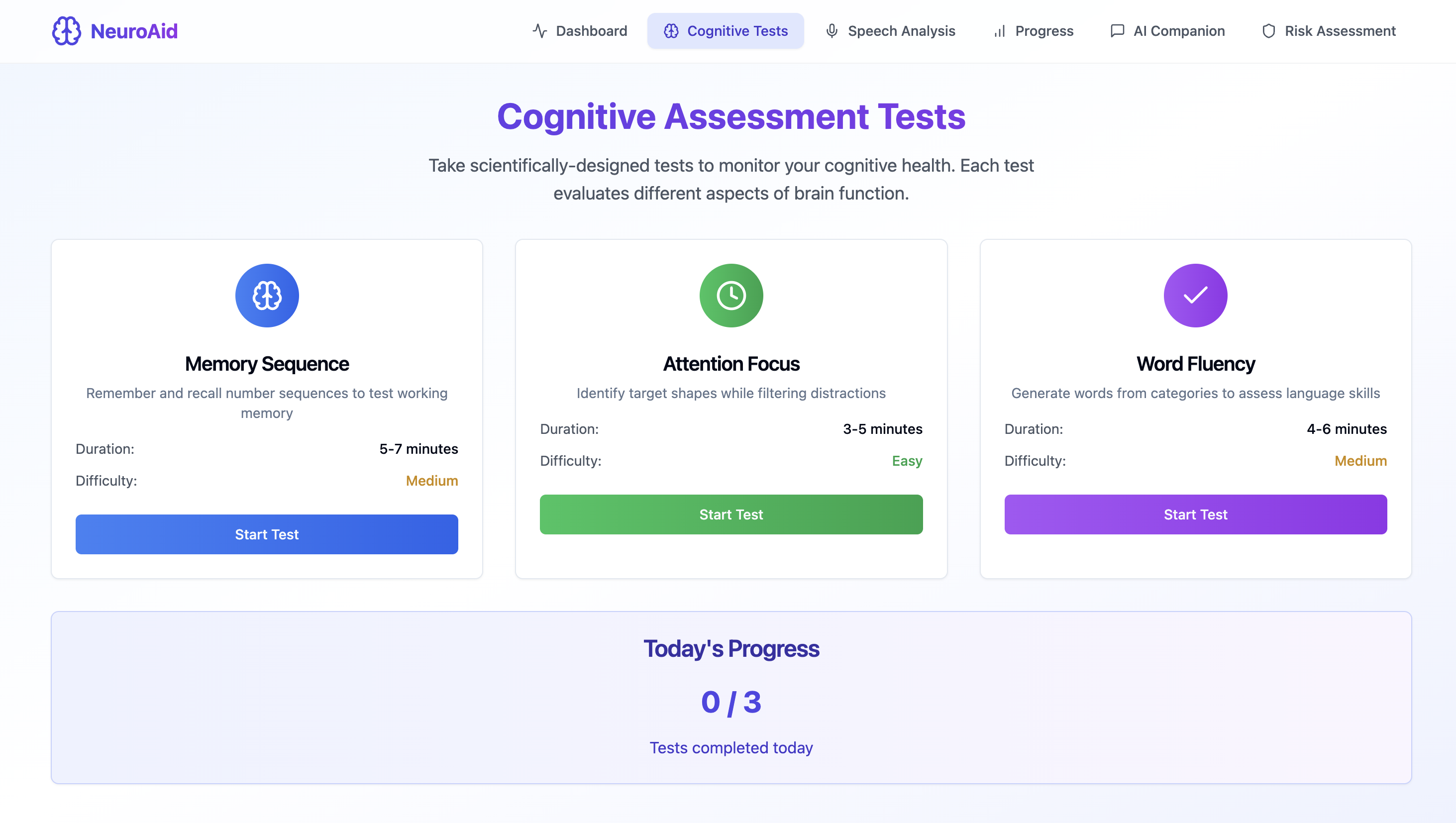
Cognitive Test landing page
-
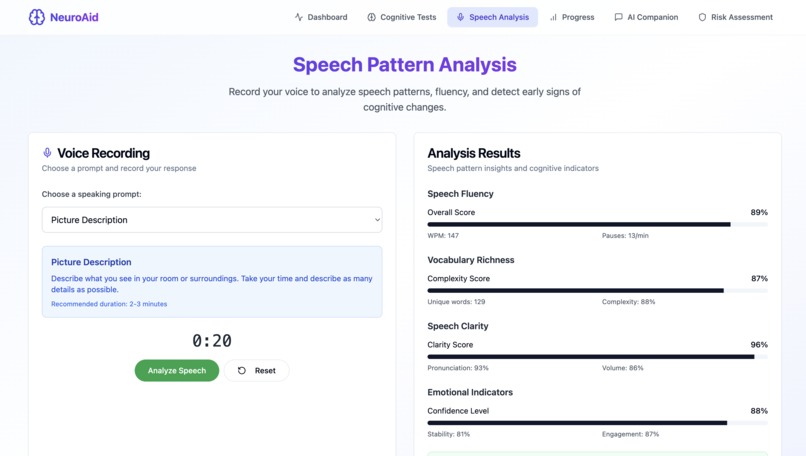
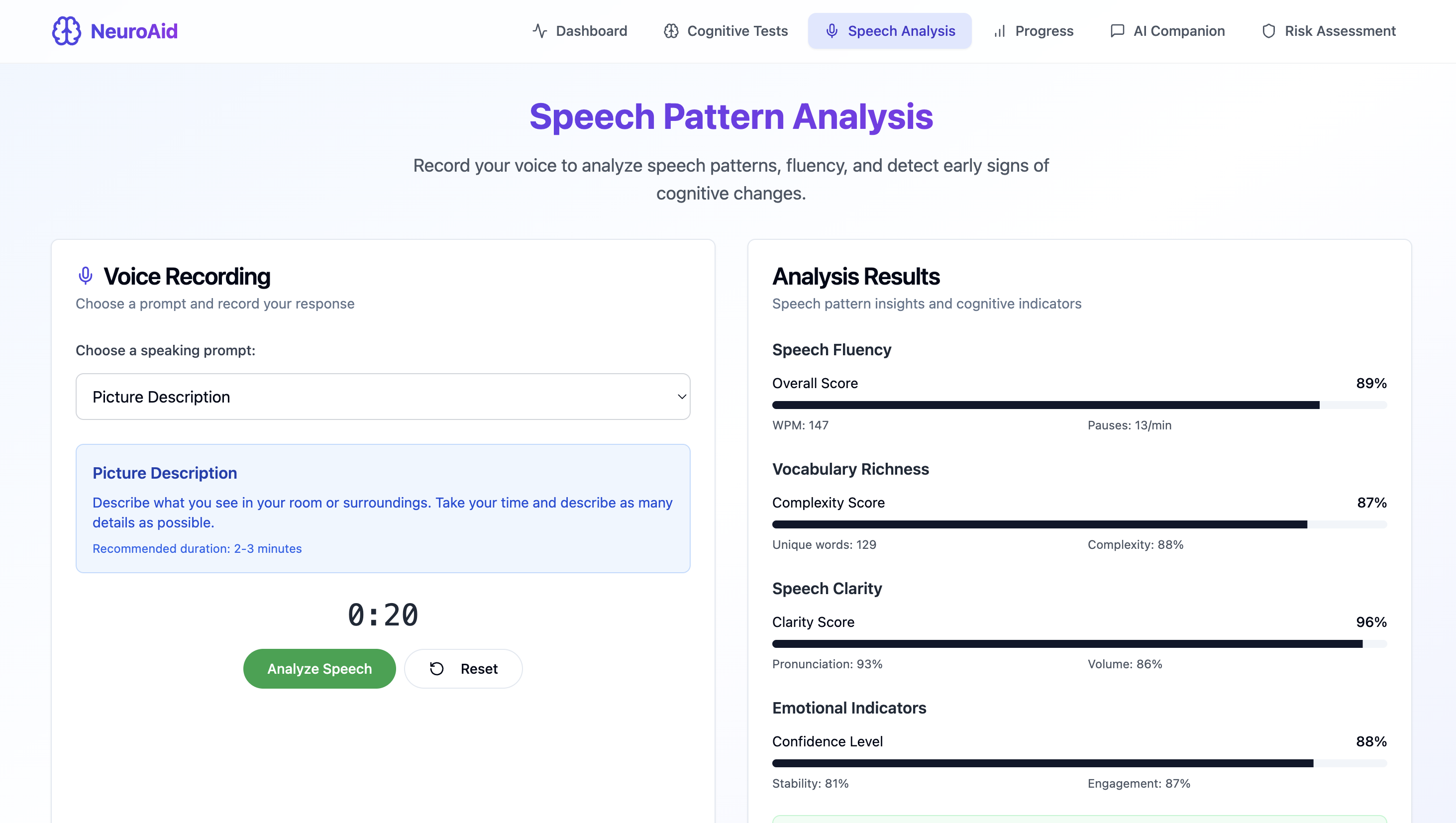
Speech Analysis
-
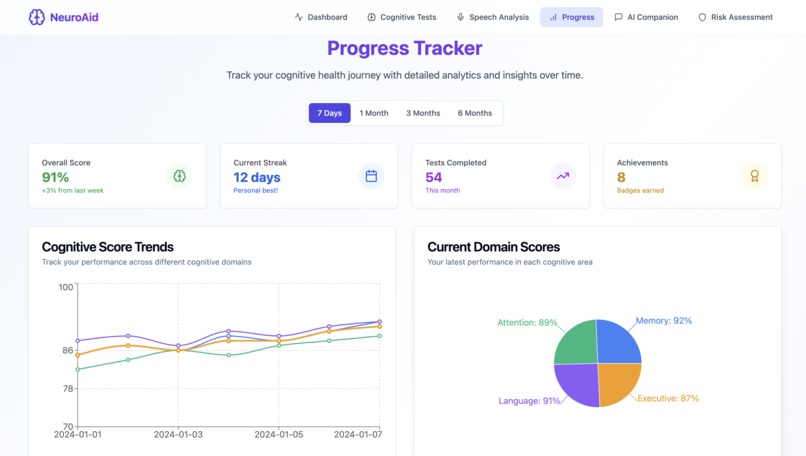
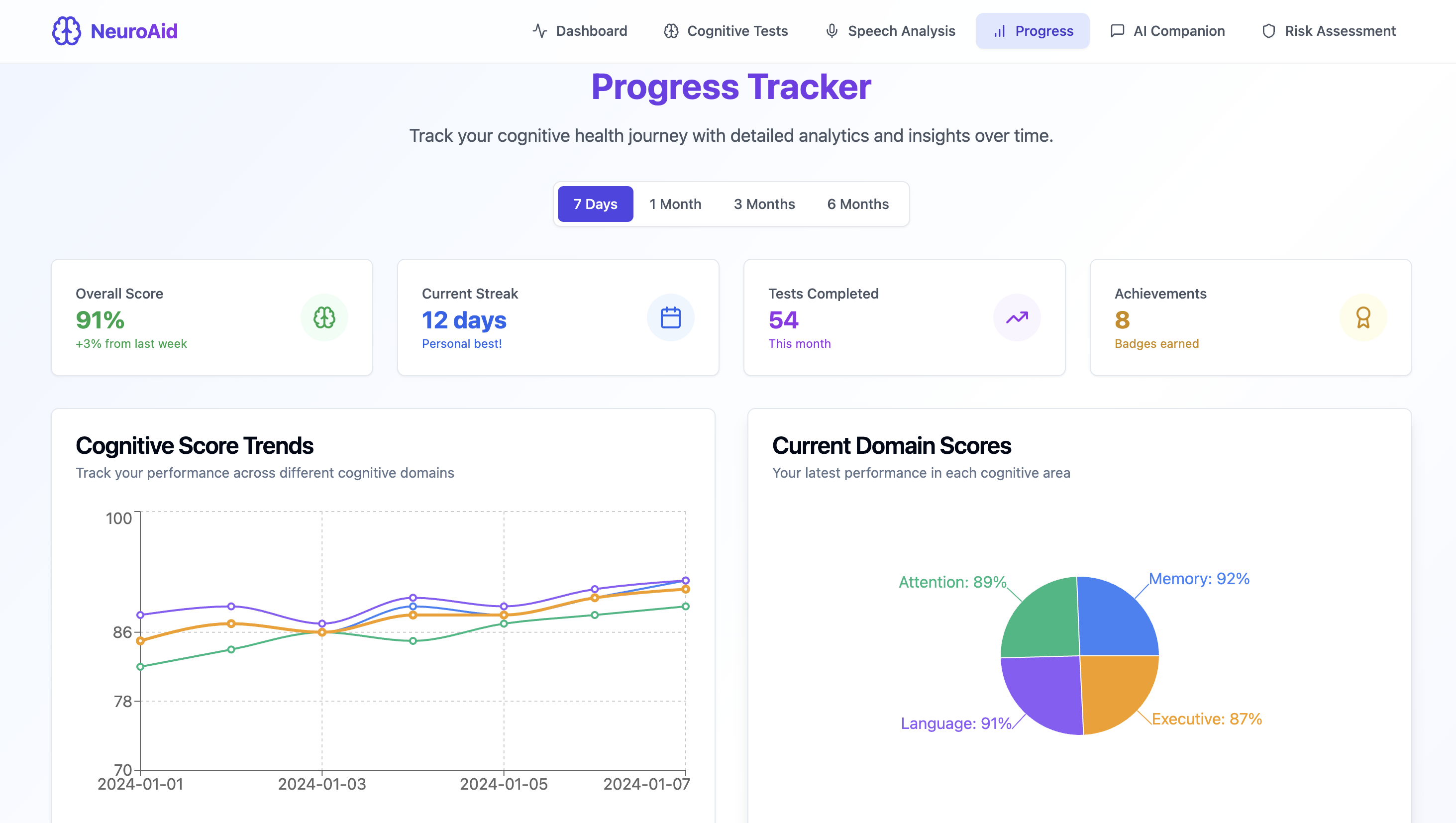
Overall Progress
-
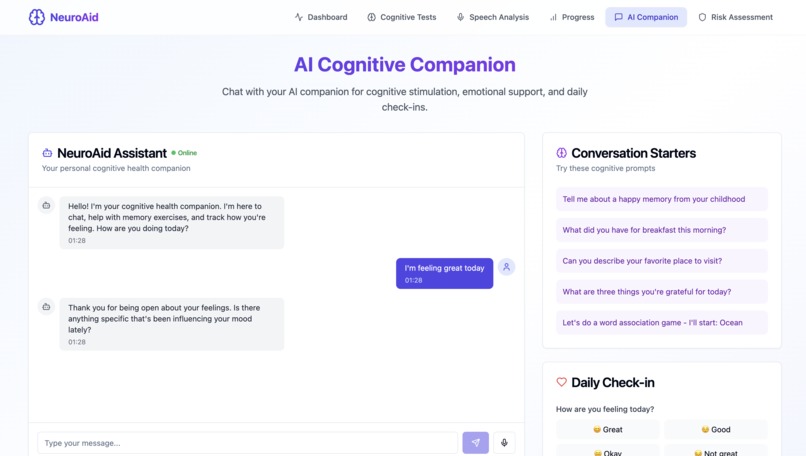
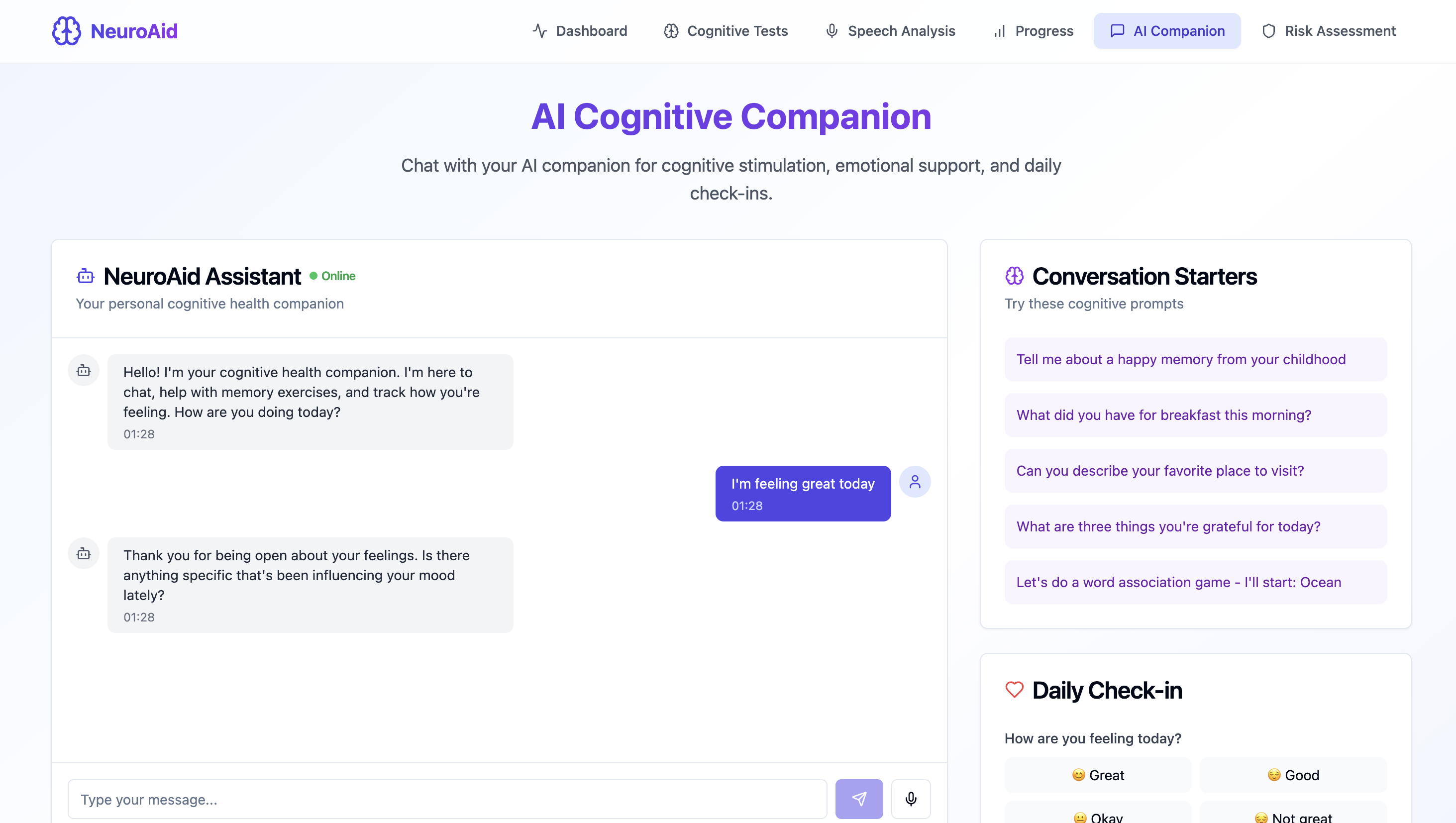
AI Companion
-
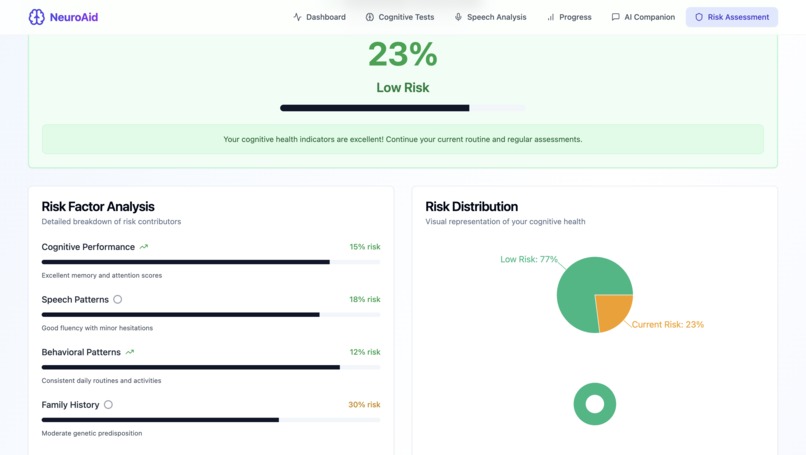
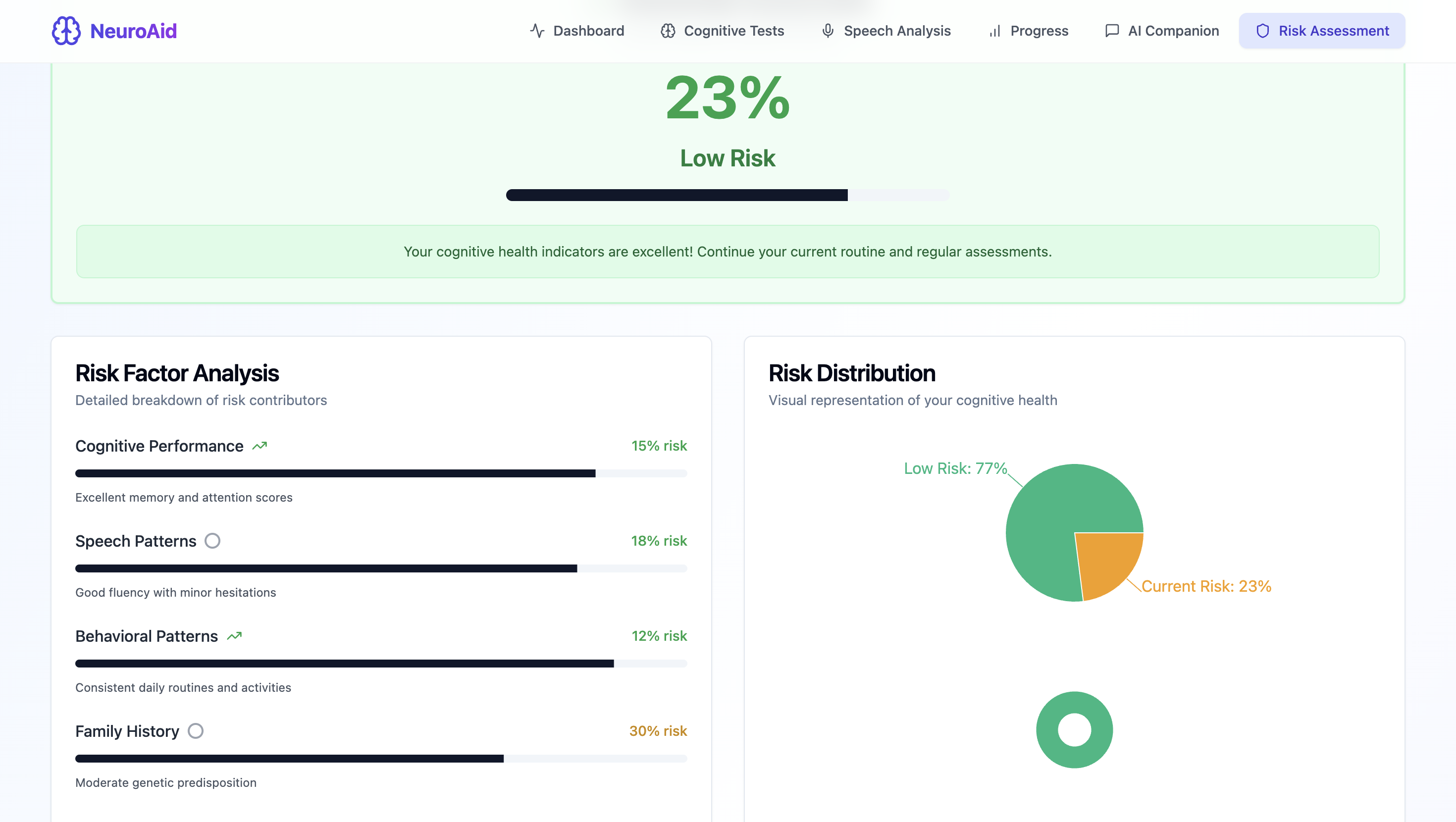
Overall Risk Analysis
-
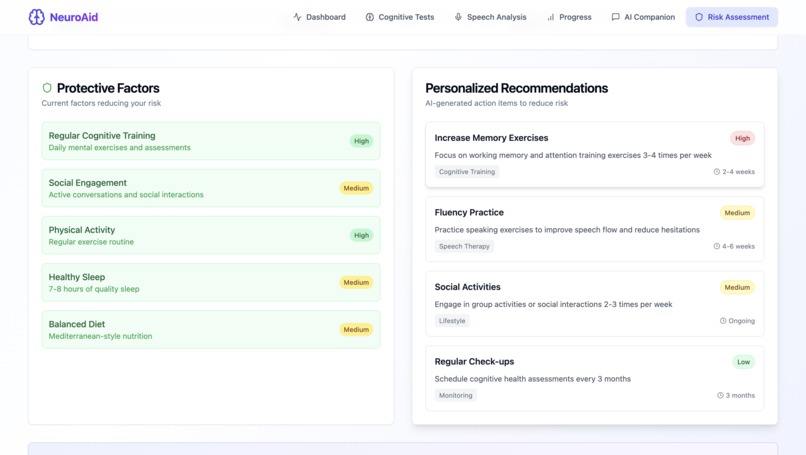
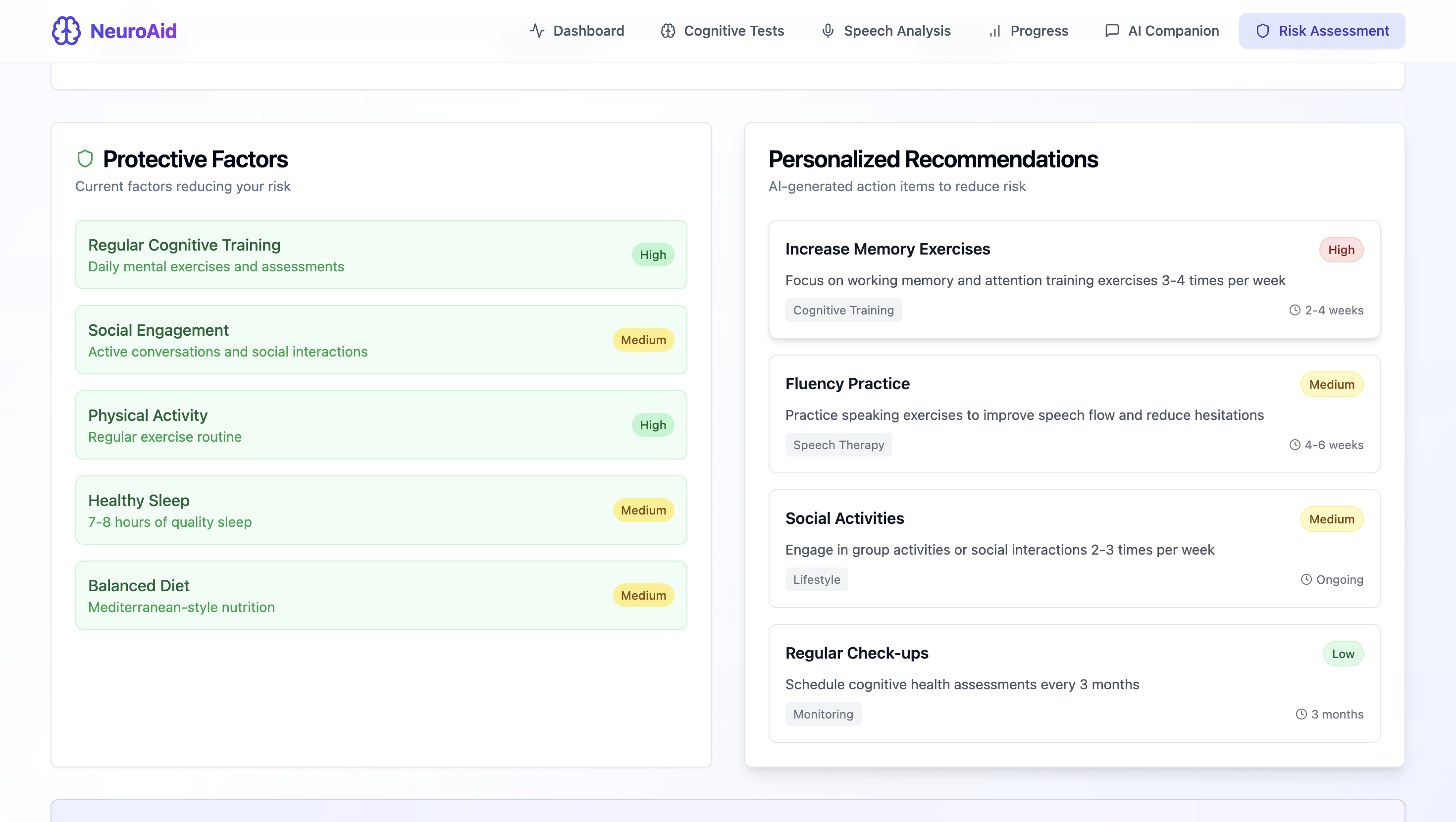
Recommandations
📖 About the Project
🎯 Inspiration
We were inspired by the growing number of families affected by dementia and Alzheimer’s — often realizing it too late. With elderly populations rising globally and limited access to early diagnostics, we saw a major gap in cognitive health monitoring. What if there was a friendly AI companion that could screen for mental decline during everyday conversations and activities — long before symptoms became critical?
That’s how NeuroAid was born — an AI copilot for cognitive wellness.
🧠 What We Learned
- How subtle linguistic, behavioral, and vocal patterns can reveal early signs of cognitive disorders.
- How to integrate multiple AI modalities — speech, NLP, and behavioral modeling — into one seamless experience.
- The importance of building accessible tools, especially for users with low digital literacy or disabilities.
- How to balance privacy and data sensitivity in health-related applications.
🛠️ How We Built It
- Frontend: A simple and accessible UI using Streamlit for fast iteration.
- Cognitive Tests: We designed interactive tasks inspired by established neuropsychological screening tools (like MMSE and MoCA) and gamified them.
- Speech Analysis: Integrated OpenAI Whisper and Perplexity Sonar API to transcribe and extract features like pause duration, hesitation, and fluency.
- ML Models: Used Python and Scikit-learn to score cognitive performance and flag risk indicators.
- LLM Integration: GPT-4 was used as a conversational agent to simulate natural interactions and prompt cognitive engagement.
- Dashboard: Plotted user performance over time using Matplotlib and Streamlit’s native components to visualize risk trends.
🚧 Challenges We Faced
- Speech data variability: Different accents, ambient noise, and senior users’ speech patterns made audio parsing tricky.
- Balancing depth with usability: We had to simplify tests and dashboards so they remained senior-friendly while still capturing useful data.
- LLM alignment: Ensuring that the GPT-powered assistant stayed on-topic and safe, without overstepping its role.
- Data sensitivity: Designing the platform in a way that would later support HIPAA/GDPR compliance — even in a prototype phase.
🌟 What’s Next?
We aim to:
- Expand our dataset with real cognitive assessments for clinical validation.
- Develop a mobile-friendly version with voice-first interaction.
- Partner with eldercare providers for pilot testing.
- Add multilingual support for global reach.
With NeuroAid, we believe we can shift cognitive health from reactive to proactive — empowering individuals and families to act early, with clarity and confidence.


Log in or sign up for Devpost to join the conversation.