Inspiration
Alzheimer’s disease is often diagnosed only after noticeable memory loss, even though the biological changes start years earlier. We were inspired by the idea that earlier detection could make a real difference for patients and families. During our research, we also noticed that many AI models in healthcare focus only on accuracy and not on explainability. This motivated us to build a system that not only predicts Alzheimer’s risk, but also helps people understand why those predictions are made.
What it does
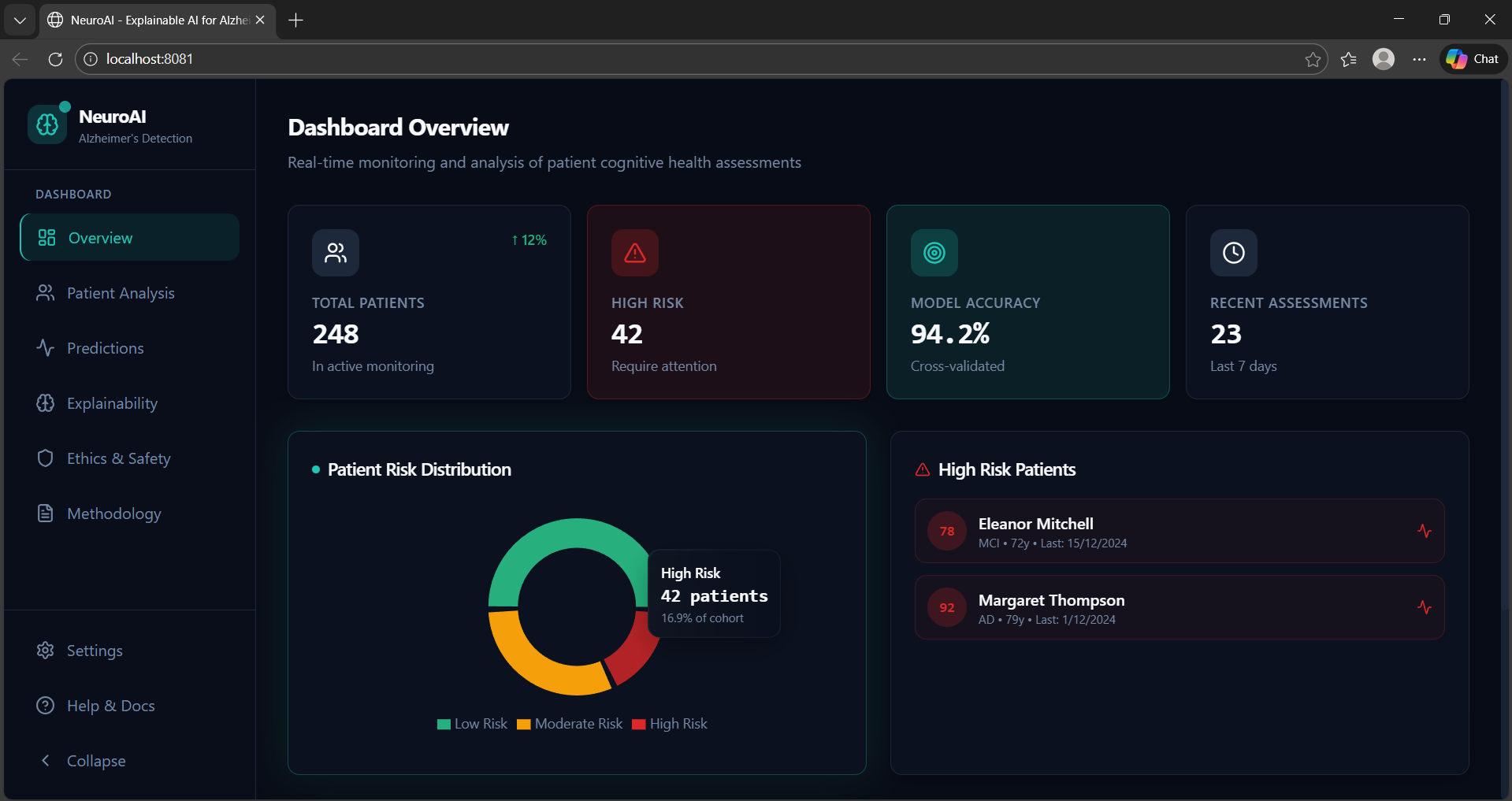
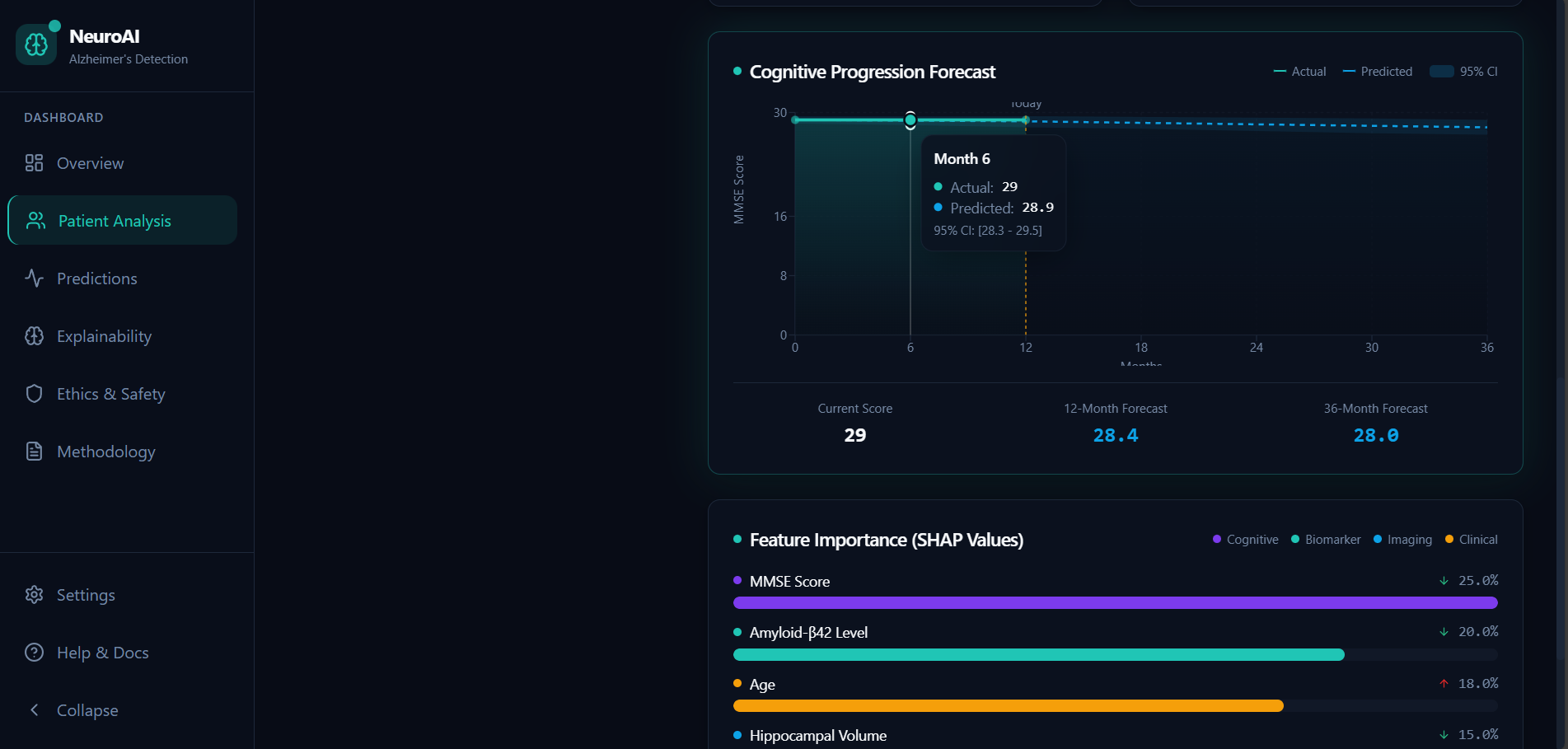
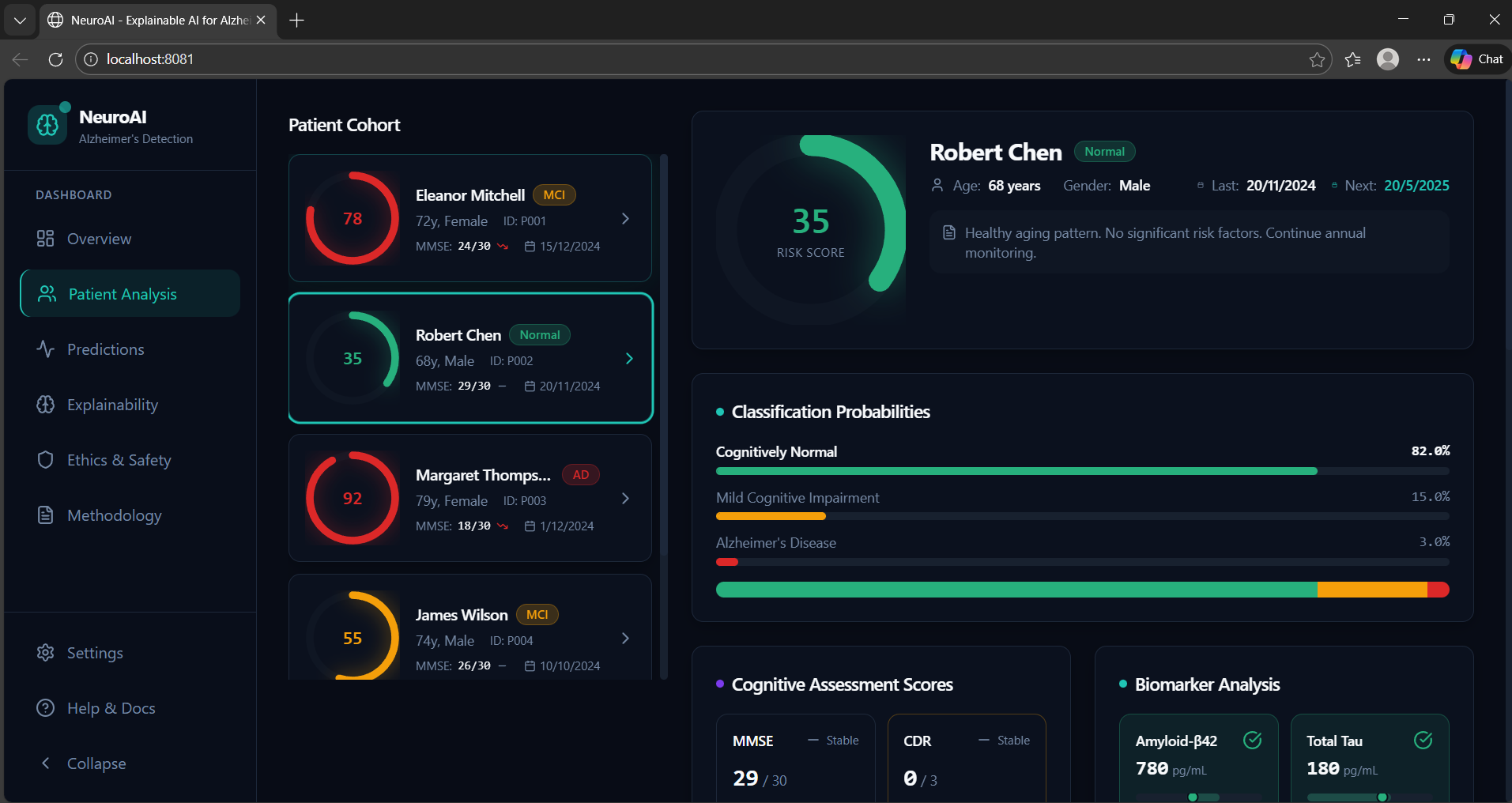
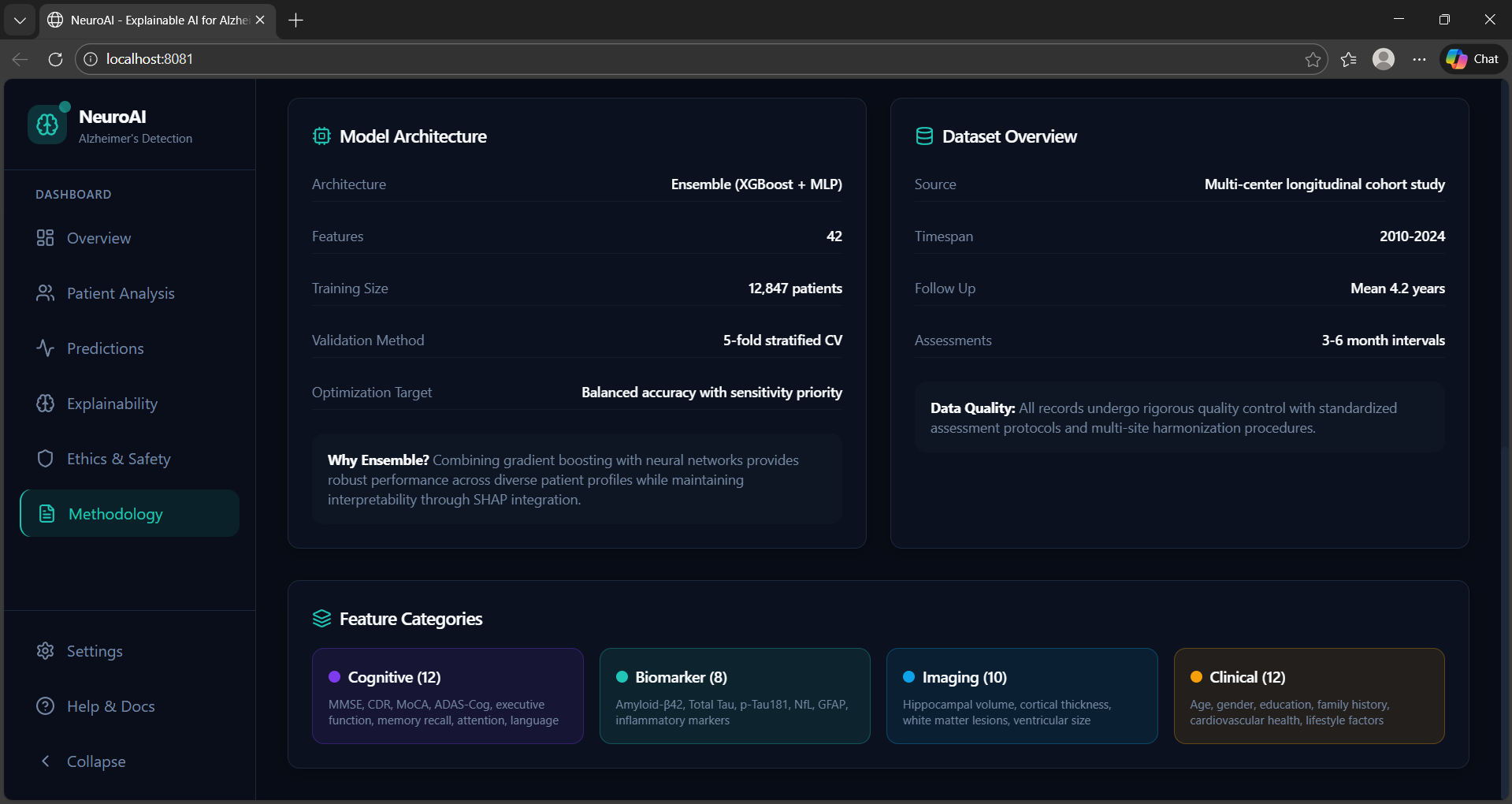
NeuroAI is an explainable AI application that analyzes de-identified biomedical data to identify early signs of Alzheimer’s disease. It classifies individuals into different cognitive stages and provides a risk score for disease progression. Instead of acting like a black box, the system highlights which features contribute most to each prediction, making the results easier to interpret and trust.
How we built it
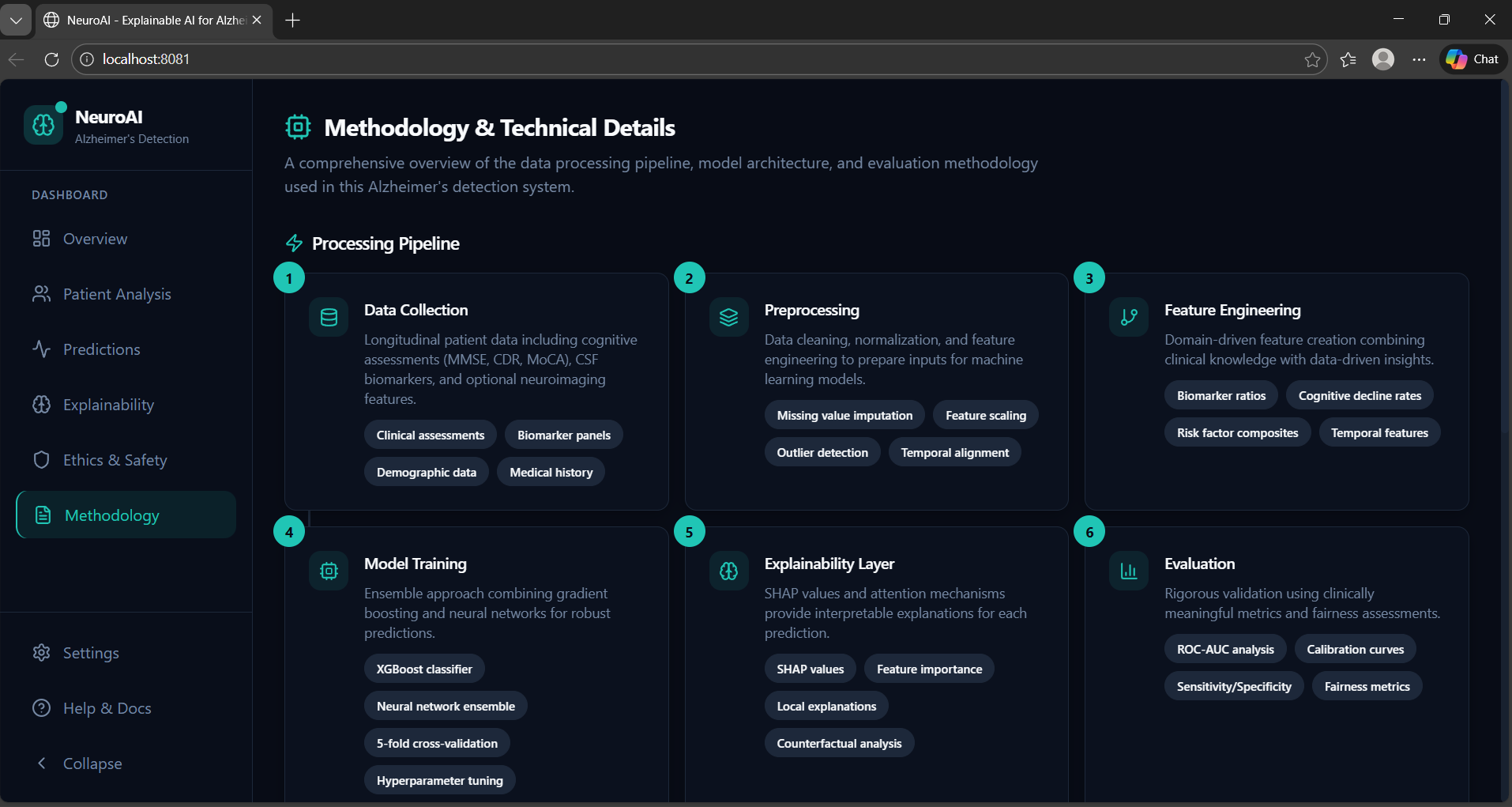
We started by exploring and cleaning the dataset, handling missing values and selecting features that were medically meaningful. We trained machine learning models to detect Alzheimer’s risk and progression patterns, focusing on models that balance performance and interpretability. To improve transparency, we added explainability techniques to understand feature importance. The frontend was built as a lightweight web application to make the results easy to visualize and interact with.
Challenges we ran into
Working with biomedical data was challenging due to missing values and variability across samples. Another major challenge was balancing model accuracy with explainability, since more complex models are often harder to interpret. We also had to carefully design the system so that it supports decision-making without appearing to replace clinical judgment.
Accomplishments that we're proud of
We are proud of building a complete end-to-end pipeline, from data preprocessing to model training and visualization. Integrating explainable AI into the project was a major achievement for us. Most importantly, we built a solution that focuses on early detection, where it has the greatest potential impact.
What we learned
This project taught us that in healthcare, transparency and responsibility are just as important as technical performance. We learned how challenging real-world medical data can be and how important it is to design AI systems that are ethical and interpretable. It also showed us that student-led projects can still create meaningful healthcare tools when designed thoughtfully.
What's next for NeuroAI
In the future, we plan to improve the model by incorporating additional data sources such as imaging or biomarker information. We also want to enhance progression forecasting over longer time periods and build a more polished clinician-friendly interface. Our long-term goal is to make NeuroAI a reliable and accessible decision-support tool for early Alzheimer’s care.
Built With
- css
- html
- javascript
- node.js
- npm
- react
- supabase
- tailwind
- typescript
- vite


Log in or sign up for Devpost to join the conversation.