-
-
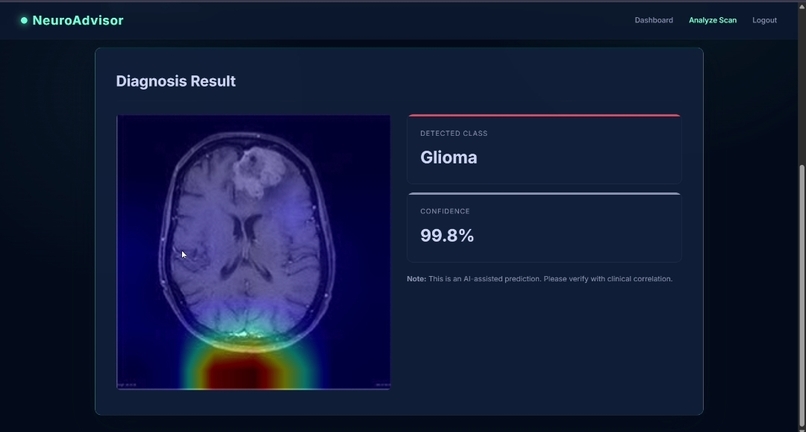
Tumor Detection with its type and also the accuracy percentage
-
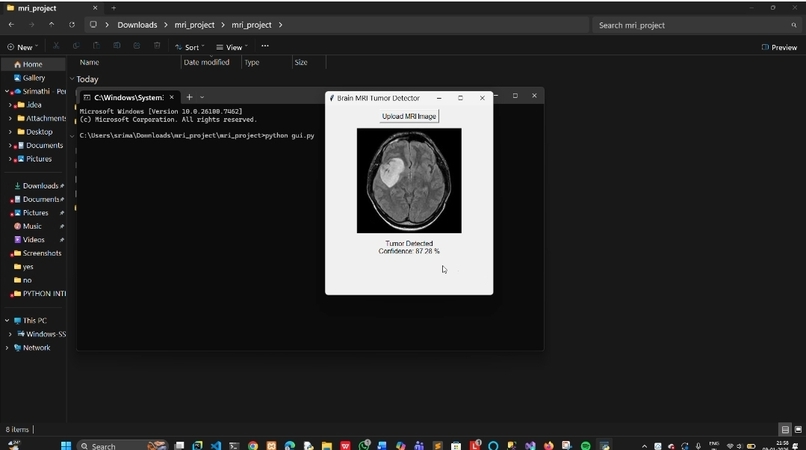
Tumor Detection with trained known dataset with tumor and it's types
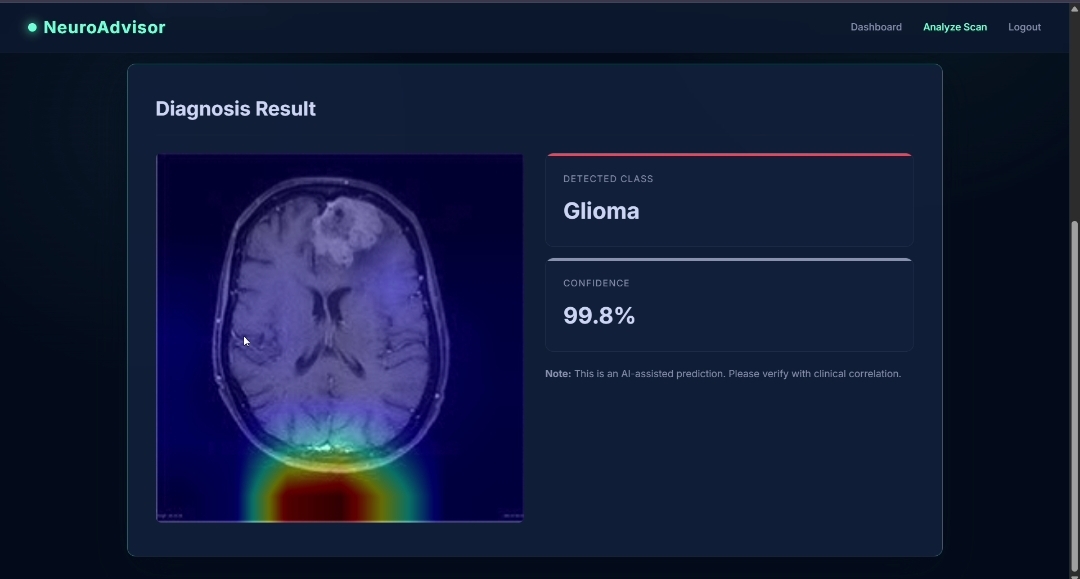
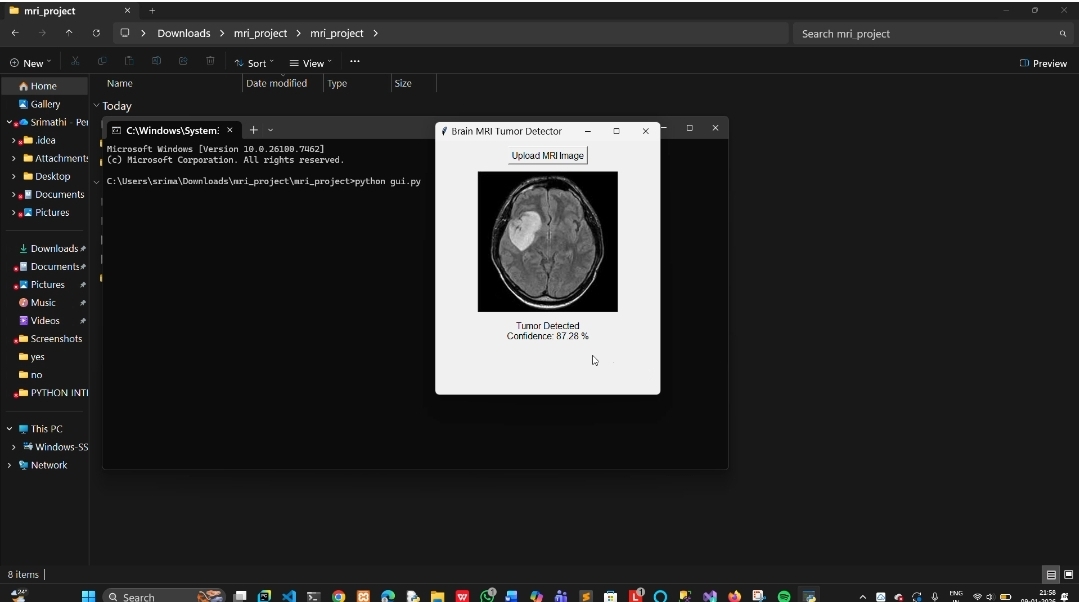
Inspiration The inspiration behind NeuroAdvisor came from the growing need for early and accurate detection of brain tumors. Many patients face delays in diagnosis due to limited access to advanced medical tools. We wanted to leverage Artificial Intelligence, especially deep learning, to assist in faster, more reliable tumor detection and classification, ultimately supporting doctors and improving patient outcomes. What it does NeuroAdvisor is an AI-powered system that detects brain tumors from medical images and classifies them into specific types. It not only identifies the presence of a tumor but also predicts its category and provides an accuracy percentage, helping users make informed medical decisions. How we built it We built NeuroAdvisor as a collaborative project with clearly divided roles: One team member designed the UI/UX for the mobile application One developed the frontend of the website One trained the CNN (Convolutional Neural Network) model using Kaggle datasets (train and test data) Another worked on training and validating the model with unknown datasets to test real-world performance The core of the system is a CNN-based deep learning model, which was trained on labeled medical imaging data to learn patterns and features associated with different tumor types. Challenges we ran into Collecting and working with high-quality medical datasets Ensuring the model performs well not just on training data but also on unseen (unknown) data Avoiding overfitting during CNN training Integrating the AI model smoothly with the frontend interface Managing team coordination across different components (UI, frontend, model) Accomplishments that we're proud of Successfully built a working CNN model for tumor detection and classification Achieved reliable accuracy on both known and unknown datasets Created a user-friendly interface for easy interaction Implemented a complete pipeline from image input to prediction output Strong team collaboration with clearly distributed responsibilities What we learned Practical implementation of CNN in medical imaging Importance of data preprocessing and dataset quality Handling real-world testing with unknown data Teamwork and coordination in a multi-role project environment Bridging the gap between AI models and user applications What's next for NeuroAdvisor Improve model accuracy using larger and more diverse datasets Add support for more tumor types and medical conditions Integrate real-time diagnosis features Deploy the system as a full mobile application Collaborate with medical professionals for real-world validation Enhance explainability (e.g., showing why the model predicted a result)
Built With
- cnn
- figma
- python

Log in or sign up for Devpost to join the conversation.