Inspira## Inspiration
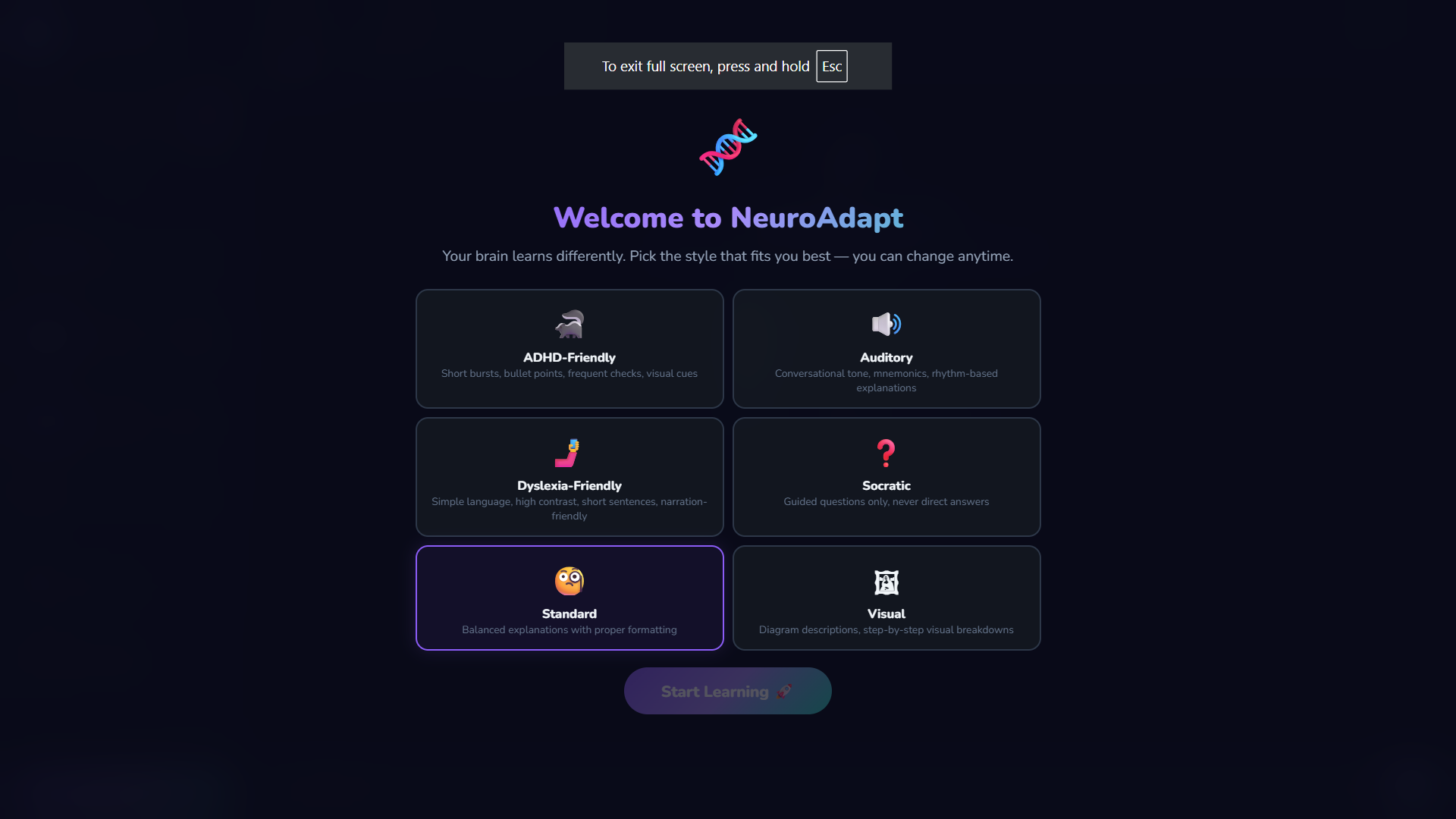
Most AI tutors explain concepts the same way to every student. But people don’t all learn the same way. Students with ADHD often need short, focused bursts of information. Learners with dyslexia benefit from simpler language and clearer structure. Visual thinkers grasp ideas faster through diagrams and spatial steps, while others learn best through questioning rather than direct answers.
We were frustrated watching classmates struggle with generic AI explanations that ignored these differences. Existing tools personalized topics or difficulty, but almost none adapted how the information was presented. That gap inspired NeuroAdapt — an AI tutor built around learning style from the ground up.
What it does
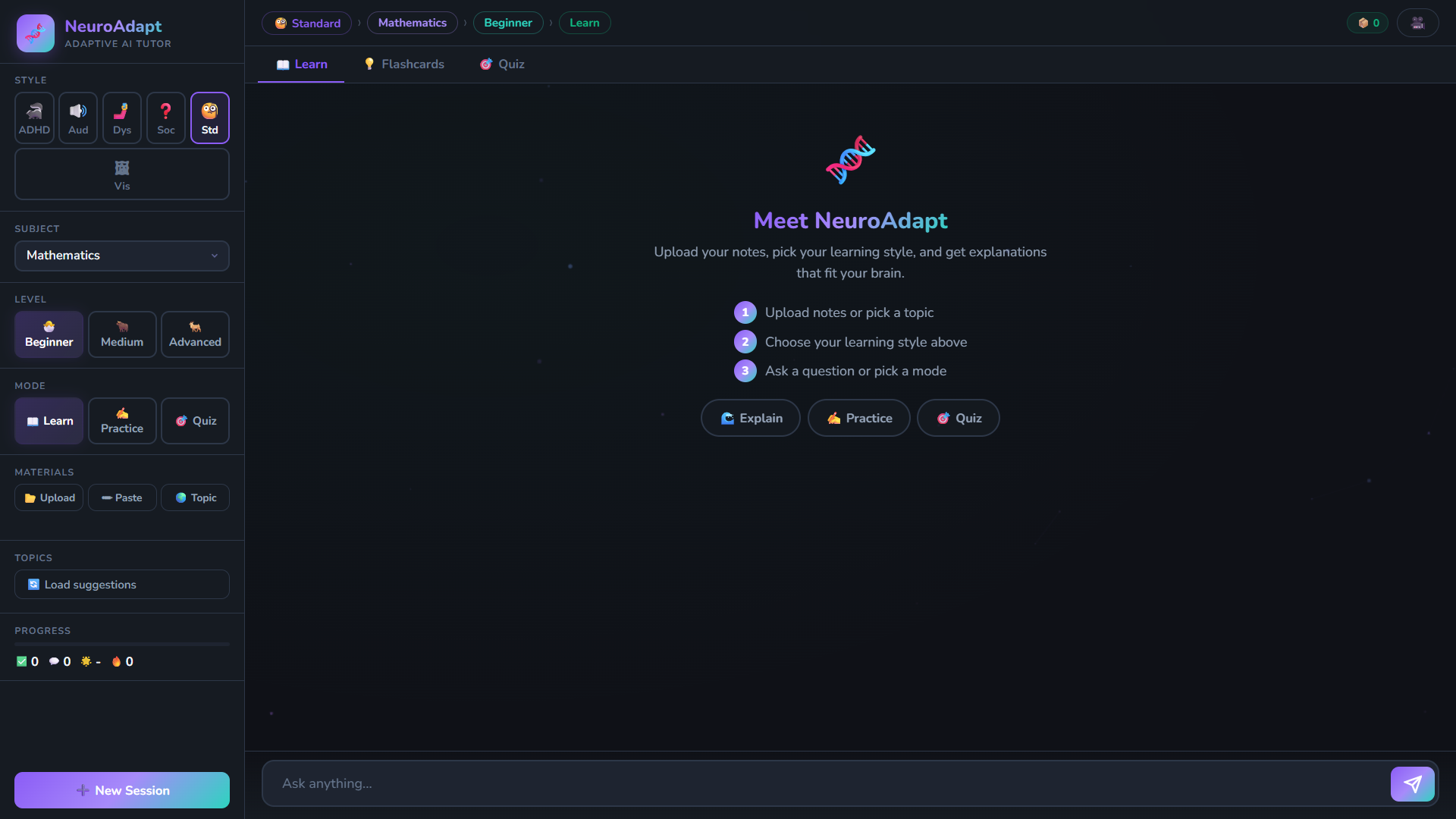
NeuroAdapt is an adaptive AI tutor that rewrites any concept to match the way a student learns best.
Users can:
- Select or switch between learning styles (Visual, ADHD-friendly, Dyslexia-friendly, Auditory, Socratic, Standard)
- Upload their own notes or choose a topic
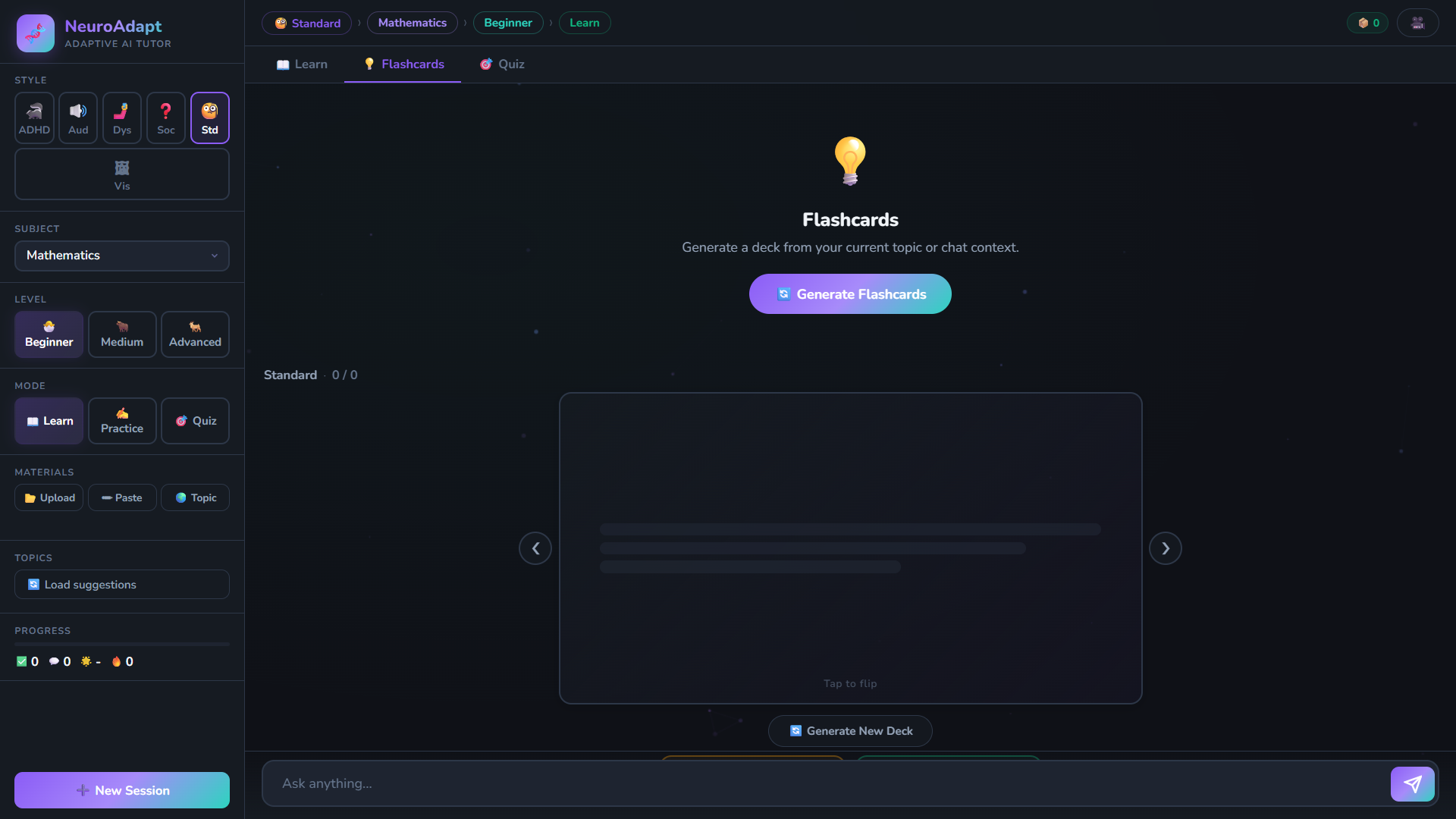
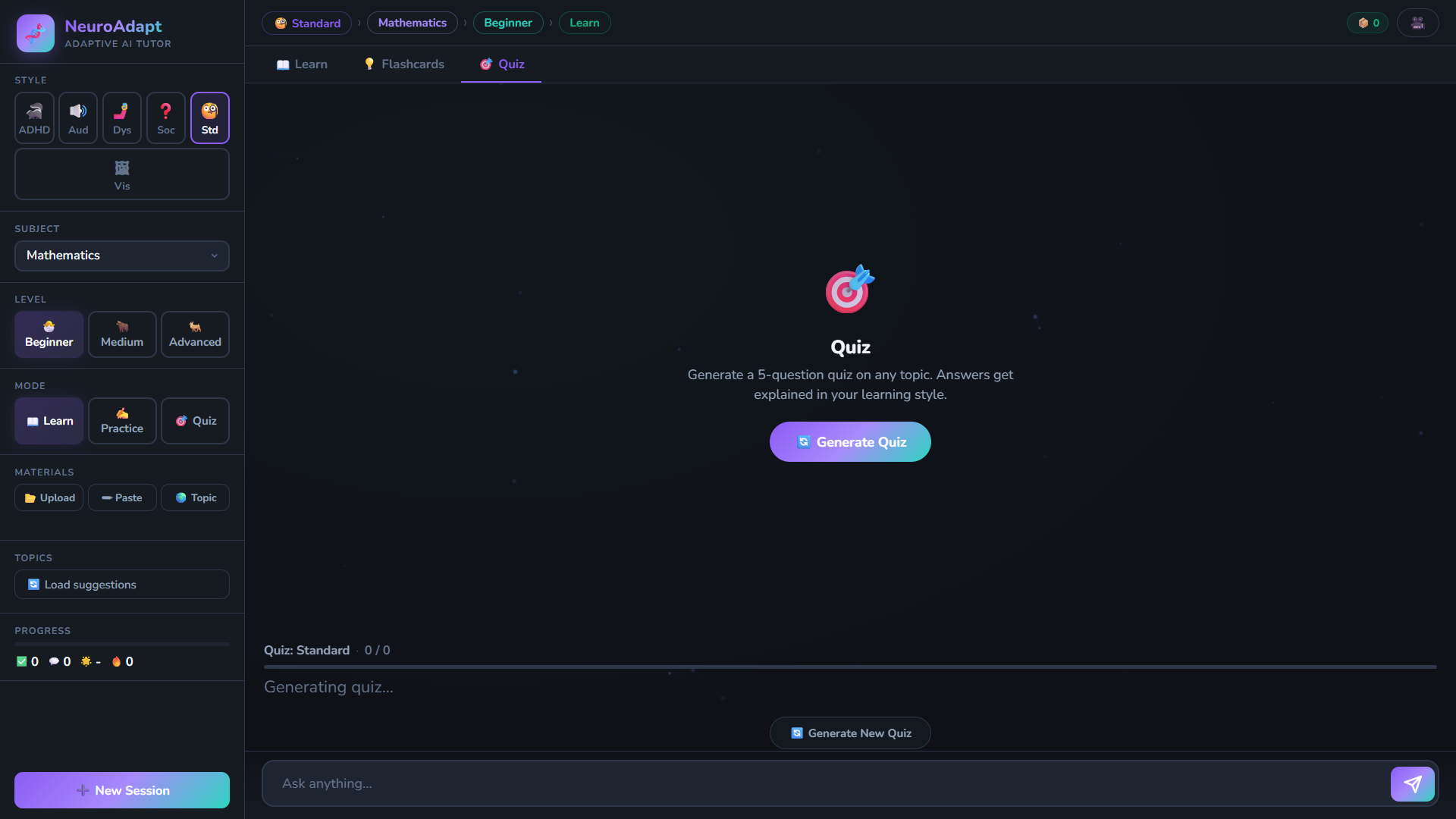
- Receive explanations, interactive step-by-step breakdowns, flashcards, and quizzes tailored to their chosen style
- Get gentle, style-matched feedback while practicing
The same concept can be turned into short visual bursts, simplified text, diagram-style guidance, or pure Socratic questions — instantly.
How we built it
We built the prototype with Python and Streamlit for a fast and clean interface. The core system uses large language models combined with retrieval (RAG) so responses stay grounded in the student’s own materials.
We designed distinct prompt strategies for each learning style so the adaptation feels meaningful, not just cosmetic. On the frontend, we focused on smooth interactions — step-by-step reveals, flip-style flashcards, clear visual hierarchy, and calm feedback — to make the experience feel intuitive and low-stress.
Challenges we ran into
The hardest part was making style adaptation actually useful. Early versions only changed tone. We had to refine the prompts so Visual mode produced genuine spatial step-by-step guidance, ADHD mode stayed truly concise, and Socratic mode avoided giving away answers.
Keeping the interface responsive while generating adapted content, quizzes, and flashcards was another challenge. We also had to be careful that the design itself stayed calm and accessible — especially for the learners we wanted to support most.
Accomplishments that we're proud of
We’re proud that NeuroAdapt goes beyond a typical chatbot wrapper. The learning style system is core to every explanation, quiz, and flashcard. We also managed to create a clean, modern interface with interactive elements (step reveals, flip cards, gentle feedback) that feels good to use even in a short prototype timeline.
Most of all, we’re proud that the tool was designed with real learning differences in mind from the beginning.
What we learned
We learned that true personalization is about more than difficulty level — how something is explained can be just as important as what is explained. Building for different learning needs forced us to think more carefully about clarity, cognitive load, and emotional tone.
We also learned the value of restraint. Keeping the interface simple and the interactions gentle made the whole experience more effective.
What's next for NeuroAdapt
Next we want to add deeper personalization (automatically detecting preferred style over time), better multimodal support (real diagrams and audio), and classroom features so teachers can generate adapted materials for mixed groups of students. Long-term, we hope NeuroAdapt can help make high-quality, personalized learning support more accessible to every kind of learner.tion
What it does
How we built it
Challenges we ran into
Accomplishments that we're proud of
What we learned
What's next for NeuroAdapt
Built With
- css3
- flask
- html5
- javascript
- openai
- python
- rag


Log in or sign up for Devpost to join the conversation.