-
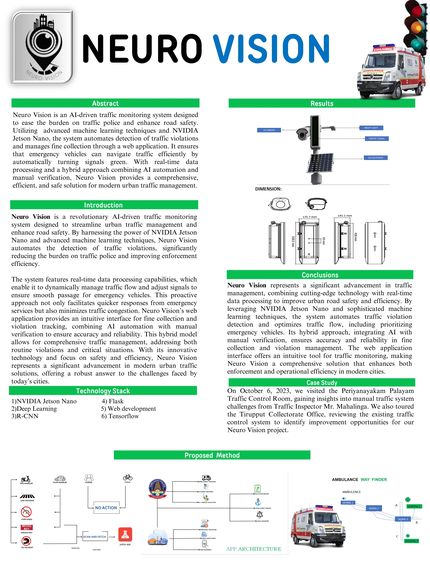
Neuro Vision
-
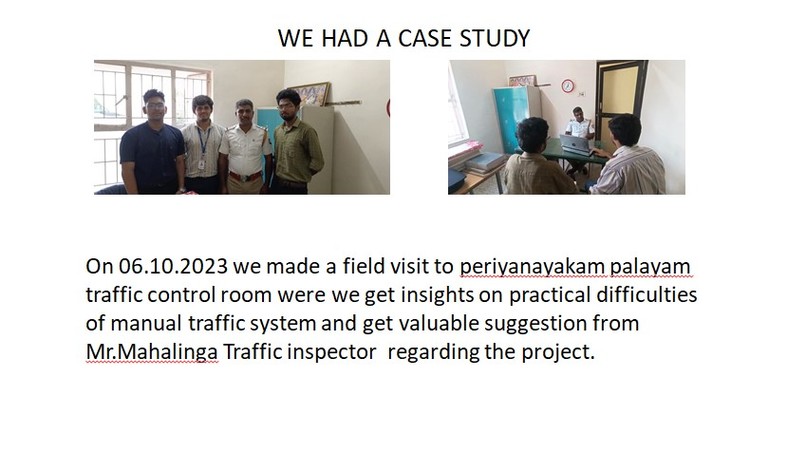
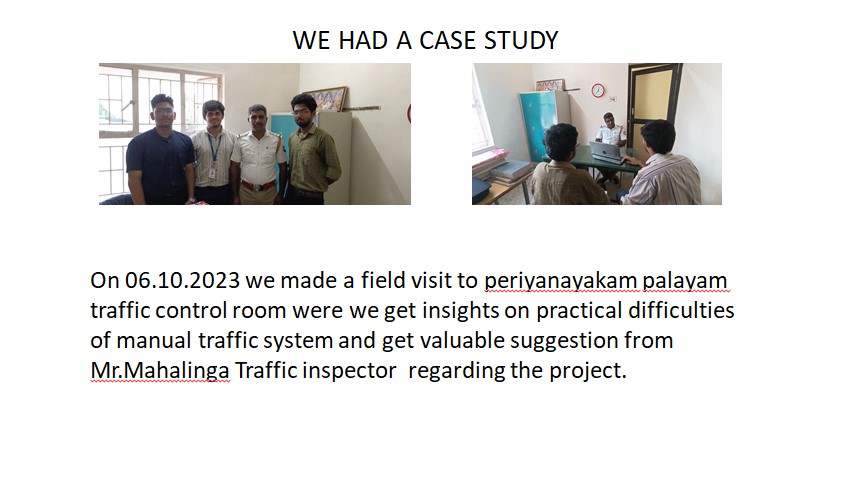
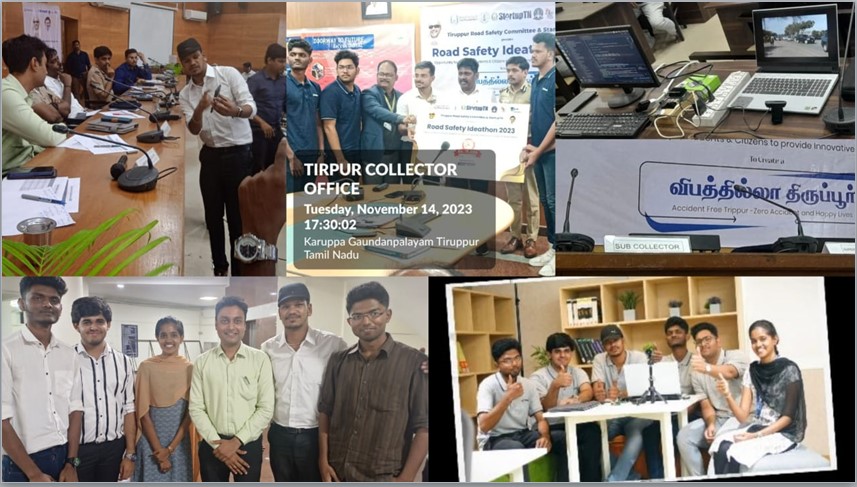
Field case study - Periyanaikanpalayam Police station and Tirrupur Police office
-
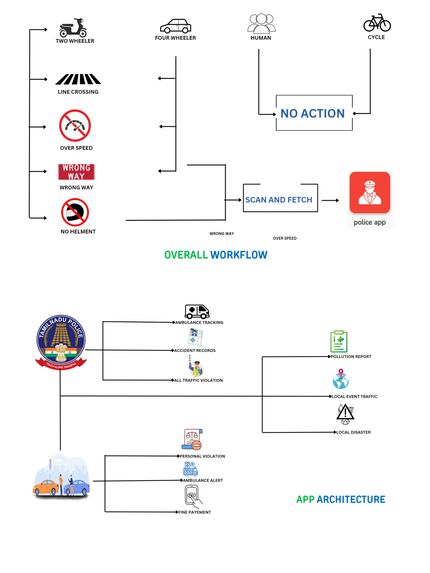
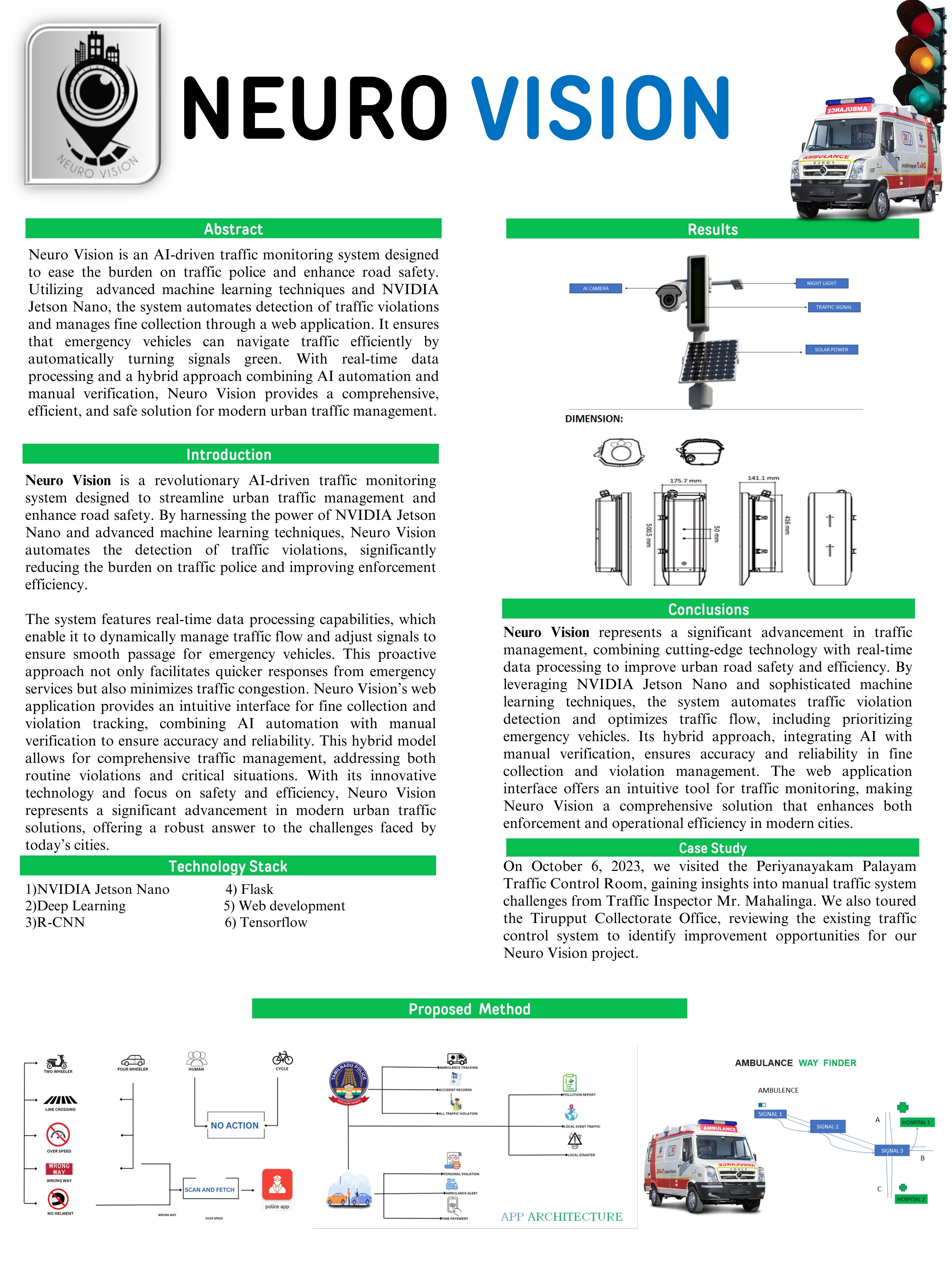
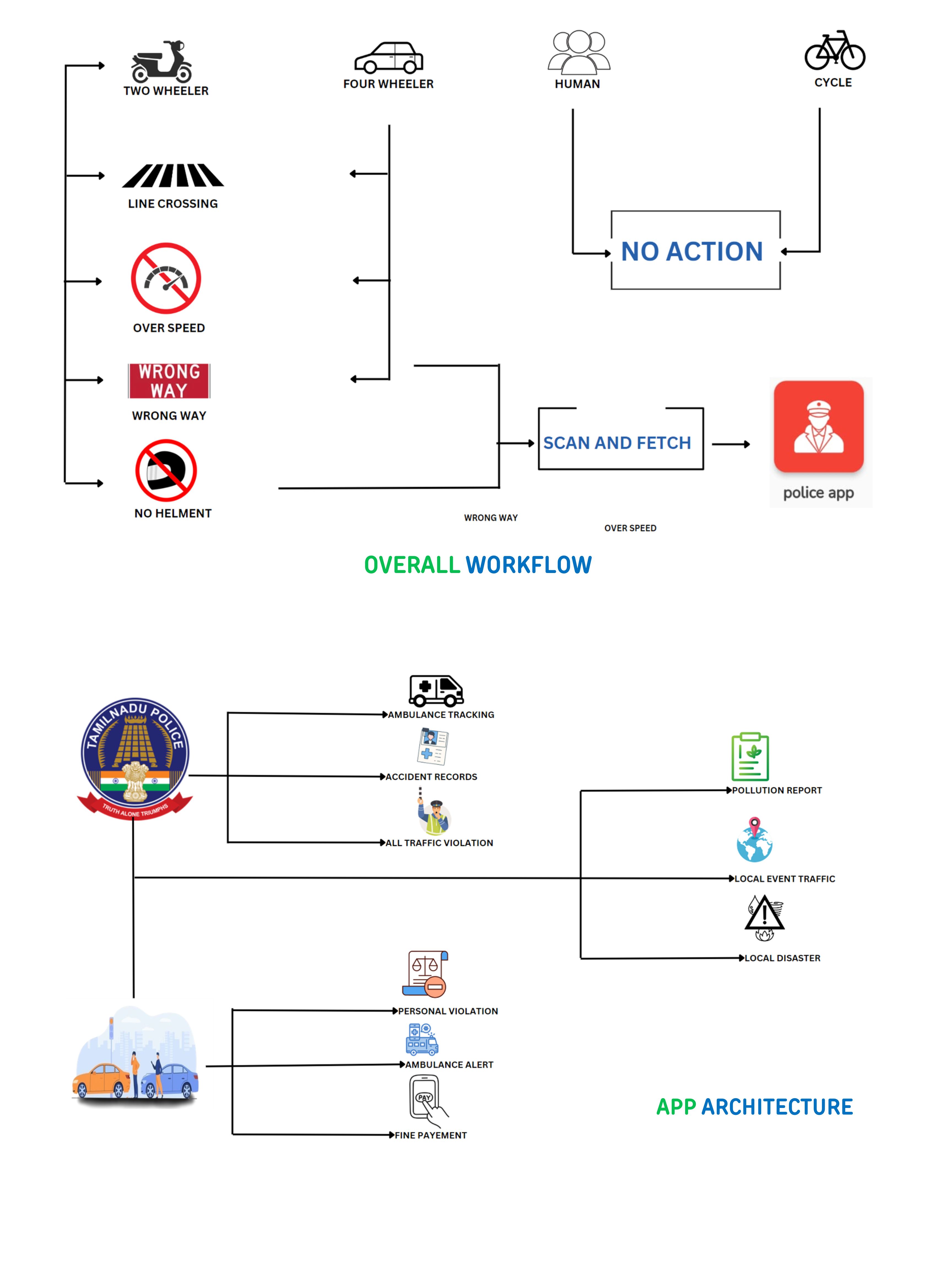
Overall Workflow of Neuro Vision
-
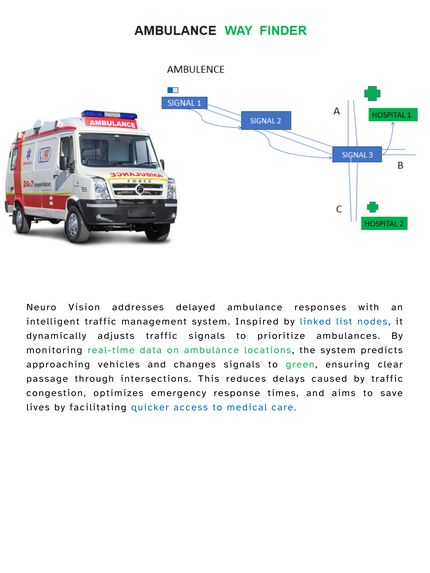
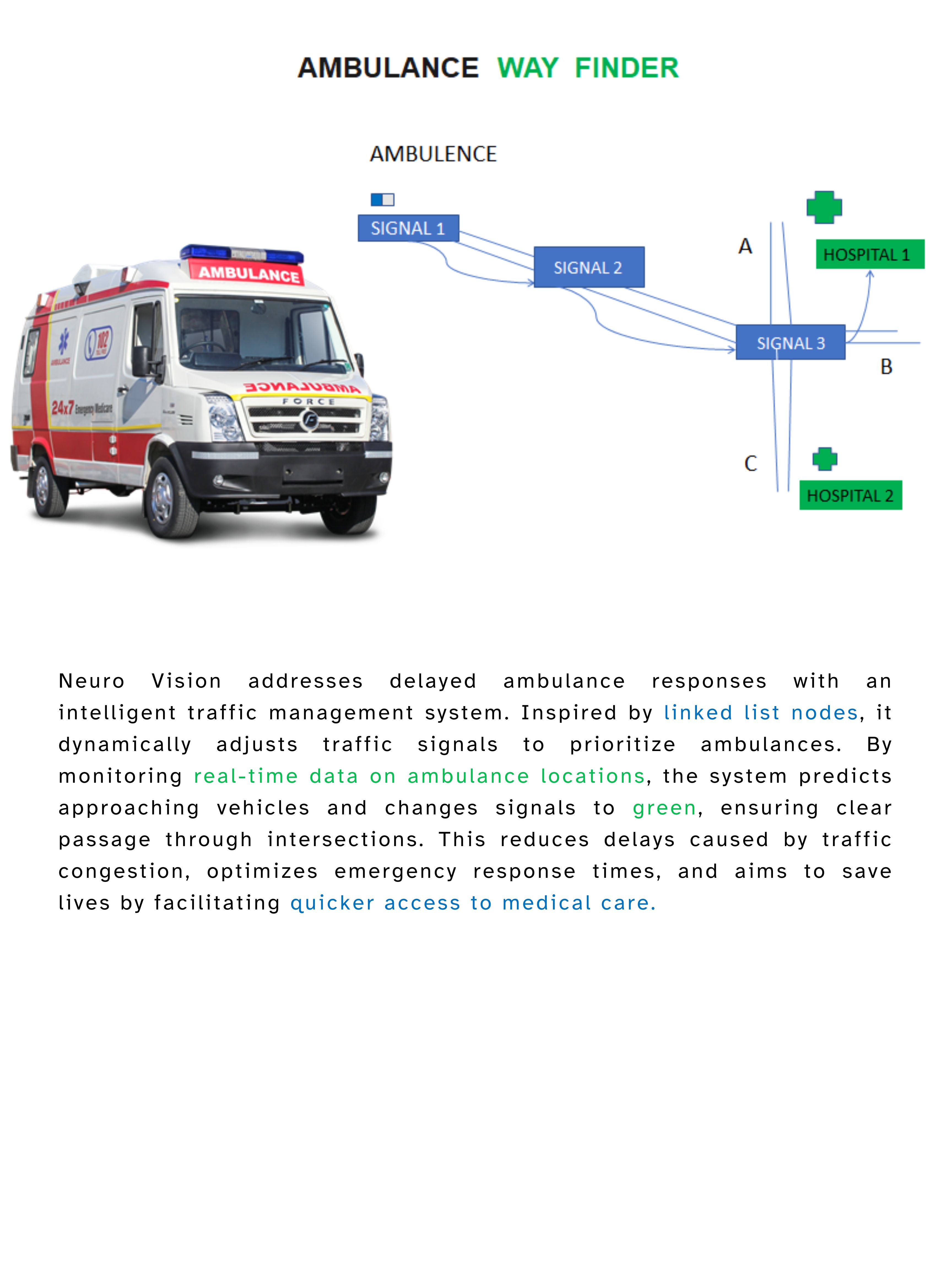
Ambulance tracking system
-
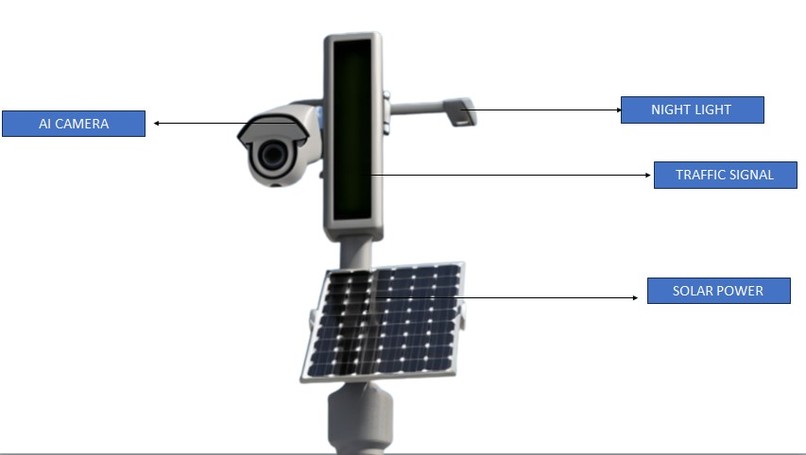
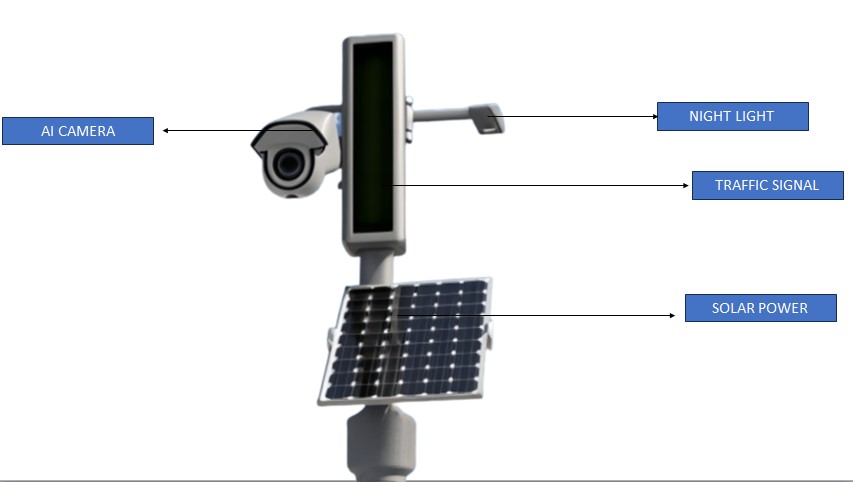
Neuro Vision Final Prototype
-
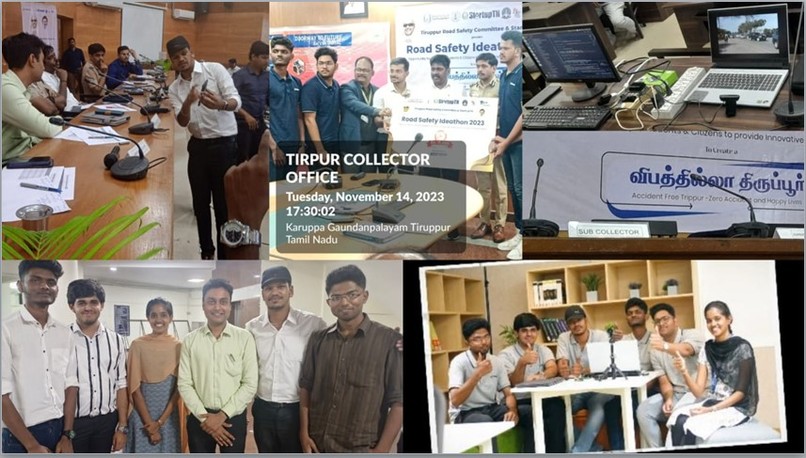
StartupTN - 3rd place
Inspiration
The inspiration for Neuro Vision stems from a personal tragedy. One of our friend from our college lost his life in a bike accident because he couldn't reach the hospital in time due to heavy traffic. This heart-wrenching incident, coupled with the realization that many lives are lost or severely impacted due to traffic rule violations and delays in emergency response, motivated us to create a solution that could prevent such tragedies and make our roads safer for everyone.
What it does
Neuro Vision is an AI-driven traffic monitoring system that automates the detection of traffic violations such as speeding, helmet non-compliance, and lane crossing. Utilizing advanced machine learning models, the system processes real-time data to identify these violations accurately. It integrates with a web application for seamless fine collection and management, allowing users to view and pay fines easily. Additionally, Neuro Vision features an innovative ambulance tracking system which is inspired by the Linked List data structure, When an ambulance approaches a traffic signal, the system dynamically adjusts the signal to green, ensuring the ambulance can navigate through traffic without delays, ensuring no traffic signals wait for an long time for the ambulance to cross through. This feature is crucial for improving emergency response times and potentially saving lives.
How we built it
We built Neuro Vision by integrating several advanced technologies. The core AI algorithms were developed using TensorFlow and deployed on NVIDIA Jetson Nano for edge computing. We developed a web application using React and Node.js for managing traffic violations and fine collection. Real-time data from traffic cameras was processed and analyzed to provide immediate feedback and control signals.
Challenges we ran into
One of the main challenges we faced was ensuring real-time processing of video feeds without significant delays. Balancing the load between the Jetson Nano and the machine learning models required meticulous optimization. Additionally, integrating the system with existing traffic infrastructure and ensuring accurate detection in diverse weather and lighting conditions posed significant hurdles.
Accomplishments that we're proud of
We are proud to have developed a functional prototype that successfully detects and processes traffic violations in real time. The integration of AI for dynamic traffic signal adjustment to prioritize emergency vehicles is a major milestone. Our web application for managing fines and providing local event information is user-friendly and efficient. Additionally, we are proud of the system’s ability to significantly reduce the burden on traffic police while enhancing road safety. A significant highlight of our journey is winning the StartupTN - Tiruppur Road Safety Ideathon, which validates the impact and potential of our innovative solution.
What we learned
Throughout the development of Neuro Vision, we learned the importance of optimizing AI models for real-time applications and the challenges of edge computing. We gained valuable insights into integrating AI with existing infrastructure and the importance of user-centric design in developing our web application. Our experience also highlighted the critical role of thorough testing in diverse real-world conditions to ensure reliability and accuracy.
What's next for Neuro Vision
The next steps for Neuro Vision include expanding its capabilities to cover more complex traffic scenarios and improving its detection accuracy further. We plan to conduct pilot tests in collaboration with local traffic authorities to gather real-world data and feedback. Additionally, we aim to enhance our web application with more features like detailed analytics for traffic management authorities and expand our AI algorithms to predict and prevent potential traffic violations. We are also exploring partnerships with emergency services to optimize the emergency response feature further.


Log in or sign up for Devpost to join the conversation.