Inspiration
In today’s digital world, websites are designed for maximum engagement — not mental well-being. Flashing ads, dense paragraphs, pop-ups, and cluttered layouts often create sensory overload, especially for individuals with ADHD and autism.
We were inspired by a simple question:
What if websites adapted to you, instead of forcing you to adapt to them?
Neuro-Vibe was born from the idea of creating a calmer, more inclusive internet experience — one that supports neurodivergent users instead of overwhelming them.
What it does
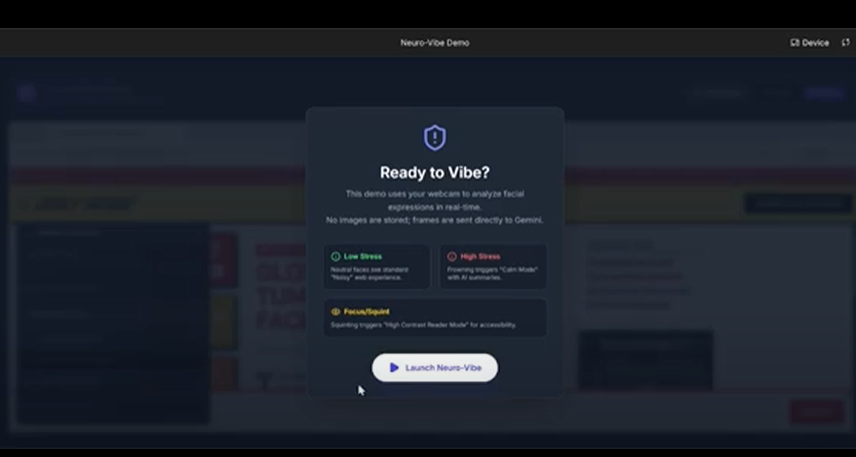
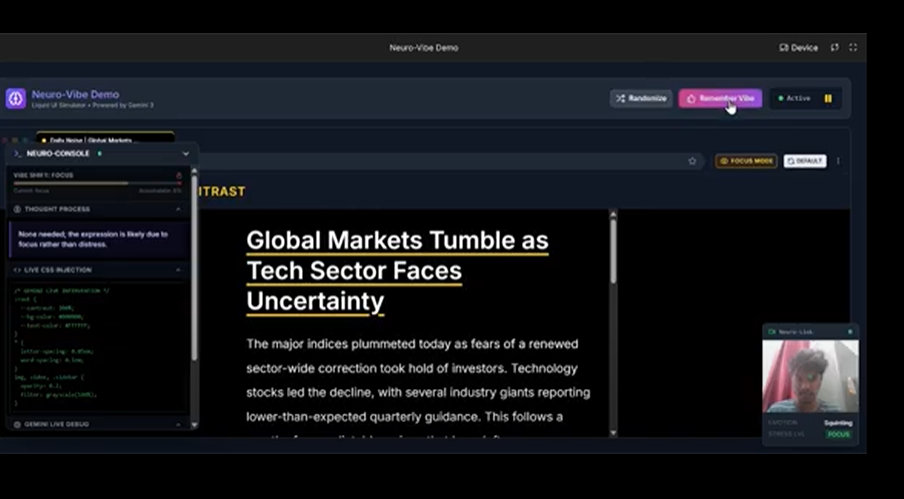
Neuro-Vibe is an AI-powered browser extension that dynamically transforms websites based on a user’s mental state.
Instead of static web pages, Neuro-Vibe creates a “living interface” that adapts in real time.
It can:
Detect user mood through a quick “vibe check” (stressed, tired, focused)
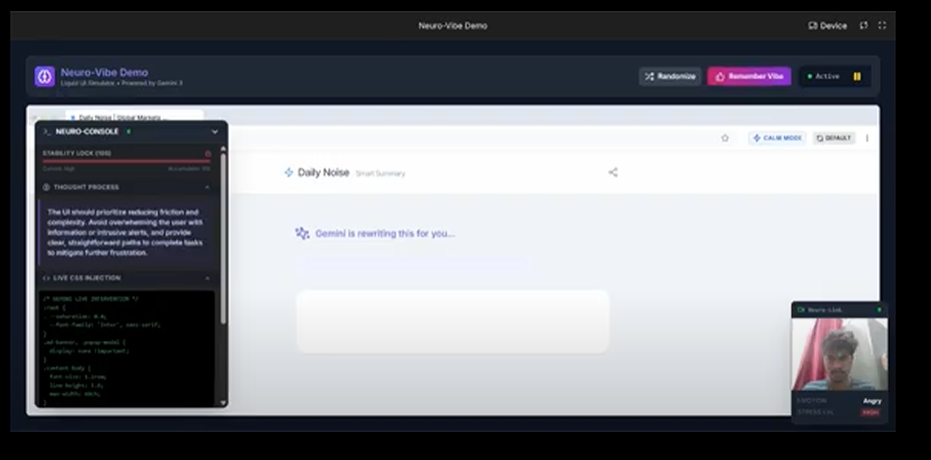
Summarize long paragraphs into bullet points
Hide distracting ads and flashing elements
Expand white space to reduce visual noise
Apply calming themes and minimal layouts
The result: a distraction-free, focus-friendly browsing experience designed for ADHD and autistic users.
How we built it
We built Neuro-Vibe as a Chrome browser extension using:
HTML, CSS, and JavaScript for UI and content injection
DOM manipulation to dynamically modify website layouts
AI APIs for:
Emotion understanding from text input
Content summarization
Dynamic UI transformation suggestions
When a user selects their mood, the AI processes the input and generates customized CSS/JS changes that are injected into the active webpage in real time.
This creates an adaptive, personalized browsing experience within seconds.
Challenges we ran into
Real-time UI manipulation Modifying live websites without breaking layout structure was complex.
Balancing simplification with usability We had to ensure summarization didn’t remove critical information.
Avoiding over-automation Users must feel in control, so we added manual mode toggles.
Performance optimization Injecting AI-generated styles without slowing the browser required careful scripting.
Accomplishments that we're proud of
Successfully created a working prototype browser extension
Demonstrated real-time content summarization
Implemented distraction removal without breaking site functionality
Designed a solution specifically for neurodivergent accessibility
Built an AI-powered adaptive interface — not just another chatbot
Most importantly, we created something that could genuinely reduce digital stress.
What we learned
Accessibility is not optional — it should be built into core design.
AI can enhance mental well-being when used responsibly.
Small interface changes can significantly impact focus and comfort.
Human-centered AI design is more powerful than feature-heavy systems.
We also learned how to integrate AI meaningfully rather than using it as a buzzword.
What's next for Neuro-Vibe
Our next steps include:
Integrating real-time facial emotion detection (with user consent)
Adding machine learning personalization over time
Conducting user testing with ADHD and autistic communities
Building mobile browser support
Partnering with accessibility advocacy organizations
Long-term vision: To make Neuro-Vibe a universal accessibility layer for the internet.
Built With
- accessibility
- adhd
- ai
- assistivetechnology
- autism
- browserextension
- clean
- humancenteredai
- like:
- mentalhealth
- neurodiversity
- tags
- uiux
- use-simple
- webaccessibility

Log in or sign up for Devpost to join the conversation.