Neuro-Sync
Inspiration
Content creators often don’t realize when their energy drops, their pacing slows, or their presence weakens until after they’ve finished recording and reviewed the footage. By then, it’s too late. Retention is lost in the first few seconds, and creators are forced to rely on guesswork and multiple retakes.
We wanted to build a real-time behavioral engagement system that doesn’t just analyze videos after the fact, but actively coaches creators while they’re recording. Neuro-Sync was inspired by the idea that performance instincts can be trained — if the feedback loop is immediate.
⸻
What it does
Neuro-Sync is a real-time behavioral engagement modeling system for creators.
While a creator records, Neuro-Sync: • Analyzes facial expressiveness, posture, motion, and vocal energy • Extracts structured behavioral signals from video and audio • Uses AI to estimate engagement quality and retention risk • Provides instant feedback through visual and audio cues • Connects to Instagram to analyze historical Reel performance • Learns from past engagement data to improve coaching accuracy
The system predicts engagement decay before it becomes obvious and intervenes in real time to help creators maintain energy and presence.
⸻
How we built it
Neuro-Sync consists of three core layers:
- Real-Time Behavioral Modeling (Local ML)
We extracted structured features such as: • Speech rate and silence ratio • Volume intensity • Smile intensity and facial activation • Posture angle and movement entropy • Eye contact stability
These signals were fed into a lightweight machine learning model to estimate engagement score and drop probability in real time.
- AI Reasoning Layer
We integrated Gemini Vision to interpret multimodal inputs and provide higher-level coaching insights beyond raw metrics. This allowed the system to move beyond numerical scoring and deliver contextual feedback.
- Hardware + App Interface
Initially, we built a Raspberry Pi-based physical module with LEDs, a screen, and a buzzer to provide embodied, non-intrusive feedback while recording.
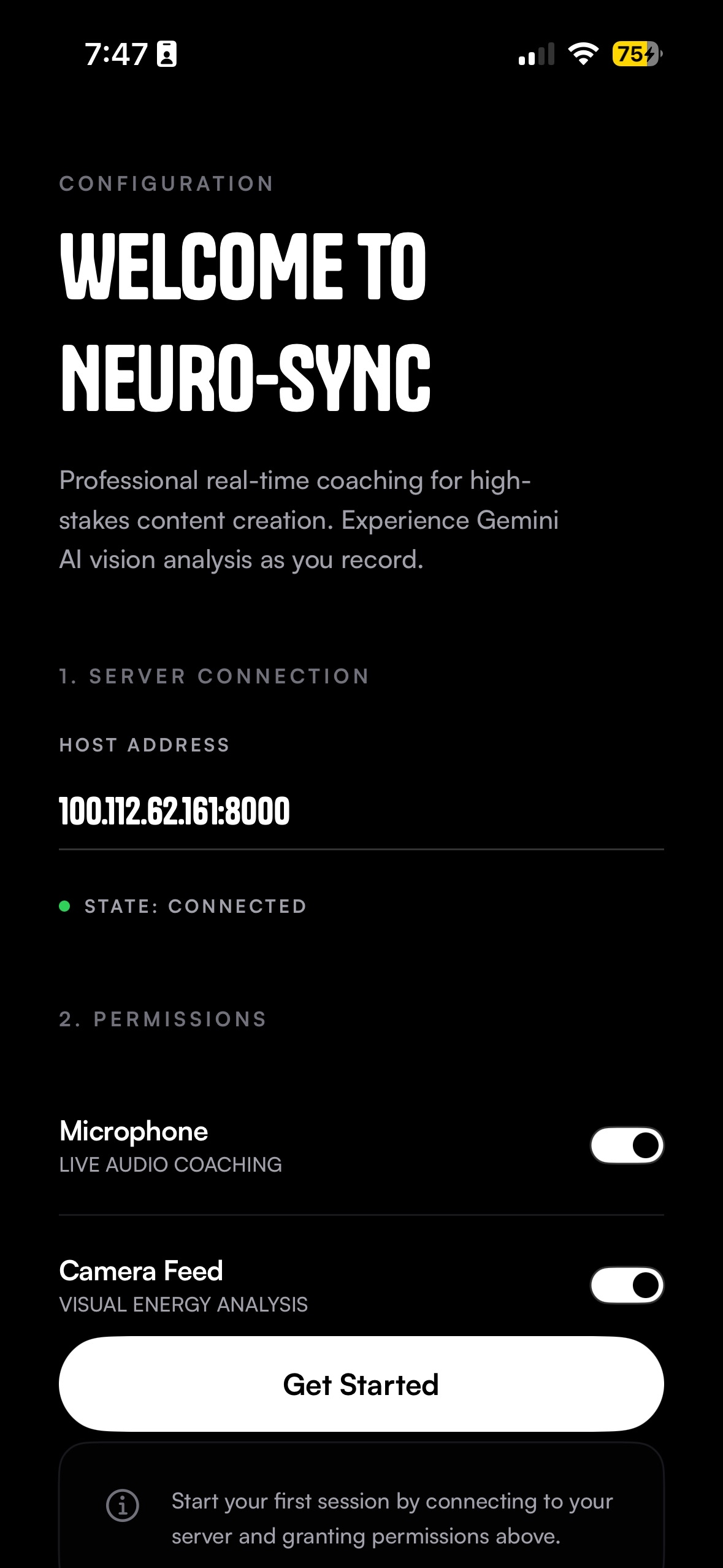
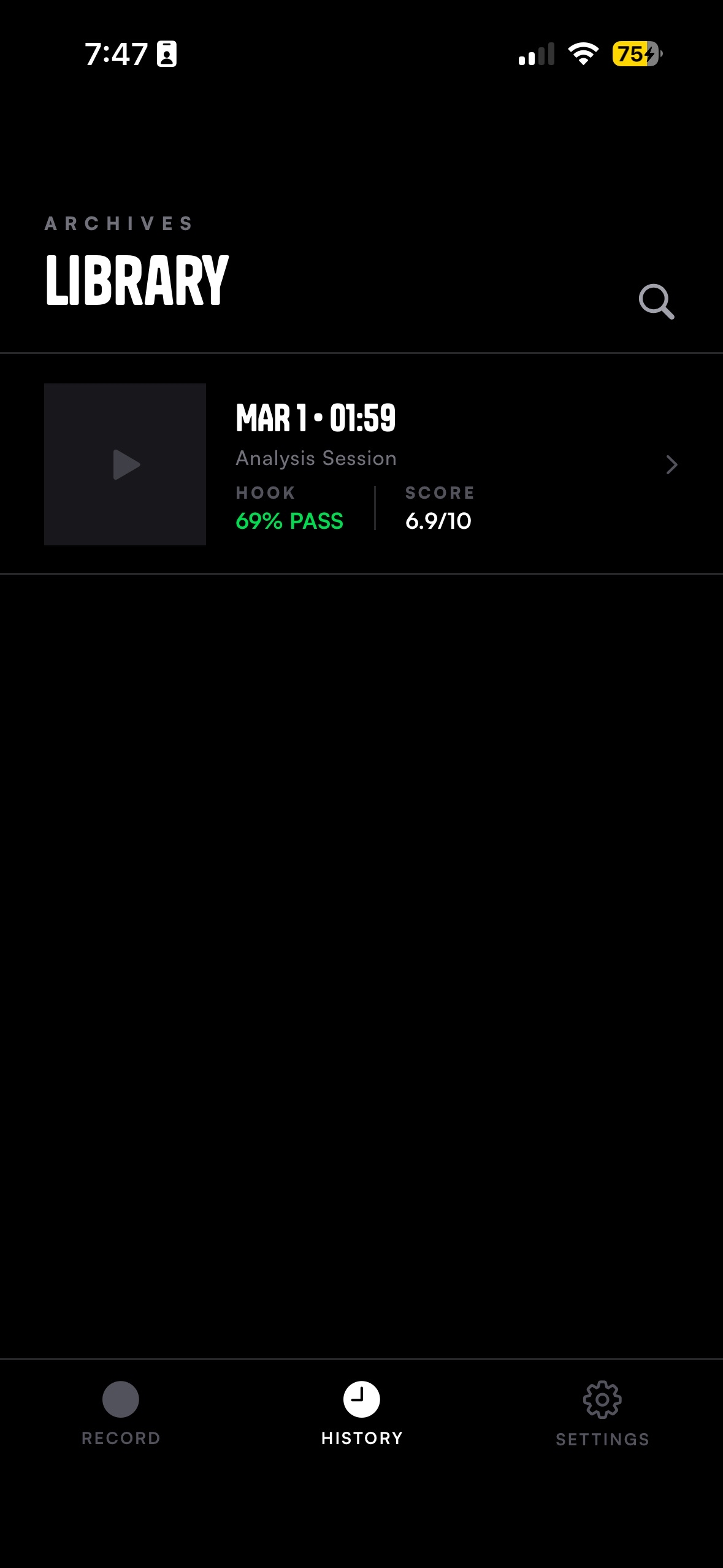
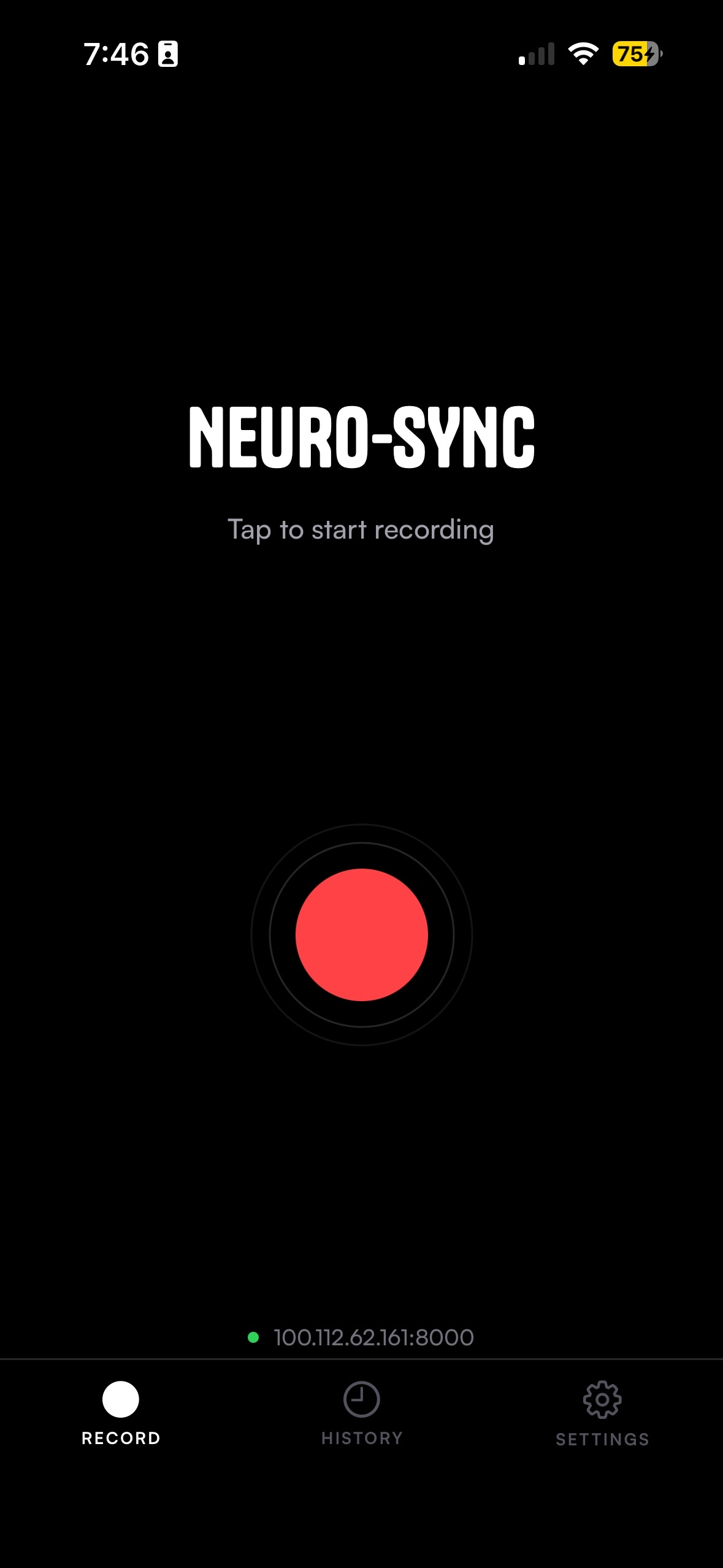
After hardware instability near submission, we pivoted rapidly and rebuilt the interaction layer as a SwiftUI app, recreating the feedback interface in under two hours to ensure a stable demo.
We also implemented authentication and Instagram integration to pull engagement metrics and personalize coaching.
⸻
Challenges we ran into
The biggest challenge was hardware reliability.
We designed the system to run with a Raspberry Pi connected to a screen and buzzer. While the setup worked during development, we experienced repeated microSD and Raspberry Pi failures close to submission. We had to swap multiple boards and cards under time pressure.
Ultimately, we made the strategic decision to pivot to a SwiftUI-based interface to stabilize the demo environment.
This shift meant we had to prioritize system stability and authentication workflows, which limited how far we could push some of the advanced real-time modeling features within the time constraints.
We also navigated the complexity of Instagram authentication and analytics extraction, which required separating identity management from data access permissions.
⸻
Accomplishments that we’re proud of • Designing a predictive behavioral engagement model rather than a reactive AI coach. • Successfully integrating multimodal AI reasoning into a real-time system. • Getting a full SwiftUI feedback interface running in under two hours under deadline pressure. • Building a structured pipeline for extracting Instagram engagement metrics. • Architecting a layered system separating identity, analytics, ML, and AI reasoning.
Most importantly, we built a working system that demonstrates real-time intervention before engagement drops.
⸻
What we learned • Always design backup plans for hardware and infrastructure. • Separate critical paths from experimental features. • Never let external APIs block your core system. • Real-time systems require deterministic local loops. • Planning failure contingencies in advance can save a project.
We also learned the importance of clear architectural separation between identity (Auth0), analytics access (Instagram Graph API), and ML modeling layers.
⸻
What’s next for Neuro-Sync
Neuro-Sync is just the beginning.
Next steps include: • Training personalized engagement models using larger datasets. • Expanding AI coaching capabilities beyond retention to storytelling structure and hook optimization. • Adding advanced emotion detection and voice modulation analysis. • Building a dedicated physical coaching module for creators that can attach to cameras or desks. • Scaling the system to analyze batches of past content for longitudinal performance trends. • Creating AI-powered content rehearsal simulations before recording.
Our long-term vision is to build a full AI-native performance coaching system for creators — one that transforms intuition into measurable engagement science.

Log in or sign up for Devpost to join the conversation.