

Background
In today’s digital age, staying focused during computer-based tasks has become increasingly difficult. With constant distractions—from social media to emails—maintaining attention can feel like an uphill battle. Focus is critical for productivity, yet the ability to stay engaged with a task often wanes without warning. That’s where FocusBoost comes in.
Project Overview
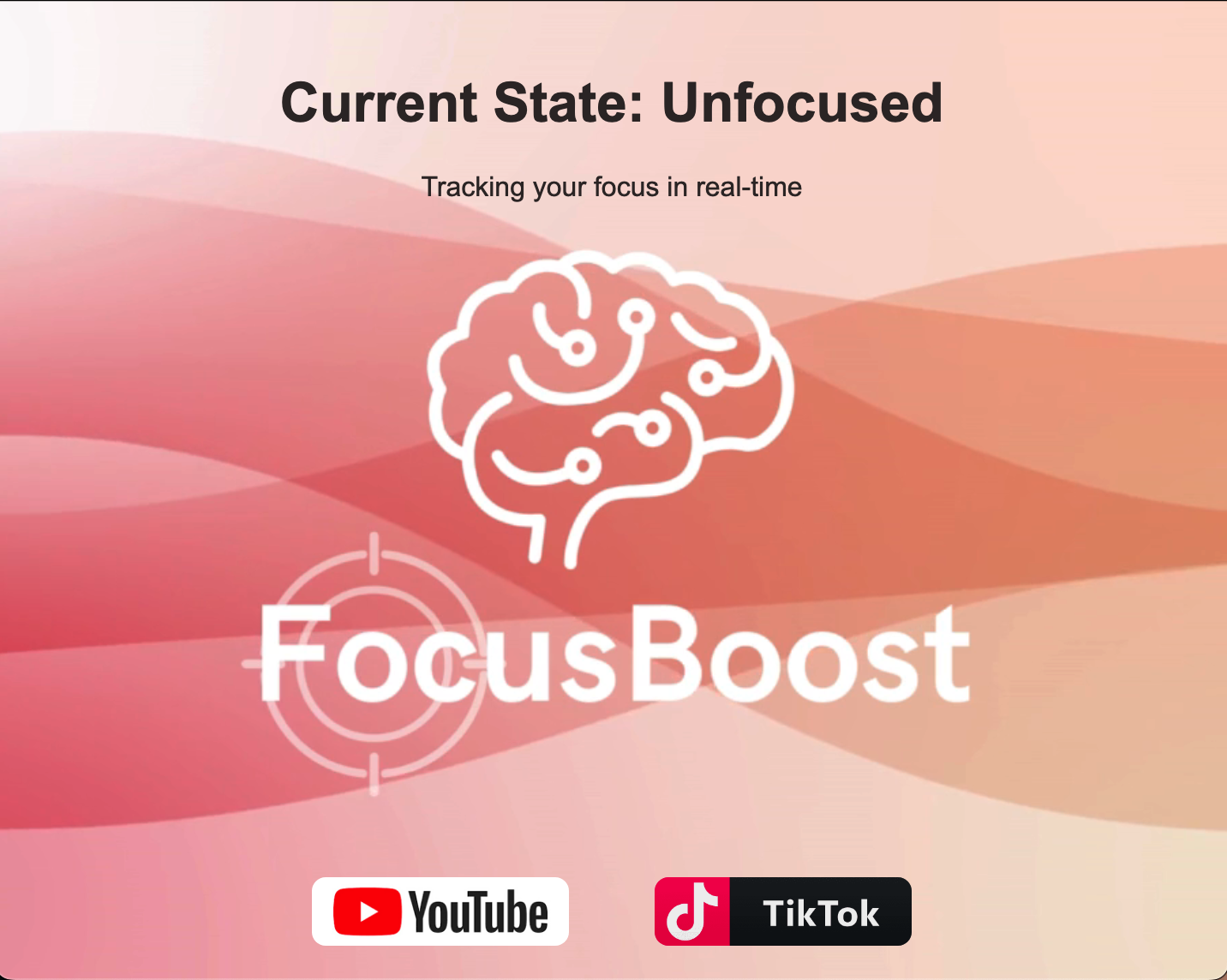
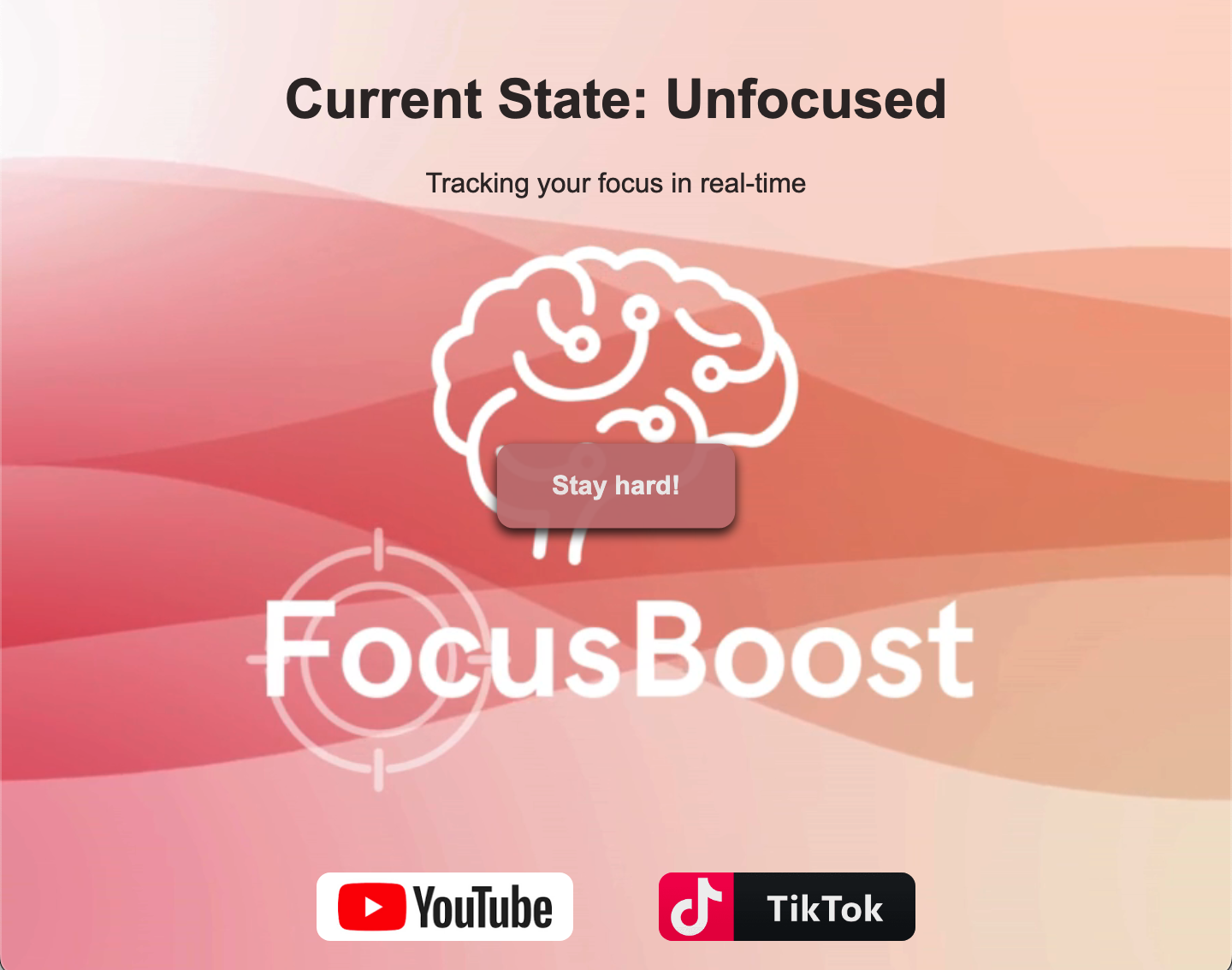
FocusBoost is a software tool integrated with a BCI, BioAmp EXG Pill and Arduino, that monitors your brain activity via EEG. By analyzing your brainwaves, the system detects when you're losing focus. Specifically, FocusBoost tracks when your brainwaves fall outside of the "beta" frequency (typically associated with active focus and alertness; see Attar, 2022) for more than 10% of a 10-second period. When focus slips, the tool sends a real-time notification to remind you to zone back in on your task with audio-visual notifications, and motivational content featuring quotes from figures like David Goggins—to help users stay on track.
Commercialization
Using a freemium business model, FocusBoost offers core features like focus monitoring and basic alerts for free, while premium features—such as advanced notifications for distractions like TikTok and YouTube—are available through a subscription. While initially targeting teenagers who struggle with focus in academic settings, FocusBoost has broad appeal, including professionals and students in high-distraction environments. Corporate clients represent a key demographic, as companies seek productivity solutions to improve focus and performance. Backed by evidence-based EEG neurofeedback research (Apicella et al., 2022), FocusBoost offers a proven way to enhance cognitive performance, learning outcomes, and productivity for a wide range of users.
References
Apicella, A., Arpaia, P., Frosolone, M. et al. EEG-based measurement system for monitoring student engagement in learning 4.0. Sci Rep 12, 5857 (2022). https://doi.org/10.1038/s41598-022-09578-y
Attar ET., Review of electroencephalography signals approaches for mental stress assessment. Neurosciences (Riyadh). 2022 Oct;27(4):209-215.https://doi.org/10.17712/nsj.2022.4.20220025


Log in or sign up for Devpost to join the conversation.