-
Home Page
-
Article Page
Inspiration
In an era where timely, accurate information can be the difference between awareness and apathy, we recognized the power of automation and AI to democratize news creation. Our team drew inspiration from both traditional newsrooms and cutting-edge AI research, imagining a system that could tirelessly scan global trends, distill essential stories, and generate readable articles in real-time. We wanted to harness LangGraph’s capabilities to build something that not only informs, but empowers communities—especially those lacking robust local journalism.
Mission & Social Impact
Neuro News is more than a tech demo—it's a tool for responsible AI-driven journalism. The project focuses on:
- Fighting misinformation by combining multiple AI agents with fact-checking and credible sources.
- Promoting global awareness of important but underreported issues.
- Enabling local communities to easily publish high-quality, verified news.
Although the mission is still a work in progress, Neuro News represents meaningful progress toward these goals.
What it does
Neuro News is an end-to-end automated news generation platform. It:
- Connects to RSS feeds of top news sites and continuously monitors trending topics.
- Performs web searches on emerging events and niche subjects to gather diverse perspectives.
- Uses a LangGraph agent to identify high-impact topics and outline article structures.
- Delegates each topic to a network of ReAct-based micro-agents that conduct multi-step research and draft full articles.
- Publishes completed stories to a Firebase-backed, instantly pushing updates to our interactive frontend.
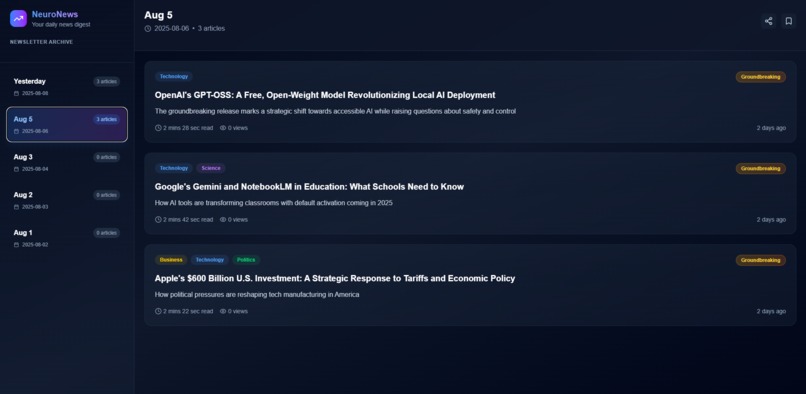
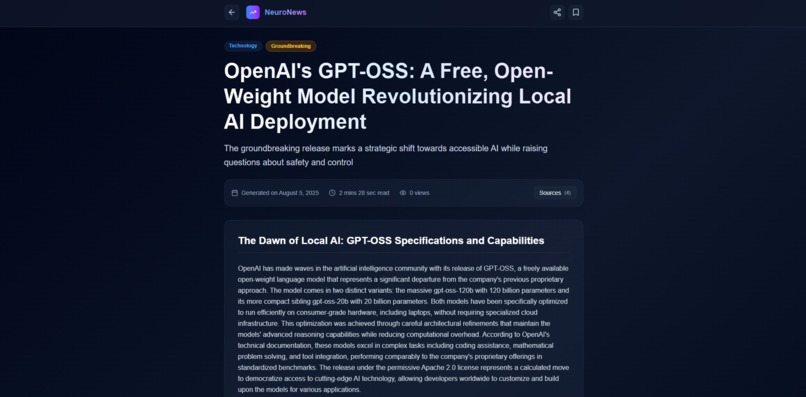
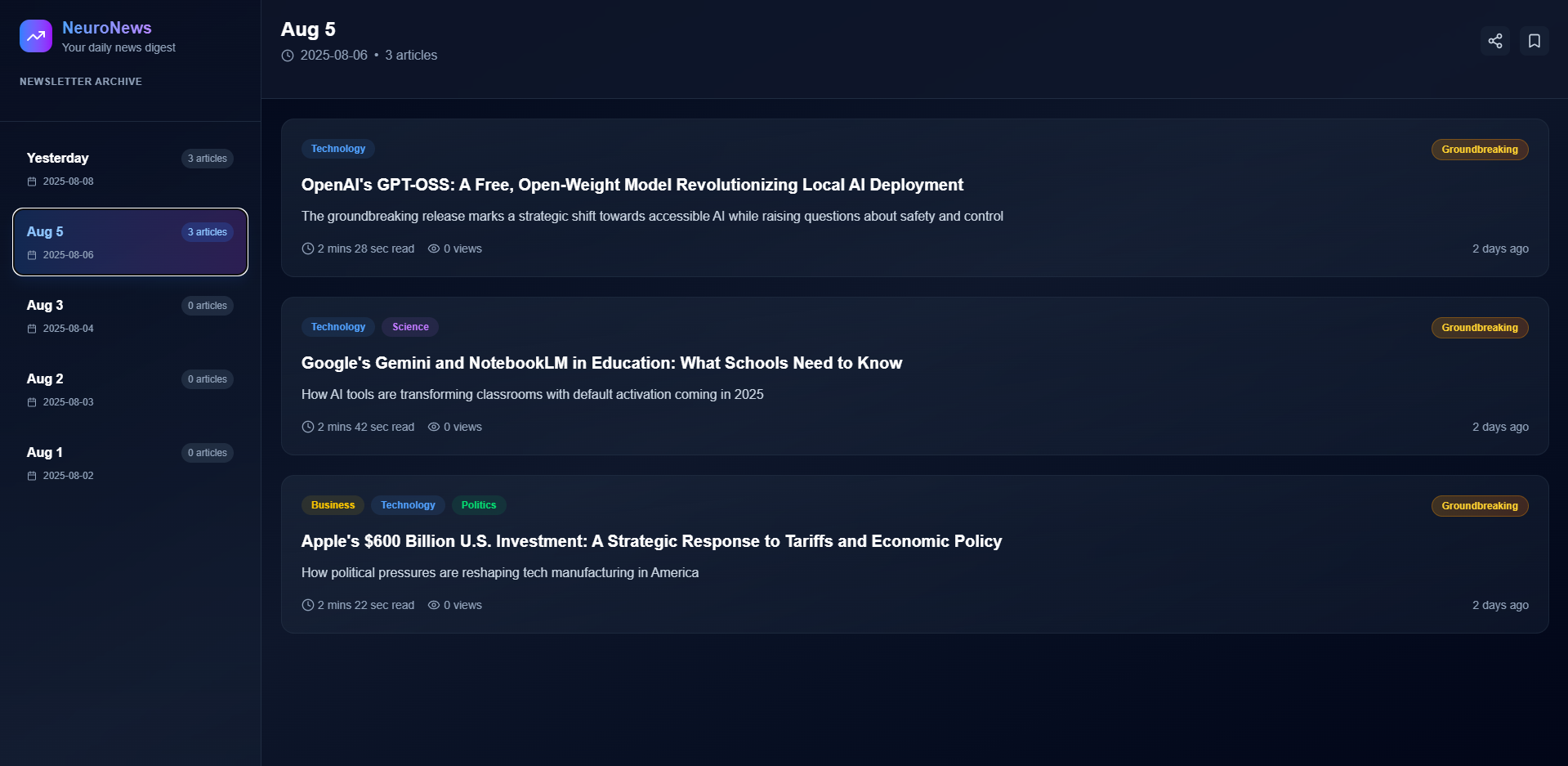
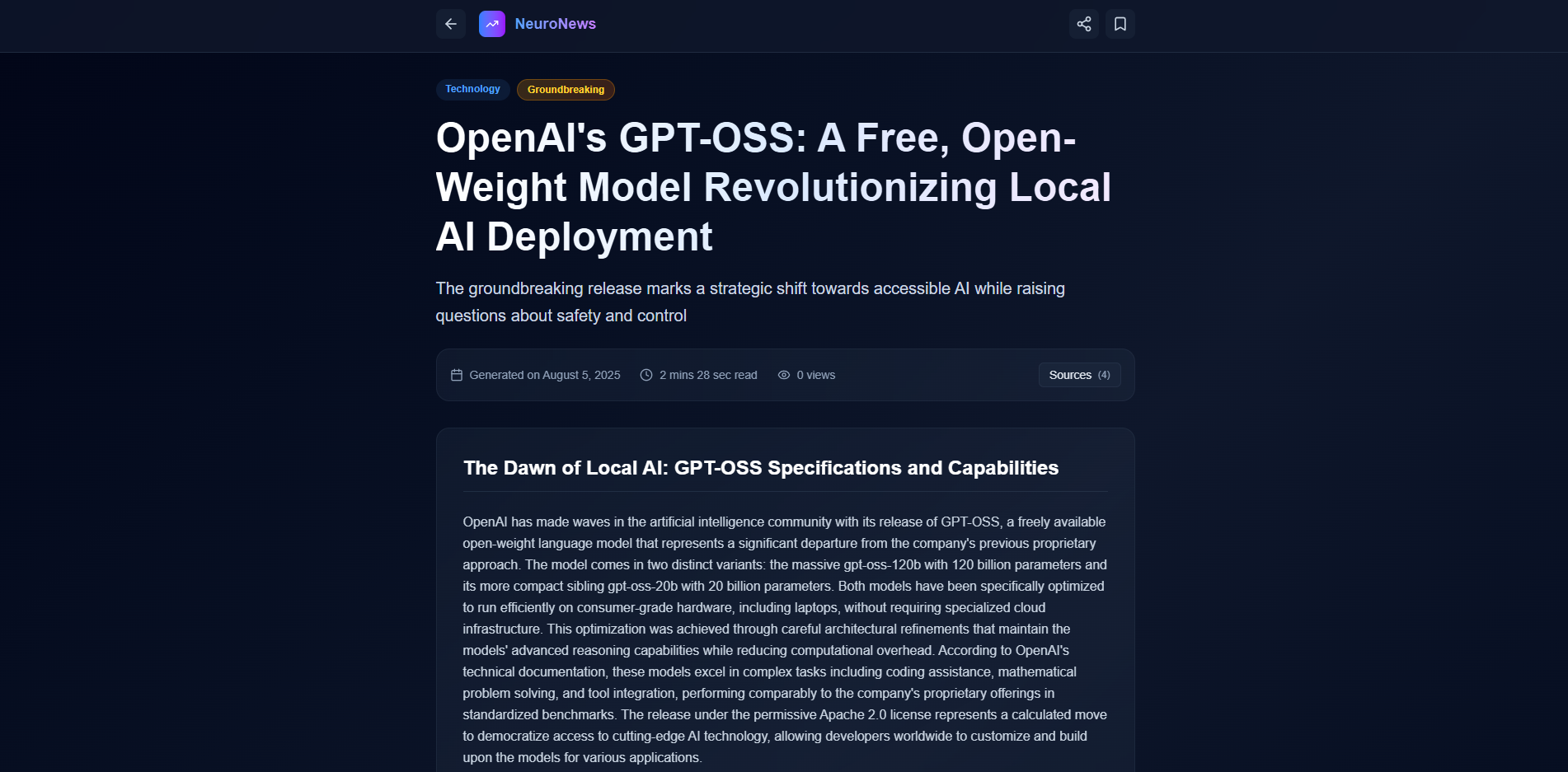
Readers can browse categories articles by date—all powered by our AI pipeline.
How we built it
- Backend & Data Collection: We configured LangGraph to ingest RSS data from a variety of news sources and integrate a web-search tool for real-time search. This pipeline normalizes content and extracts keywords, sentiment, and relevance scores.
- LangGraph Agent Orchestration: We constructed a multi-agent graph: one master agent selects topics, while subordinate agents outline, research, and write. Each sub-agent calls specialized LangChain tools for summarization, fact-checking, and citation formatting.
- Frontend & Firebase: Our Next.js app uses Firestore for article storage. The UI features dynamic filters and an interactive reading experience.
Challenges we ran into
- Data consistency: Different RSS schemas required extensive normalization to extract uniform fields.
- Time constraints: With the hackathon deadline looming, we prioritized core features—like topic discovery and article generation—so we couldn’t implement secondary fact-checking APIs or parallelize subtasks; those remain on our roadmap.
- LangGraph structure & prompting: Designing a multi-node agent graph—configuring a master topic selector and subordinate research/writer agents—required careful planning. Crafting precise prompts for each agent step to ensure coherent, accurate output was particularly challenging.
- Agent coordination: Ensuring research agents produced accurate, non-overlapping content required defining clear inter-agent communication protocols within the graph.
- Latency: Sequential multi-step generation led to noticeable delays in publishing; future work will focus on parallel execution and caching to improve responsiveness.
Accomplishments that we're proud of that we're proud of
- Automated detection and publication of articles.
- Designed a modular LangGraph architecture that can scale with additional data sources.
- Built an intuitive, responsive React UI.
- Integrated a fact-checking layer to maintain high journalistic standards.
What we learned
- The importance of schema normalization when aggregating heterogeneous data.
- Techniques for parallel agent orchestration to balance speed and accuracy.
- Best practices for real-time UI updates with Firebase.
- Ethical considerations in automated content generation and frameworks for responsible AI.
What's next for Neuro News
- Localization: Expand to non-English languages and integrate local news RSS feeds.
- User feedback & quality loops: Add reader ratings and comments, feeding insights back into the agent prompts and establishing editorial oversight to verify accuracy and style.
- Automated verification: Build lightweight fact-checking workflows—combining API checks with keyword-based consistency tests—to flag potential issues before publication.
- Voice & Multimedia: Incorporate text-to-speech and simple video summaries.
- Community Contributions: Allow citizen journalists to submit tips that our agents can follow up on, with a vetting step to ensure content quality.
- Academic partnerships: Collaborate with journalism schools to evaluate article accuracy, readability, and impact, refining our verification framework over time.
Neuro News is just the beginning—empowering communities worldwide with AI-driven, reliable information.

Log in or sign up for Devpost to join the conversation.