-
-
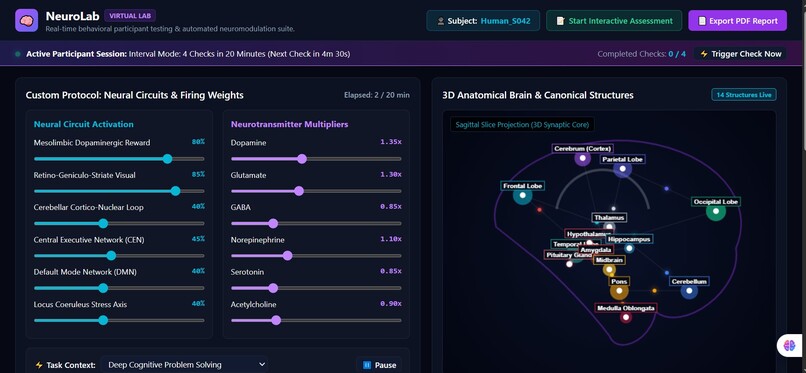
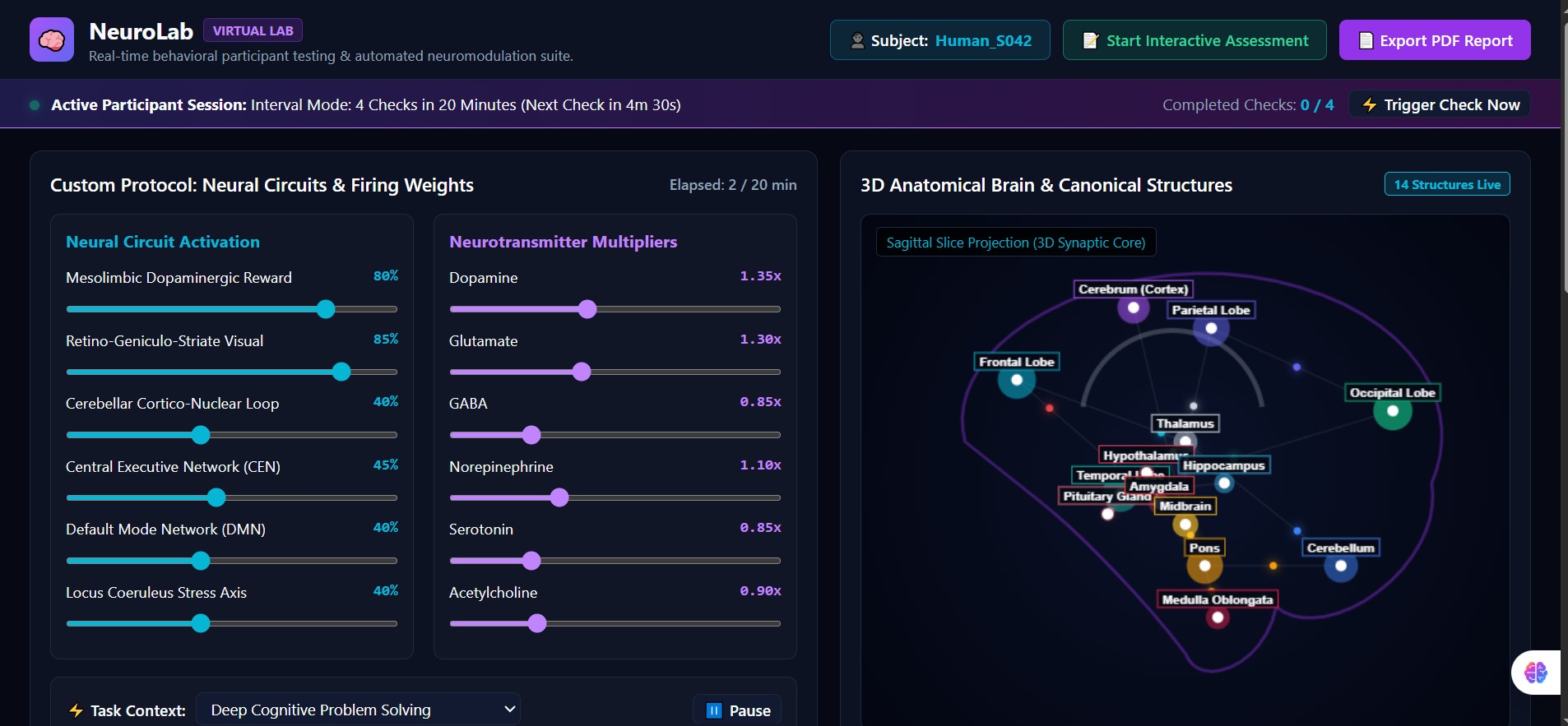
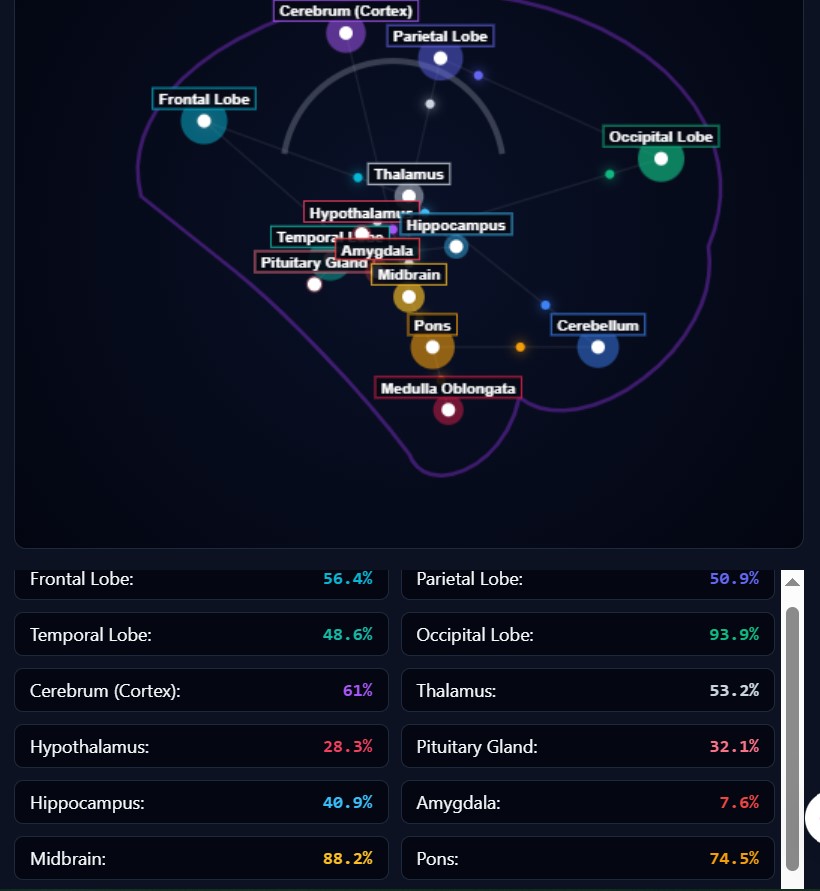
live brain with manipulatable neural circuits and nurotransmitters
-
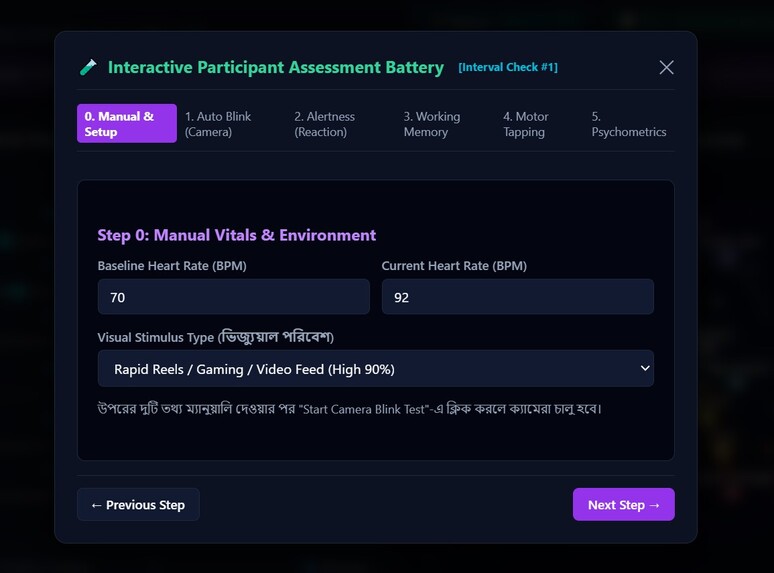
Biomarker Data
-
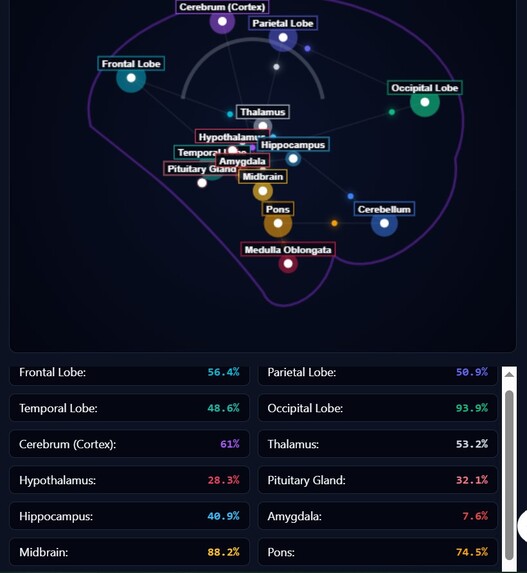
Brain Activities
-
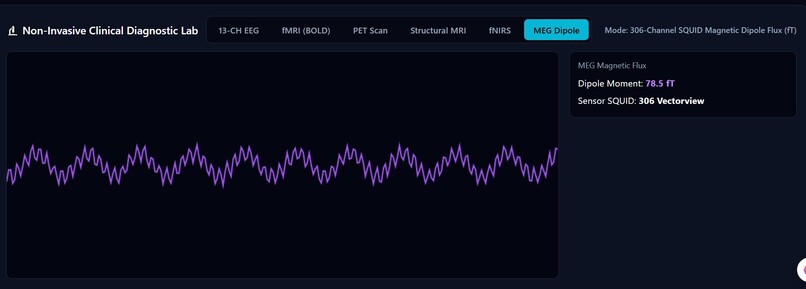
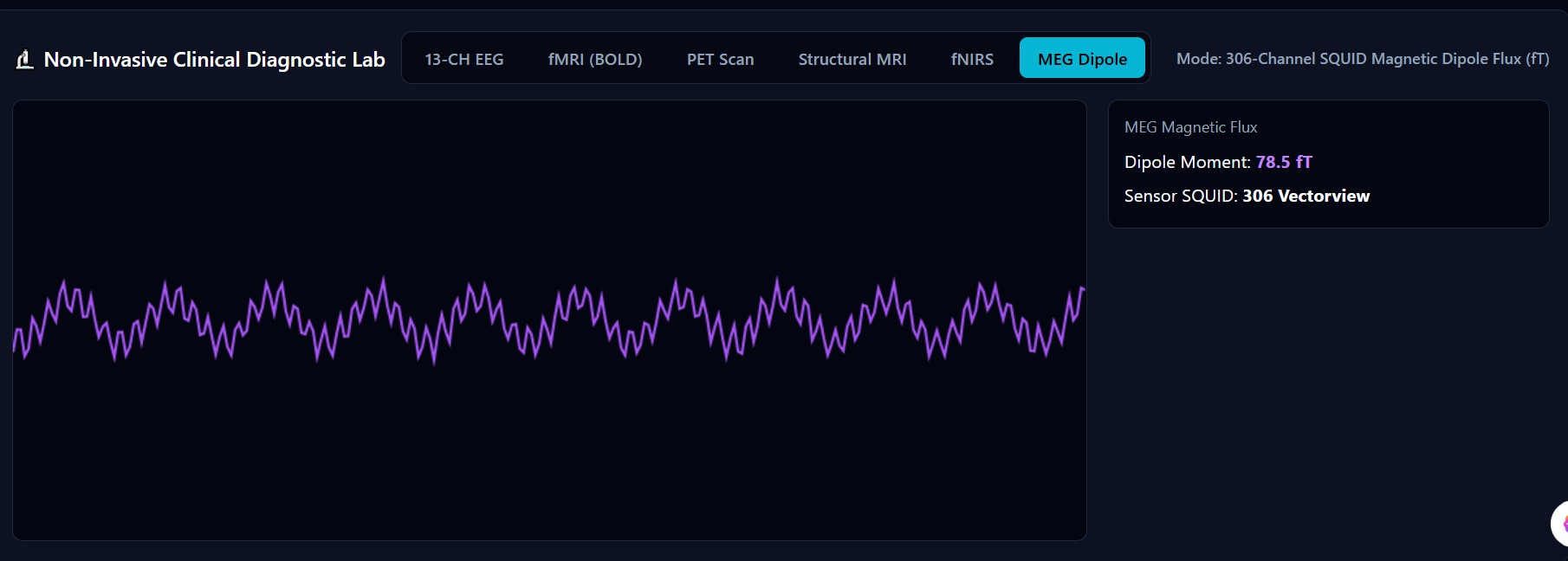
Test (MEG)
-
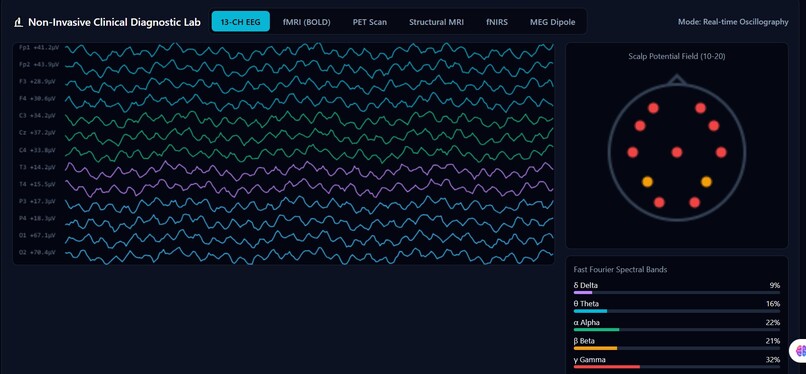
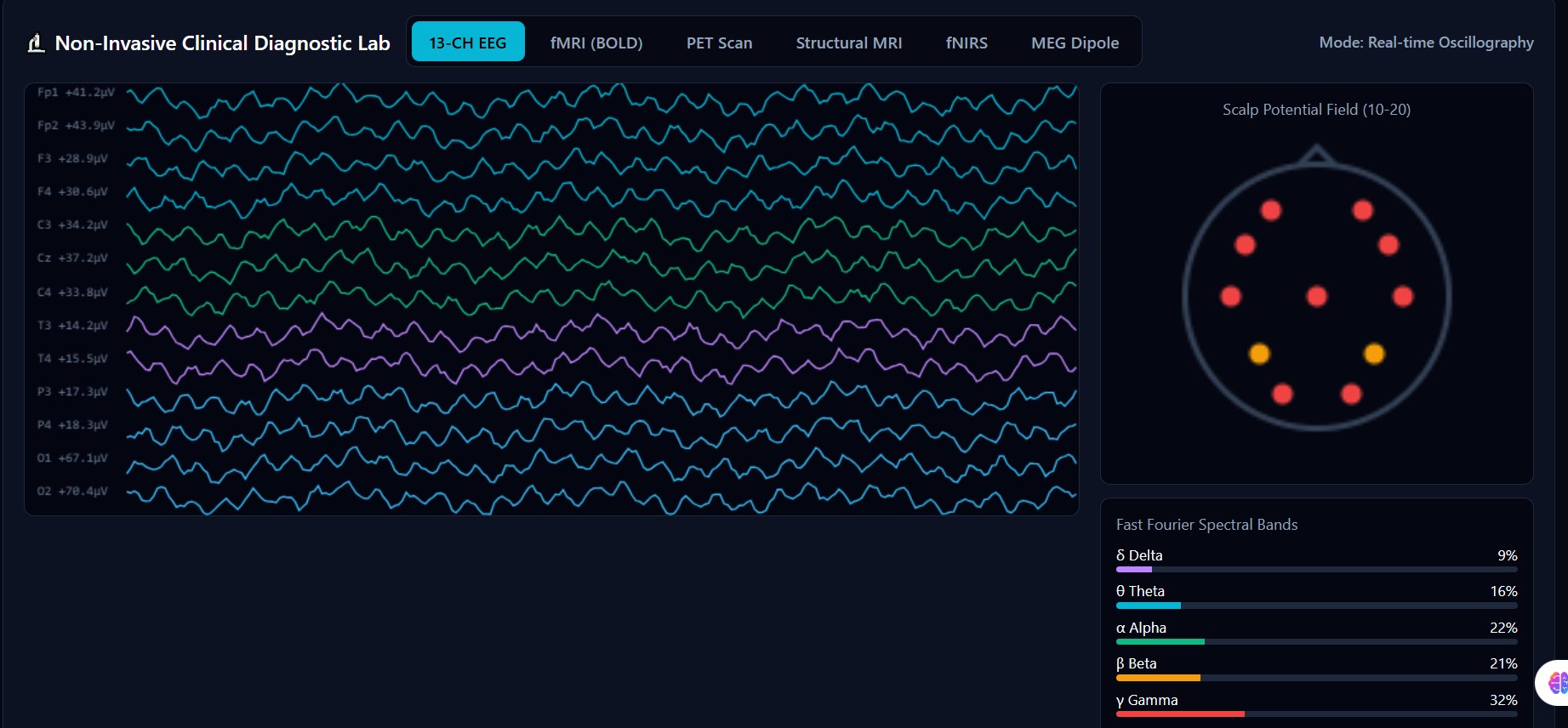
EEG
-
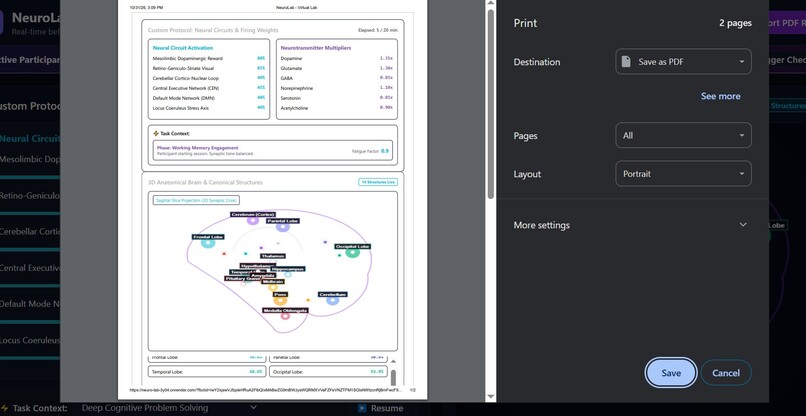
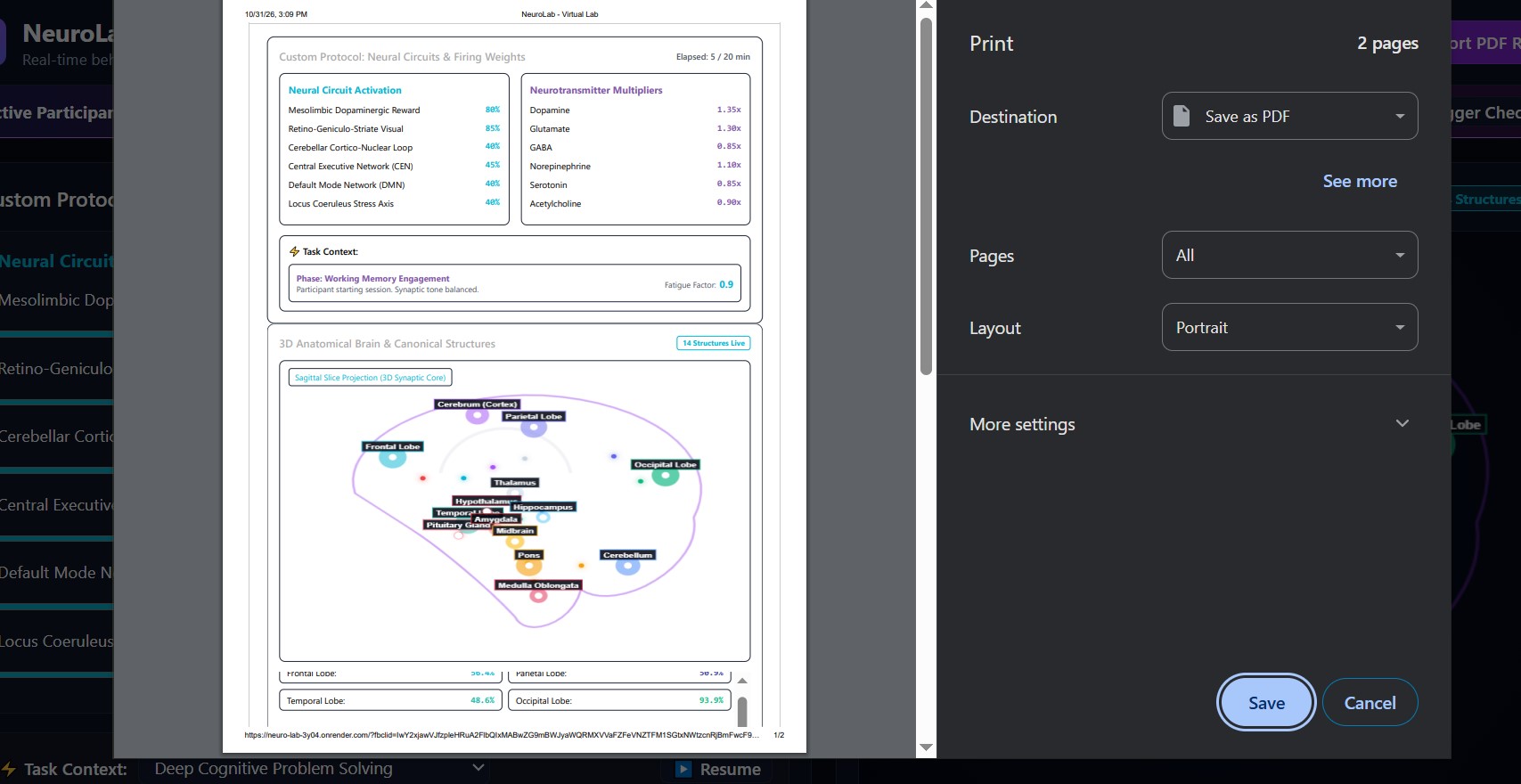
Test Report as PDF
NeuroLab: Exploring How Life Changes Brain Chemistry
About the Project
The human brain is constantly responding to the world around us. Stress, sleep deprivation, nutrition, physical activity, and social experiences can influence hormones, neurotransmitters, and the neural systems involved in emotion, cognition, and decision-making. But how can we explore these complex relationships in a structured, understandable, and data-driven way?
That question inspired NeuroLab.
NeuroLab is a data-driven experimental lab concept designed to explore how different life experiences and environmental factors may be associated with changes in hormones, neurotransmitters, and brain function. Our vision is to make neuroscience more interactive by transforming scientific data into experiments that help users investigate relationships between everyday experiences and the brain's biological responses.
How It Works
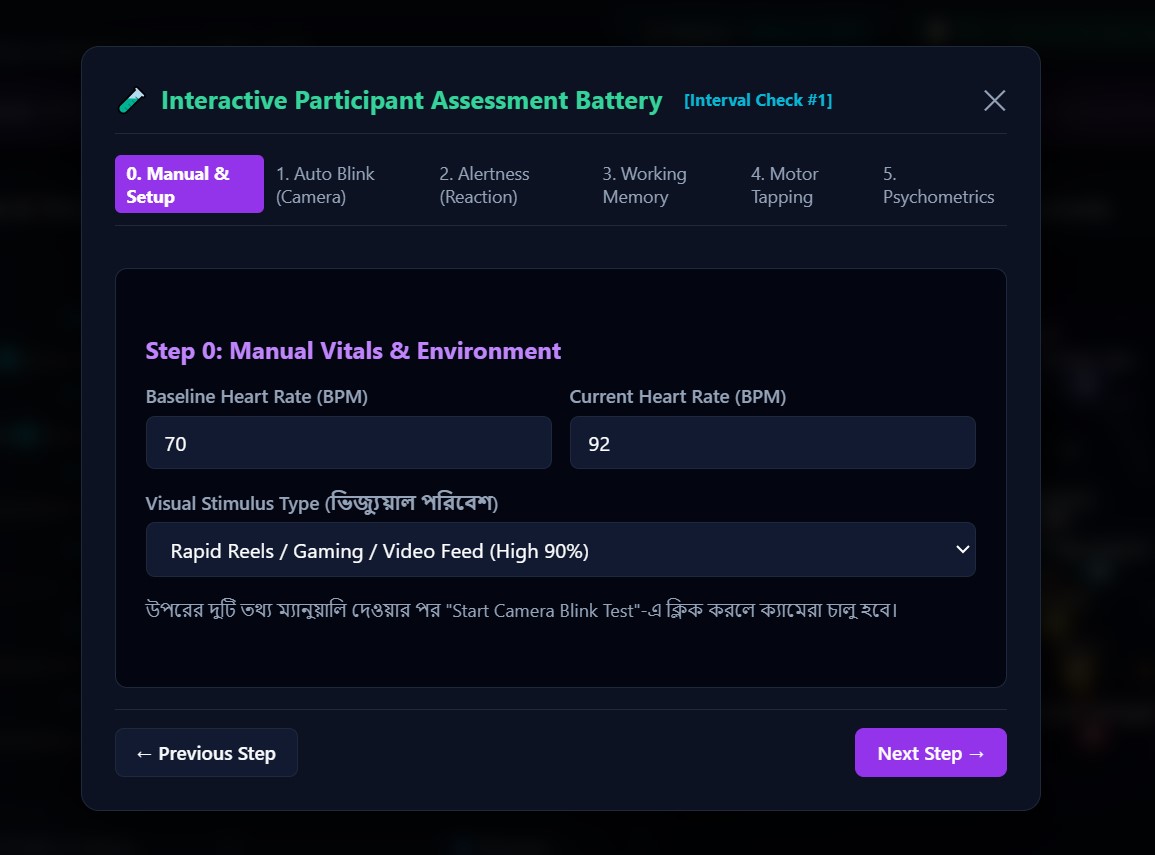
NeuroLab aims to bring neuroscience research data into an interactive environment where users can explore different scenarios, examine relevant biological markers, and observe patterns supported by scientific evidence.
For example, a user could investigate how chronic stress is associated with cortisol regulation, how sleep deprivation affects attention and cognitive performance, or how nutrition may relate to neurotransmitter systems. The platform would use existing scientific datasets and published research to explain these relationships, including the mechanisms involved, the strength of available evidence, and the limitations of current knowledge.
Rather than treating the brain as a black box, NeuroLab aims to help users explore the connections between external experiences, biological processes, and cognitive outcomes.
What We Aim to Learn
Developing NeuroLab offers an opportunity to connect neuroscience, psychology, data science, and computational experimentation. We aim to learn how to organize scientific data, identify meaningful patterns, communicate biological mechanisms, and distinguish evidence-based associations from causal relationships.
One important challenge is that hormonal and neurological responses are complex. The same experience can affect different people differently, and a correlation in a dataset does not necessarily establish causation. NeuroLab will therefore prioritize scientific accuracy, transparent data sources, and clear explanations of uncertainty.
Challenges and Future Vision
One of our main challenges is integrating data from different studies, which may use different measurement methods, populations, and experimental conditions. Another is representing complex biological processes without oversimplifying them or implying that a single hormone explains a person's behavior.
Our goal is to develop a prototype that makes these relationships easier to investigate and understand. In the future, NeuroLab could support neuroscience education, research exploration, and hypothesis generation by allowing users to ask questions, explore evidence, and investigate how biological systems interact.
NeuroLab is built around one central idea: understanding the brain becomes more powerful when scientific data can be explored, questioned, and tested.


Log in or sign up for Devpost to join the conversation.