-
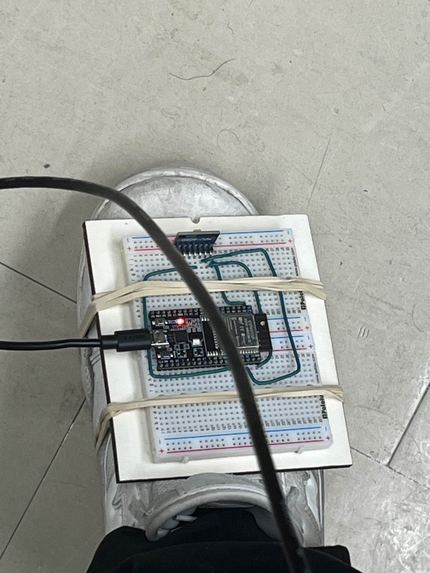
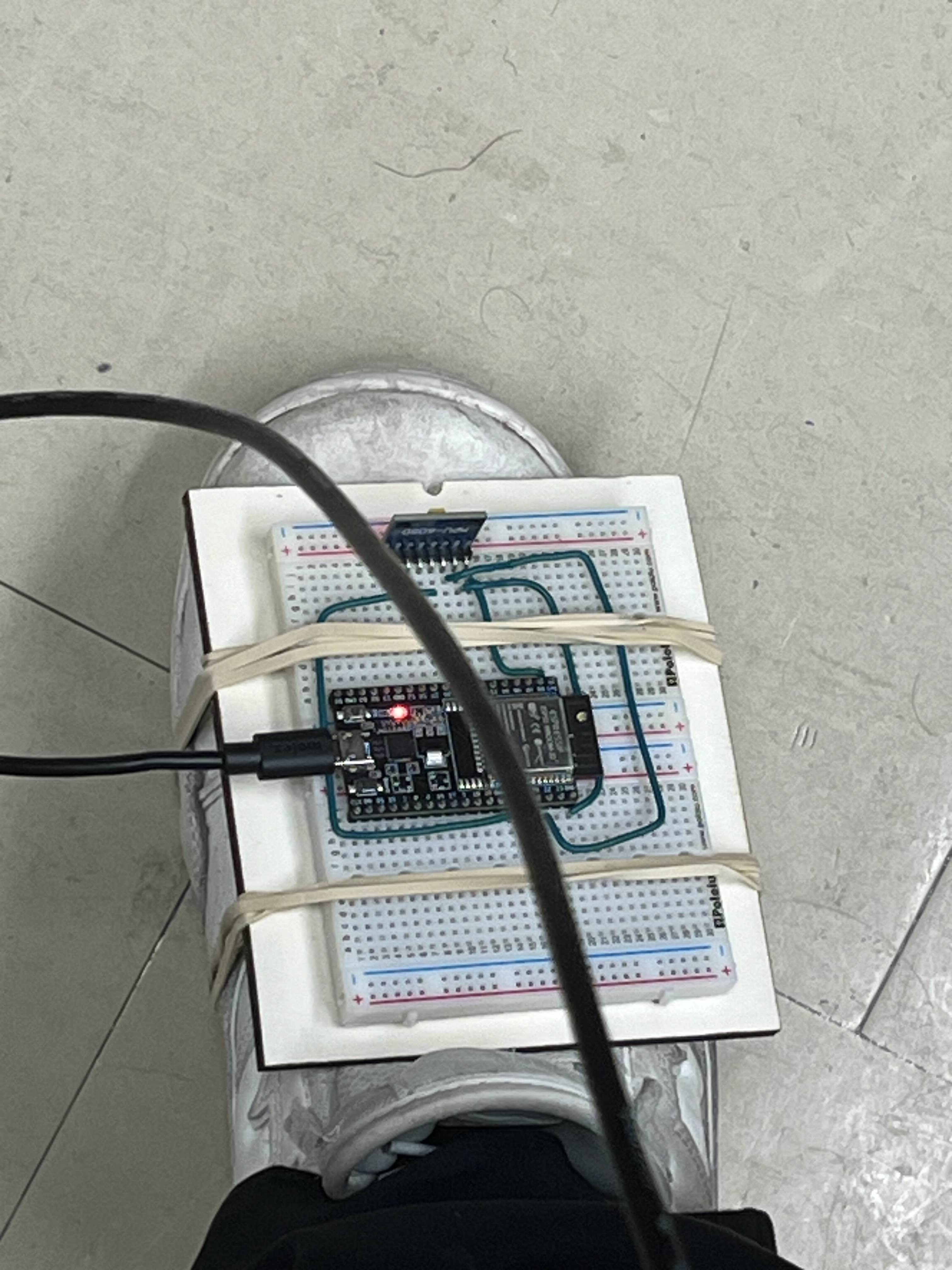
System connected on user with microcontroller power being supplied.
-
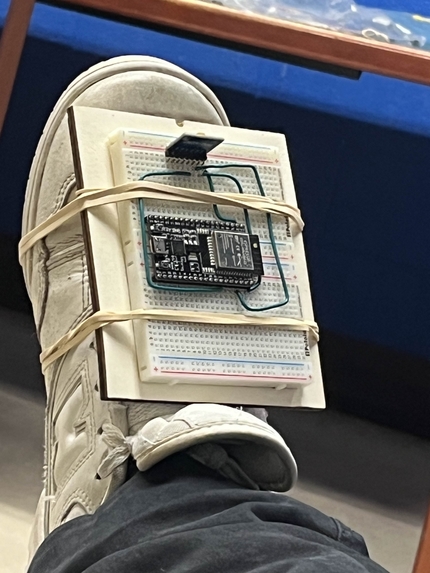
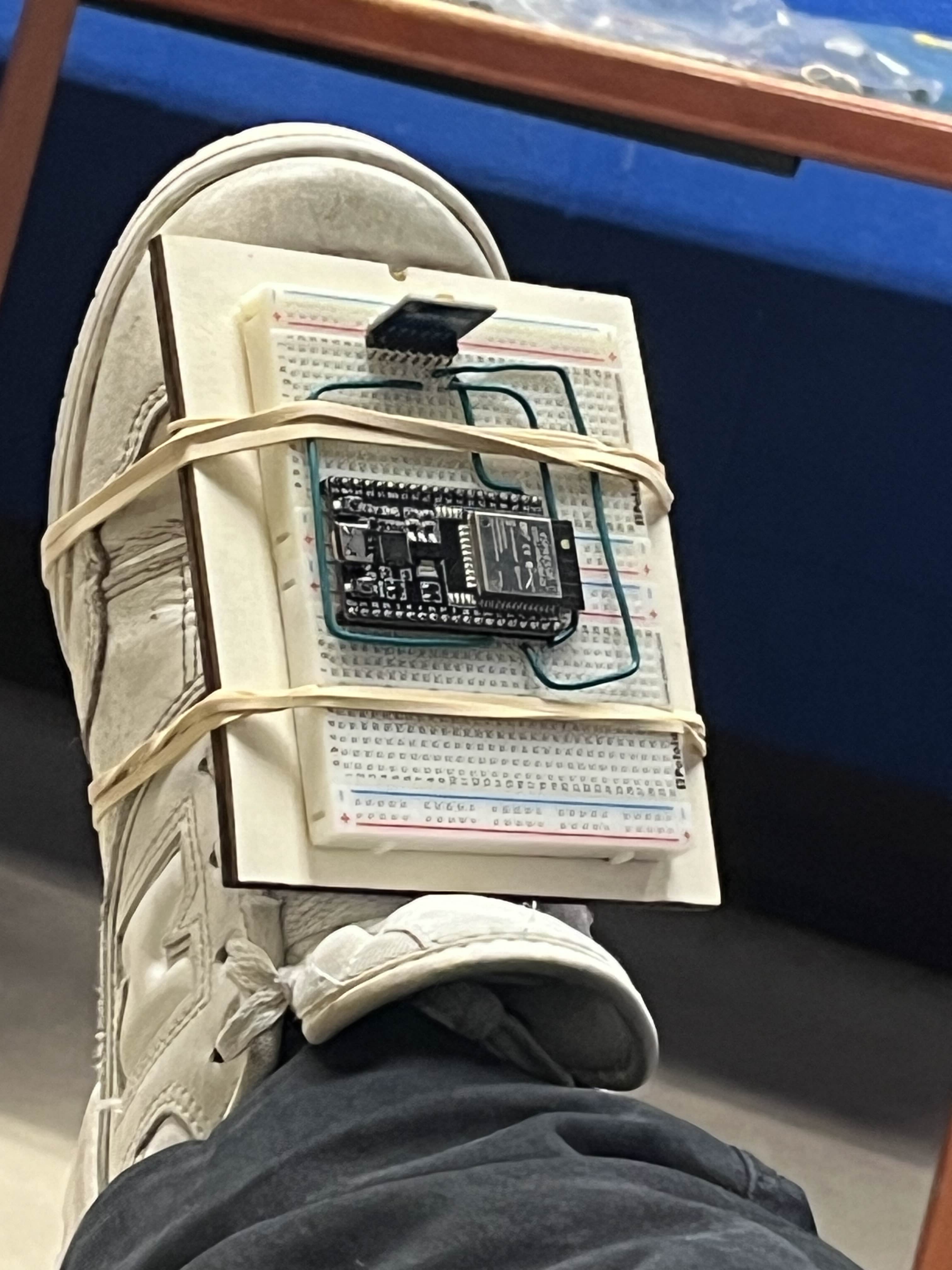
Close-up of system braced onto the user's shoe (for demonstration purposes).
Inspiration
One of our team member's grandparents recently started to experience cognitive degeneration. If the problem had been caught in its earlier stages, there would've been a higher likelihood of effective treatment. While discussing this, we recalled that there have been many studies on how certain walking characteristics can help predict certain cognitive degeneration, such as Alzheimer's and Parkinson's. This was the foundation of our inspiration to detect walking patterns and characteristics of the elderly. We knew that smart insoles already existed, but they are being implemented almost entirely for high-level athletes. Seeing this, we made a goal to produce a smart insole specifically designed for use by the elderly, so that what happened to our friend can be prevented from happening again.
What it does
Gait analysis revolves around quantifiable measures of important characteristics, commonly referred to as gait parameters. Gait parameters allow us to quickly interpret and translate the overall gait data into meaningful and relevant information. Some of the most commonly investigated parameters include cadence, gait speed, stride length, and stride time. These common parameters provide us with key information of one’s gait cycle. Moreover, complex parameters build upon the common parameters and serve to provide more specific data. Discrepancies in the values of certain parameters can potentially indicate clinical concerns. A regularly investigated complex parameter is gait variability, the irregularity in stride times throughout multiple repetitions of the gait cycle. A high gait variability has been correlated with cognitive dysfunction and has been shown to discriminate Alzheimer’s disease from other age-related neurodegenerative disorders. Evidently, certain gait parameters serve to hold clinical relevance, which has been discovered and reinforced over the years.
How we built it
We utilized microcontrollers (ESP32), accelerometers, and gyroscopes to collect precise positional data on the user's walking characteristics. The parameters we collected were Stride Duration (time between consecutive heel-strikes), Stance Duration (time between heel-strike and toe-off of the same stride), Swing Duration (Stride Times minus Stance Times), Number of Strides (total duration divided by average Stride Duration), and Cadence (number of strides divided by times in minutes). Using these parameters, we calculated more complex characteristics such as Gait Variability (calculate average standard deviation of both feet -> calculating coefficient of variation for both feet -> calculate average coefficient of variation), Gait Asymmetry, and Activity Detection. The parameters were sent through Bluetooth to an external computer which did the calculations and stored them in a database. Using the database, we were able to collect baseline data profiles for individual users. Further expanding on this feature, we were able to create unique flags if the user deviated too far off their average values for too long. This allowed us to create a personalized data profile for users. The concept of the system is to send this precise and tailored data to an assigned medical professional. This will allow medical professionals to study the data and better predict cognitive degeneration at earlier stages, hopefully aiding in more effective treatment.
Challenges we ran into
We ran into issues with interfacing with Bluetooth. Initially, the connection was unstable and not effective. However, by studying the ESP32 datasheet and tweaking our code, we were able to resolve the issue. Another issue we ran into related to the storage and processing of our data. We had a large amount of raw data collected from the accelerometer and gyroscope, but processing and storing this data to be effectively used required a lot of time and effort. However, in the end, we were successful in our endeavours and created a functional final project.
Accomplishments that we're proud of
We are proud that we were able to produce a functional final product which aligned with our initial goal. We had set our sights high for this project and there were many times we were in doubt about its completion. However, through all of our team members' experience, hard work, and resilience, we were able to make everything work in the end.
What we learned
We learned a great deal about electronic components and data processing as a direct result of this project. Learning how to interface with Bluetooth was a challenging but rewarding experience. Data processing took many hours, but the programming skills obtained from completing the task were truly invaluable.
What's next for Neuro-Gait
Our next steps are to make the complete system smaller and fit within the insole of the user's shoes. This will enhance our idea for non-invasive wearable technology. We would also like to incorporate FSRs (Force Sensing Resistor) to capture another dimension of the user's walking characteristics and further aid medical professionals' diagnoses.

Log in or sign up for Devpost to join the conversation.