-
-
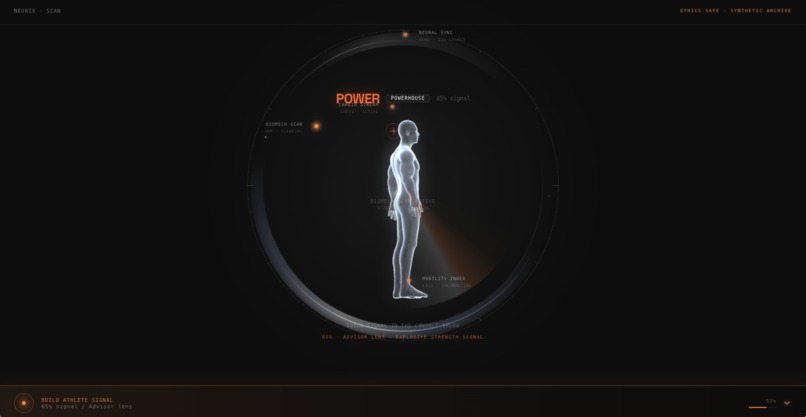
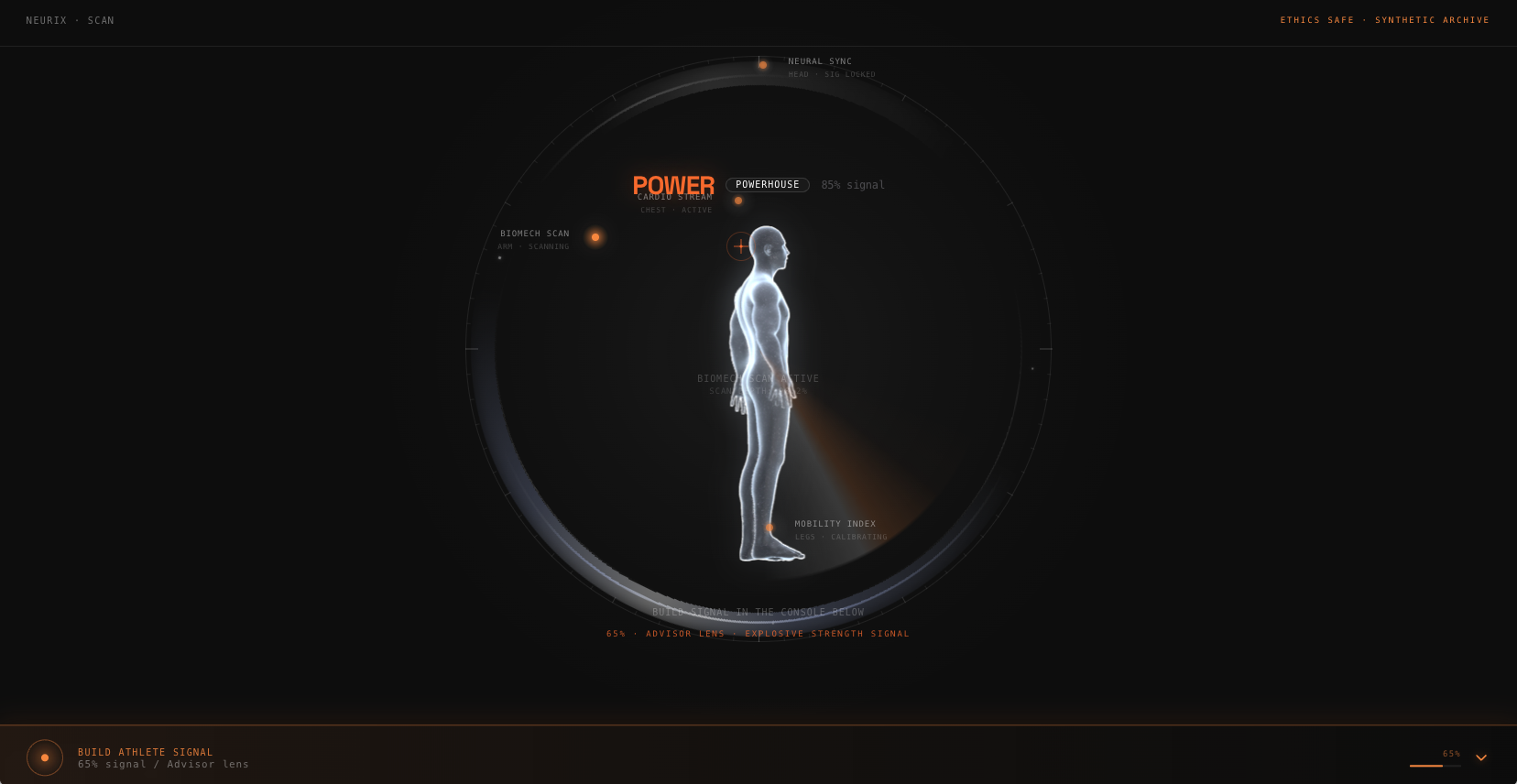
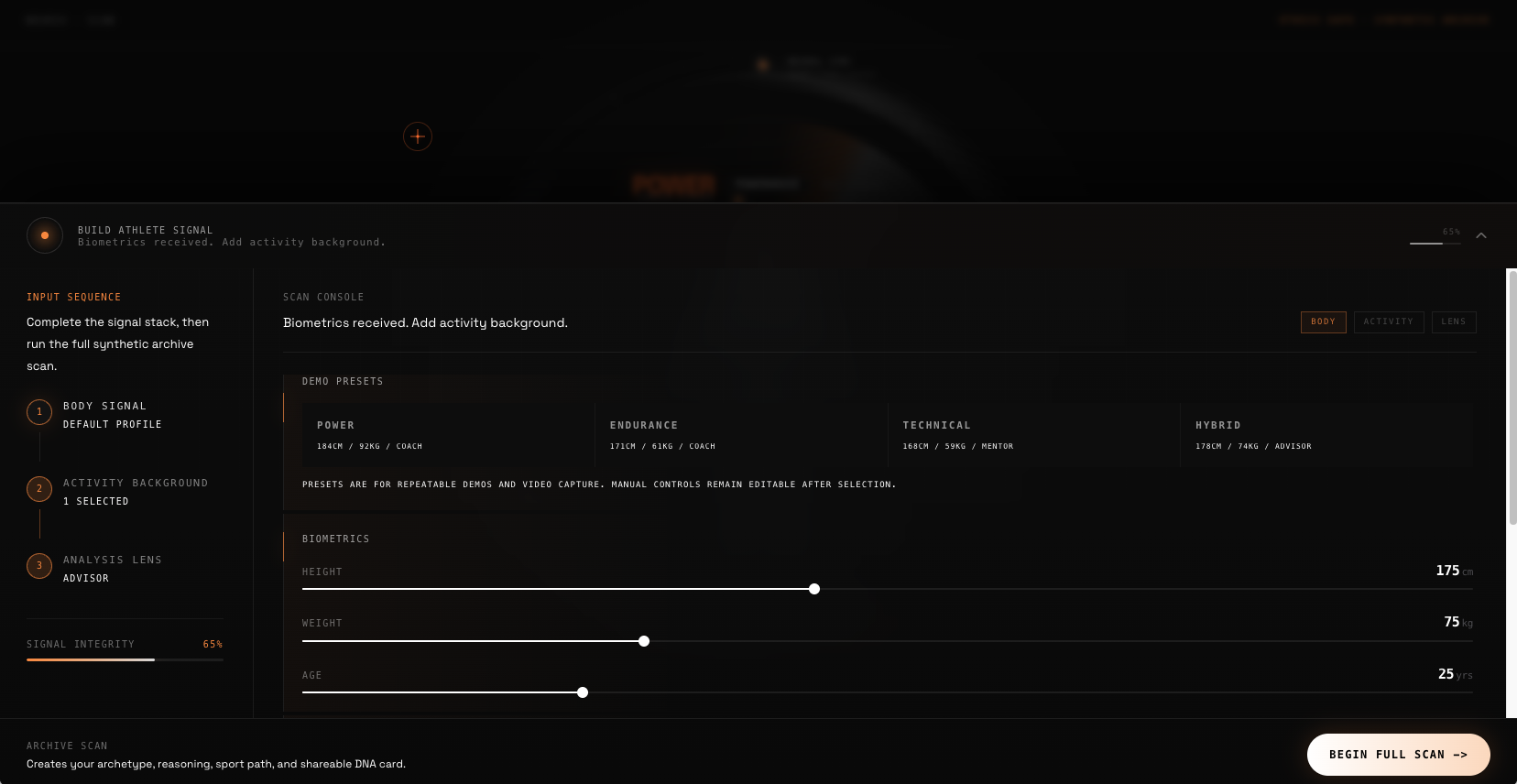
Scan Console
-
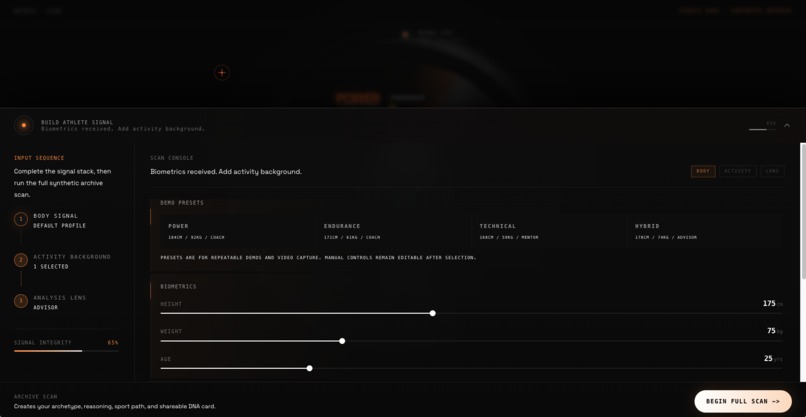
Scan Details
-
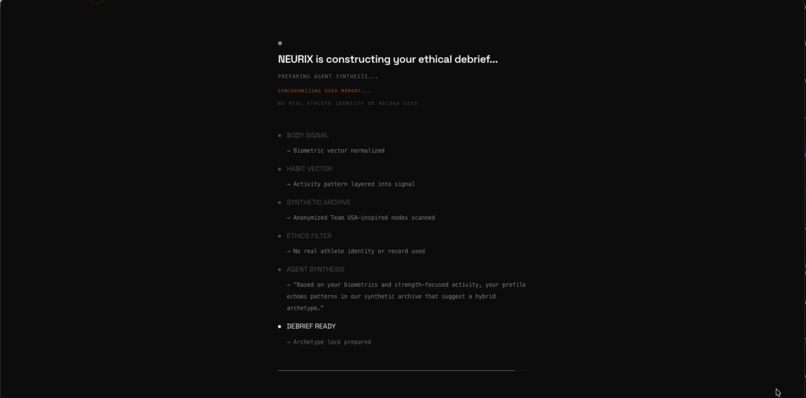
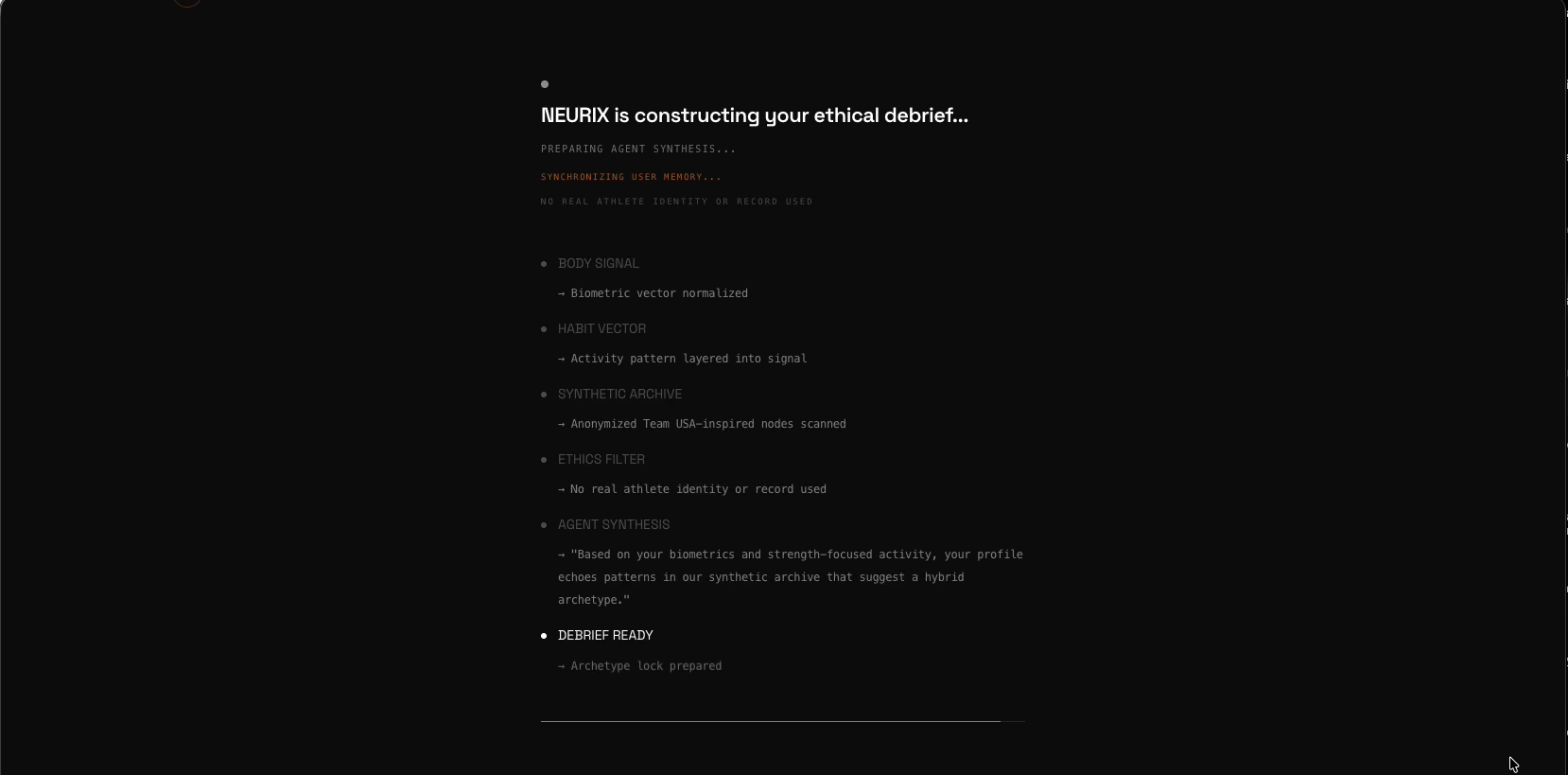
thinking pipeline
-
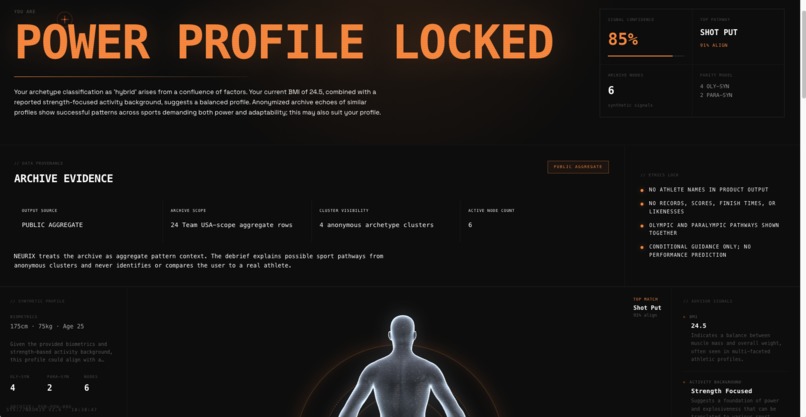
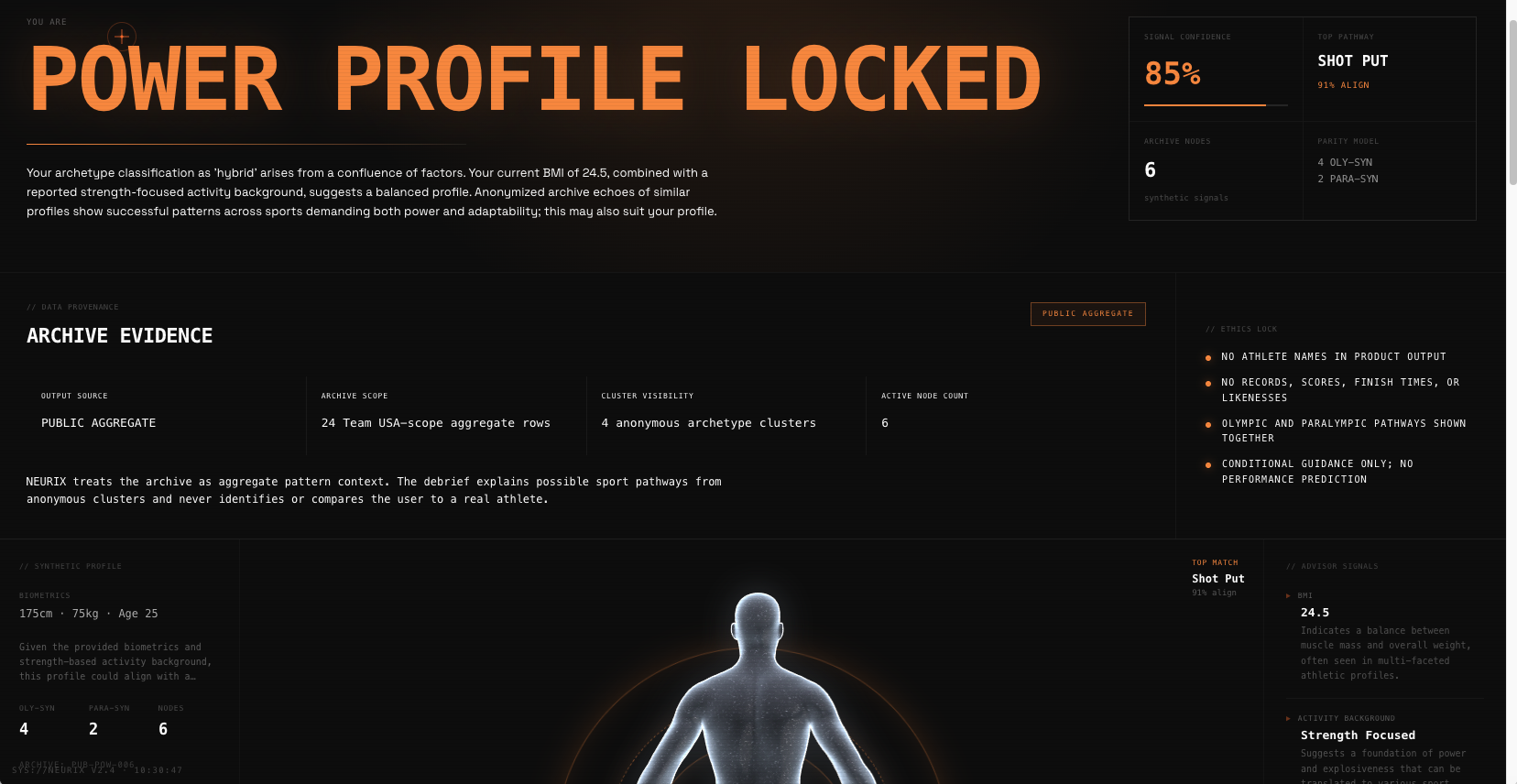
Results Hero
-
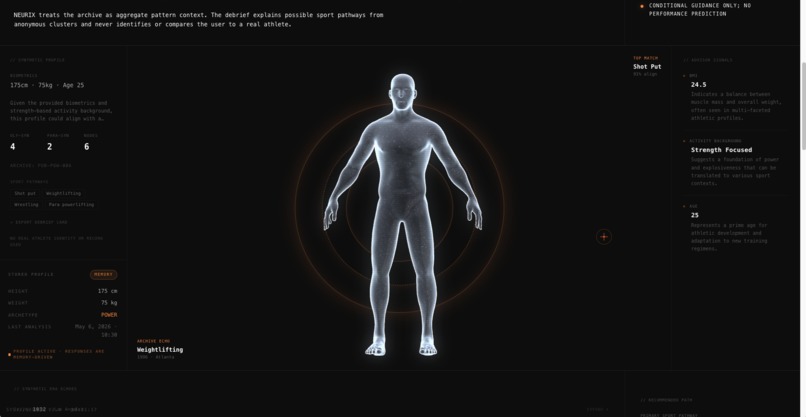
Provenance Panel
-
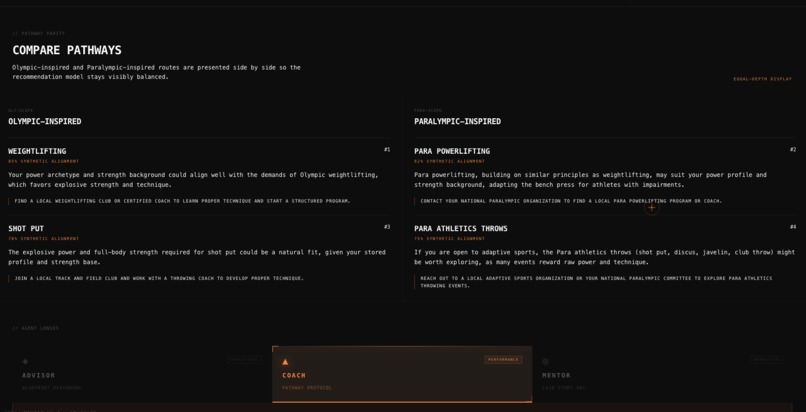
Pathway Comparison
-
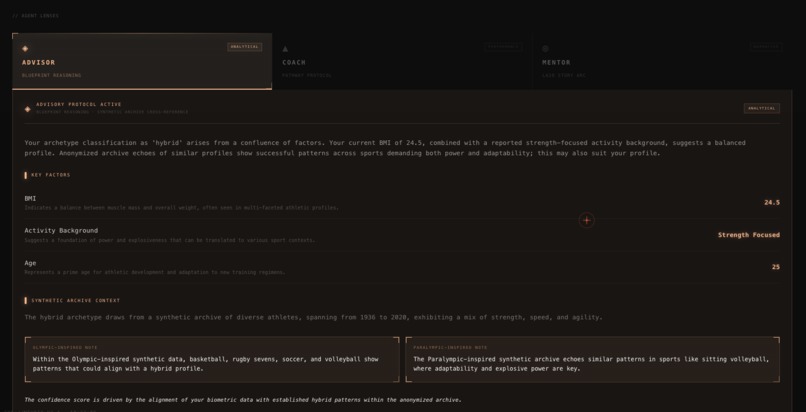
Advisor Mode
-
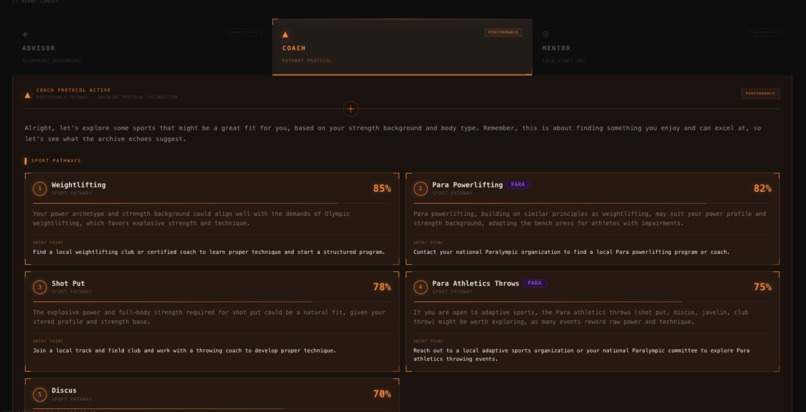
Coach Mode
NEURIX
Inspiration
Team USA history is rich with human stories, but most fans experience it from a distance: medals, records, and highlights.
NEURIX was built around a simple question:
“Where could my body and habits belong in the broader story of sport?”
Instead of matching users to real athletes, NEURIX uses anonymous, synthetic archetype patterns inspired by Team USA-style data. It allows users to explore possible sport identities in a way that is ethical, inclusive, and privacy-safe.
What it does
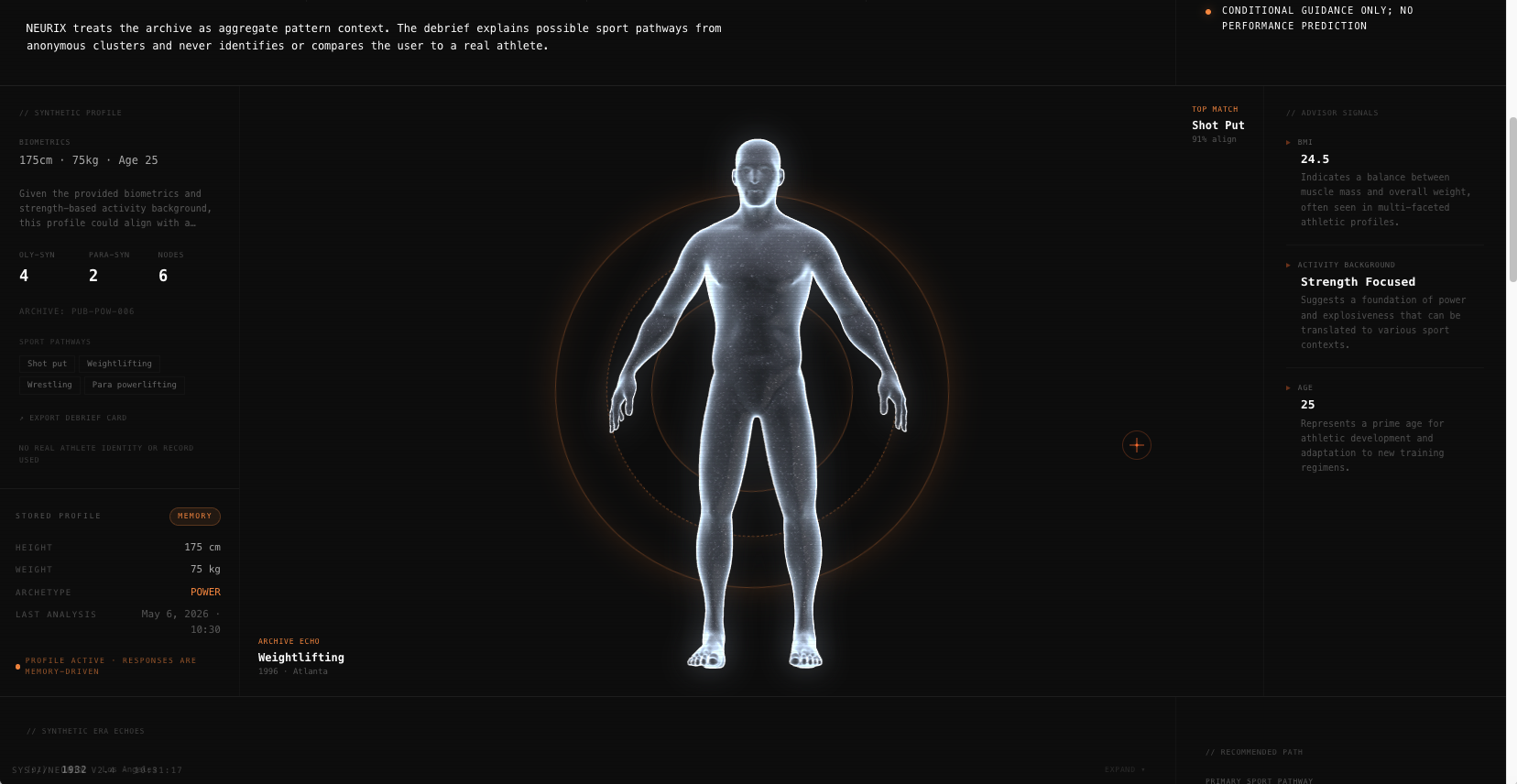
NEURIX is an AI-powered athlete archetype system.
Users input:
- Height, weight, and age
- Activity background
- Optional voice or visual signals
NEURIX analyzes these inputs and generates a personalized athlete debrief, including:
- Archetype classification
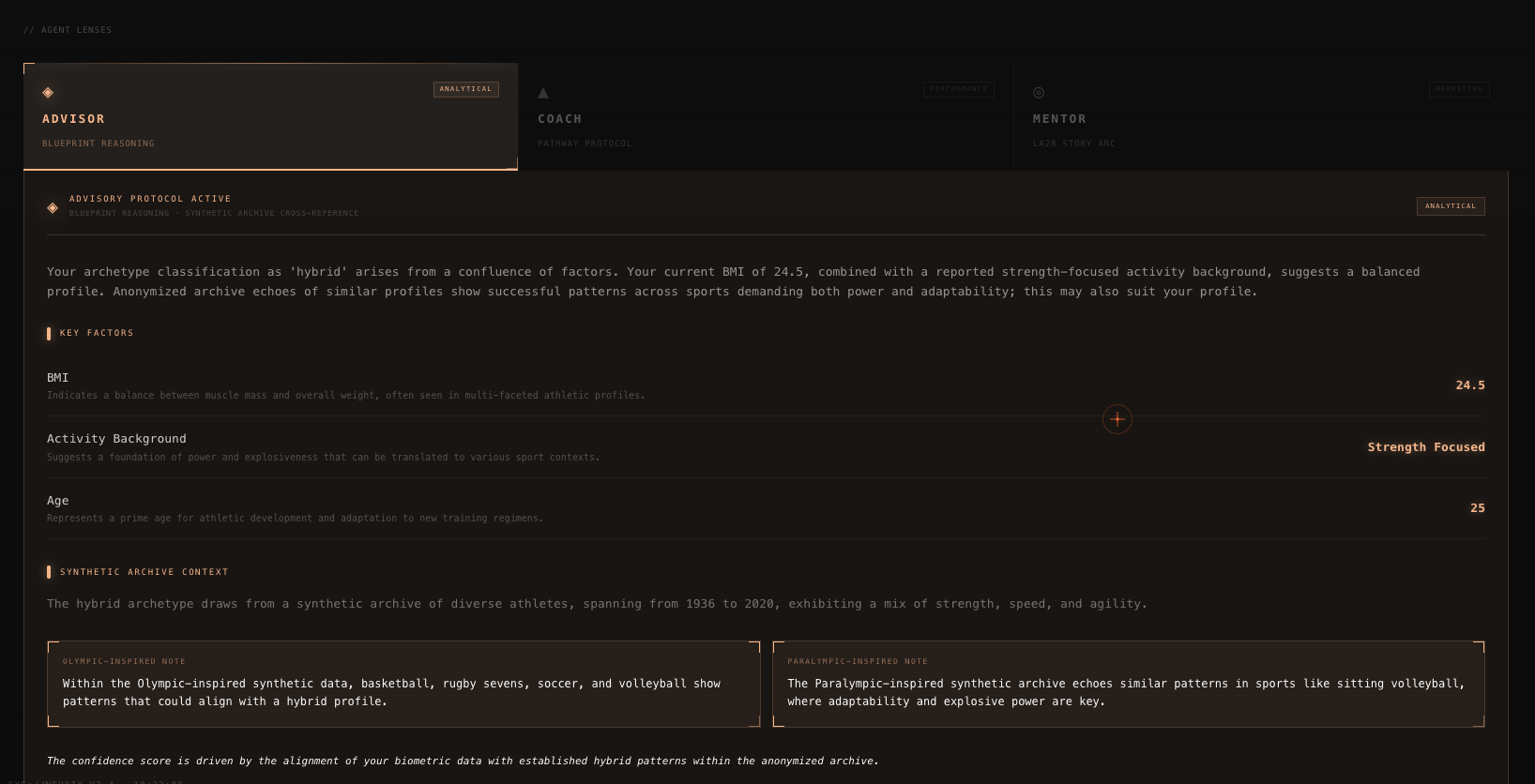
- Signal confidence and key factors
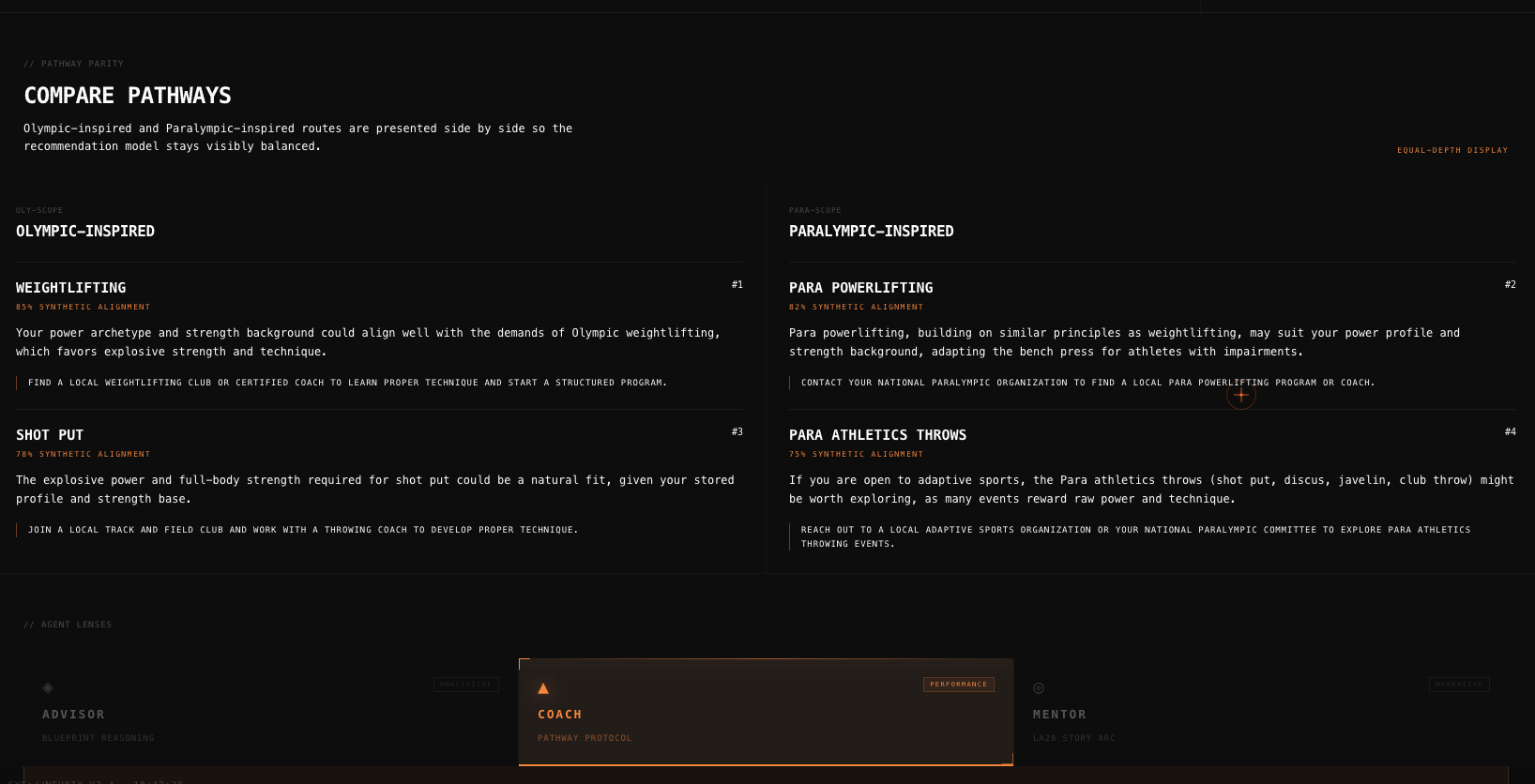
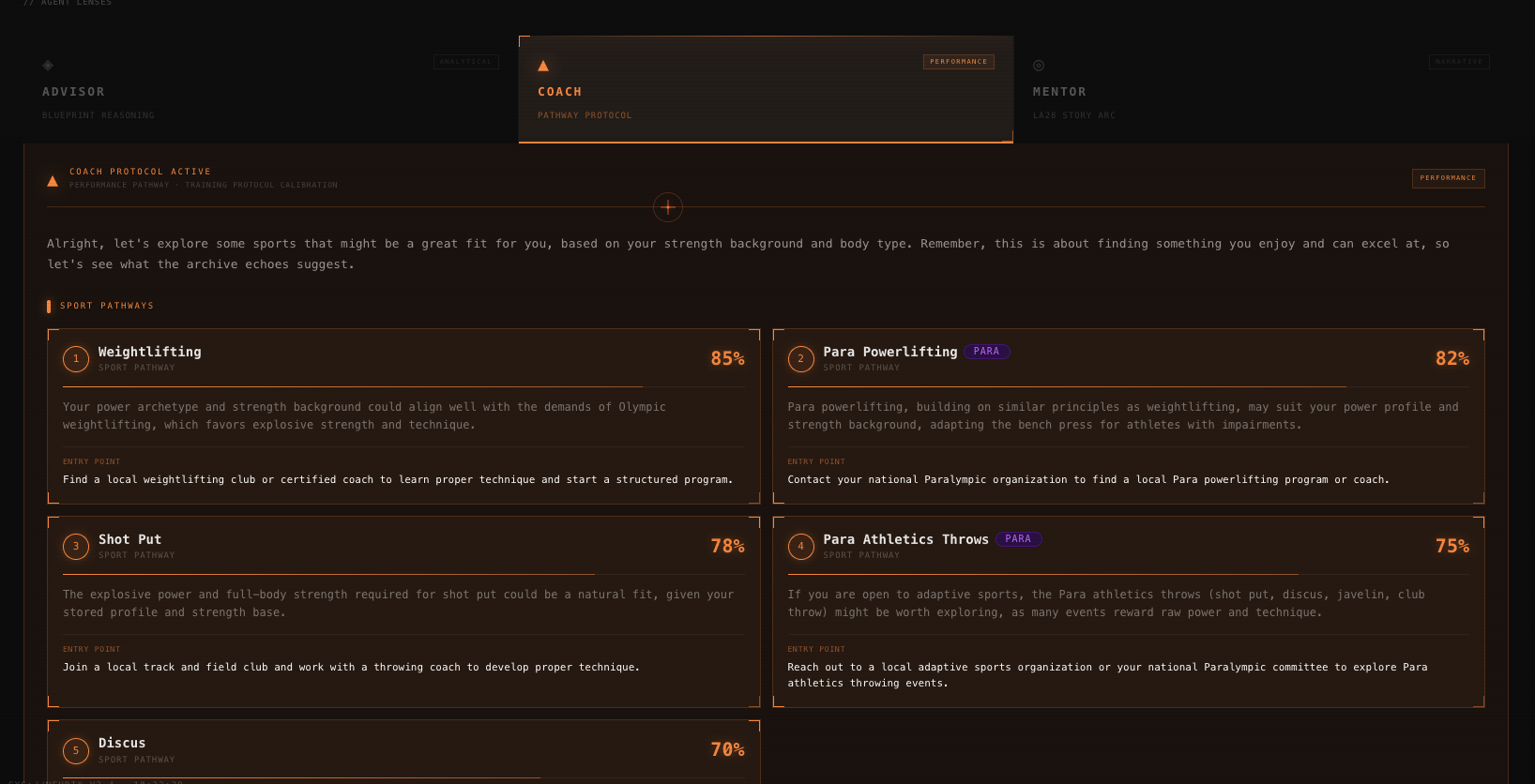
- Sport pathway recommendations
- Olympic and Paralympic comparisons
- Advisor, Coach, and Mentor perspectives
- Synthetic “archive echoes”
- A shareable DNA profile card
NEURIX does not identify real athletes, use athlete likenesses, or predict outcomes.
It is designed as a fan-facing digital mirror, not a performance predictor.
How we built it
NEURIX is built with:
- Next.js 14
- React
- TypeScript
- Tailwind CSS
- Zustand for state management
The system is structured into three core layers:
1. Brain — Gemini
Gemini powers reasoning, archetype classification, and narrative generation.
2. Memory
The memory layer stores user input and analysis signals to maintain context across the experience.
3. Execution
The execution layer uses modular skills to generate archetypes, recommendations, and agent outputs.
The user experience is structured into:
- Scan input
- Real-time analysis pipeline
- Results debrief
- Shareable profile output
The backend uses Next.js API routes to handle:
- Biometric signal processing
- Voice parsing
- Agent mode generation
- Streaming analysis states
We also built an anonymous archive pipeline that transforms public Team USA-style datasets into synthetic archetype clusters. Fallback data ensures the demo remains stable even if API calls fail.
How we used Gemini
Gemini powers the reasoning layer of NEURIX.
We use Gemini to:
- Explain archetype alignment
- Generate Advisor, Coach, and Mentor outputs
- Parse voice input into structured signals
- Produce reflective, human-centered narratives
- Maintain Olympic and Paralympic parity
We implemented strict prompt contracts to ensure:
- Conditional language with no guarantees
- No real athlete identification
- Ethical and privacy-safe outputs
- Inclusive Olympic and Paralympic framing
Google Cloud usage
NEURIX is deployed on Google Cloud Run using a containerized Next.js setup.
Our Google Cloud usage includes:
- Cloud Run for hosting the live application
- Containerized deployment for scalability
- Backend API routes for secure Gemini API calls
- Environment variables and Cloud secrets for API key management
This enables a scalable, production-ready architecture for a live fan-facing system.
Challenges
The main challenge was balancing engagement with responsibility.
We designed NEURIX to:
- Avoid sensitive or misleading claims
- Maintain ethical boundaries around identity
- Prevent real athlete matching or likeness usage
- Ensure stable outputs for a live demo
We also prioritized Paralympic parity, integrating it directly into prompts, data structures, and UI instead of treating it as an afterthought.
Accomplishments that we're proud of
We are proud that NEURIX feels personal, cinematic, and interactive while still maintaining strong ethical boundaries.
Some accomplishments we are especially proud of include:
- Building a complete AI-powered athlete archetype experience from input to shareable output
- Creating a three-layer system with Brain, Memory, and Execution components
- Using Gemini to generate thoughtful Advisor, Coach, and Mentor perspectives
- Designing the experience around synthetic archetypes instead of real athlete matching
- Including Olympic and Paralympic pathways as part of the core experience
- Building a shareable DNA profile card to make the result feel visual and memorable
- Deploying the project with a scalable Google Cloud Run architecture
Most importantly, NEURIX demonstrates how AI can make sports history feel personal without exploiting real athlete identity, likeness, or private data.
What we learned
Building NEURIX taught us that the most important part of an AI experience is not only what the model can generate, but how responsibly the system is designed.
We learned how to balance personalization with ethical boundaries. It was easy to imagine an exciting system that compares users to famous athletes, but that direction could create privacy, NIL, and identity concerns. Instead, we learned to design with anonymous, synthetic archetype patterns so the experience could still feel meaningful without claiming to identify or predict a real person.
We also learned that prompt design is product design. The Gemini prompts needed to do more than generate nice text. They had to follow strict rules:
- Use conditional language
- Avoid guarantees
- Avoid real athlete identification
- Maintain Olympic and Paralympic parity
Another major lesson was the importance of fallback systems. For a live demo, the experience needs to remain stable even if an API call fails. Building fallback data and synthetic archive echoes helped us make NEURIX feel more reliable and demo-ready.
Finally, we learned that AI can be more powerful when it acts as a reflective mirror instead of an authority. NEURIX is not trying to tell users who they are. It helps them explore where their body, habits, and interests might connect to the wider story of sport.
What's next
Next steps include:
- Expanding the anonymous data archive
- Improving testing and deployment workflows
- Enhancing the demo experience
- Refining the archetype scoring and confidence system
- Improving the shareable DNA profile card
- Adding clearer data provenance and ethics explanations
- Making the real-time analysis pipeline more visual and cinematic
Long-term, NEURIX could evolve into a broader platform for:
- Youth sport exploration
- Adaptive sport awareness
- Fan engagement leading into LA28
- Educational sport discovery
- Ethical AI-powered fan experiences
The bigger vision is to turn NEURIX into a responsible AI sport discovery system that helps people feel closer to the Olympic and Paralympic spirit while respecting privacy, identity, and real athlete boundaries.
Built With
- archetype
- biometric
- cloudrun
- docker
- gemini
- next.js
- react
- tailwind
- typescript
- voice
- zustand

Log in or sign up for Devpost to join the conversation.