-
-
Neuri -- Speak it. Start it. Stay on track. Neuri application logo.
-
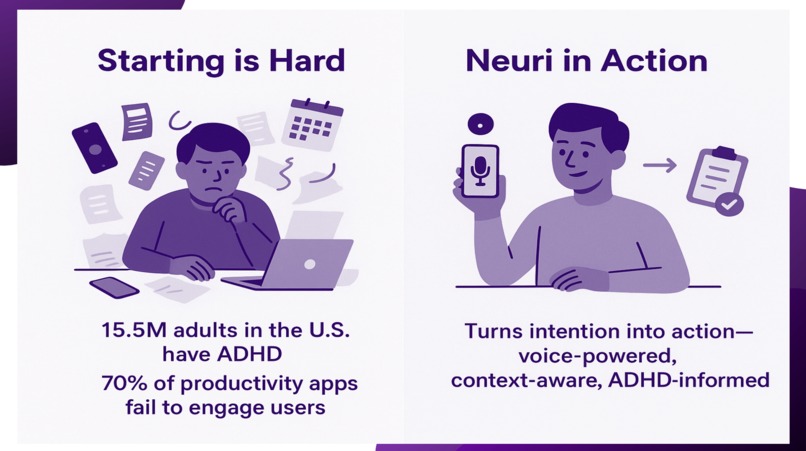
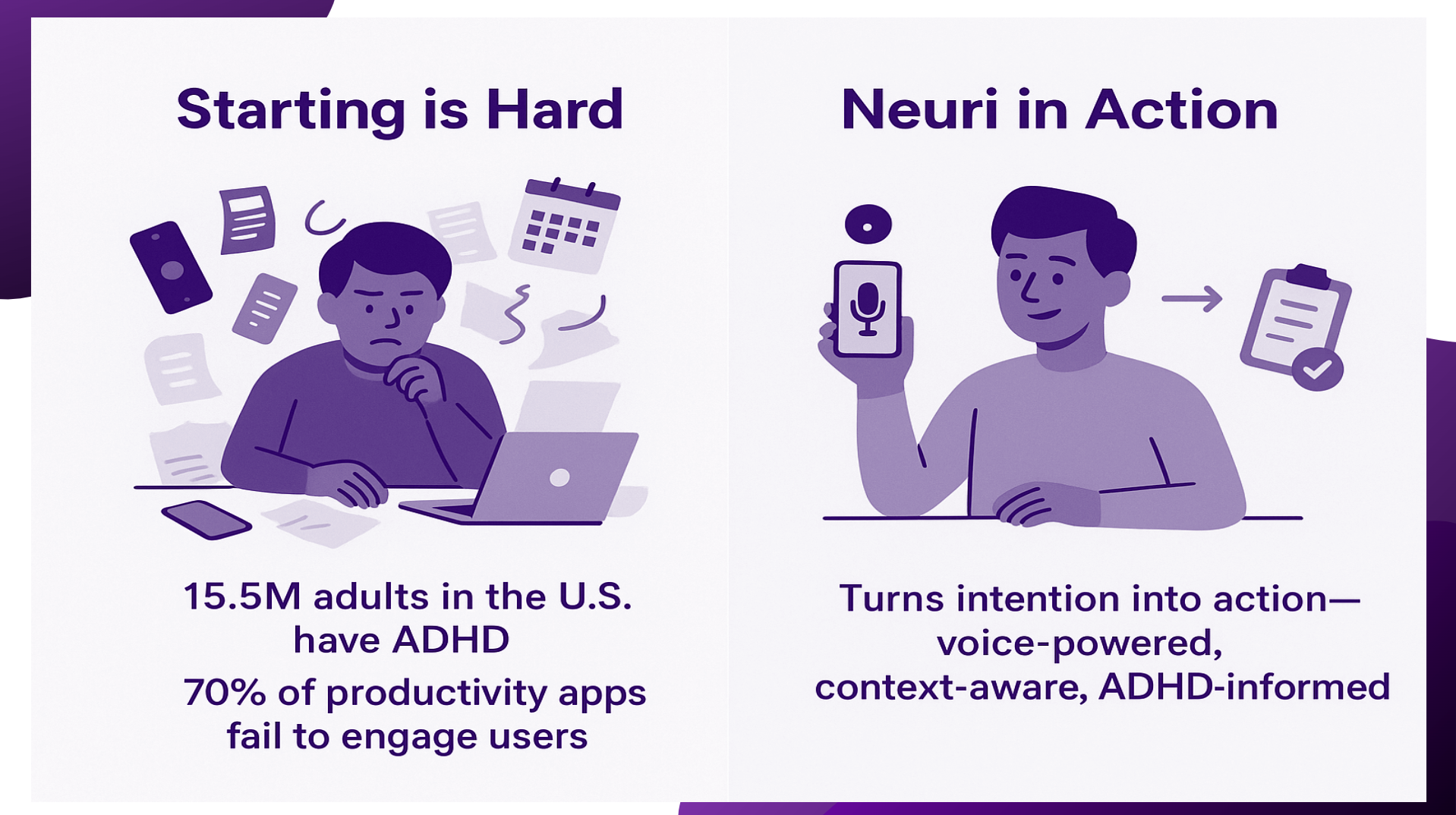
We recognize that starting tasks can feel challenging, especially in people with ADHD, so we created Neuri to address this problem.
-
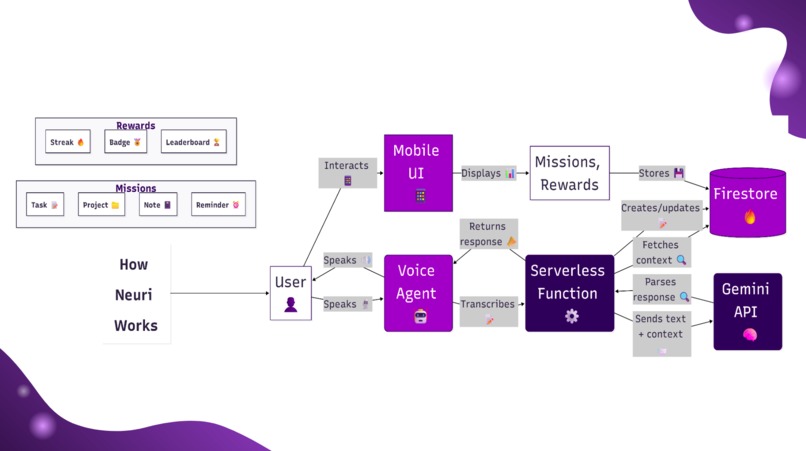
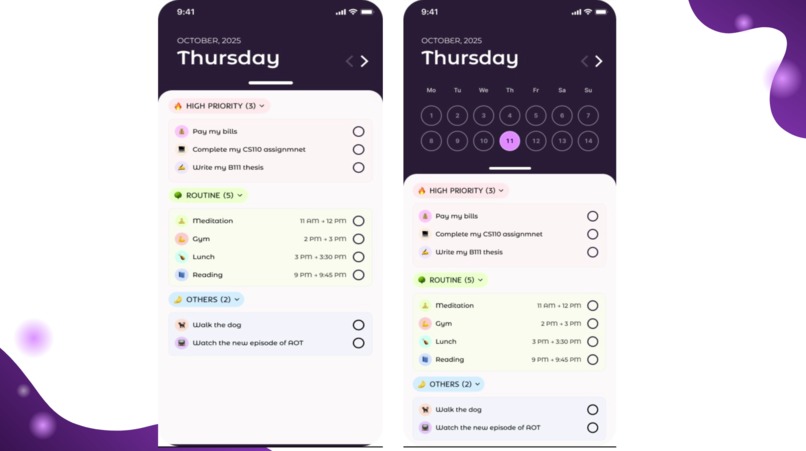
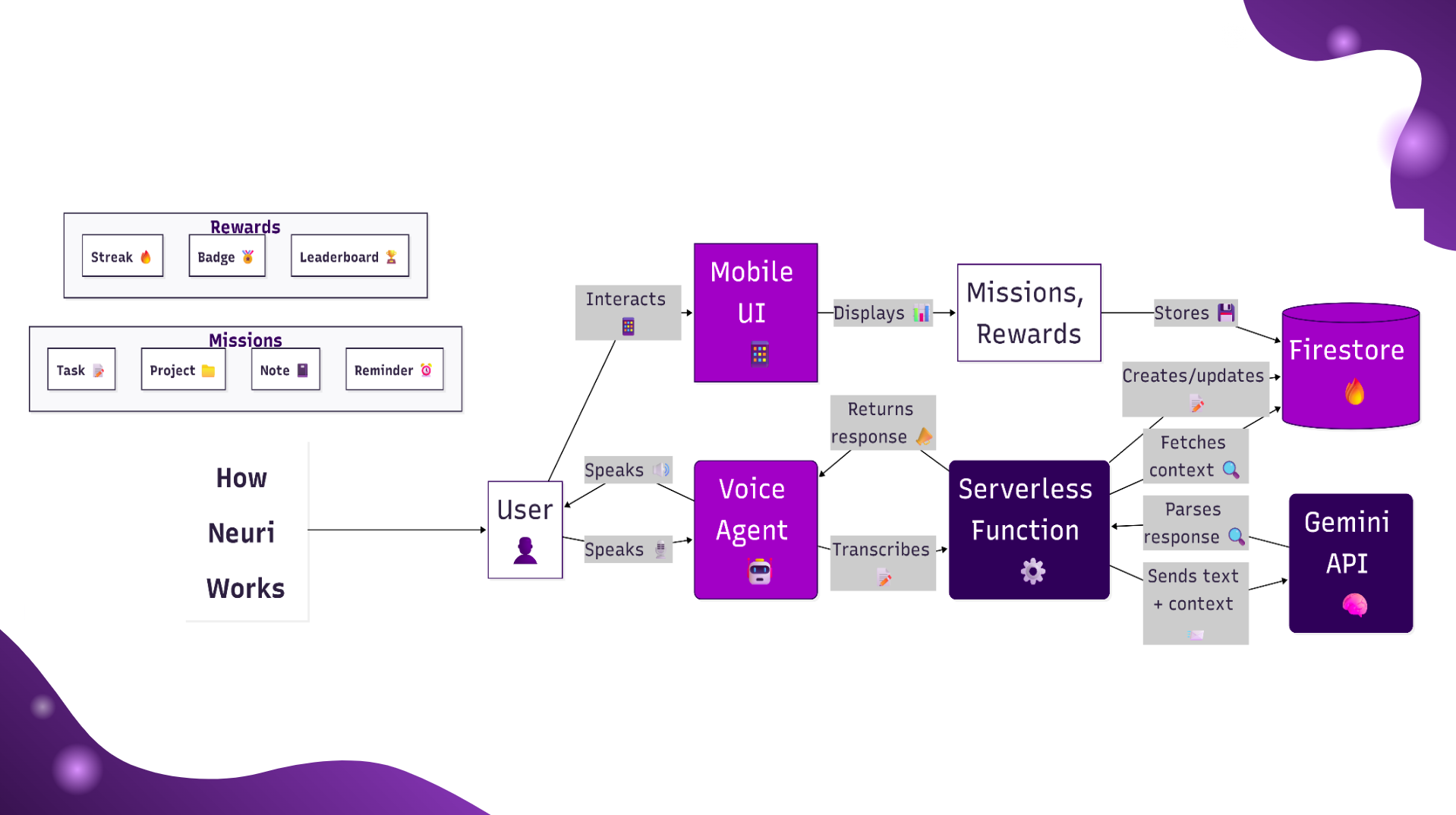
Neuri is a voice-powered task manager that turns spoken goals into structured missions and rewards through AI and Firestore integration.
-
-
https://youtu.be/4T6im0NMmkg?si=lDU0QK-GsNhR8zwh
Inspiration
For people with ADHD, starting tasks isn't about motivation—it's about executive dysfunction, a neurological barrier that makes "just starting" feel impossible. Members of our team with ADHD experience this daily:
- Spending 45 minutes trying to start a 10-minute assignment
- Juggling five different productivity apps that each demand executive function
- Losing thoughts while switching between calendar, notes, and to-do lists
- Getting overwhelmed by setup tasks before even reaching actual work Current productivity tools make this worse—they require typing, organizing, and decision-making, adding cognitive load to already overwhelmed brains.
Neuri takes a radically different approach: speak your thoughts, and everything else happens automatically. Studies show that voice-based interfaces can reduce cognitive load by up to 40% for neurodiverse users. Voice input captures tasks instantly before working memory fails. AI parsing eliminates decision-making. Automatic organization removes the planning burden. Over 15.5 million U.S. adults (6.0% of the population) and 7.1 million children and adolescents (11.4% of youth) have been diagnosed with ADHD. Neuri is specifically designed to remove this neurological barrier for this massive user base, but its frictionless, voice-first system helps anyone who struggles to start and stay organized. Because starting shouldn't be the hardest part of doing.
Why Now?
The world is facing an executive function crisis—and the tools meant to help are part of the problem. For 1 in 7 college students with ADHD, productivity platforms become another layer of friction instead of relief, contributing to missed deadlines, burnout, and academic setbacks that ripple into adulthood.
But this challenge doesn’t fade with age—it scales. The same cognitive overload that stalls a student’s progress becomes corporate burnout for employees. U.S. companies lose an estimated $4,000–$21,000 per worker annually to the hidden costs of executive dysfunction.
Until recently, technology couldn’t meet this need. Interfaces still depended on typing, tapping, and decision-making—the very processes impaired by ADHD and executive dysfunction. But with the rise of voice-first large language models, for the first time, we can remove—not just reframe—the neurological barrier to getting started.
The time for Neuri is now: the science is clear, the technology is ready, and the need has never been greater. Neuri’s intuitive, voice-first design scales to everyone--positioning it for global adoption in the rapidly expanding productivity-tech market and targeting a growing, multibillion-dollar market for cognitive productivity and digital wellness.
What it does
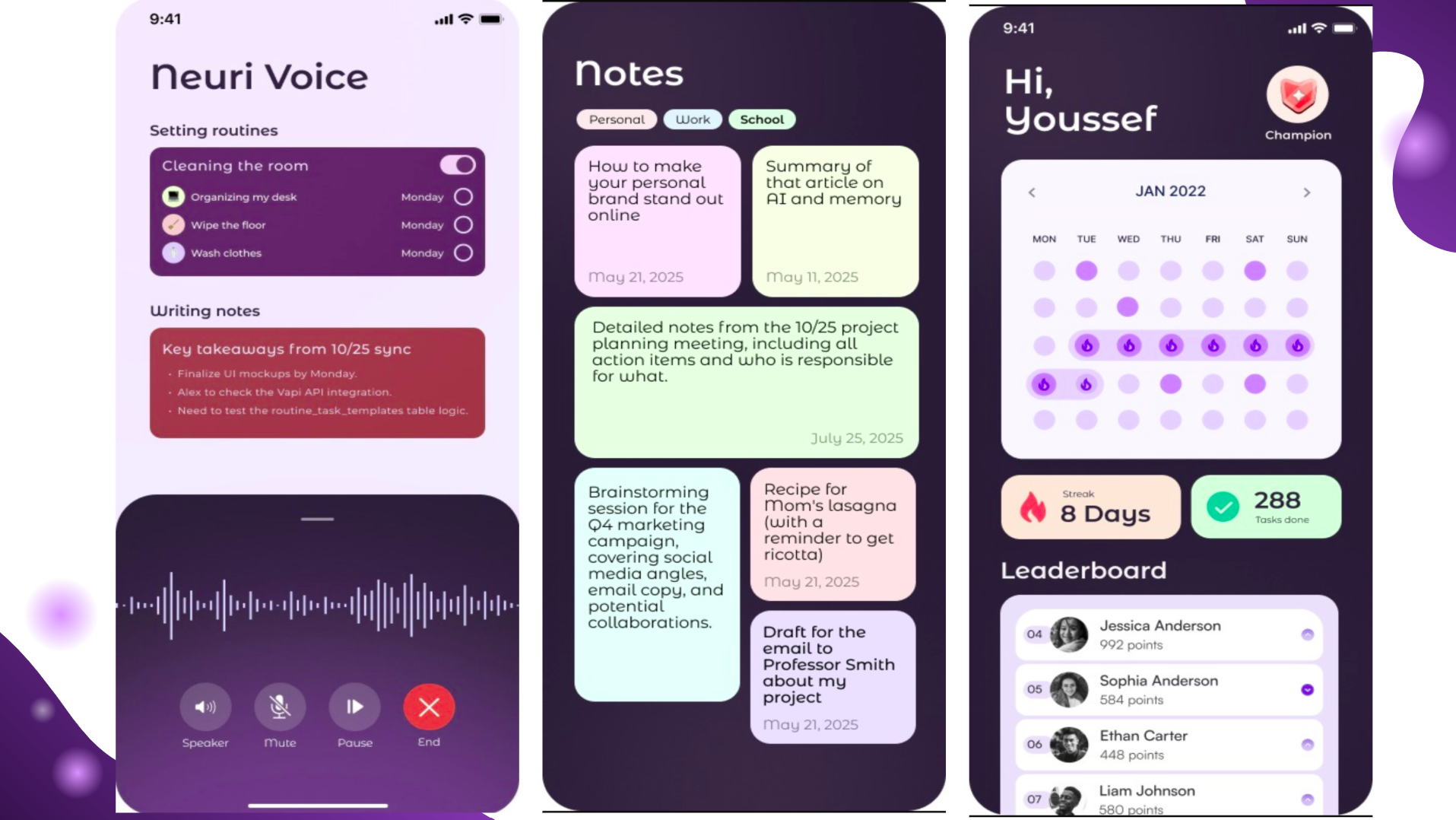
Introducing Neuri: Your Voice-Powered ADHD Productivity Companion Neuri isn't just another task manager; it's a voice-first AI system that transforms scattered thoughts into organized action through an intuitive reward system. Here's what it can do:
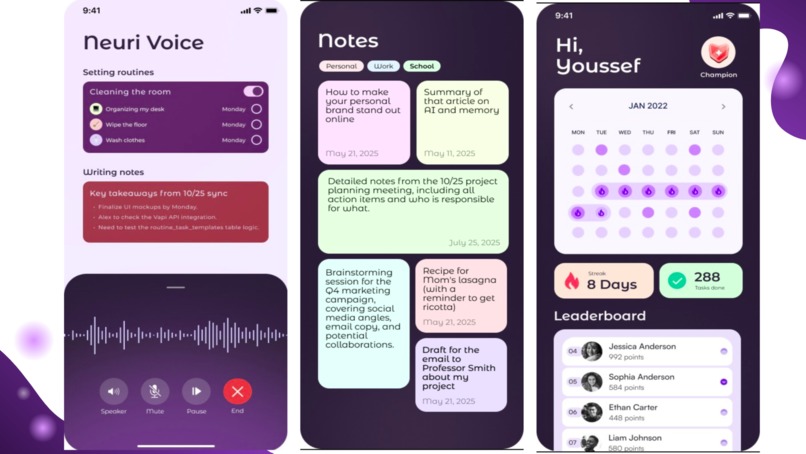
Voice Input (The Main Interaction):
- Natural Speech Recognition: Speak naturally: "I have to finish my bio lab and buy groceries" - no special commands needed
- AI Intent Parsing: Automatically detects deadlines and categories from your speech patterns and updates your dashboard instantly
- Zero Manual Entry: No typing, no scrolling through messy calendars - just speak and go
Automatic Organization:
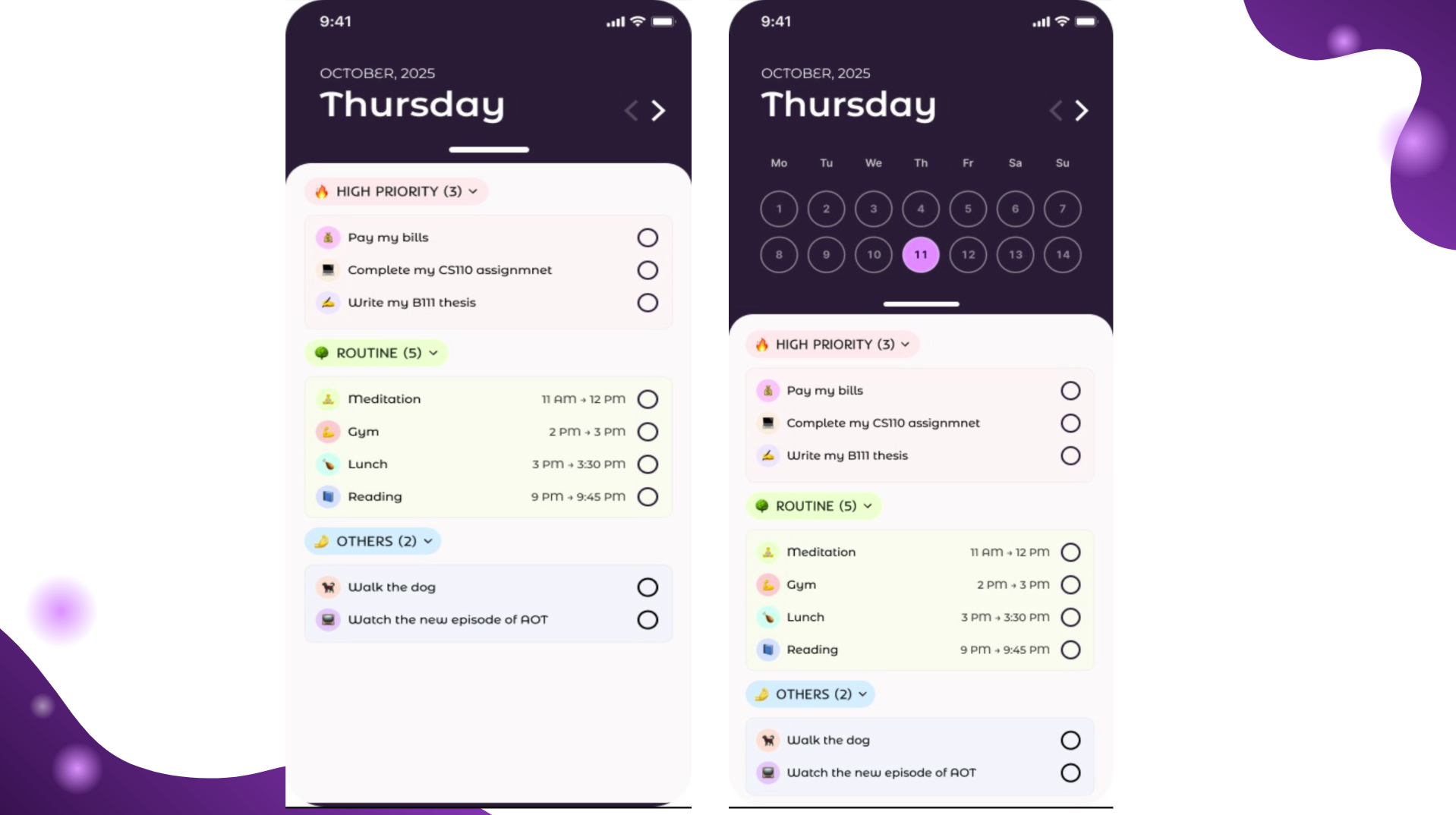
- Smart Task Linking: AI connects detected tasks to Calendar
- Intelligent Categorization: Groups tasks under school/personal/work categories and displays them clearly on your dashboard
Focus + Progress System:
- Point-Based Progress: Completed tasks earn points that feed directly into your streak, badge, and leaderboard system
Rewards (Motivation Loop):
- Streak Recognition: Completing tasks or maintaining streaks increases your streak count
- Badges: Hit milestones to unlock badges for achievements
- Leaderboard: Optional social comparison with friends to encourage light accountability without shame
Reminders + Quick Thoughts:
- Fleeting Thought Capture: Save short voice notes as "quick thoughts" - perfect for ADHD brains that jump between ideas rapidly
- AI Summarization: The AI later transforms these scattered thoughts into actionable tasks or suggestions
- Gentle Nudges: Set supportive reminders that encourage rather than nag
Why This Stands Out:
- Less Typing, Less Friction: ADHD brains speak faster than they type; voice removes the barrier
- Zero Clutter: Replaces calendars and to-do lists with a single visual reward system (streaks, badges, leaderboard)
- Built-in Dopamine: Feedback from streaks, badges, and leaderboard creates micro-rewards that sustain motivation
- Science-Aligned: Addresses task initiation, working-memory offloading, and overload reduction — the core executive-function deficits in ADHD
How we built it
We built Neuri as a React Native mobile application using Expo, focusing on voice interaction and visual feedback.
Core Technology: Voice Processing:
- Deepgram API for voice capabilities - handles transcription and processing ($200 free credits) Database Schema:
- SQLAlchemy models defining five core tables:
- Users: Stores profile information and preferences (preferred work time, pace)
- Categories: User-defined categories for organizing missions (Work, Study, Life)
- Routines: Stores routines with schedule data as JSON
- Missions: Central table handling all tasks, projects, notes, and reminders through a MissionType enum
- Rewards: Tracks gamification progress including points, streaks, badges, leaderboard position, and milestone unlocks
Core Functionality: We implemented three main feature sets:
- Routine Management: Create, edit, and delete routines
- Task Management: Add, edit, and delete normal tasks
- Reminder System: Set, edit, and delete reminders
Mission Types: The missions table uses an enum to handle four types:
- TASK
- PROJECT (can have sub-tasks via parent_project_id)
- NOTE
- REMINDER
Gamification System: The rewards table tracks:
- Points (spendable currency)
- Current streak
- Badges earned
- Leaderboard position
- Milestone unlocks stored as JSON list
Challenges we ran into
One of our biggest challenges was figuring out how to build an app that people with ADHD would actually use—and keep using. Early on, we asked ourselves tough questions:
- How do we retain users when ADHD itself makes consistency hard?
- How can we avoid becoming another app in the “ADHD app graveyard”?
- Why can’t this just be a plug-in instead of a standalone tool?
- How do we hook the audience this was inspired by (people with ADHD) while also appealing to everyone else who struggles with task paralysis?
- Most importantly: people with ADHD often struggle to start—so what would make them start with us? Technically, integrating voice AI, task parsing, and real-time dashboard updates into one seamless flow also proved complex. We had to coordinate the AI model’s logic, task categorization, and the visual feedback system (the “growing tree”) in real time without overwhelming users—especially on mobile.
Accomplishments that we're proud of
We’re proud of our application being grounded in science: Neuri isn’t just another planner—it’s built around cognitive science, specifically reducing executive function load through frictionless design and automatic structuring. Finally, we’re proud that Neuri can scale beyond ADHD, providing effortless organization for anyone who experiences procrastination, decision fatigue, or burnout.
What we learned
How to Design for the ADHD Brain We learned how to design an AI agent that bridges neuroscience and usability. Through research into ADHD cognition, we discovered that most existing tools (like Tiimo) still rely heavily on manual setup and visual interaction. These interfaces—timers, lists, and checklists—still require executive function to initiate. Our insight: voice-first automation removes that barrier entirely. By offloading planning, typing, and decision-making to AI, users can start tasks through a single, natural input: speech.
Why Neuri is Different While Tiimo focuses on visual planning (timers, checklists, and flexible scheduling), Neuri takes a voice-first, AI-native approach:
- Voice over visuals: Neuri’s primary interface is speech, not buttons or lists. This removes the need to plan before starting.
- Automation over input: Instead of manually building a schedule, Neuri’s AI listens and auto-organizes.
- Motivation loop: The streak, badge, and leaderboard system rewards consistency and makes progress feel tangible—an emotional feedback layer missing from Tiimo.
- Scalable design: While inspired by ADHD, Neuri is intentionally built to help anyone struggling with overwhelm or task initiation—not just one neurotype.
How We Market Neuri Finally, we gained insight into how Neuri not only fills a gap for ADHD users but also has a significant opportunity in the broader productivity market and potential to scale.
- ADHD Prevalence: Approximately 15.5 million adults in the U.S. have ADHD.
- App Adoption Challenges: Many ADHD-focused apps fail to engage users effectively. For instance, a study on the FOCUS ADHD App noted high adoption rates but did not increase adherence to treatment, suggesting room for improvement in user engagement and effectiveness.
- Voice Assistant Adoption: Over 62% of U.S. adults report regular use of a voice assistant, indicating a broad market for voice-driven productivity tools.
- Productivity Gains: Enterprise implementations of voice assistants have reported up to 40% increases in productivity and 60% reductions in routine task completion time.
- Scalability: Neuri's voice-driven approach not only addresses ADHD-specific needs but also has the potential to scale to a broader audience, including professionals and students, leveraging the widespread adoption of voice assistants.
What's next for Neuri
Beyond the Hackathon: Given the time constraint, we focused on core voice input and tree visualization features. With more time, we plan to add these key features in development:
- One-Tap Activation: Each task includes a "start" action that opens related links or Google Docs automatically
- Instant Focus Mode: When you start a task, a distraction-free environment appears with timer and calm background
- Shared Forests: Study groups or teams could cultivate forests together, seeing collective progress
- Kids Mode: Feature similar to YouTube kids that makes child friendly
- Enhancement: If we had more time, we would enhance the reward system to include tree growth visualization as a visual (e.g. a seed growing into a tree as tasks are done) for even more engaging motivation (an original idea that we ran out of time to implement)
Work Distribution
Meet the Team Behind Neuri!
- Moi – Backend logic: voice input → AI → task management, reward system updates.
- Saif – Frontend/UI: Expo app structure, focus screen; collaborated with Moi on full-stack + ML integration.
- Maya – First-time college hackathon participant; contributed research background in neuroscience and psychology (psychoimmunology, behavioral studies, ADHD), framed the Devpost submission, and helped shape the pitch/storytelling.
- Candy – Product direction and branding: led pitch narrative, storytelling, and reality-checking the idea; facilitated communication between engineers and team strategy.
Built With
- claude
- figma
- gemini
- vapi


Log in or sign up for Devpost to join the conversation.