-
-
Impact
-
Concept
-
Relevance
-
Prototype
-
App
-
Features
-
Research
NEUREX: When Neurons Whisper, We Listen.
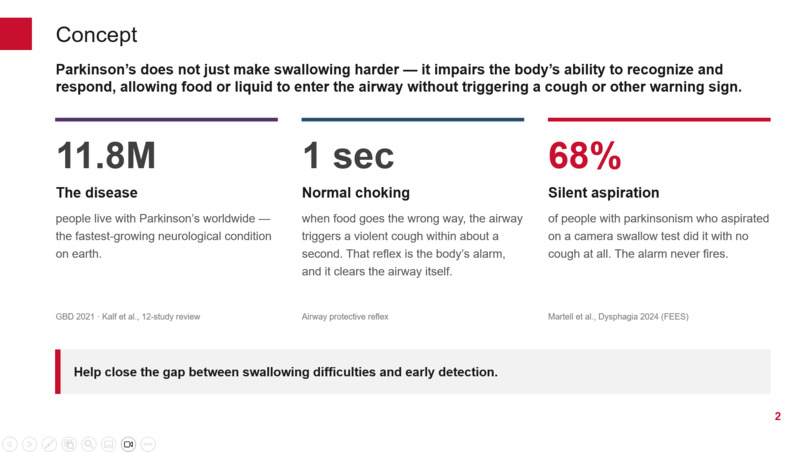
The most dangerous cough in Parkinson’s is the one that never happens
Inspiration
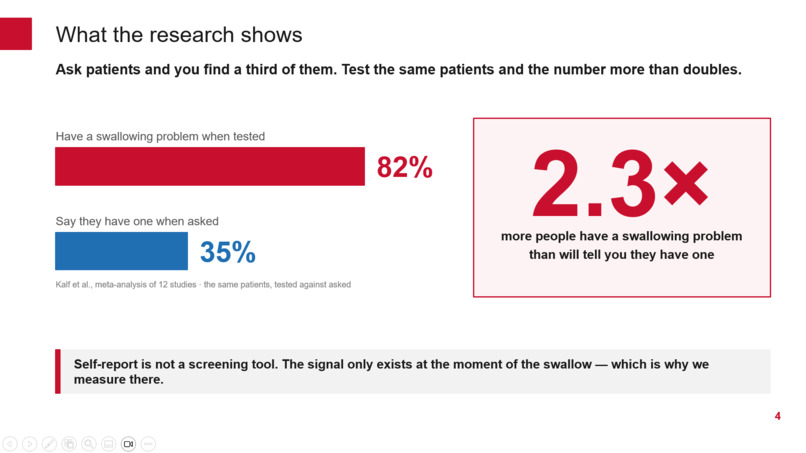
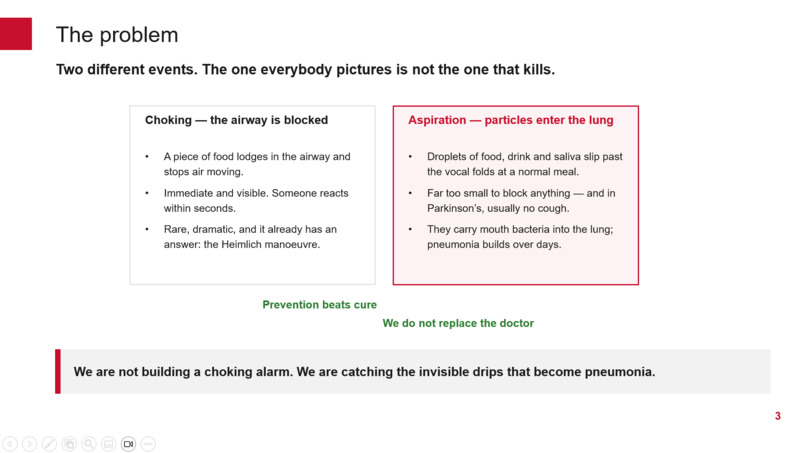
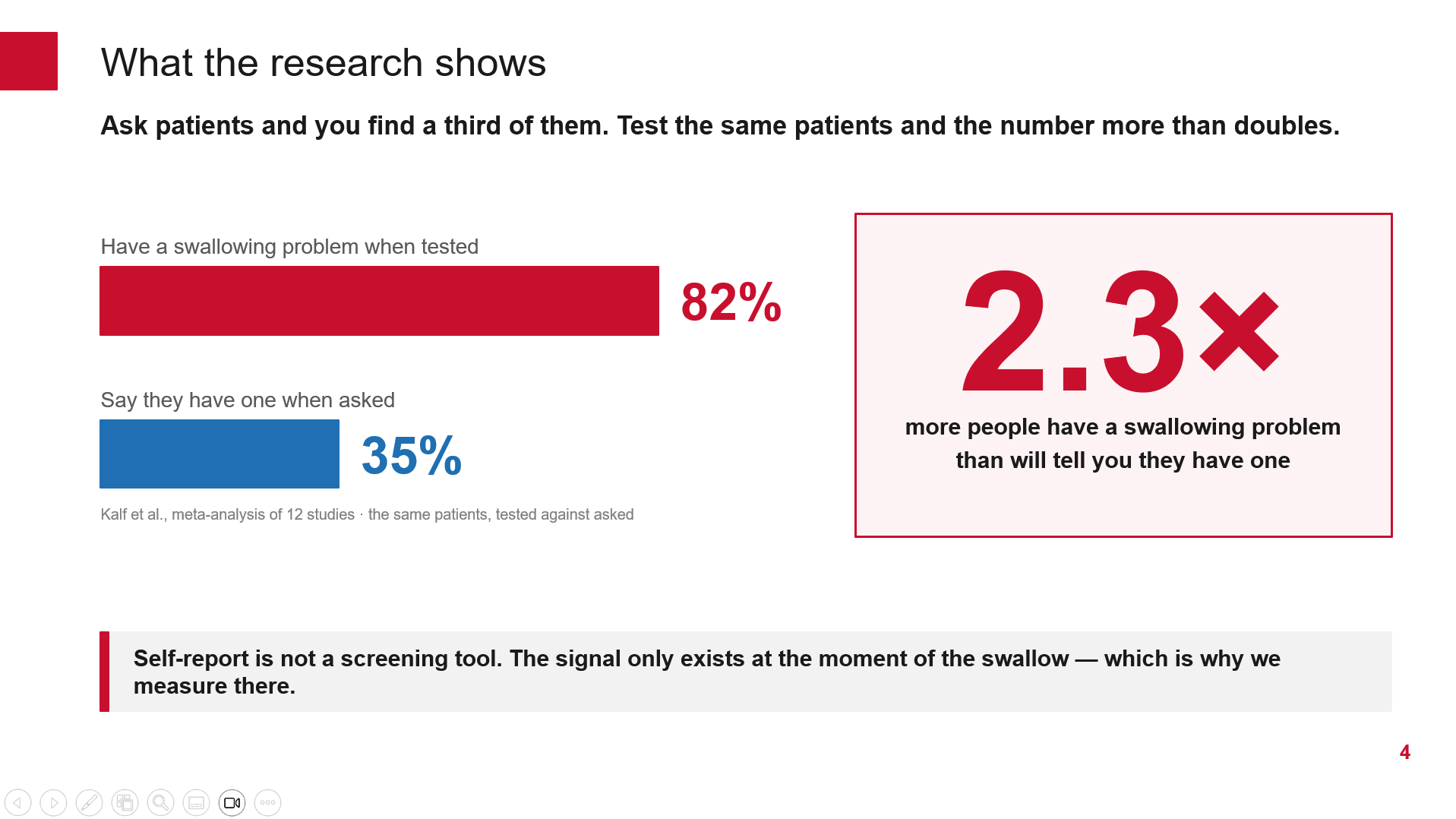
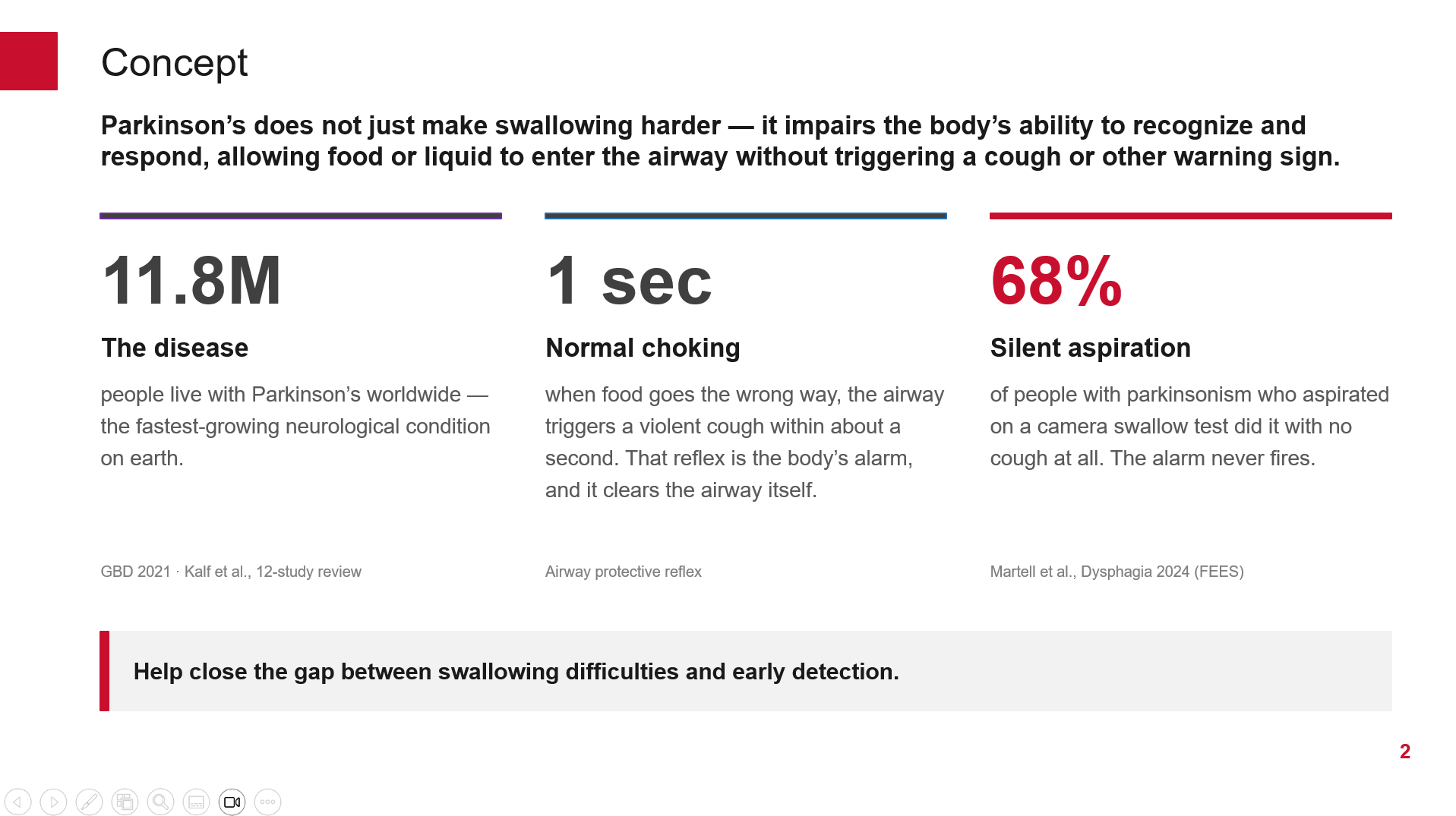
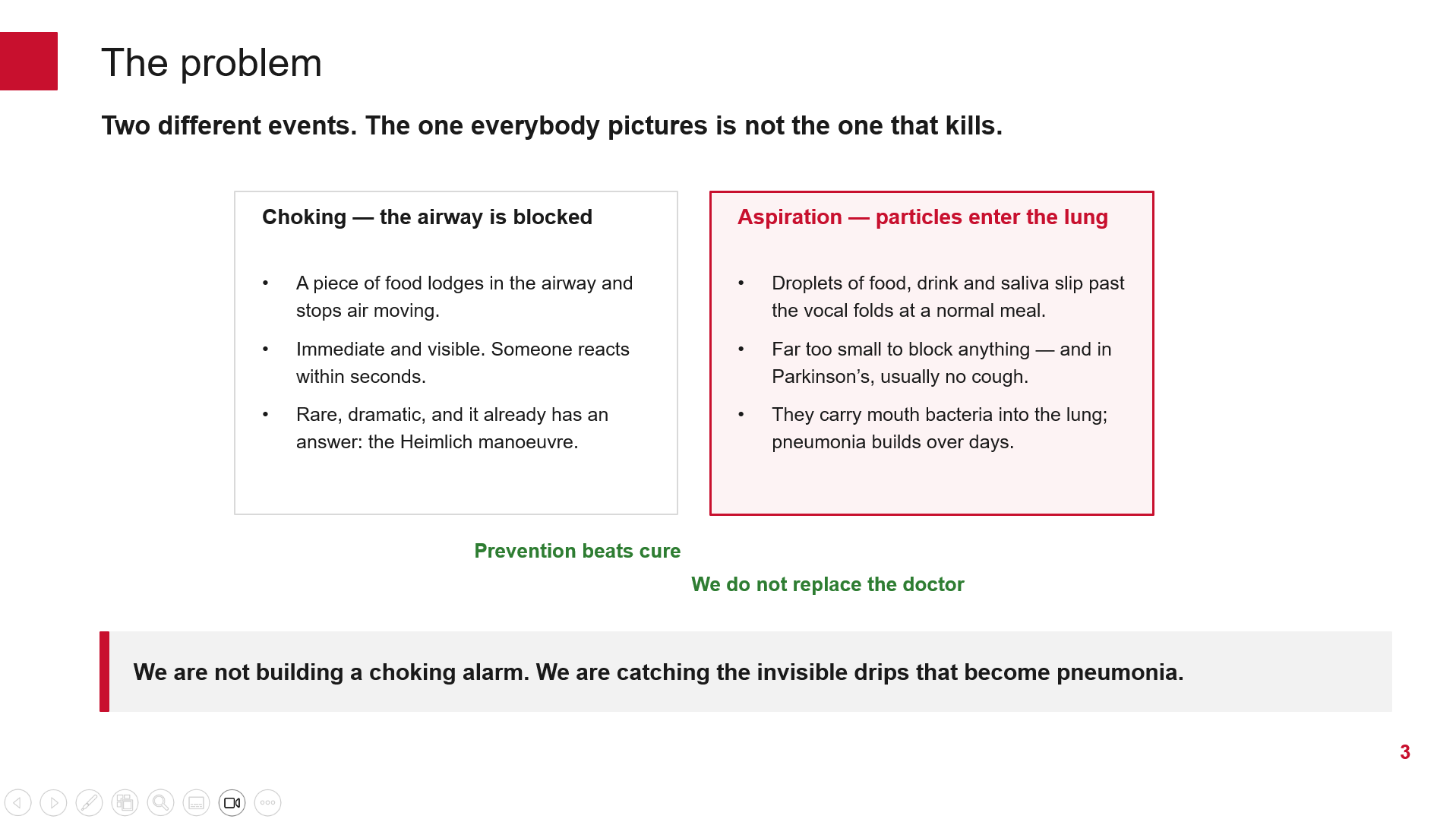
For people living with Parkinson’s, swallowing difficulties can turn something as simple as sharing a meal into a serious health concern. About 82% show swallowing problems when tested, but only 35% report them. One of the biggest risks is silent aspiration, where food or liquid enters the airway without triggering a cough or obvious warning sign. Over time, this can lead to aspiration pneumonia, hospitalization, and reduced independence.
We wanted to address the gap between experiencing a swallowing problem and recognizing it. Our idea was to create a wearable device that monitors swallowing activity during meals and helps identify potentially concerning patterns before they become more serious.
What It Does
NEUREX is a wearable mealtime monitoring concept paired with an interactive application designed to help identify potentially unsafe swallowing patterns.
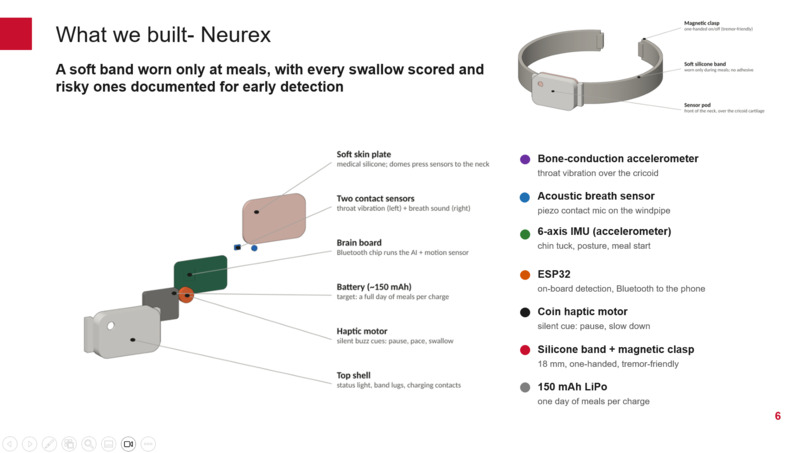
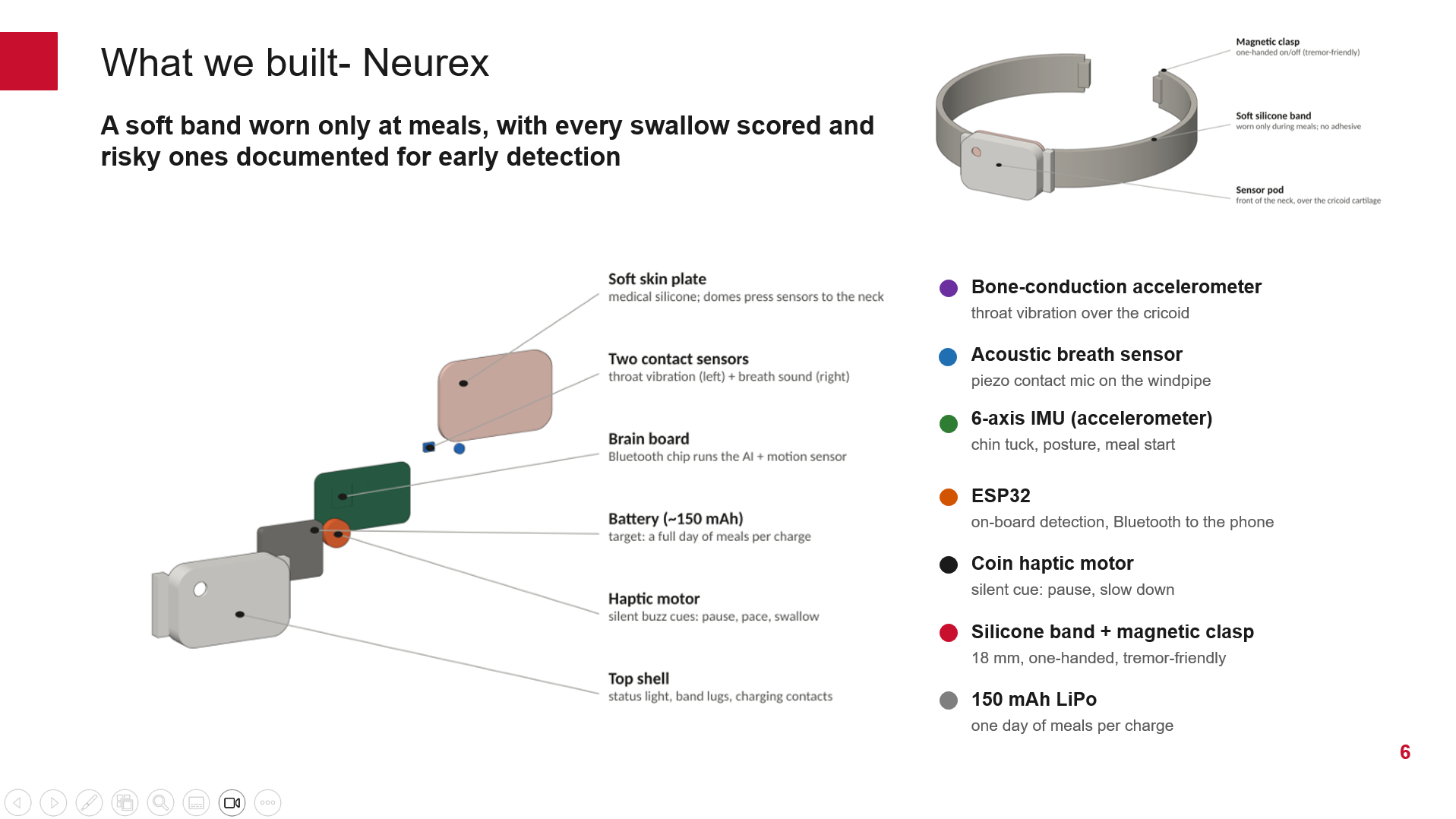
The Wearable A lightweight neckband uses multiple sensing technologies to capture different aspects of swallowing:
- Accelerometer: Monitors throat vibrations and movement associated with swallowing.
- Acoustic sensor: Captures breathing and sounds around swallowing events.
- 6-axis IMU: Tracks head position, posture, and movement.
An ESP32 microcontroller supports the wearable's sensing architecture and communication with the application.
The Application The companion app turns sensor readings into information that users and caregivers can understand.
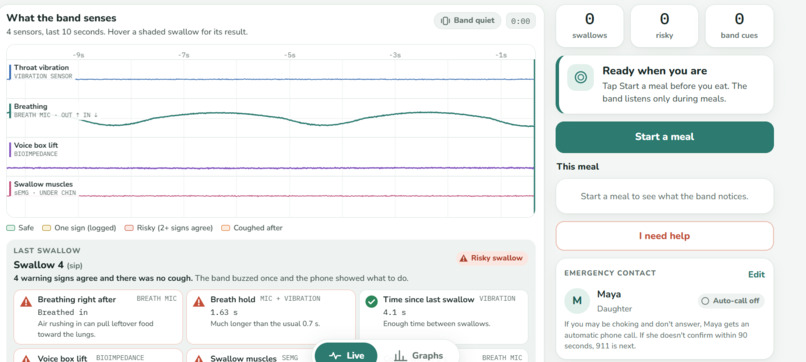
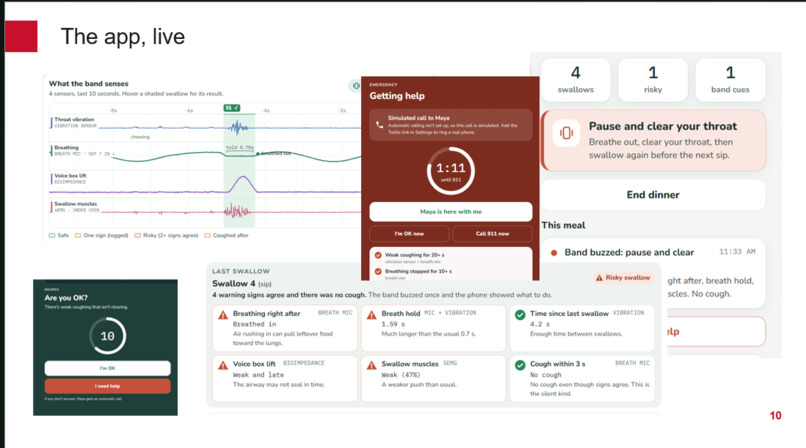
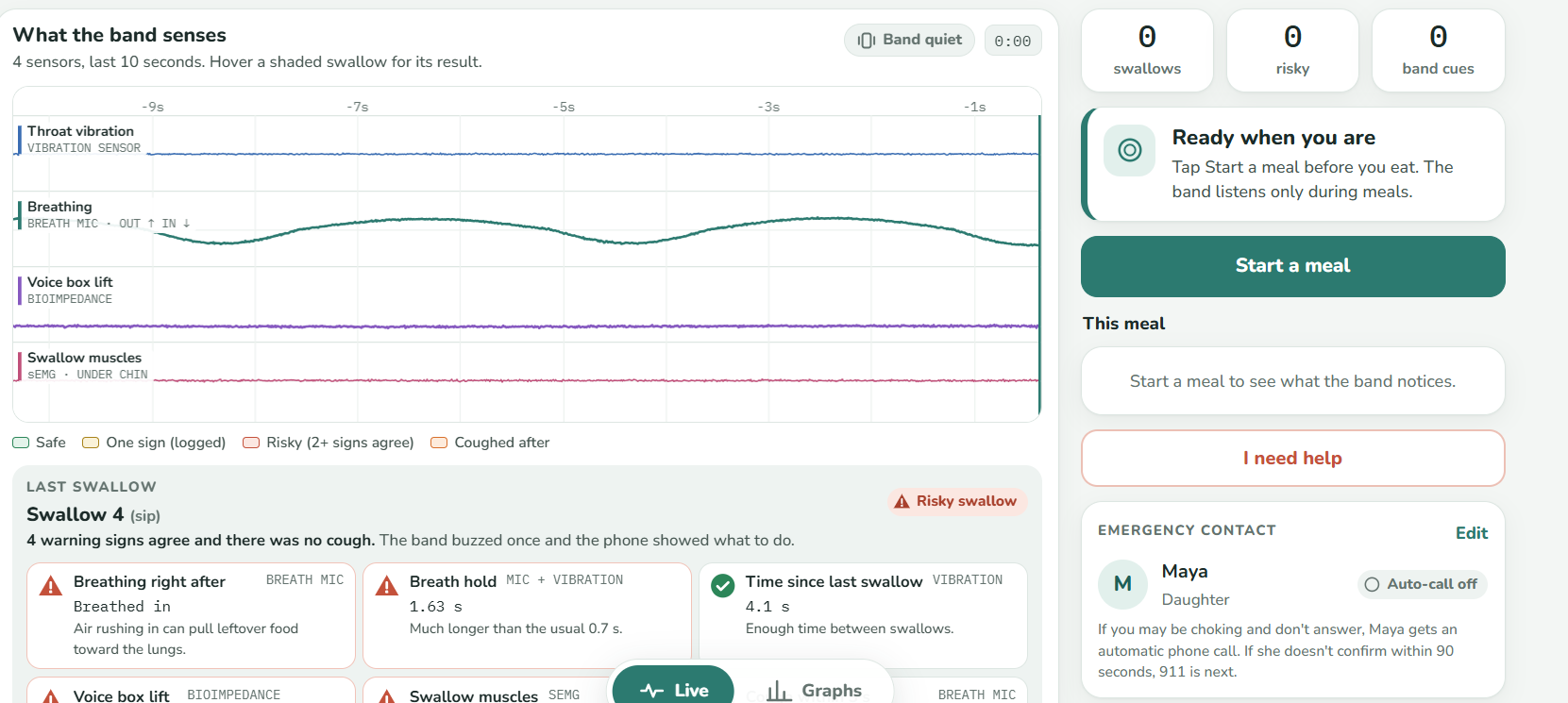
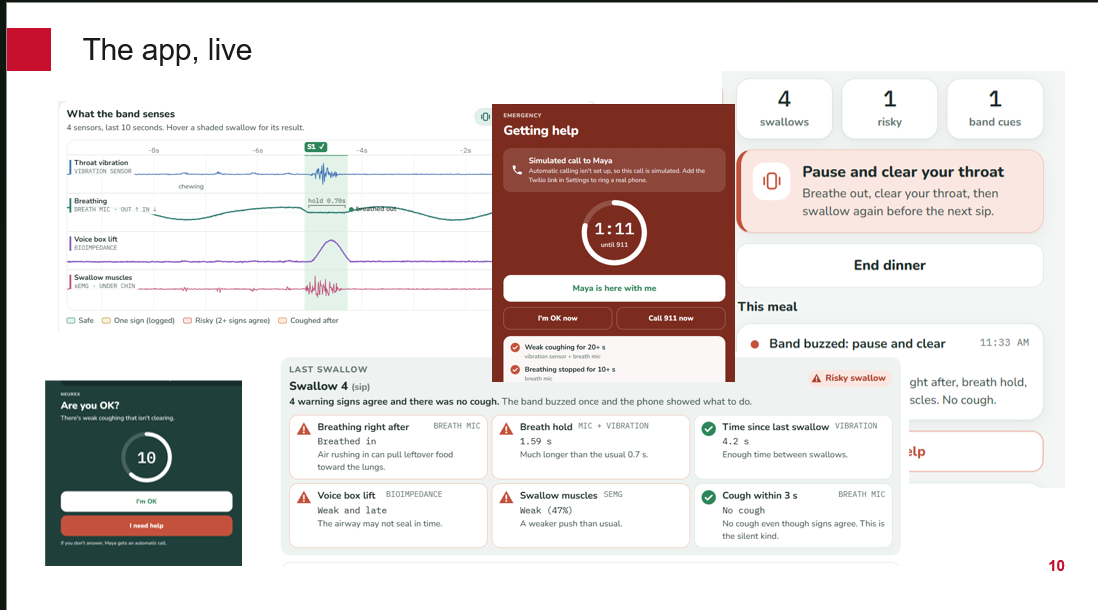
- Live Monitoring: Displays sensor activity through live graphs during a meal.
- Swallow Assessment: Evaluates six indicators, including breathing patterns, breath-hold duration, repeated swallows, laryngeal movement, swallowing muscle activity, and coughing.
- Smart Alerts: Looks for multiple warning indicators before triggering a discreet vibration, helping avoid unnecessary interruptions.
- Emergency Response: Includes an automated escalation workflow. If concerning coughing or breathing interruptions persist, the app prompts the user to confirm they are okay. If they do not respond, Twilio can automatically call their emergency contact.
- Caregiver Dashboard: Displays daily swallowing trends, potentially concerning events, meal comparisons, alert history, and individual swallow records.
- Health Reports: Generates plain-language reports for healthcare professionals and allows users to download their data as a CSV file.
How We Built It
We developed the application using HTML, CSS, and JavaScript, with no external frontend frameworks.
- LocalStorage: Saves meal records and monitoring history on the device.
- Twilio Functions: Supports automated emergency-contact calls.
- ESP32 and Grove Accelerometer: Used to explore the wearable hardware and neck-motion sensing.
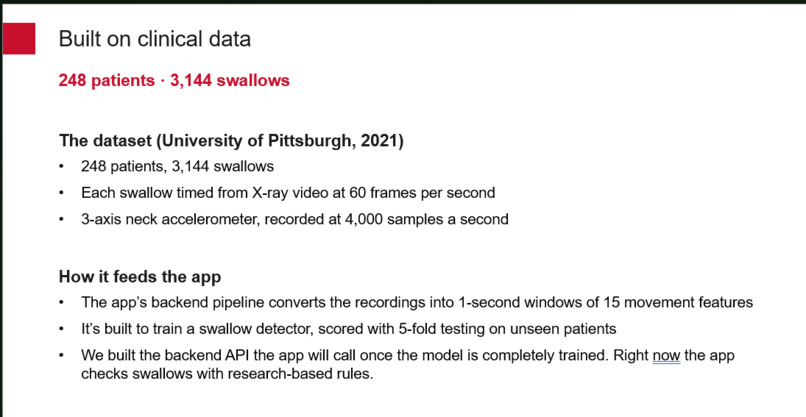
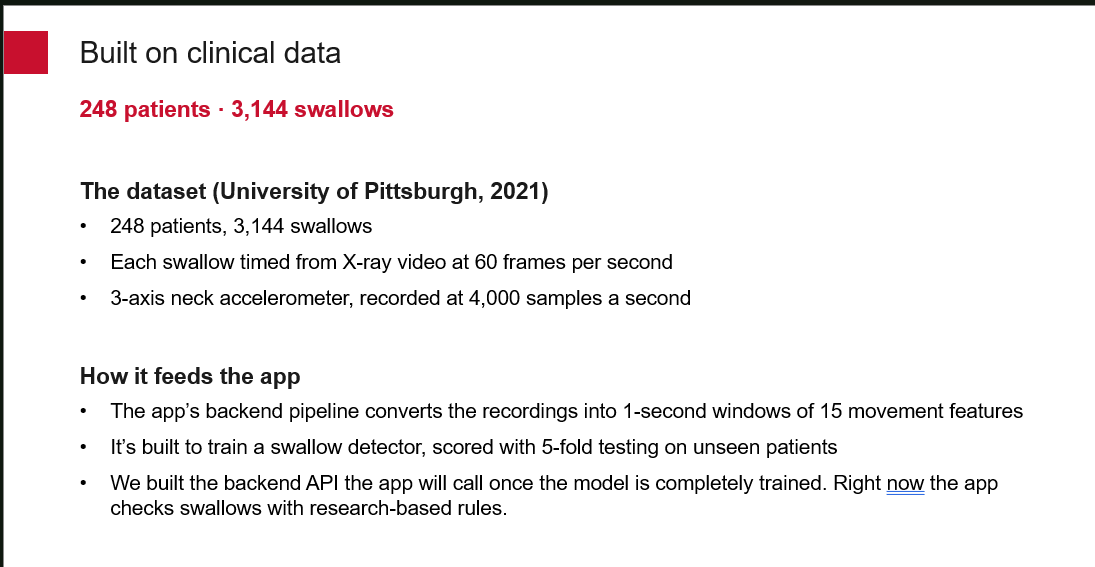
We also developed simulated sensor readings based on published swallowing research to demonstrate how different signals could be evaluated together.
Challenges
One of our biggest challenges was determining how to recognize potentially concerning swallowing patterns without relying on a single sensor. Swallowing involves several coordinated processes, so we explored combining breathing, throat movement, muscle activity, and posture to provide more context.
Another challenge was designing an emergency response system that would not react to every unusual reading. We incorporated multiple indicators, confirmation prompts, and escalation safeguards to make the workflow more thoughtful.
What We Learned
Through NEUREX, we learned how to bring together hardware concepts, sensor data, software development, and healthcare research to address a real-world problem.
We gained experience building interactive dashboards, designing multi-indicator monitoring logic, integrating Twilio communication, and translating complex sensor information into understandable insights.
Most importantly, we learned that healthcare technology needs to do more than collect data. It needs to make that information useful for the people who depend on it.
What's Next
Our next step is to connect the sensing components into a functioning wearable and test the system using real sensor data. With additional development and validation, NEUREX could help individuals and caregivers recognize concerning swallowing patterns earlier, support more informed care decisions, and preserve independence.
NEUREX is a prototype concept, not a clinically validated medical device. Its simulated readings do not diagnose aspiration or replace professional medical evaluation.
Built With
- accelerometer
- bluetooth
- c++
- embedded-systems
- esp32
- hardware-prototyping
- health-monitoring
- healthcare-technology
- html
- human-centered
- inertial-measurement-unit-(imu)
- javascript
- mobile-application
- parkinson's-disease
- piezoelectric-sensors
- sensor-integration
- simulation
- wearable-technology
