-
NeuraWell Logo
-
Chat Window
-
Chat Window
-
Chat Window
Inspiration
Young adults today are facing a growing mental health crisis, yet the support systems available are often inaccessible, generic, and lack continuity. We noticed a critical gap in existing generative AI tools: they are entirely passive. They wait for a prompt, offer generic advice, and instantly forget the user's emotional state the moment the chat window closes. We wanted to build a system that doesn't just talk, but actively analyzes emotional states, remembers past triggers, and autonomously formulates actionable coping strategies.
What it does ?
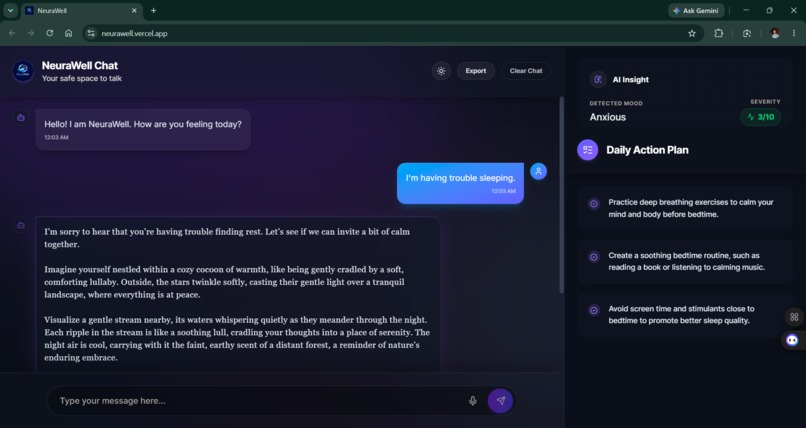
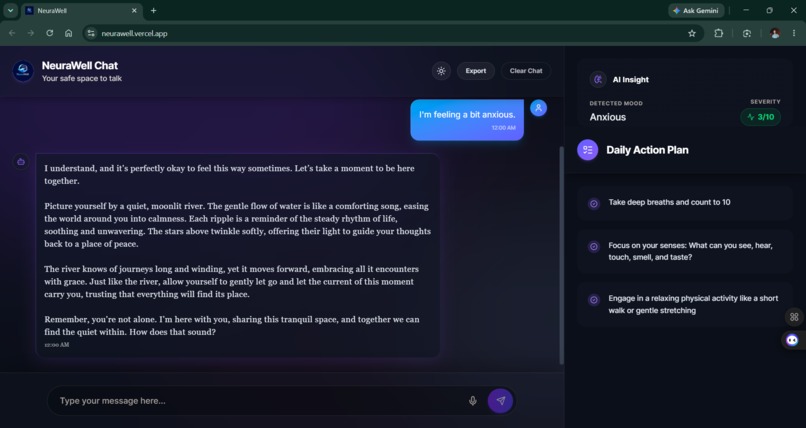
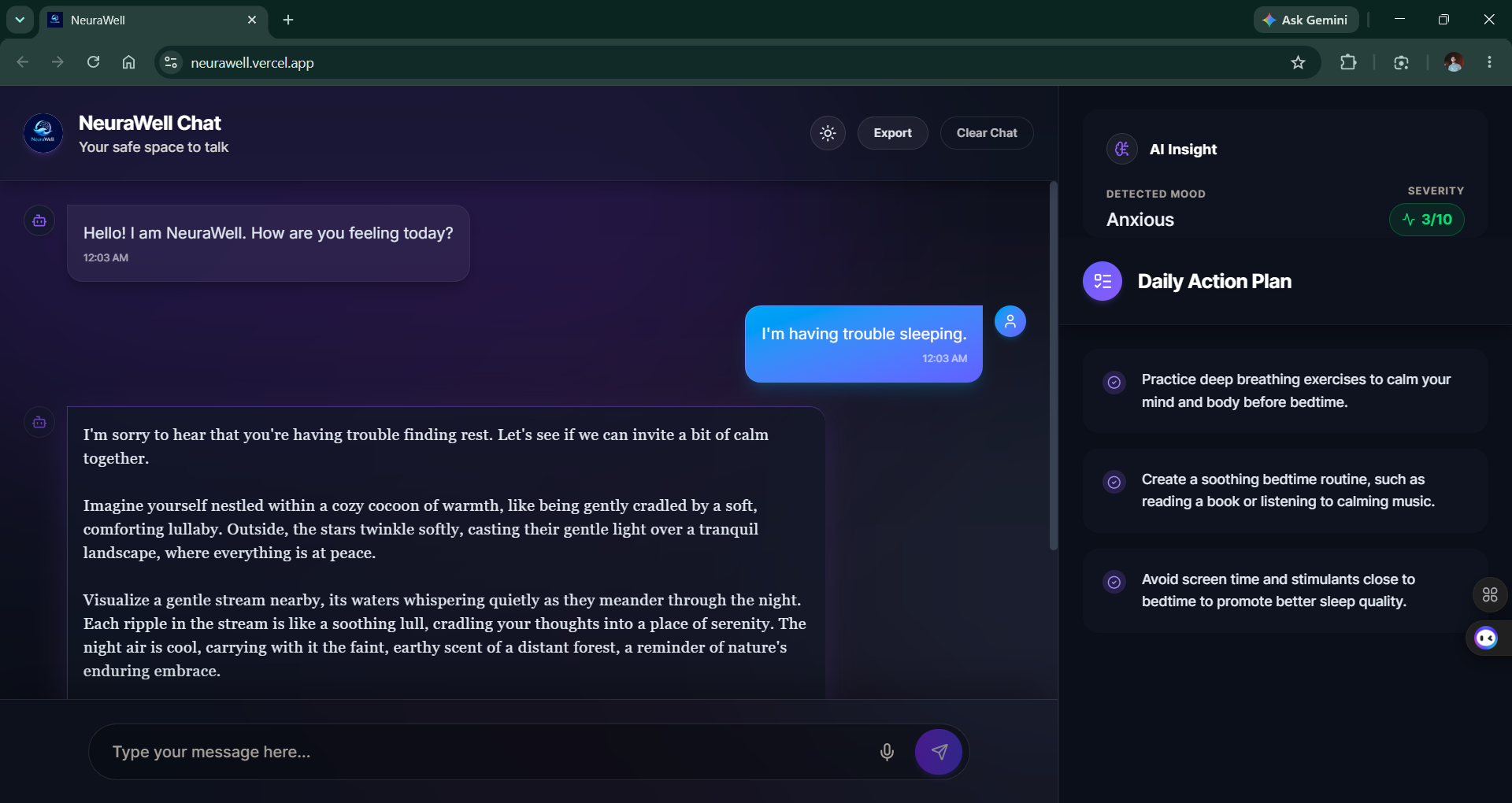
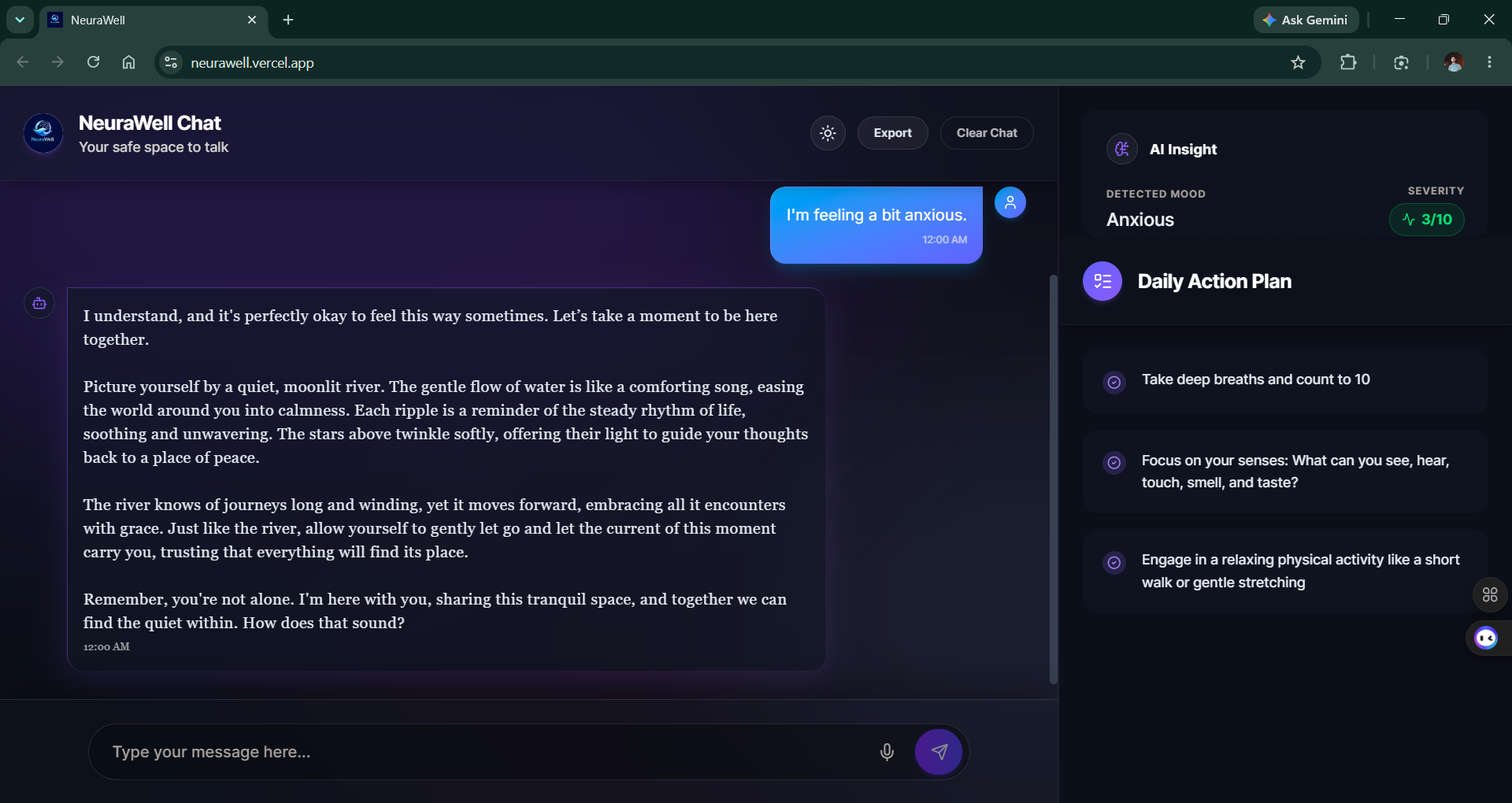
NeuraWell is an autonomous, multi-agent AI wellness companion designed to provide continuous, proactive emotional support. Instead of relying on a single LLM to generate text, NeuraWell utilizes a chained network of specialized AI agents:
Emotion Analysis Agent: Detects mood (stress, anxiety, burnout) and calculates a severity score in real-time.
Planning Agent: Converts overwhelming user problems into actionable micro-tasks (immediate actions, short-term goals, long-term habits).
Intervention Agent: Deploys interactive exercises like breathing techniques and journaling prompts.
Memory Agent: Stores historical emotional patterns and retrieves past context so the AI can follow up proactively (e.g., "You mentioned exam stress earlier—how are you feeling now?").
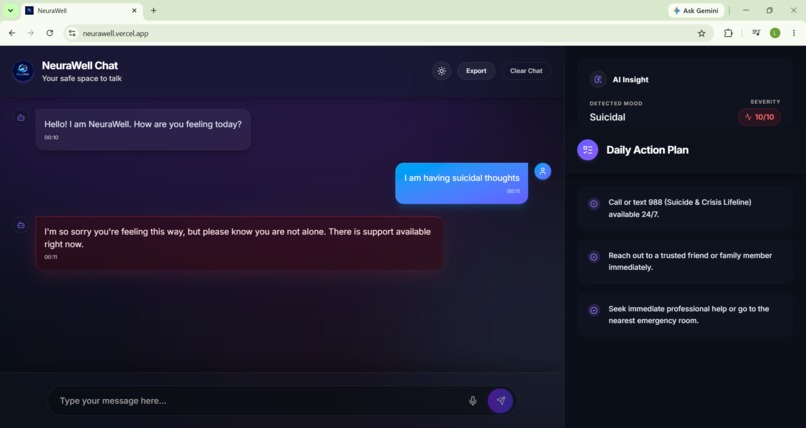
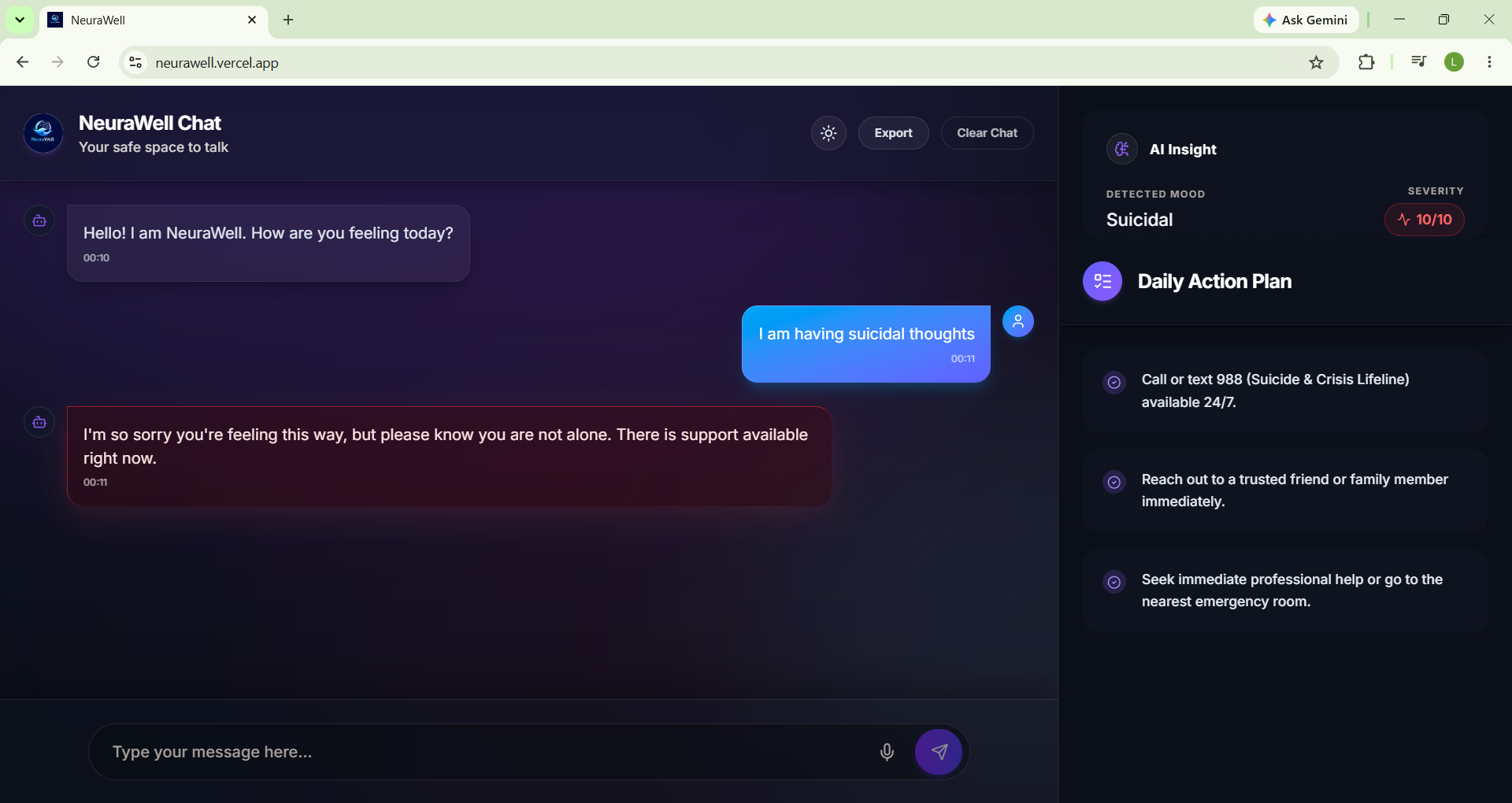
Crucially, NeuraWell features strict Ethical AI guardrails. If the Emotion Agent detects severe distress or harmful intent, it immediately triggers de-escalation protocols and routes the user to professional helplines.
How we built it ?
We architected NeuraWell as a robust full-stack monorepo:
Frontend: Built with Next.js (App Router) and Tailwind CSS to create a calming, responsive, and minimalist user interface.
Backend: Powered by Python and Flask, providing a lightweight and fast API layer.
Agent Logic: We utilized LangChain to orchestrate the multi-agent workflow.
Vector Storage: Integrated ChromaDB to handle long-term memory retrieval and semantic context matching.
Challenges we ran into
One of the biggest hurdles was ensuring our AI agents communicated deterministically. Initially, the agents would output unstructured text, which made it impossible to dynamically render the personalized action plans in our React frontend. We overcame this by implementing strict Pydantic JSON schemas within our LangChain workflow, forcing the Planning and Emotion agents to output structured data that our Next.js UI could easily parse and display in the sidebar.
Accomplishments that we're proud of
We are incredibly proud of the Memory Agent integration. Watching the application successfully query ChromaDB to recall a user's previous session and organically bring it up in conversation felt like a massive leap forward from standard chatbots. We are also proud of the ethical safety net we implemented, ensuring the application remains a responsible tool that supports, rather than replaces, professional help.
What we learned ?
Building NeuraWell was a masterclass in multi-agent orchestration. We learned how to effectively chain specialized LLM nodes, manage state across distributed AI workflows, and utilize vector databases for semantic memory. Working through these complex integrations drastically accelerated our understanding of advanced AI engineering.
What's next for NeuraWell ?
We plan to expand NeuraWell's capabilities to make it even more accessible and insightful. Our immediate roadmap includes:
Voice-based interaction: Allowing for more natural, hands-free emotional offloading.
Wearable Integration: Syncing with smartwatches to monitor real-time biometric data (like heart rate) to proactively trigger grounding exercises.
Multilingual Support: Breaking down language barriers to reach a wider global audience.

Log in or sign up for Devpost to join the conversation.