
Inspiration
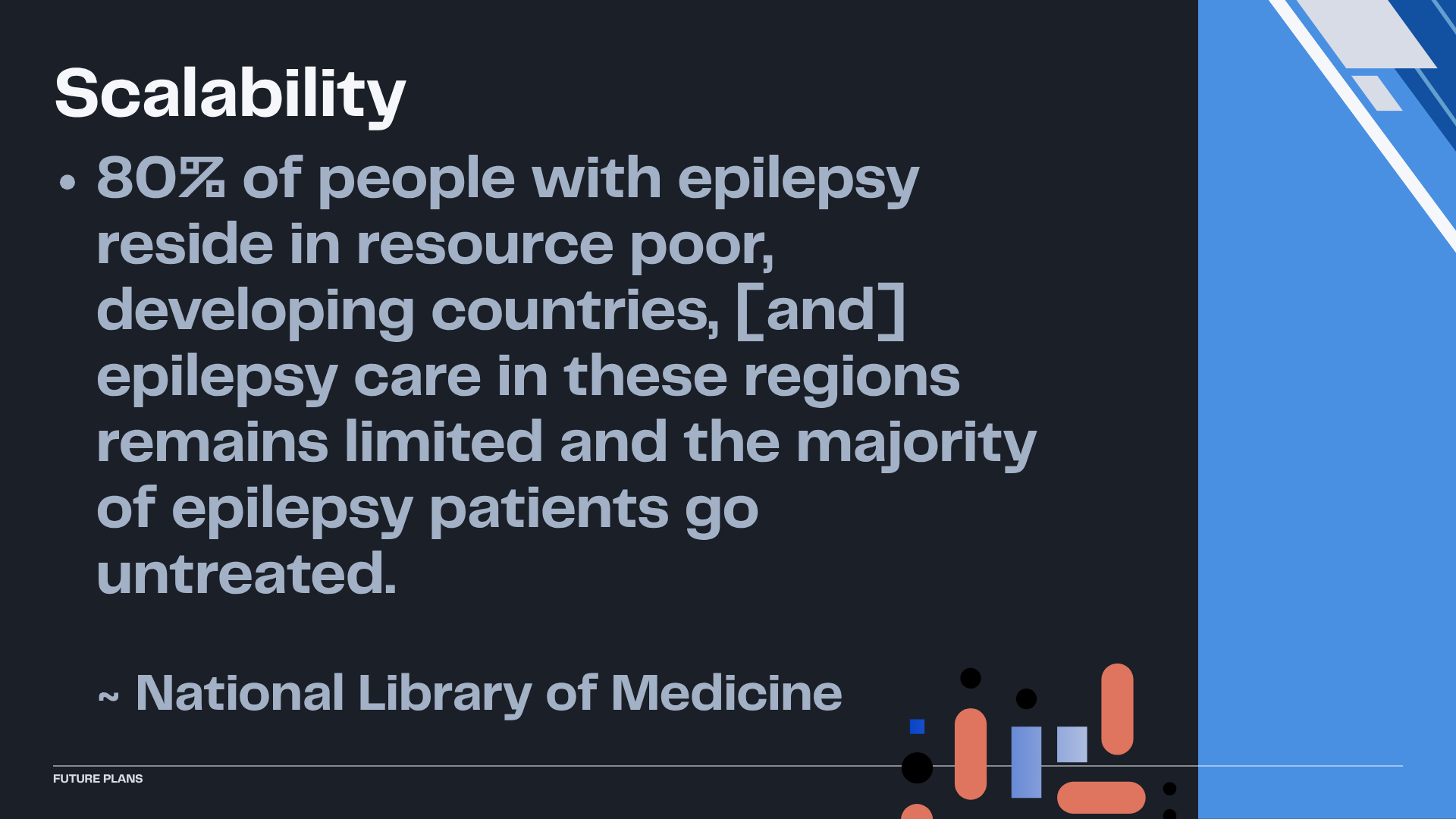
Epilepsy is unpredictable and still mostly monitored in hospitals instead of through everyday, wearable tools.
We wanted to give people and caregivers minutes of warning, not just detection logs after a seizure happens.
Existing devices are often bulky, uncomfortable, or expensive, so many patients can't actually wear them in their day-to-day life.
We were also inspired by continuous glucose monitors (like CGM patches from Dexcom), and we realized that a device like this could be used for seizure prediction.
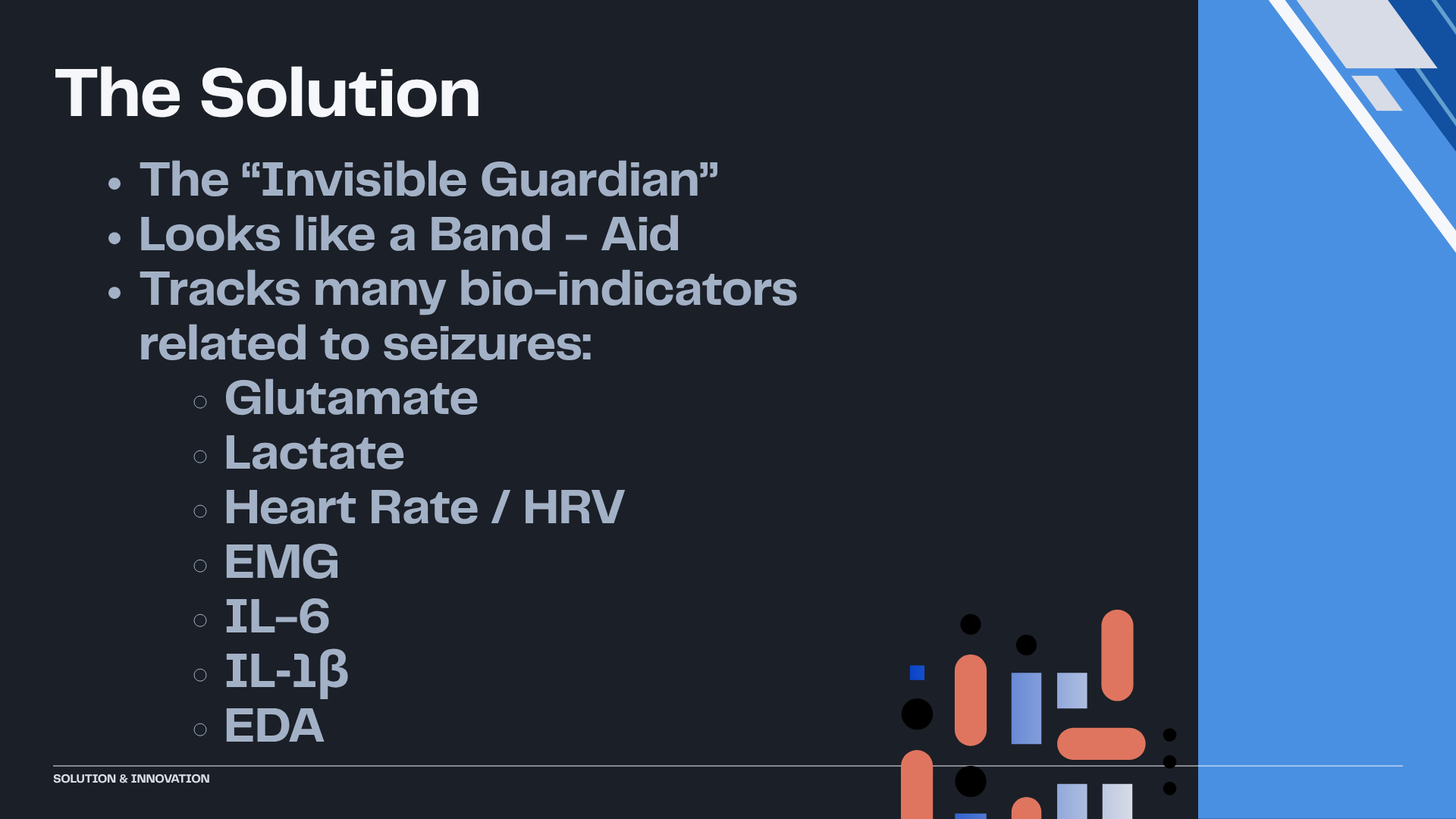
Neuravon. was born from the idea of a thin, discreet patch that combines microneedles, multi‑sensor physiology, and AI processing.
What it does
Neuravon. is a wearable seizure‑prediction patch worn on the upper arm.
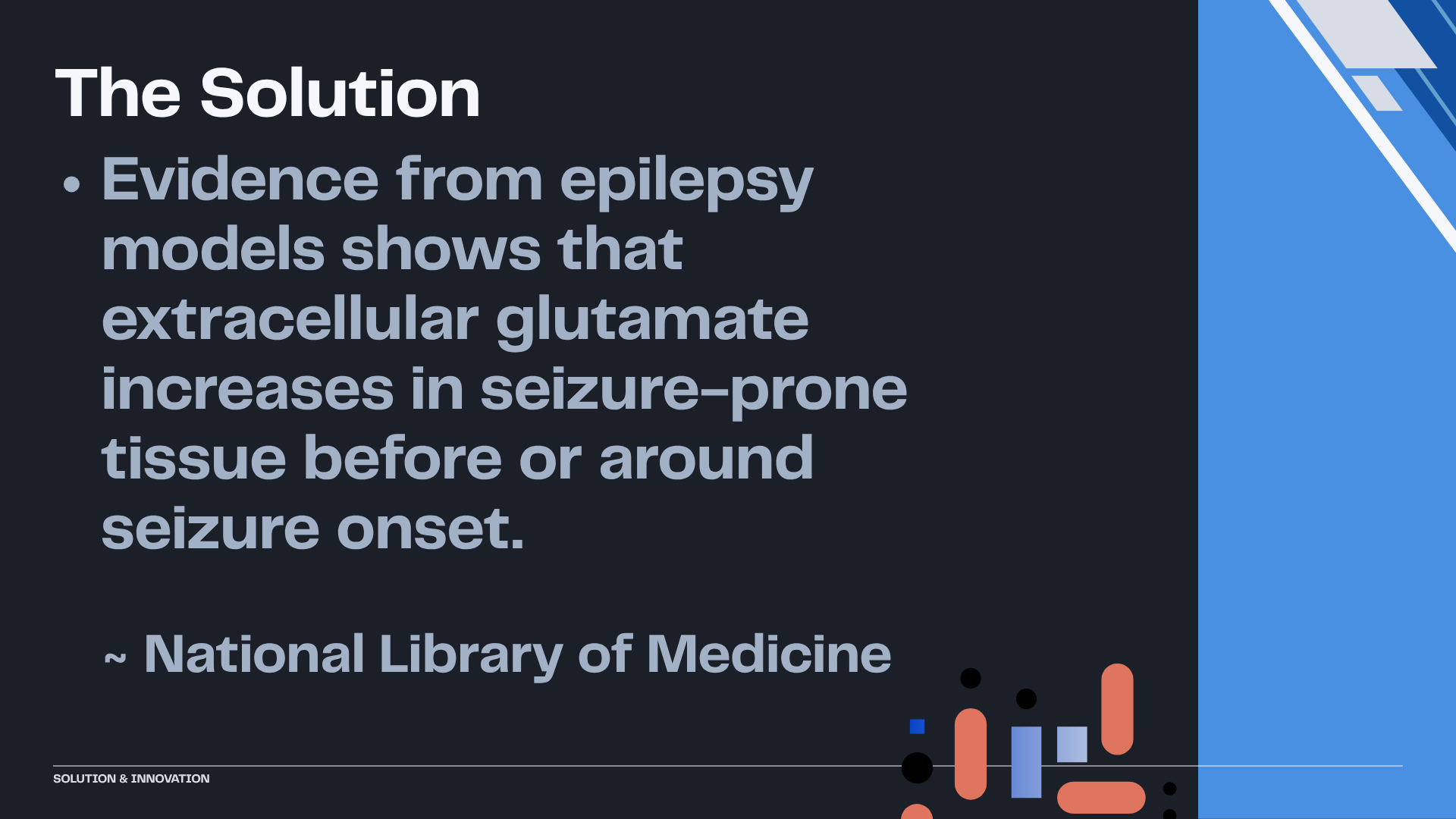
Our concept continuously monitors neurochemical and physiological signals to detect subtle early changes linked to seizure onset.
It streams this data securely to a companion app, where AI models running in the cloud analyze it in near real time to estimate short‑term seizure risk.
When elevated risk is detected, the app sends proactive alerts to the user and caregiver smartphones so they can prepare, intervene early, or get to safety.
If a seizure is detected or strongly suspected, the app can automatically send an emergency message with location and relevant details to designated emergency contacts.
The goal is to increase autonomy, reduce injuries, and generate richer data for clinicians to personalize care.
How we plan to build it
Hardware – sensing patch (microneedles)
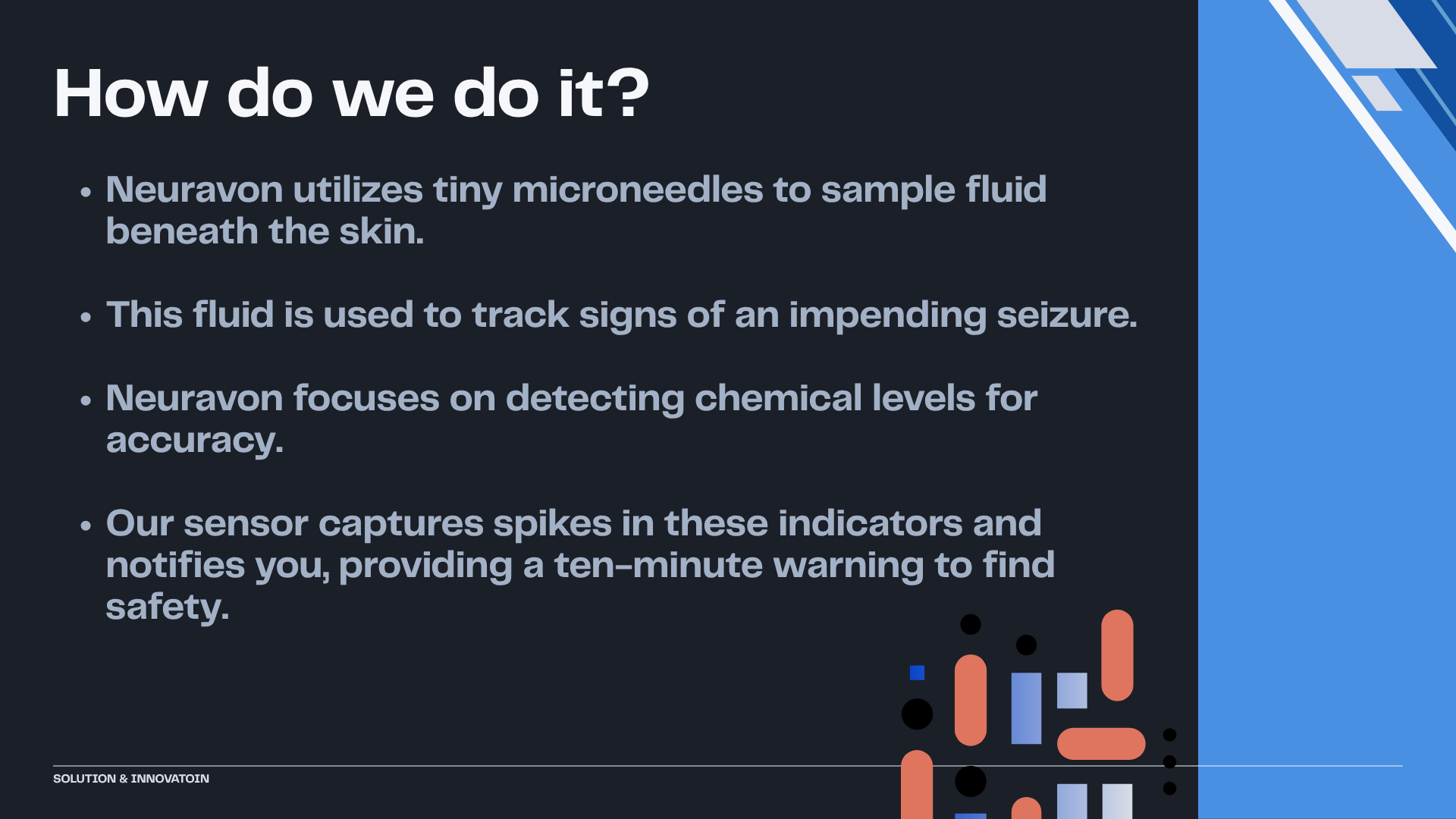
- We envision a thin, upper‑arm microneedle patch that samples interstitial fluid to track seizure‑linked neurochemical and inflammatory biomarkers, including glutamate, lactate, IL‑6 and related cytokines, cortisol (stress hormone), and general metabolic markers that reflect brain excitability and systemic stress.
- This skin‑facing patch is envisioned as disposable and biocompatible, with carefully tuned microneedle geometry (length, spacing, and density) to balance comfort, sampling reliability, and safe longer‑term wear.
- We envision a thin, upper‑arm microneedle patch that samples interstitial fluid to track seizure‑linked neurochemical and inflammatory biomarkers, including glutamate, lactate, IL‑6 and related cytokines, cortisol (stress hormone), and general metabolic markers that reflect brain excitability and systemic stress.
Hardware – transmitter & signal hub (separate module)
- In parallel, we plan a compact transmitter module that mechanically docks to the patch and houses a low‑power microcontroller, power management, and wireless connectivity to the phone app.
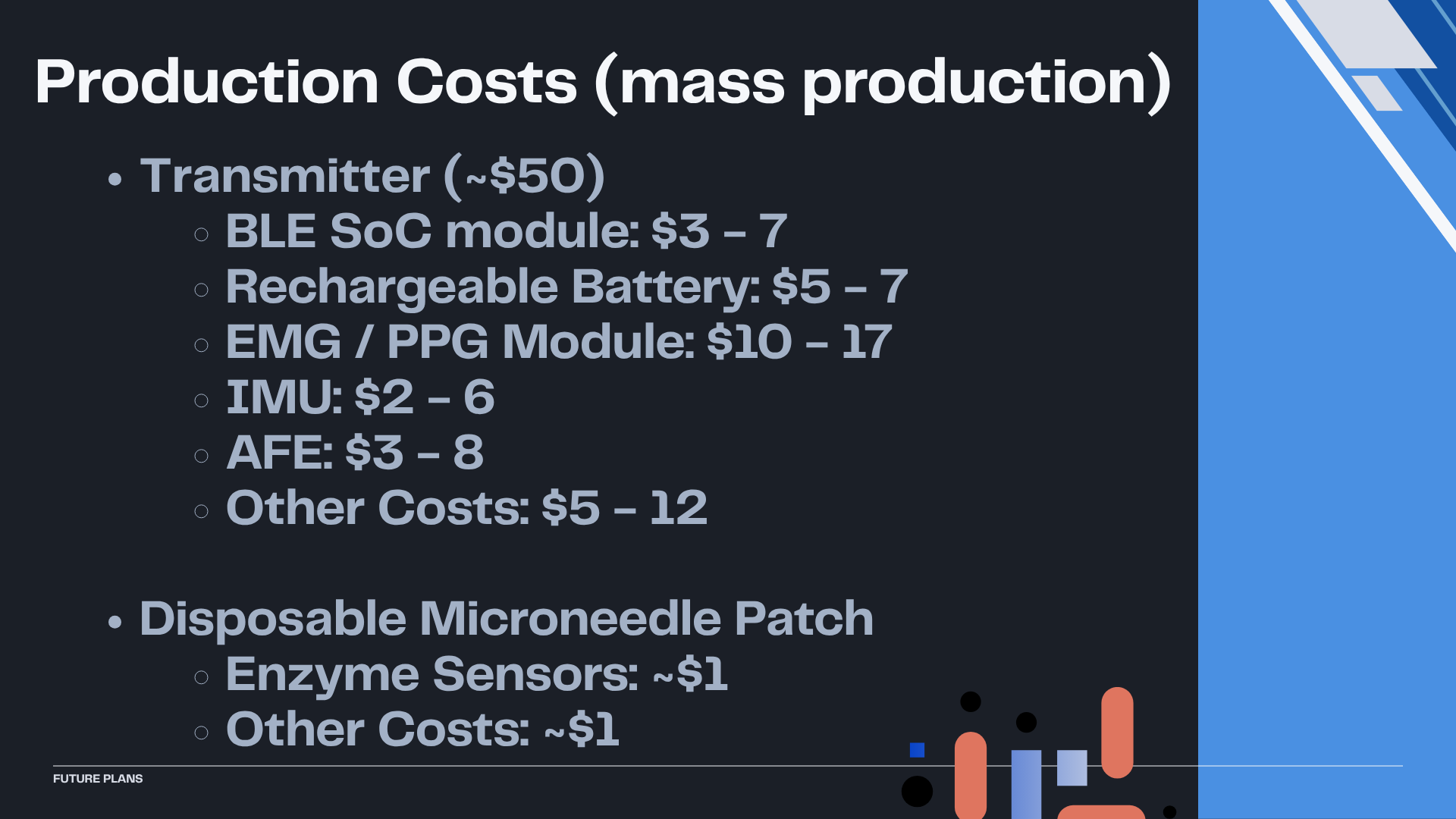
- This hub would integrate multiple contextual sensors: an IMU (accelerometer + gyroscope) for motion, tremor, and fall‑like events, a PPG optical sensor for heart rate and oxygen saturation, and an optional skin‑temperature sensor to capture autonomic changes around seizure onset.
- We plan to use CAD to iterate on the transmitter’s enclosure and its snap‑on interface to the disposable patch, aiming for a thin, low‑profile, cable‑free module that can be worn under clothing without snagging or irritation.
- In parallel, we plan a compact transmitter module that mechanically docks to the patch and houses a low‑power microcontroller, power management, and wireless connectivity to the phone app.
Software & ML
- We plan to build a multi‑sensor signal‑processing pipeline that fuses IMU motion data, PPG heart rate/oxygen saturation, and interstitial‑fluid biomarker trends (e.g., glutamate, lactate, IL‑6, cortisol, and related inflammatory/metabolic markers) into a single time‑aligned stream for analysis.
- Our software stack is intended to clean noisy wearable data, extract features like motion bursts, autonomic shifts, and biomarker trend patterns, and then feed those features into lightweight seizure‑risk models.
- For machine learning, we envision starting from open‑source seizure and biosignal datasets and simulated multi‑sensor fusion workflows, then benchmarking both classical ML models and compact neural networks to balance accuracy, latency, and power usage.
- Rather than relying only on the cloud, we plan a hybrid system where some preprocessing and fast risk scoring can run close to the device, while cloud services handle personalization, long‑term trend tracking, and model updates.
- We plan to build a multi‑sensor signal‑processing pipeline that fuses IMU motion data, PPG heart rate/oxygen saturation, and interstitial‑fluid biomarker trends (e.g., glutamate, lactate, IL‑6, cortisol, and related inflammatory/metabolic markers) into a single time‑aligned stream for analysis.
User experience
- We plan a companion mobile app that securely receives patch data, surfaces simple risk states (baseline, elevated, high), and lets users and caregivers review timelines of seizures, warnings, and potential triggers.
- When the model flags elevated short‑term risk, the app would send proactive notifications with clear, actionable language instead of raw graphs, helping families decide whether to rest, prepare rescue meds, or get to a safer environment.
- If a seizure is strongly suspected, the app is designed to optionally auto‑notify trusted contacts with location and a brief status snapshot, while still giving the user tight control over privacy, data sharing, and how “loud” alerts should be.
- Over time, we want the UX to feel personalized rather than clinical by adapting to each person’s patterns, avoiding alarm fatigue, and turning complex neuroscience and biosensing into a calm, understandable experience for patients and caregivers.
- We plan a companion mobile app that securely receives patch data, surfaces simple risk states (baseline, elevated, high), and lets users and caregivers review timelines of seizures, warnings, and potential triggers.
Challenges we ran into
Designing a realistic sensing stack
- Combining microneedle ISF sensing (for glutamate, lactate, IL‑6, cortisol, and other markers), IMU motion, and PPG heart‑rate/oxygen into one system forced us to think carefully about signal routing, noise sources, and how each sensor would physically fit into a thin, upper‑arm form factor.
- Combining microneedle ISF sensing (for glutamate, lactate, IL‑6, cortisol, and other markers), IMU motion, and PPG heart‑rate/oxygen into one system forced us to think carefully about signal routing, noise sources, and how each sensor would physically fit into a thin, upper‑arm form factor.
Signal quality vs. comfort
- Many high‑fidelity sensing setups in the lab use rigid hardware and awkward placements—not realistic for an everyday patch—so we had to rethink microneedle geometry, sensor placement, and where to position the transmitter module to keep things comfortable while still getting usable signals.
- Many high‑fidelity sensing setups in the lab use rigid hardware and awkward placements—not realistic for an everyday patch—so we had to rethink microneedle geometry, sensor placement, and where to position the transmitter module to keep things comfortable while still getting usable signals.
Making multi‑sensor ML actually feasible
- Many seizure‑prediction papers assume clean lab data and large, power‑hungry models, while our concept needs to work with noisy, real‑world signals and tight power budgets.
- We had to think through how to fuse motion, heart‑rate/SpO₂, and biomarker trends, decide which features are realistic to compute on or near the device, and which parts of the pipeline must stay in the cloud.
- Many seizure‑prediction papers assume clean lab data and large, power‑hungry models, while our concept needs to work with noisy, real‑world signals and tight power budgets.
Health‑tech realities beyond a hackathon
- Exploring safety, biocompatibility, regulatory pathways, data privacy, and clinical validation made it clear that Neuravon has to move far beyond a “cool prototype” to become something patients and neurologists could actually trust.
- Exploring safety, biocompatibility, regulatory pathways, data privacy, and clinical validation made it clear that Neuravon has to move far beyond a “cool prototype” to become something patients and neurologists could actually trust.
Accomplishments that we're proud of
Neuravon. takes a full‑stack approach: biosensing hardware, signal conditioning, embedded AI, and a user‑facing app all tied together.
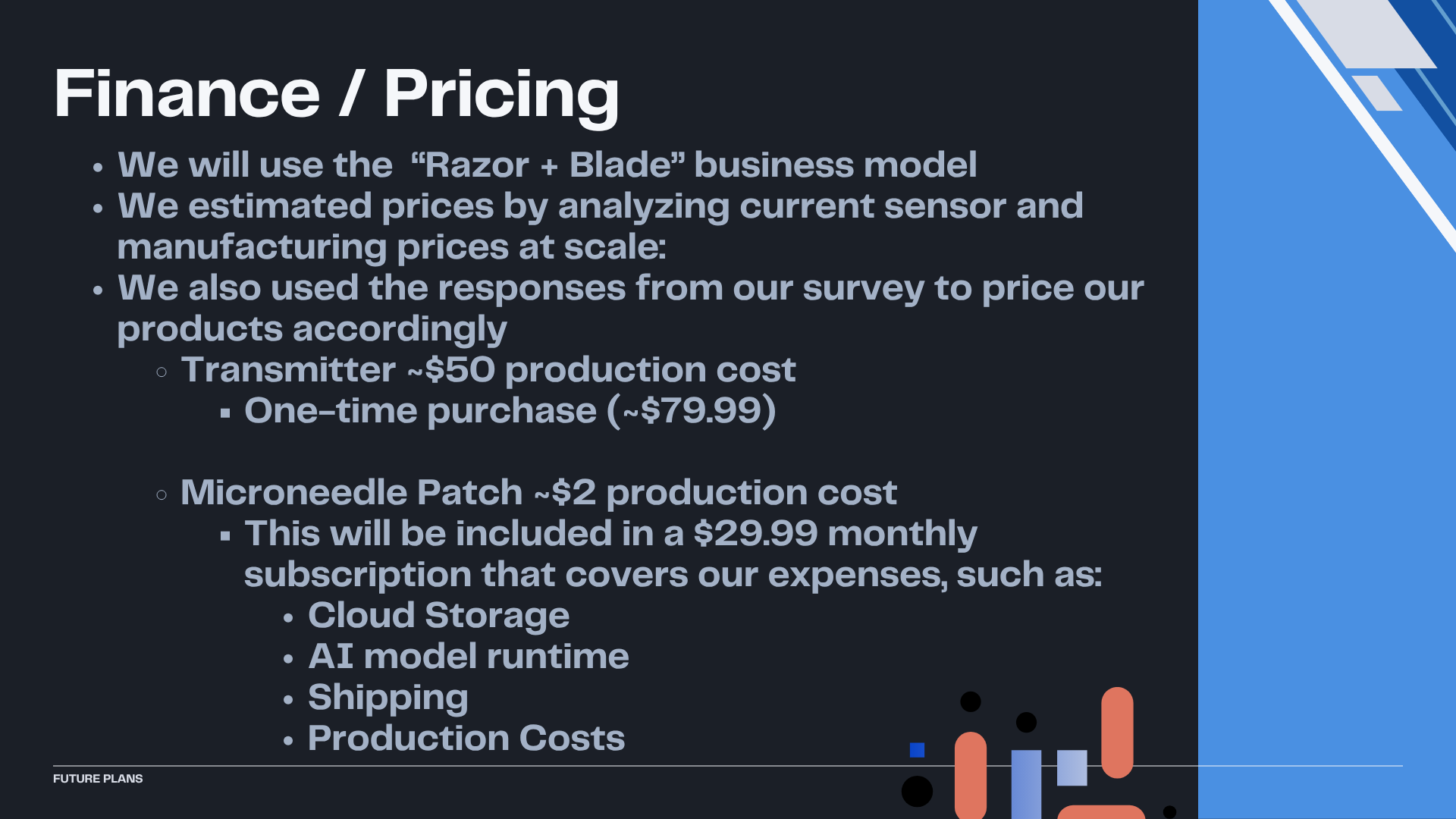
The early system design shows how a thin wearable patch could continuously monitor seizure‑related signals while staying low‑power and cost‑conscious.
We pulled together microneedles, embedded systems, and ML into a coherent product concept instead of separate experiments.
The project is grounded in real patient needs (unpredictability, stigma, safety), not just tech for its own sake.
What we learned
Physiological data is messy, and good preprocessing, labeling, and validation are crucial before trusting predictions.
In health tech, hardware, software, and human factors are tightly connected; even the best model fails if the device is uncomfortable or alerts are confusing.
We learned about the gap between a hackathon prototype and a medical device: the need for clinical studies, neurologist collaboration, and strong privacy practices.
Impactful epilepsy innovation requires empathy, interdisciplinary thinking, and long‑term commitment.
What's next for neuravon.
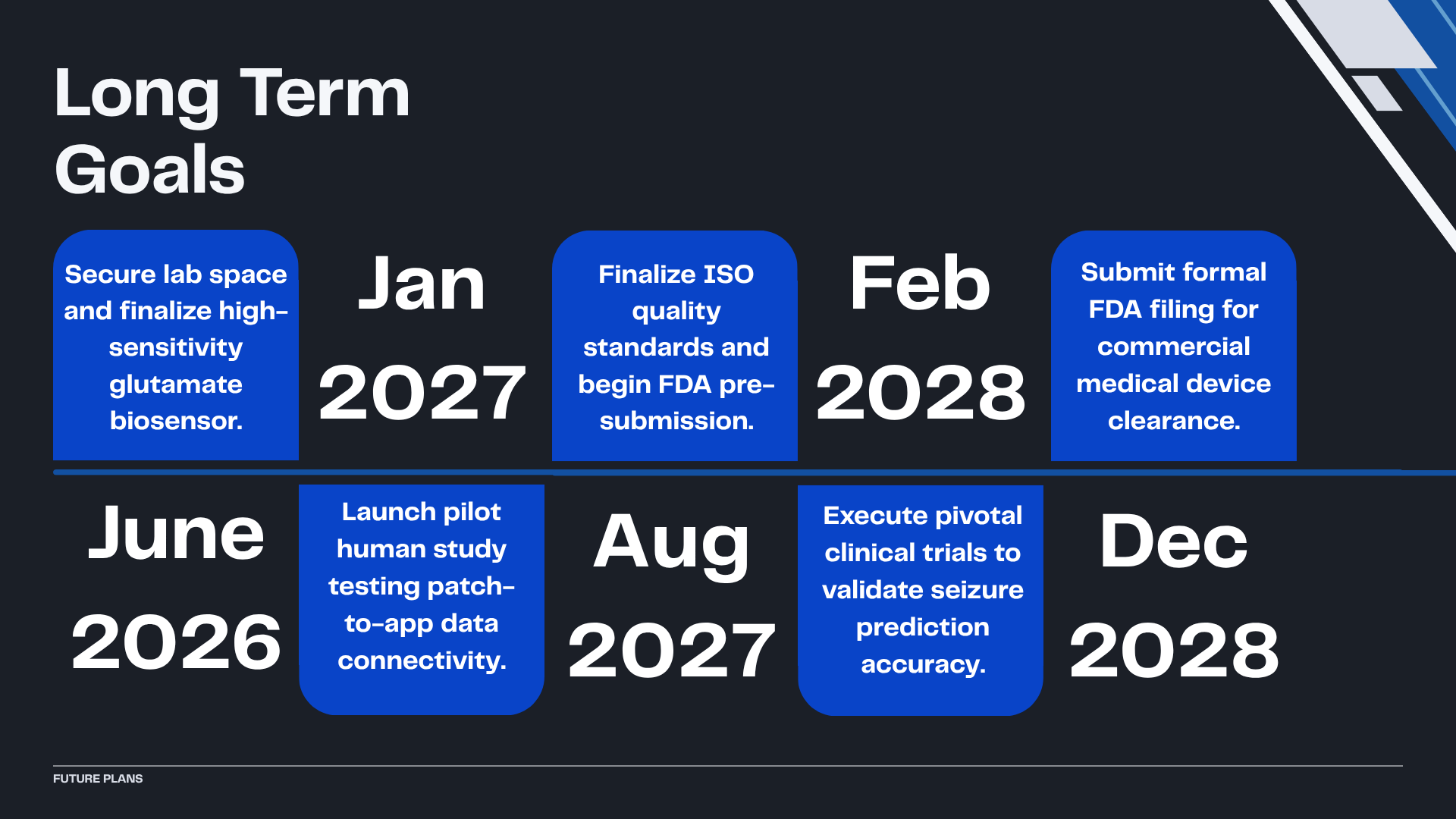
Move from public datasets toward early pilot signal collection with a non‑clinical test rig to refine the multi‑sensor pipeline and hardware concept.
Collaborate with clinicians, patients, and caregivers to validate sensing locations, which biomarkers are most actionable, and what alert behaviors actually help in real life.
Further compress and optimize the models, explore on‑device or near‑device continual learning, and harden firmware for low‑power 24/7 use.
Long‑term, evolve Neuravon. toward a clinically validated assistive device that integrates with EHRs and seizure‑management plans while staying comfortable and affordable.

Log in or sign up for Devpost to join the conversation.