Inspiration
In today’s fast-paced student life, burnout and inconsistency are common—but they often go unnoticed until it’s too late. Most existing health apps only track data or react after failure happens. We wanted to build something different: a system that predicts problems before they occur.
NeuralGuard was inspired by the idea of preventive intelligence—what if we could detect early warning signs from daily behavior and intervene before burnout or habit failure happens?
What it does
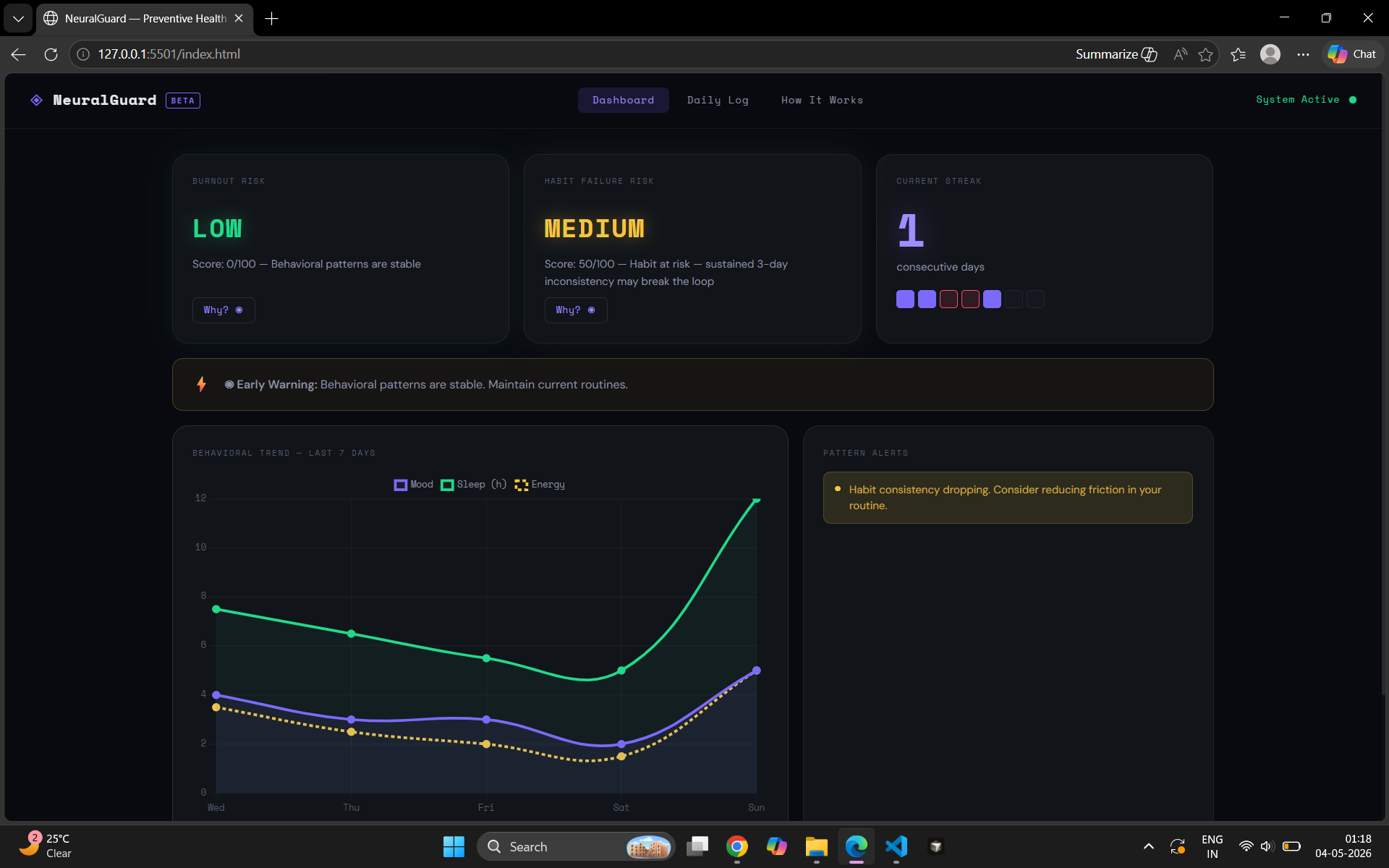
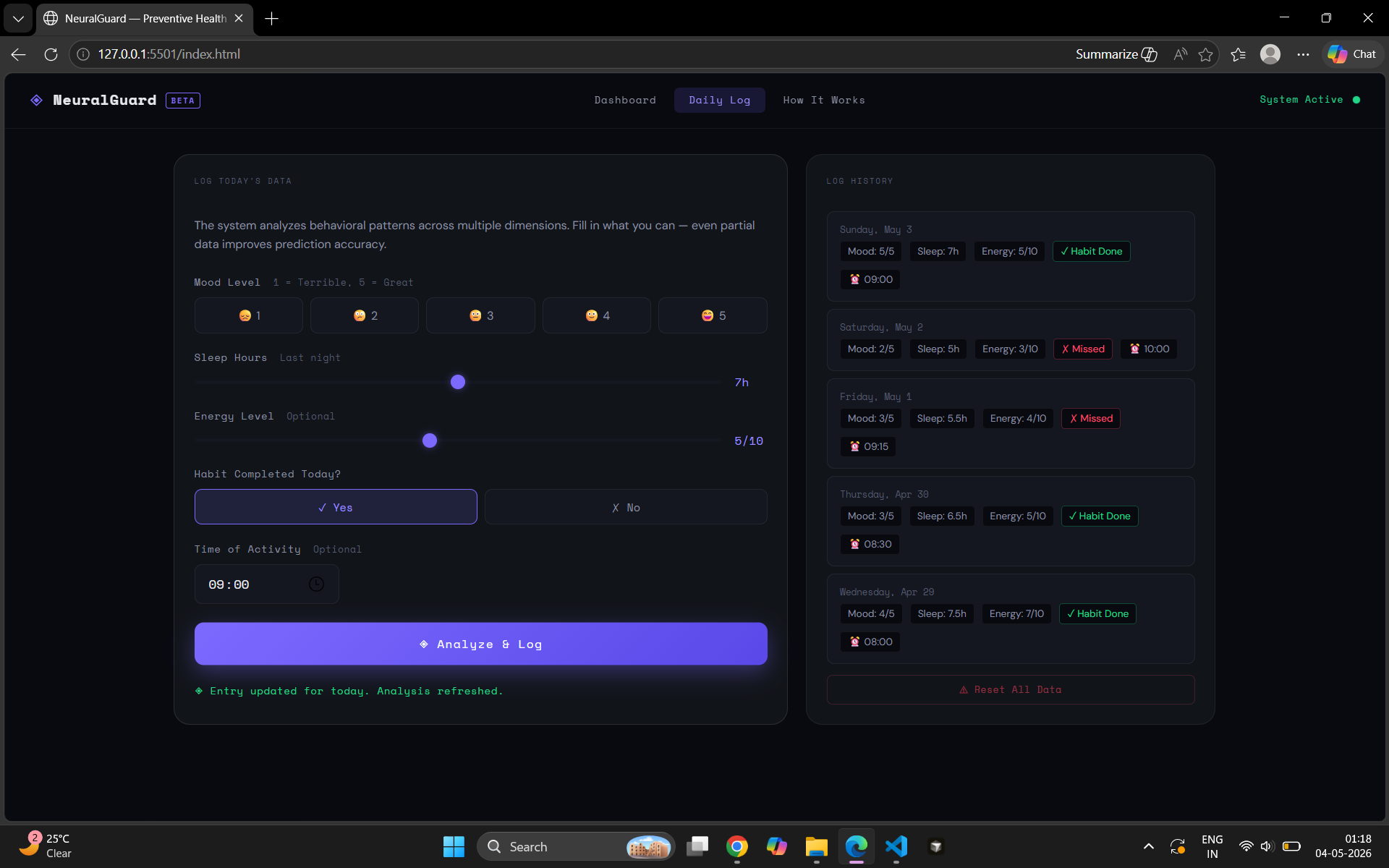
NeuralGuard is an AI-powered preventive health system that analyzes daily behavioral inputs like mood, sleep, energy, and habit consistency. Instead of just tracking progress, it identifies patterns over time and predicts:
- Burnout Risk
- Habit Failure Probability
The system provides:
- Risk scores (0–100)
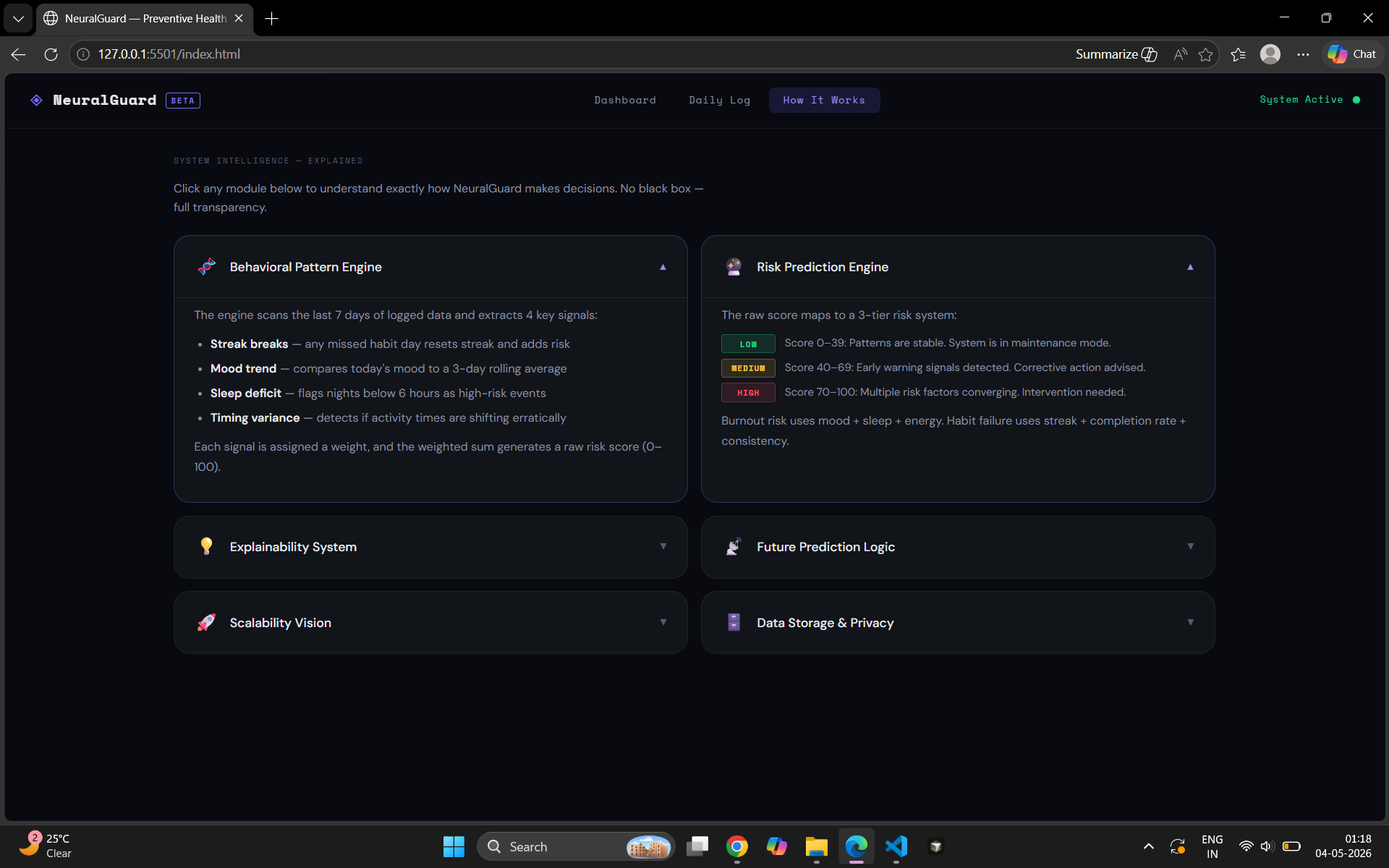
- Clear categorization (Low, Medium, High)
- Future predictions
- Explainable insights through a “Why?” system
How we built it
We built NeuralGuard as a web-based application using:
- HTML, CSS, JavaScript
- Modular architecture (Tracker, Predictor, UI layers)
- LocalStorage for data persistence
- Chart.js for visualization
The core intelligence comes from a behavioral pattern engine, which evaluates multiple factors such as mood trends, sleep quality, habit streaks, and timing consistency. These signals are combined into a weighted scoring system to simulate AI-like predictions.
Key Innovation
Unlike traditional habit trackers, NeuralGuard is:
- Predictive, not reactive
- Explainable (XAI-based) — users can see exactly why a prediction was made
- Behavior-driven — focuses on patterns, not isolated inputs
This creates a system that feels intelligent, transparent, and actionable.
Challenges we ran into
- Designing a scoring system that feels intelligent without using heavy machine learning
- Balancing simplicity (for demo) with depth (for realism)
- Building explainability in a way that is both technical and easy to understand
- Structuring the project cleanly within limited hackathon time
What we learned
- How to simulate AI behavior using structured logic
- Importance of explainability in modern systems
- How UI/UX impacts perceived intelligence
- Building modular, scalable frontend architecture
Future Scope
NeuralGuard can evolve into a real-world platform by integrating:
- Wearable data (sleep, heart rate, activity)
- AI models for personalized prediction
- College and workplace wellness systems
- Healthcare integrations for early intervention
Conclusion
NeuralGuard is a step toward preventive digital health, where systems don’t just track behavior—but understand it, predict risks, and guide users before problems arise.


Log in or sign up for Devpost to join the conversation.