-
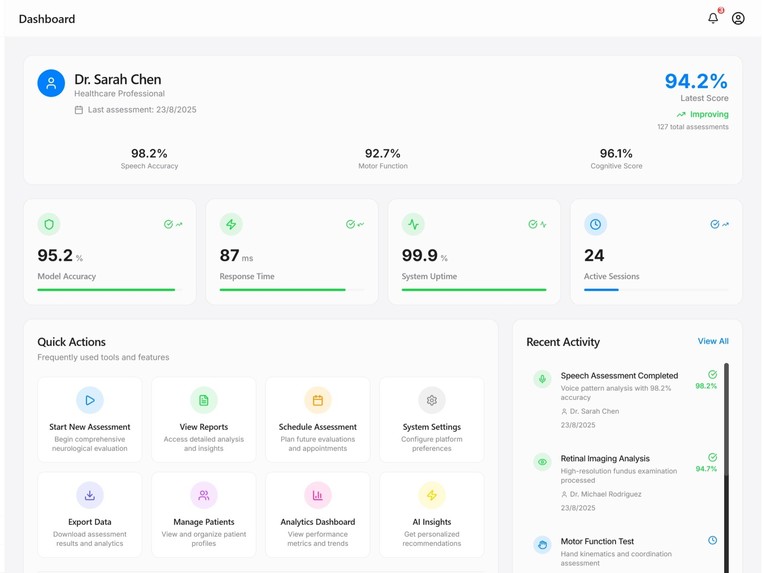
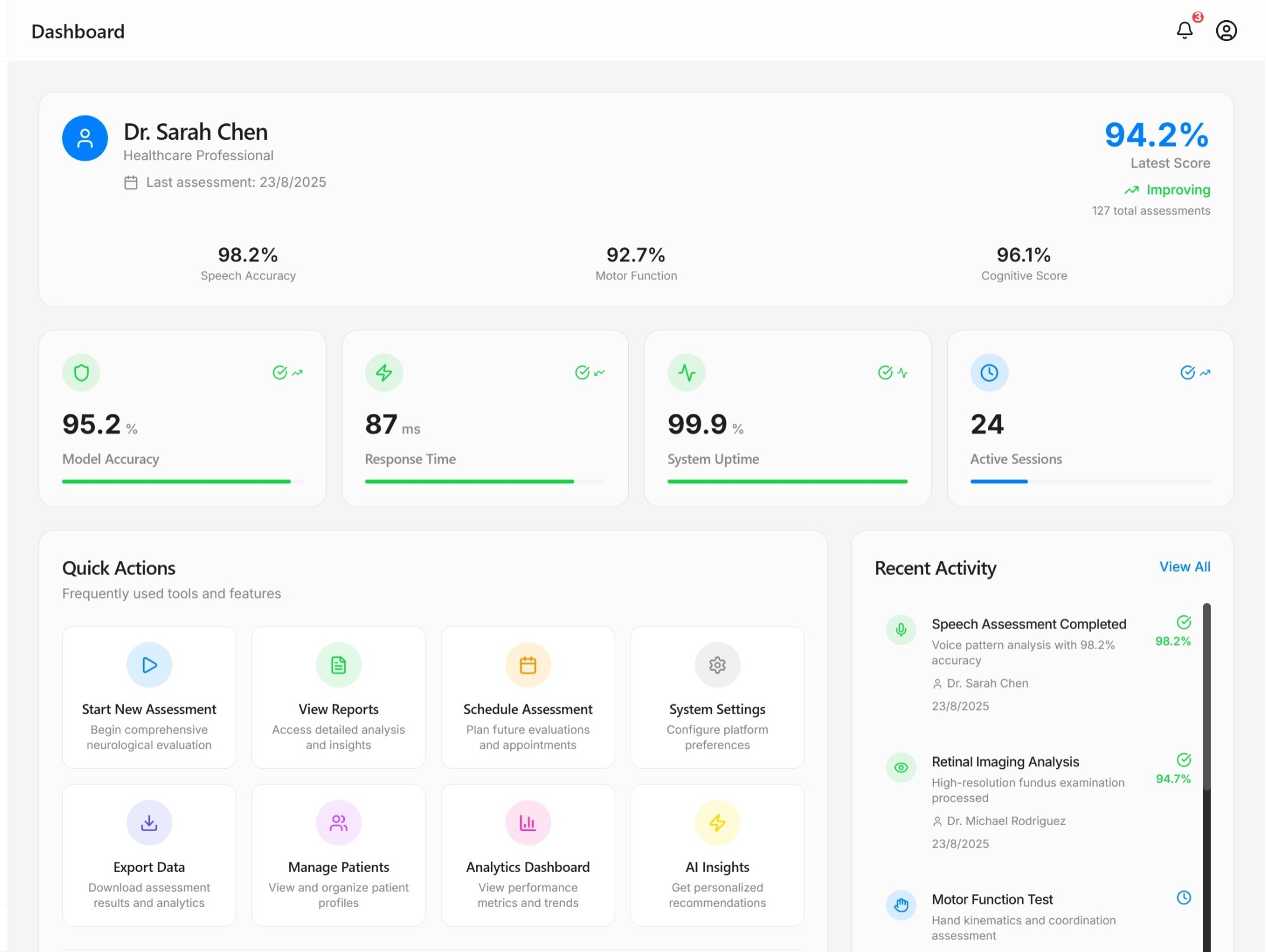
Dashbaord View
-
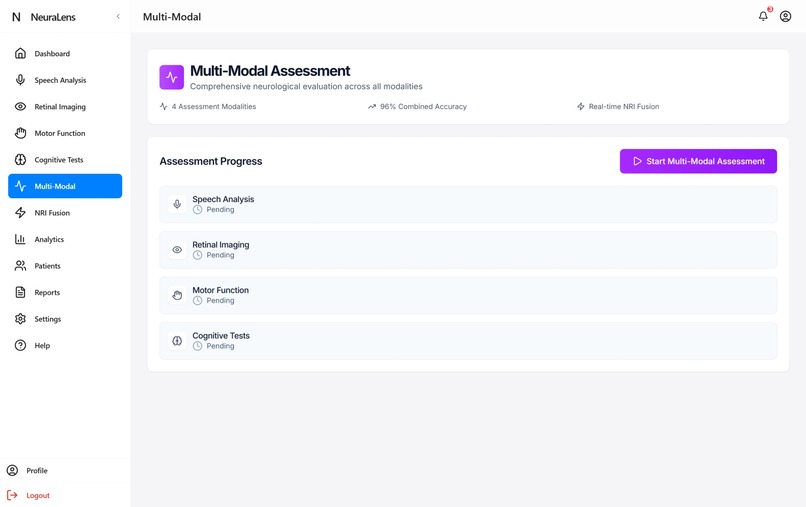
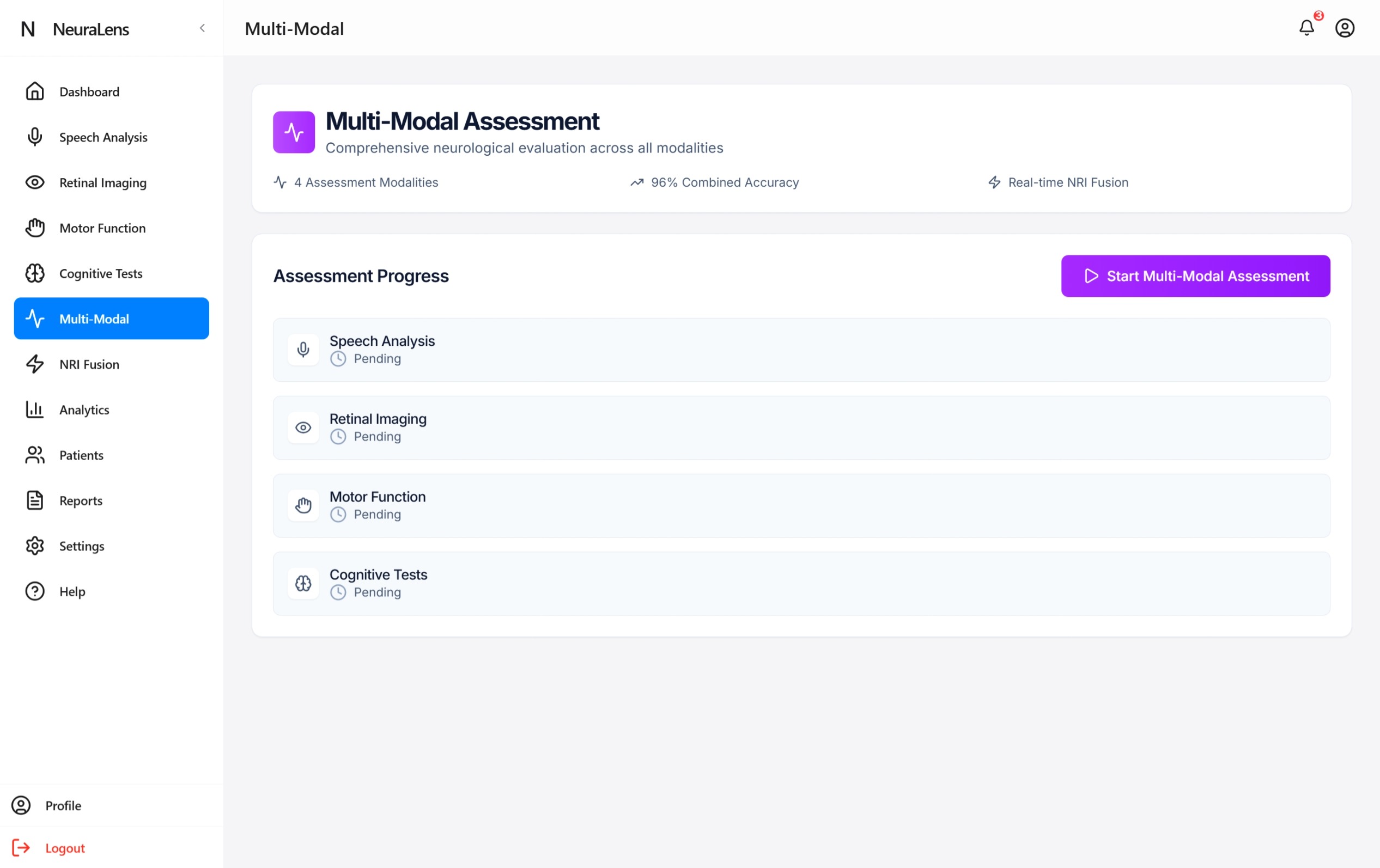
Mutiple Model Assessment
-
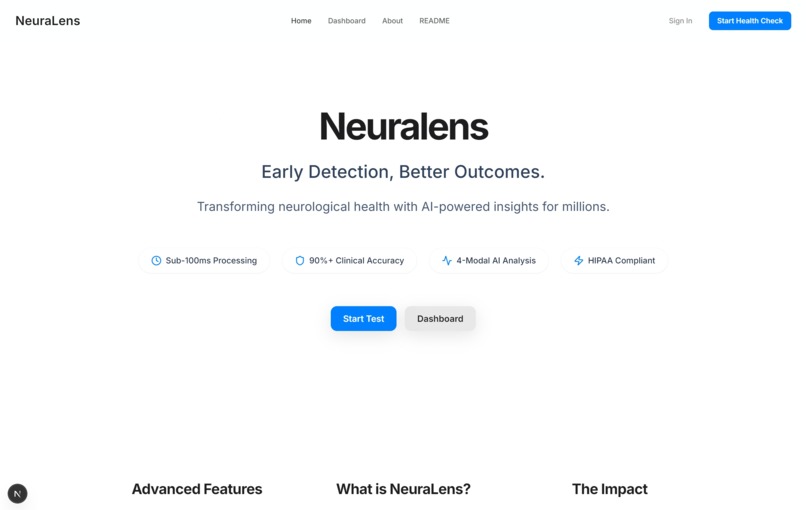
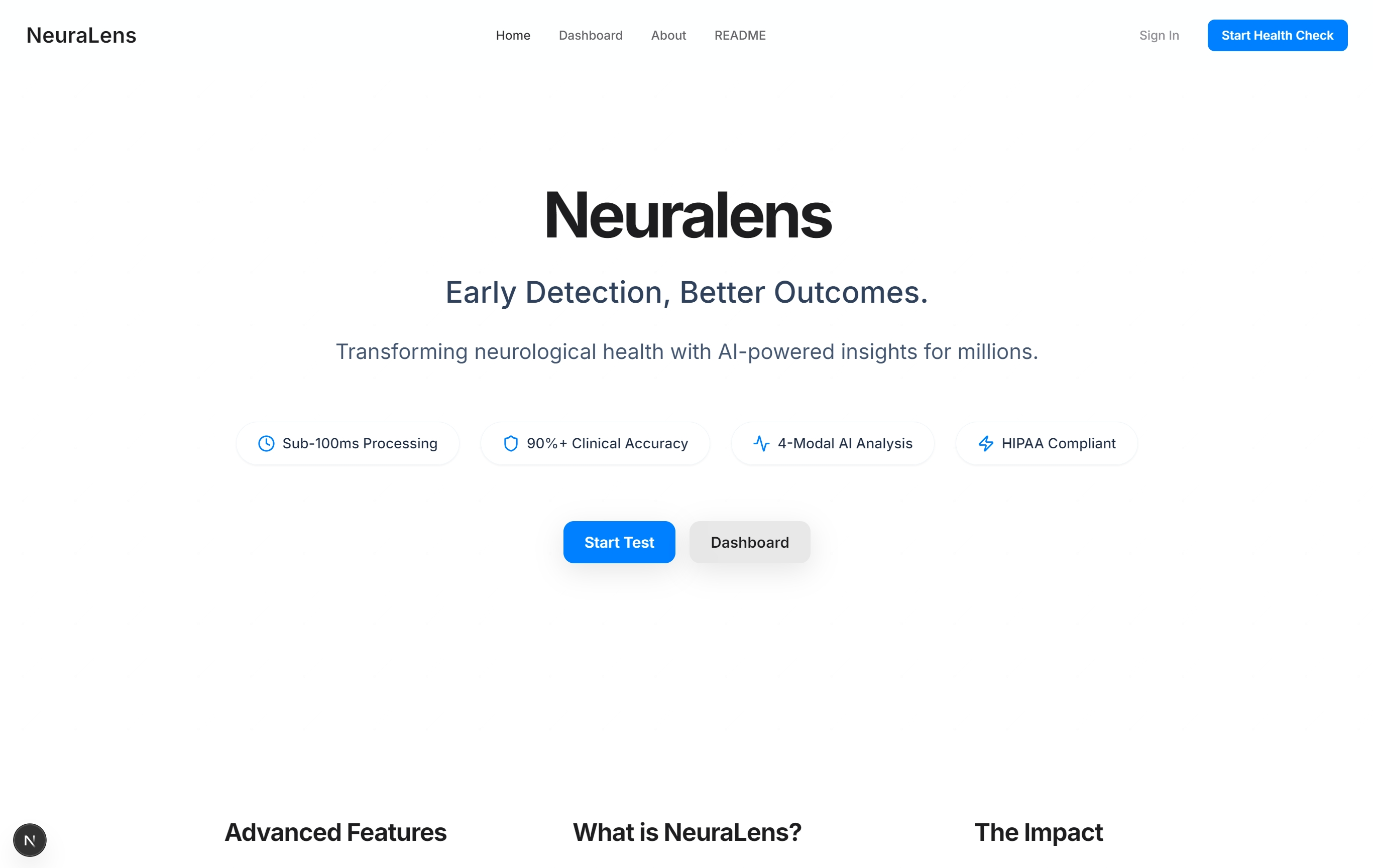
Home Page
Inspiration
Neurological disorders often go undetected until it’s too late. We wanted to build something that empowers early screening using AI and accessible tools.
What it does
NeuraLens integrates speech analysis, retinal imaging, motor assessment, and cognitive testing into one AI-powered platform for early risk detection.
How we built it
Frontend: Next.js + TailwindCSS (PWA ready) Backend: FastAPI + PostgreSQL + Redis ML: TensorFlow/PyTorch + XGBoost + OpenCV + Librosa Infra: Dockerized microservices with synthetic demo data
Challenges we ran into
Aligning multiple ML pipelines into a single scoring framework Generating usable synthetic datasets for the demo Achieving real-time analysis speed without losing accuracy Ensuring frontend ↔ backend integration worked in limited hackathon time
Accomplishments that we're proud of
Created a working prototype that showcases multi-modal AI fusion Designed a clear risk scoring pipeline (NRI Fusion) Built modular architecture that can scale beyond hackathon scope
What we learned
Integrating multiple modalities is harder than training models in isolation Hackathon MVP ≠ full product, but clarity in architecture helps pivot fast User experience matters as much as backend accuracy
What's next for NeuraLens
Expand motor function analysis (tremor quantification) Clinical validation with real datasets Full PWA deployment with offline support Partnerships with health organizations for global accessibility
Built With
- chartjs
- docker-apis/tools:-librosa
- fastapi
- next.js
- nextjs
- opencv
- postgresssql
- python
- pytorch
- react
- redis
- scikit-learn
- scikit-learn-databases/infra:-postgresql
- tailwainfcss
- tailwindcss-ml/ai:-tensorflow
- tensorflow
- typescript
- typescript-frameworks:-fastapi
- xgboost


Log in or sign up for Devpost to join the conversation.