Inspiration
Textbooks are valuable, but static pages can make complex ideas hard to picture. We wanted learners to explore topics through personalized animated explanations—lessons they can pause, replay, and ask questions about.
What it does
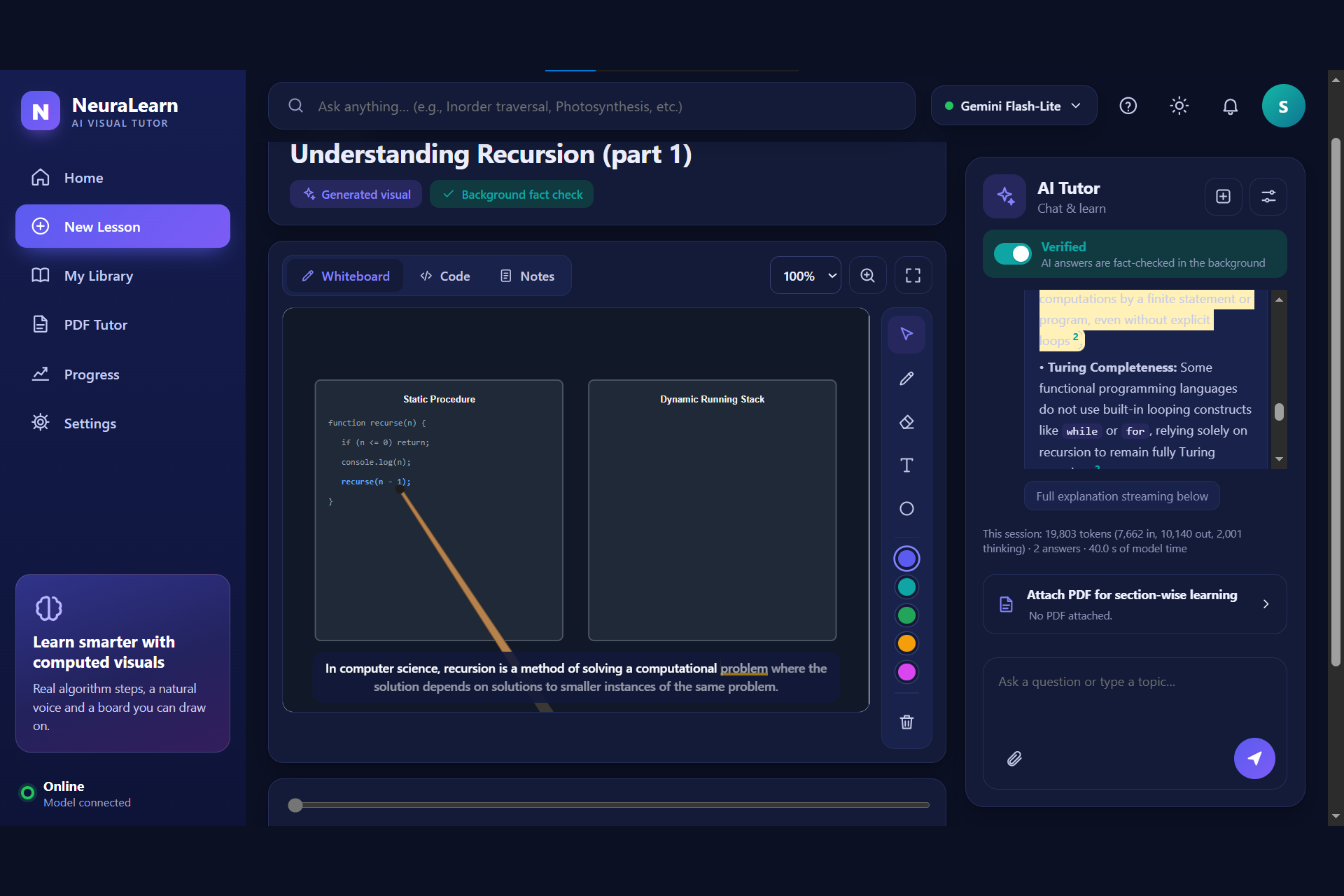
NeuraLearn turns topics and PDFs into narrated visual lessons. For supported algorithms, it runs the learner’s input and animates the real execution steps. For other topics, it generates an animated explanation. Learners can ask questions as they study.
How we built it
We built a JavaScript web app with a Node.js server connected to AI models. For open-ended topics, the model generates runnable HTML lessons with animated SVG visuals. The app plays them with narration and subtitles. For supported algorithms, our tracing code records each step, and the app animates that trace.
Challenges we ran into
Keeping narration and visuals in sync was challenging. We also worked to make generated lessons run reliably and ensure algorithm explanations match the actual execution. Supporting different topics and PDF content added more complexity.
Accomplishments that we're proud of
We combined AI-generated visual lessons with trace-based algorithm animations in one learning experience. Learners can use their own algorithm inputs, study from PDFs, replay lessons, and ask follow-up questions.
What we learned
Educational AI needs more than a good explanation: visuals must match the lesson, and learners need control to pause, replay, and ask questions. We also learned to validate generated content and ground algorithm lessons in real execution.
What's next for NeuraLearn
We plan to support more topics and algorithms, improve personalization and accessibility, and refine the accuracy and quality of generated lessons. Student feedback will help us decide what to improve next.
Built With
- css
- generative-ai
- google-gemini
- html
- javascript
- mediarecorder-api
- node.js
- pdf.js
- supabase
- svg
- vercel
- web-speech-api

Log in or sign up for Devpost to join the conversation.