Inspiration
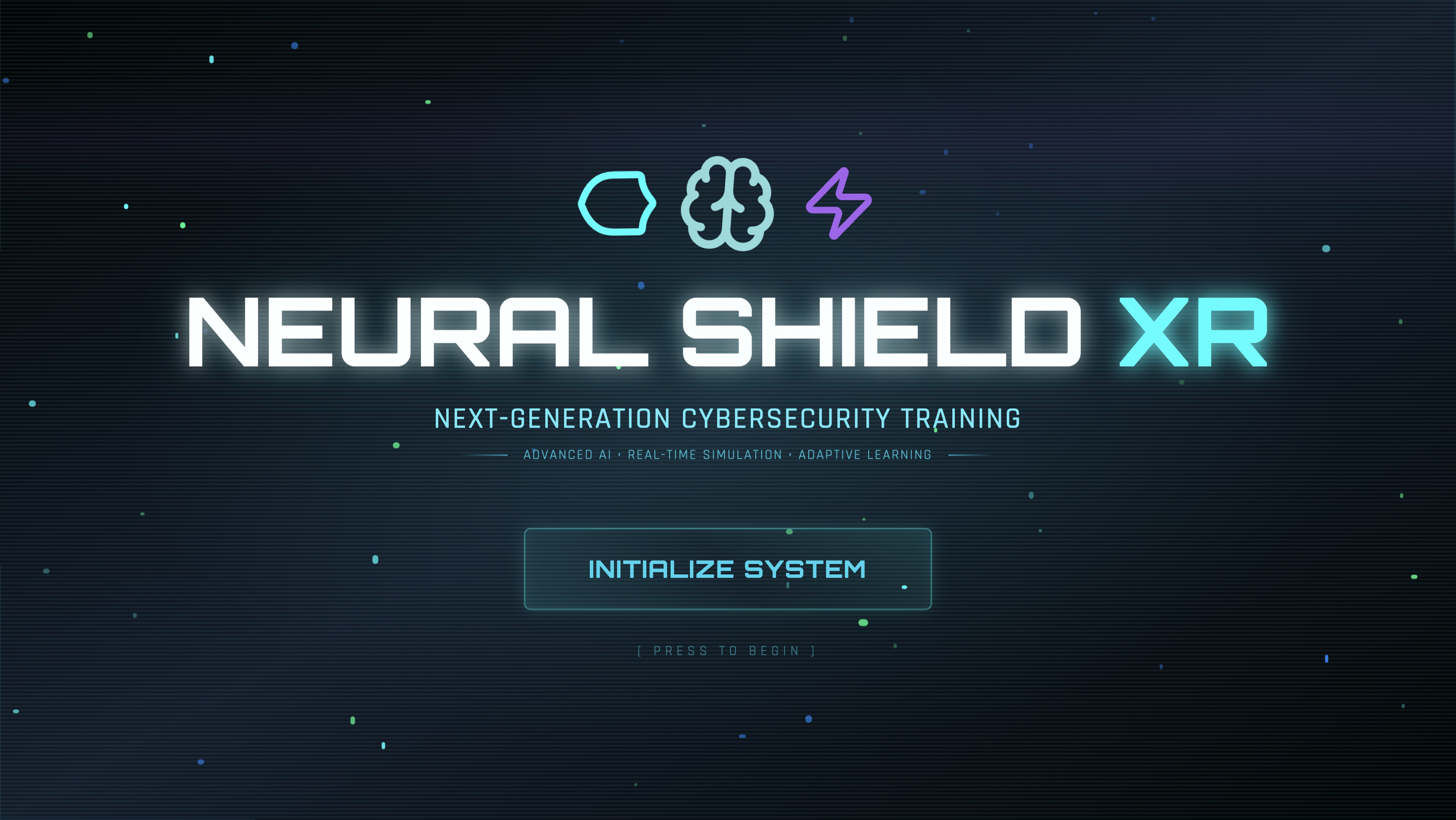
Cybersecurity is increasingly critical, yet traditional tutorials and courses often fail to teach practical instincts. We wanted to create an experience where users feel cybersecurity, not just read about it. Inspired by neural networks, cyberpunk aesthetics, and real-time AI systems, we envisioned a platform where threats are alive, adaptive, and visible, and decisions have immediate visual and behavioral consequences.
What it does
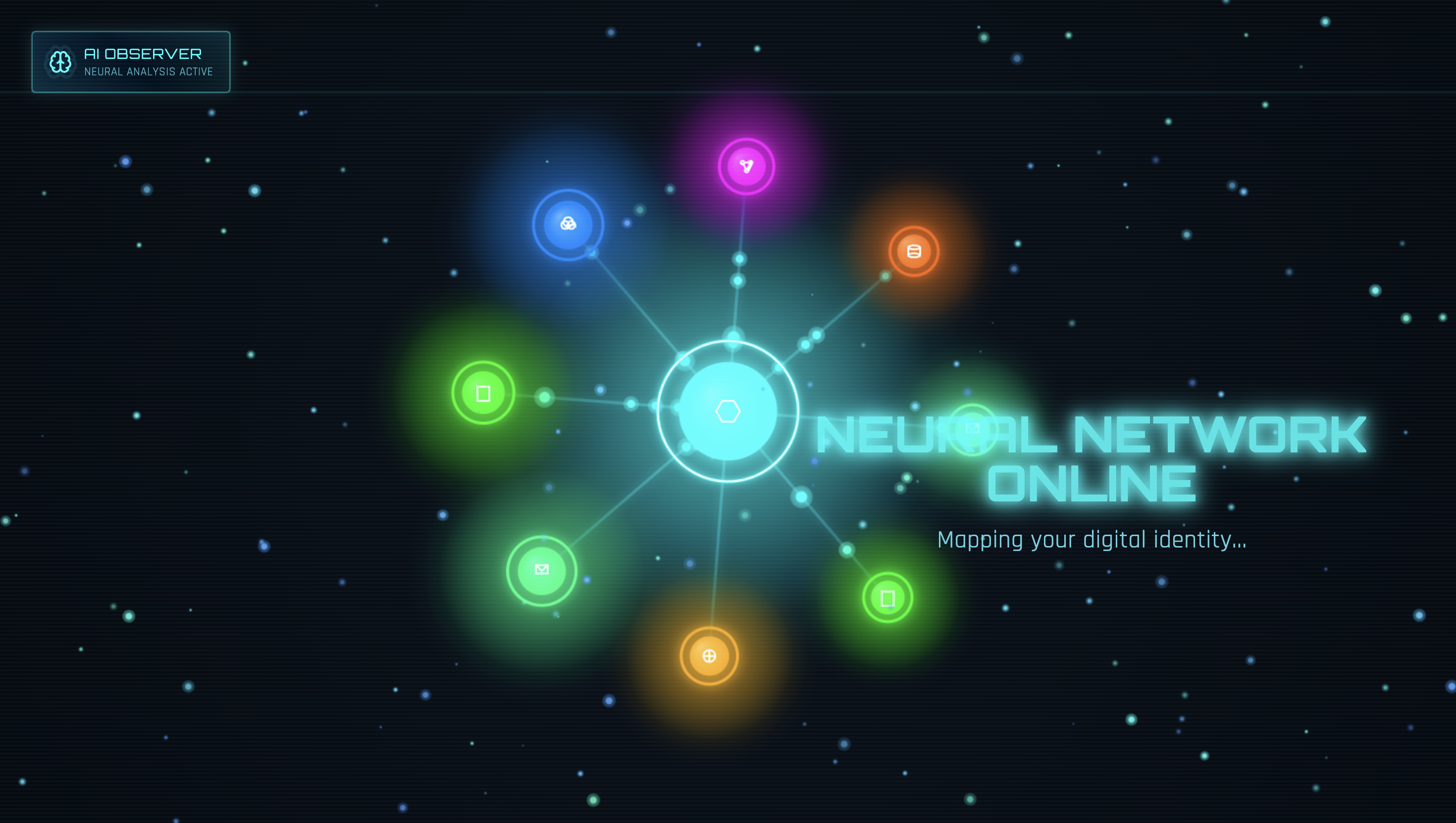
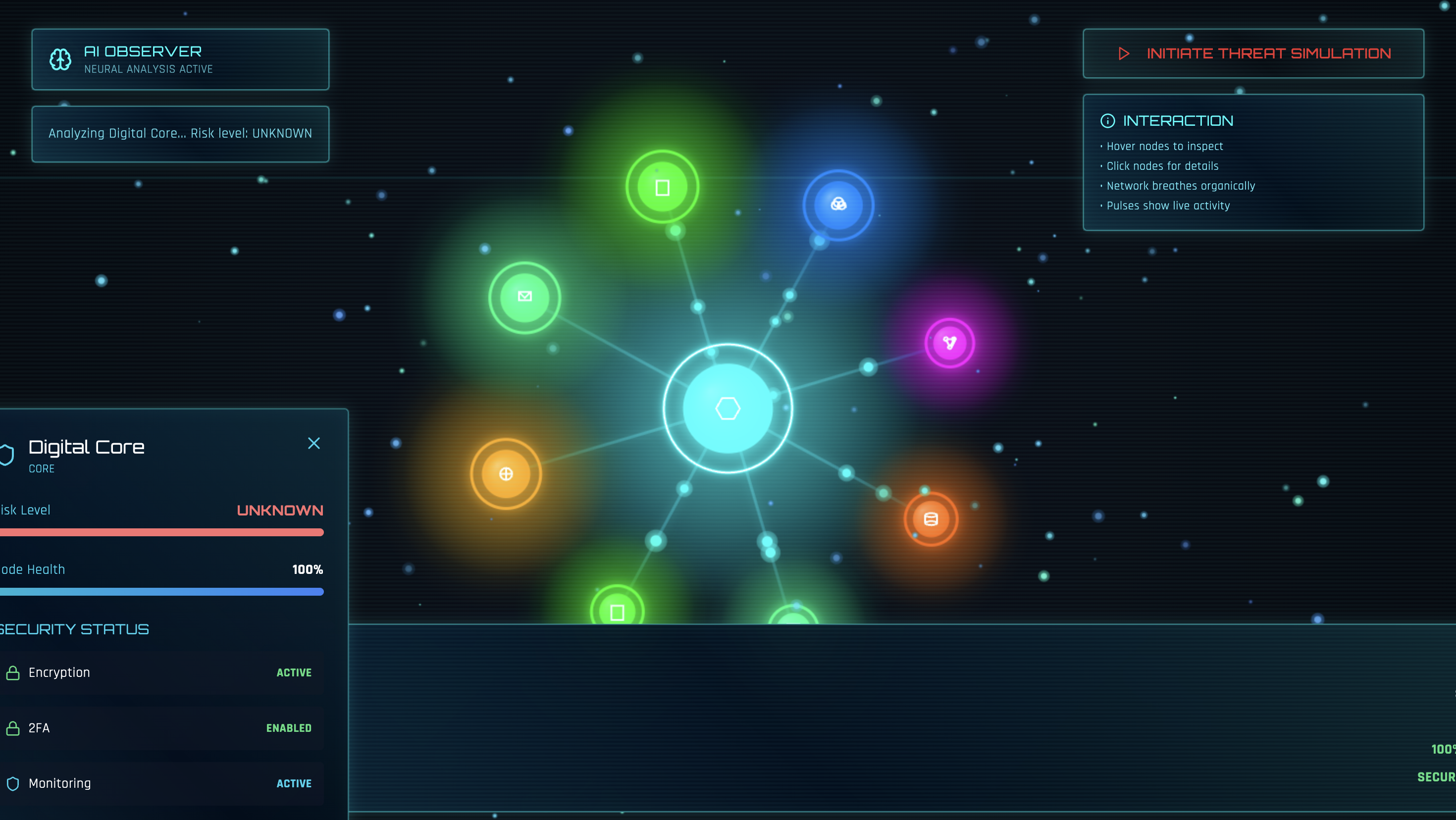
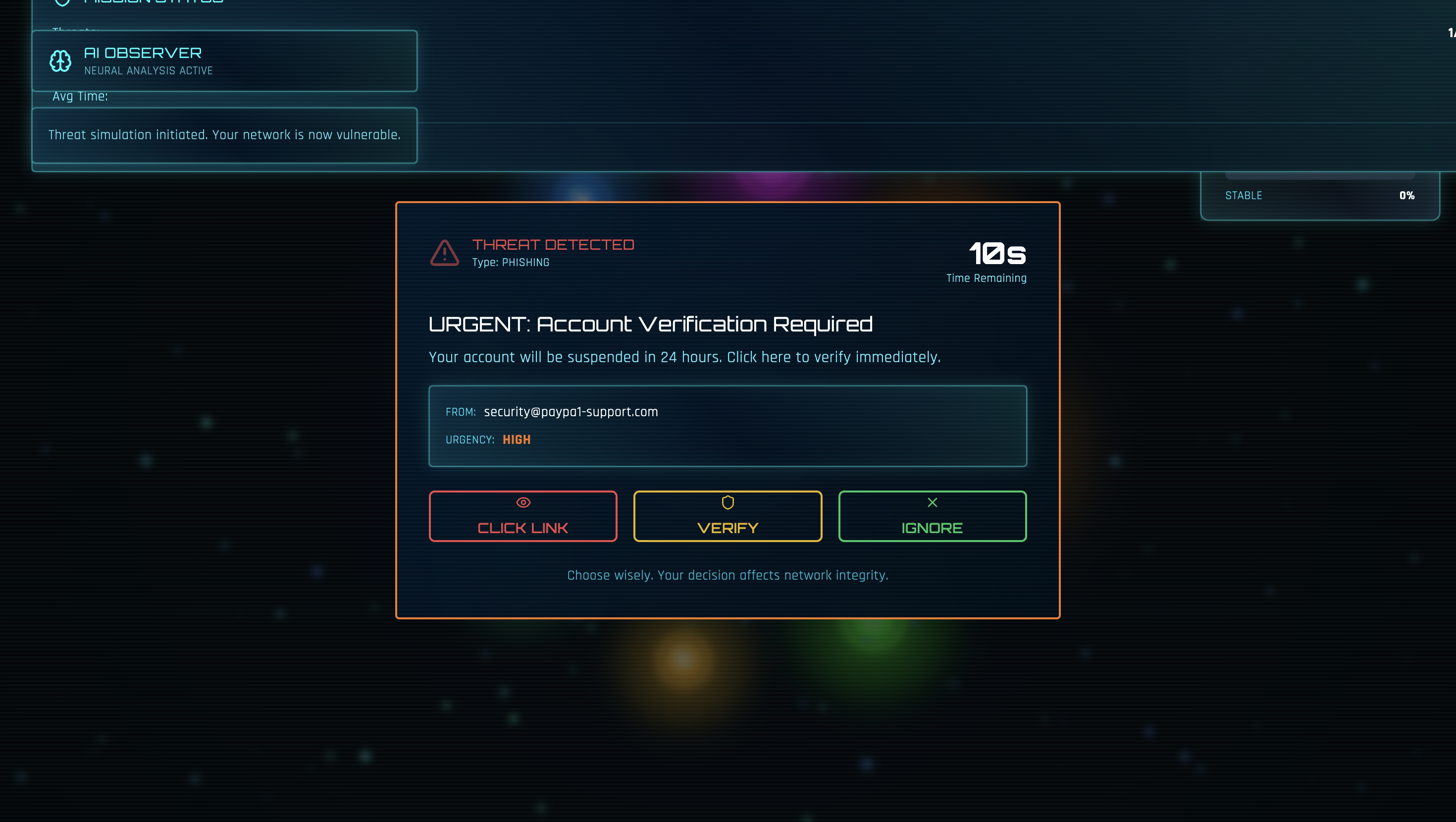
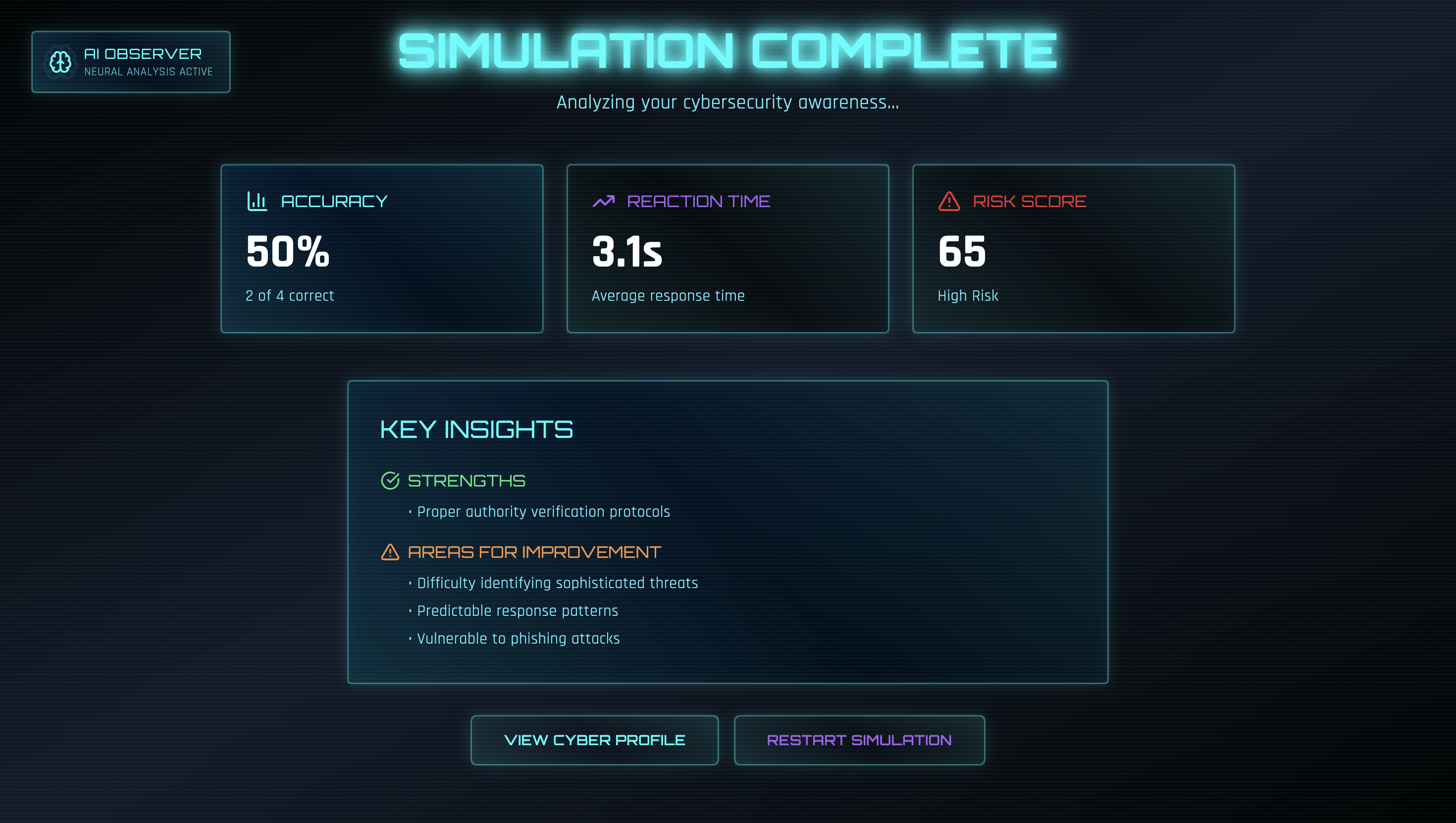
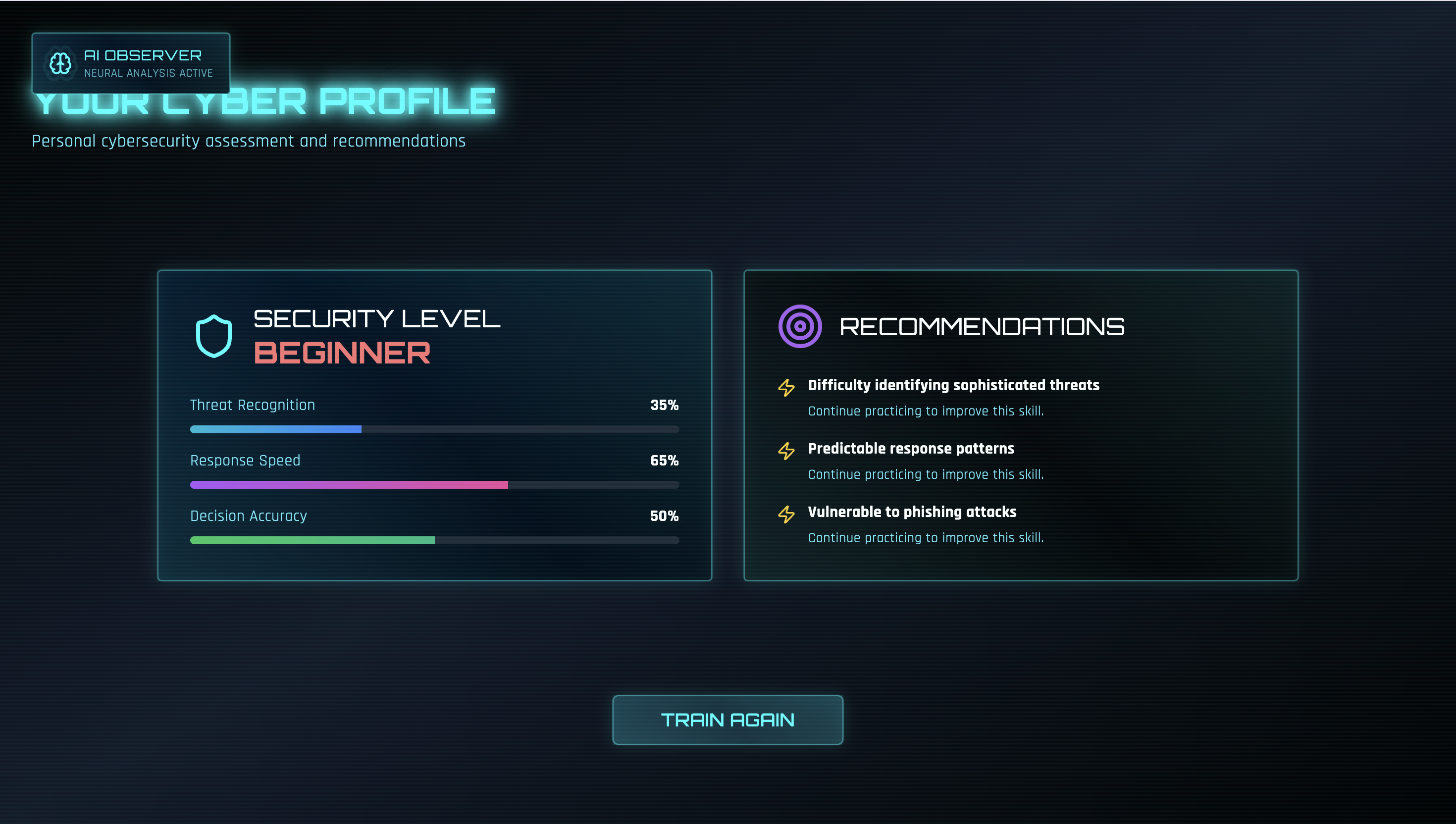
Neural Shield XR is a fully interactive web platform that: Visualizes a 3D living neural network representing devices, accounts, and data flows Introduces real-time, AI-adaptive cyber threats that challenge the user’s decision-making Reacts dynamically to user interactions (hovering, clicking, dragging nodes) Provides post-session replay showing all actions, threats, and consequences Generates a personalized cyber profile highlighting risk tendencies, reaction speed, and actionable improvements Uses audio, motion, and particle effects to immerse the user in a cyberpunk “living network” The experience teaches cybersecurity instincts without being a traditional tutorial or game. Users leave with actionable knowledge and awareness.
How we built it
I combined modern web technologies with AI and 3D visualization: Frontend: React + Tailwind CSS for clean, responsive design 3D Visuals: React Three Fiber + Drei to create a fully interactive neural network Animations: Framer Motion and custom particle shaders for neuron pulses, glowing connections, and subtle environmental movement AI Engine: TensorFlow.js monitors user behavior (reaction speed, risk patterns, decision consistency) and adapts threats in real time Audio: Web Audio API generates ambient hum, threat cues, and positive reinforcement pulses State Persistence: Local storage tracks network memory and user decisions, enabling replay and profile generation
Challenges we ran into
Performance optimization: Rendering hundreds of nodes with real-time animations and AI analysis initially caused frame drops. Solved via React Three Fiber instancing and throttling AI computations. Adaptive AI balance: Creating threats that are challenging but fair required iterative testing with multiple user patterns. User interface clarity: Designing interactions that feel immersive without cluttering the screen was difficult; we implemented radial holographic menus and contextual hover panels. Cyberpunk aesthetics without overload: We wanted a cinematic feel without overwhelming users with neon or chaos, balancing subtle glows, particle effects, and depth.
Accomplishments that we're proud of
Fully functional interactive 3D neural network with dynamic visual feedback AI-driven adaptive threats that change based on real-time user behavior Post-session replay system that visually explains all decisions Clean cyberpunk aesthetic that is immersive but professional Generated personal cyber profile providing actionable insights for real-world cybersecurity awareness Optimized the site to run smoothly in-browser without dedicated servers
What we learned
Real-time AI integration in the browser is feasible and impactful when paired with immersive 3D environments Users engage more deeply when learning is visual, interactive, and emotionally tied to consequences Balancing performance, aesthetics, and usability in complex 3D web apps is crucial for real-world adoption Cybersecurity education benefits from experiential learning, not just text-based tutorials
What’s next for Neural Shield XR
Expand threat types (e.g., multi-vector attacks, social engineering simulations) Add multi-user mode for collaborative defense scenarios Integrate real-world cybersecurity training metrics (simulated MFA, phishing simulations) Build progressive difficulty levels personalized to the user’s profile Extend analytics to track improvement over time, creating a learning dashboard
Built With
- css/tailwind
- framer-motion
- html5
- javascript
- react
- react-router
- react-three-fiber
- react-three/drei
- typescript

Log in or sign up for Devpost to join the conversation.