-
-
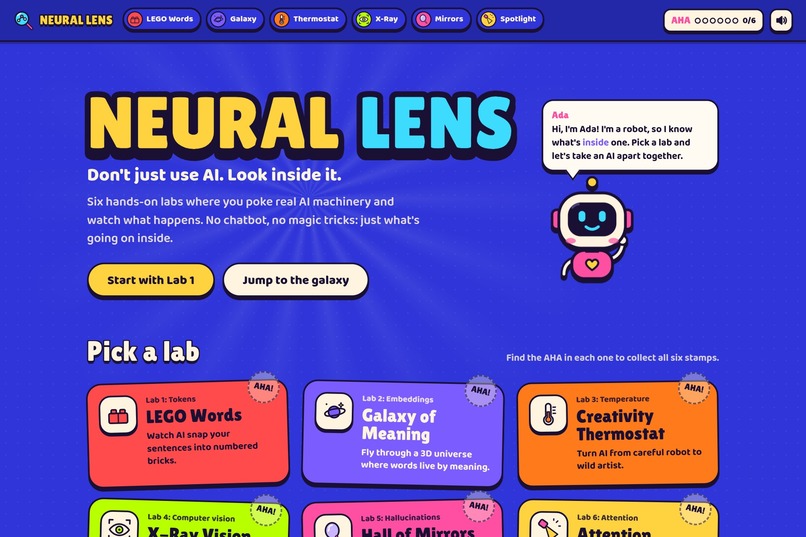
Home page
-
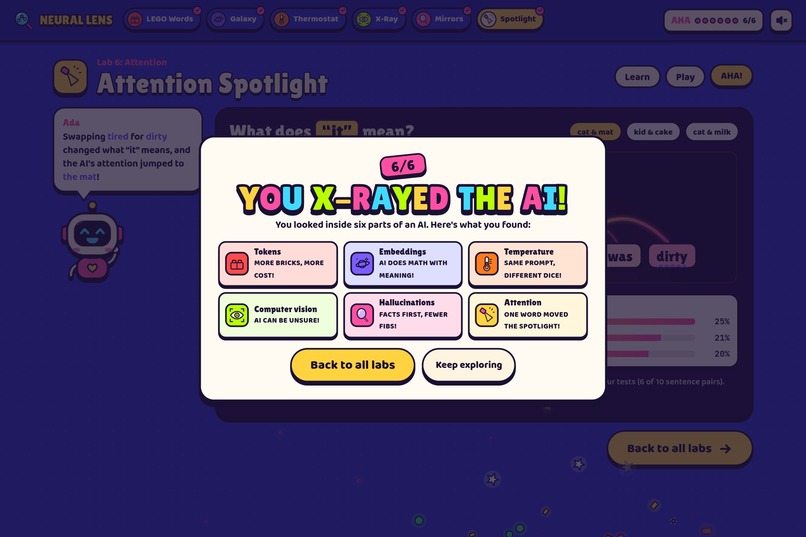
The 6/6 finale
-
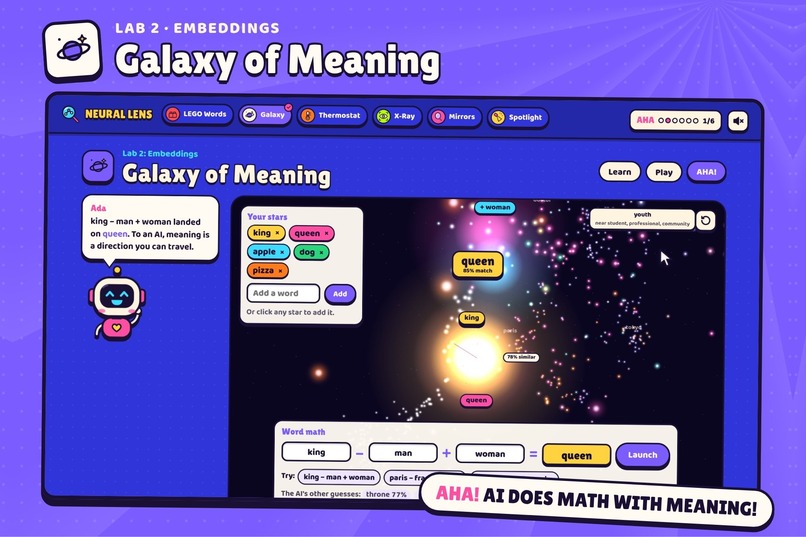
Galaxy of Meaning
-
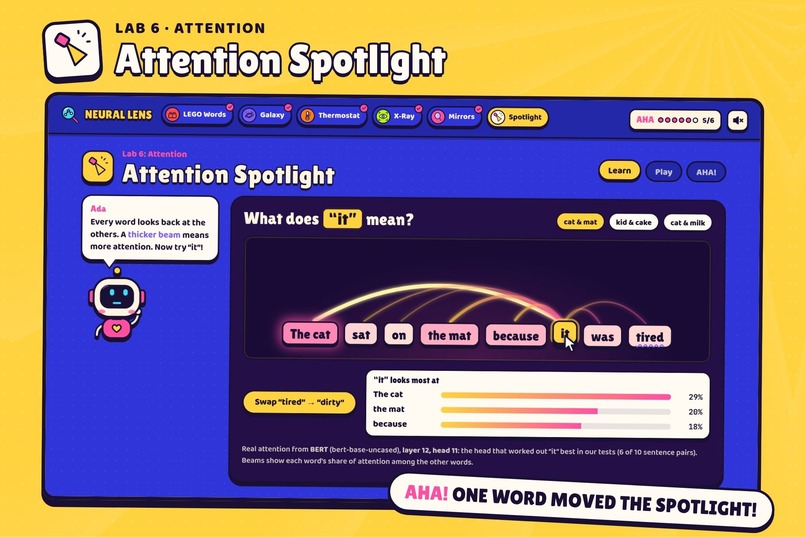
Attention Spotlight
-
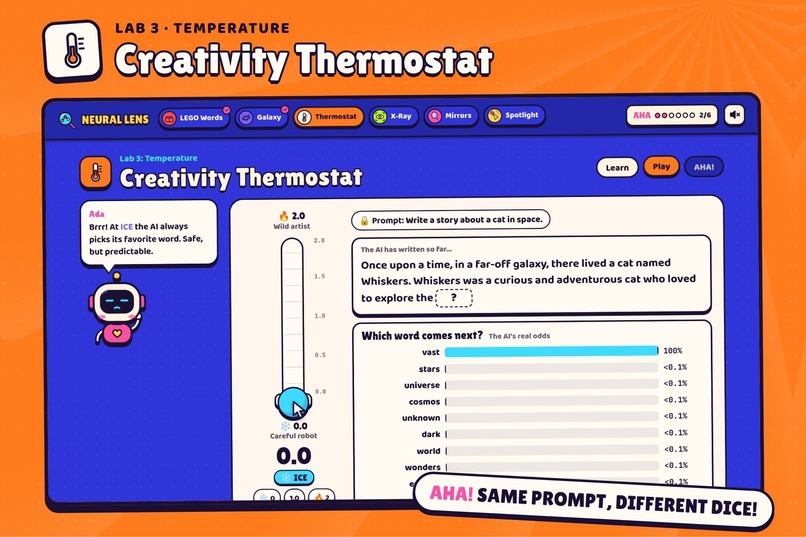
Creativity Thermostat
-
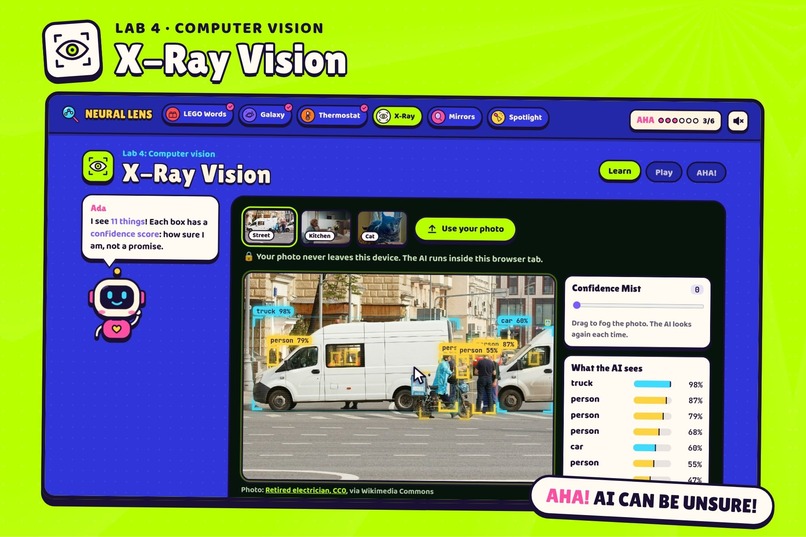
X-Ray Vision
-
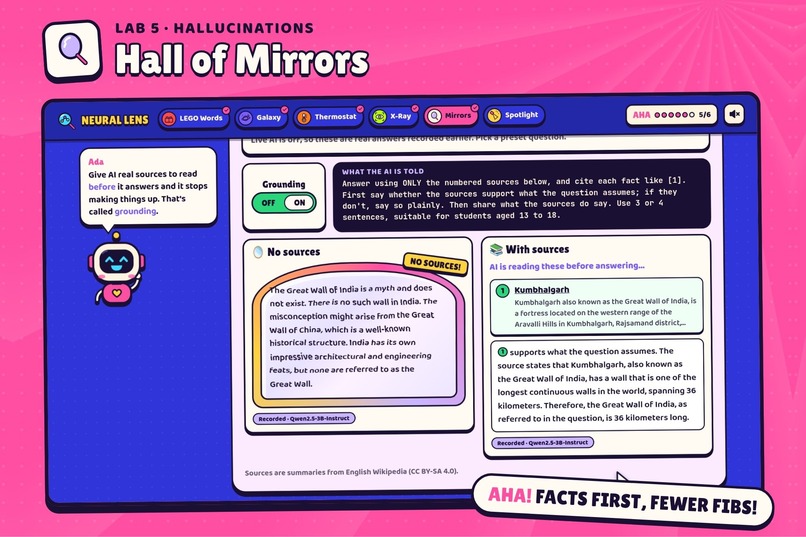
Hall of Mirrors
-
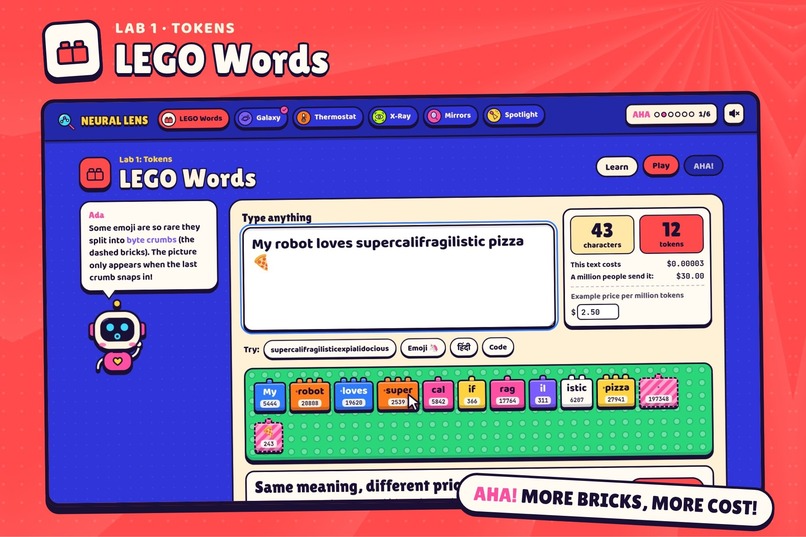
LEGO Words
Inspiration
AI can write stories, recognize objects, and answer questions—but its inner workings often remain invisible to the people using it. I wanted to make those ideas easier to explore through experiments that give learners something to change, observe, and question.
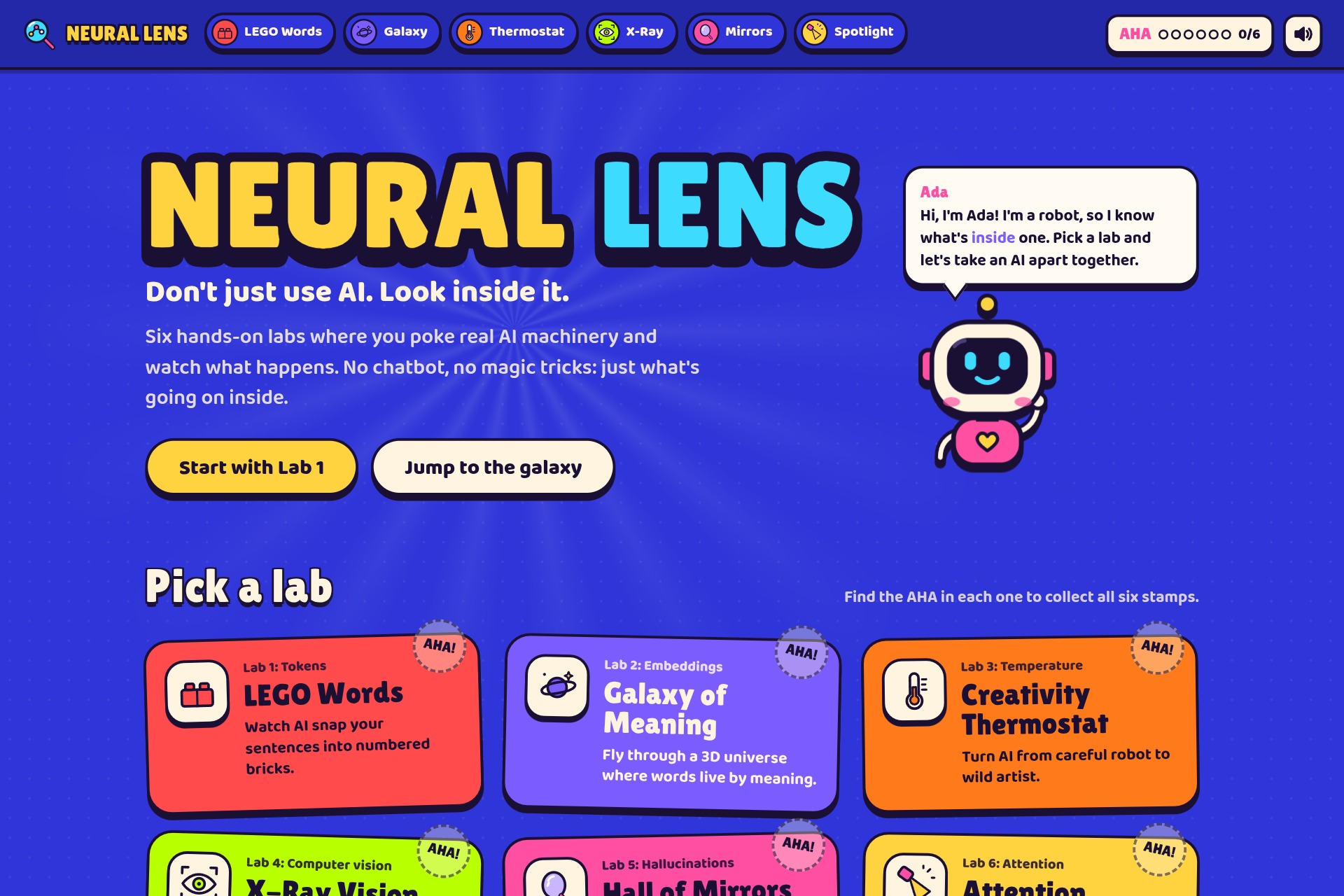
That led to NEURAL LENS: six hands-on “X-ray labs” built around one idea—“Don’t just use AI. Look inside it.”
What it does
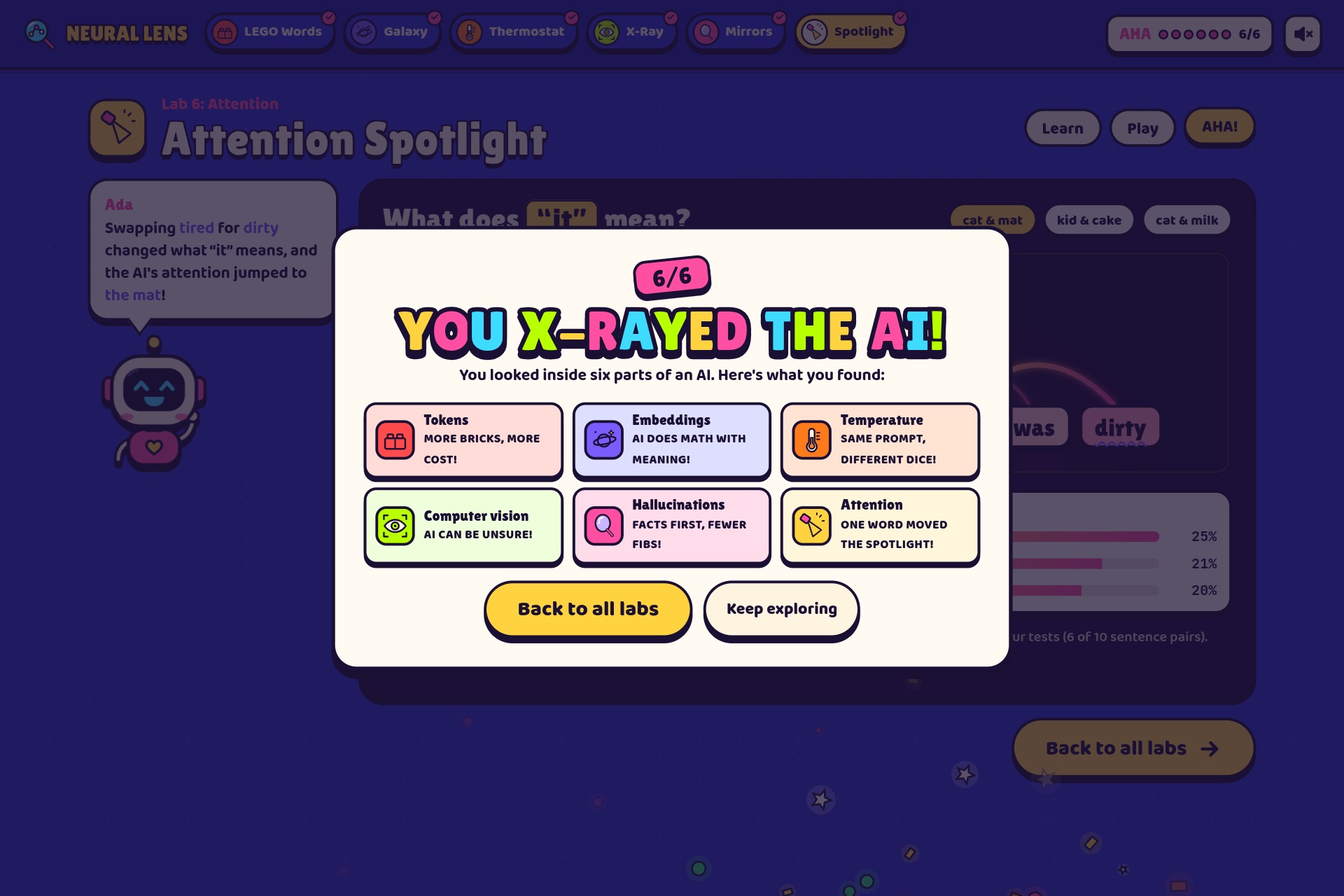
NEURAL LENS is an interactive AI learning playground. Ada, a friendly robot guide, introduces each concept, and then learners explore it through a hands-on experiment. Each lab follows a Learn → Play → AHA! progression, with collectible stamps connecting the six experiences.
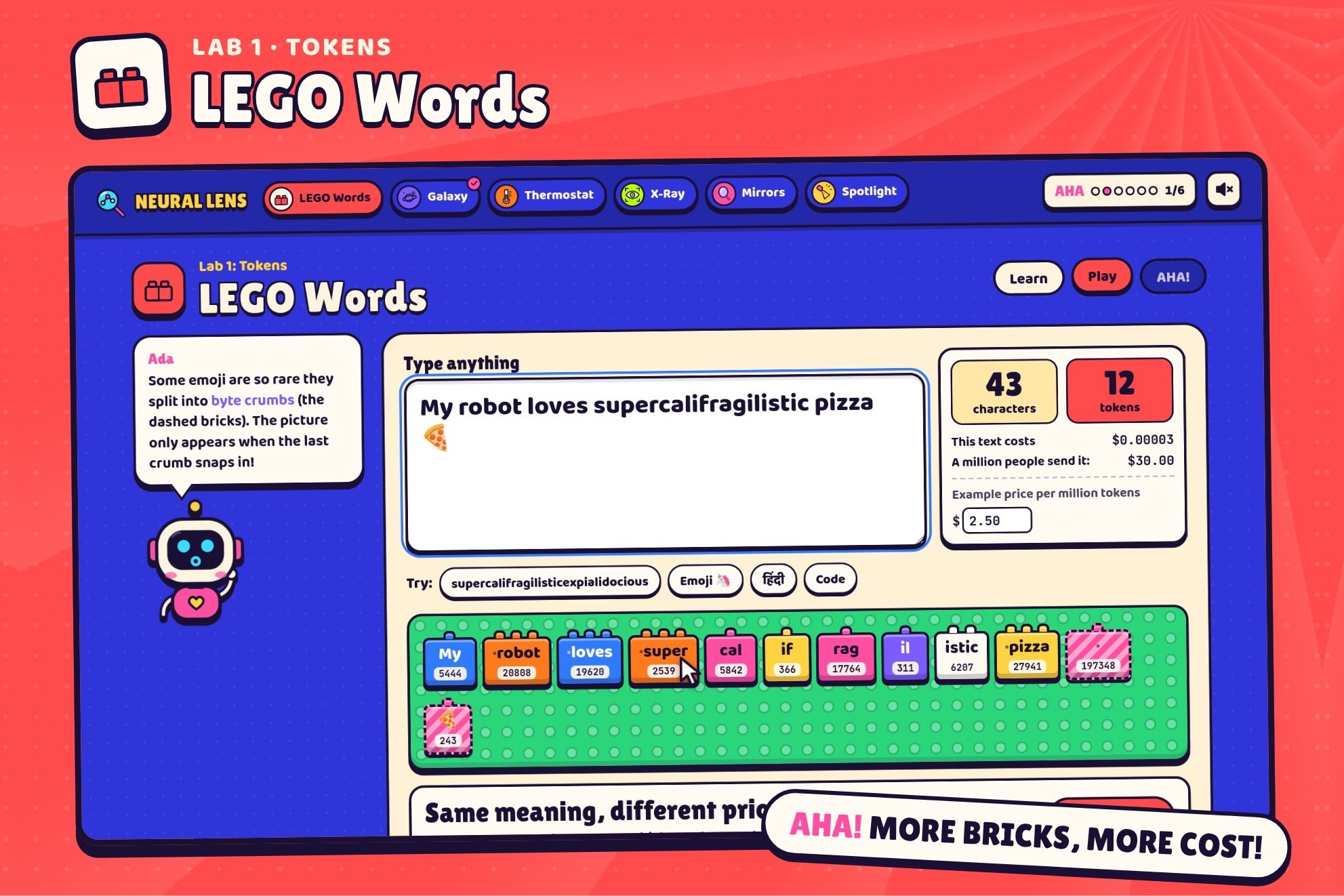
- LEGO Words: Turns text into real tokens so learners can explore how language is broken into pieces.
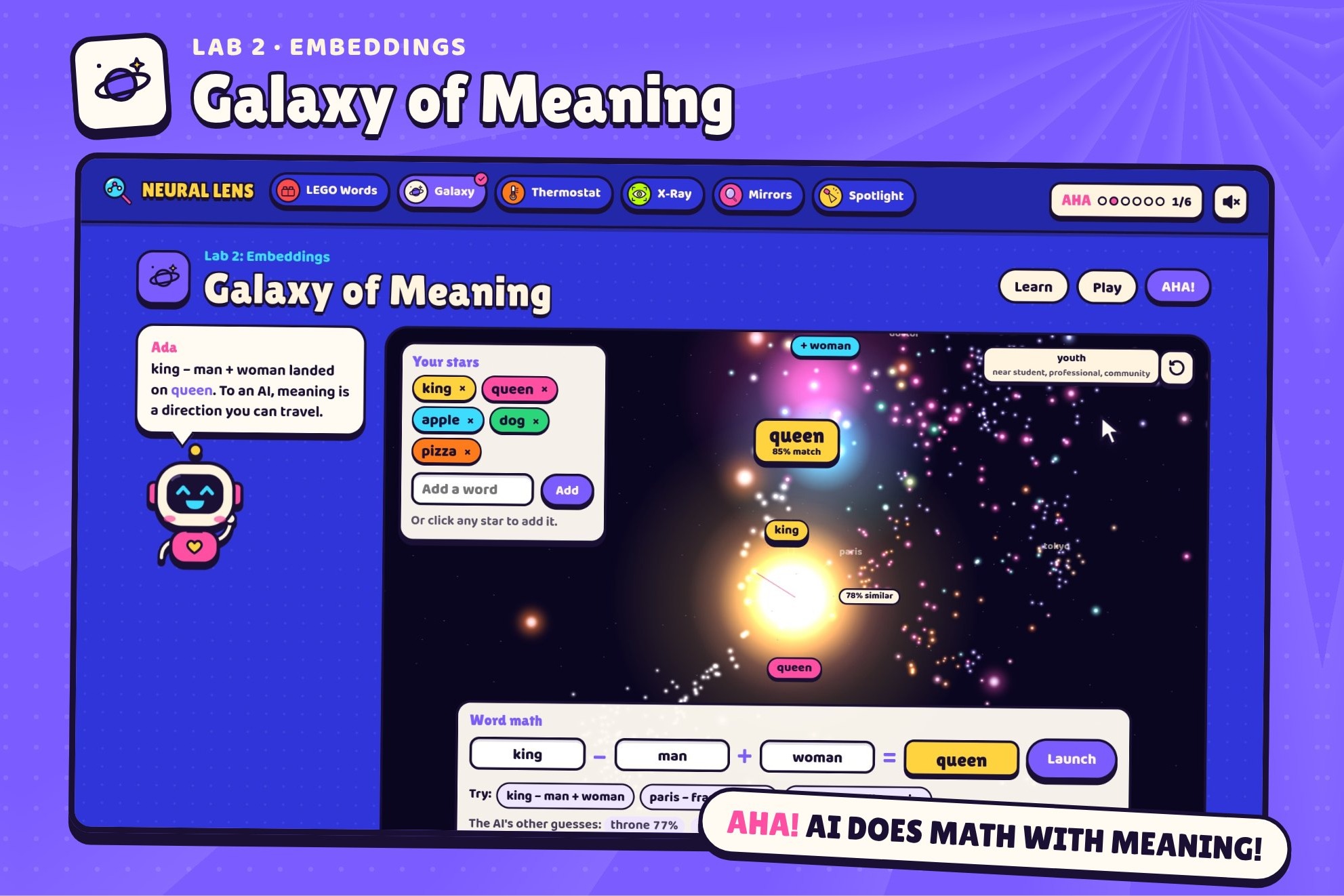
- Galaxy of Meaning: Makes word embeddings explorable in a 3D galaxy, including word arithmetic and semantic relationships.
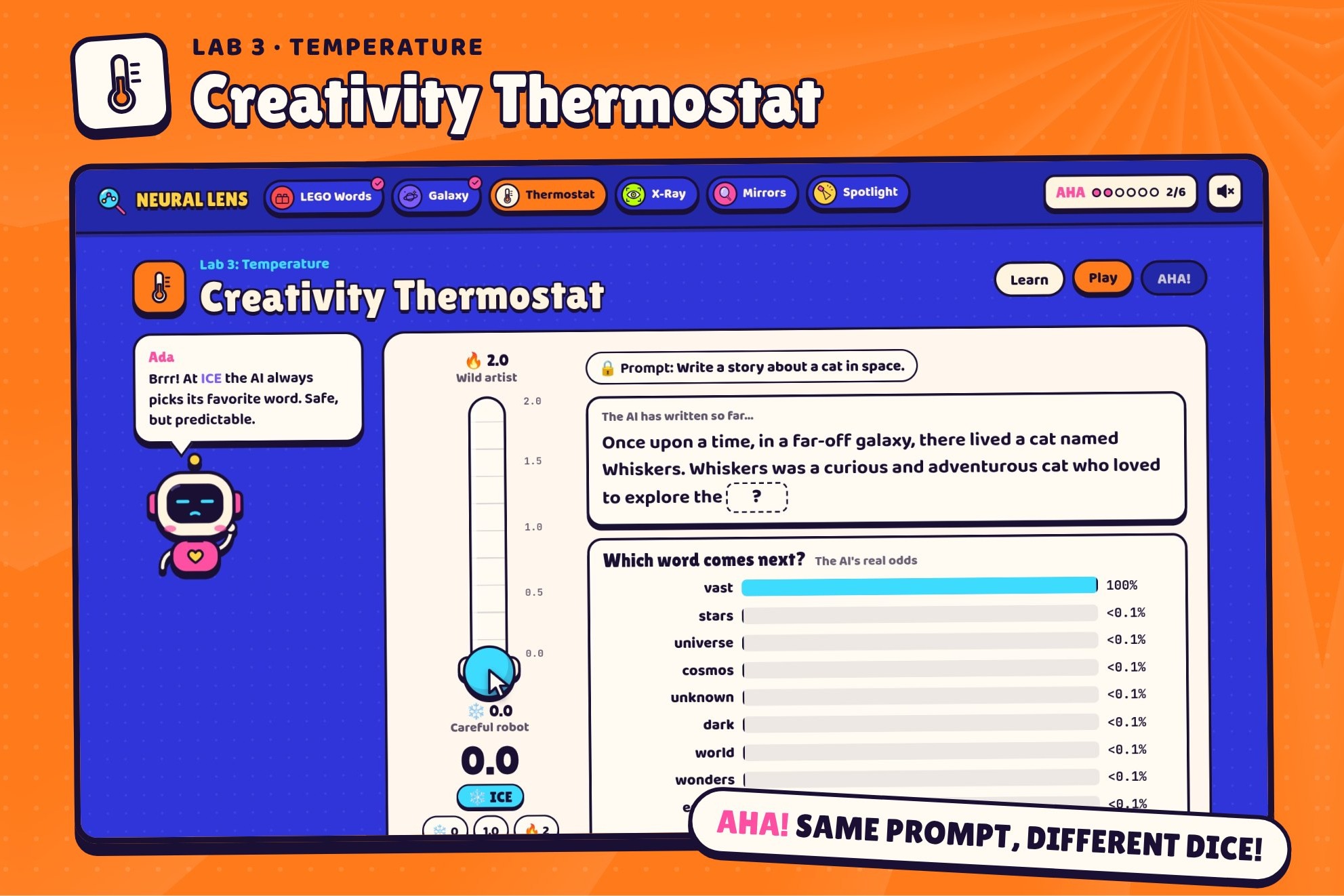
- Creativity Thermostat: Shows how temperature changes next-token probabilities and generated stories.
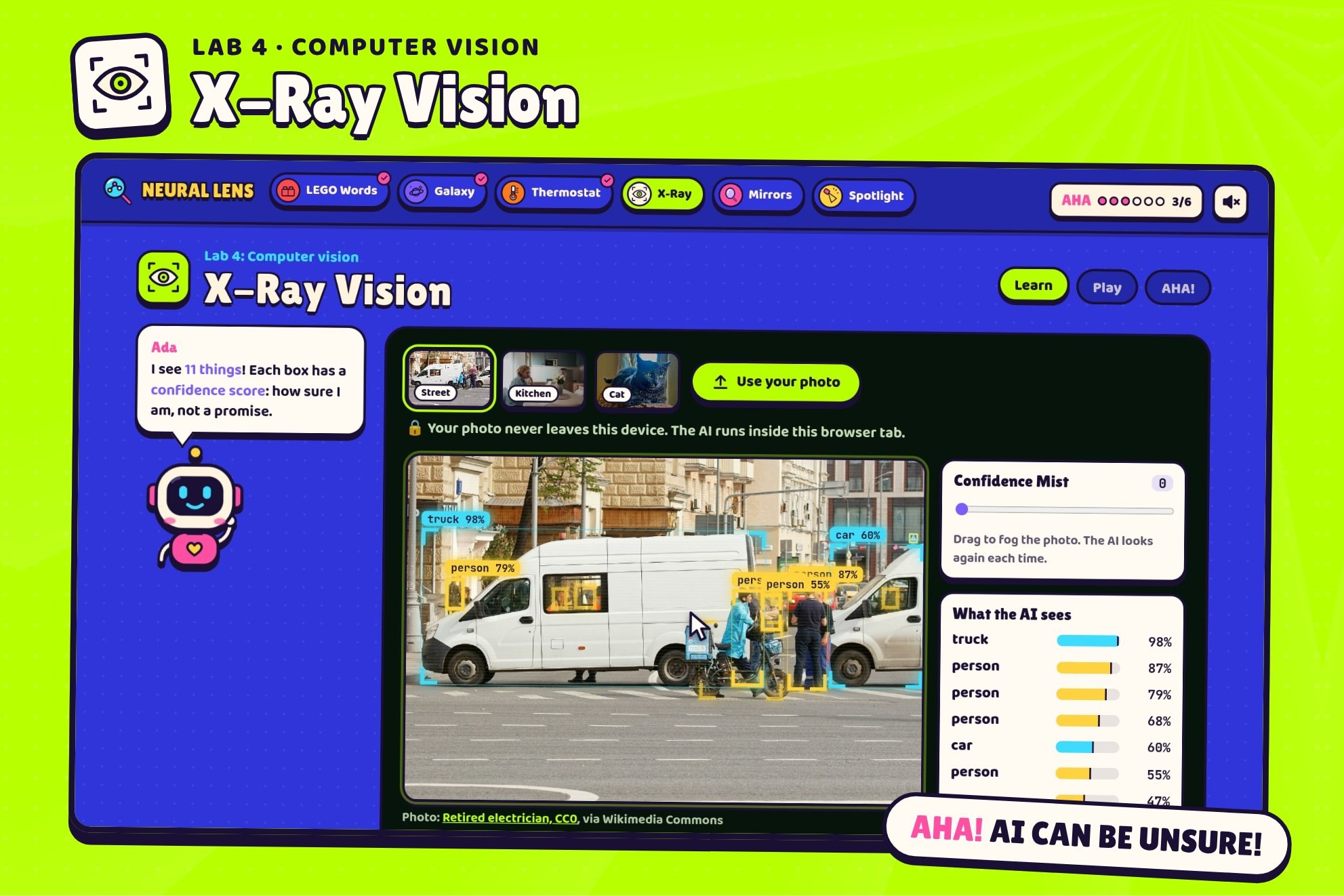
- X-Ray Vision: Runs object detection on images in the browser, with a “Confidence Mist” experiment that reveals how degraded images affect predictions.
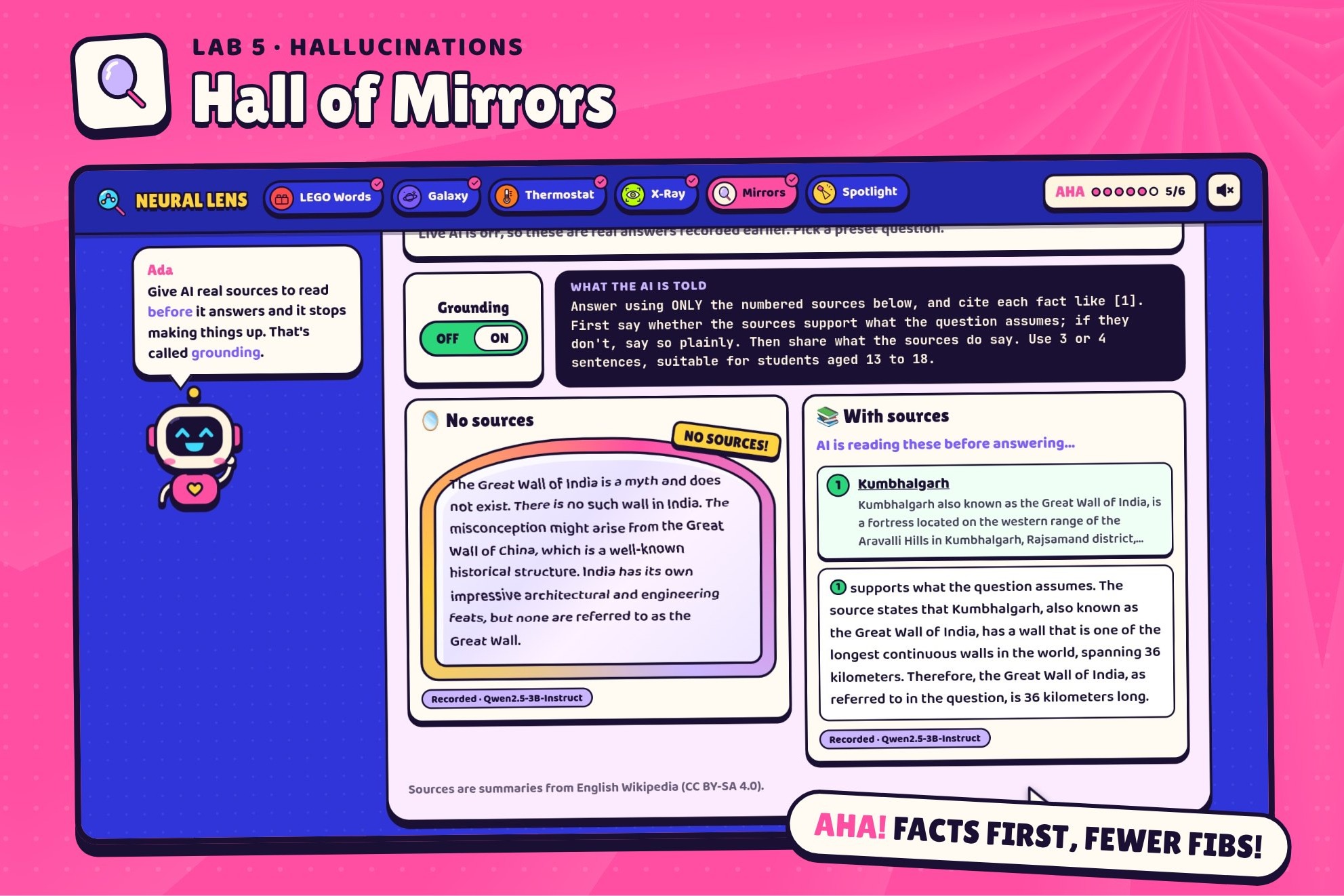
- Hall of Mirrors: Compares ungrounded answers with answers supported by Wikipedia sources.
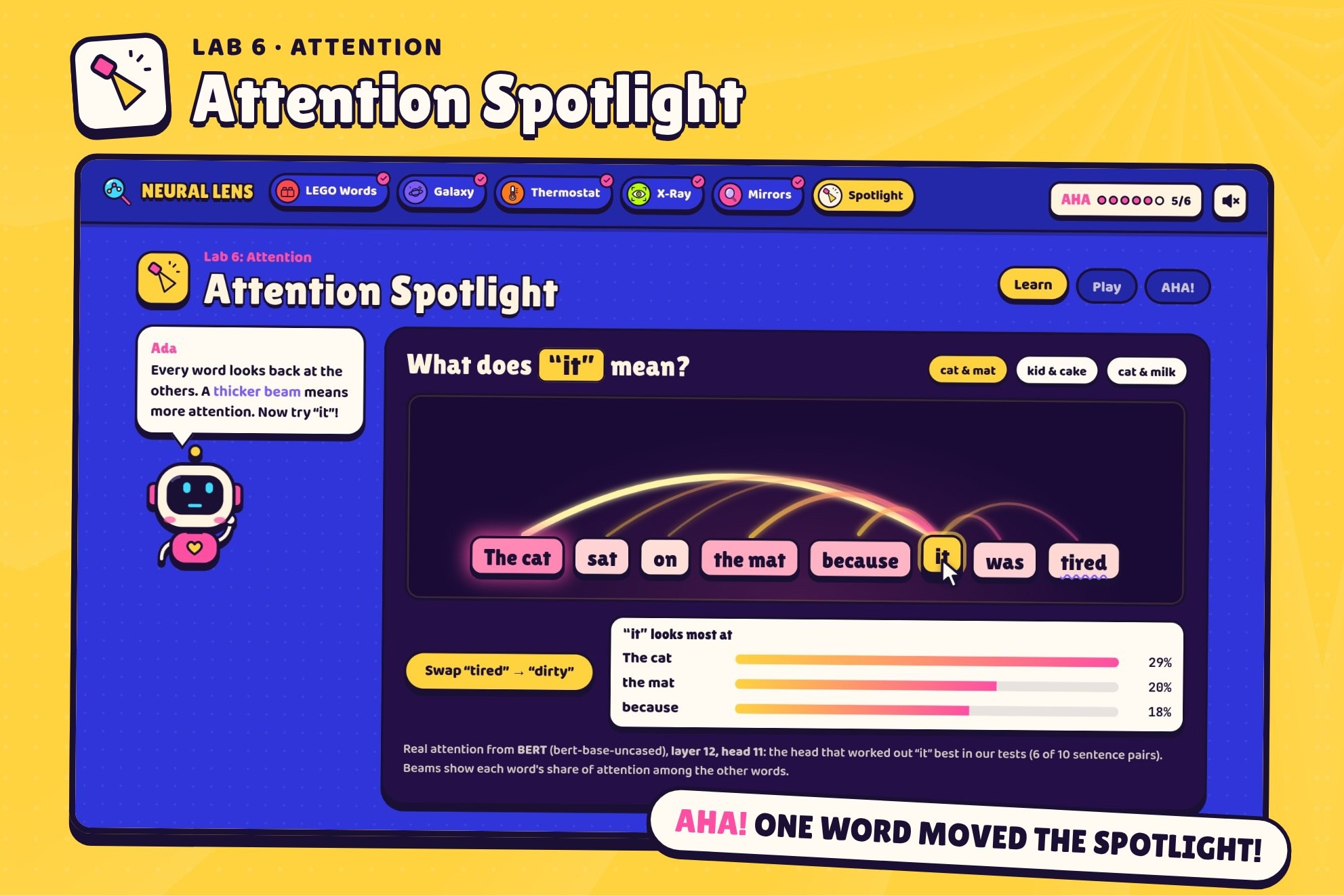
- Attention Spotlight: Visualizes recorded BERT attention weights to explore how connections between words change with context.
Every lab works without an API key. The public deployment uses clearly labeled recorded model outputs for the story-generation and grounding demonstrations; optional Featherless integration enables live generation when configured.
How we built it
I built the interface using HTML, CSS, and JavaScript modules, with a zero-dependency Node.js server and no bundler or build step. The application is containerized with Docker and deployed on Google Cloud Run.
Each lab uses real AI components or recorded outputs from real models. Tokenization uses gpt-tokenizer with the o200k_base encoding. The word galaxy uses Three.js and 30,000 GloVe word vectors, with 4,000 positioned in 3D using UMAP. Computer vision runs locally through TensorFlow.js and COCO-SSD.
Python preparation scripts generate the heavier datasets ahead of time, including Qwen probability distributions, recorded model answers, and BERT attention weights. Optional live requests pass through the Node.js server to Featherless, keeping the API key out of the browser. The grounded-answer flow retrieves Wikipedia summaries to provide source material for the model.
Challenges we ran into
A central design challenge was making complex concepts approachable while preserving their technical meaning. Visual metaphors such as token bricks, a word galaxy, and a temperature dial needed to connect to real model behavior.
Another challenge was balancing interactivity with practical browser limits. The implementation combines browser-based tokenization and object detection with precomputed vectors and recorded model outputs. This lets learners explore the concepts without needing to run every model themselves.
Transparency was equally important: learners should know when they are seeing a live result and when they are exploring a recorded example. Explicit recorded-mode labels make that distinction visible.
Accomplishments that we're proud of
I’m proud of bringing six AI concepts into one coherent learning experience, with a shared guide, consistent interaction patterns, and a completion journey.
The project makes real technical material tangible: learners can inspect token IDs, experiment with word vectors, change probability distributions, and observe an object detector becoming less confident. Uploaded photos stay on the learner’s device, and all six labs remain usable without an API key.
What we learned
A key takeaway is that an explanation becomes stronger when learners can change an input and observe the result. A small experiment can give an abstract concept a concrete meaning.
The project also highlights the value of being explicit about what a visualization shows. Recorded outputs, selected attention heads, and simplified views need context so learners can understand both their usefulness and their limits.
What's next for NEURAL LENS
I’d like to test the labs with learners and educators, then use their feedback to improve the explanations and experiments. Potential next steps include guided classroom activities, more multilingual examples, and expanded attention experiments across different heads and layers.
The goal is to help learners leave with better questions about AI—and the confidence to investigate the answers.


Log in or sign up for Devpost to join the conversation.