Inspiration
We noticed a gap between fitness apps that track physical progress and wellness apps that focus on mental health - rarely do they work together. Our inspiration came from the idea of merging these worlds into one intelligent system that understands both body and mind. Neural Adapt was created to bridge that divide - an AI-powered companion that not only guides your workouts but also monitors your emotional well-being, helping you stay balanced inside and out.
What it does
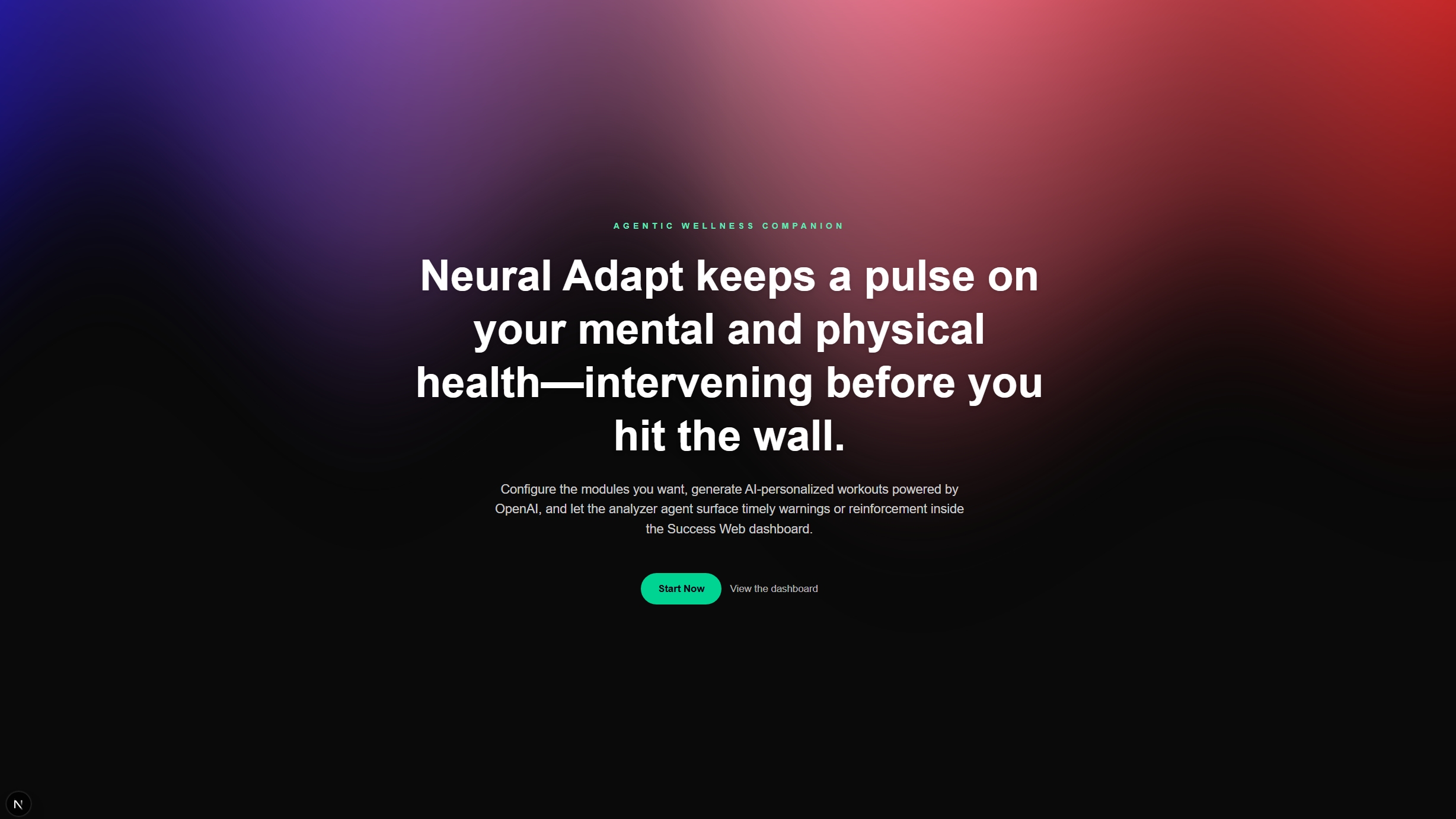
In a world of passive trackers, what if your wellness app could actively intervene before you hit a wall? Introducing Neural Adapt, the next-generation productivity platform designed to fundamentally improve your mental and physical health.
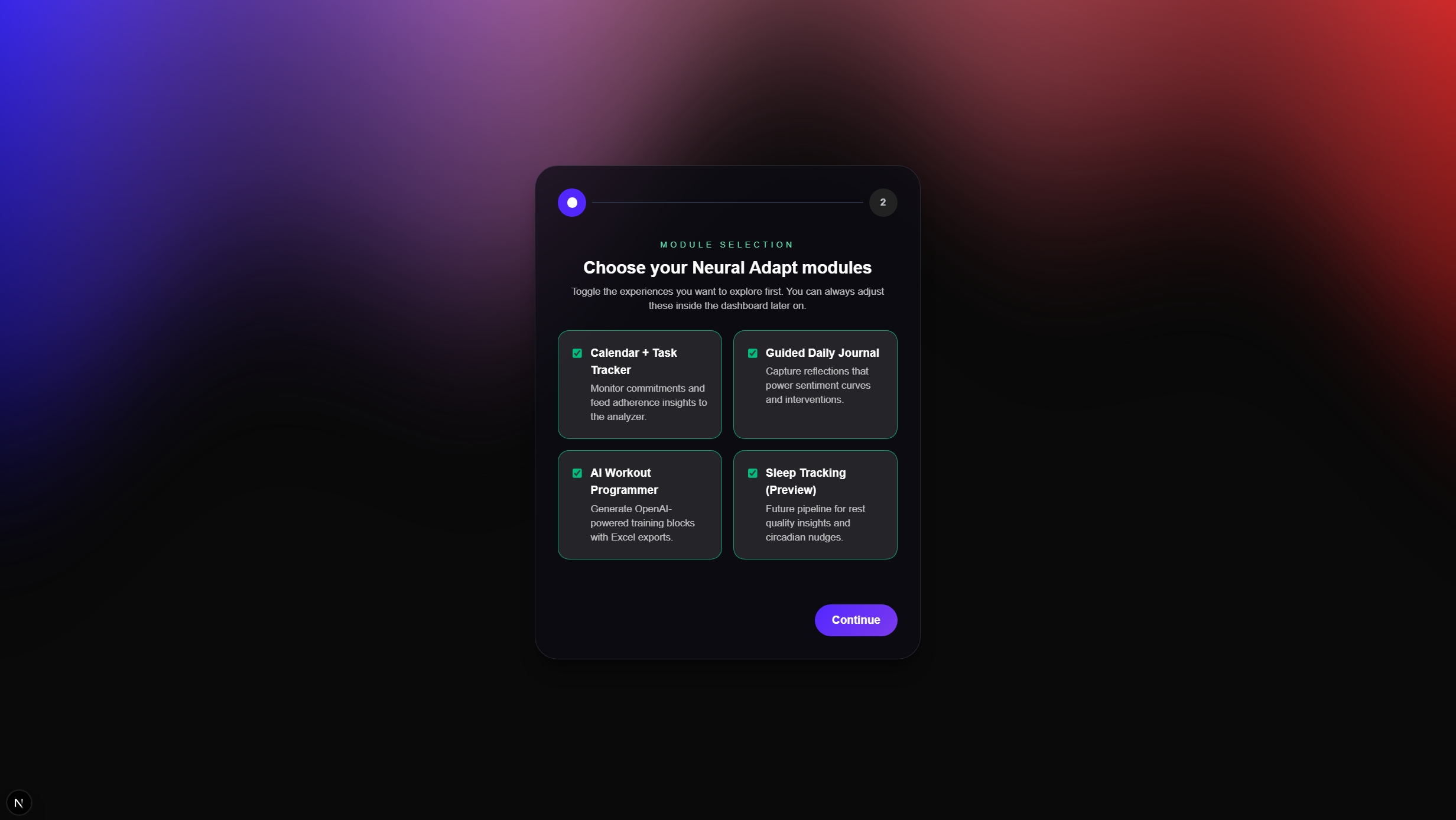
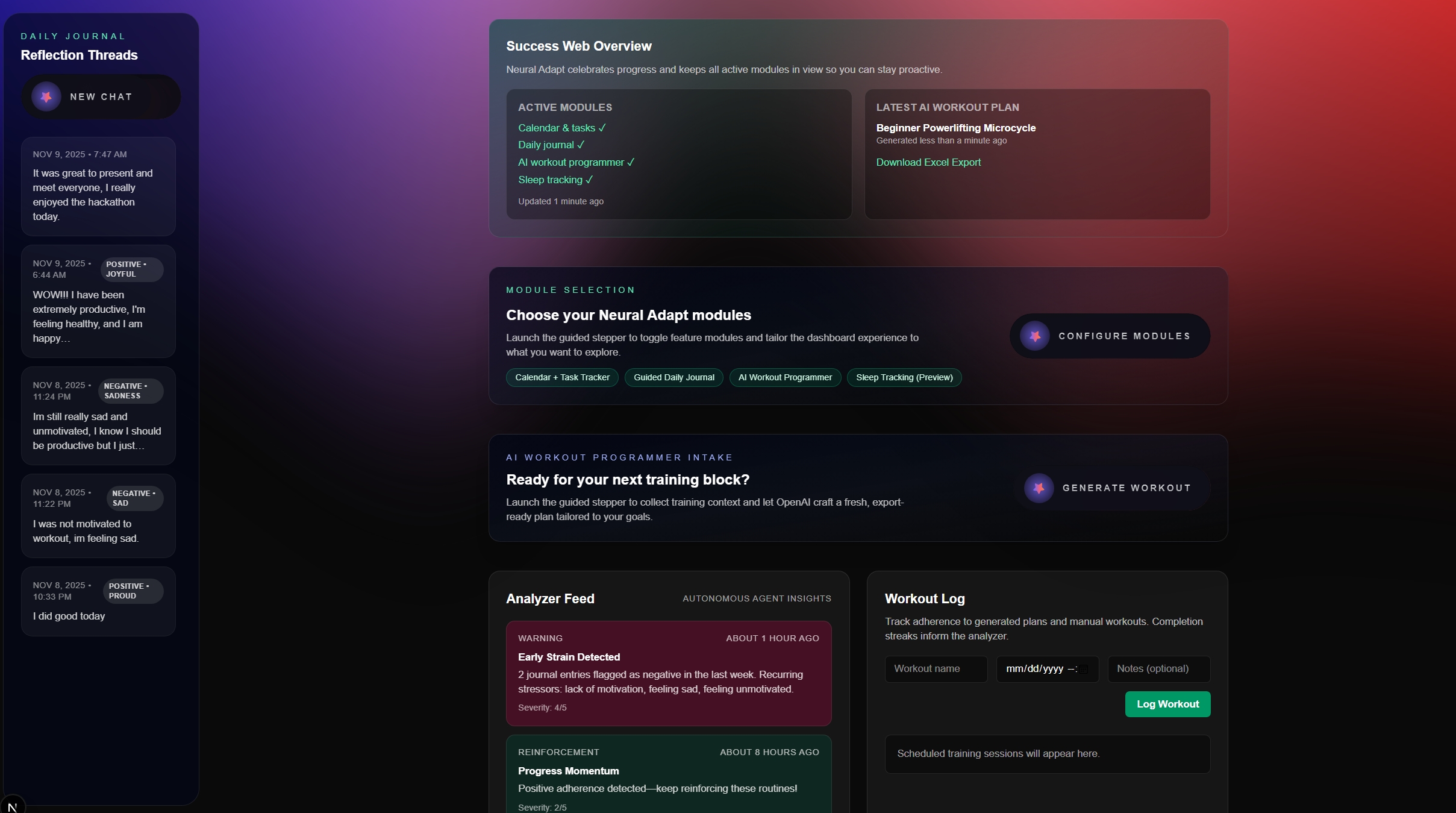
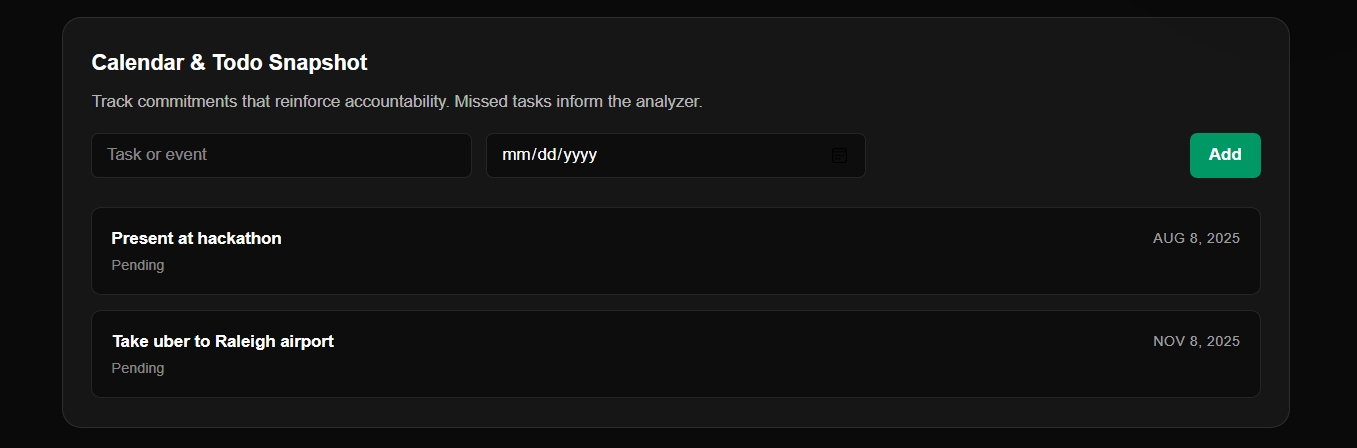
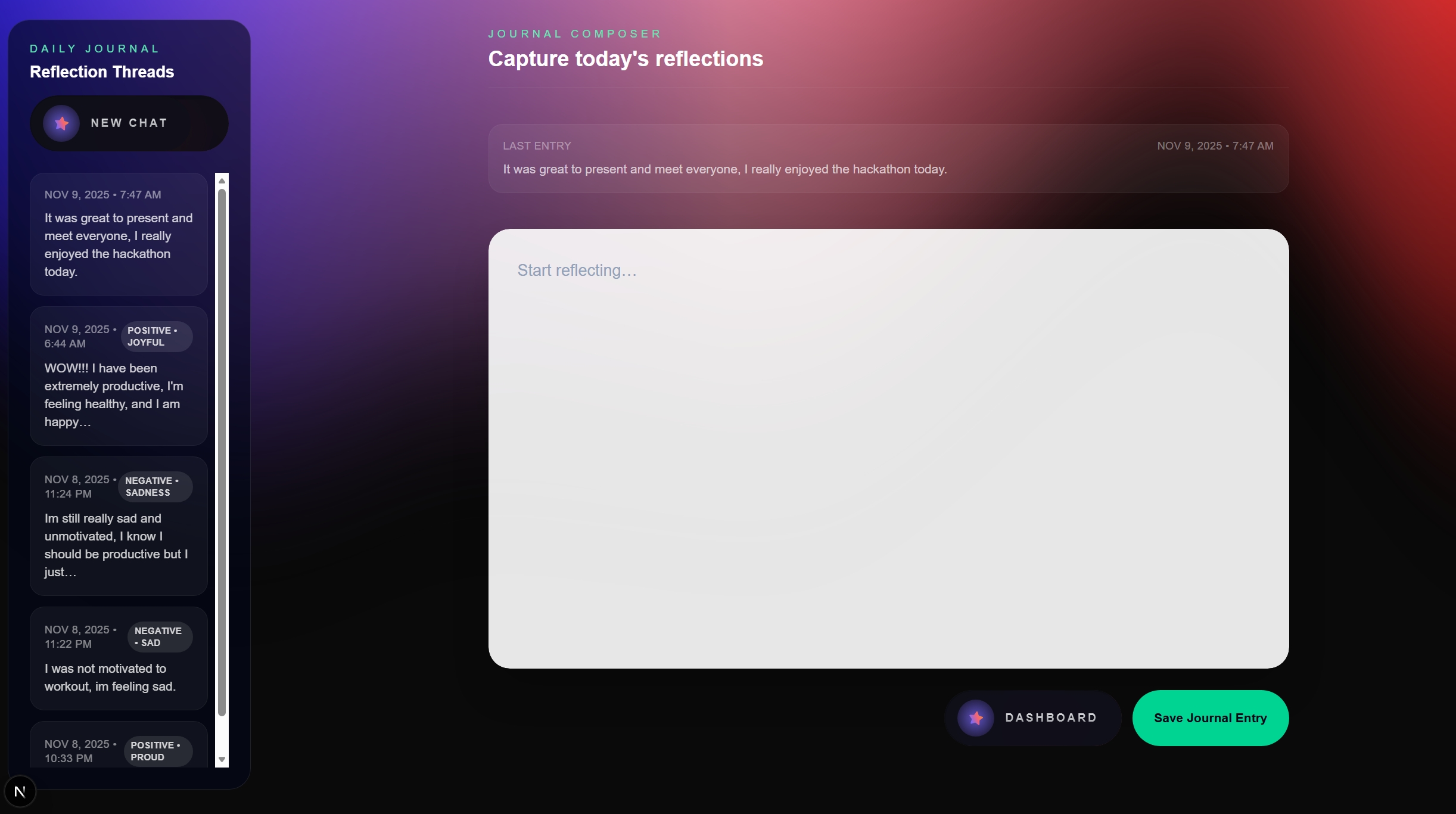
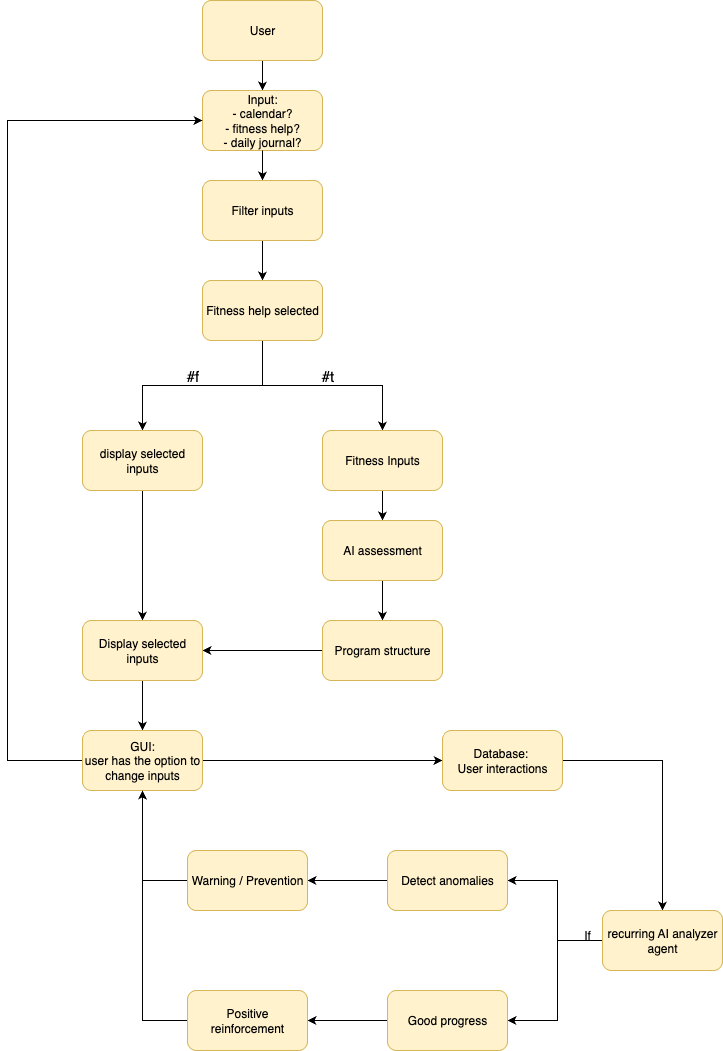
Neural Adapt isn't just another journal or fitness log; it’s a proactive "agentic AI" companion. By continuously monitoring and analyzing multimodal inputs - from your daily journal and fitness logs to your calendar - our platform builds a dynamic, predictive model of your unique well-being.
This is our key differentiator: Neural Adapt provides real-time mental health crisis intervention. Its powerful predictive analytics don't just show you graphs of past behavior; they identify subtle negative patterns as they emerge. Before a bad day turns into a bad week, the AI proactively engages with tailored suggestions, resources, and intervention techniques.
This entire system is built on a "Success Web" that uses positive reinforcement to celebrate your progress. Neural Adapt isn't just an app; it's your personal, intelligent agent for building a healthier, more resilient life.
How we built it
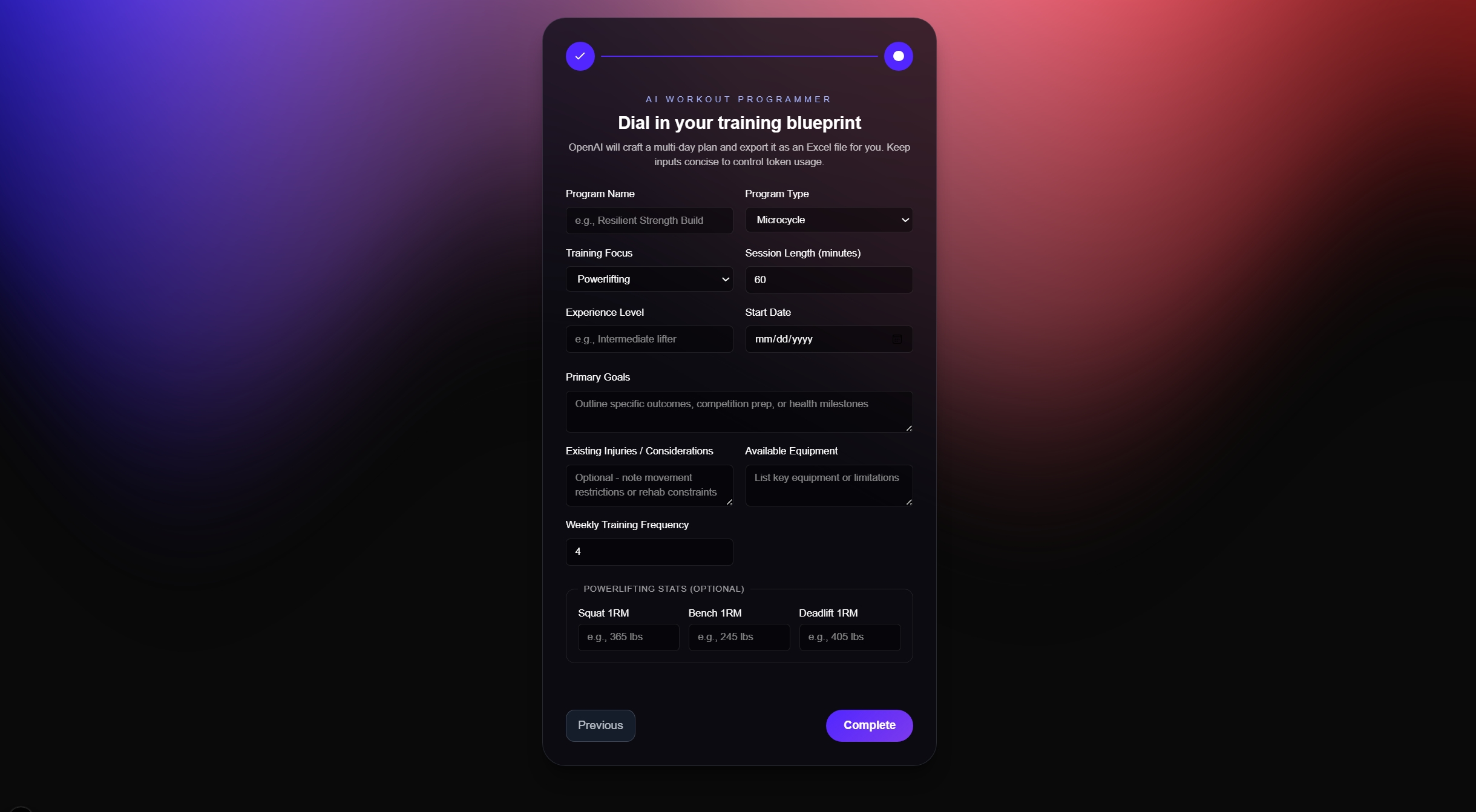
Everything ships inside a Next.js 16 + React 19 monorepo. Prisma talks to a local SQLite database (Postgres-ready), ExcelJS exports workout plans, and OpenAI powers structured workout generation plus lightweight sentiment scoring via the scripts/analyzer.ts job. Background processing is orchestrated with TypeScript services; no Firestore, LSTMs, or reinforcement learning—just deterministic heuristics paired with OpenAI responses.
Challenges we ran into
Tuning the analyzer so alerts feel timely (not noisy) was tricky, especially when juggling limited journal samples. Keeping OpenAI usage within a $10 demo budget also forced us to add strict rate guards and fallbacks. Additionally, navigating the huge repetoir of AI tools and agents and familiarising ourselves with them in very short periods of time posed a challenge to our team.
Accomplishments that we're proud of
We successfully built a fully functional, end-to-end AI pipeline capable of reading natural language journals, identifying emotional shifts, and responding with context-aware interventions.
What we learned
We learned how to integrate multiple specialized AI agents into a cohesive, collaborative pipeline. We also refined our prompt engineering skills, creating structured prompts that balance accuracy with human-like interaction. Finally, we optimized our models and system architecture to meet real-world performance standards, ensuring fast, seamless, and reliable user experiences.
What's next for Neural Adapt AI
Our next step is to refine the predictive model with larger and more diverse datasets, making it even better at spotting early signs of stress, burnout, or depression. We’re also planning to partner with mental health professionals to integrate verified intervention strategies and crisis support pathways.
On the product side, we’d love to introduce wearable integration and voice journaling, so Neural Adapt can respond to your life in real time - not just when you open the app.
Ultimately, our vision is for Neural Adapt to evolve into a trusted companion - an AI that truly understands you, celebrates your progress, and helps you stay balanced through life’s ups and downs.


Log in or sign up for Devpost to join the conversation.