Inspiration
Over 100 million people worldwide suffer from stroke or cerebral palsy, leaving one side of their body paralyzed. The gold standard for recovery is repetitive physical therapy, but clinic robotic exoskeletons cost upwards of $20,000, and standard therapy is inaccessible to millions. NeuralHand is a low-cost rehabilitation device that translates real-time computer vision hand tracking into synchronous robotic tendon actuation to restore bilateral motor function.
What it does
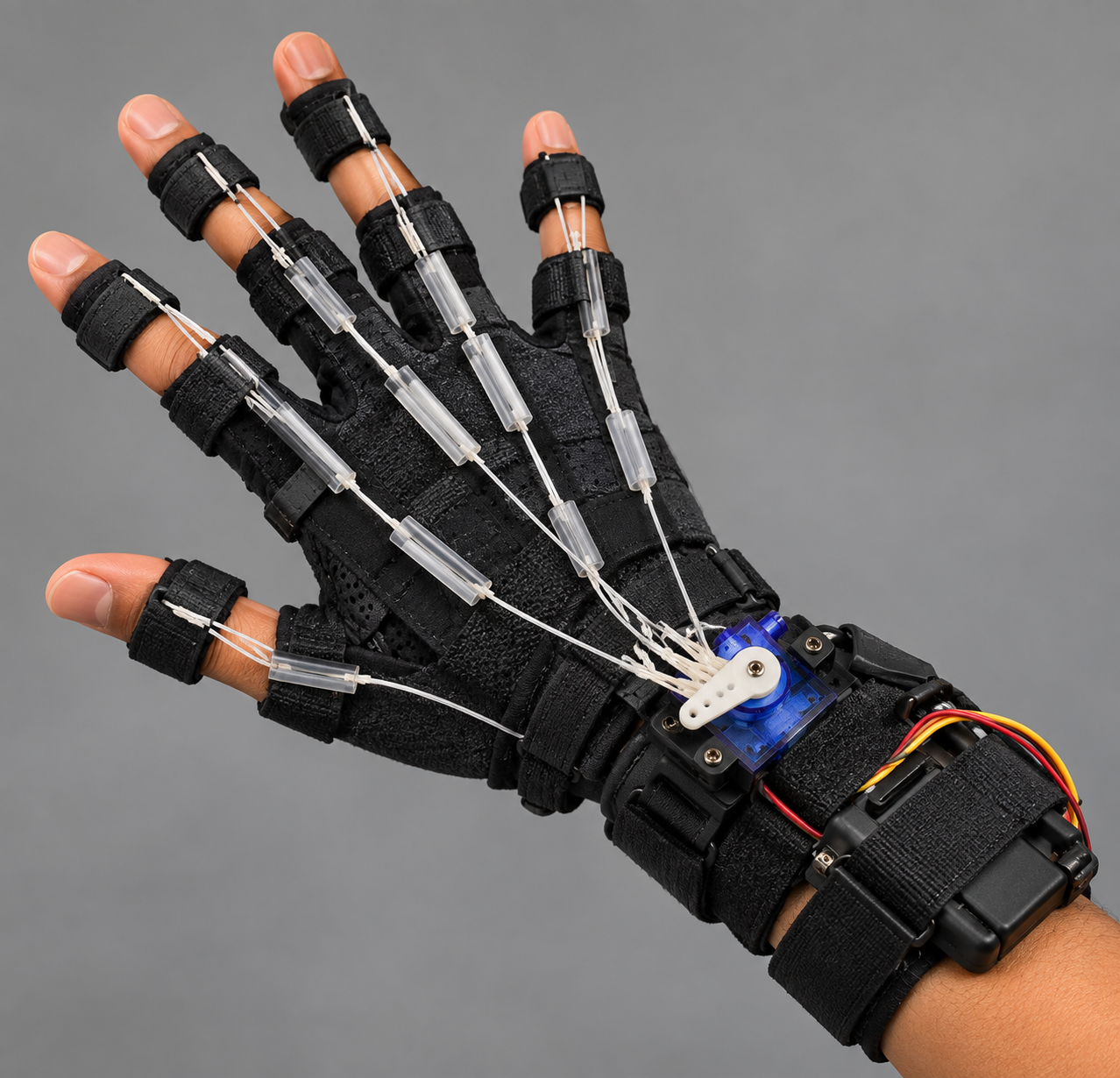
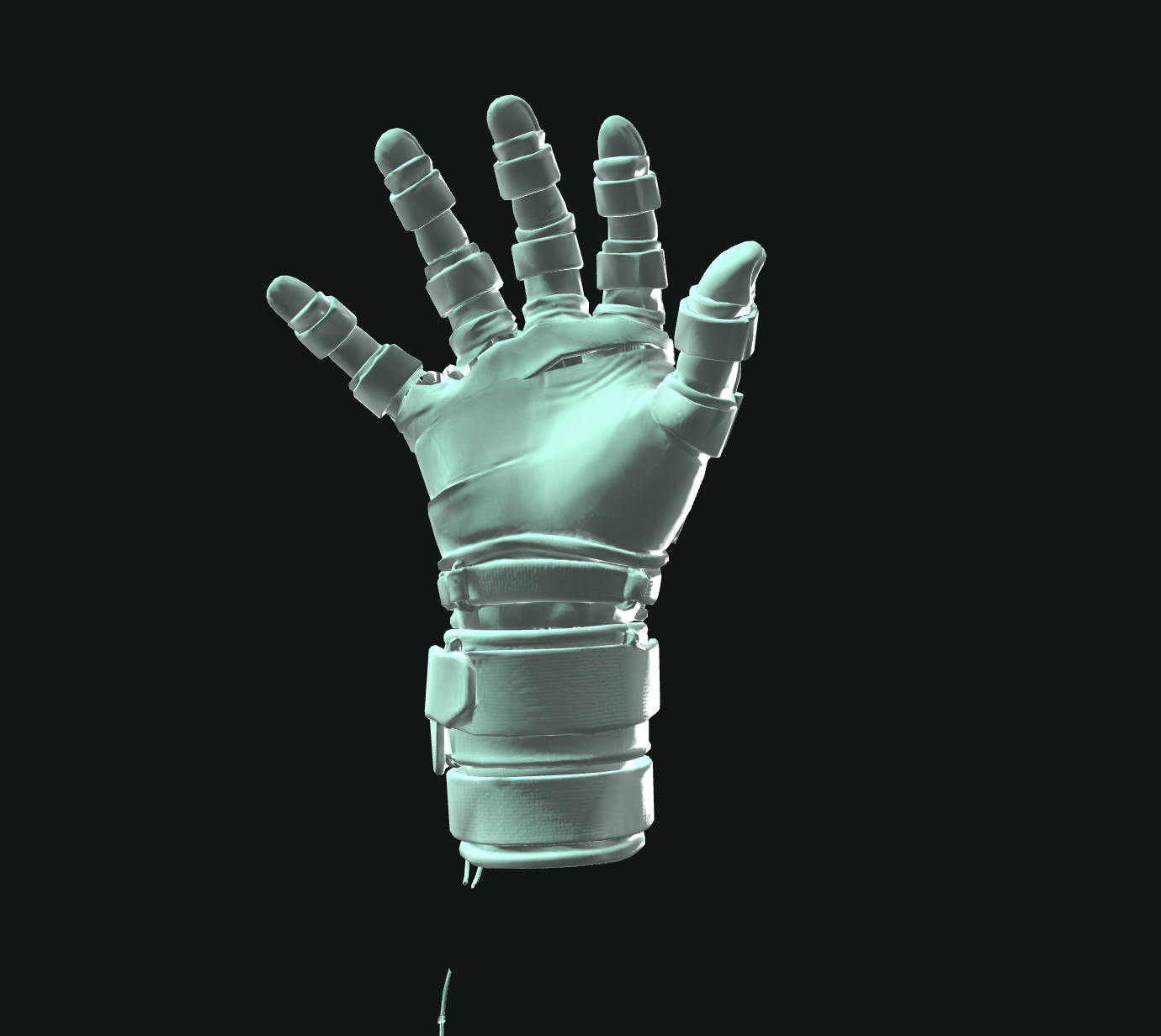
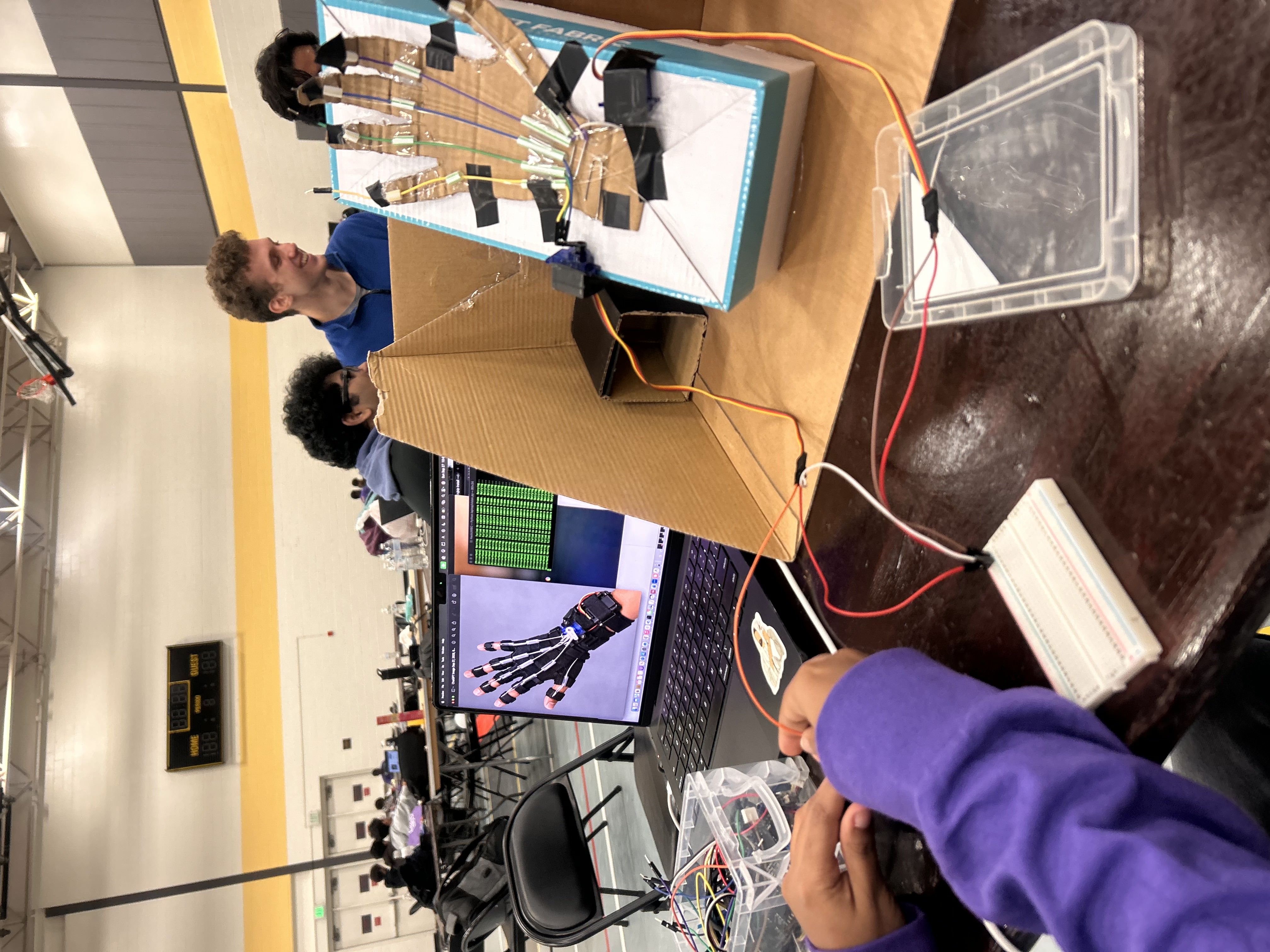
Using only a standard laptop webcam, NeuralHand tracks the patient’s healthy dominant hand in real time calculating individual finger curls and transmitting those movements to an assistive robotic glove worn on the impaired hand. When the patient pinches or forms a fist with their strong hand, the glove’s motorized tendons physically close the fingers of their weak hand at the exact same millisecond.
How we built it
NeuralHand connects a computer vision perception layer directly to an embedded robotic actuator across three core subsystems:
Perception & AI Tracking (Laptop):
- Built with Python 3.12, OpenCV, and Google MediaPipe Hands, extracting 21 3D spatial landmarks at 20 FPS.
- Developed a distance-invariant normalization formula indexed against the palm scale. ensuring stable curl tracking regardless of how close or far the user sits from the camera.
- Engineered specialized kinematics for all 5 fingers, including saddle-joint thumb opposition tracking.
- Added an on-screen visual HUD with live telemetry bars, a 2-stage startup calibration (3s open, 3s closed), and Exponential Moving Average (EMA) smoothing.
Communication Pipeline:
- Streams 20 Hz ASCII coordinate packets over USB Serial at 115,200 baud via PySerial, with automatic Arduino COM port detection.
Embedded Firmware & Mechanics (Hardware):
- Programmed the Arduino UNO R4 WiFi in C++ with non-blocking serial reading and velocity-limited soft motion ramping to eliminate current spikes.
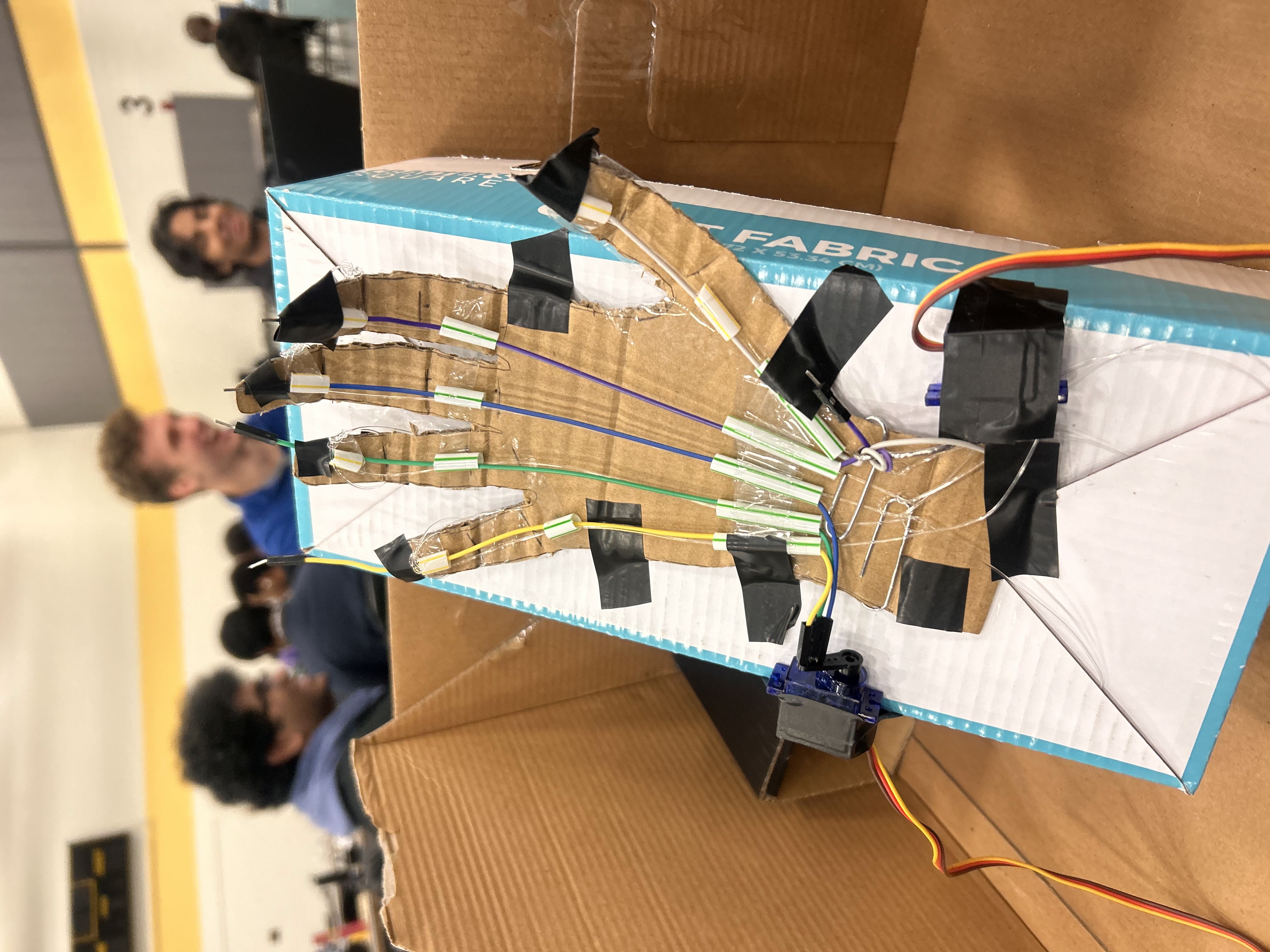
- Engineered tendon-driven mechanics on a lightweight glove using Tower Pro SG92R micro servos, low-friction braided fishing line as artificial flexor tendons.
Challenges we ran into
Limited Hardware : We are a team of a diverse background, no of which is electrical or computer engineering. Learning what hardware we'd need and how to get it working was interesting and time-consuming.
Complexity: Originally, we had high expectation for the outcome of this project - including a larger model that would extend all the way up an individual's arm. Eventually, we settled to working on a more manageable version - a hand.
Accomplishments that we're proud of
-Zero-Wearable Markerless Tracking: Achieving sub-50ms real-time mirroring from a standard laptop webcam without requiring any heavy sensors, gloves, or markers on the healthy hand.
- Low-cost materials
-Taking the project from raw concepts, math, and breadboards to a fully working live demonstration in a single hackathon.
What we learned
Neuroplasticity & Bilateral Training
Geometric Computer Vision
Embedded Control Systems
What's next for NeuraHand
Surface EMG Muscle Integration: Integrating surface electromyography (EMG) sensors on the forearm to detect micro-volt electrical muscle intentions, enabling "assist-as-needed" adaptive actuation
Custom 3D-Printed Modular Exoskeleton: Moving from soft fabric glove anchors to personalized, 3D-printed finger cuffs tailored to individual patient hand scans.


Log in or sign up for Devpost to join the conversation.