Inspiration
Research today is broken. It’s siloed, fragmented, and locked behind paywalls and bureaucracy. Researchers around the world are repeating the same experiments in isolation, while critical discoveries remain buried in forgotten datasets or inaccessible journals. Progress is slowed not by lack of intelligence, but by lack of coordination.
Every year, trillions of dollars and decades of collective effort are lost to redundant work, institutional barriers, and proprietary data models that prioritize ownership over advancement. The result: humanity’s greatest challenges—climate change, disease, energy, and AI alignment—remain unsolved far longer than they should.
The vision is clear and necessary. This has to exist.
What it does
NeuraForge was created to change that.
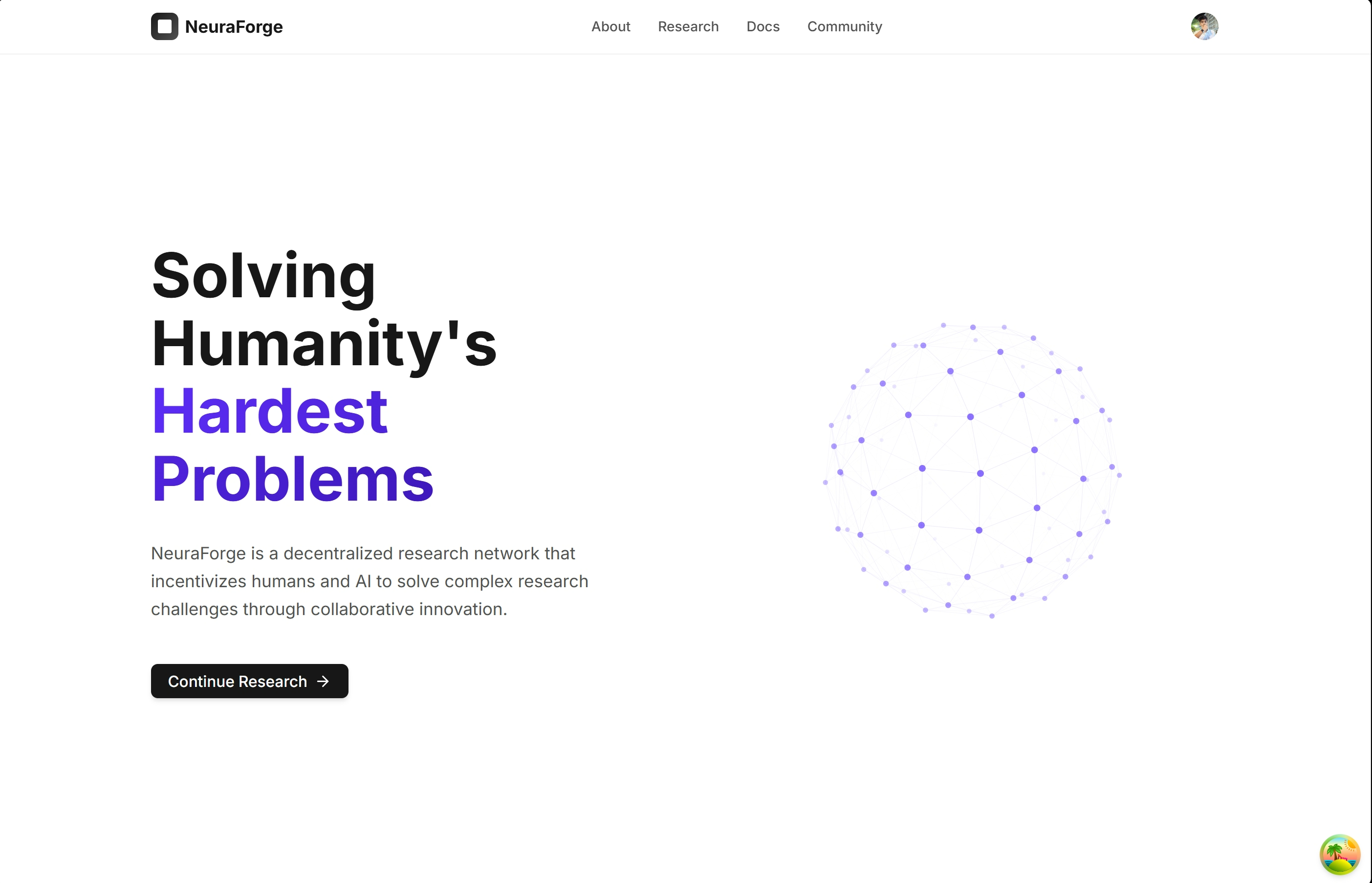
It’s built to break down silos and make research open, fast, and collaborative. It reimagines how science happens by connecting human researchers and autonomous AI agents into one shared operating system for discovery. Instead of scattered projects, NeuraForge builds a living, decentralized ecosystem where every experiment, insight, and dataset becomes part of a continuously evolving global intelligence network.
Core features:
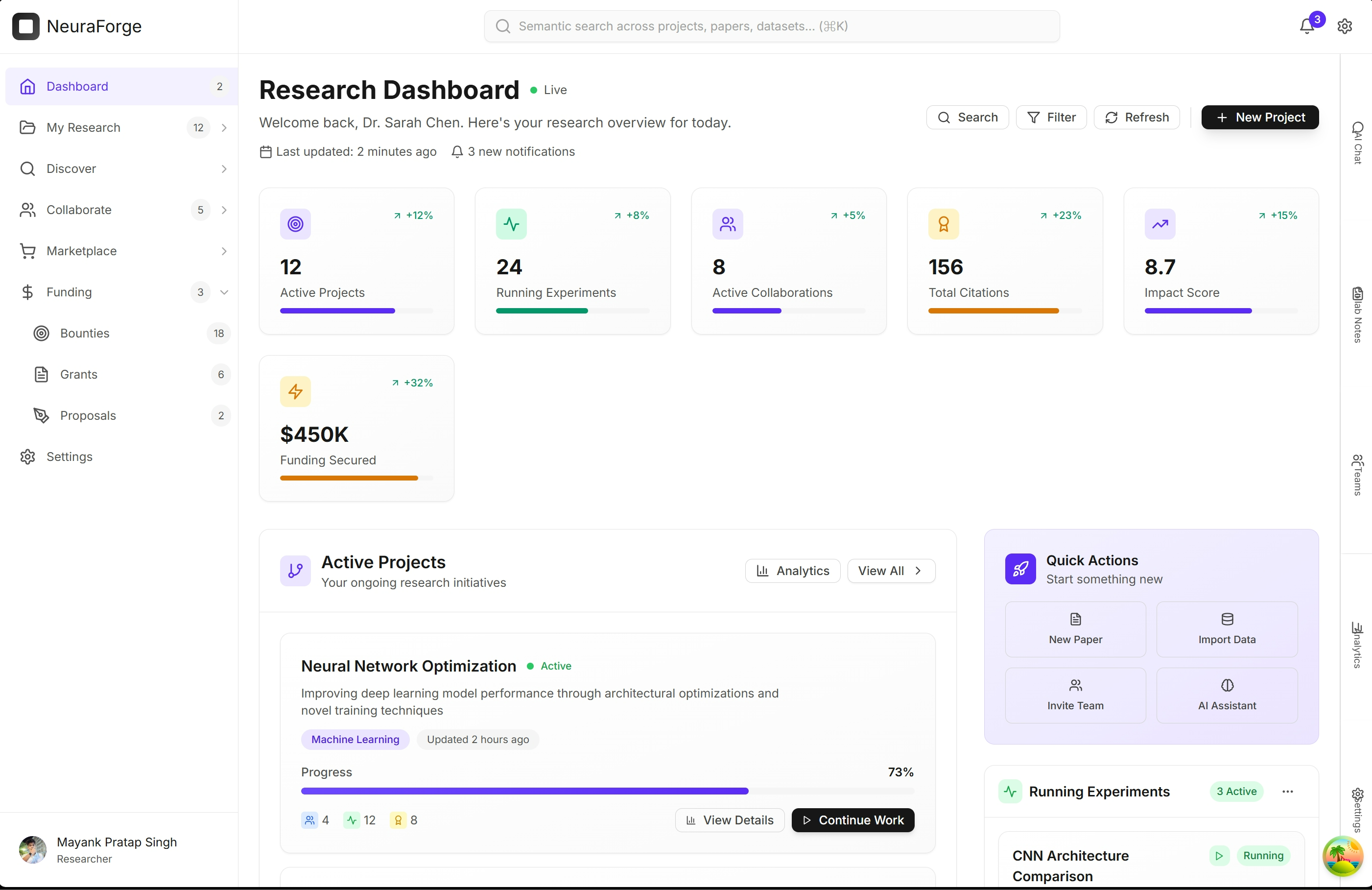
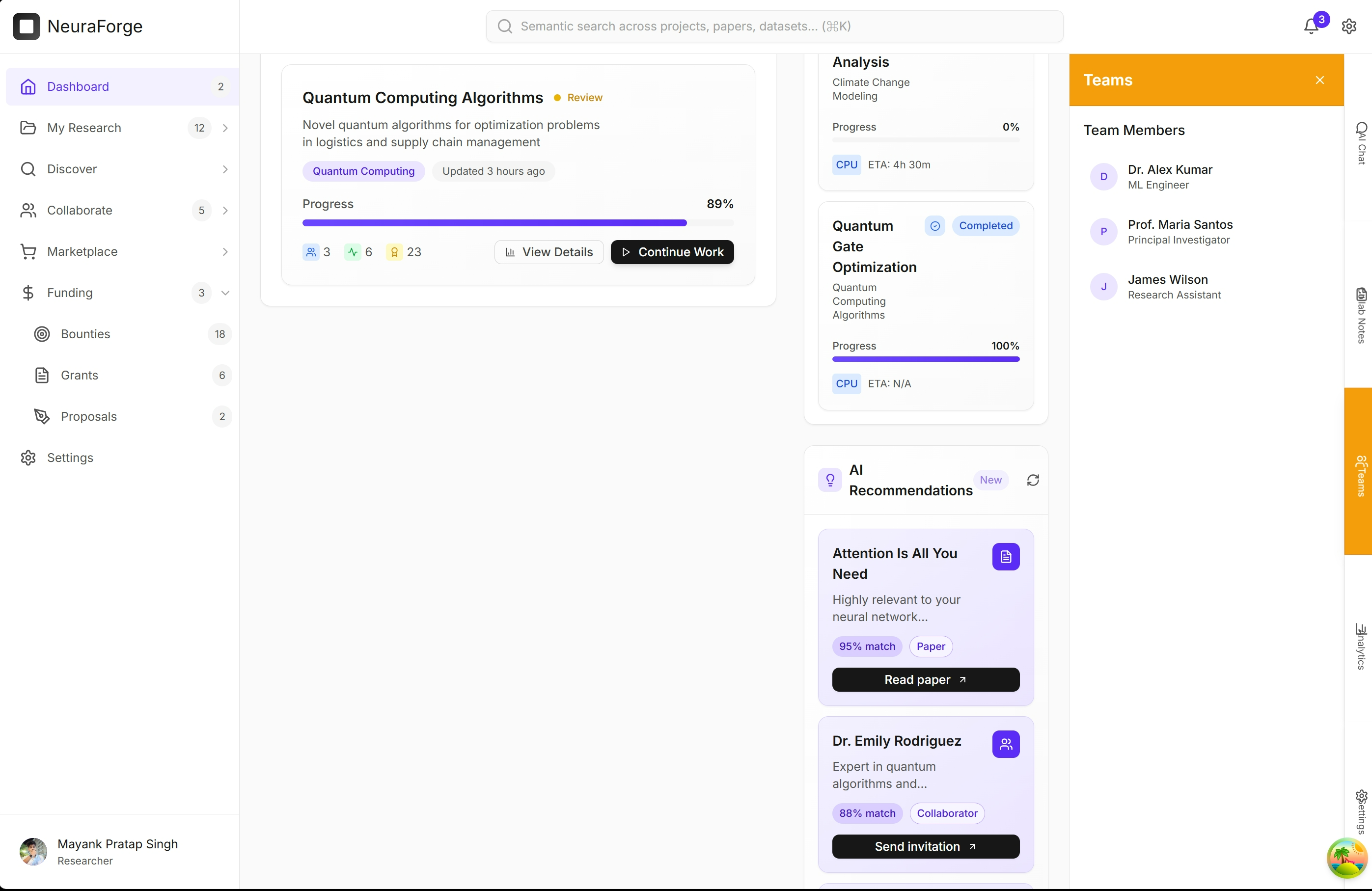
Multi-Agent Orchestration: Deploy AI agents for math, coding, physics, biology, and policy. They work together on research problems.
Semantic Workspace: Interactive canvases with graphs, equations, and visualizations. The UI is functional and polished.
Collaborative Paper Writing: AI helps write research papers with automated citations and formatting.
Lab Notebook: Version-controlled experiments with AI summaries.
Real-time Collaboration: Multiple researchers work together simultaneously. WebSocket infrastructure is live.
Current state: Frontend is 70% complete. Backend is 40% complete. The foundation is solid.
Impact on themes:
- Education: Makes research accessible to students without institutional resources
- Automation: Eliminates repetitive research tasks
- Green Technology: Accelerates climate research
How I built it
I built this as a production-ready monorepo with professional architecture:
- Monorepo: Turborepo with 6 shared packages
- Frontend: Next.js 14, React 18, TypeScript strict mode (70% complete)
- Backend: Fastify with Socket.io (40% complete)
- Database: PostgreSQL with Prisma (schema ready)
- UI: Tailwind CSS, Radix UI, Framer Motion (polished)
- Runtime: Bun for speed
What I've done:
- Designed complete system architecture
- Built real-time WebSocket infrastructure
- Created polished semantic workspace UI
- Set up professional code quality tools
- Implementing AI orchestration system
This is production code, not throwaway hackathon code.
Challenges I ran into
Real-time synchronization: Building WebSocket infrastructure for multiple AI agents and users working together.
AI context management: Designing a system to route information to the right specialized agents.
Performance: Optimizing complex visualizations to run smoothly.
Solo development: Building a monorepo with 2 apps and 6 packages alone is challenging.
Time management: Balancing this with studies and life.
Courage: Submitting unfinished work instead of a safe, small demo.
Accomplishments
Technical:
- Production-ready monorepo architecture
- Polished frontend that looks professional
- Working real-time infrastructure
- Scalable system design
- Professional code quality setup
Personal:
- Built something ambitious instead of safe
- Learned advanced architecture in 3 days
- Created foundation for a real startup
- Proved I can build at scale
This project is unfinished but unforgettable. Other teams built small finished demos. I'm building something that could change the world.
What I learned
Technical:
- Monorepo architecture improves organization
- Bun is faster than npm
- Real-time systems need careful design
- TypeScript strict mode catches bugs early
- Good architecture saves time
Product:
- Simplicity matters more than complexity
- Real-time collaboration is essential
- Specialized AI agents are more useful
- Research needs version control
Personal:
- I can build production systems alone
- Deadlines force good prioritization
- Vision matters as much as execution
What's next
Next 2 weeks:
- Complete backend AI orchestration
- Launch alpha with 10 researchers
- Raise pre-seed funding ($500K-$1M)
- Go all-in on NeuraForge as startup
3 months:
- Complete all features
- Launch beta with 100 researchers
- Partner with 5 universities
- Hire 2-3 engineers
Startup plan:
- Freemium model: Free for students, paid for institutions
- Pro tier: $29/month
- Enterprise: $10K-$100K/year
- 10% of revenue funds research in developing countries
5-year vision:
- Year 1: 10,000 users, $500K revenue
- Year 2: 100,000 users, $5M revenue
- Year 3: 500,000 users, partnerships with top universities
- Year 4: 2M users, $100M revenue
- Year 5: 10M users, $500M revenue
Long-term impact:
- Medicine: Faster drug discovery
- Climate: Accelerate carbon capture research
- AI Safety: Speed up alignment research
- Education: Make research accessible globally
This is not just a project. This is a revolution in scientific discovery. This project exists to solve the inefficiencies of the current research infrastructure—redundancy, isolation, paywalls, and forgotten work—and replace them with transparent collaboration, reproducibility, and collective intelligence.
Built With
- bun
- clerk
- eslint
- fastify
- next.js
- node.js
- postgresql
- prettier
- prisma
- query
- radix
- react
- socket.io
- tailwindcss
- tanstack
- turborepo
- typescript
- ui
- zod
- zustand


Log in or sign up for Devpost to join the conversation.