-
-
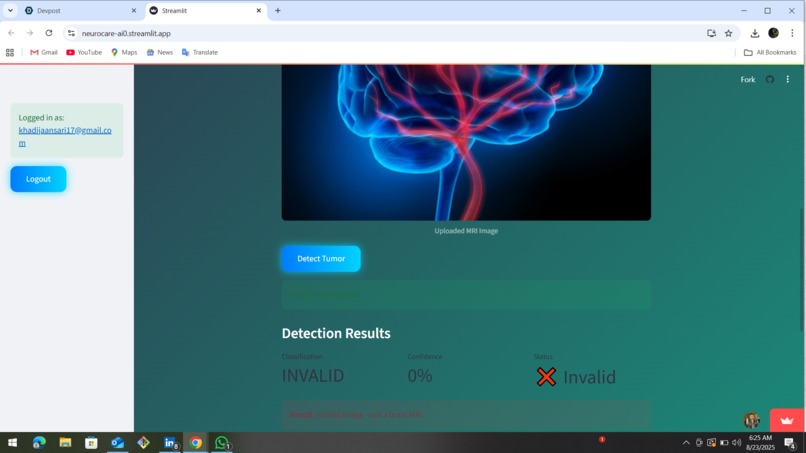
to detect tumor
-
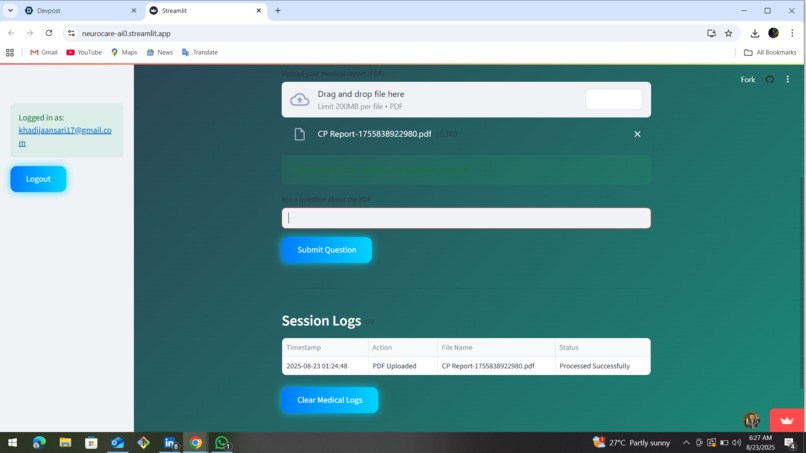
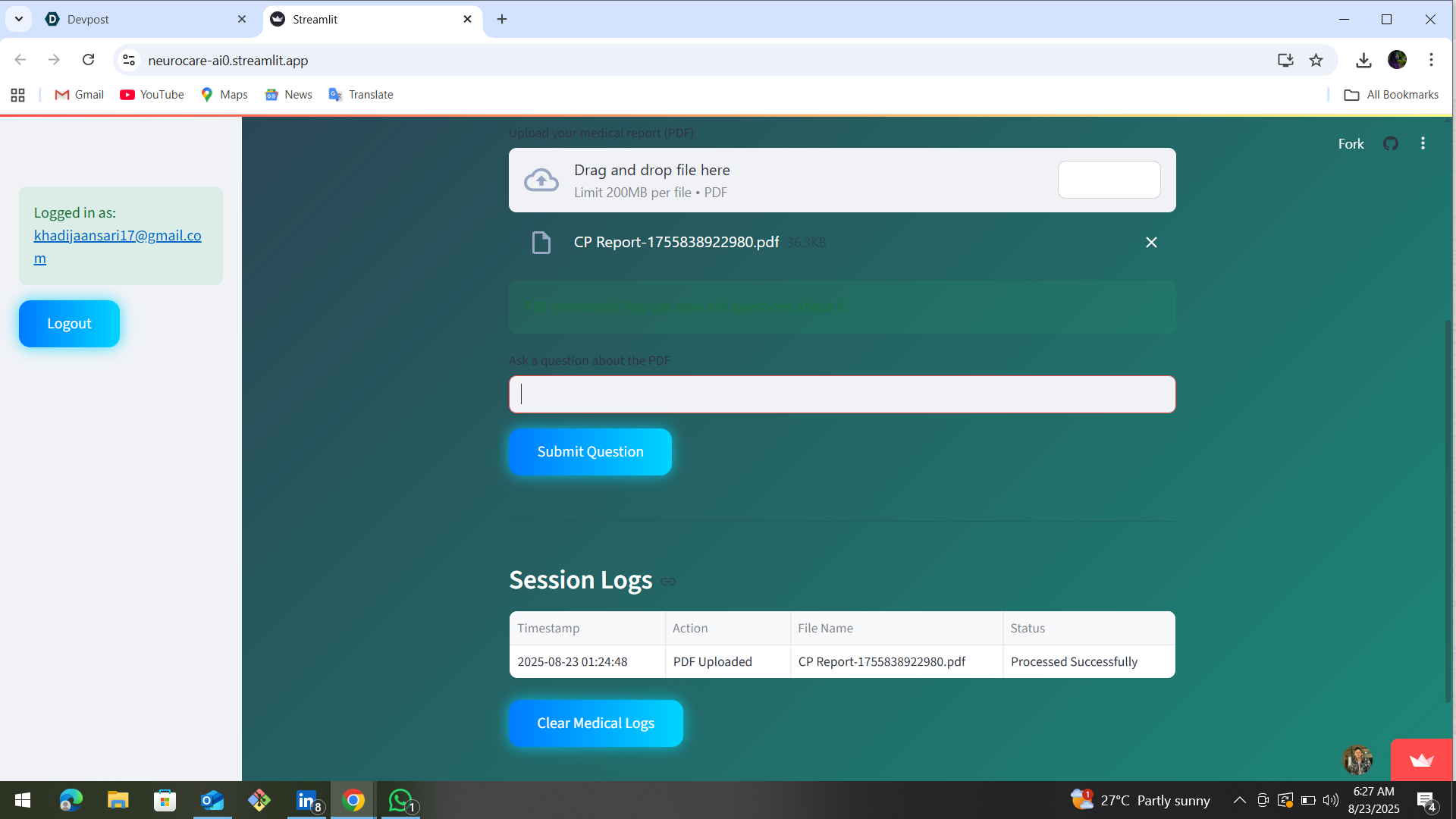
to get review about medical reports
-
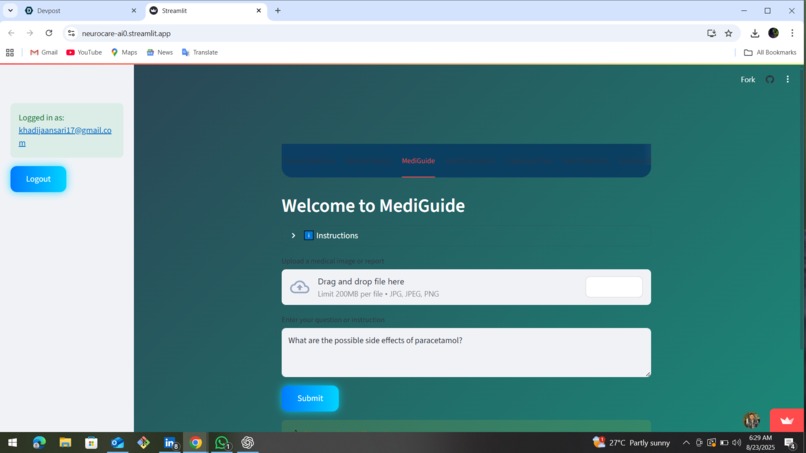
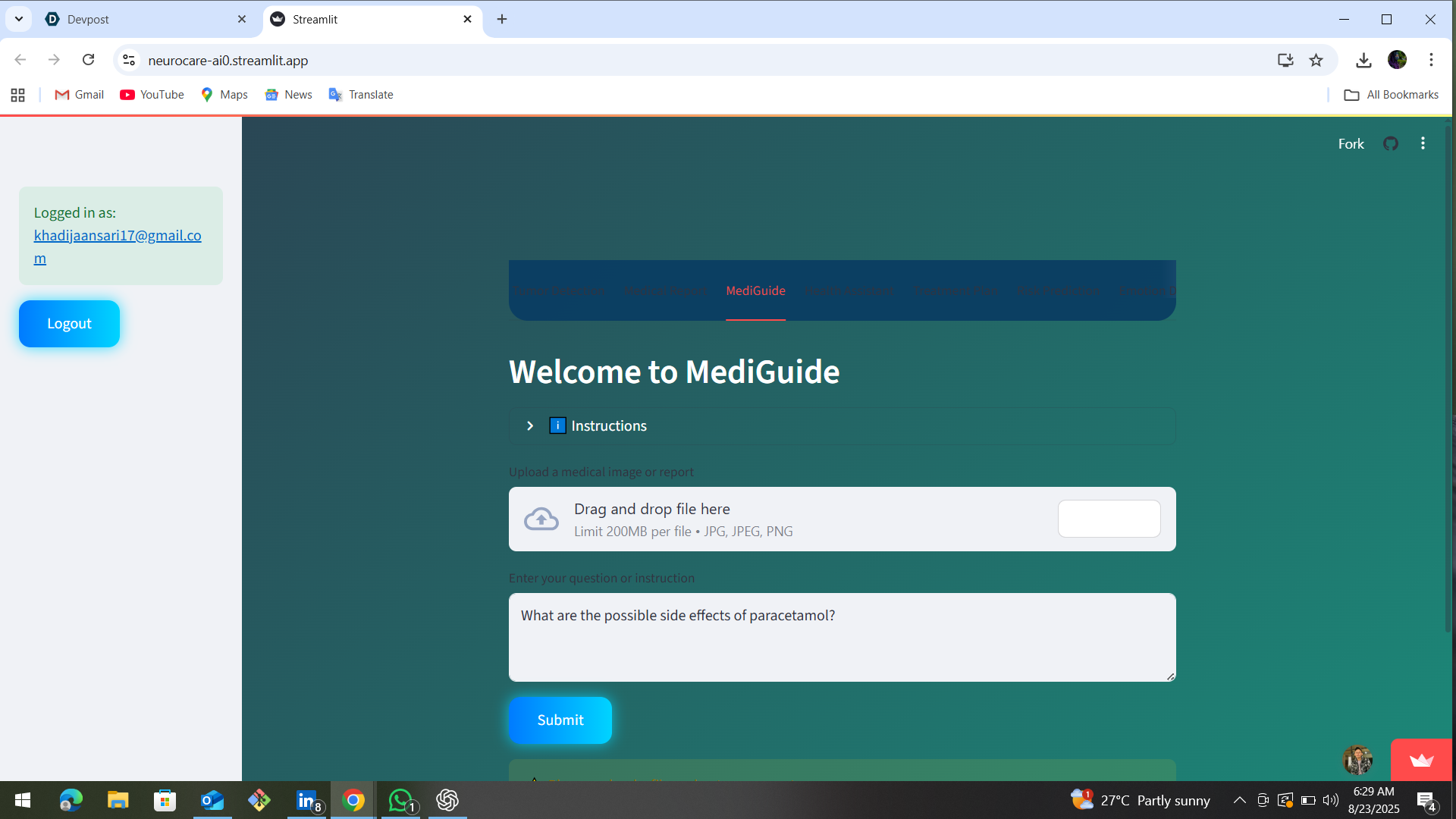
to ask about any medicine use
Inspiration
When I looked at the current healthcare system, I noticed so many gaps. People often wait too long for their scan reports, medication details can be confusing, and mental health support is almost missing. That’s when I thought — why not build something that combines AI and healthcare into one assistant that helps with both physical and mental wellness? That’s where the idea of NeuraCareAI started.
What it does
NeuraCareAI is basically like a smart health companion. It can detect brain tumors from MRI scans, guide patients with medicines through an AI pharmacist, create personalized reports and treatment plans, monitor mood through facial expressions, and even suggest lifestyle improvements. I wanted it to feel like a complete health ecosystem rather than just one single tool.
How we built it
I used Streamlit for the frontend because it’s quick and clean. For the backend, I worked with Python and FastAPI. I trained AI models with PyTorch and TensorFlow for tumor detection and emotion recognition. I also used OpenCV for image processing and NLP for generating reports. Finally, I deployed it on Streamlit Cloud so it’s easy to access.
Challenges we ran into
It wasn’t easy. One big challenge was getting good datasets for medical images. Also, integrating different modules (like tumor detection, MediGuide, and mood detection) into one platform took a lot of time. Another challenge was balancing speed with accuracy — because in healthcare, both matter equally. And of course, data privacy was always a major concern.
Accomplishments that I’m proud of
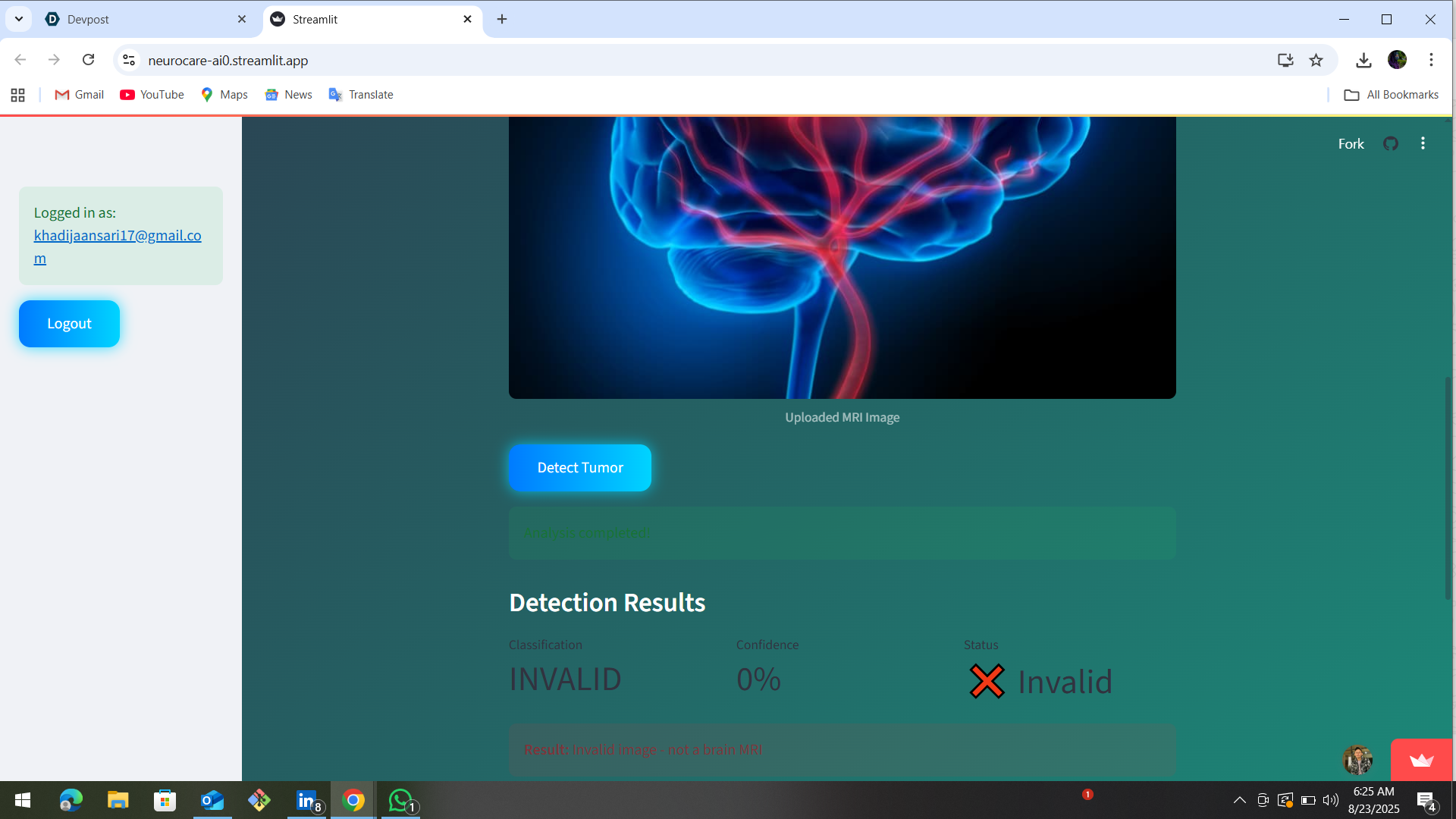
I’m really proud that the tumor detection model reached 97% accuracy. I also love that I was able to bring different aspects — medical, mental, and lifestyle — into a single assistant. And honestly, seeing the prototype run smoothly on Streamlit Cloud felt like a huge achievement.
What I learned
I learned how powerful it is when you combine AI with healthcare, but also how careful you need to be. I gained a lot of knowledge about optimizing AI models, and I also understood how important user-friendly design is, especially in healthcare. This project taught me not just technical skills but also the value of thinking from a patient’s perspective.
What’s next for NeuraCareAI
I want to expand NeuraCareAI further — add more diseases, integrate wearables for continuous monitoring, and make it available in multiple languages so it can help people globally. In the future, I’d love to collaborate with healthcare providers to see it being used in real-world medical practice.
Built With
- fastapi
- natural-language-processing
- pytorch
- streamlit
- tensorflow


Log in or sign up for Devpost to join the conversation.