-
-
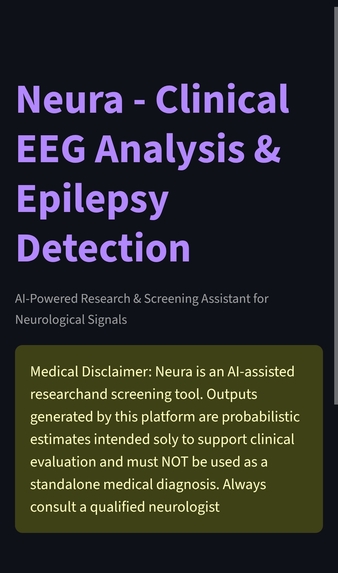
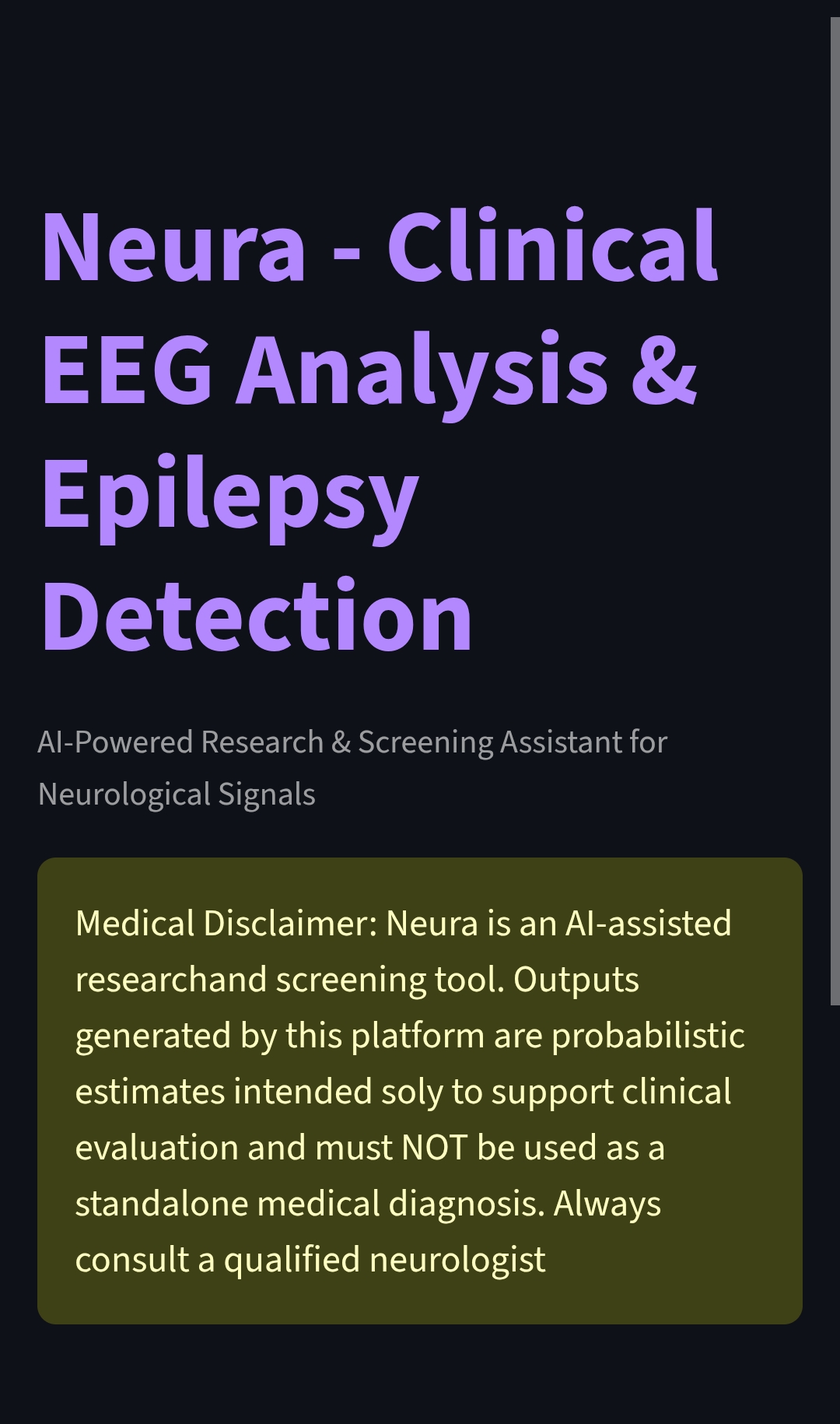
Neura dashboard header featuring the main title and built-in medical disclaimer.
-
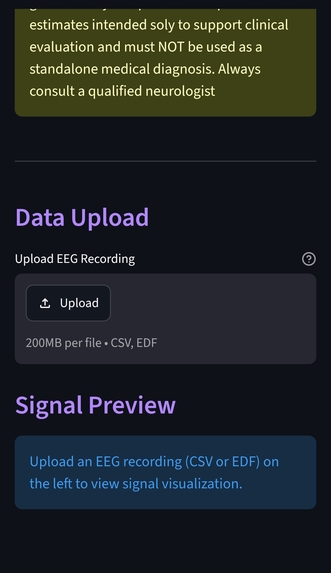
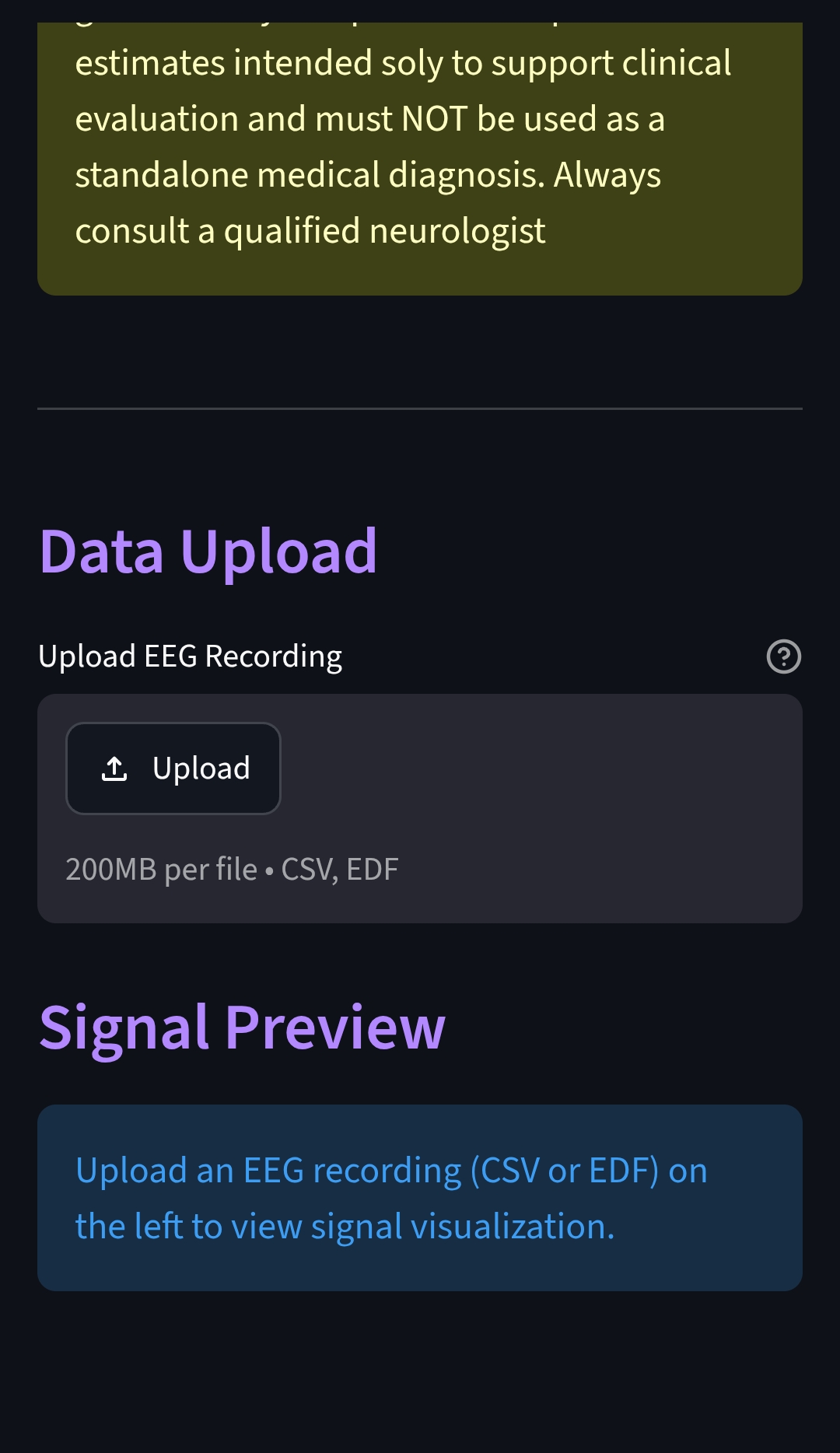
Data upload section where users can input CSV or EDF EEG recording files up to 200MB.
-
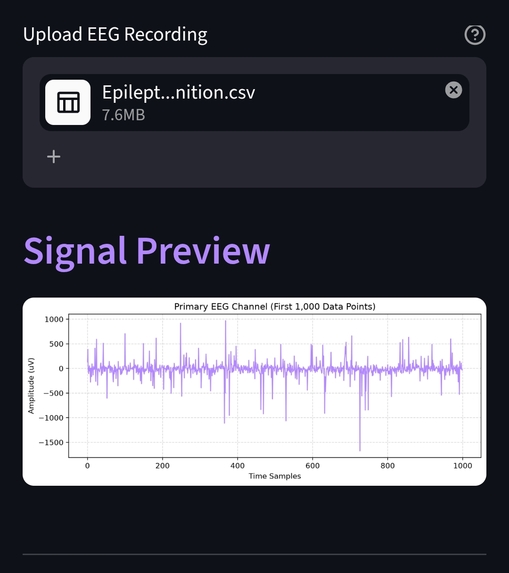
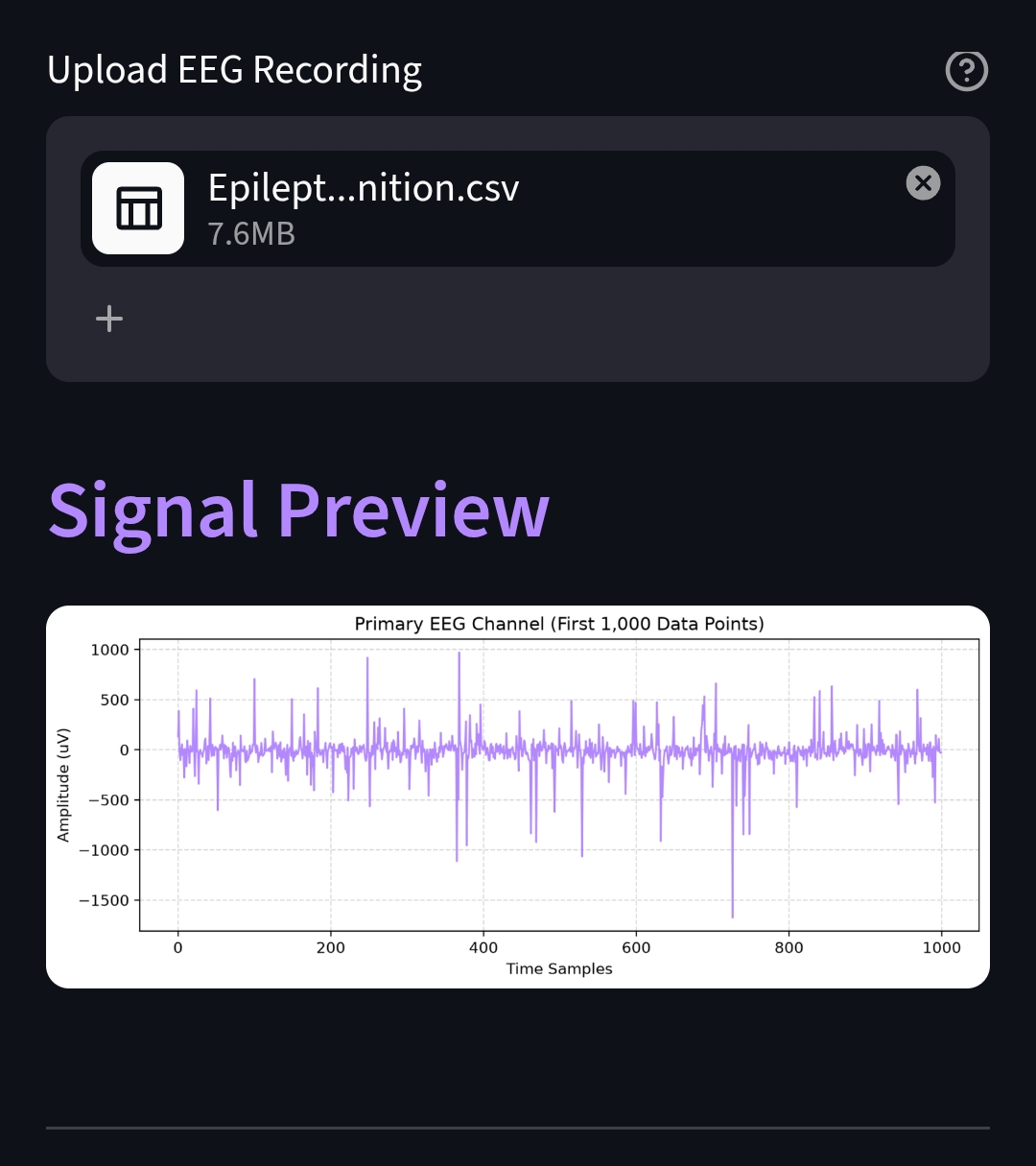
Interactive signal preview graph displaying the primary EEG channel waveform data loaded from an uploaded dataset of a non seizure patient.
-
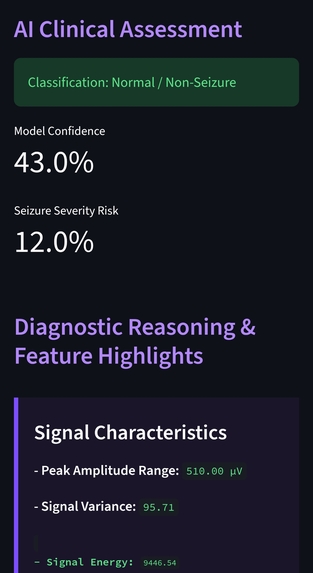
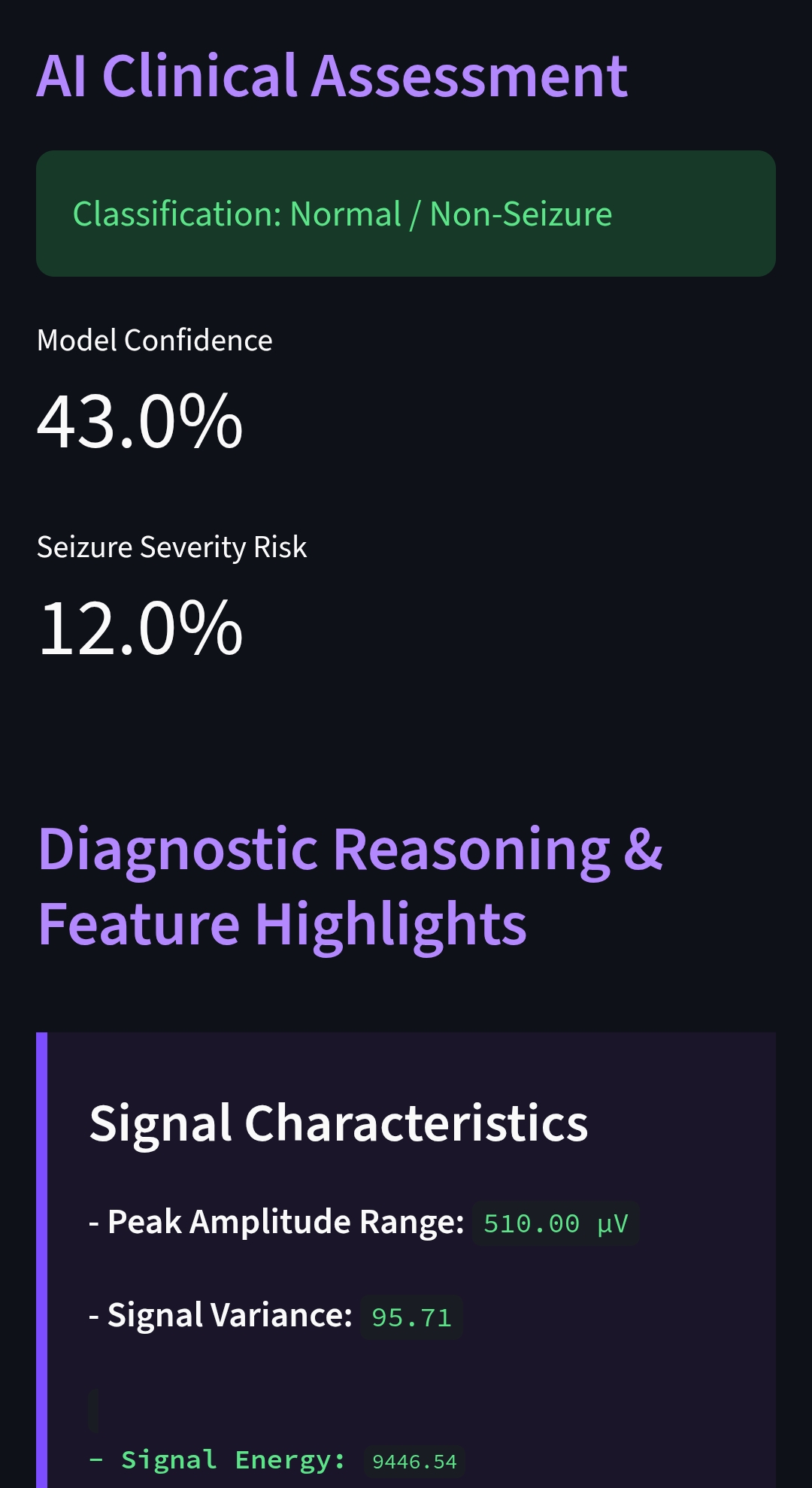
clinical assessment output displaying classification results, confidence percentage, seizure risk score, and diagnostic feature highlights.
-
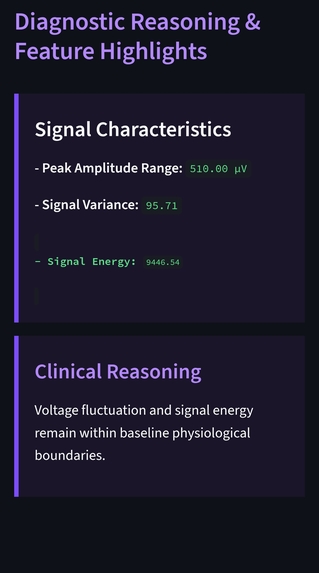
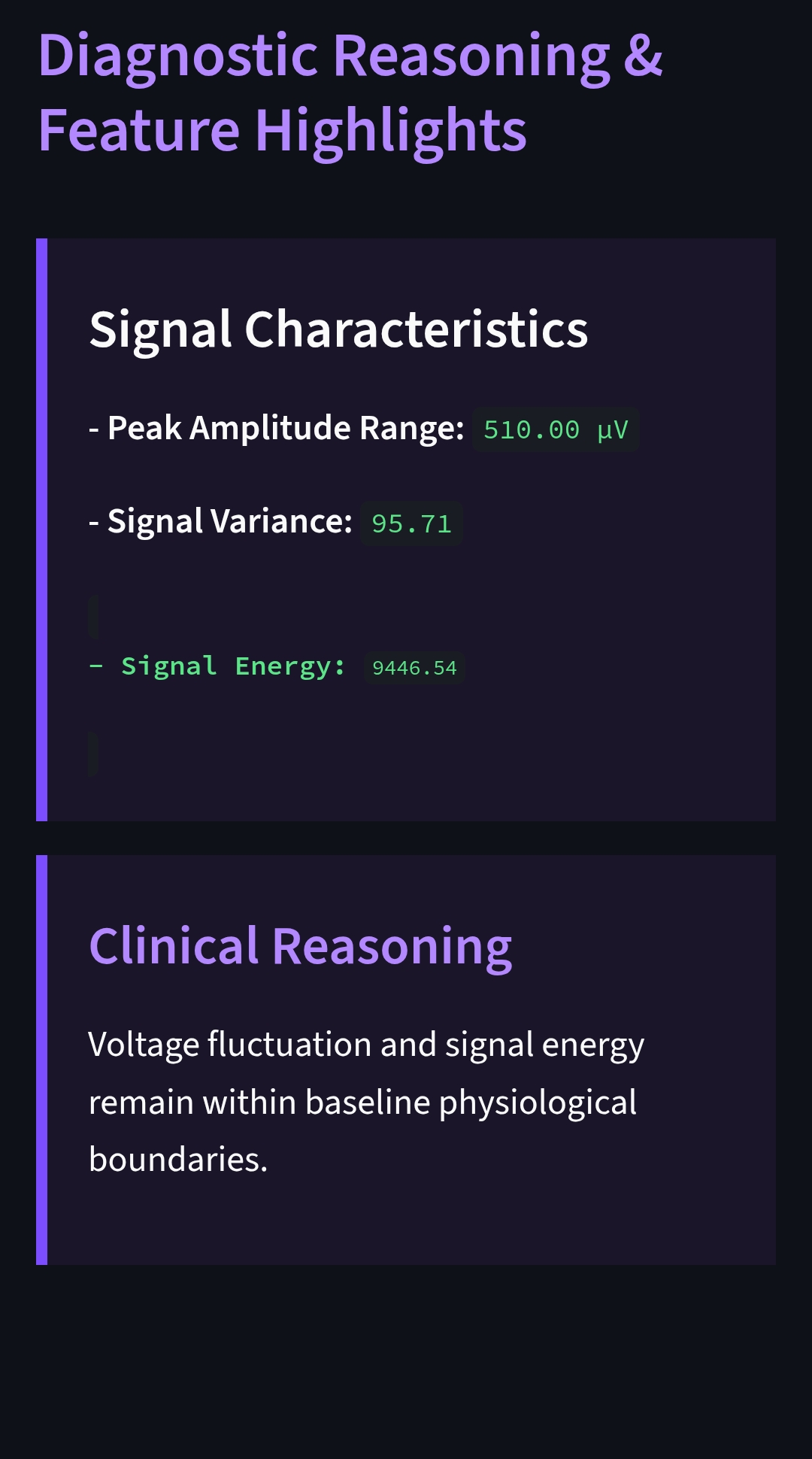
Detailed breakdown of diagnostic reasoning, signal characteristics, and clinical reasoning insights generated by the model.
Inspiration
Neura started from my love for the brain and my love for creating. After I started teaching myself Python, I became interested in building something that could contribute to neuroscience. The idea became more personal when I remembered an incident in church where one of my students suddenly fell down and had a seizure. Seeing it happen made me wonder what caused seizures and whether there was something I could eventually contribute to the field. I initially wanted to build an AI that could detect and predict Alzheimer’s disease, but after setting a deadline for myself, I realized that was too ambitious for my first version, so I decided to start with epilepsy.
What it does
Neura is an AI project focused on using EEG data to detect patterns associated with epileptic activity. My goal is to explore how machine learning can be used to contribute to the detection and understanding of neurological conditions.
How we built it
I began by teaching myself Python through the University of Michigan’s Python for Everybody specialization, then learned NumPy through freeCodeCamp and Pandas through Keith Galli’s tutorials. At first, I did everything on my phone, and later borrowed my brother’s laptop to continue using VS Code. I also took a Medical Neuroscience course from Duke on Coursera alongside my programming studies. I researched EEG data, obtained my dataset from Kaggle, and began building my AI.
I also learned that programming is a lot like cooking: the tools are your ingredients, training your algorithm is the procedure, the finished product is the food, and the frontend is the way you dish it.
Challenges we ran into
- Messy File Formats: Dealing with different types of EEG files (.edf and .csv) that had different data structures.
*Large EDF Files Crashing the App: Ingesting raw .edf files repeatedly overloaded the server's memory, causing instant crashes during file uploads.
*Slow Data Processing: Keeping the app smooth and responsive while processing heavy brain scan data and rendering live charts.
*Server Memory Limits: Optimizing memory usage on Render by using Streamlit state cleanup so the cloud server stayed stable.
*Limited resources as well as limited Internet access
Accomplishments that we're proud of
I am proud that I was able to start building Neura despite having limited resources. I taught myself Python, learned the tools I needed, researched neuroscience, found and worked with an EEG dataset, and turned an idea into an actual AI project. I am also proud that the project gave me even more research questions, because I believe the first step toward a discovery is a good question.
What we learned
While building Neura, I gained hands-on experience in biological signal processing using MNE-Python and NumPy to parse multi-channel EEG data, extract key time-series features, and handle raw .edf and .csv files. I deepened my machine learning skills by using Pandas and Scikit-Learn to structure datasets and train predictive models for real-time seizure detection. On the software engineering side, I learned how to build interactive, real-time dashboards with Streamlit, manage app session states, and optimize live data visualizations. I also learned to deploy web applications on Render, control server memory limits, troubleshoot crash issues, and manage project version control using GitHub.
And I learnt that no matter your situation, what matters is your determination to learn and build. Neura taught me that your circumstances don't determine how much you can learn or build; determination does.
What's next for Neura
I want to keep improving Neura and eventually expand it beyond epilepsy to other neurological conditions, including Alzheimer’s disease. I also want to improve its ability to work with EEG data, learn more about neuroscience and machine learning, and eventually turn Neura into something that can contribute to solving real problems in neuroscience.
Built With
- github
- kaggle
- numpy
- pandas
- python
- render
- scikit-learn
- streamlit
- vs-code

Log in or sign up for Devpost to join the conversation.