-
-
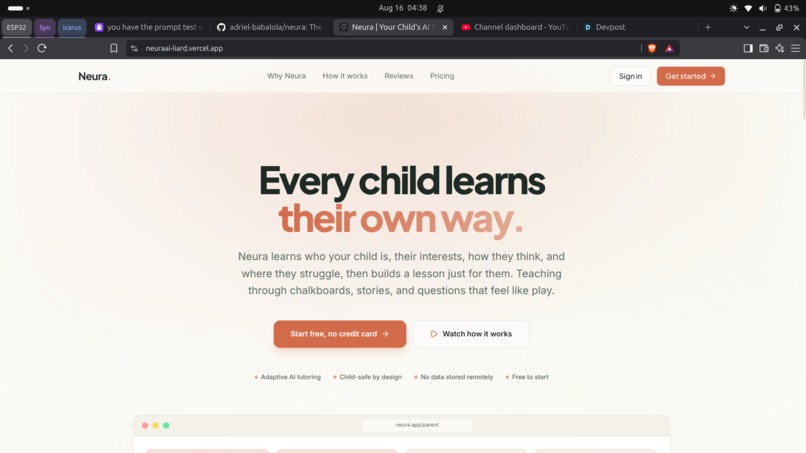
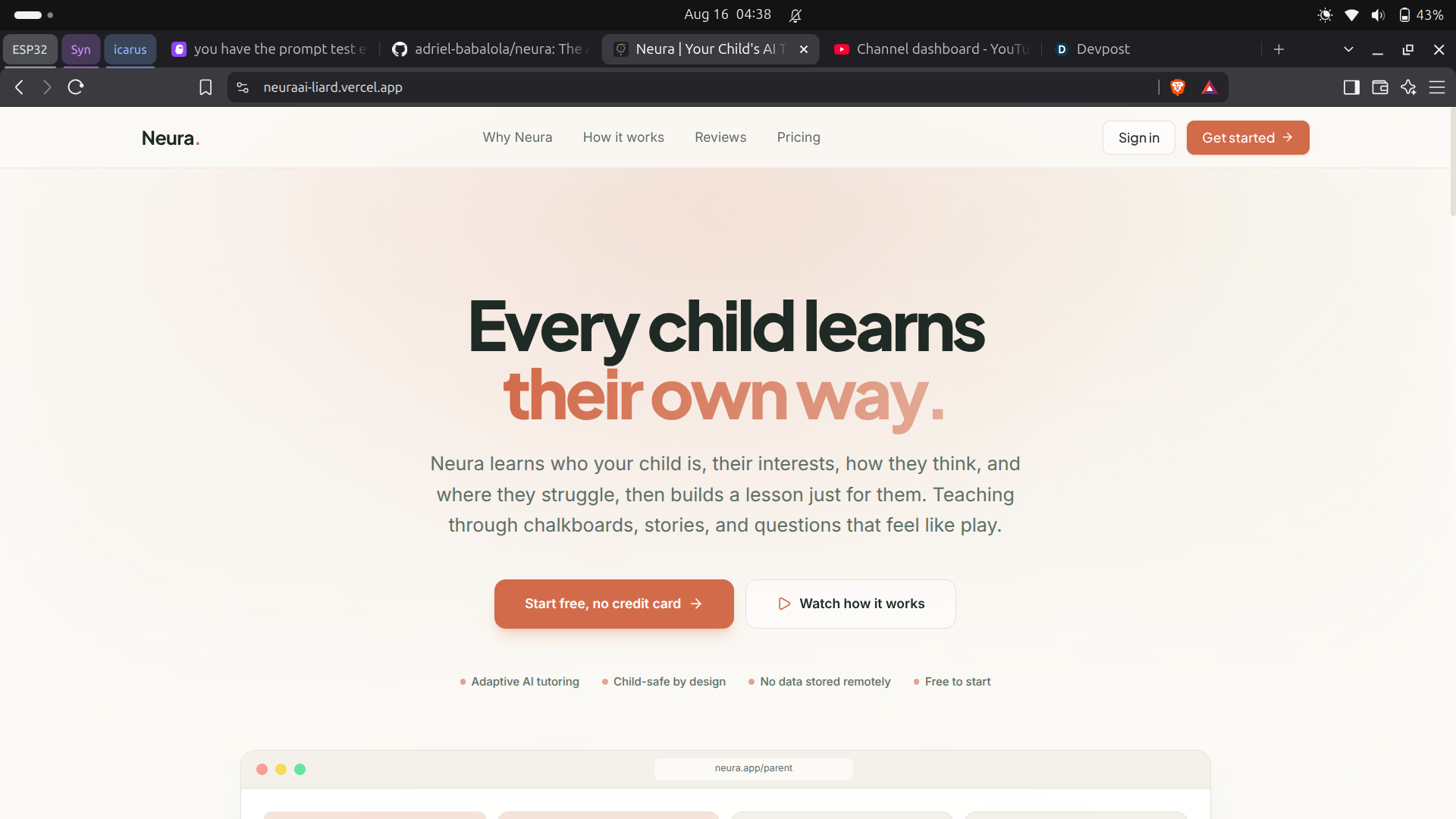
Landing Page
-
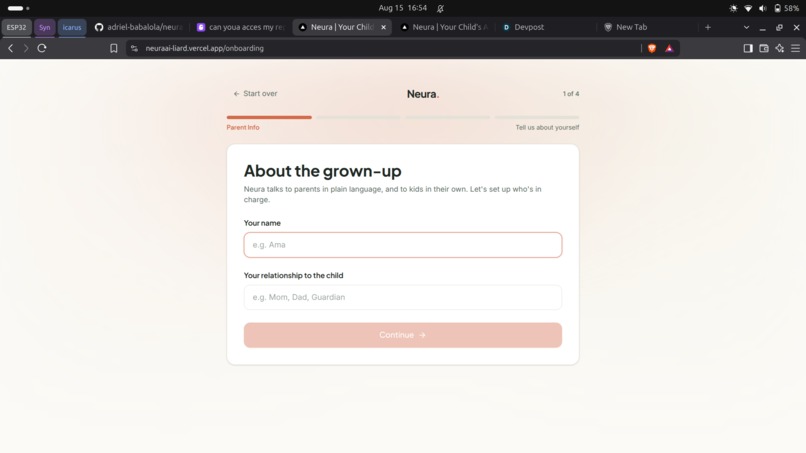
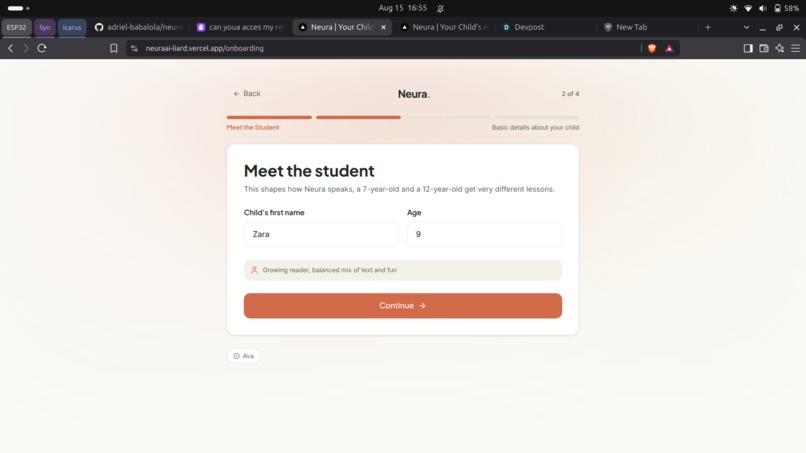
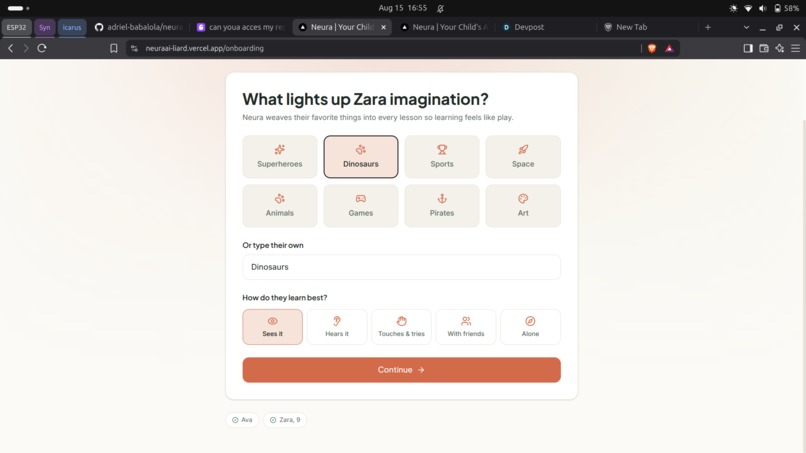
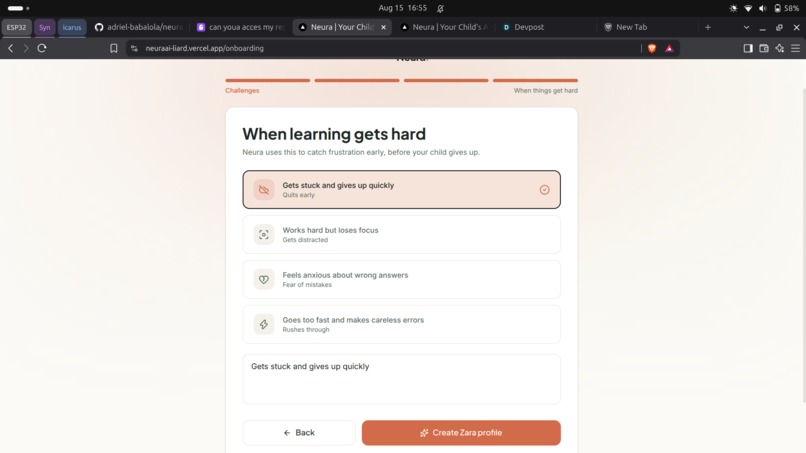
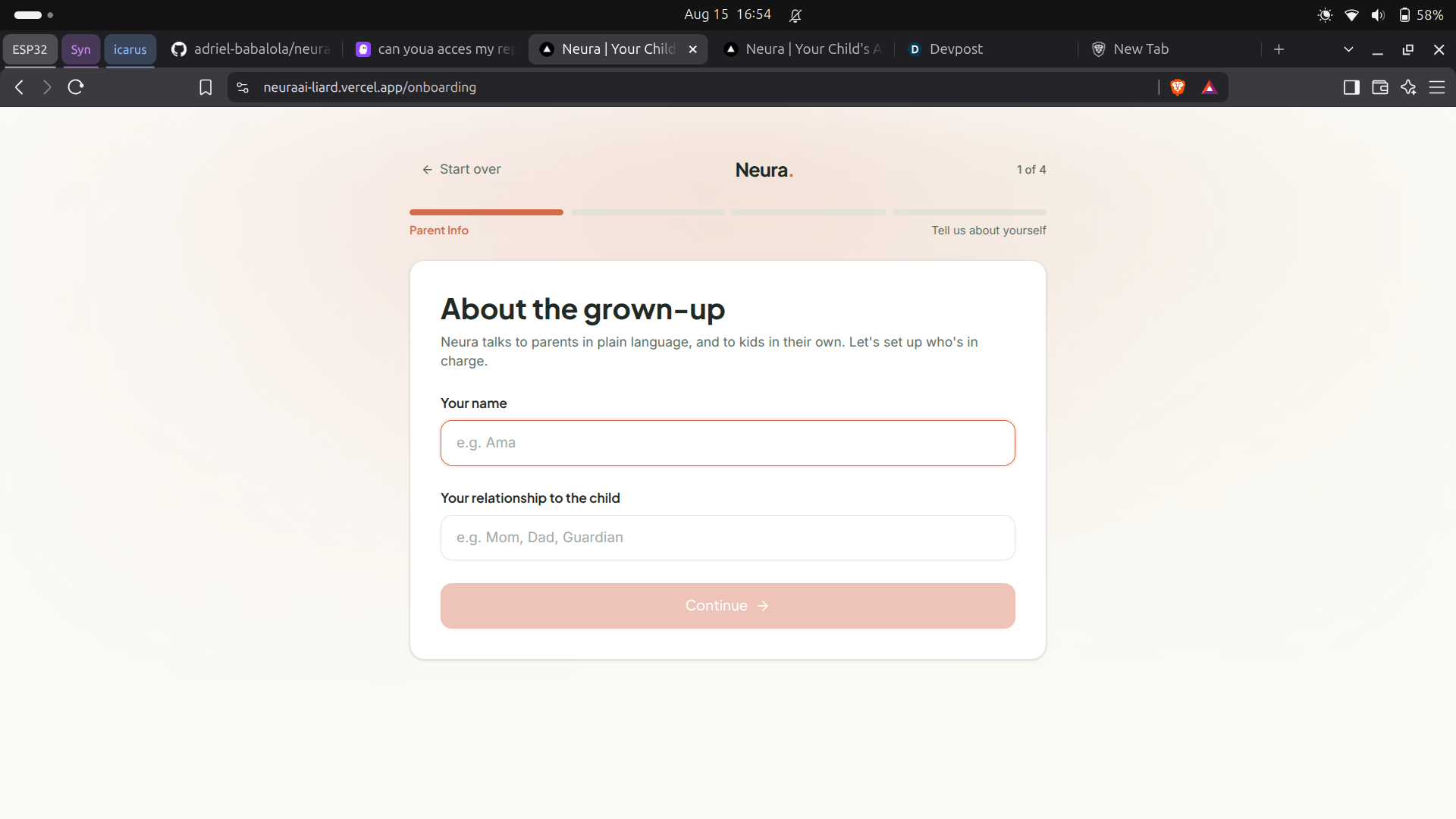
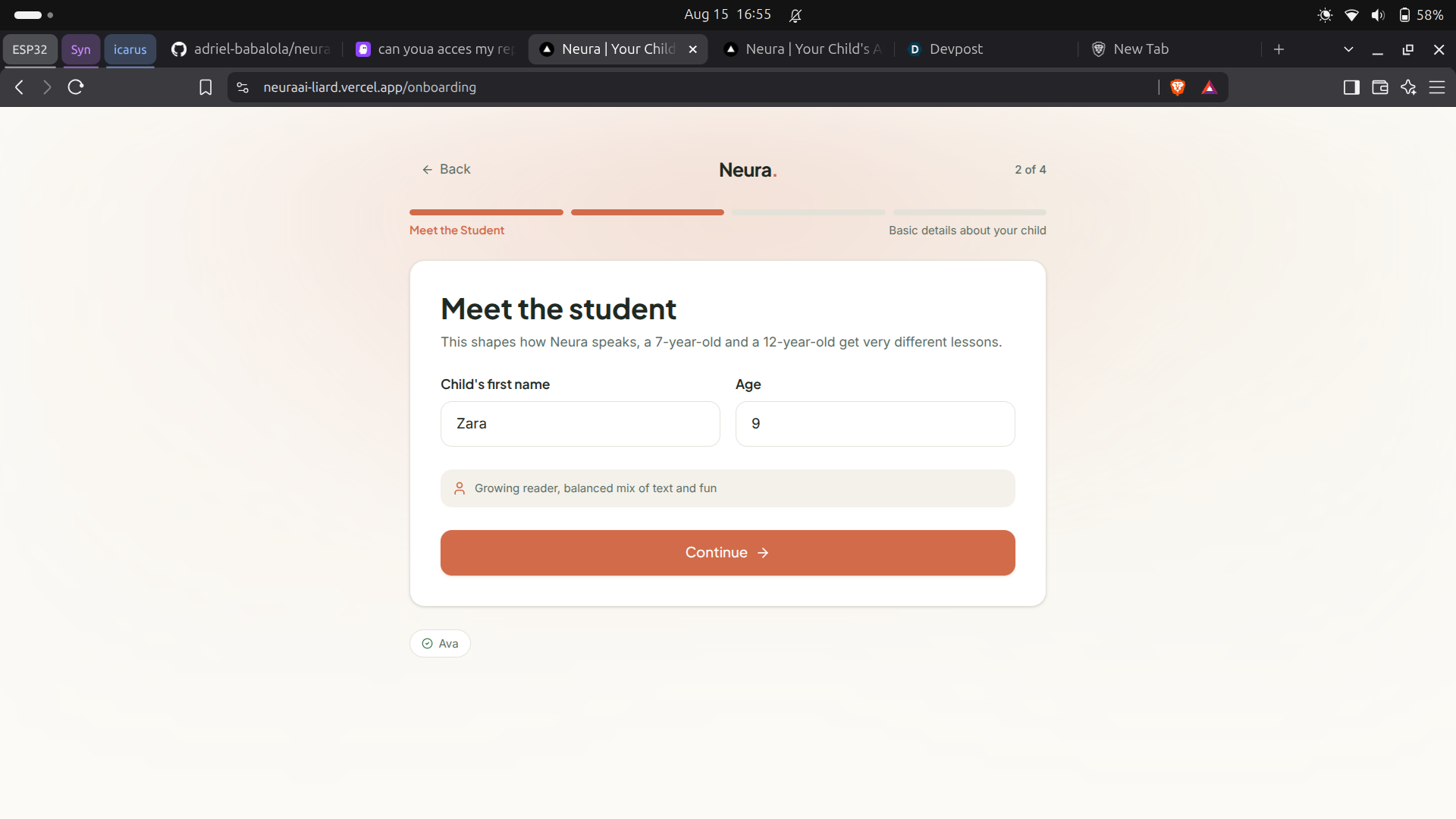
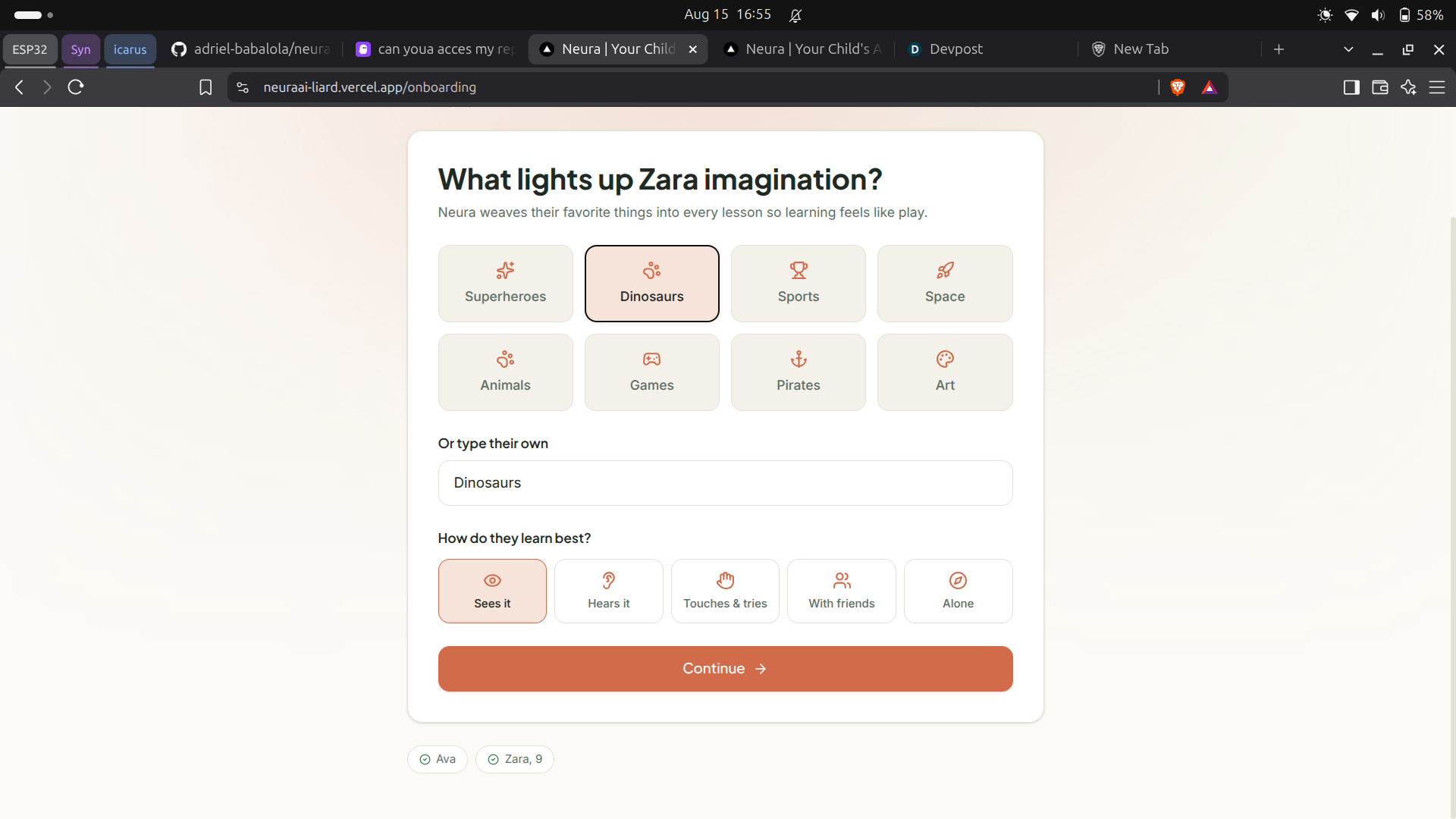
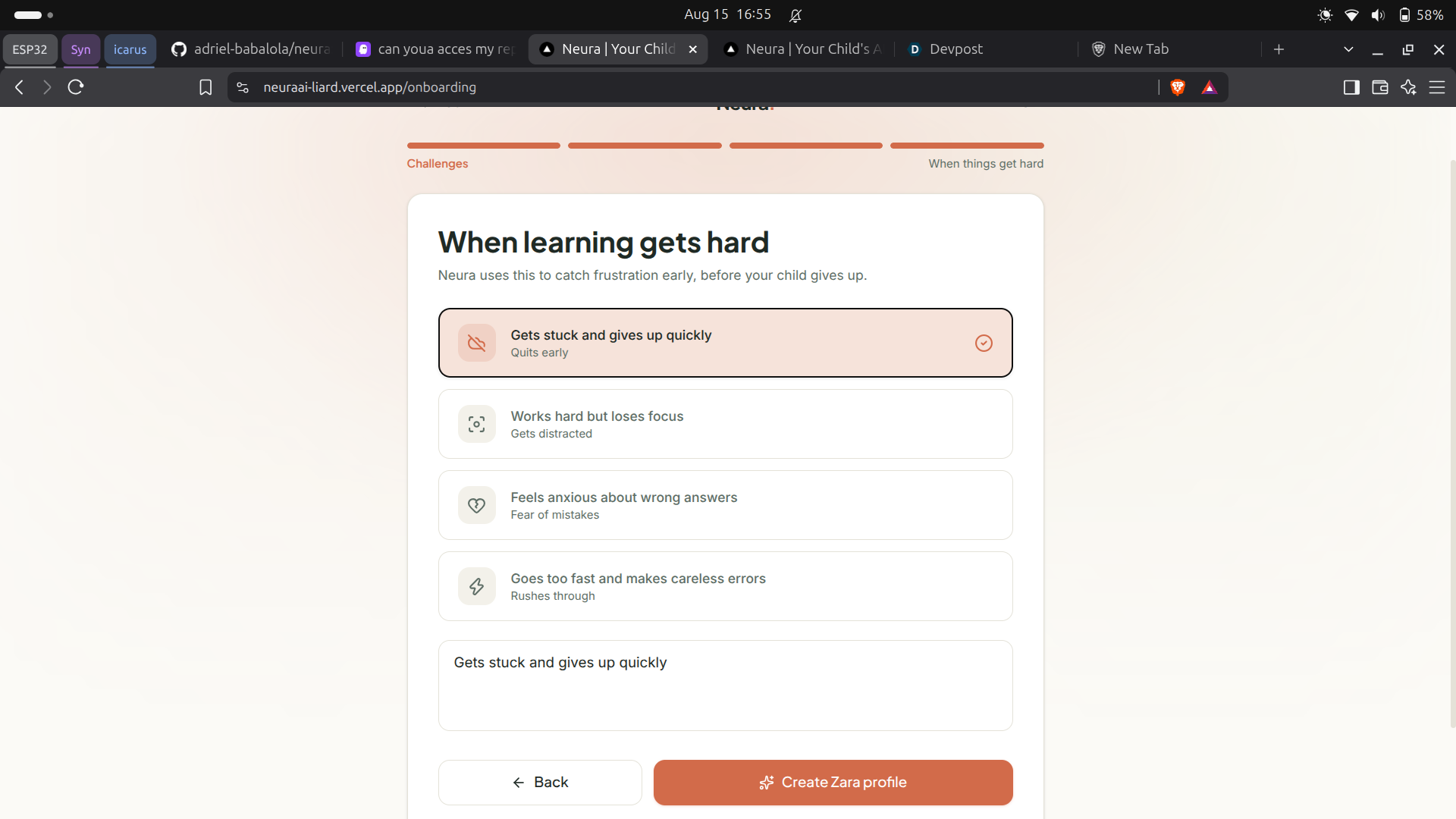
On boarding for Context
-
-
-
-
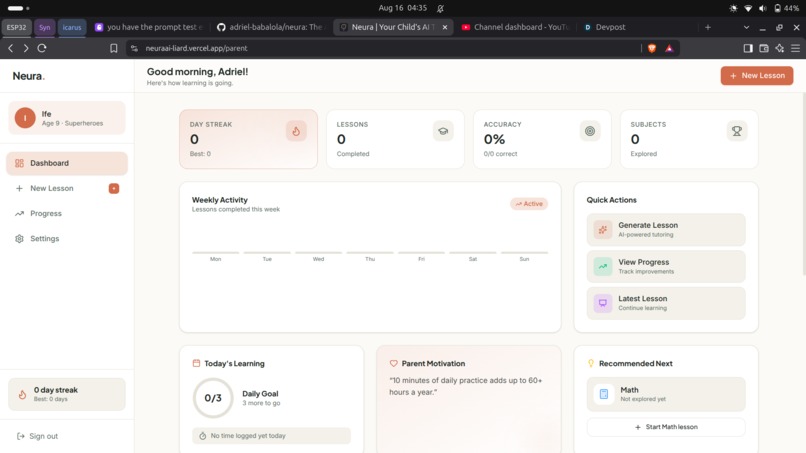
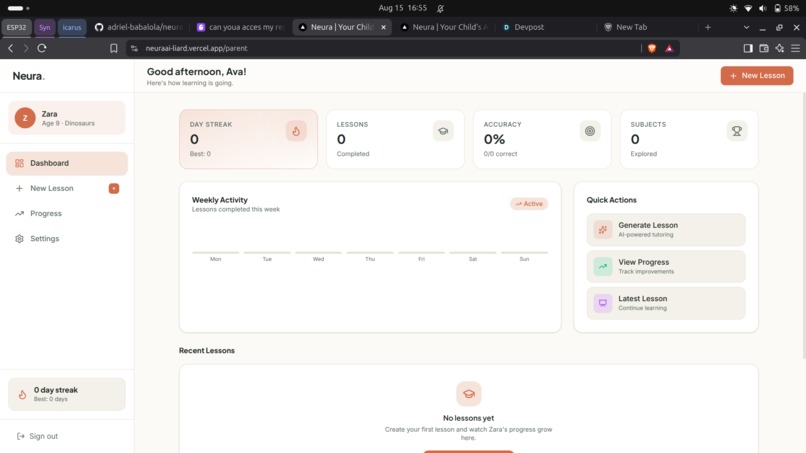
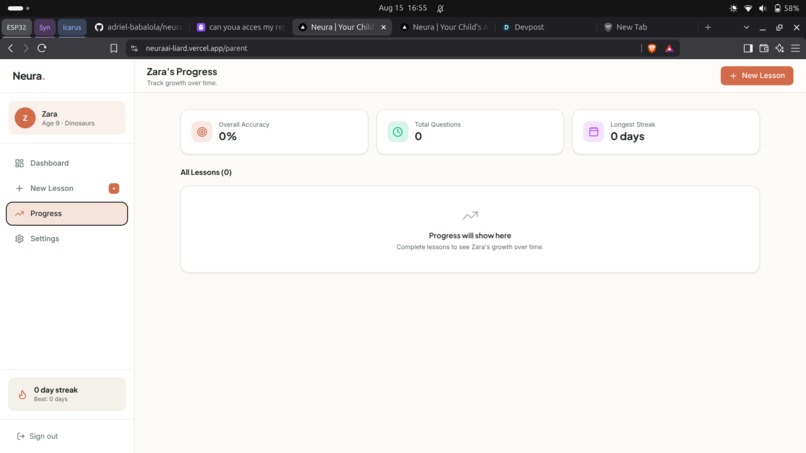
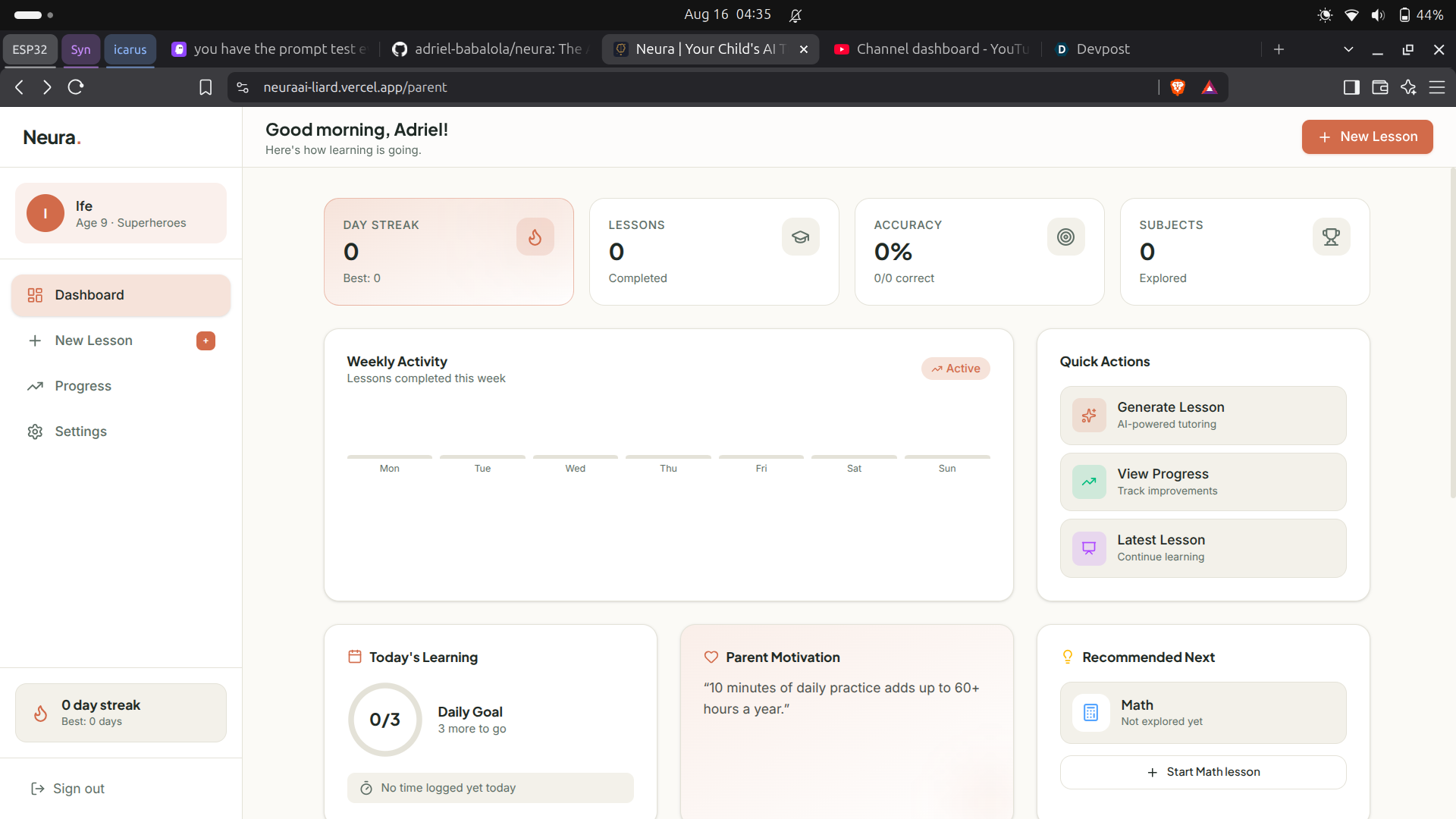
Main Interface
-
-
-
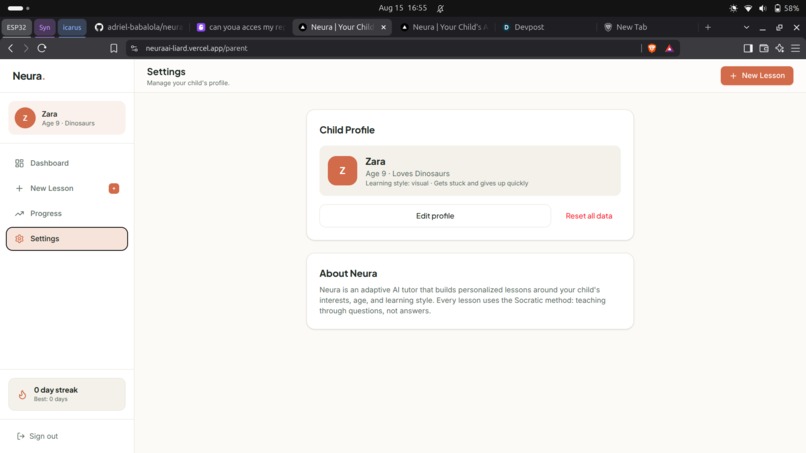
-
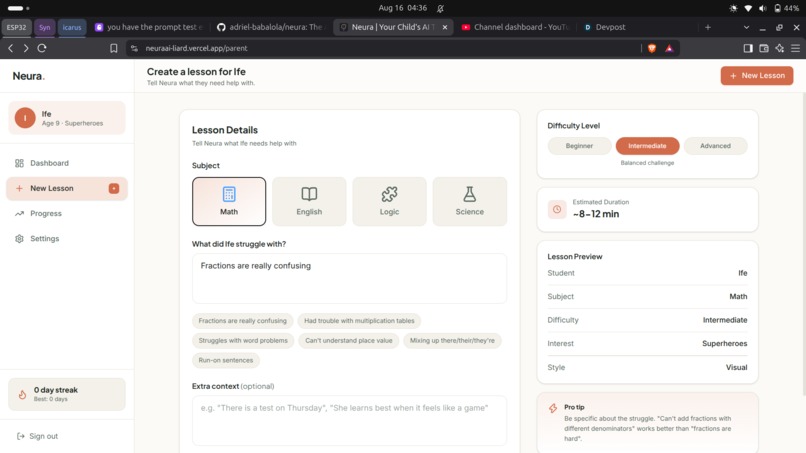
Choose a topic
Inspiration
Every child learns differently. But education at scale has always been one-size-fits-all. We were inspired by Neal Stephenson's The Primer , a book that adapts to who its reader is, teaching not just facts but thinking itself. We asked: what if we could bring that to every child, everywhere?
What it does
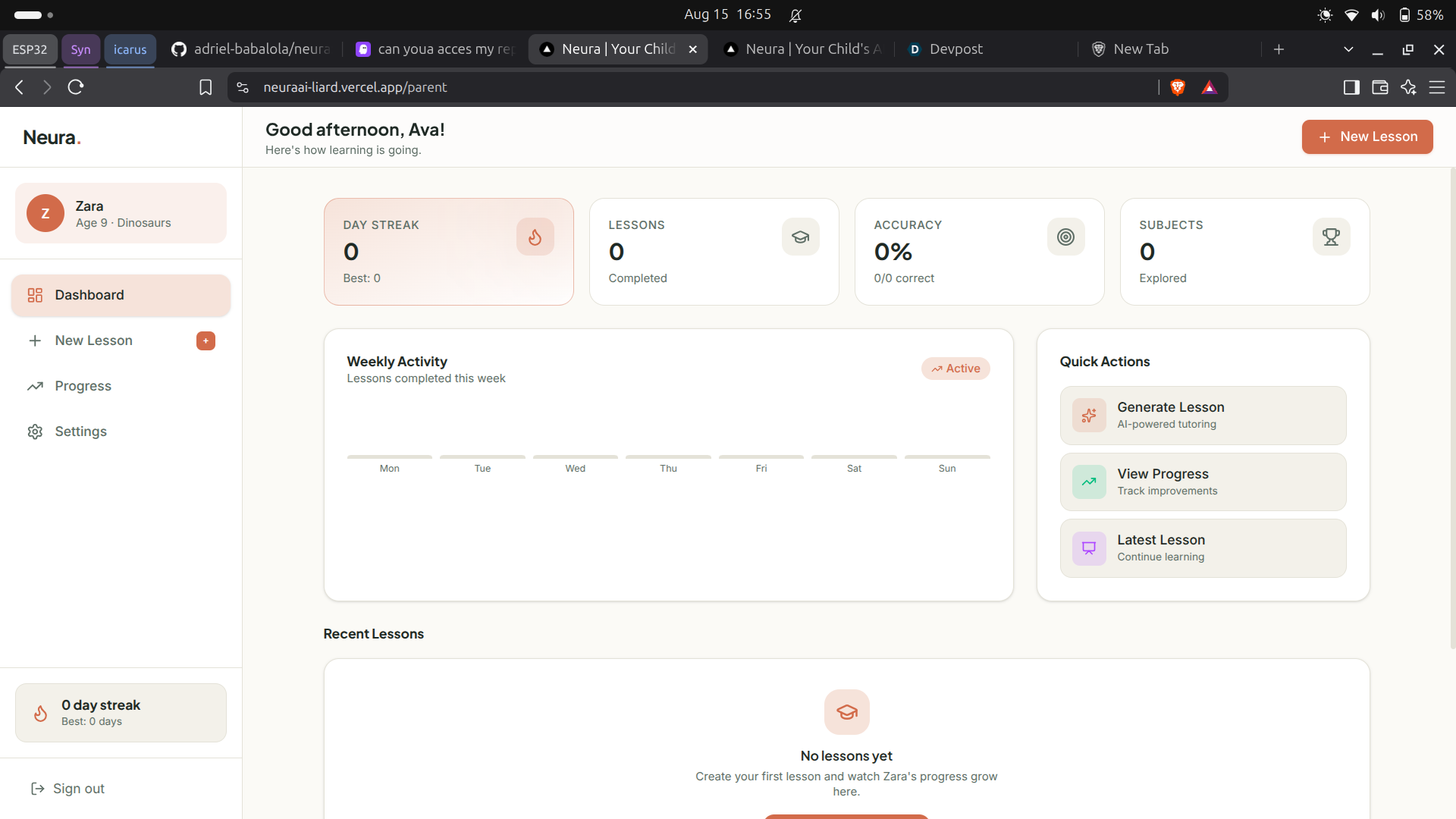
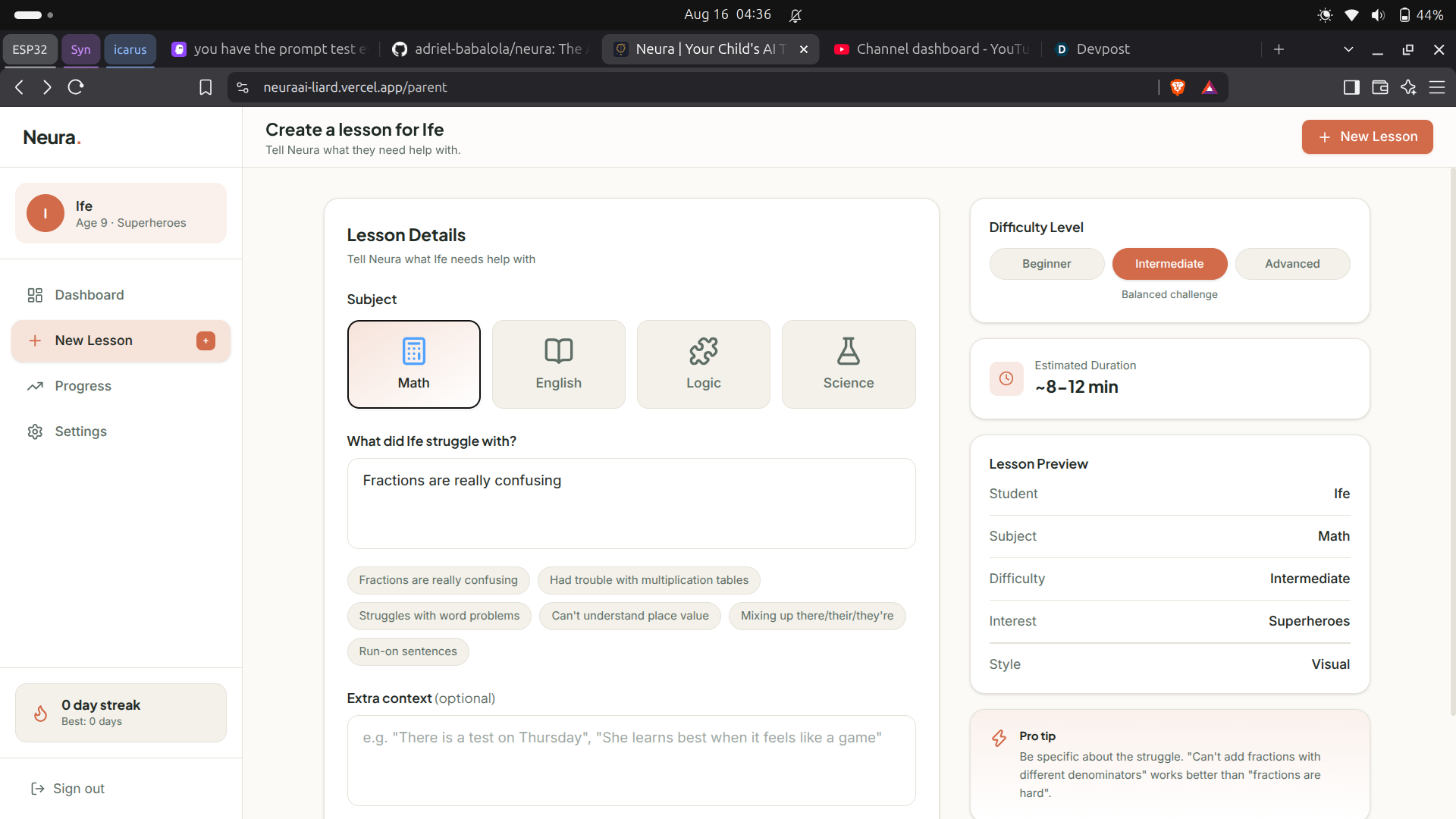
Neura is an adaptive AI tutor for children aged 8-12. Parents input what their child struggled with in school. Neura generates a personalized story lesson where the child's favorite character encounters a problem that naturally teaches the concept they need to understand. Through Socratic questions embedded in the story, children discover answers themselves — building independent thinking, not just memorization.
Two modes:
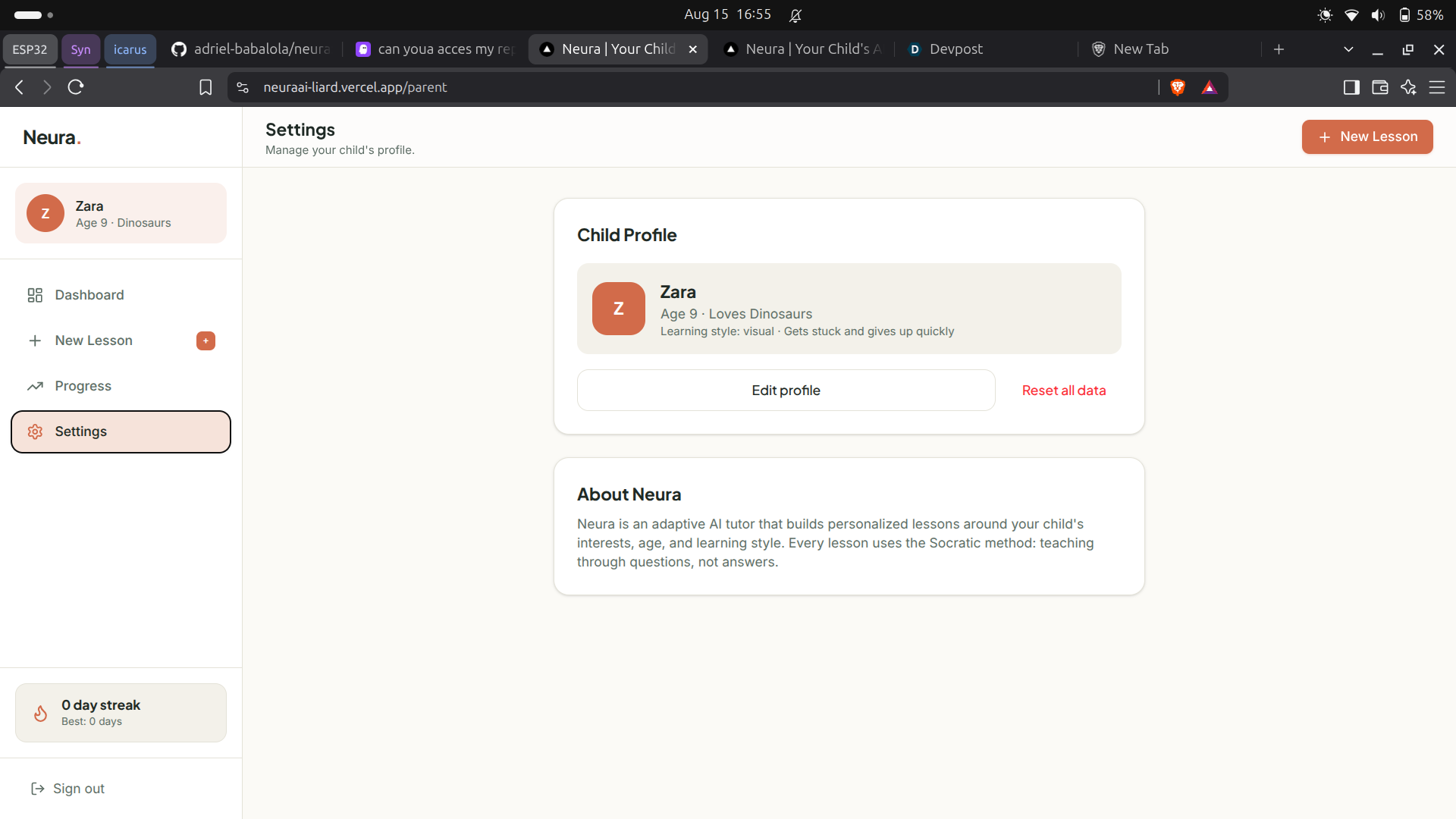
- Parent Mode: Input child's learning gap + interests → AI generates lesson
- Child Mode: Read personalized story → Answer guiding questions → Learn by discovery
How we built it
- Frontend: React 19, Next.js, Tailwind CSS, Framer Motion (for story text animations)
- Backend: Node.js/FastAPI, Gemini 2.5 Flash API
- Core: Adaptive prompt engineering that generates story + Socratic questions based on child profile + learning gap
- UX: Chalkboard aesthetic (board texture, chalk colors), voice narration, smooth animations, progress tracking
Story generation flow: Parent input → Gemini prompt (context-aware) → JSON with 5 scenes + 4 questions → Child interface renders story progressively with fade-in animations and voice-over.
Challenges we ran into
- Token constraints: Initial prompt was too verbose (8192 tokens). Optimized to 2500 to fit within rate limits.
- Prompt quality: Getting the AI to actually teach Socratically (guide, don't answer) required careful prompt engineering and iterative testing.
- Story coherence: Ensuring each question flows naturally from the narrative (not bolted on) while maintaining pedagogy.
- API reliability: Multiple fallback chains (Gemini → Groq → OpenRouter) to handle rate limits during hackathon crunch.
Accomplishments we're proud of
- End-to-end MVP: Working from onboarding → story generation → child interaction in 16 hours
- Pedagogically sound: Actually teaches through questioning, not just entertainment
- Personalization at scale: Every lesson is unique to the child (name, age, interests, learning style, specific struggle)
- Polish: Beautiful UX with animations, voice narration, confetti celebrations — feels like a real product
- Feasibility: Low token cost, works with free API tiers, deployable today
What we learned
- Pedagogy + AI > just AI alone. The prompt engineering for Socratic method was harder than the code.
- Simplicity wins. Story-only mode (text + questions) outperformed complex chalkboard visualizations for both feasibility and learning.
- Personalization is the differentiator. Not flashy features — knowing the child's name and interests makes lessons stick.
- Hackathon scope matters. We cut 70% of planned features and shipped something that works instead of something ambitious that breaks.
What's next for Neura
- Voice input for younger children (8-9 year-olds who struggle with typing)
- Game mode with interactive challenges alongside stories
- Multi-subject expansion (currently math focus, add science, languages, logic)
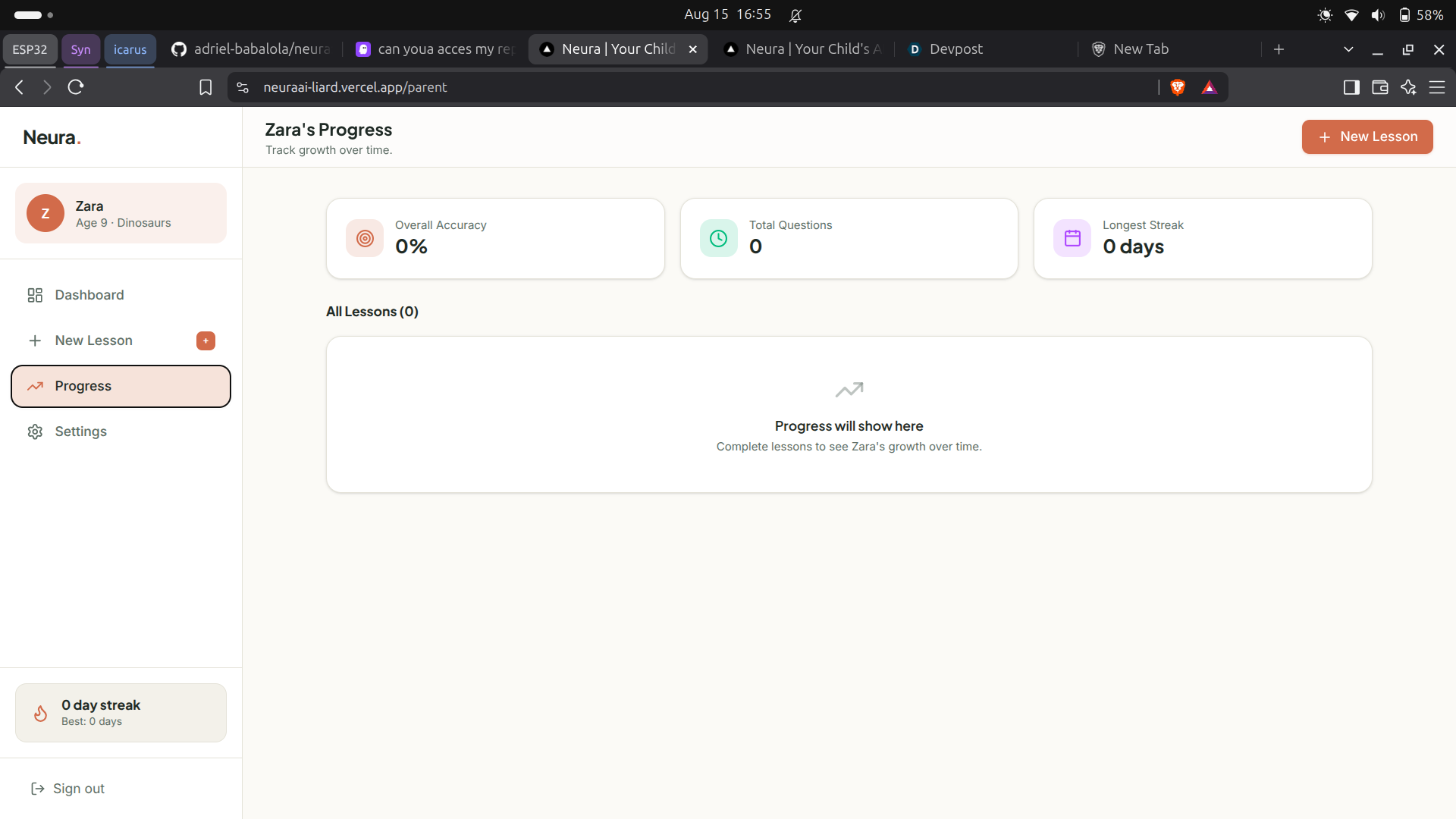
- Parent dashboard with progress tracking, learning gaps identified, recommendations
- Fine-tuned model for production (custom Gemini tuning for teacher-quality responses)
- Offline mode for low-connectivity regions
- Localization (Arabic, Spanish, French, Mandarin — built for global learners)
Built With
- api
- kiro
- nextjs
- react


Log in or sign up for Devpost to join the conversation.