-
-
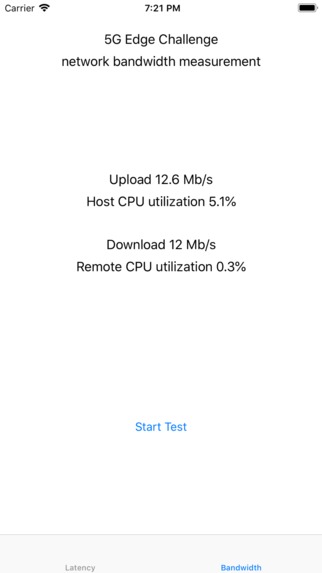
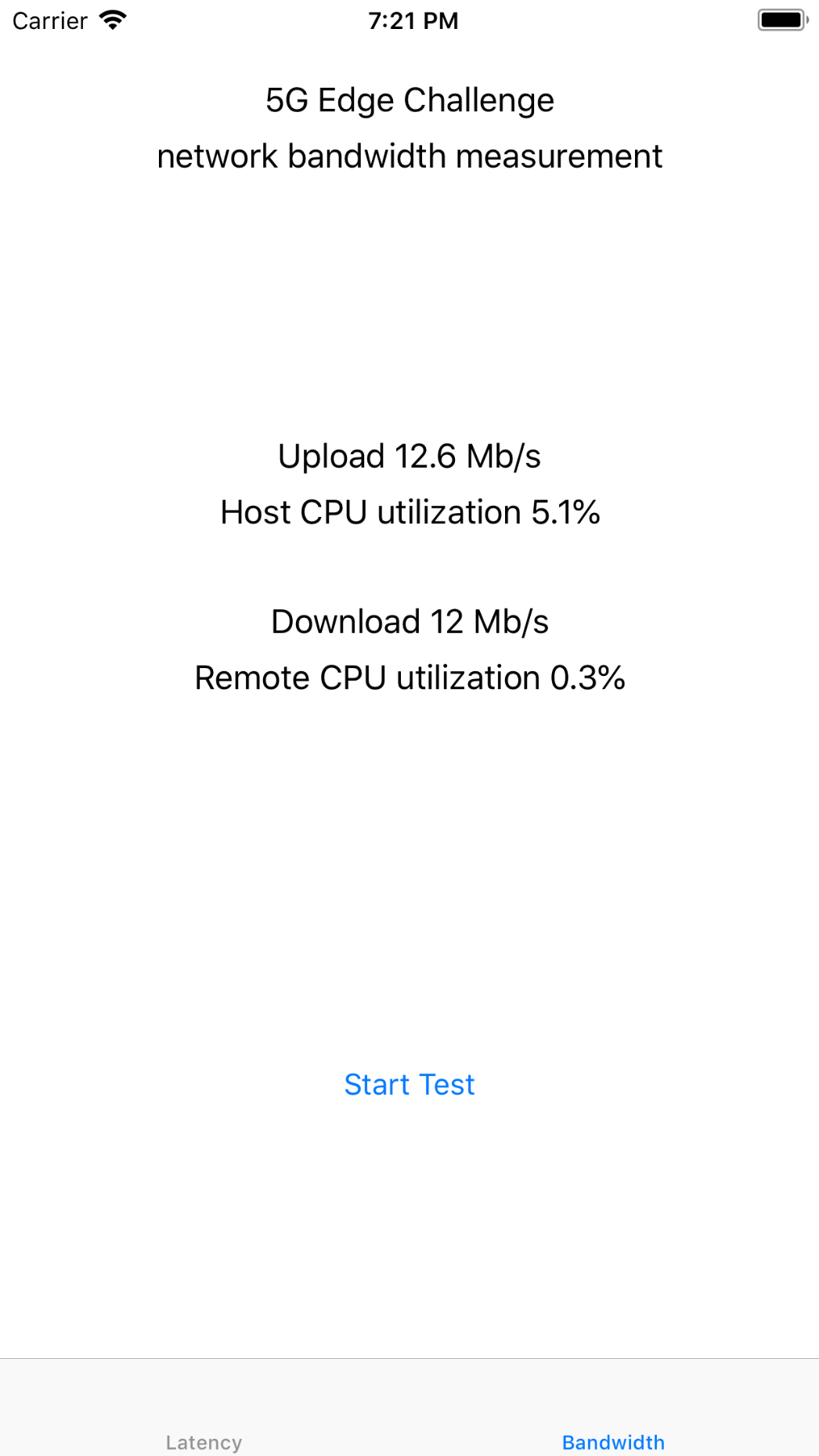
bandwidth test
-
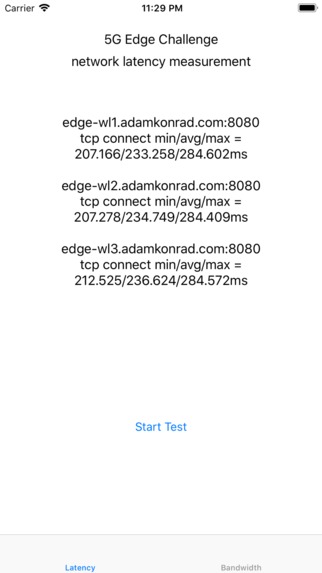
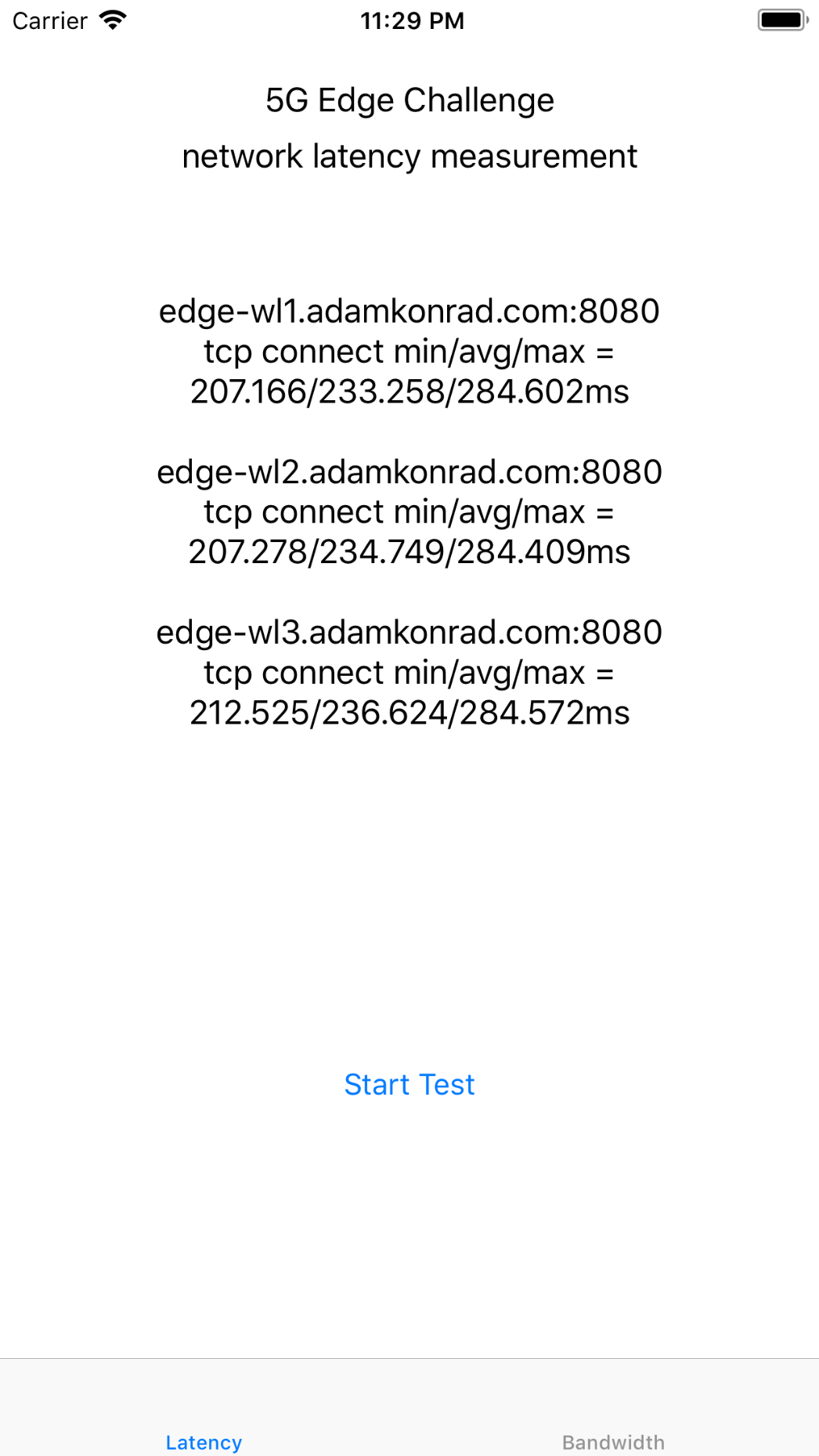
latency test
Inspiration
5G is complex with many different combinations of technology both on the base stations and the mobile phones. Fast and complex networking brings challenges to application developers who need tools to better understand bandwidth and latency. The edge compute brings processing closer to the users to minimize latency.
What it does
The application performs bandwidth and latency measurements against an endpoint deployed in a region and endpoints deployed in the AWS Wavelength zones. The latency measurements are important for applications attempting to use the edge compute in the AWS Wavelength Zones. Accessibility and latency measurement seems to be the best way of determining the endpoint closest to the user.
How we built it
The application consists of the stack, the server and the client. The CloudFormation stack provisioned resources in AWS. The server is a multithreaded C++ application running HTTP endpoints providing iperf instances for bandwidth measurements. The client is an iOS app running an iperf client for bandwidth testing and implementing a TCP-ping for latency measurements.
Challenges we ran into
CloudFormation does not support Network border groups for Elastic IPs.
Accomplishments that we're proud of
We have only one application stack that controls the deployment. Both bandwidth and latency measurements are working from the application.
What we learned
How to use the Wavelength Zones and what are the challenges using Carrier IPs. This hackathon was a nice full-stack exercise.
What's next for Network Performance
Creating a library implementing the endpoint selection algorithm to pick the right AWS Wavelength zone endpoint closest to the user.
Simulator Demo Video: https://youtu.be/VEjh_Qu0Vto

Log in or sign up for Devpost to join the conversation.